may 26/RUNHIKE

3.1 miles
trestle turn around
69 degrees
humidity: 74%

The earliest run I’ve done in some time — 7:30, which is not that early. I liked running earlier. Next time, I’d like to run by 7. Greeted Mr. Morning! for the first time in months. All year, I’ve been running later in the morning or early in the afternoon, so I’ve missed seeing all of the regulars.

The other day I remembered that I had a pair of Saucony Cohesions that I’ve only wore a handful of times because they made one of my toes hurt. I wondered if they would work better (that is, hurt less) than my Brooks’ Ghosts. Yes! Ever since I wore an old pair of Saucony’s to mow the lawn, I’ve been thinking about returning to Saucony’s for my marathon training. Maybe I’ll buy a new pair; they’re less than half the price of the Brooks shoes, and they’re navy with light pink soles.

10 Things

  1. the Welcoming Oaks — tall, green
  2. boom boom — construction noise from across the river
  3. clank clank clank — something banging/being banged below the trestle
  4. the crack just north of the trestle is shifting and growing — what once was a crack became a trench, and now a ledge — orange cones all around it as warning
  5. someone was sitting at the sliding bench
  6. a walker in a bright yellow jacket — were they a rower heading down to the rowing club?
  7. the parkway was buzzing with cars commuting to work
  8. bright headlights from an approaching bike
  9. a lone honk from a goose somewhere below
  10. a man and a dog crossing the path then entering a steep trail down to the river through small hole in the wall of green

later in the day: Watching a video about her life as a pro runner, Lauren Gregory said this: “Consistency isn’t just about showing up when things are going well; it’s about building a life that allows you to keep showing up.” For Gregory, this means routine.

I really like combining Gregory’s idea of life-building practices routines with Des Linden’s famous call to keep showing up:

hike: 50 minutes
minnehaha off leash dog park
77 degrees

A warm, but not as warm as I thought it would be, hike. It started with irritation: a guy standing with his dog right in front of the entrance, blocking the way in, barely moving enough to let us by. Why? We both wondered what he was doing and why, out of all of the places he could be waiting, he was standing right in front of the gate.

Most of the rest of the hike was good. FWA reported on all of the theories about Subnautica 2, and discussed how thoughtful the creators of the game are in their early release — hardly any bugs and a well-developed story. When he mentioned that the area where a huge tree lived was called Xanadu, I asked him if the creators of the game named it that as a more general reference to the pop culture idea of Xanadu, or the poem by Samuel Taylor Coleridge, Kubla Kahn. He thought it was possible they were referencing the poem. All I could remember from it was most of the first 2 lines: In Xanadu, did Kubla Kahn —- decree.

Kubla Kahn/ Samuel Taylor Coleridge

In Xanadu did Kubla Khan
A stately pleasure-dome decree:
Where Alph, the sacred river, ran
Through caverns measureless to man
Down to a sunless sea.
So twice five miles of fertile ground
With walls and towers were girdled round;
And there were gardens bright with sinuous rills,
Where blossomed many an incense-bearing tree;
And here were forests ancient as the hills,
Enfolding sunny spots of greenery.

But oh! that deep romantic chasm which slanted
Down the green hill athwart a cedarn cover!
A savage place! as holy and enchanted
As e’er beneath a waning moon was haunted
By woman wailing for her demon-lover!
And from this chasm, with ceaseless turmoil seething,
As if this earth in fast thick pants were breathing,
A mighty fountain momently was forced:
Amid whose swift half-intermitted burst
Huge fragments vaulted like rebounding hail,
Or chaffy grain beneath the thresher’s flail:
And mid these dancing rocks at once and ever
It flung up momently the sacred river.
Five miles meandering with a mazy motion
Through wood and dale the sacred river ran,
Then reached the caverns measureless to man,
And sank in tumult to a lifeless ocean;
And ’mid this tumult Kubla heard from far
Ancestral voices prophesying war!
The shadow of the dome of pleasure
Floated midway on the waves;
Where was heard the mingled measure
From the fountain and the caves.
It was a miracle of rare device,
A sunny pleasure-dome with caves of ice!

A damsel with a dulcimer
In a vision once I saw:
It was an Abyssinian maid
And on her dulcimer she played,
Singing of Mount Abora.
Could I revive within me
Her symphony and song,
To such a deep delight ’twould win me,
That with music loud and long,
I would build that dome in air,
That sunny dome! those caves of ice!
And all who heard should see them there,
And all should cry, Beware! Beware!
His flashing eyes, his floating hair!
Weave a circle round him thrice,
And close your eyes with holy dread
For he on honey-dew hath fed,
And drunk the milk of Paradise.

dog name: I didn’t hear any dog names directly, but I think I heard a woman, who sounded exasperated, calling to her dog down by the water, Scarlet! Scarlet! Come here!

my 2 favorite sounds: First, the bullfrogs. As we neared the end of the trail, at the beach, I could hear the loud buzz of the frogs. The noise was coming from the other side of the water, where the river turns into a creek that winds through a section of the floodplain forest. Second, Delia’s thundering feet. As Delia ran past me, I could hear her little paws pounding the ground — on sand, then grass, then firmer dirt. I love that sound!

holes / strings

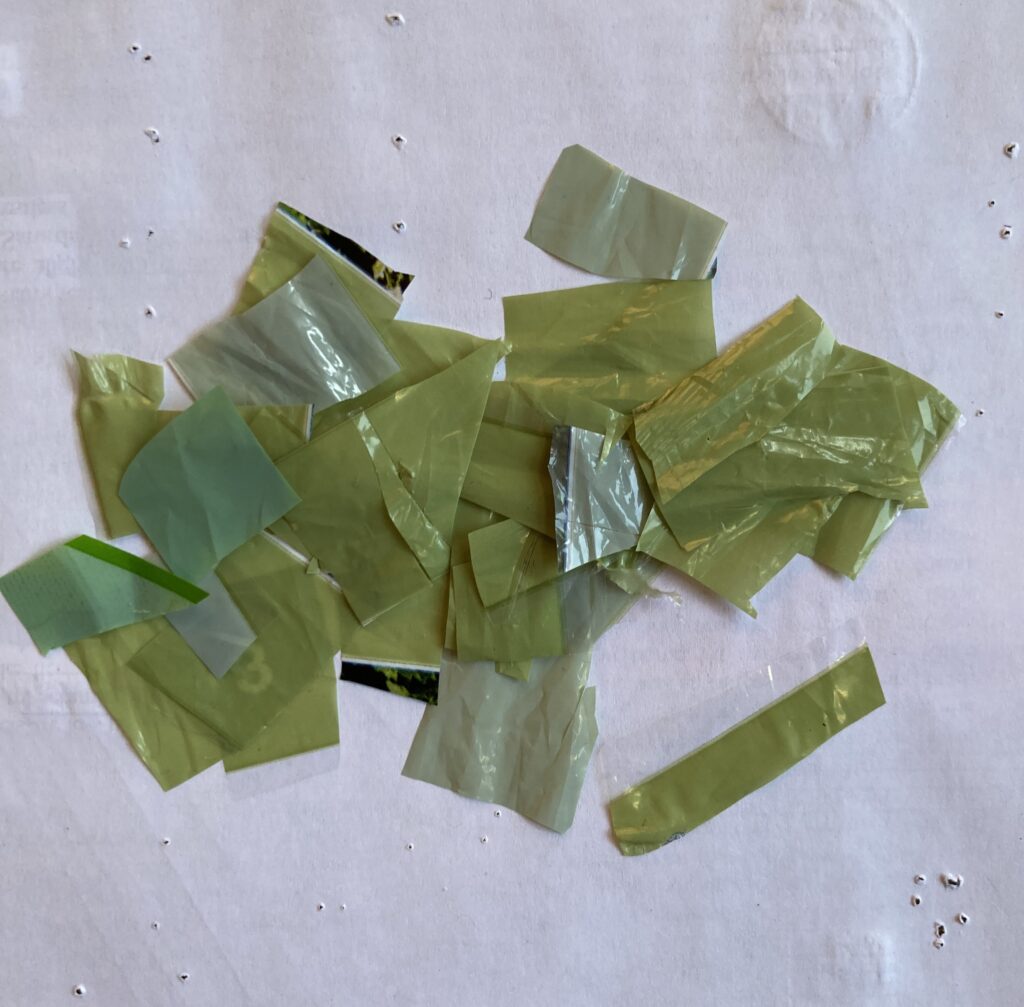
I’m continuing to work on my found poems project, but I’d like to wrap it up so I can spend the summer with water. What I need to do now is document my process so that I can remember what I was doing when I pick it back up in the fall. Will I be able to stop, or will I keep working on it regardless of my intentions? We’ll see.

Before I stop, I’d like to get some orange thread — regular + embroidery — and experiment with incorporating it into my otherwise black and white (and gray) visual poems.

I’d also like to figure out the words for my poem using a NYer essay reviewing memoirs by daughters about their fraught relationships with their mothers. In my version, mother = word, and it’s about my fraught relationship with seeing/reading/making sense of the written word.

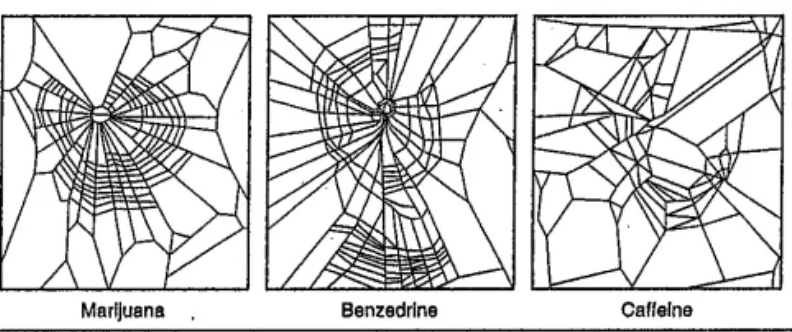
a few hours later: As I worked on finding words in the essay, phrases and fragments kept popping up, then an idea came to me: Pick out a few of these phrases, which offer a way to describe my experiences reading, particularly in terms of how words connect me to the world. Pair a phrase with one of the spiders-on-drugs webs that has been inspiring me. Map the words on a panel, create the spider web over it. I love the idea; can I actually make it?

Some of the webs are easier than others; all of them seem too much to try without some sort of help. One of Chuck Close’s grids?! I definitely want to do the caffeine web, but I think I should start with something easier, like marijuana:

drug-induced webs

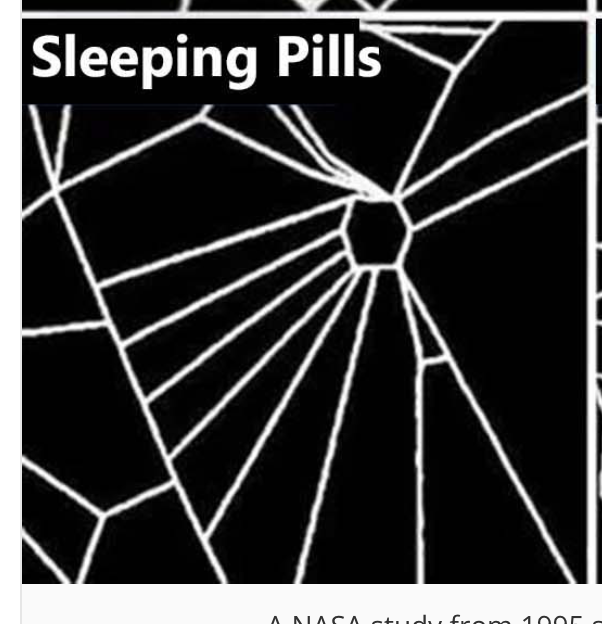
I also want to do “sleeping pills” — especially since I often fall asleep while I’m reading!

spider on sleeping pills makes web

I think I’ll do 3 or 4. Here are the phrases I want to refine/condense:

1

When the forms are too fuzzy
I escape into coordinates

note: I like the idea of this and the linking of coordinates to the grid and mapping and my desire to find concrete ways to locate my vision loss, but I’m not sure it makes enough sense as is. I’ll keep thinking about it.

2

the ordinariness of language lost

3

gaze — an act of creation and of demolition — made hole again

4

nothing, subdued, entangled

5

shadows and absences born
certainty died (or ruptured?)

6

kinship between eye, world, word confounded
threads twisted, knotted, cut

march 20/RUNGETOUTICE

5.5 miles
the flats and back
55 degrees

Happy first day of Spring! Many years it still feels like winter, but today it was SPRING! If I didn’t have to jump over a lumps of snow I wouldn’t have remembered it snowed almost a foot less than a week ago. Wonderful weather for a run — sun and not too much wind. I wore shorts, a short sleeved shirt and a lightweight pullover which I took off right before I turned around. For half the run, bare arms and bare legs!

a regular: Daddy Long Legs! As I ran back south, he greeted me, Hello again! Does he remember me from past years, or did he think he’d already seen me once today? (he’s done that before.) I’m choosing the believe he remembers me. I wonder if he has a name for me, like I do for him?

The ice on the surface of the river has melted. Down in the flats I was able to get close — only feet away — from the surface: some foam floating on the water moving slowly south.

holes

As I told RJP, I’ve hit the point in the process of these poems where I’m beginning to doubt myself and what I’m doing. Part of it, I explained to her, is because I dwell in the almost and struggle to find how to execute the final bit and/or give it the “polish” it needs. I’m not giving up. Instead, I’m trying a different approach: cut-outs. Would ths work better if the words were cut-out — a way to isolate them — instead of encased in holes? Can I do both? What if I had some of the words encased in the holes and some cut-out? Would that make it a little less complicated and less messy + easier to execute?

The question to return to again and again: what will serve the message/meaning/intentions of the poem?

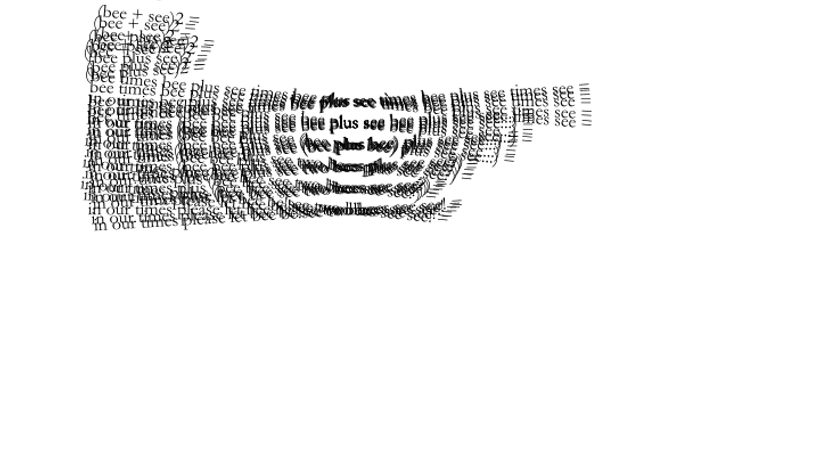
Searching for visual poetry, I found some good stuff, including this interview with Monica Ong, these great visual poems from Sarah J. Sloat, some answers to the question, what is visual poetry? and this anti-poem from  SHRIRAM SIVARAMAKRISHNAN:

bee plus see times bee

june 29/RUN

3 miles
trestle turn around
71 degrees

I would have liked to do open swim today, but FWA and I heading to Austin, MN to see the musical, Hairspray, so I didn’t have time. Oh well, a run instead. I walked some, and flew a lot. Feeling fast and full of energy on the path. I hoped I would see Dave, the Daily Walker so that we could greet and when he asked me how I was doing I’d say, It’s my birthday. And it happened, and he did wish me a happy birthday!

As I ran, I listened to my bday 2018 (2018?!) playlist — a lot of Lizzo and Justin Bieber. Wow.

june 21/RUN

4 miles
the Monument and back
82 degrees
dew point: 74

Last night I decided I would get up early and do a 7 mile run. Then I checked the forecast. 80 at 6 am. What? No thanks. I went to bed thinking I might skip running today and tomorrow (the low is 80). Then I woke up at 6 and even though it felt oppressive outside, I decided to go for a run. Maybe a 5k. Somehow, without meaning to, I ran 4 miles. It was hard. I felt almost dizzy once as I walked up the lake street bridge steps. And I’m glad I did it. Even with a few extra walk breaks I consider this run a victory.

Yes, it was warm and uncomfortable, but it was worth it for the quiet and for the strange light: darker, a little ominous, the green so deep, not glowing but pulsing? not sure what word I would use.

10+ Things

  1. on the lake street bridge from east to west, to the right a pale blue sky, to the left darker blueish-purple
  2. on the lake street bridge, wind blowing hard from the south, a bird getting a boost and flying so fast
  3. from the monument, I could her Shadow Falls dripping
  4. small white caps on the river
  5. the gentle slope of a mowed stretch of grass between Shadow Falls and the Monument
  6. the shuffling of a runner’s feet across the road
  7. the clicking and clacking of ski poles through the trees and on the other side of the ravine
  8. at the Monument, the line of narrow paving stones near the water fountain — they looked old — when were they placed here and who did it?
  9. the swirling and waving of some wildflowers in the wind
  10. taking off my cap on the bridge because of the wind, feeling it hit my face and grab my hair
  11. encountered the runner who wears bright orange compression socks*

*I’ve encountered this runner enough that they’re officially a regular. I think I’ll call him Mr. Orange Socks

Listened to the wind and dripping water and the heavy air for 3 of the miles. Put in my “It’s Windy” playlist for the final mile. Windy has stormy eyes that flash at the sound of lies.

Encountered two Anne Carson poems this morning and it feels like a sign, or a nudge, to keep reading her The Anthropology of Water. One of this poems was from an 21 june entry in 2022 (Could I), and this one from today’s poem of the day:

Between Us And/ Anne Carson

BETWEEN US AND
animals is a namelessness.
We    flail    around
generically      —
camelopardalis   is   what
the Romans came up with
or  ”giraffe” ( it looked to
them like a camel crossed
with a leopard ) or get the
category wrong — a musk
Ox isn’t an ox at all but
more closely cognate with
the  goat —  and   when
choosing   to    name
individual  animals  we
pretend they are objects
(Spot) or virtues (Beauty)
or just other selves (Bob).

The idea of knowing the names of things has come up before on this blog. There’s the act of naming something, which is addressed in this poem and evidenced in my naming of “regulars,” and there is also the act of learning the name that a living thing calls itself. Robin Wall Kimmerer (Gathering Moss in 22 march 2024 entry), JJJJJerome Ellis (“A Litany of Names” from Aster of Ceremonies), and Alice Oswald (“Violent” in 16 feb 2025 entry) all describe this in their writing.

an hour later: Taking up the nudge to read more Anne Carson, I returned to The Anthropology of Water. I focused on the final section, “Margins: An Essay on Swimming By My Brother.” Wow! So many great descriptions of what it feels like to swim in a lake! I need to make a list.

I may have posted this bit before, but here’s Carson’s answer to the question, How does swimming figure into your writing?

It keeps me from being morose and crabby. Sometimes I think in the pool. Usually it’s a bad idea. The ideas you have in the pool are like the ideas you have in a dream, where you get this sentence that answers all questions you’ve ever had about reality and you get up groggily and write it down, and in the morning, it looks like “let’s buy bananas” or something completely irrelevant. Plus, I like water. Some people just need to be near water.

Interview in Paris Review

I am one of those people who needs be near water.

Back to the “An Essay on Swimming.” I like how it’s structured: journal entries titled with day of the week and time and either swimming or not swimming. Here’s the second entry:

Friday 4:00 p.m. Swimming.

In late afternoon the lake is shaded. There is the sudden luxury of the places where the cold springs come flooding up around the swimmer’s body from below like an opening dark green geranium of ice. Marble hands drift enormously in front of his face. He watches them move past him down into the lower water where red stalks float in dust. A sudden thin shaft of fish smell. No sleep here, the swimmer thinks as he shoots along through the utterly silent razor-glass dimness. One drop of water entirely awake.

I like how there’s no date. It’s placed in time, but vaguely.

that sudden luxury! I welcome those cold patches in lake nokomis when I swim but I don’t think they’re from cold springs. What are they from? Now when I feel them I will think: I’m being flooded with a dark green geranium of ice!

marble hands — yes! that’s how I should describe the pale legs and hands of swimmers that I’ve seen recently.

where red stalks float in dust — for me: curled green feathers that do more than float, they seem to reach up to/for me.

that’s me: one drop of water entirely awake

Recap, and to put on a list of Carson’s water descriptions to use/think about as I swim:

  • I’m being flooded with a dark green geranium of ice!
  • marble hands and legs
  • stalks that reach to/for me
  • me as one drop of water entirely awake

june 17/RUNBIKESWIMBIKE

4 miles
river road, north/river road, south
67 degrees / dew point: 63

Started my run at 8:30, which was too late for how warm and humid it is. Even so, I felt strong and relaxed and confident that I could stick to my 9/1 plan and I did. As the runs get longer, I’m going to need to get up earlier. Chanted in triple berries — strawberry/blueberry/raspberry — then in other favorite triples — mystery history — then in triples that describe the world around me — worn dirt trail / old oak tree / cloaked green view / rushing cars

10 Things

  1. at least 2 roller skiers standing at the top of the franklin hill
  2. voices below — rowers!
  3. 2 minneapolis park trucks on the path, both hauling riding lawn mowers
  4. Mr. Morning!
  5. a big branch loaded with green leaves on the ground near the welcoming oaks, blocking a small section of the path
  6. 2 or 3 stones stacked on the ancient boulder
  7. the sliding bench was empty
  8. encountering Max, a big and gentle German Shepherd
  9. a mini-peloton on the road — a dozen or so bikes
  10. an older runner in bright orange compression socks standing in the middle of the walking path, gathering himself

I don’t remember thinking about much as I ran, other than that it was hot and that I knew I could keep going.

Yesterday, during my vision assessment, I mentioned reading about a way of training the eyes so that they could see outside of your blind spots. It was in a book by a famous author, but I couldn’t recall who. I knew they were from the 1900s and that they were male and I thought they were a philosopher, but I was drawing a blank on the name. At some point during the appointment, I was convinced it was Henry James. I was wrong. I looked it up today: Aldous Huxley and his book, The Art of Seeing. I wrote about it in this long on 13 sept 2020, including this quote from Huxley in the introduction:

Ever since ophthalmology became a science, its practitioners have been obsessively preoccupied with only one aspect of the total, complex process of seeing—the physiological. They have paid attention exclusively to eyes, not at all to the mind which makes use of the eyes to see with.

The Art of Seeing/ Aldous Huxley

How true is this assessment in 2025? Well, the study I am hopefully participating in is a collaboration between Ophthalmology and psychology at the U of M.

In the process of searching for the Huxley reference, I came across an article about low vision and reading. The specific ways that reading is difficult for me are different than this author, but the strange, and sometimes frustrating, sometimes delightful ways it (doesn’t) work resonate:

I try to figure out how apples connect to the topic, and how a noun just there might fit into the sentence, then give up and go back, to see the “i” that I missed when I first read “applies.” All those mistakes don’t happen at once. When my splotchy vision is not making me fail to grasp the point of an essay or fail to see the word “salt” in a recipe, it keeps me amused, keeps me aware of language itself. Who knew that “apples” is only one letter different from “applies”? Who could regret noticing that? 

As My Vision Deteriorates, Every Word Counts/ Alice Mattison

Reading more of the article, I find that her perspective on audiobooks resonates less:

Listening to an audiobook, I wouldn’t hear punctuation. True, an actor could produce the pauses, hesitations, and buildup that punctuation merely signals. But I like punctuation. I wouldn’t know whether the author had chosen a period or a semi-colon for the end of that main clause, wouldn’t know about em dashes, colons, parentheses, ellipses. Audiobooks are mediated. Another person would be present as I read. Worse, that person would have interpretive power, power over speed. Audiobooks happen in time, not space, like music or dance. Performance is indispensable but it isn’t the same as reading. 

My first reaction was to disagree with this assessment, but it has me thinking more about the idea of an audiobook as performance. I like listening to a good audiobook actor. And I love listening to an author who can read their own book well, like Zadie Smith. So what? Does that mean I’m not reading, and do we need to gatekeep what reading is? Now I’m wondering: what is reading?

Some thoughts about punctuation:

  • As I memorize poetry, I often struggle to write it down again later; I often mess up the punctuation. I memorize words, but rarely semi-colons or em dashes.
  • In Lucille Clifton’s rules for writing poetry, she suggests that a poet should write their lines in such a way that punctuation is never necessary — not sure where I stand on this
  • Isn’t the writer’s choice of punctuation a sort of mediation between reader and word?

bike: 8.7 miles
lake nokomis and back
78 degrees

Hooray for no problems on the bike! I could see well enough and I didn’t have to do any awkward passing. My left knee was a little stiff at the end, like it was 2 summers ago, but otherwise it was good. I liked biking to the lake before my swim, and biking back home after. Some things I remember: a line-up of traffic near the falls; kids playing in the creek; the pleasing curve of the new bike trail at lake hiawatha; the rush of water gushing out of the sewer pipe and into the ravine at 42nd; a surrey slightly off course; the bouncy stride of a runner.

swim: 2 loops
lake nokomis open swim
79 degrees

Open swim! A wonderful night for a swim. Not much wind, hardly any waves. I would have liked to do more than 2 loops but I didn’t want to push it and have a sore shoulder again. No problems going off course even though I could barely see the buoys. So little data, so much trust and belief in my ability to swim straight!

10 Things

  1. put my bag down under the lifeguard stand, next to some kid’s swim trunks that were swarming with gnats (gross!)
  2. milfoil reaching up from the bottom, thick and pale orange until it faded into the dark blue-green water
  3. cold water with pockets of warmer water
  4. baby bros (15 or 16? year-olds) playing football in the shallow water, cheering every time someone caught a pass or missed a pass
  5. the legs of another swimmer doing breaststroke, looking pale underwater
  6. bubbles! the translucent, almost white ones, that remind me of the bubbles in scooby doo
  7. my sparkle friends! the small glittering particles floating in the water
  8. open swim was set up a full 15 minutes early! the lifeguards have their shit together again this year
  9. the familiar form of the beach house dome, viewed mid-lake
  10. calling out to another swimmer — have fun! / you too!

A great swim. No deep thoughts or reciting water poems or noticing sounds or clouds or planes. As I get more fit, and spend more time in the water, these things will happen.

may 7/RUN

4 miles
trestle+ turn around
59 degrees

Today I tried the walk/run method: 9 minutes of running, 1 minute of walking. As usual, I followed this method approximately. Run 9:30/Walk 1:30, 8:30/1 — I can’t remember after that. It was good. It’s still difficult, but I’m pushing through more. I greeted 2 regulars! Dave, the Daily Walker and Daddy Long Legs. I noticed how green the floodplain forest was, only the narrowest sliver of river to see. And the view from the sliding bench? Green green green. If someone was walking below, would I even be able to see them? Ran on the grass and the dirt a lot. Thought about taking the short dirt trail that cuts behind a tree nearing the trestle, but didn’t. Next time? Admired someone’s raspberry red running shoes. I used to have shoes that color. Now they’re boring dark gray/almost black.

Ran through gnats. Most of them went in my eye, one in my throat. Also ran through cottonwood, or some white flowery thing that I thought of as cottonwood fuzz. Usually the cottonwood arrives at the beginning of June, so maybe it was something else?

No rowers, no roller skiers, no turkeys or geese or bird shadows. One fat tire. One little kid. Several runners and walkers and cars.

I don’t remember what I heard for the first half of the run, but for the second half, I listened to my windy playlist (it was windy out there!).

edges / middles / context

I started the morning thinking about surfaces and the places where things meet and textures and skin and feet. And then I remembered Emily Dickinson’s love of the circumference and the wonderful site, out of Dartmouth, all about ED in 1862. It has a blog post on ED and circumference.

I was excited to read this bit:

Laura Gribbin argues that Dickinson’s conception of Circumference rejects Emersonian expansion, revises the patriarchal conceptions of the (male) poet’s encompassing consciousness, and resists being taken over by an outside power. It does so by calling attention to “the circle’s necessary boundary or perimeter without which it has neither shape nor meaning.” In Gribbin’s reading,

“Circumference marks the borderline of symbolic and linguistic order.
This border is a highly charged point of convergence where oppositions are collapsed, boundaries are explored, and meaning originates. Circumference is also the space within a circle where life is lived, pain is felt, and death is observed.”

In what amounts to a powerful critique of Romanticism, Dickinson stands not at the center but on the periphery, at the outer limits of knowledge and language, replacing, as Gribbin notes,

“the Romantic impulse toward transcendence with an alternative concept of knowledge gained within the limits of experience.”

Instead of the Emersonian emphasis on sight and specularity, Dickinson emphasizes touch and what can be felt. Because

“Circumference delineates that region where the imagination comes into play, [it] is thus the source of poetry itself.”

White Heat: Emily Dickinson in 1862, a Weekly Blog

While reading my “on this day” posts yesterday, I encountered a discussion of middles from 6 may 2023. It’s in the middle of my summarizing of Mary Ruefle’s essay “On Beginnings”:

It’s about beginnings and how there are more beginnings in poetry than endings. The first note I jotted down in my Plague Notebook, Vol 16 was about the semicolon, which is a punctuation mark that I particularly like. Ruefle has just introduced an idea from Ezra Pound that each of us speaks only one sentence that begins when we’re born and ends when we die. When Ruefle tells this idea to another poet he responds, “That’s a lot of semicolons!” Ruefle agrees and then writes this:

the next time you use a semicolon (which, by the way, is the least-used mark of punctuation in all of poetry) you should stop and be thankful that there exists this little thing, invented by a human being–an Italian as a matter of fact–that allows us to go on and keep on connecting speech that for all apparent purposes unrelated.

then adds: a poem is a semicolon, a living semicolon, and this:

Between the first and last lines there exists–a poem–and if it were not for the poem that intervenes, the first and last lines of a poem would not speak to each other.

At some point as I read, I suddenly thought of middles. The in-betweens, after the beginning, before the end. How much attention do these get, especially if we jump right in and start with them. It reminds me of a writing prompt/experiment I came up with for my running log: Write a poem about something that happened during the middle of your run–not at the beginning or the end, but the middle (see 27 nov 2019). 

the MIDDLE

mid-motion
mid-walk, mid-run
Activity: notice and record what you notice in the midst of motion. Pull out your smart phone and speak your thoughts into it.

Not how you got there or where you’re headed, but here now in-between

the middle: Lucille Clifton’s unfenced is, Alice Oswald’s purpled sea

I like the idea of being dropped in the middle — no need to endure a beginning or an ending, but what’s lost when we’re floating in the middle? Something that grounds or frames the experience: context.

aside: writing that last bit, I recalled a few lines from Jorie Graham’s “Still Life with Window and Fish”:

The whole world outside….
I know it’s better, whole, outside, the world—whole
trees, whole groves–but I
love it in here where it blurs, and nothing starts or
ends, but all is
waving, and colorless,
and voiceless….

This morning, I came across a learning prompt on Poetry Foundation: Context.

The Merriam-Webster Dictionary defines context as “the parts of a discourse that surround a word or passage and can throw light on its meaning.” The word itself comes from the Latin contexere, which means “to weave or join together,” which I interpret as “to make sense of” what we’re reading, particularly when we’re not familiar with the author’s background and/or work. Knowing a poem’s context can give us a sense of place, culture, politics, gender dynamics, etc., and situate us in a specific time and place using concrete references. . . .

A sense of place, a connection, an anchor, a way to ground ourselves and our understandings.

a few hours later: I just remembered Kamala Harris’ coconut tree comment, which RJP loved to quote during the campaign:

context

added the next day: As I read through this entry again the next morning, I suddenly remembered something I posted earlier this spring about how not knowing or acknowledging a person/community’s history is to de-humanize them, to turn them into an object and not a subject. I can’t find where I wrote about it or what I was referencing. After a lot of searching, I found it! It’s in an interview with Jenny Odell about her new book on time, Another Kind of Time. Instead of posting the lengthy quotation here, I’m putting it in my entry for 8 may.

ground contact time

The Apple watch has all sorts of data points, most of which don’t matter to me or are meaningless because I don’t know what to compare them too. One such data point is “ground contact time.” Mine is almost always between 235 and 240 ms. It’s cool to think about how little time my foot is on the ground — and how much time I’m flying! — but what does this number mean? I suppose the fact that it is consistent is good, but should I be spending more time or less on the ground? I found a helpful primer on GCT (ground contact time) that has a chart — and plenty of caveats about that chart — to use for evaluating your ground contact time:

  • < 210 ms: Great
  • 210 – 240 ms: Good
  • 241 – 270 ms: Room for improvement
  • 271 – 300 ms: Needs improvement
  • > 300 ms: Lots to work on

The bottom line: less time on the ground is better. It makes you a more efficient, less injury-prone, faster runner.

So, mine is good, but barely. Ways to improve it include: picking up the cadence, being lighter on your feet, dynamic hip exercises — plyometrics or hill repeats, more deliberate arm swing. Maybe I’ll try some of it; I’d like to fly more! I think I’ll start with hill repeats. I’ve been wanting to do those for some time.

All of this talk about surfaces and edges where things meet — seams — and middles and shortened time on ground is making me want to reread Wendell Berry’s “A Native Hill.” I finally have a physical copy of it. I think I’ll read it and mark it up this afternoon!

april 1/RUN

3.5 miles
2 trails
39 degrees / wind: 27 mph gusts

Windy and cold. Cold enough to bust out my black vest, but not cold enough for the purple jacket. Lots of swirling and floating leaves. Did I hear any birds? Not that I remember, but I did hear voices — kids on the playground and a squeal near longfellow flats that I think was an excited little kid but could have also been a hurt animal. Saw one roller skier twice, or 2 different roller skiers once.

My back was stiff this morning, but didn’t hurt at all while I was running. The run was relaxed — I stopped several times to look for rusty things – and felt good. The wind didn’t bother me while I was running, but now, sitting at my desk, my ears are burning.

Also, sitting at my desk, looking out my window, a runner that often see is running by. This is the first time I’ve seen her at home, the other times have been near the ravine at 36th. I suppose I should include her as one of the regulars. The distinctive thing about her, the thing that makes it possible for me notice and remember her even with my bad vision, is her strange gait. She runs with a hitch in her step. I marvel at it: how can she keep running with that hitch? how does she not get injured? does she feel the hitch, or is she unaware of it? Tentatively, I’ll call her, Miss Hirple Hip because I learned last month, while looking for a word that rhymes with purple, that hirple means limp and because her limp starts in her hip.

Before the run I wrote about my chosen challenge for the month: steps (see below). I made a list of things I want to explore. After that, I briefly wrote about 2 poems that I re-memorized this morning, which brought me to color and rust. I thought about the process (the steps) of rusting — oxidation — and decided to search for rusty things while I ran. Has my plan for the month already derailed? Instead of steps, will I fixate on rust? Future Sara will find out!

10 Rusty Things

  1. the bolts on a bench at 42nd street
  2. the metal plates at the entrance to the sidewalk on the next block
  3. almost every chain link fence
  4. the sound of the st. thomas bells ringing from across the river
  5. wind chimes in a yard
  6. the bottom of a lamp post on the edge of the trail
  7. just above the wheel well of a car
  8. a metal pole that used to hold a sign but no longer does
  9. a cover for the wires stretching up from the ground to a power line pole
  10. the sound of the dead leaves as they rustle in the wind

Some general thoughts I had about rust as I ran: rust is an edge dweller / while there are lots of edges around here, there isn’t that much rust, at least where I was looking

Steps

Last month, I came up with a challenge for this month. Steps. Will I stick with it? I can’t ever be sure, but it is a very promising theme. So many things I can do with it. Here are just a few:

  1. identify and list all of the steps on the franklin/ford loop
  2. take them, describe them, count them
  3. explore the history of these steps
  4. explore the public staircases of St. Paul
  5. incorporate stair climbing into marathon/strength training
  6. explore the history of step as a concept — a measurement
  7. how are steps designed — what regulations exist around steps, best practices, etc.
  8. steps and low vision, steps and accessibility
  9. step-by-step instructions + how to manuals
  10. activities that require a certain sequence, activities that do not
  11. ladders
  12. memorable steps in literature and poetry
  13. step counters and 10,000 steps
  14. feet — it begin here: feet first, following

Refreshing My Memory

It’s been almost a year (I think?) since I checked that I can still recite the poems in my 100 list, so during April — for National Poetry Month! — I’m revisiting my poems and refreshing my memory. I’m working in reverse order:

Crumbling is not an instant’s Act — / Emily Dickinson — I decided to memorize this poem because of its description of erosion — all of it, but specifically the line, An Elemental Rust. Erosion — as evidenced by the gorge and in my dying cone cells, is a key theme for me right now. Also: rust as a process, a color. I want to add to my collection of color poems with one about rust.

Tattoo/ Wallace Stevens — I first read this poem in a dissertation about Lorine Niedecker and her nystagmus. Immediately I thought of Alice Oswald and Dante and insects that travel from your eye to the world and back again to deliver data so you can see. I love this idea and have been playing around with it in terms of color vision while I’m swimming — I imagine light as the fish in me escaping to determine the color of the water/waves, and then reporting back to me. Another mention of color — I think I should return to my color poems!

march 2/RUN

5 miles
bottom of franklin hill
26 degrees

Hooray for being outside and on the walking trail! Hooray for not much wind! Hooray for running up the Franklin hill! My back was a little tight, but not too bad. My legs felt fine.

The river was open; the only ice was on the edges. The sky was a mix of clouds and bright sun. Before the run I heard some geese — did I hear any during? I don’t think so. Also heard before the run: some kids having fun inside a house — laughing and yelling through the closed windows.

At some point, I had an idea for my monthly challenge: the run as ceremony. Inspired by Ellis’s Aster of Ceremonies, I want to return to Gary Snyder, Mount Tamalpais, and circumambulation. What sort of ceremonies can I make out of my run that brings together my blind spot and the gorge?

10 Things

  1. bright pink graffiti on a foot of the 1-94 bridge
  2. the top of one section of the wooden fence on the edge above Longfellow Flats is missing
  3. the chain across the old stone steps has been removed
  4. the path was almost completely clear — the only bit of snow I recall seeing was under the lake street bridge: a low and narrow ridge — just remembered one other bit of snow: just past the franklin bridge
  5. a full-length mirror left by the trashcan
  6. disembodied voices — coming from inside houses, below in the gorge, far behind me on the trail
  7. sh sh sh — my feet striking the grit on the asphalt
  8. my shadow briefly appeared – not sharp but soft, faint
  9. at least 2 trios of runners, some pairs, several runners on their own
  10. my friend, the limestone slabs propped up and looking like a person sitting against the underside of Franklin, is still there. I’d like to name them and add them to my list of regulars: Lenny the limestone?

lower back pain

My lower back has been sore lately. Sore enough that I took 5 days off of running. Not sure why I’ve waiting this long, but i decided today to look up lower back stretches for runners. I found this video and its 4 helpful stretches — the video claims to have 5 stretches, but they are only 4. I wonder what the missing one was?

correction, 2026: All five stretches are there, there just isn’t a marker for the third one, a 90-90 stretch. That one starts at about 4 minutes in.

The stretches: pretzel, thread the needle, plank to lunge, hip sweep

I’ll see how it feels in a few hours, but right now, having just stretched, it feels good!

a purple spill from march 1

I wrote this yesterday, but didn’t have a chance to post it.

It’s March and the purple hour is over, but in true purple fashion, the color can’t be contained to one month. Always it oversteps its boundaries. Reading the poem of the day, “Fog” by Emma Lazarus, purple appeared:

Swift, snowy-breasted sandbirds twittering glance 
Through crystal air. On the horizon’s marge, 
                Like a huge purple wraith, 
                The dusky fog retreats.

wraith

1
a: the exact likeness of a living person seen usually just before death as an apparition

b: GHOST, SPECTER

2

an insubstantial form or semblance SHADOW

3

a barely visible gaseous or vaporous column

f you see your own double, you’re in trouble, at least if you believe old superstitions. The belief that a ghostly twin’s appearance portends death is one common to many cultures. In German folklore, such an apparition is called a Doppelgänger (literally, “double goer”); in Scottish lore, they are wraiths. The exact origin of the word wraith is misty, however, and etymologists can only trace it back to the early 16th century—in particular to a 1513 translation of Virgil’s Aeneid by Gavin Douglas (the Scotsman used wraith to name apparitions of both the dead and the living). In current English, wraith has taken on additional, less spooky, meanings; it now often suggests a shadowy—but not necessarily scary—lack of substance.

Merriam-Webster entry

marge = margin = edge

Wraith — I like that word and what it conjures. And to make it purple? Good job, Emma! I’m not sure about the middle section where she imagines the “orient town,” but I like “Fog,” especially this:

for on the rim of the globed world 
I seem to stand and stare at nothingness. 
                But songs of unseen birds 
                And tranquil roll of waves

Bring sweet assurance of continuous life 
Beyond this silvery cloud. Fantastic dreams, 
                Of tissue subtler still 
                Than the wreathed fog, arise,

And cheat my brain with airy vanishings 
And mystic glories of the world beyond. 

Returning to the purple — I like how she imagines the lifting fog as purple. Back in November of 2022 (how has it been that long?!) when I studied gray, I devoted a day to fog and mist: 23 nov 2022. Last month, purple — especially lavender and lilac or eggplant and dark purple — replaced gray. Where I used to see gray everywhere, now I see purple, or imagine purple.

nov 19/RUN

4 miles
minnehaha falls
49 degrees
wind gusts: 25 mph

Wet. Windy. Slick leaves. Squeaks. A light gray sky. Singing pines. The usual puddles. White foam falls. Gushing sewer pipes. Brisk air. Mud.

Greeted Santa Claus (the regular runner whose long white beard reminds me of Santa Claus). Passed a man walking with one leg up in a boot on a scooter. Gave directions to 2 walkers — which way to the falls? follow the path, it’s over there.

The creek was a steel blue and rushing to reach the limestone ledge. A kid at the main overlook was jumping in a puddle. The green gate at the top of the steps leading down to the falls was still open.

Wore shorts and a pink hooded jacket. My legs were only cold for a few minutes. Too warm for mid-November. Today is the last day of warmer air. Tomorrow, below freezing.

I started working on the section of Haunts poem that I’m titling, And. Came up with a few lines while running north. Recited them in my head until I stopped near the Folwell bench and spoke them into my phone:

Before a Victor-
ian’s great love for
ventilation, there
was water wanting
to be something and
somewhere else.

The ventilation bit is taken from an article about the origins of the Grand Rounds, and the Victorian is Horace W.S. Cleveland:

The concept of The Grand Rounds was born from Cleveland’s “preference of an extended system of boulevards, or ornamental avenues, rather than a series of detached open areas or public squares.” This was not only an aesthetic consideration: Cleveland had lost many possessions in the 1871 Chicago fire, and saw parkways as an effective firebreak in built-up urban areas. In addition, Cleveland stressed the
sanitary benefits derived from parkways. Cholera, typhus, and other diseases plagued cities in the late nineteenth century. Parkways could save land from unhealthy uses and, reflecting the Victorians’ great
love for ventilation, carry “winds . . . to the heart of the city, purified by their passage over a long stretch
of living water, and through the foliage of miles of forest.”

The History of the Grand Rounds


nov 14/RUN

4.1 miles
trestle turn around
45 degrees

Moist this morning. Wet sidewalk, wet leaves, wet air. Something was squeaking — my shoes on the leaves or the leaves on my shoes? Only one stone on the boulder, looking lonely and flat. The black stocking cap I mentioned yesterday was still there on the pole. Today I remembered that it was above the old stone steps. Greeted Dave, the Daily Walker with a good morning Dave!, greeted Daddy Long Legs with a wave. He was with his walking partner again. Smiled and gave a head nod to another walker who I think I’ve mentioned before. They always wear a long skirt with tights, and most of the year, a blue puffer jacket. They have gray hair in a long braid. I looked it up, and when I wrote about them before (26 jan 2024), I described them as wearing a dress and tentatively named them, All Dressed Up.

Anything else? I’m pretty sure I looked at the river, but I don’t remember what I saw. No fat tires or roller skiers or geese — where are all the geese? — or turkeys. More YELLOW leaves, falling fast. Some sour sewer smells, puddles, empty benches.

I listened to squeaking leaves and thudding feet as I ran north, then my Color playlist returning south: “Not Easy Bein’ Green,” “Roxanne,” “Mellow Yellow,” and “Let’s Go Crazy.” Speakig of color, I discovered this excellent color poem yesterday afternoon:

Night Comes and Passes Over Me/ Carl Phillips

There’s a rumor of light that
any dark starts off as. Plato speaks
here and there of colors, but only
once, I think, does he break them
down into black and white, red,
and a fourth color. By then they’d
reached for California high country
where, knowing none of the names for
all the things that grew there, they

began to make names up. But to have
trained an animal to come just a bit
closer because here, here’s blood,
doesn’t mean you’ve tamed it. Trans-
lations vary for what Plato calls his
fourth color: what comes closest
to a combination of (since they
aren’t the same) radiant and
bright–what shifting water does,

with light? Violence burnishes
the body, sometimes, though we
call it damage, not burnishing, more
its opposite, a kind of darkness, as if
to hide the body, so that what’s been

done to it might, too, stay hidden,
the way meaning can, for years, until
some pattern by which to trace it
at last emerges. There’s a rumor of light.

I need to give more time to this poem; there’s so much I don’t quite get. But I love the discussion of Plato and color and what shifting water does to light.

july 20/RUN

5.8 miles
bottom of franklin hill and back
69 degrees / humidity: 84%

More progress! Running a little longer before stopping to walk, then running a little longer before stopping again. Increased my distance and time on my feet too. Step by small step I’ll get there.

Almost 9 am on Saturday morning. As I warmed up with a walk, it was quiet, calm. No cars or kids or other adults around. Just birds and my footsteps on the sidewalk. Ah, I love summer mornings!

During the run: hot, humid, lots of sweat. Greeted the Welcoming Oaks. Passed a group of runners in the tunnel of trees — good morning! Noticed an orange water station set up at the top of lake street, above the rowing club. Chanted triple berries — strawberry/raspberry/blueberry. Someone running up the hill turn around in front of me and descended again — hill repeats? Some bikers bombed down the franklin hill, others crawled up it. No rowers. The surface of the river seemed to have an oily skin on it. No foam or waves. Two runners passed me, one of them talking about his sister’s upcoming wedding. Waved at a regular runner, the white-bearded Mr. Santa Claus. At the bottom of the hill, two men fished in the river. Did they catch anything?

image: an older man running in BRIGHT blue shorts and matching long socks. As blue as a cloudless sky.

For the first half of the run, I listened to the quiet. Walking up the hill, I put in some music: Beyoncé’s “Cowboy Carter” and then the movie soundtrack to “The Wiz.”

july 13/RUN

3 miles
neighborhood
80 degrees / dew point: 71

So hot and humid this morning! Decided to go for a run before the storm arrived. Ran around the neighborhood just in case it started pouring or thundering. It didn’t and still hasn’t even though the forecast said there was 100% chance. Strange weather this summer. So many expected storms not happening, so many unexpected storms happening.

Greeted Mr. Holiday, a regular — good morning! He replied, Morning! It’s so humid out here! I agreed. Noticed the street one block over closed for tree work then saw a very tall crane halfway down the street. No tree dangling from its claw yet. Heard water gushing at the ravine. Did it rain overnight? Felt relaxed and strong and not too warm at first. A little overheated later.

Earlier this morning, watched Courtney Dauwalter win the ultramarathon, Hardrock 100. She’s amazing. Also saw one of my favorite cyclists, Lotte Kopecky gain 2 more seconds in the Giro D’Italia. She’s only 1 second behind Longo Bourghini heading into tomorrow’s final stage!

wildlife update: It’s been a busy summer in our yard. Distraught sparrows, wild turkeys on the fence, dead bunnies, bats hiding in umbrellas, and now a big ass wasp nest perched on one of the highest branches of our crab apple tree. Yikes! RJP noticed it yesterday. Time to call in the experts!

I’m still reading Heidi Julavits, The Folded Clock. I love her sense of humor and enjoyed her thoughts on being afraid to swim alone because of sharks:

I am scared to swim alone not because I might drown but because I might be attacked by a shark. Mine is an unwarranted phobia (shared by basically every person in my generation, i.e., those of us who grew up with Jaws); companionship is an illogical cure. To date, there have been no shark attacks in our harbor. Should a shark, against all statistics, appear, a friend (unless he or she is swimming with a machine gun) will be unable to save me from it. But I feel safe in knowing—before I am pulled underwater to my death by an animal, I can share a final what the fuck? moment with a sympathetic human.

The Folded Clock / Heidi Julavits (247)

may 5/RUN

3.1 miles
turkey hollow loop
60 degrees

Late morning felt hot today. Bright sun, not much shade. The river road was closed off for the annual Walk MS charity event so I ran on the dirt/mud trail between it and edmund. Listened to my “I’m Shadowing You” playlist for the whole run:

(skipped Shadow Song/Screaming Trees, Shadows and Light/ Joni Mitchell)
Silver Shadow/ Atlantic Starr
Total Eclipse of the Heart/ Bonnie Tyler
Help Me Make It Through the Night/ Kris Kristofferson
Sunshine in the Shade/ The Fixx
The Shadow of Your Smile/ Astrud Gilberto
Evening/ The Moody Blues
White Room/ Cream

I wondered what a silver shadow might look like, then I wanted to see one. The silver outline of the sun behind the clouds? My shadow on the blue-white snow? I know — it’s Eamon Grennan’s birdsong in his poem, Lark-Luster:

. . . when summer happens, you’d almost see the long silver ribbons of song the bird braids as if binding lit air to earth that is all shadows, to keep us (as we walk our grounded passages down here) alive to what is over our heads—song and silence—and the lot of us leaning up: mind-defeated again, just harking to it.

Then I got distracted by mud and people and the sun and didn’t give close attention to the lyrics for the next three songs, only briefly registering that Bonnie Tyler was singing to someone whose love is like a shadow on her, keeping her in the dark; Kris Kristofferson was comparing someone’s hair “laying soft upon his skin” to the shadows on the wall; and The Fixx were declaring that they were the sunshine in the shade of life.

Off the grass, back on the road, I thought about Astrud Gilberto’s affection for the shadow of a smile — was the shadow cast by a very bright smile? Looking at the lyrics now, I understand the shadow to be the wonderful (but haunted?) memory of a love that didn’t last.

I am really digging The Moody Blues, “Evening.” That flute! Shadows on the ground/never make a sound/fading away in the sunset/Night has now become/Day for everyone

I thought about the white curtains in Marie Howe’s dark room instead of Cream’s black curtains in a white room. where the shadows run from themselves.

This is fun! I like thinking about silver shadows as birdsong, and shadows softly caressing the wall, and what it would be like to see shadows running from themselves.

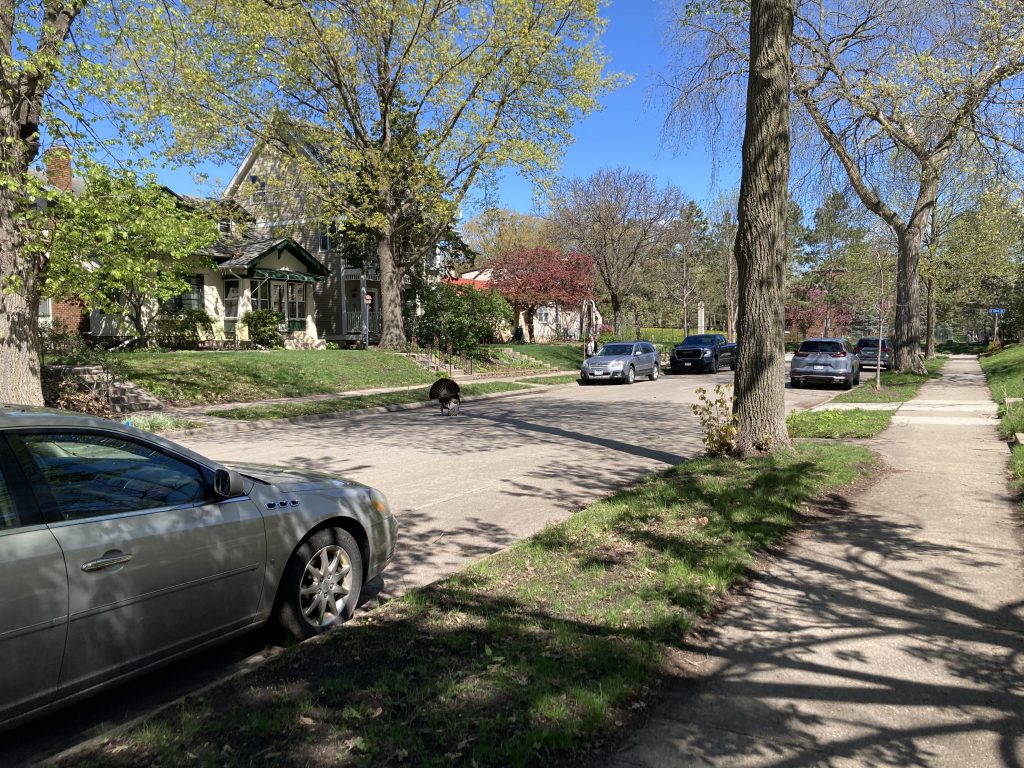
Near the end of “Shadow of Your Smile,” I saw something ahead of me, in the middle of the road. A big black dog? No — it’s that menacing turkey again! The one I wrote about on april 30th and april 11th. Just standing there in the middle of the road, his feather fanned out. This time I didn’t turn around, but walked by him, at a safe distance. I also took a picture:

RJP has named this big turkey Jon.

Zooming in, I see a brave person on the sidewalk, nearing Jon.

Recounting the story to Scott when I returned home, I decided that I wanted to imagine this turkey as a friend, not an enemy — or a frenemy? I also began to believe that he’s trying to tell me something: write about ME! And I will. Well, I already wrote one poem:

Unsettled

by noise

I stop to
witness

a dark shape
draw near

too big for

a squirrel

too small for
a bear.

The moment
suspends

unresolved
until

the shape turns —
pale beak

red wattle
framed by

tail feathers.
This Tom

wants trouble.

What if this turkey is my shadow-self? Will he be around for my next run? I guess it’s the spring of the turkey — maybe the summer, too? I will add Jon — I might name him myself if he appear again — to my list of Regulars!

Inspired by another turkey sighting, and deciding that I will embrace these visits, here’s another amazing poem from Diane Seuss’s Sill Life with Two Dead Peacocks and a Girl:

Still Life with Turkey/ Diane Seuss

The turkey’s strung up by one pronged foot,

the cord binding it just below the stiff trinity

of toes, each with its cold bent claw. My eyes

are in love with it as they are in love with all

dead things that cannot escape being looked at.

It is there to be seen if I want to see it, as my

father was there in his black casket and could not

elude your gaze. I was a child so they asked
if I wanted to see him. “Do you want to see him?”

someone asked. Was it my mother?
Grandmother? 
Some poor woman was stuck with the job. 

“He doesn’t look like himself,” whoever-it-was

added. “They did something strange with his mouth.”

As I write this, a large moth flutters against

the window. It presses its fat thorax to the glass.

“No,” I said, “I don’t want to see him.” I don’t recall

if I secretly wanted them to open the box for me

but thought that “no” was the correct response,

or if I believed I should want to see him but was

too afraid of what they’d done with his mouth.
I think I assumed that my seeing him would

make things worse for my mother, and she was all

I had. Now I can’t get enough of seeing, as if I’m paying

a sort of penance for not seeing then, and so

this turkey, hanged, its small, raw-looking head, 

which reminds me of the first fully naked man

I ever saw, when I was a candy striper

at a sort of nursing home, he was a war veteran,

young, burbling crazily, his face and body red
as something scalded. I didn’t want to see,

and yet I saw. But the turkey, I am in love with it, 

its saggy neck folds, the rippling, variegated

feathers, the crook of its unbound foot,

and the glorious wings, archangelic, spread

as if it could take flight, but down, 
down
ward, into the earth.

jan 26/RUN

2.1 miles
river road, north/dorman/loons coffee
37 degrees / humidity: 90%

Ran with Scott up the river road and over to a coffee place. The air was so thick with moisture, which made it harder to breathe. Otherwise a good run. We talked about The Muppet Movie, which we watched last night, and how it didn’t dumb down (or try to purify) the characters or their relationships. Then I rambled on for a few minutes about what a rich, messy character Miss Piggy was and how there was such a variety of representations of love within the movie.

10+ Things

  1. encountered and greeted a woman in a bright red jacket, almost the same color as Scott’s
  2. passed a woman in a blue jacket — she’s a Regular that I should name. I see her often. The thing I remember most is that she’s always wearing a long skirt or dress. In the winter, she also wears a ski jacket and tights, in the summer just the dress. I’m not sure what to call her — all dressed up?
  3. near the tunnel of trees the river is still white
  4. everyone else the river is open — a deep dark gray
  5. heard some cardinals, at least one black-capped chickadee
  6. the ghost bike — June’s bike — at the trestle was wreathed in dried flowers
  7. the ravine, between the 35th and 36th street parking lots had an open view and was only half covered in snow
  8. 4 stones stacked on the ancient boulder
  9. bright orange striped barrel blocking the way down the old stone steps
  10. a lone black glove, looking forlorn on the biking path
  11. a SUV honking unnecessarily and repeatedly at a pedestrian near Minnehaha Academy

Here’s a poem I don’t want to forget by Jane Hirshfield:

To Opinion: An Assay/ Jane Hirshfield

Many capacities have been thought to define the human— yet finches and wasps use tools; speech comes into this world in many forms. Perhaps it is you, Opinion.

Though I cannot know for certain,
I doubt the singing dolphins have opinions.

This thought of course, is you.

A mosquito’s estimation of her meal, however subtle,
is not an opinion. That’s my opinion, too.

To think about you is to step into
your arms? a thicket? pitfall?

When you come rising strongly in me, I feel myself grow separate
and more lonely.
Even when others share you, this is so.

Darwin said no fact or description that fails to support an argument can serve.

Myoe wrote: Bright, bright, bright, bright, the moon.

Last night there were whole minutes when you released me.
Ocean ocean ocean was the sound the sand made of the moonlit waves
breaking on it.

I felt no argument with any part of my life.

Not even with you, Opinion, who drifted in salt waters with the bullwhip kelp
and phosphorescent plankton,
nibbling my legs and ribcage to remind me where Others end and I begin.

Good joke, I agreed with you, companion Opinion.

sept 12/RUN

2.25 miles
dogwood run
61 degrees / 71% humidity

Cool. Wore my pink jacket this morning. Thick air. Fall is here. The Welcoming Oaks are starting to turn golden. Everywhere, the feeling of soft yellow. We ran north on the river road trail. I was on the outside and was nearly hit a few times by bikers speeding by without warning. Oh well. I’ll try to remember the kind bikers I encountered on Saturday and forget today’s jerks.

Saw one of my running regulars, Santa Claus! Also, as we ran through the tunnel of trees, I recounted to Scott the time I noticed some guy silently sitting in a tree. What was he doing? added an hour later: I just realized that this strange tree sitting happened on september 11, 2019. I can’t remember what we talked about, and I forgot to look down at the river.

10 Things

  1. several stacked stones on the ancient boulder
  2. the port-a-potty is back near the overlook
  3. slippery trail, a few squeaking leaves
  4. burnt toast or burnt coffee bean smell near the Lake Street bridge
  5. passing a fast walker on the inside near the trestle
  6. encountering a runner almost sprinting on the greenway
  7. a duet of chainsaws in the gorge below, probably cutting up the giant tree that we noticed on the ground last Sunday on our hike
  8. yellow vests at Brackett Park — park workers mowing the lawn?
  9. clashing colors: a pale green bench next to a pale blue church
  10. after finishing, walking to Dogwood, passing a welcome mat with thick stripes of black and white

august 31/RUN

4.15 miles
franklin loop
60 degrees

Since we’re driving FWA back to school on Saturday, Scott and I decided to do our weekly run today instead. We ran (most of) the Franklin loop. A beautiful morning: cool, sunny but with plenty of shade, calm. At one point the wind picked up and I had to recite one of my favorite wind poems, “Who Has Seen the Wind?” by Christina Rossetti.

Fall is coming: discarded acorn shells, glowing leaves, the light seems longer and softer, maybe a bit sadder too?

10 Things

  1. empty river — no rowers or kayaks or big paddle boats playing dixieland jazz
  2. 3 or 4 stones stacked on the ancient boulder
  3. waved at the woman who stopped me the other day to tell me about some other runner who had my same gait. I think she wanted us to go on a date — she kept telling me how cute he was. A new regular? I’ll call her, the Fixer Upper — talking with Scott, we agreed that Fixer Upper sounded like she needed to be fixed up, which is not true at all, so I guess I’ll call her the Setter Upper
  4. the porta potty by the overlook has been removed. Why? I bet the people living in tents down in the gorge really needed it
  5. the cracks in the path just past the trestle are growing wider and deeper. Is the bluff becoming too unstable? Will they need to abandon this part of the path?
  6. a steady stream of cars on the road — no soft moments when all I can hear are my footfalls and my breath
  7. the east river road just south of franklin is in terrible condition — so many potholes!
  8. played a game with Scott — was that noise down in the east flats wind or water? I said water, he said wind. I think he was right; it hasn’t rained for a while
  9. another game — what is that loud, strangled cry? Knowing I was being ridiculous I guessed, a giant gobbling turkey. Scott thought it was a man yelling. We were both wrong; it was a dog barking
  10. crossing back over the lake street bridge: shadows of trees on the river near the shore, soft ripples from the wind

the day made

Walking back through the neighborhood, we encountered a pair of dogs that I had run by earlier in the summer (june 10, 2023) and always hoped to see again. 2 tiny dogs, barking with little yips and snorts, especially the larger one. Scott thought the smaller one — a minpin chihuahua mix? — was so small that it could have escaped through the bars of the fence if it wanted too. It didn’t. Of course, I cried out in delight when I saw them. I might have even clapped. Scott started laughing and then imitating the yip snort whenever I asked. Would I love these dogs as much if I had to live next to them? Maybe not, or maybe I’d love them even more.

Earlier this morning, prepping for my class, I was thinking about being open to the world, letting it interrupt you. These dogs were wonderful interrupters. That glorious bark, those cute, impossibly tiny bodies! Before we saw them, we were tense — Scott needed to hurry home to fix a server, but when they suddenly appeared, everything else was forgotten. It was just those dogs and that moment of sound and blurry little bodies.

I’ve written about frantic dogs barks before (and how much I like them). A few years back, I also posted a poem that included some yippy yappy dogs.

from I Heart Your Dog’s Head/ Erin Belieu

Which leads me to recall the three Chihuahuas
who’ve spent the fullness of their agitated lives penned
in the back of my neighbor’s yard.
Today they barked continuously for 12 minutes (I timed it) as
the UPS guy made his daily round.
They bark so piercingly, they tremble with such exquisite outrage,
that I’ve begun to root for them, though it’s fashionable
to hate them and increasingly dark threats
against their tiny persons move between the houses on our block.
But isn’t that what’s wrong with this version of America:
the jittering, small-skulled, inbred-by-no-choice-
of-their-own are despised? And Bill Parcells—
the truth is he’ll win
this game. I know it and you know it and, sadly,
did it ever seem there was another possible outcome?

It’s a small deposit,
but I’m putting my faith in reincarnation. I need to believe
in the sweetness of one righteous image,
in Bill Parcells trapped in the body of a teacup poodle,
as any despised thing,
forced to yap away his next life staked to
a clothesline pole or doing hard time on a rich old matron’s lap,
dyed lilac to match her outfit.
I want to live there someday, across that street,
and listen to him. Yap, yap, yap.

august 7/RUN

3.15 miles
2 trails
66 degrees
humidity: 84% / dew point: 62

The temperature isn’t that high, but the humidity and dew point are. Now, having finished my run, sitting on my deck, I’m dripping sweat while the trees drip rain from yesterday’s showers. Reminds me of a poem I just memorized, “The Social Life of Water” — All water is a part of other water and All water understands and Puddle has a long conversation with lake about fjord. A line to add? Sweat sings a duet with tree while deck listens.

oh no! Still sitting under the tree, the wind suddenly picked up and it began to rain drips all over my keyboard.

A good run. My left hip felt a little sore or tight. Listened to dropping acorns for most of the run, then put in a playlist for the last mile.

10 Things

  1. Mr. Morning! called out good morning! from across the road — he was on the river road trail, I was running on Edmund. Good morning! I called back
  2. the bright headlights of a truck parked on the wrong side of the street
  3. most of the dirt path was wet, a few parts were muddy, but one stretch was loose, dry sand — how had it avoided the rain? was it sheltered by a big tree?
  4. the river was white through the trees. It waved to me in the wind
  5. the coxswains’ voices — first, a deep one, then a higher-pitched one — drifted up from the river. I tried to find the boats, but I couldn’t — less about my bad vision, more about all the green blocking my view
  6. brushing my elbow against some leaves on the side of the trail — wet, cold, refreshing
  7. a chattering of sparrow lifted from a lawn as I ran by
  8. another regular — the woman with shoulder-length hair who walks and always wears a short sporty skirt with sandals. This might be the first time I’ve seen her this summer
  9. a minneapolis parks riding lawnmower hauling ass on the bike path — wow, those vehicles can go fast!
  10. almost forgot — acorns! thumping the ground every few seconds, littering the trail, some intact others already ravaged by squirrels, crunching under car wheels

The early signs of late summer / coming fall are here: dropping acorns and the dull din of non-stop cricket chirps.

july 31/RUNSWIM

5 miles
bottom of franklin hill and back
65 degrees

What a wonderful morning to be outside! Cooler, sunny, calm.

My new morning routine is to get up, feed the dog, make my coffee, and then sit outside on my deck. Sitting there, I noticed a few birds swooping down from our new gutters. Uh oh — they’re trying to build a nest.

I felt pretty good on my run. Relaxed for the first few miles. Running down the hill, my left hip felt a little tight. Not too bad. Last night, Scott and I talked about signing up for the Oct 2024 marathon, for our 50 birthdays. Can my knees and hips handle it?

Listened to birds, acorns falling from the trees, kids calling out for Dairy Queen for the first half of the run. Put in headphones and listened to “Camelot” on the way back.

At the bottom of the franklin hill, I turned around. As I walked back up the hill, I recorded a few moments from the run:

moment one

Running through the tunnel of trees
a few minutes ago
a wonderful silence
no cars
I could hear myself breathing
everything still
no wind.
I was mostly in the moment
although
every so often a wonder
about when a car would come
and break the silence
cut into my calm.

moment two

approaching the trestle
I heard some kids
yelling, yeah! dairy queen!
another camp group
a dozen kids in bright yellow vests
as they biked past me
one of them chanted, dairy queen! dairy queen!

moment three

as spoke about moment two into my phone
a runner passed me
looking relaxed graceful
his legs rhythmically bobbing up and down
mesmerizing

10 Things

  1. a still river
  2. a black shirt dropped near the porta potty
  3. one acorn dropping to the ground from a tree, thud
  4. another acorn being crushed by a bike wheel, crunch!
  5. 2 roller skiers, or the same roller skier encountered twice
  6. the Welcoming Oaks wondering where I’ve been
  7. a person asleep under the bridge
  8. a regular — Santa Claus
  9. another regular — Mr. Morning!
  10. a woman ahead of me, a dark shirt strung through the strap of her tank top, flapping as she ran

On this last day of July, a month about water, I want to include this passage from Roger Deakin’s Waterlog:

The following afternoon, under a blue sky fringed white with distant clouds on the horizon, four of us swam in 360 feet of turquoise water in a sheer-sided quarry on Belnahua. The island encricled a huge natural swimming pool, raised above sea level, whose waters were so utterly transparent that when we swam, we saw our shadows far down, swimming ahead of us along the bottom. All around, only yards away, was the deeper blue of the open sea, and the Hebrides: Fladda, Scarba, Jura, Lunga, the Garvellachs (the ‘Islands of the sea’, St. Coumba’s favourite place), Luing, Mull and Colonsay. The light and the skies kept changing all afternoon: from bright blue with distant dazzling clouds to deepening red and gold. Diving from the rocks into the immensely deep, clear, brackish water, intensified the giddy feeling of aquatic flying.

Waterlog / Roger Deakin (237)

I would love to swim here (or near here)– some day in my 50s, I hope. Last week I mentioned possibly seeing my shadow in the water, but barely because the water in the lake is opaque. I remember seeing (and writing about) my shadow in the pool last winter, how it felt like I was flying above the deep end. I love the idea of aquatic flying and the rare times I feel like I’m actually doing it.

swim: 2 loops (4 cedar loops)
cedar lake open swim
83 degrees

Always grateful for another swim. Was able to swim on course, even without the buoys. My calves felt a little strange, my nose was a bit stuffed up, but otherwise, a great swim.

Instead of listing 10 things I noticed, here’s the coolest thing of the night: the vegetation stretching up from the bottom of the lake. How tall is it, I wonder? On the last loop, rounding the far orange buoy at Hidden Beach, I swam parallel to the beach, right above the vegetation — is it milfoile? Whatever it is, it’s wonderfully creepy — a pale green, ghostly, reaching up toward the light or my torso. So much of it! When I have more time, I do a little more research about these plants, and try to describe them more too.

a note from Future Sara, 24 june 2026: the milfoil is very bad this year. There is a big patch covering part of the swimming area and the start of the open swim path that is so thick, I could easily imagine a less confident swimmer becoming entangled and drowning. Even with my strong swimming ability, I can’t easily swim through it, which makes swimming beside the white buoys impossible. As one (among many) ways to deal with this milfoil and the anxiety it causes, I’m gathering entries (like this one) by tagging them “aquatic plants,” collecting research, and writing about and around nets, entanglement, vines, threads, webs, strings.

may 17/RUN

6 miles
annie young meadow and back
55 degrees

The perfect temperature for a spring run. The light looked strange. Filtered through trees, clouds, haze? it looked almost pink or light orangish-pink. I liked it. Everything, everywhere thick with green.

note, 19 may, 2023: talked with Scott and RJP about the strange light, which has continued: forest fires

I greeted the Welcoming Oaks and good morninged Mr. Morning! and another regular — did I ever name him? Maybe it was Mr. Holiday?

I chanted in triple berries to keep a steady rhythm — strawberry blueberry raspberry — and tried to stop thinking or noticing anything, to just be on the path, moving and breathing. What did I notice anyway?

10 Things I Noticed When I Wasn’t Noticing

  1. 2 stones stacked on the ancient boulder
  2. down in the flats, the river was moving fast. I tried to race it
  3. white foam on the river, under the I-94 bridge I thought (or hoped?) it was a rowing shell
  4. a fat tire bike sped down the franklin hill, abruptly turned at annie young meadow and almost ran into a parked car, then called out to the guy in the car — his friend — Hey!
  5. the bucket of a big crane curled under the franklin bridge with a worker in it, studying the underside of the bridge
  6. a guy walking on edmund in a bright yellow vest, no other vest wearers or official vehicles in sight
  7. a runner coming down the other franklin hill — the one near the dog park — then entering the river road trail 25 yards? ahead of me
  8. smell: pot, down in the flats
  9. a woman stopped at the edge of the trail, looking through a camera lens at a tree on the other side of the road. I thought about calling out, what’s in the tree?, but didn’t
  10. the weeds on the edge of the trail, poking out of cracks in the asphalt looked monstrous — now I can’t remember what I thought they were at first, just not weeds
  11. bonus: a turkey! chilling in the grassy boulevard between edmund and the river road

I don’t really remember what I heard as I ran without headphones toward franklin. After stopping 3/4 of the way up the hill to walk, I put in music. I thought I put in Lizzo’s Special but I must have forgot to tap something because when I hit the play button it was Dear Evan Hansen again. Oh well.

Mary Ruefle, “Madness, Rack, and Honey”

Last night during Scott’s community jazz band rehearsal, after our regular community band rehearsal, when I sit for an hour and try to read or write or think about my poetry, I started Ruefle’s titular lecture (is that the correct way to use titular?). Now, after my run, I’m back at it again. This lecture is a chewy bagel and I’m determined to not spend too much time on it.

The title is strange — what does she mean by madness, rack, and honey? — and I was pleased to discover that she devotes the lecture to explaining the title. She begins with a Persian poem:

I shall not finish my poem.
What I have written is so sweet
The flies are beginning to torment me.

honey:

It is so simple and clear: the “figurative” sweetness of the author’s verse has become honey, causing “literal” flies to swarm on the page or in around the autor’s ead. This is truly the Word made flesh, the fictive made real, water into wine. That is the honey of poetry: the miracle of its transformation, which is that of creation: once there was a blank page–scary!–now there is something in its place that is attracting flies. Anyone who has not experienced the joy, pleasure, transport, and who has not experienced the joy, pleasure, transport, and sweetness of writing poems has not written poems.

pages 130-131

rack:

Enter the flies who feast. For the poem clearly reminds us that honey has complications–those flies are beginning to torment the poet. Torment, pain, torture, is what I mean by the rack.

page 134

It is what poetry does to the world, what poets do with words, and what words will do to a poet. And that’s the rack of it. And if you have never experienced the rack while working on a poem then you have have never worked on a poem. Have you never put language in an extenuating circumstance with dangerous limits until an acute physical sensation results?

page 135

And, if I have time, I’ll return for madness later today.

One more thing to post before I go eat lunch. Instead of posting the poem, which I also like, I’m only posting the poet’s explanation of it.

About This Poem (Evening)

“Sometimes you hear a word as if for the first time, a word you’ve been saying your whole life. I don’t know what in the brain allows the word, in that moment, to reveal itself, but it always makes me feel very smart and very foolish at once. This poem was written during the period when I had just gotten into gardening and was gaining a new appreciation for everything—food, nature, and time. I wonder what else is waiting to reveal itself to me in such a way, and whether I’ll be distracted enough to receive it.”
Jeremy Radin

Now I’m thinking of the opening lines from Marie Howe’s “The Meadow”: As we walk into words that have waited for us to enter them…is this idea of walking into words similar to words (and new meanings) revealing themselves to us? As I write this question, I’m reminded of a Mary Ruefle piece in My Private Property: “In the Forest”

When I wander in the forest I am drawn towards language, I see meaning is quaintly hidden, shooting up in dark wet woods, by roots of trees, old walls, among dead leaves…

page 74

And these lines helped me to remember a thought I had as I ran this morning on the part of the pedestrian path that dips below the bike path, the two separated by a slight rise and some bushes. When I first started to run this trail, almost 10 years ago, I was a little afraid of taking this lower trail. It was hidden from the road and other people and I wondered if someone might be lurking, waiting for me. Today I thought, how could I have been afraid of this short part of the path, only hidden from view for a few seconds? It does seem ridiculous.

may 12/RUN

2.4 miles
2 trails
72 degrees
humidity: 70%

Another hot, sticky morning. Listened to “Dear Evan Hansen” running south, so I don’t remember much about the first half of the run, except waving at the older man sitting on the seat on his walker at the edge of the trail. I’ve seen him before — in fact, I knew I had written about him before, so I searched my log. Here’s what I found from sept 12, 2022:

For a few months, I’ve noticed an older white man with white hair and a white beard (at least, I think he has a beard), using a walker when I run south on the river road. Sometimes he’s using the walker to help him walk pretty swiftly along the trail, and sometimes he’s using it as a chair. Today, we was sitting. We greeted each other as I ran by. He’s a friendly guy. It makes me happy to see him out there, continuing to walk with a walker, enjoying the beautiful trail. I think I’ll call him Mr. Walker.

from log entry on 12 sept 2022

Mr. Walker is too boring of a name. I think I’ll call him Mr. Walker Sitter instead. My happiness about his still walking had something to do with my hope that Scott’s parents would use their walkers and get out in the world. I wrote these lines less than 3 weeks before Scott’s mom died. I don’t think we knew she would be dead by the end of the month — that understanding came a week later.

When I reached the 44th street parking lot, I ran down the hill to the south entrance to the Winchell Trail where I encountered 2 walkers.

me, approaching 2 walkers: Excuse me. Right behind you.
a kind woman looks back, and moves out of the way: Oh, sorry, didn’t see youyou’re so quiet!
me, slowly passing: No worries. Thanks.

I always marvel at other people’s ability to speak in gentle, kind tones in situations like these, to have a default of being relaxed and open to others even when they’re surprised. I’m sure it comes naturally to some, and it might have for me when I was younger, but now I see it as an achievement and a goal.

Heard: the water falling out of the sewer pipe and down the ravine at 42nd, kids playing at the school playground, some loud talkers up above, some sort of banging across the river, on a pipe, at a construction site?

Avoided: thick, slick mud on the part of Winchell right before the oak savanna that always gets muddy in the spring. It happens so often that people have created a sort detour above it that curves through some tree. As I walked it new leaves brushed my arm

Forgot: to check the river for rowers. Scott spotted some the other day.

Mary Ruefle “On Fear” and “In the Forest”

Before I went out running, I skimmed through “In the Forest” and started “On Fear.” I planned to try and think about my fears as I ran on the more isolated Winchell Trail, but after encountering the kind woman walker at the entrance to the trail, I couldn’t imagine being afraid. Now writing this, I got distracted — I needed to eat, then start the dishes — and I’ve run out of time. Maybe later today I’ll try to read more of “On Fear” and add in some things from “In the Forest.”

feb 14/RUN

4.15 miles
river road, south/ ford bridge/ river road, north/ 33rd, west/ edmund, south
40 degrees / rain
5% ice-covered

There’s another runner in the neighborhood who I’ve seen running past my house several times in the early morning this winter. Usually I notice them when the weather is bad and I’m wondering whether or not to go out in it. I see them and think, if she can go out in this cold/heavy snow/rain, I can too. Not as a competitive thing, but as a sign of encouragment. That’s what happened this morning, so I went out for a run in the rain.

I want to name her and add her to my list of regulars, but I can’t think of anything catchy or pithy or whimsical right now. Maybe it will come to me after I eat lunch? Okay, I’m back. Scott suggested “Canary” for canary in the coal mine, which didn’t seem quite right. I’ve decided tentatively to call her Miss Wake-up Call because I see her not long after waking up and because she reminds me to get out there (and after it). I’m still not satisfied, but I’ll leave it for now.

layers: 1 pair of black running tights, 1 pair of socks, 1 long-sleeved green shirt, 1 bright purple jacket that I inherited from my beloved mother-in-law who died this past September, 1 pink and purple nylon running cap (also inherited), black gloves

About a mile into the run, my left thumb was cold. Why? Suddenly I noticed a big hole in the seam. I said out loud, oh, that’s no good, just as I encountered a walker. Did they hear me?

Was able to greet Dave the Daily Walker. Of course he was out in this rain; he can walk in anything!

Everything was wet and dripping, even the bill of my cap. Drip drip drip every few seconds. I didn’t feel it, just saw movement. Lots of splooshing from car wheels. I don’t remember hearing the water gushing through the sewer pipes. Why not? Big puddles near 42nd and on the path leading to under the Ford Bridge. No lakes.

Heard some strange clanking or clunking then honking over on the other side of the river. Heard the kids playing on the playground, then a teacher’s whistle as I ran south. Later, running back north, heard more kids. It was raining harder. How wet will they be for the rest of the day? I imagined them in snow suits, or because the playground was at posh Minnehaha Academy, under some fancy, magical dome.

Heading north, I noticed that the view near Winchell (Winchell to the left, the memorial bench to the right), was especially open and revealing. Earlier, heading south, I had noticed that my former favorite winter view spot just past the oak savanna was unsatifying. Too many small trees blocking my view. Are those trees new?

Encountered several walkers, some alone, others in pairs; a runner or two; at least two bikers.

As I write this entry, I am listening to the gentle ringing of the rain through the gutters. A steady ping ping ping vibration.

added later today: Returning to my desk hours later, I heard and then saw 3 or 4 geese honking and speeding through sky. This reminded me of something else I remember from my run. Twice I heard some honking geese, once on the east and once on the west. Both times I stopped running, leaned my head back, and stared into the sky to watch them. One wedge of geese was flying low, the other much higher. It’s always a good day when you can stop and admire the geese!

I found a rain poem from Linda Pastan for today:

November Rain/ Linda Pastan

How separate we are
under our black umbrellas—dark
planets in our own small orbits,

hiding from this wet assault
of weather as if water
would violate the skin,

as if these raised silk canopies
could protect us
from whatever is coming next—

December with its white
enamel surfaces; the numbing
silences of winter.

From above we must look
like a family of bats—
ribbed wings spread

against the rain,
swooping towards any
makeshift shelter.

Love the image of the bats. Over the years, I’ve found several wonderful bat poems. In theory, bats are beautiful, fun-to-imagine creatures who eat mosquitoes and see with sound in ways I’d like to learn. But my one close encounter with bats, when they were flying through my house one year and established a colony in the attic, freaked me out. I like thinking I see or hear them at twilight, flying high above. I don’t like seeing the evidence of them in my closet.

dec 1/SWIM

1.5 miles
ywca pool

Back to the pool. Hooray! Swam a lot of loops — 99 laps — while breathing every 3, then 4, 5, then 6. Worked on breathing on my weaker side (left) when breathing every 4. Decided not to count, just swam until Scott entered the pool area and stood at the top of my lane. Not very crowded today. A guy in swim trunks to my right, swimming a lot of side stroke. It was fun to watch the wide sweep of his hands as he moved through the water on his side. Empty to my left, then Miss Luna arrived. Almost positive it was Miss Luna — the regular swimmer who swims with fins and paddles and does butterfly, and wears a pale green suit, with pale blue too, that makes me think vaguely of a luna moth. She wasn’t in pale green with blue today, but a similar suit. Same strong stroke, same fins.

They must have added chlorine since my last swim. Much clearer, sharper too. The blue of the tiles on the bottom that make the lines dividing the sides of the lane were a vivid blue instead of almost looking navy or black. Speaking of color, kept seeing yellow and orange when I lifted my head.

Felt strong and happy and buoyant, riding the surface, smoothly powering through the water. At some point, I started thinking about my color poems. I’ve written one about yellow, another about color in general. Before swimming, I started one about gray. Almost everything is gray or seems gray or leads to gray. Other colors are only pops, flashes, suggestions. I thought about making the poem mostly variations on the phrase, a gray day, or singing a song of gray, or gray area, or grayed out. Then I thought about having the poem visually mimic how I often see color. It’s frequently a flat or hazy gray until suddenly, to the side, a slash or pop of color appears, like orange or red. So, most of the words are gray, gray day, gray dreams, sing a song of gray, then off to the side, “orange” appears. Could this work? I’ll give it a try!

december challenge

I’m not sure what my challenge for this month will be. I’m in the thick of working on these color poems and prepping for my finding wonder in the winter writing class in late January (so excited to teach this one!). Should it be about orange? Or the poet that just wrote a collection partly about her degenerative eye disease — Julia B. Levine — titled, Ordinary Psalms? Or joy, inspired by recently purchasing Ross Gay’s Inciting Joy and my desire to explore what gray joy could be? I’ll give it another day, but I’m leaning towards Gay and joy. In the meantime, here’s one of Levine’s psalms from Ordinary Psalms:

Psalm with Near Blindness/ Julia B. Levine

i. 
The world mostly gone, I make it what I want: 
from the balcony, the morning a silver robe of mist.

I make a reckless blessing of it—the flaming, 
flowering spurge of the world, the wind 

the birds stir up as they flock and sing. 
Edges yes, the green lift and fall of live oaks,

something metal wheeling past, 
and yet for every detail alive and embodied— 

the horses with their tails switching back and forth, 
daylilies parting their lobes to heat— 

I cannot stop asking, Sparrow or wren? Oak
or elm? Because it matters 

if the gray fox curled in sleep 
is a patch of dark along the fence line,

or if the bush hung with fish kites 
is actually a wisteria in flower. Though 

even before my retinas bled and scarred 
and bled again, I wanted everything 

different, better. And then this afternoon, 
out walking the meadow together,

my husband bent to pick a bleeding heart.
Held it close as I needed 

to see its delicate lanterns, 
the shaken light. 

ii. 
Deer, he says, our car stopped in traffic. 
And since I can’t see them, I ask, Where?

Between the oaks, he answers,
and since I can’t see the between,
                                                                I ask, In the dappling?                        
He takes my hand and points 
to the darkest stutter in the branches 
                                                                and I see a shadow 

in the sight line of his hand, his arm, 
his blue shirt with its clean scent of laundry, 

my hand shading my eyes from glare. 
There! he says, and I can see 
                                                              the dark flash of them 
                                                              leaping over a fence (or is it reeds?), 

                                                              one a buck with his bony crown, 
                                                         and one a doe, and one smaller, a fawn,

but by then it seems they’ve disappeared 
and so I ask, Gone?
and he nods. 

We’re moving again,

                                                               and so I let the inner become outer 

                                                               become pasture and Douglas firs 
                                                               with large herds of deer, elk, even bison, 

                                                               and just beyond view, a mountain lion 

auburn red, like the one we saw years before, 
hidden behind a grove of live oaks, 

                                                                                        listening.

Oh, I am so excited to find this poem and the brilliant work of this poet! I can relate to so many of her words! The silver mist of the morning, the edges mostly gone, the emphasis on movement, her husband helping her to see, the inner becoming outer. Some differences too (probably partly because I imagine my vision isn’t quite as bad as hers): I don’t think the world is gone, more shifted, italicized, transformed. And I don’t need to know exactly what type of tree I’m seeing. I’d like to be able to tell the difference between a deer or a bush — sometimes I can’t — but the fine details matter less.

My thoughts on this last bit, about seeing exactly what’s there, are partly inspired by Levine’s response in an interview about the psalm. She says:

As I worked on it, this poem felt to me like a meditation on one particular dilemma of near blindness: that is, in the absence of a clear visual image, how the mind fills in, and what relationship this kind of seeing” has to spiritual notions of “vision” as opposed to a medical/anatomical definition of “sight.”

To explain further, there are some absences of visual perception that I actually like: I don’t see how dirty my house is, or whether or not my clothes are covered in blonde dog hair, and my friends and family all look very beautiful to me since I cannot see their wrinkles or whatever else might be considered “flaws.”

But I have loved the natural world since I was a small child and it is my inability to see it accurately that pains me. So, in the poem, I am interested in both how tounderstand what I do “see” as a amalgam of my own mind and memory, plus the relational construction that primarily my husband lends to me, and finally, what I can actually perceive. The result of this perceptual construction can sometimes feel like an important “truth” as opposed to visual fact.

I have loved the natural world since I was a small child and it is my inability to see it accurately that pains me.

Interview with Julia B. Levine

I love the natural world, but I’ve never needed to see it accurately in the ways that Levine seems to be invoking. I’m not interested in critiquing her perspective, but in positioning mine in relation to it. Also, I’d like to understand more of what she means by accurate. The more I (attempt to) study how vision and sight work, the more I’m fascinated by how much guesswork it involves for everyone, even “normally” sighted people. The brain filters, guesses, fills in. What does it mean to see nature accurately? Also, what about other senses? Can they enable us to access parts of nature that our limited/biased vision can’t? Losing some sight and the ability to easily, and more quickly, with much more detail, sucks, and I struggle with it. But I’m also interested in ways of knowing/understanding/recognizing/becoming familiar with beyond central vision and fine detail. I have a different project than Levine, but I deeply appreciate her words.

nov 21/SWIM

1.5 miles (2700 yards / 108 laps)
ywca pool

Very glad to be able to swim this morning. My foot, which has been sore the past few days, feels much better today. Swimming instead of running will help even more. I swam my usual continuous 200s. Decided not to count the laps and just keep swimming until Scott came to the pool and stopped at the end of my lane. A few workouts ago, I asked him to stop at the end of my lane instead of going straight over to the hot tub to wait for me to be finished. I explained that it’s hard for me to recognize him — I might not be able to do it. Now I don’t have to worry. It’s not hard for me to see a person with bright orange shorts at the end of my lane. Just another strategy for dealing with not being able to see that well.

note: re-reading this entry on 21 nov 2025, I thought about how this statement, it’s not hard to see a person with bright orange shorts at the end of lane, is not always true these days. Just a few days ago, Scott stood at the end of my lane in his bright orange shorts for 3 full laps trying to get my attention, but I didn’t see him. Was it bad vision or a fluke? Just yesterday, he stood there again and I saw him without a problem.

10 Things I Noticed While Swimming

  1. a few more things on the ground, at least one stringy thing floating in the water — I was in a different lane, so that might it explain why there were more things. It could also be that it’s time for them to clean the pool again
  2. no chlorine stings
  3. crowded — most lanes had 2 people
  4. the woman sharing the lane with me was a great swimmer. I liked watching her freestyle as I approached her, and the way she shot off the wall
  5. 2 Regulars — Mr. Speedo, the older white man who is lanky and probably has been swimming for 1/2 a century, and who wears a dark speedo and the oldish white woman in the pale blue and green suit who sometimes wears fins or booties on her feet, mitts on her hands. Today, after about 30 minutes in the water, she started swimming butterfly. It might be a stretch, but I think I’ll call her Miss Luna after the luna moth which is pale green — this luna moth is not a butterfly, but people often mistake it for one
  6. predominant color I noticed again: orange. I think a lot of the orange I see are the small sandwich board signs that are orange and read, caution wet floor, or someting like that
  7. looking straight ahead through the cloudy water, I could just barely see my lane partner approaching. She was in a solid dark suit and was streamlined, making me think of a small shark — surprisingly, this didn’t make me nervous
  8. at one point, Miss Luna and the shark were swimming at the same speed, on either side of me. It was fun speeding through the two of them — like what, a rocket?
  9. one distinctive noise — the squeak of my nose because my nose plug was not on properly
  10. 2 older women in the locker room discussing the big snow storm in upstate New York. 2 things in particular I remember: first, that the football game had to be moved somewhere else and two, about how after a big storm there are always tons of pictures on social media of people who are stuck and can’t open their front doors

Today’s gray theme: gray variations

The Nomenclature of Color/ Richard Jones

Absinthe green: Laura’s eyes.
Bishop’s purple: Evening skies.
Cornflower blue: Dreams of the wise.
Dragon’s-blood red: My mother’s dark sighs.
Elephant’s breath: Imagination.
Forget-me-not blue: The dust of cremation.
Guinea green: Ruination.
Hessian brown: The dust of creation.
Iron gray: The paradox of clouds.
Jade green: The bride’s necklace.
Kingfisher blue: Justice and grace.
Lavender gray: A widow’s shroud.
Medici blue: The heart that is jealous.
Nile blue: The color of water.
Onionskin pink: A poem for my daughter.
Pearl gray: The wedding gift.
Quaker drab: The virtue of thrift.
Raw sienna: Dirt we sift.
Seafoam green: The rowboat adrift.
Tyrian rose: Love’s ardor.
Ultramarine blue: Heaven’s color.
Venetian pink: Hell below.
Wedgewood blue: The little we know.
Xanthine orange: The taste of life.
Yvette violet: The lips of my wife.
Zinc orange, zinc blue, zinc white: The colors of houses in paradise.

Iron gray
Lavender gray
Pearl gray

Doing a google search about gray, I found this article with 6 Popular Gray Paint Colors: Agreeable Gray, West Coast Ghost, Seize the Gray, Balboa Mist, Comfort White, and White Metal.

from “ode to gray”

Gray in the wild opens and spills. Put two grays together and you’ll see the color each one hides within, the “endless variations” noted by Van Gogh. I think of the handful of river pebbles I once snuck into my pockets on a day trip to a waterfall: they were dusty gray when I got home, but underwater, each concealed a secret separate life as green or red or blue. So many things that seem gray on the surface have a treasure to unlock—myself, I hope, included.

from To Theo van Gogh (a letter from Vincent Van Gogh to his son)

As regards black in nature, we are of course in complete agreement, as I understand it. Absolute black doesn’t in fact occur.2 Like white, however, it’s present in almost every colour and forms the endless variety of greys — distinct in tone and strength.3 So that in nature one in fact sees nothing but these tones or strengths. 

The 3 fundamental colours are red, yellow, blue. Composite: orange, green, purple.

From these are obtained the endless variations of grey by adding black and some white — red-grey, yellow-grey, blue-grey, green-grey, orange-grey, violet-grey. 

It’s impossible to say how many different green-greys there are for example — the variation is infinite.

But the whole chemistry of colours is no more complicated than those simple few fundamentals. And a good understanding of them is worth more than 70 different shades of paint — given that more than 70 tones and strengths can be made with the 3 primary colours and white and black.4 The colourist is he who on seeing a colour in nature is able to analyze it coolly and say, for example, that green-grey is yellow with black and almost no blue, &c. In short, knowing how to make up the greys of nature on the palette.  

nov 16/SWIM

1.5 miles
ywca pool

Another swim this week! Hooray for strong, sore shoulders and buoyancy. Googles and nose plugs and flip flops with a cartoon image of bloody, frankenstein-y toes (an awesome gift from my sister Marji from a few years ago). I’m not sure how far I swam. I stopped counting laps at a mile, wanting to be surprised by my watch when Scott would appear at the end of my lane and I’d end my workout. Looked at my watch. Oops. No workout on. I forgot to push the extra green button for lap distance. Oh well. Judging by my calories and time, I must have swum a little farther than Monday, but I’ll keep it at 1.5 miles.

10 Things I Noticed While Swimming in the Pool

  1. the slight burn of chlorine in my nose
  2. a few more bits of something on the bottom of the pool — was it more, or was it just because I was swimming in a different lane? were these bits moving, or was that a trick of the light or my eyes?
  3. the older woman to my right, swimming breaststroke — slow, steady, graceful frog kicks
  4. the older woman to my left, swimming sidestroke — more grace and the calm, slow sweep of arms through the water
  5. this sidestroking woman was wearing a wonderful bathing suit — all black in the back, in the front: black at the bottom with red or pink or orange horizontal panels up above
  6. “racing” a guy 2 lanes over, swimming freestyle at about the same speed as me, until he stopped and I kept going
  7. a regular — the older, trim woman in the pale blue and green suit whose stroke is strong and fast, and who sometimes wears fins or booties
  8. the feeling of orange everywhere up above, blue below
  9. my foot (the right one?) feeling a little strange near the end, not quite numb but like it might cramp up (it didn’t)
  10. arriving, a crowded pool, everyone sharing lanes. A few minutes later, it began to empty. By the time I was done, only 2 people left

Thought about Ishihara’s colorblind plates as form. I feel drawn to this form because taking this test, and failing it, was my first evidence that something was wrong with my vision. But, this form is difficult to recreate or embody. I decided, as I looped, that I should do a little more research on how the form was created and how it works. Maybe that will help me to figure out what I want to do with it, or whether I want to use it all.

Here’s a place to start: Eye Magazine / Feature / Ishihara

And this video: The Science Behind the Ishihara Test

I can’t remember which poetry craft book I read this poem in, but I like how Soto uses color here — as flashes, sparks, flares against the “gray of December”:

Oranges/ Gary Soto

The first time I walked
With a girl, I was twelve,
Cold, and weighted down
With two oranges in my jacket.
December. Frost cracking
Beneath my steps, my breath
Before me, then gone,
As I walked toward
Her house, the one whose
Porch light burned yellow
Night and day, in any weather.
A dog barked at me, until
She came out pulling
At her gloves, face bright
With rouge. I smiled,
Touched her shoulder, and led
Her down the street, across
A used car lot and a line
Of newly planted trees,
Until we were breathing
Before a drugstore. We
Entered, the tiny bell
Bringing a saleslady
Down a narrow aisle of goods.
I turned to the candies
Tiered like bleachers,
And asked what she wanted –
Light in her eyes, a smile
Starting at the corners
Of her mouth. I fingered
A nickel in my pocket,
And when she lifted a chocolate
That cost a dime,
I didn’t say anything.
I took the nickel from
My pocket, then an orange,
And set them quietly on
The counter. When I looked up,
The lady’s eyes met mine,
And held them, knowing
Very well what it was all
About.
Outside,
A few cars hissing past,
Fog hanging like old
Coats between the trees.
I took my girl’s hand
In mine for two blocks,
Then released it to let
Her unwrap the chocolate.
I peeled my orange
That was so bright against
The gray of December
That, from some distance,
Someone might have thought
I was making a fire in my hands.

sept 12/RUN

4.25 miles
ford bridge + turkey hollow
57 degrees

A fine fall morning. For most of the run, I didn’t listen to anything — not sure I remember any sounds from the gorge. For the last mile, I put in headphones and listened to Taylor Swift’s 1989. My knees ache a little, not like they’re injured, just sore from use. Could it partly be because of slightly cooler weather?

10 Things I Noticed

  1. 2 bikers on the road near the start of my run — 1 adult, 1 kid. My guess: a kid biking to Dowling Elementary School with his dad
  2. running above the oak savanna, a green glow as the sun streamed through the leaves of the trees lining the trail
  3. the ravine near the double bridge looked extra leafy and green
  4. the river, viewed from the ford bridge on the downtown side, was a beautiful blue and empty
  5. the sidewalk at the end of the bridge was under construction. Right now, it’s all dirt
  6. a few kids skating at the new skate park on the land that was the site of the ford plant
  7. the river, viewed from the ford bridge on the locks and dam no. 1 side, was still and high? — I couldn’t quite tell, but it looked like it had partly flooded the small island in the middle
  8. the locks and dam no. 1 is closed — carp invasion, I think. I didn’t see/hear the gushing water down the conrete apron
  9. no turkeys in turkey hollow
  10. no roller skiers or loud birds or darting squirrels or rowers or fat tires

a new regular

For a few months, I’ve noticed an older white man with white hair and a white beard (at least, I think he has a beard), using a walker when I run south on the river road. Sometimes he’s using the walker to help him walk pretty swiftly along the trail, and sometimes he’s using it as a chair. Today, we was sitting. We greeted each other as I ran by. He’s a friendly guy. It makes me happy to see him out there, continuing to walk with a walker, enjoying the beautiful trail. I think I’ll call him Mr. Walker.

I tried to think about my latest poem, but I got too distracted, I guess. No new words or ideas.

Here’s another poem from Tanis Rideout’s Arguments with the Lake. O, her last verse!

excerpt from Shirley As Drowned Ophelia/ Tanis Rideout

Though in the Lake are visions — submerged forests
of blossoming myriophyllum. I was cuaght
half-remembered in early morning darkness and a web of pondweed
that withered all when fathers died.

O, the Lake. The only thing that kept me afloat
was what I thought was on the other side.

august 23/RUNSWIM

run: 4 miles
minnehaha falls and back
66 degrees / humidity: 79%
8:30 am

As (almost) always, another good run. Was lulled into a dreamy state by the gentle whooshing of the cars as I ran south on the river road trail without headphones. Then ran a minute faster per mile while listening to Taylor Swift on the way back. Do I remember any of my thoughts? Not really.

10 Things I Noticed

  1. a metal shovel scraping the bare pavement
  2. a regular I haven’t seen in a while: the woman in a skirt and sandals that I used to see when I ran south last year. Not sure if I ever gave her a name
  3. an older couple with a dog, spread out across the entire walking path
  4. Mr. Morning! — Good morning!
  5. the loud crash of an acorn falling to the ground, then the crack of another as a squirrel opened it
  6. the falls, rushing over the limestone ledge
  7. my shadow, below me in the trees, getting a closer look of the creek below the falls. At one point, she waved to me
  8. the bugs! Just past the south end of the ford bridge, after Locks and Dam no 1, thee’s a field with tall grass and lots of bugs: crickets, cicadas…maybe some frogs too?
  9. no surreys out yet at the falls
  10. a roller skier in the parking lot of locks and dam no 1

Have I posted this poem before? I don’t think so, but I definitely read it and thought about the idea of being of use. I like the water/swimming metaphors throughout.

to be of use :: marge piercy

The people I love the best
jump into work head first
without dallying in the shallows
and swim off with sure strokes almost out of sight.
They seem to become natives of that element,
the black sleek heads of seals
bouncing like half-submerged balls.

I love people who harness themselves, an ox to a heavy cart,
who pull like water buffalo, with massive patience,
who strain in the mud and the muck to move things forward,
who do what has to be done, again and again.

I want to be with people who submerge
in the task, who go into the fields to harvest
and work in a row and pass the bags along,
who are not parlor generals and field deserters
but move in a common rhythm
when the food must come in or the fire be put out.

The work of the world is common as mud.
Botched, it smears the hands, crumbles to dust.
But the thing worth doing well done
has a shape that satisfies, clean and evident.
Greek amphoras for wine or oil,
Hopi vases that held corn, are put in museums
but you know they were made to be used.
The pitcher cries for water to carry
and a person for work that is real.

I’m not sure how I feel about it, or how often I manage to achieve, but I am drawn to the idea of being useful, doing something useful. A problem: I am also drawn to things that might not immediately seem useful (or practical), but are essential and necessary. What does that mean? I’ll have to think about that some more.

addendum, 25 august: Thinking more about what is useful and useless, partly inspired by Jenny Odell’s How To Do Nothing (among others) and her critique of productivity and who it serves. The version of useful that Odell and others are critiquing is about being used/exploited and serving/feeding the interests of the most powerful. That it not what Marge Piercy is talking about, and yet, the terms work and usefulness are so tethered to capitalism, sometimes it’s hard for me to read them otherwise. My efforts to do so, and to rethink/reclaim work, is another one of my ongoing projects.

Today I started reading Julie Otsuka’s The Swimmers. I LOVED the first chapter (which is as far as I’ve gotten) and her description of the various types of people who are drawn to swimming regularly in a basement pool. I could really relate to her descriptions of the different types of people and their quirks.

I love this description of why swimming matters:

And for a brief interlude we are at home in the world. Bad moods lift, tics disappear, memories reawaken, migraines dissolve, and slowly, slowly the chatter in our minds begins to subside as stroke after stroke, length after length, we swim. And when we are finished with our laps we hoist outselves up out of the pool, dripping and refreshed, our equilibrium restored, ready to face another day on land.

I also enjoy her description of how people are categorized “down below.” Up above, in their “real lives,” people have a variety of jobs, character quirks, relationship struggles, illnesses, “but down below, at the pool, we are only one of three things: fast-lane people, medium-lane people or the slow.”

I feel like I could type up this entire chapter; there are so many details that resonate. Since that would be too much, I think I’ll just make a list of the various lists she has (which in the book aren’t in list form, but in descriptive paragraphs):

Lists in Julie Otsuka’s Chapter, “The Underground Pool”

  • the reasons why regular swimmers come to the underground pool
  • how the swimmers leave their troubles behind in the pool
  • what the swimmers are escaping “up above”
  • the rules at the pool
  • hobbies/mistakes/conditions/occupations up above, in the “real world”
  • the three types down below
  • how swimming restores the aging swimmers
  • people to watch out for
  • the locker room regulars who don’t swim
  • the rotating lifeguards
  • what the swimmers dream about when they dream about swimming (which is every night)
  • the various rituals the swimmers must complete as part of the swimming
  • things found at the bottom of the pool

Oh, I’m so happy I found this book! I checked it out of the library, but I might need to buy it.

updated, 23 september: If you’ve read this book, you know I’m in for a shock, and I was. Honestly, I will need to come back to the rest of the chapters, which never return to swimming again, sometime in the future. As I read about the main character being admitted to a care facility, I was dealing with my beloved mother-in-law being hospitalized and then needing a nursing home (and now in hospice and days? weeks? from dying).

swim: 3 loops
lake nokomis open swim
83 degrees
5:30 pm

Made it to my 100th loop tonight! It was too crowded — on the beach and in the water, but it was a great swim. If I had had time, I could have done a loop or two more. Maybe on Thursday? The water was warm and a little choppy. I couldn’t see where I was going on the way back from the little beach, but it didn’t matter because I knew where to swim. A few menancing swans.

favorite thing about tonight’s swim? the light, especially what the light did to the water. A late summer light, softer, making the water look soft too. I could tell the sun would be setting earlier than it had in July.

an image I’ll remember in February: rounding the green buoy, swimming parallel to the big beach, heading towards the first orange buoy to start another loop. I see the orange buoy way off in the distance, looking impossibly far away and small. Such a strange vision: the buoy so far away, this part of the loop looking extra long. I imagine myself visualizing that stretch of water with the far off orange dot sometime this winter when I’m missing the water.

may 10/RUN

5.15 miles
franklin loop
70 degrees

Ugh. Beautiful weather, but a more difficult run. Not sure if it was the pollen or the sun or my sore legs, but I struggled in the last 2 miles. Even so, it was wonderful to be out beside the river. I was able to greet Dave the Daily Walker and Mr. Morning!. I have decided that like me, Mr. Morning! has (at least) 2 versions: Winter Mr. Morning! and Summer Mr. Morning (mine are Winter Sara and Summer Sara). Winter Mr. Morning! heads south on the river road trail and wears a parka and a stocking cap. Summer Mr. Morning! heads north on the river road trail and wears shorts and a button up short-sleeved shirt. Both versions are enthusiastic in their greetings and wear transition lenses, or maybe just sunglasses. I often wonder, is Mr. Morning! that enthusiastic with everyone, or just people like me that he encounters a lot, all of us regulars?

Speaking of regulars, I have a new one: an older male runner with white hair who shuffle-runs — or does a combination of walk-running or run-walking — and is very friendly. I recall seeing him probably half a dozen times over the last 5+ years. The thing I remember most about him, other than his great spirit, is his greeting. One time it was, “Happy Fourth of July!” and today it was, “Happy Spring!”. I think I’ll call him Mr. Holiday.

Other things that happened: I greeted all of the welcoming oaks (in my head); noticed there were no stones stacked on the boulder; marveled at how quickly the leaves have filled in below me in the floodplain forest; looked for, but didn’t find, any rowers on the river; noticed how the river was blue as I ran west, and brown as I ran east; watched a plane slip through the clouds above me; didn’t see an eagle perched on the dead limb of the tree near the lake street bridge; and wondered how flooded Meeker Island Dam dog park was as I ran by a sign that read, “closed due to flooding.”

march 10/RUN

5 miles
franklin bridge and back
17 degrees / feels like 7

What a gift this winter-almost-spring run is this morning! A reminder of why I love winter runner with its cold, crisp air and quiet calm. It was a little difficult to breathe, with my nose closing up on me (hooray for sinuses), and it didn’t always feel effortless. Still, I was happy to be outside with the world — the birds (pileated woodpeckers, geese, cardinals), the Regulars (Dave, the Daily Walker and Daddy Long Legs), and the river, sometimes brown, sometimes blue.

Before I went out for my run, I read a lot of different poems and essays about poetry and breath. Decided I would think about rhythmic breathing, running rhythms, and chants. I started by counting my foot strikes, them matching it up with my breathing of In 2 3/ Out 2 or Out 2/ In 2 3: 123/45, 123/45 then 54/321, 54/321. A few miles later, I thought about a verse from Emily Dickinson’s poem, ‘Tis so much joy! Tis so much joy!” that I imagine to be a prayer or a spell or reminder-as-chant. I started repeating it in my head:

Life is but Life! And Death, but Death!
Bliss is, but Bliss, and Breath but Breath!

With this prayer/chant, I matched the words up to my foot strikes in several different ways, none of which were 123/45 or 54/321.

Equal stress on each syllable/word, and the altering of the poem slightly:

Life Is But Life
Death Is But Death
Bliss Is But Bliss
Breath Is But Breath

Then in ballad form (I think?), with alternating lines of: stressed un un stressed / 3 stressed but silent beats (or not silent, but voiced by my feet, striking the ground):

Life is but Life
x x x
Death is but Death
x x x
Bliss is but Bliss
x x x
Breath is but Breath
x x x

Then in 6, with 2 feet of stressed, unstressed, unstressed (a dactyl):

Life is but Life is but
Death is but Death is but
Bliss is but Bliss is but
Breath is but Breath is but

Then in 4 again, one spoken beat, three silent:

Life xxx
Life xxx
Life xxx
Life xxx

Or, like “The Safety Dance”:

Life life life life
Death death death death
Bliss bliss bliss bliss
Breath breath breath breath

These were so much fun to do, and helpful in keeping me going as I grew tired. When I chanted them, my pace was about 8:40 and my heart rate was in the upper 170s (pretty standard for me). At one point, I pulled out my phone and recorded myself mid-run. Later, when I stopped running and was walking back, I recorded myself again.

Dickinson chant during run
Dickinson chant after run

It’s interesting to check back with the poem now and see that I had added words to make the rhythm more steady and even. Seeing how Dickinson wrote it, I want to try these chants on another run with the right words. How will I fit “And Death, but Death!” with my feet? Is this part of Dickinson’s disruption of rhythm?

I like the repetition of these chants and how, if you repeat them enough, they lose their meaning, or change meaning, or change the space you’re running through, or change you. It reminds me of some lines from a poem I recently wrote about running by the gorge and rhythmic breathing. It’s in 3/2, In 2 3/Out 2:

I

settle in-
to a

rhythm: 3
then 2.

First counting
foot strikes,

then chanting
small prayers.

I beat out
meaning

until what’s
left are

syllables,
then sounds,

then something
new, or

old, returned.

Wow, this is so much fun for me, thinking through how my running, and breath, and poetry, and body, and the words work (and sometimes don’t work) together. Very cool.

And, here’s a poem that doesn’t fit neatly with my running rhythm/chants, but fits with the idea of getting outside to move by the river:

How to Begin/ Catherine Abbey Hodges

Wipe the crumbs off the counter.
Find the foxtail in the ear of the old cat.
Work it free. Step into your ribcage.

Feel the draft of your heart’s doors
as they open and close. Hidden latches
cool in your hand.

Hear your marrow keep silence,
your blood sing. Finch-talk
in the bush outside the window.

You’re a small feather, winged seed, wisp
of cotton. Thread yourself
through a hole in the button on the sill.

You’re a strand of dark thread
stitching a word to a river. Then another.

jan 14/RUN

3.5 miles
trestle turnaround
16 degrees / feels like 4
snowing
100% snow-covered, at least an inch of loose snow

Snowing all day today. Usually, I wait until it stops and the trails have been plowed before I go out for a run, but not today. Decided to dig out my oldest yak trak and run through the snow. Loved it! A few parts weren’t fun: the wind blowing sharp shards of snow on my face, into my eyes, how slick and soft and difficult it was to run through. The rest of it was great. Quiet, calm, dreamy.

10 Things I Noticed

  1. the regular, Santa Claus, bundled up in a bright orange jacket, with black running tights
  2. a fat tire, their light cutting through the grayish white
  3. almost everything looked soft, blanketed in snow; many things felt hard, sharp pellets of icy snow stinging my face
  4. a car disappearing into the falling snow, near the trestle
  5. a runner in glowing yellow
  6. geese overhead, honking
  7. impatient chickadees, their fee bee calls overlapping
  8. the river: a lot of white, with streaks of dark, open water
  9. 4 people emerging from the forest below, crossing the river road
  10. running on the road, at the end, mesmerized by the endless, blank white beneath me, feeling like I was running in place, or running through nothing, or not moving, just suspended in white

Time for another Chang/Merwin combo. I love this chance to reflect on Victoria Chang’s short poems, and be introduced to more of W.S. Merwin’s work. Today’s pairing starts with Chang’s “Daylight.” I couldn’t find a poem by Merwin with that exact title, so I settled for “The Wings of Daylight.” Is it the poem Chang is referencing? Not sure.

Daylight/ Victoria Chang

One by one, days died,
even they weren’t protected.
They have no symptoms
but keep dying. They want to
fix melancholy,
to keep coming back to no
answers, to take the
depositions of orchards.

The Wings of Daylight/ W. S. Merwin

Brightness appears showing us everything
it reveals the splendors it calls everything
but shows it to each of us alone
and only once and only to look at
not to touch or hold in our shadows
what we see is never what we touch
what we take turns out to be something else
what we see that one time departs untouched
while other shadows gather around us
the world’s shadows mingle with our own
we had forgotten them but they know us
they remember us as we always were
they were at home here before the first came
everything will leave us except the shadows
but the shadows carry the whole story
at first daybreak they open their long wings

nov 13/RUN

3.75 miles
marshall loop
32 degrees

Just at freezing, but the feels like temp was in the 20s. I was not cold, but too warm after a few minutes. Next time, I should lose a layer, or maybe the vest? Overcast, not too much wind. Admired the floodplain forest, bare branches with a deep yellowish brown floor. Crossed the river at lake street. Don’t remember the water, but I do remember the 3 people on the shore, near the bridge, with big white garbage bags — volunteers cleaning up? Forgot to look over at shadow falls, or listen for the water that only falls after it’s rained.

Thought about my series of poems on haunting/haunted. The one I’m working on is about all the people who frequent/haunt the trail. I’m calling them, The Regulars. Trying to figure out where and how the Dakota people fit into this idea of the regulars. At first, I thought about using we and thinking very loosely about that “we”– not a community of regulars, but a gathering of people past, present, and future who all frequent/inhabit a space — but this felt wrong, not giving enough room for recognizing who can and can’t inhabit this space and who was forced off of this land. It seems too soon (or ever possible?) to claim a we and it flattens out the differences between how and why the gorge is haunted. I’m not sure how to address this, but I want to devote more time to it and feeling uncomfortable about it—maybe this discomfort and my uncertainty about it is something my poems should circle/orbit around as I struggle to find better words and an understanding?

Here’s a wonderful poem I encountered this morning that connects more broadly to the treatment of indigenous peoples by white settlers and the US government:

Passive Voice/ LAURA DA’

I use a trick to teach students
how to avoid passive voice.

Circle the verbs.
Imagine inserting “by zombies”
after each one.

Have the words been claimed
by the flesh-hungry undead?
If so, passive voice.

I wonder if these
sixth graders will recollect,
on summer vacation,
as they stretch their legs
on the way home
from Yellowstone or Yosemite
and the byway’s historical marker
beckons them to the
site of an Indian village—

Where trouble was brewing.
Where, after further hostilities, the army was directed to enter. 
Where the village was razed after the skirmish occurred.
Where most were women and children.

Riveted bramble of passive verbs
etched in wood—
stripped hands
breaking up from the dry ground
to pinch the meat
of their young red tongues.

nov 12/RUN

5 miles
bottom of franklin hill and back
35 degrees
wet snow flurries!

It begins! Cold air, layers, snow. Winter is almost here. Everything was already wet when I started, then, at some point, it started sleeting or snowing or something in-between. I didn’t care; I had a hood and a water resistant vest. Greeted Dave the Daily Walker and a new regular who I don’t have a name for yet. No distinguishing features that my fuzzy eyes can see–an older man, not too tall or short, not too big or small, white. All I remember is his enthusiasm and the joyful ways he waves or greets me with a “morning.” Am I even sure it’s the same person every time?

When I got to the bottom of the franklin hill I stopped to dictate a line for the poem I’m working on. Yesterday I struggled to get through a section on bells and ghosts. Early this morning, I had a breakthrough but still needed to work on the last line. I figured a run would help, and it did. Hooray for running and its ability to get me unstuck!

After that, I put in a playlist and listened to music for the rest of my run, which made me run about 1 minute per mile faster. I felt like I was flying. Free and fast and untethered.

10 Things I Noticed

  1. The color palatte of the day: light gray, dark brown, spicy mustard yellow, slate blue, light green
  2. Running down the franklin hill noticed that half of the tree line was bare, half was a light green
  3. Running through the tunnel of trees, looking down on the floodplain forest: here you can’t see the river, only an endless stretch of forest floor and bare trees
  4. Almost to the the bottom of the hill, a snow/rain drop fell straight into my eye — ouch
  5. Some geese honking, sounding agitated
  6. A chirping whistling bird, sounding like spring, a woman stopped on the path, craning her neck, looking for the source of these sounds (at least, that’s what I imagine she was doing)
  7. Flashing lights from a parks or city vehicle, glowing brighter in the gloom
  8. The vase of flowers still perched on the ledge below the railroad trestle
  9. A bright white paper towel or plastic bag laying on the path, just past the franklin bridge
  10. A very fast runner that I saw twice in shorts and a bright orange long-sleeved shirt

This poem! So many lines that I love:

In the Meantime/ Max Garland

The river rose wildly every seventh spring
or so, and down the hatch went the town,
just a floating hat box or two, a cradle,
a cellar door like an ark to float us back
into the story of how we drown but never
for good, or long. How the ornate numbers
of the bank clock filled with flood, how
we scraped minute by minute the mud
from the hours and days until the gears
of time started to catch and count again.
Calamity is how the story goes, how
we built the books of the Bible. Not
the one for church, but the one the gods
of weather inscribed into our shoulder
blades and jawbones to grant them grit
enough to work the dumb flour of day
into bread and breath again. The world
has a habit of ending, every grandmother
and father knew well enough never to say,
so deeply was it stained into the brick
and mind. We live in the meantime
is how I remember the length of twilight
and late summer cicadas grinding the air
into what seemed like unholy racket to us,
but for them was the world’s only music.

october 11/RUN

5.25 miles
franklin loop
52 degrees

Still a little warm, but fall is here. Another great morning — sunny and cooler than last week. I wore shorts and a long sleeve shirt (my bright yellow 10 mile race shirt from a few years ago). For the first few minutes, I was chilly, but I warmed up quickly. I wouldn’t mind running in this weather every day. Frequently counted to 4. Sometimes felt strong, sometimes tired.

10 Things I Noticed

  1. The Welcoming Oaks have lost most of their golden leaves
  2. The tunnel of trees and my favorite spot above the floodplain forest is slowly turning yellow. Still lots of green and no view of the river yet
  3. The new asphalt, put down only last year, near the trestle is cracking already. In addition to the long cracks, people have spray-painted a peace sign, an anarchy sign, and something else that looks like squiggly lines to me
  4. Running over the franklin bridge, thought I saw a rower on the river, but the railing blocked my view. Every time I turned back, I could almost see it, believed it was there, but could never fully see it. Finally, almost across the bridge, I looked back and there it was: a single shell
  5. The river was mostly a pale blue with the dark edges — the result of trees on the shore casting their shadows into the water like fishermen
  6. A dog barking below
  7. No stones stacked on the ancient boulder
  8. Another regular: the guy with big headphones on who I used to see on the track at the Y. Last week I saw him near the east side of the trestle, today it was below the lake st bridge on the marshall side
  9. Running back over the lake st bridge, I admired the rowers on the river. 6 rowers. 2 single shells and 2 doubles
  10. An older man running on the other side of the bridge, shirtless

My shadow was running in front of me for part of the time. I thought about her as a ghost, or me as a ghost, then about all of the running or walking feet that have landed on this path. I thought about other people — the ones still alive who frequent the trail, like me, and the ones who are dead. I wondered about the old woman whose death, caused by a speeding bike in the 70s, resulted in separate biking and running trails on the west side of the river. Where was she struck? I looked it up, and the only thing I had correct: a woman was struck and killed by a bike and the outrage over her death led to the creation of separate bike trails. BUT, it was not on the river road, but at Lake Harriet, and she wasn’t old, but 58. (Source) I thought about all of the past Saras that have run this trail too. How many of us are there?

sept 29/RUN

4 miles
wabun park and back
64 degrees

Warm again this morning. More fall colors — mostly golds with a few hints of red. Recited “Spring and Fall” a few times, but didn’t think about it much. I might memorize a few fall poems for October.

10 Things I Noticed

  1. The river glowing through the trees
  2. A kid’s cry coming from somewhere
  3. Several loud rustling sounds in the dry underbrush
  4. Two or three wild turkeys near the start of the Winchell Trail, on the other side of the chain link fence. I’ve never encountered them here before!
  5. The curve of a log, serving as a bench at the frisbee golf course in Wabun Park
  6. A loud chirping sound that might have been a bird or a squirrel
  7. The flailing arms of an approaching runner
  8. High in the sky, the moon, faintly glowing
  9. The new (is it new?) fence surrounding one side of the bottom of the ford bridge near Locks and Dam #1
  10. A few regulars: the older man (mid 60s, white hair) runner whose fast and friendly and the walker with shoulder length blonde hair

A solid run that improved my mood.

Here’s my approximate/almost/not quite poem of the day:

When Night is almost done – / Emily Dickinson

When Night is almost done –
And Sunrise grows so near
That We can touch the Spaces –
It’s time to smooth the Hair –

And get the Dimples ready –
And wonder We could care
For that Old – faded Midnight –
That frightened – but an Hour –

july 11/RUN

3.15 miles
trestle turn around
72 degrees
humidity: 81%/ dew point: 65

Thunderstorm early this morning then sun and humidity. I’m pretty sure the Olympian Carrie Tollefeson passed me right before the lake street bridge. Very cool. Heard some black capped chickadees. Ran up 43rd ave then down 32nd st to the river so I was able to run right by the aspen eyes. Didn’t hear any rowers or see the river or any “regulars,” like the Daily Walker or last year’s man in black or the tall, slim, older man in the running shorts. I don’t see any regulars this year. Strange and sad.

Recited the first half of Maria Howe’s “The Meadow” — a poem I memorized 3 years ago when I was injured but have mostly forgotten. I had been planning to memorize Wordsworth’s “I wander lonely as a cloud” but it seemed too cheesy or sing song-y or poem-y (whatever that means). I think I’ll wait to memorize his snowflake this next winter instead.

The Meadow/ Marie Howe (first half)

As we walk into words that have waited for us to enter them, so
the meadow, muddy with dreams, is gathering itself together

and trying, with difficulty, to remember how to make wildflowers.
Imperceptibly heaving with the old impatience, it knows

for certain that two horses walk upon it, weary of hay.
The horses, sway-backed and self important, cannot design

how the small white pony mysteriously escapes the fence everyday.
This is the miracle just beyond their heavy-headed grasp,

and they turn from his nuzzling with irritation. Everything
is crying out. Two crows, rising from the hill, fight

and caw-cry in mid-flight, then fall and light on the meadow grass
bewildered by their weight. A dozen wasps drone, tiny prop planes

sputtering into a field a farmer has not yet plowed,
and what I thought was a phone, turned down and ringing,

is the knock of a woodpecker for food or warning, I can’t say.
I want to add my cry to those who would speak for the sound alone.

On my walk home after I finished, I recorded myself reciting this first half. A few wrong words or forgotten phrases. I love the line, “this is the miracle just beyond their heavy-headed grasp” and the pleasing rhymes in “two crows fight and caw-cry mid-flight, then fall and light on the meadow grass”

The Meadow, first half, July 11

Discovered Antonio Machado, a Spanish poet who lived from 1875-1939, and his delightful “Proverbs and Canticles” yesterday. Here are a few:

canticle: a hymn or chant, typically with a bible verse

I

The mode of dialogue, my friends,
is first to question:
then . . . attend.

III

The poets does not pursue
the fundamental I
but the essential you.

IV

In writing verses, seek
to give them a double light: one
to read square by, one oblique.

jan 14/RUN

3.2 miles
trestle turn around
27 degrees
100% slushy loose snow-covered

It snowed a few inches on Sunday, a few more last night. Not enough to plow but enough to cause problems on the path. Wore my yak trax and that helped. Except for the bad stretch between the lake street bridge and the trestle. It’s always windy and the path is always covered. Nearing the trestle, my legs felt really tired from all of the sliding around I was doing. I stopped to take a break and put my headphones in. This seems to be a trend: running one way with no headphones, the other with them in. Not sure if I like this habit. It’s harder to listen to the gorge with headphones in.

the daily delight

Just after I reached the river, running on the bike path near the road, I heard a shimmering shaking sound as the wind blew roughly through some dead leaves on the trees closer to the gorge. It was my friends, the Welcoming Oaks! I imagined that they were calling out to me, “Hi friend, we miss you. When will you run on the walking path near us again?”

a strange image

With a quick glance down, the river looked like a brown wall to me. Flat and vertical instead of horizontal. So strange. Looking again, for longer, it stopped being a wall.

the daily walker

Perhaps the biggest reason I take note of and remember the Daily Walker is that he is always by the gorge walking. No matter what the weather. Usually wearing 2 long sleeved shirts and no coat. Rarely a hat. Since I started writing in this log, I’ve seen him almost every time I’ve ran. I admire his consistency and aspire to be him in a few decades. But there is another reason I take note of him: his gait. I’m not sure what happened to him–maybe he had a stroke?–but his arm swing–I think his left arm–is very exaggerated. It swings out wide. This swinging motion is how I can see that it is him. Without it, I’m not sure I would remember him. Even after passing him hundreds of times. I hardly ever remember faces anymore because I can’t see them clearly. I rely on other features–hair, clothes, how a body moves. As I near someone on the path, I always look for the tell-tale swing and I know it is him. Today he was there and we greeted each other.

A few days ago, I watched the short documentary, Notes on Blindness. Wow! Discovered that it’s been turned into a longer documentary and that it’s on Netflix. Cool. I’ll need to watch that soon. At some point in the film while discussing how we can’t see or remember his wife’s or kids’ faces, Hull asks,

To what extent is the loss of the image of the face tied up with the loss of the image of the self and with the consequent feeling of being a ghost or a mere spirit?

I can still see the outline of faces and haven’t lost my memory of ones important to me, but this idea of losing a sense of the self–at least a self beside other selves–because I can’t see faces, resonates for me. When I don’t recognize family members’ and friends’ faces, I feel less human, more spectral.

feb 22/RUN

4.3 miles
mississippi river road path, north/south
19 degrees/feels like 19 degrees
100% snow-covered

feels like: this snow is here to stay forever, the white is too bright, a strange dream, slick, soft, sibilant

layers: (too much) green shirt, orange shirt, black jacket, black vest, buff, hood, visor, 2 pairs of tights, 1 pair of socks. gloves. 2 miles in, the gloves came off.

Not much sun but the snow was very bright. So white. White path, white walls, white sky. No snow on the river though. Walking, right before I started running, I heard the birds. Determined to make spring come soon. They started chirping a few weeks ago. The run was fun. I like running on snow, even if it is uneven in spots. Encountered a few other runners, the Daily Walker!, the man in black (the one I mentioned yesterday)–we greeted each other and he seems very nice so I’m not freaked out by how tall he is now, 2 fat tires, a few dogs. Thought about the marathon again as I neared the franklin bridge. Also thought about a poem I read this morning: Robert Duncan’s “Often I am Permitted to Return to a Meadow.” I was trying to think about the made place in my mind that I return to. I struggled to hold onto any thought about the poem or places I imagine. I kept thinking about my breathing and not slipping on a slick spot or twisting my ankle on an ice chunk.

Often I Am Permitted to Return to a Meadow
Robert Duncan

as if it were a scene made-up by the mind,
that is not mine, but is a made place,

that is mine, it is so near to the heart,
an eternal pasture folded in all thought
so that there is a hall therein

that is a made place, created by light
wherefrom the shadows that are forms fall.

Wherefrom fall all architectures I am
I say are likenesses of the First Beloved
whose flowers are flames lit to the Lady.

She it is Queen Under The Hill
whose hosts are a disturbance of words within words
that is a field folded.

It is only a dream of the grass blowing
east against the source of the sun
in an hour before the sun’s going down

whose secret we see in a children’s game
of ring a round of roses told.

Often I am permitted to return to a meadow
as if it were a given property of the mind
that certain bounds hold against chaos,

that is a place of first permission,
everlasting omen of what is.

This poem is the first poem in Duncan’s 1960 book, The Opening of the Field. He was part of the Black Mountain Poets. Charles Olson was another member of the Black Mountain Poets. In doing some research on Duncan and this poem, I encountered Olson’s idea of projective verse: poetry shaped by rhythms of poet’s breath. So cool–I want to explore this more, thinking about breathing when I run vs. walk vs. sit.

Olson argues that the breath should be a poet’s central concern, rather than rhyme, meter, and sense. To listen closely to the breath, Olson states, “is to engage speech where it is least careless—and least logical.” The syllable and the line are the two units led by, respectively, the ear and the breath:

“the HEAD, by way of the EAR, to the SYLLABLE
the HEART, by way of the BREATH, to the LINE”

poetry foundation introduction to “Projective Verse”