feb 22/RUNGETOUTICE

3 miles
river road, north/lena smith hill x 3
15 degrees / feels like -2
wind: 24 mph gusts
100% clear path

A late afternoon run. It was cold but I had on (almost) all of the layers — 2 pairs of running tights, 2 base layer shirts, 1 hooded pull-over, a jacket, a buff, a cap with ear flaps, 2 pairs of gloves — so I was very warm. Only now, back inside at my desk, can I feel how the cold burned my face. I saw a few walkers, but I think I was the only runner. The river was open, the paths were clear, the sky was a grayish white.

overheard: 2 men walking a dog, heading north — when can we get out of this wind?!

Yes, the wind was rough. I don’t recall it stirring up anything, just howling, and feeling cold. 3 miles was enough for me today.

thank you past Sara!

Performing my morning ritual — my “On This Day” practice in which I read past entries from this day — I reread 22 feb 2024 and my lengthy discussion of pain. Such a gift today when I seem to be having an almost 2 month long argument with my body. I hesitate to call it pain, although I am in some discomfort. It started with a mild but persistent “cold” (never tested it, so I’m not sure what it was) that lasted more than 2 weeks. Then the discovery of high blood pressure at an annual check-up, which I’m monitoring for the next month (doctor’s orders), and that is sometimes normal, sometimes not, and is leaving me unsettled by its refusal to be one or the other. Combine that with the return of anxiety, a stretch of particularly bad restless legs and insomnia, and the acceleration of fascism in the US. Fascism aside, none of these are that big of a deal, and maybe that’s part of the problem. If they were actually a big deal, I would learn how to accept and accommodate them. Instead they linger as uncertainties, specters of worry, causing a rift between me (who is the me here?) and my body. (This litany of minor complaints is offered as gift to future Sara who most likely won’t read them as complaints, but as the documenting and archiving of what it felt like to be living in this strange and terrible and hopeful time.)

I’m not sure when I created the hashtag, body in pain, but I should do more with it — maybe create a page? And maybe I can do a little more with the 2024 entry and this — 18 august 2017.

Get Out Ice

Fight
Unlawful
Conduct
Keep
Individuals and
Communities
Empowered Act

Democratic lawmakers in New Jersey have sent a blunt message to Immigration and Customs Enforcement with the introduction of a new bill.

The “Fight Unlawful Conduct and Keep Individuals and Communities Empowered Act” – or F*** ICE Act – was introduced Thursday in the State Assembly. It aims to extend residents’ rights under state law to sue federal immigration officials for unconstitutional conduct. 

“There have to be real consequences if ICE breaks the law,” said Katie Brennan, an Assembly Democrat who is co-sponsoring the bill alongside former Hoboken mayor Ravi Bhalla, also a Democrat, according to The New York Times.

The Independent

Many of the articles about this FUCKICE Act described it as vulgar in the headline, which reminds me of a great quote from an article in MPR recently about mocking ICE and the Dildo Distribution Delegation:

“When people come out and say, ‘Well that was really vile or vulgar or distasteful,’ it sets up the question: isn’t it more distasteful and violent and vulgar to shoot people in the back of the head when they’re at a protest or to kill the citizens of Minneapolis?” Winchester said.

misheard

Read a poem last night, or was it early this morning?, by Kelli Russell Agodon that connects with my interest yesterday in sense misperceptions, and reminds me of something I wrote about on a log entry from 26 jan 2025: the 10 muses of poetry, including: Mishearing, Misunderstanding, Mistranslating, Mismanaging, Mislaying, and Misreading. The poem: “Coming Up Next: How Killer Blue Irises Spread —Misheard health report on NPR” And here’s something else from that 26 jan 2025 entry to put with all of this:

A second key might be “eavesdropping.” As it happens I have deficient eyesight and hearing, not enough to impair my regular function but enough that I can, as my colleague Karla Kelsey puts it, “squint,” either with the eye or the ear, without difficulty. Some of my best lines—especially the generative lines, the bits of poetic grist from which poems develop—come from phrases I’ve misheard in conversation or (at least initially) misread as text. I guess you could say I “own” such material—I make a lyric and creative claim to it—by mishearing or misreading it.

An Inheritance Reassembled

I bought a collection by Waldrep after discovering this intervew, and a few of his poems. Maybe it’s time to read it!

april 29/WALKRUN

walk: 25 minutes
neighborhood
52 degrees

Took a walk with Delia the dog through the neighborhood. The sky was very blue, with no clouds. Had the wind blown them all away?

A beautiful contrast: a silvery birch (or aspen?) with no leaves against the bright blue sky

Earlier today, I bent over too far and tweaked my back (see below). As I walked, I felt stiff and too cautious. Everything tight and anxious, like when I’m walking on a sidewalk covered with ice.

A favorite moment: turning a corner and walking under the bright green leaves of an enormous willow tree

before the walk

No tornadoes! No 85 mph wind! No golf ball sized hall or thunder or giant trees crashing down! No damaged roofs or freaked out dogs or power outages! Not even rain. Several tornadoes touched down in southern Minnesota, south of FWA, but by the time the line of storms reached the edge of the twin cities, it split in two, with one section angling north of us, and one angling south. Whew.

Whatever has been happening with my back/piriformis/glutes/? seems to have turned a corner. Not fully healed, but feeling much stronger. A new problem: a dull, restless ache in my left hamstring. It doesn’t hurt that much, just feels uncomfortable. If it’s a muscle, I think it’s my semitendinosus or maybe the satorius?

20 minutes later: Ever since I bent over and experienced a burst of sharp pain in my lower back 2 days ago, I’ve been trying to avoid bending over with my legs straight. Reaching down to put a baking sheet away, I forgot. Ouch! oh oh oh oh oh oh — that’s what I chanted after it happened. Damn, that’s some pain. Now, reverberations. Boo. Decided to call and make an appointment with a spine specialist — May 23rd. I hope everything is better before then!

Doing some more research about running and herniated discs (I think that’s what I might have), I read that low-impact running might help — something about the movement producing spinal fluid? So, with some trepidation, I decided to go out for a short run —

run: 2.4 miles
2 trails
54 degrees

I was very nervous to take the first few steps, but after a block, I started to feel good. My back and legs didn’t hurt at all and it was wonderful to be out moving beside the gorge. No pain at all during the run! (I walked some, too)

10 Things

  1. a turkey on the edge of the path near the Horace Cleveland Overlook
  2. a roller skier and a biker
  3. several of the benches along the trail were occupied
  4. the soft, sprawling shadows of tree branches
  5. a runner moving fast, working hard with slapping feet and jagged breaths
  6. kids laughing and yelling at the playground across the road
  7. swarming gnats near the 42nd entrance to the winchell trail
  8. someone in a big white hat, below me, on a path closer to the river
  9. a bird — but not a cardinal — calling out the same note in quick succession, maybe 15 or so times
  10. soft purple flowers on the edge of the trail — not Siberian squill

The Bog Wife

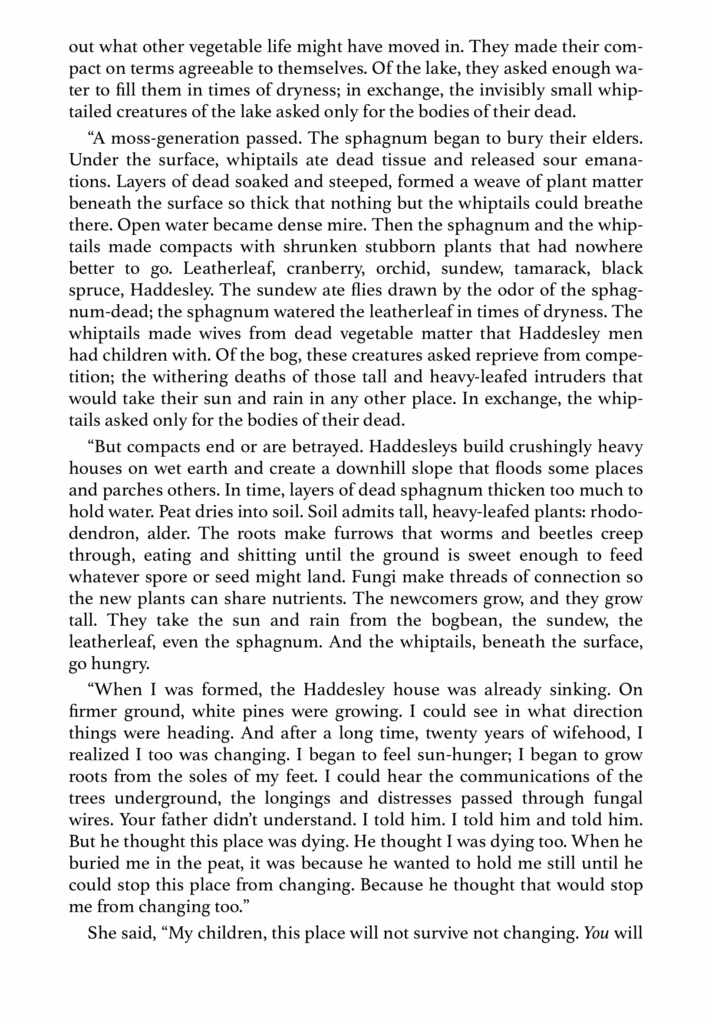
Down to the wire. I had to finish this wonderful book by the end of the day before it was automatically returned. I did it! What a wonderful ending, and so fitting for my thinking about entanglement. A beautiful story about a history of compacts with the land.

compact: an agreement or covenant, to knit or draw together

the compact / The Bog Wife

april 26/BIKE

30 minutes
basement
outside: 57 degrees

It’s beautiful out there today, but I think it’s too crowded on the trails for me to bike outside with my failing vision. Plus, I didn’t want to miss the live coverage of Ironman Texas, so I biked in the basement while I watched it. It felt good to move my legs, which were restless from less activity. No pain while I biked, only a slightly stiff left knee 20 minutes in.

Before I biked, some pain in my lower glutes/upper hamstrings — a dull ache? Not sharp, but constant, a little uncomfortable.

injury spells

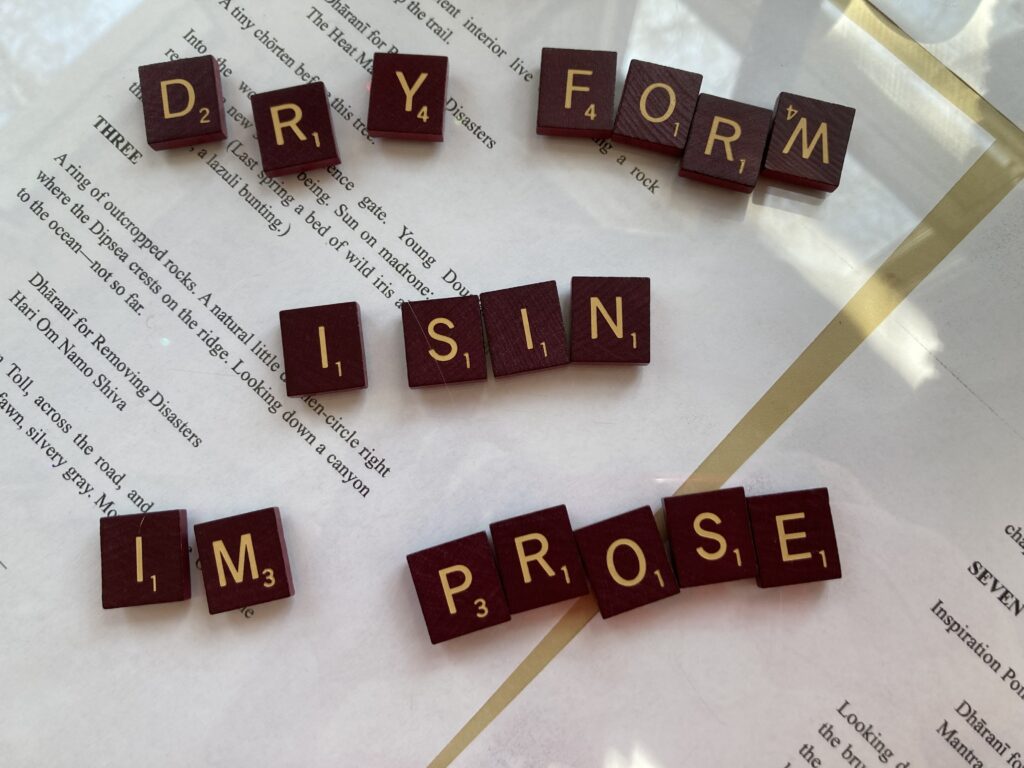
Yesterday I found the scrabble tiles for P I R I F O R M I S S Y N D R O M E and put them on my table. This morning I worked on them some more, trying to find a way to use all the tiles to make a phrase. The idea is that once I do, I will have a spell to break open or through my latest injury. Here are some of attempts:

  • Do I personify? [MMIRRS]
  • Miss Fiery Moon Drip [R]
  • Or is my form inspired? — all tiles used!
  • O sir, my form inspired! — all tiles used!
  • I inform my spired rods — all tiles used!
  • Miss Merry Porfirio [DN] — porfirio = purple-clad person, surname in Spanish/Portuguese
  • Is my sniper mood fir? [R]
  • Sir, spin my fired room — all tiles used!
  • Rim mood: spiny fires [R]
  • I spy: red moon, fir rims — all tiles used!
  • I spy: fir moon, red rims OR I spy: fir’s moon, red rim
  • (dry form) I sin, I’m prose! — all tiles used!

I might like this last one the best.

yes, that is an upside down W. We’re missing an M.

On Thursday I FINALLY picked up CA Conrad’s Ecodeviance, which I requested on march 4 and was planning to use that month. In the book, Conrad is interested in making it impossible to not be present in place by performing rituals that access the “extreme present.” A quick, perhaps half-baked, thought about Conrad’s soma(tic) rituals: from the ones I’ve read so far, a key element seems to be making other people uncomfortable.

Example: (Conrad riding an elevator repeatedly) “At the top and bottom of each ride I would show photographs of myself to strangers and ask, “EXCUSE ME, have you seen this person?”

I laughed out loud when I read this, but I also wondered about other ways of accessing the extreme present were possible that didn’t involve confronting strangers.

Conrad performs these rituals for days/weeks and take notes. From the notes, they write poems. A line from one reminded me of a delightful image from Mary Oliver that I read yesterday:

Six/ CA Conrad

a golden needle
stitches my head to
my knee leaving me
aching along the river

from The Book of Time/ Mary Oliver

those silver sheets, with the occasional golden staple,

I love MO’s description of a storm!

april 25/WALK

52 minutes
winchell / ravine / steps / longfellow / river trail
55 degrees

A great afternoon walk with Delia the dog. Sometimes there was sun, but mostly it was cloudy and overcast. Some wind. Bright green everywhere, even on the felled trees in the floodplain forest. Heard lots of singing birds, people talking, a sharp clanging noise. When it was sunny, I admired the soft shadows of tree limbs and Delia’s stubby legs and long body.

10 Things

  1. creeeaakkk — the tall trees in the floodplain forest were swaying in the wind and some branches were rubbing together to make a soft (and sinister) creaking noise
  2. the top step of the stone steps had a big puddle of water — watch out!
  3. stopping to wait for a trail runner to pass before heading back up the steps. They looked too warm and had a sweatshirt wrapped around their waist
  4. the soft lapping of the water against a log on the edge of the shore
  5. someone in a bright orange jacket following behind, talking to someone on a phone
  6. the sky above the forest was more open than usual, the ground more cluttered with tree trunks
  7. the gentle curve of a tree trunk, almost like an arched back
  8. a loud splash in the water, then a flash of movement — a fish jumping out of the water?
  9. a retaining wall in the oak savanna, across the ravine, was painted bright colors — blue, yellow, red
  10. someone on a scooter, someone else on a bike, both masked and on the walking trail

before the walk

Woke up stiff and sore, which I’ve been doing for the past month. Most of me is okay, only my lower glutes and hips and hamstrings hurt, especially when I leaned down to throw something away in the organics. Ouch! After a few minutes, it should get better. Is it worse this morning because of yesterday’s biking? I don’t think so.

Other things I woke up to:

  • a thought: I have to wheel the recycling bin down before the truck comes!
  • a rejection: “After careful consideration, we decided this submission is not the right fit for us”
  • green green green grass from all the rain yesterday and early this morning

Rejections are not fun. Even though I know how difficult it is to get something published — less than 5% acceptance rate + your poem needs to fit with the others already selected — it still stings. But only for a few minutes. Now I’m thinking about grass and spring and noisy birds outside my window — the torpedoed call of a cardinal. I wish I would have counted their repeated chirps — 10 or 12 or more in a row!

A video came up on YouTube about piriformis syndrome, which I may or may not have, but probably don’t because it’s very rare — 6% chance: Piriformis Syndrome — STOP Stretching. I checked it out, and I’m willing to try the 2 exercises it suggests for contracting/strengthening my piriformis muscle instead of stretching/lengthening it. Will it work? I’m not sure, but I don’t think it will hurt to do them as I wait for my far off doctor appointment.

I’ve come a long way in my reactions to injury over the years. I’m not freaking out or in despair, even though I haven’t been able to run for 10 days. The pain isn’t making me anxious, like it did last year with my calf. I’m sure my more relaxed attitude is partly due to more experience with injury, less fear over tight glutes than knots in calves, and the lexapro. Whatever it is, I’m grateful to not be in constant panic mode.

So, is it piriformis syndrome? Who knows. What else could it be? Time to get out the scrabble tiles and make some anagrams!

P I R I F O R M I S S Y N D R O M E is tough one —

  • In moss drip form (not used: I R E Y)
  • Permission from Id (not used: Y R)
  • Osprey mind forms (not used: R I I)
  • Spry of mind, I rise (M O R)

after the walk

I’m continuing to read Robin Wall Kimmerer’s The Serviceberry. I think I might need to buy it. The part I’m currently reading is about ecological economics.

We’ve created a system such that we self-identify as consumers first before understanding ourselves as ecosystem citizens. In ecological economics, the focus is on creating an economy that provides for a just and sustaianable future in which both human life and nonhuman life can flourish.

The Serviceberry/ RWK

competition is not the primary force regulating evolutionary success

competition only makes sense when we consider the unit of evolution to be the individual. When the focus shifts to the level of a group. cooperation is a better modle not only for surviving but for thriving.

since competition reduces the carrying capacity for all concerned, natural selection favors those who can avoid competition. Oftentimes this avoidance is achieved by shifting one’s needs away from whatever is in short supply, as though evolution were suggestion “If there’s not enough of what you want, then want something else.”

april 21/WALK

45 minutes
minnehaha academy loop*
50 degrees

*43rd ave, north / 32nd street, east, past Minnehaha Academy / edmund, south / 34th street, west, past 7 oaks / home

Before taking a walk with Delia and Scott, I “watched” the Boston Marathon, where watching = tracking runners on the app, listening to the Citius Mag watching party, and watching the last 5 minutes of the women’s race on an unofficial YouTube feed. Wow, they were fast!

It looked warm and sunny, but it felt colder than 50. It was the wind, I think. For the first half we talked about kids and wanting to be empty-nesters and how to have hard conversations about the future and the series finale of The Americans — we finished it last night. In the second half, Scott pointed out a strange mash-up of a garage and I pointed out the Siberian Squill. I wondered if we were seeing it more now because we’ve named it, but we agreed that it has become more abundant in the past few years. There was a particularly impressive patch of it in the yard of the house on the south corner of edmund and 34th. Taking in the entire patch, it looked blue. Focusing on a flower, it looked purple.

10 Things

  1. siberian squill, everywhere, including at the edge of our yard
  2. a loud dog in a fenced-in backyard
  3. an empty parking lot at minnehaha, no school for Easter
  4. a metal sign at Cooper School, bent and leaning to the side
  5. a security guard car parked in front of the gate to the field at minnehaha academy
  6. the boulevard on the edge of the academy that used to have a small line of aspensmwith aspen eyes, now only has one aspen
  7. a woman stapling a poster to a pole
  8. mud on a boulevard — Delia, stay out of the mud! — a deep brown
  9. the wind chimes chiming at the house with an Easter Island head on the front stoop
  10. looking over at the river road and seeing/feeling the open space between the west and east banks

Back/hip/leg update: today it is a little uncomfortable to sit in the chair at my desk. Is that because I went down and up the old stone steps to the river?

april 19/WALK

35 minutes
neighborhood
50 degrees

Walked with Scott and Delia the dog. My hips feel a little sore, but otherwise I’m okay. Not in pain, not stressed about taking a break from running. I know I need this break. Scott and I noticed more Siberian Squill, taking over. I admired the big turtle in someone’s front yard, Scott critiqued some out of place columns holding up a trellis-like porch at the front of a house. He asked, how have I never noticed these columns before? My response: Really? These columns are the defining characteristic of this block for me. Scott wondered if a robin, standing still in a yard, was dead. Nope, we saw it move its head. I pointed out a house that was very big. The wind was coming at us from almost every direction — not quite stiff, but irritating. Even with the chilled air, it felt like spring was here to stay. Hooray!

La Guerre (II)/ e.e. cumming

O sweet spontaneous
earth how often have
the
doting

               fingers of

prurient philosophers pinched
and
poked

thee
,has the naughty thumb
of science prodded
thy

       beauty     how

often have religions taken
thee upon their scraggy knees
squeezing and

buffeting thee that thou mightest conceive
gods
(but
true

to the incomparable
couch of death thy
rhythmic
lover

             thou answerest

them only with

                             spring)

april 16/WALK

40 minutes
neighborhood
50 degrees

Woke up this morning unable to bend down to put on socks. I’ve been having a mild version of this problem for a few weeks, but today it was worse. Time to shut it down for a while. I scheduled an appointment with the doctor. First available: June 12th. Oh well, I’m on the wait list, and I feel like there’s a good chance this problem will get better on its own — iff (if and only if), I take a proper break. No running for at least a week. No biking either. The problem has been in my upper glutes/lower back, today I felt pain all down my leg to my calf. It’s worse in the morning, after not moving for most of the night. I can stand and walk but bending down in a certain way hurts too much. I am not bothered by this injury. Of course, I’d like to be running and biking, but it’s okay. The uncertainty is gone — am I injured or not? I know I am and that I need to take a break.

Thankfully, I can still walk! Went with Delia and Scott. Beautiful — blue sky, birds, and the feeling that spring is here. Oh — and little purple flowers. Scott looked them up: siberian squill. According to the Minnesota Wildflower site, they’re not purple, but blue, and invasive. Originally from Russia, these colorful flowers are hearty and take over gardens. Not even critters want to touch them. Unfortunately, some gardeners continue to plant them. At the bottom of the entry, in bold, is:

Please, all you gardeners out there: stop planting this.

The site recommends planting native species, like phlox or bluebells. Before Scott identified them with his app, I had guessed that they might be phlox.

Wow, I just read the comments and discovered a fight — on a wildflower site? I’m not sure I agree with Sandy, but I enjoyed her spirited comment.

Petyr:  It is as bad if not worse than garlic mustard – you can’t even pull this crap.

Which gardeners are now willing to stand up and take responsibility, or is this just another “so sorry”? Gardeners, this is stupid… mindless… enough!

Sandy: Finally, after 40 years of living in the same house, I have identified the little blue flowers that blossom with the snow on the ground. Early Siberian Squill. They grow wild along the front of my house. I find them to be quite beautiful. I find nothing offensive about them. A whole lot prettier than dandilions, which I wish were gone, gone, gone. So all you gardeners out there, bite me. My Squill will be left in peace, while I continue to fight a war on the big ‘D’.

There is a poem here, I think, featuring Sandy.

april 12/WALKBIKE

35 minutes
7 oaks
58 degrees

Last night and this morning my glutes ached, so no running today. I did some more research and I think the exercises in this video might help. Future Sara will let us know!

a pain in the butt

Walked with Delia and Scott. Warmer today, windy too. My favorite sound: the wind rushing through a big pine tree. I noticed some dry leaves skittering in front of us as we walked east. Heard the St. Thomas bells and their extra long chimes at noon. Saw lots of runners and walkers and bikers. Scott talked about how farmers are getting screwed by the new tariffs, and I talked about Indigo. A few times my back ached — was it a spasm? Not sure.

indigo

For the past few days, I’ve been working on a crown of color sonnets, using the words of other writers (cento). The plan is to write 7 sonnets, with each one setting up the next with its color mentioned in the last line. I started with green, then went to orange, then yellow-red, then purple. I wasn’t sure what would come next — I thought it would probably be blue — but in the last line of the purple sonnet indigo appeared. I haven’t studied indigo that much, so before writing a sonnet about it, I’d like to spend some time with it.

Indigo began working its way into my sonnets a few days ago, when I attempted to list colors I’d seen on my run in using the ROYGBIV system. I couldn’t recall seeing anything indigo. Then yesterday, while looking for a passage by Oliver Sacks on yellow I encountered this description (which I read a few years ago, but had forgotten):

I had long wanted to see “true” indigo, and thought that drugs might be the way to do this. So one sunny Saturday in 1964, I developed a pharmacologic launchpad consisting of a base of amphetamine (for general arousal), LSD (for hallucinogenic intensity), and a touch of cannabis (for a little added delirium). About twenty minutes after taking this, I faced a white wall and exclaimed, “I want to see indigo now—now!” And then, as if thrown by a giant paintbrush, there appeared a huge, trembling, pear-shaped blob of the purest indigo. Luminous, numinous, it filled me with rapture: It was the color of heaven, the color, I thought, which Giotto had spent a lifetime trying to get but never achieved—never achieved, perhaps, because the color of heaven is not to be seen on earth. But it had existed once, I thought—it was the color of the Paleozoic sea, the color the ocean used to be. I leaned toward it in a sort of ecstasy. And then it suddenly disappeared, leaving me with an overwhelming sense of loss and sadness that it had been snatched away. But I consoled myself: Yes, indigo exists, and it can be conjured up in the brain. For months afterward, I searched for indigo. I turned over little stones and rocks near my house, looking for it. I examined specimens of azurite in the natural history museum—but even they were infinitely far from the color I had seen. And then, in 1965, when I had moved to New York, I went to a concert in the Egyptology gallery of the Metropolitan Museum of Art. In the first half, a Monteverdi piece was performed, and I was utterly transported. I had taken no drugs, but I felt a glorious river of music, four hundred years long, flowing from Monteverdi’s mind into my own. In this ecstatic mood, I wandered out during the intermission and looked at the ancient Egyptian objects on display—lapis lazuli amulets, jewelry, and so forth—and I was enchanted to see glints of indigo. I thought: Thank God, it really exists! During the second half of the concert, I got a bit bored and restless, but I consoled myself, knowing that I could go out and take a “sip” of indigo afterward. It would be there, waiting for me. But when I went out to look at the gallery after the concert was finished, I could see only blue and purple and mauve and puce—no indigo. That was nearly fifty years ago, and I have never seen indigo again.

Hallucinations/ Oliver Sacks (found here)

His description of standing in front of blank wall reminded me of my mood rings experiment: facing a blank wall, staring at it, waiting for my blind spot to occur. I wonder, could I see indigo doing this (and without the drugs)?

I recall reading something about indigo and debates over whether or not it existed. I’ll have to look for that source.

At the time, because I was working on a yellow poem, I didn’t dwell on the indigo. But later that day, it returned in a Mary Oliver poem — I was looking for another orange poem:

Poppies/ Mary Oliver

The poppies send up their
orange flares; swaying
in the wind, their congregations
are a levitation

of bright dust, of thin
and lacy leaves.
There isn’t a place
in this world that doesn’t

sooner or later drown
in the indigos of darkness,
but now, for a while,
the roughage

shines like a miracle
as it floats above everything
with its yellow hair.
Of course nothing stops the cold,

black, curved blade
from hooking forward—
of course
loss is the great lesson.

But also I say this: that light
is an invitation
to happiness,
and that happiness

when it’s done right,
is a kind of holiness,
palpable and redemptive,
Inside the bright fields,

touched by their rough and spongy gold,
I am washed and washed
in the river
of earthly delight—

and what are you going to do—
what can you do
about it—
deep, blue night?

A thought occurs to me in reading this — actually, a reminder: here in the city, on a street with street lights and security lights and light pollution of other kinds, a deep, blue night is impossible to see. And, ever since the family farm in the UP was sold in 2005, I rarely am in a place remote enough to lack light.

bike: 30 minutes
basement

Finally had a chance to finish up the first episode of The Residence and start the second one. Wow, it’s good. One moment that I couldn’t quite figure out, even with the audio description: Cordelia Cup encounters the male chef sitting on the floor, against the wall and under a row of knives. He looks motionless and dead to me, but no one reacts and the audio description says his eyes followed Cordelia as she left the room. I watched again and still couldn’t tell. His eyes looked dead to me, but that happens a lot — that is, when I actually see someone’s eyes.

feb 24/WALK

25 minutes with Delia
to the Winchell Trail
53! degrees

No running today; I’m being careful with my sore/stiff lower back. Thought I’d be taking a longer walk in the warm weather with Delia, but I made the bad decision to go to the Winchell Trail. Even though I tried to be very careful on the thawing hill, I slipped and SPLAT! fell flat on my butt into gooey mud. The butt of my jeans, the back of my coat, and my hands were caked in mud. I’m lucky I didn’t hurt myself. Whew! The worst part of it was the 10 minute walk of shame through the neighborhood back to my house with my muddy butt.

the purple hour

3 am / bedroom

A quick look at my iPad. When I turned it off and put it down, an afterimage: a bright rectangle, then all darkness. It took more than a minute for the lavender light to return. As I waited, I recited “We Grow Accustomed to the Dark.” The light gray blanket on the couch glowed a pale violet which I mistook for a square of light until I touched it and felt the blanket. If dark cast on the light is a shadow, what is the word for light cast on the dark?

Reminded of a poem I gathered and its description of light cast on the dark:

Good-Night/ Seamus Heaney

A latch lifting, an edged den of light
Opens across the yard. Out of the low door
They stoop in the honeyed corridor,
Then walk straight through the wall of the dark.

A puddle, cobble-stones, jambs and doorstep
Are set steady in a block of brightness.
Till she strides in again beyond her shadows
And cancels everything behind her.

Now I’m thinking of ED’s a long, long yellow on the lawn
The light in my bedroom had a pale and cold ghostly glow, not a warm one — no color. 


a pool of light? a stream of light? what are some other words to describe light in a dark room?

4:34 pm / front room

violet — On Color/David Scott Kastan

Yesterday, reading an essay about periwinkle, I discovered On Color by David Scott Kastan. My local library doesn’t have it, but RJP’s college does. Hooray! I was able to download the entire book! Currently I’m reading the chapter on violet. Here are a few passages I’d like to remember:

An exasperated French novelist, Joris-­ Karl Huysmans, complained that “earth, sky, water, flesh” were inevitably now the color of “lilacs and eggplants” (141).

Lilacs and eggplants. That’s what light and dark look like to me in the bedroom in the middle of the night. That also seems like a great name for a poem.

Landscape became the characteristic genre of the impressionists, but their interest was not, as with earlier landscape painters, in recreating the particularities of its geological, agricultural, or architectural features. They wanted, it was said, to recreate the immediate visual impression of that landscape, produced by the light in the very instant before the brain fully organized the scene (144-145).

Can my brain every fully organize the scene? Sometimes it/I get stuck and a landscape doesn’t make sense.

It isn’t that they painted objects as we see them. They painted the luminous air and light that exists in between the eye and those objects (145).

I’m fascinated by this in-between space and all that happens in it. Here I’m thinking about Alice Oswald and her invoking of Dante and the spiriti visivi — light as insects traveling to object to collect the color like pollen and then deliver them to us.

I’m roughly halfway done with the chapter, but I’ll stop here for now.

back pain

Looking up lower back pain I’m happy to report that it’s most likely only a weak core/overuse issue. Time to do some “gentle moving” — walking, stretching — for a few days. I’m cool with that. This article recommends dead bugs, planks, side planks, glute bridges, and child poses. Also: a heating pad.

sept 5/WALK

35 minutes
neighborhood, with Delia the dog
68 degrees

Today, I convinced an anxiety-ridden dog to go for a walk. What a beautiful, late summer/early fall morning! Wow. Our pace was slow, with Delia stopping to “read the news” at every tree, but I didn’t mind. I tried to stand straight and felt the calm in my core — a stillness so sweet it almost buzzed or hummed. Speaking of buzz, Delia stopped to smell some pink zinias and right next to her nose a bumble bee hovered. Only for a moment, then it flew off to the next blossom.

10 Things

  1. a city pick-up truck with a yellow arrow flashing on the bumper as it drove by
  2. a thick and long root sticking out of some boulevard dirt where the grass had been removed
  3. an shaded balcony on the second floor of a house across from 7 Oaks
  4. a chattering squirrel
  5. the steady, relaxed rhythm of a shirtless runner with a baseball cap on backwards
  6. big, bright pinkish-red blooms, emerging from a bush
  7. soft shadows cast across a big boulder
  8. a shaggy, scruffy tree, needing a shave, leaves covering the trunk and whole branches
  9. a steel planter on a boulevard filled with carrot greens, looking to my untrained eye like they were ready to be picked
  10. a neighbor across the alley dumping some cans in his recycling bin — hello! / hi!

Found this poem the other day, Painblank/ Daniel Borzutsky. So good! Instead of posting the entire poem, here’s the author’s helpful description:

About this Poem

I have said Emily Dickinson’s line ‘Pain has an element of blank’ in my head thousands of times…. I don’t know how many times I have tried to make sense of something only to conclude that the best poetic solution available is to say that it’s blank—the blank in the blank of my blank, the blankest of times, the blankness into which we all digress. Perhaps the thing about Dickinson’s poem is the way in which pain is enveloped so completely by, well, pain itself. But also, the problem of pain’s untranslatability, its blankness, resides in the sounds and symmetry of the words. What I’m suggesting in this translation of Dickinson’s Pain-Blank relationship is a reading and writing practice that believes in two things: that repetition is never repetition and that poetry, like pain and blankness, resides in the body. Perhaps poetry has the ability—definitely for the writer and perhaps for the reader—to assimilate into the body, to become inseparable from it, to become a language that is ingested through sonic relationships that have an effect beyond time, logic, and comprehension.

Daniel Borzutzky

And here’s the Emily Dickinson poem that inspired Borzutsky:

Pain–has an Element of Blank–/Emily Dickinson

Pain—has an Element of Blank— 
It cannot recollect 
When it begun—or if there were 
A time when it was not— 

It has no Future—but itself— 
Its Infinite Contain 
Its Past—enlightened to perceive 
New Periods—of Pain.

may 30/RUN

4.5 miles
bottom franklin hill and back
65 degrees

Windy but sunny. Ran faster than I should have and it wiped me out. Made it to the bottom of the hill — I had to bargain with my shadow to keep going — then paused to notice the river. It was moving a little, some white foam, the water a mix of brown and purple and blue. No rowers or birds or paddle boats.

Listened to the wind shaking the leaves and some cheering somewhere running north. Put in “Billie Eilish Essentials” on the way back south. Picked up the pace for the third mile, especially when “Bad Guy” came on.

Greeted Dave the Daily Walker —

Good morning Dave!
Hi Sara, how are you?
I’m great! How are you?
I’m good, thanks for asking!

I don’t know how many times we have had this almost exact exchange over the years, but it’s a lot. As I’ve written before, these words aren’t empty but part of the ritual of being outside, moving, noticing, and connecting.

I was distracted today — worrying about why I feel so strange — not dizzy but light-headed?, with a tight left leg. I talk to the doctor tomorrow. I think it’s the latest intense version of anxiety triggered by hormones and unusual (for me) aches and pains. Thanks, perimenopause! In this distracted, uncomfortable state, can I remember 10 things I noticed?

10 Things

  1. a tall stack of stones on the ancient boulder
  2. greenish white fuzz on the edge of the trail
  3. clicking and clacking of a roller skier’s poles
  4. an e-bike zooming up the franklin hill
  5. a group of school kids speaking spanish in the tunnel of trees
  6. a minneapolis road crew tarring more craters on the path — the tar smelled sharp
  7. the solid, wide forms of the bridge columns at the bottom of the franklin hill
  8. graffiti: the outline of a shape I can’t recall in black
  9. a runner in orange shorts doing hill repeats on the franklin hill
  10. another runner powering up the hill. I watched their steady rhythm and beautiful broad shoulders run out of sight

I did it!

silhouette and concrete poetry

Nearing the end of my shadow month, I’m still thinking about silhouettes. Today, the silhouette of a poem and how poets make their words into a recognizable shape. The most obvious version of this shaping words into form is the concrete poem.

one

I suppose you could call my mood rings concrete poetry. Some of the words are the shape of my blind spot, some the shape of my total central vision, and some the shape of what’s missing:

two

Reading more of Ted Kooser’s The Poetry Home Repair Manual, I came across a mention of concrete poetry. He doesn’t like it:

Each of us must make a thousand choices in every poem. Nobody is going to take away your poetic license for playing with typography or punctuation or spelling. It can be lots of fun to write a poem about a flying seagull in the shape of a flying seagull, but you need to understand that that bird shape will interfere to some degree with the ability of the reader to pass through the surface of the poem behind that clever silhouette.

A shaped poem with a serious message will never be taken as seriously as the same poem without the trick of shape. A lovely elegy to your dead mother is not likely to be quite as moving as it might have been if you’d not shape the typography to look like a coffin.

The Poetry Repair Manual/ Ted Kooser

A page earlier, referring to other distracting techniques, like of haphazard line breaks and ampersands, Kooser writes:

In business, executives make cost-benefit analyses. I used this term earlier. They never want the cost to exceed the benefit. Every choice you make in a poem, thinking to make it better, can also have a corresponding cost. If you want to make a line look shorter by using an ampersand or an abbreviation of a word, you face the cost of drawing the reader’s attention back to the surface while he or she wonders why you decided to use Sgn for surgeon.

The Poetry Repair Manual/ Ted Kooser

I’d prefer to steer clear of the economic metaphors, but I agree with the idea of giving care and attention to the choices you make and their consequences.

three

On this day in 2017, I wrote about Linda Pastan’s poem Vertical, which I love and have since memorized. Near the end of the entry, I mention how the shape of the poem fits with the title and topic:

Pastan’s poem is vertical in form. [the words are] Long and lean, stretching upwards.

log entry from 30 may 2017

four

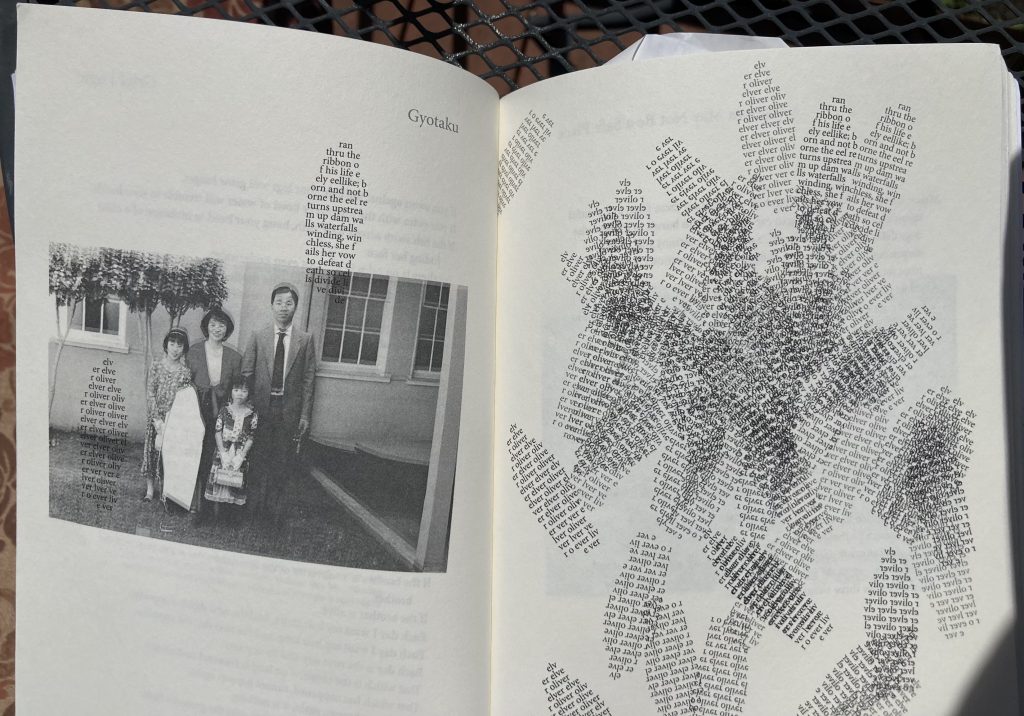
This month, partly inspired by an ongoing discussion of silhouettes, I’ve been revisiting Diana Khoi Nguyen’s brilliant book Ghost of. The visual poetry in it is strange and stunning and not a gimmick. Her poem, “Triptych,” was an inspiration for my mood rings. Here’s a video of her reading it — WOW!

Triptych

Ghost of is not all visual poems, there are other forms too, but the ones in which she writes within and around the space of her brother’s silhouette are amazing. In the following poem, instead of a triptych, she uses gyotaku:

Gyotaku / Diana Khoi Nguyen

And here’s what Nguyen says about these gyotaku poems:

Several poems in Ghost Of are titled “Gyotaku.” You’re referencing this traditional method of printing from fish because you’re “printing” from the absent body of your brother?

Essentially, there’s the absent body which I fill in with text, so the absence is rendered into a visual text. Gyotaku is a practice using dead fish to create an impression of what had been captured, an old practice before photography existed. It still goes on today. I liked the idea that gyotaku creates just the impression. You can’t capture the whole of the fish, just wherever the ink or the paint was able to touch the body, the scales, and you get an idea of the thing. Thinking about the act of writing and printing—bookmaking is also inked fabric—it makes sense to also begin to claim, to manipulate, to capture this image-text in a visual way.  
source: Diana Kyoi Nguyen, To Cut Out

Open water swimming is having a moment

Okay, open water swimming. First the awesome, Nyad, and now this:

open water swimming rules

april 19/RUN

4.9 miles
veterans’ bridge and back
36 degrees / snow flurries
wind: 16 mph / gusts: 31 mph

Windy, some snow flurries. They started when I started. At first, they looked like glitter falling from the sky, later they felt like sharp pins pricking my face. Difficult conditions, but I didn’t mind — well, not that much.

Saw a BIG turkey heading for the edge of the park. Also saw a bird — a robin, I think — running fast across the grass. It’s fun to watch birds run. Had a sudden thought: Where on the Beaufort Scale would you fit the description, birds opt for running instead of flying or flying is inconvenient for birds? In my head, I began composing lines for a poem that features this bird. Another description to add to the scale: a fallen leaf will outrun you — that’s not quite right, but something about how I noticed a leaf in front of me being pushed by the wind so fast that I couldn’t catch up to it.

Was too busy battling the wind to notice the river. I wonder, were there any foam or white horses on it?

Running south, I listened to the howling wind. Heading back north, I put in Taylor Swift’s new album: The Tortured Poet’s Department

Another 5 on the Beaufort Scale. As I ran I wondered about factors other than wind speed, like wind direction — head winds, tail winds, crosswinds. I never really thought about crosswinds before I started watching cycling races. Now, like many others, I look forward to windy days of a tour when there’s a chance that some bikers will get “caught out by the crosswinds” and the peloton will splinter.

Eula Biss, Pain Scale

Before moving onto level 2 on Biss’ pain scale, I’m trying to think more about 1 and what lines of poetry might fit it. Can’t find anything yet, but I’m imagining level 1 to be the type of pain so minor, so barely there, that we doubt its existence. If 0 is faith, then 1 is doubt.

2

The sensations of my own body may be the only subject on which I am qualified to claim expertise. Sad and terrible, then, how little I know. “How do you feel?” the doctor asks, and I cannot answer. Not accurately. “Does this hurt?” he asks. Again, I’m not sure. “Do you have more or less pain than the last time I saw you?” Hard to say. I begin to lie to protect my reputation. I try to act certain. Okay, so 2 is also doubt. That gray area when we’re not certain. I don’t mind not knowing, when knowing is not possible — embracing the mystery — but not being certain, not knowing when you feel like you should know, are supposed to know, is very difficult.

And here Biss introduces the Beaufort Scale!

Wind, like pain, is difficult to capture. The poor windsock is always striving, and always falling short. There’s the difficulty of describing, and there’s the difficulty of feeling, knowing, experiencing accurately . . .

It took sailors more than two hundred years to develop a standardized numerical scale for the measure of wind. The result, the Beaufort scale, provides twelve categories for everything from “Calm” to “Hurricane.” The scale offers not just a number, but a term for the wind, a range of speed, and a brief description. Creating a standard — a common language from which to communicate and connect with others, a scale that is practical

A force 2 wind on the Beaufort scale, for example, is a “Light Breeze” moving between four and seven miles per hour. On land, it is specified as “wind felt on face; leaves rustle; ordinary vanes moved by wind.”

3

Left alone in the exam room I stare at the pain scale, a simple number line complicated by only two phrases. Under zero: “no pain.” Under ten: “the worst pain imaginable.” Too much is contained between these numbers. . . . This idea of “the worst pain imaginable” produces anxiety. I don’t want to even imagine what the worst pain imaginable might be.

“Three is nothing,” my father tells me now. “Three is go home and take two aspirin.”

“You are not meant to be rating world suffering,” my friend in Honduras advises. “This scale applies only to you and your experience.” At first, this thought is tremendously relieving. It unburdens me of factoring the continent of Africa into my calculations. But the reality that my nerves alone feel my pain is terrifying. I hate the knowledge that I am isolated in this skin—alone with my pain and my own fallibility.

The more I read of Biss’ essay, the more I’m thinking about the purpose of these scales and what other purposes descriptions/words/language can offer. The wind scale is for utility: to help sailors estimate the wind speed using visual observations. The pain scale’s purpose: to better understand and care for patients.

4

conflating physical and emotion pain — is there actually a distinction? hurting vs. feeling?

pain as seen in a face — Biss wonders, no face, no pain? Then she describes how there are no visible markers of her pain — there was nothing to illustrate my pain except a number, which I was told to choose from between zero and ten. My proof. I’m thinking about how invisible my vision problem often is to others and also, how the doctors could tell immediately that something wasn’t right: I got a diagnosis. What relief! I’m also thinking of a New Yorker article I read recently about gaslighting that mentions how the gaslit crave a diagnosis because it offers irrefutable evidence of something being wrong.

Okay, more of the pain scale in the next entry. I’m thinking about a key distinction between the Beaufort and Pain scales: the Beaufort offers brief descriptions to accompany the numbers, not just the numbers.

And, returning to point of these scales: they’re practical, which would seem to make them, at least to some, not poetry. Poetry is impractical and about making strange what we thought was familiar. It removes the utility of language, making it delightfully useless. Of course many poets disagree with this simplistic assessment, myself included. One reason I’ve turned to poetry is because it is useful; it gives me language and a method for describing my strange ways of seeing to others.

I found the following poem in an entry from aug 1, 2019. I think the descriptions might offer a more compelling and practical way than numbers on a scale to understand what pain feels like.

Let us for a moment call this pain by other words/Dominik Parisien

Ask, How many roses does the hammer weigh

when it bears down on your skull? 

Does the sword seem toothed like a toddler’s smile

or sharp as your first ice skates?

On a scale of anglerfish to northern lights

how bright are the flashes in your head? 

When I touch this, here, which constellations

light the sky behind your eyes?

Would you say that pulsing is the flicker of a satellite 

or the stubborn heartbeat of a newborn chick?

Ask, Can we for a moment make of beauty

the measure of our pain? and I will answer.

march 5/RUN

2.6 miles
2 trails
39 degrees

Sun! Blue skies! Hardly any wind! Wore compression socks while I ran for the first time. I felt fine while I was running and after I stopped, so they must be working (or, at least not not working).

Heard birds. No particular bird, just birds. Earlier, while walking with Scott to our polling station to vote in the primary, I heard a downy woodpecker and blue jays and cardinals. But, just now, running, only Bird.

I know I saw the river, but I can’t remember what it looked like. The leaves on the winchell trail were slippery, the mud up above was not. I thought about my mom a few times — mostly about her prolonged death and how I recently started understanding it as an expression of resistance and rage against cancer and dying too young and “redemption” and the expectation that she should/would be a good girl who died a nice and neat death.

Do not go gentle into that good night.
Rage, rage against the dying of the light.

I’ve written before about how I dislike the idea of this Dylan Thomas poem. I’ve changed my mind.

earlier today

A morning of wandering (and some worrying too — not quite panic, but unease, discomfort for no real reason — peri-menopause anxiety?). Began with some thoughts about my mom, who would be 82 today if she were still alive, and a beautiful poem-of-the-day about a daughter’s grief and guilt. Then a skim of an article about W. H. Auden, which led me to his poem, “Musée des Beaux Arts” — an ekphrasis! — and the memory of an amazing, interactive essay about the poem by Elisa Gabbert, which I found and then read. I recall encountering this essay when it first came out, thinking it was great, but not having any interest in studying it. Now, on my dead mom’s birthday and with a new interest in ekphrastic poetry, I was ready for it.

encounters:

Musée des Beaux Arts/ W.H. Auden

About suffering they were never wrong,
The Old Masters: how well they understood
Its human position; how it takes place
While someone else is eating or opening a window or just walking dully along

How, when the aged are reverently, passionately waiting
For the miraculous birth, there always must be
Children who did not specially want it to happen, skating
On a pond at the edge of the wood:
They never forgot
That even the dreadful martyrdom must run its course
Anyhow in a corner, some untidy spot
Where the dogs go on with their doggy life and the torturer’s horse
Scratches its innocent behind on a tree.

In Brueghel’s Icarus, for instance: how everything turns away
Quite leisurely from the disaster; the ploughman may
Have heard the splash, the forsaken cry,
But for him it was not an important failure; the sun shone
As it had to on the white legs disappearing into the green
Water; and the expensive delicate ship that must have seen
Something amazing, a boy falling out of the sky,
Had somewhere to get to and sailed calmly on.

In her wonderful essay about this poem, Gabbert writes:

No matter how familiar a poem is, rereading it always gives me a sense of first encounter, as though I’ve gone back to sleep and re-entered the dream through a different door.

Each time I return to this one, I’ve read a lot of other poems in the interim, which change and expand my reading. But I’ve also done more living, so I understand more about suffering myself. Pain is a kind of wisdom, maybe. As I age, I’m making the poem better.

A Poem (and a Painting) About the Suffering That Hides in Plain Sight/ Elisa Gabbert

Today, reading the first lines — the first stanza-long sentence — almost took my breath away. There it was, what I felt when my mom was dying and dying then dead, that suffering happens in the midst of others’ living their daily, mundane lives. This can lead to indifference, as Gabbert describes Auden as suggesting (he wrote this on the brink of WWII), but it can also lead to relief or acceptance or an expanded understanding of how we are all living and grieving and suffering and eating and walking at any given time. Life is defined by all of those things together, not just one of them. I suddenly thought of some lines from Mary Oliver’s “Wild Geese”: Tell me about despair, yours, and I will you mine/Meanwhile, the world goes on.

I could spend the rest of the afternoon trying to find better, more precise and coherent, words to describe what I mean here, but I don’t want to. Maybe future Sara can take it up?

even more fun with medical terms!

I mentioned that I bought compression socks, or compression sleeves: they stop at the ankles, so nothing for the foot. Anyway, I decided to take out my scrabble tiles and try to do something with the letters for compression then compression sleeve.

compression

  • Ms. Ion Corpse
  • Price on moss?
  • O Prim Scones!
  • Poem is scorn
  • Poems r icons

compression sleeve

  • Impress Console Eve
  • Crisp moon sleeves (leftover e)
  • O seem clovers spines
  • Poems never close [is]
  • moon splice verses (leftover e)

march 3/RUN

5 miles
lake nokomis, then falls coffee
60 degrees

Ran through the neighborhood, past the falls, over the mustache bridge, on the creek path, up the hill from lake hiawatha to lake nokomis, then turned around and took the sidewalk on the parkway until we reached Falls Coffee. A good run — warm and very windy. Lots of shadows on the path — people too. Crowded. Tried to stay loose and relaxed as I ran; I called it being “Shaggy loose.” It worked and my right calf didn’t hurt when I was running. It felt strange again when I stopped — a few flashes of discomfort, then anxiousness. But we ran 5 miles and walked 2 and I was fine.

We talked about Scott’s music project: an arrangement of “Helter Skelter” without using any past versions for reference. I asked about the difference between parallel and series circuits. Mostly, we were quiet today, partly because we were enjoying just running outside in the warmth, and partly because Scott was arranging music in his head and I was monitoring my calf mid-run.

My calf occasionally reminded me it was there during the run, but it was fine and I was loose. When we stopped, my ankle was a little tender, but nothing hurt. Still, I was anxious and concerned about what might happen. Spent the walk home talking through it with Scott. I felt a little sore and stiff during the walk home, but no shooting pain or pops or anything too alarming. I said to Scott that I feel like my body was trying to tell me something with all this anxiety and he answered, Maybe it’s not. And I thought, yes, maybe it’s not. Maybe I’m just dealing with the random aches, the occasional nighttime muscle cramp, that older runners get? Why does the story have to be any more complicated than that?

As we approached the playground at Hiawatha School — the one our kids played on for almost a decade — I said, I think my calf pain is minor, like the sinus pain I used to get in my face. Once I started using breathe-right strips, it stopped happening — no more pressure or sinus head-aches. Scott replied: You need to find the breath right strip for your calf. Now, hours later, it suddenly came to me: compression socks. Could that be the magic antidote to my calf pain (and my fears about calf pain)? Have I cracked the code? I’ll try it and see.

update, 5 jan 2025: 10 months later, the compression socks seem to be working! Admittedly, I’m also on lexapro for anxiety now (since June), so that could also be helping.

note for past Sara (or future RJP/FWA) and for anyone else interested: Writing some of this stuff about my anxieties over calf pain feels a little ridiculous, but it seems important to document the in-the-midst-of-it process of figuring out how to navigate the uncertainty of new (albeit minor) pain. There are lots of reason why, here’s one that I return to again and again: remembering how you felt and handled moments of vulnerability and uncertainty, when you’re overwhelmed and anxious, can give you more empathy for others in their own, often different, experiences of uncertainty.

notes from a pages document titled: “To Do: 2022/2023/2024”

brain mind self soul spirit Sara body
I You us we
pain fear uncertainty loss death grief
breath muscle machine
break rupture relent embrace reject reframe resist rewire

Back to the magic of the body and our efforts to understand and describe what’s happening / the power of language, of stories, to affect how and if we survive and endure — what stories do we tell?

Where does my body end, yours begin?

What if the soul was populated by selves? what if Sara was a city, not one Self? or a lake — Lake Sara? or a gorge? or a river — the river Sara?

What is the relationship between anxiety, the body, and the mind? Is anxiety the body asserting itself?

Running as a new relationship with my body, poetry as a rewiring of my brain/mind — not as rational scientist (even though I still do this), but as poet. Not fully rejecting the rational/scientific approach, but de-centering it.

wiring circuits: series and parallel
body circuits: pulmonary and systemic
ED: success in circuits lie

Yesterday I mentioned Natasha Badmann and her experiences running through the Energy Lab during the Kona Ironman. I found the spot in the race commentary, where she is interviewed:

The Energy Lab wasn’t taking energy, but giving energy. . . . I left my soul out there on part of the course . . . Exchange yourself with the island, see the beauty. . . . Running into the Energy Lab, I saw the strength of the ocean, the waves splashing up, and I said, This ocean, it’s endless. My energy is endless.

start at 8 hours and 52 minutes in / Women’s Ironman 2023

added this in a few minutes later: After the run, I got a pistachio scone at Falls Coffee. When I told RJP about it, she said, Feed 2 birds with one scone, which is PETA’s non-violent version of the classic expression. I like it! How else can I play with it?

Text 2 teens on one phone.
Diss 2 jerks with one own.
Scare 2 kids with one crone.
Film 2 scenes with one drone.
Seat 2 kings on one throne.
Put 2 scoops in one cone.
Whet 2 blades with one hone.
Buy 2 cars with one loan.
Seduce 2 Ferris’ with one Sloane. (too many syllables, but I couldn’t resist)

one more note, the next day: When I mentioned the scones/birds phrase to FWA on our weekly Facetime, he mentioned another one: Feed a fed horse. Oh, that’s good.


march 2/WALK

2+ mile walk
neighborhood/river/Winchell Trail
50 degrees

Tomorrow Scott and I will do our weekly “long” run, so today we walked. A beautiful morning. Earlier, after sitting at the dining room table for too long, I stood up and my calf felt weird. So difficult to describe it — no pain, just a strange, slight tightness — oh, I also remember that it ached a little on the posterior side. It made me anxious. Would it cramp? Why was it tight? During the walk it felt strange occasionally, but never hurt. I tried to be aware of my walking and to stay loose, relaxed, like Shaggy from Scooby Doo, I decided. Yes, loose ankles, almost floppy feet.

Down on the Winchell trail, Scott pointed out how clear and ice-free the river. I’d add: blue and calm and, at one spot, burning the white heat of light hitting the water. Such a wonderful day for a walk.

As we walked and tried to stay relaxed, I kept thinking about the stories we tell ourselves to make sense of the world. Last week, when I was watching some interviews with Courtney Dauwalter (CD), she kept talking about how we can change the stories we tell ourselves when we’re in pain and that stories matter. I need a new story — new stories? — about my aging, anxious body.

I mentioned to Scott that when CD is having difficult in a 100 mile race, she visualizes opening a filing cabinet and looking through folders of past experiences, trying to find something that could help her figure out how to handle her problem. CD loves facing and solving problems. Before she ran professionally, she was a high school science teacher.

Lately, I’ve started describing my approach to handling aches and pains and anxiety: cracking the code. What code? I think I mean the code of why I react to all these minor aches and pains with mild panic. And I also mean: the code of why the anxiety travels around my body, not staying too long in one spot: a strange-feeling calf, a tight throat, an upset stomach. During the pandemic, it was sinus headaches, a heavy face weighed down by an imaginary iron plate. This code story is useful and makes me feel empowered, like I’m doing something or gives me the illusion of control. Sometimes I need that illusion.

Walking on the Winchell Trail, looking out at the river, I told Scott about the 5 (or 4?) time Ironman winner Natasha Badmann and her approach to dealing with difficulties in a race. In particular, she talked about the Energy lab, which is one of the most brutal stretches of the Kona Ironman. While most racers think about this stretch as taking your energy, she understood it as giving it to her — while running through it, she could look off in the distance and marvel at the dolphins swimming in the ocean. I need to find this interview again. I told Scott that I’d like to change my story to think about what pain/anxiety is giving me, instead of what it is taking away/depriving me of. When I started this blog, I wrote about how the new aches and pain I was feeling while running were an opportunity for me to pay attention to a body that had been neglected for decades.

CD’s story about pain and facing challenges and bodies that are trying to convince you to quit is the pain cave. She visualizes putting on a hard hat, grabbing a chisel, going to the very back of a cave, and then trying to make it bigger. Carving out more space for what could be possible.

One more story that I mentioned while we walked (and that I mentioned on here last week). Emma Bates talks about greeting the pain like an old friend.

Old Friends from Merrily We Roll Along

Hey, old friend,
Are you okay, old friend?
What do you say, old friend,
Are we or are we unique?
Time goes by,
Everything else keeps changing.
You and I,
We get continued next week.

Most friends fade
Or they don’t make the grade.
New one’s are quickly made
And in a pinch, sure, they’ll do.
But us, old friend,
What’s to discuss, old friend?
Here’s to us who’s like us
Damn few!

Maybe I should create a friend playlist and try to be better friends with my body?

march 1/RUN

3.45 miles
2 trails + extra
45 degrees
wind: 15 mph / 31 mph gusts

Everyone knows it’s windy — All week I’ve had that song in my head. Partly because it’s catchy, but mostly because it’s windy. The wind didn’t bother me too much. Ran south to the overlook and was startled by a white truck honking as it drove past — was it honking at me, someone else, the wind? Reached the entrance to the Winchell Trail and entered. The path was thick with dead leaves and some mud. I don’t remember much about the river other than that it was blue and open and there, taking up a glorious amount of space. I heard some kids above playing, also some guy on a bike say, in exasperation, fuuucckk. Felt, more than saw, some shadows. Took off my pink jacket before climbing the 38th street steps — overdressed!

I recited ED’s “I felt a Funeral, in my Brain” as I ran. Stumbled over this line a little:

With those same Boots of Lead, again

Not sure why the line was difficult to get right. I thought about sense breaking through, my mind going numb, space beginning to toll. Also: iron boots creaking across my soul. Last night, I asked Scott, after passing a store with the sign “guidance for the soul,” what he thought the difference between a soul and a spirit was — not what he believed — I know he doesn’t believe in either (at least I think he doesn’t) — but how they function theologically. Wait — what I actually asked was, on the scale of most rational to least, where do mind brain soul and spirit fall? I was thinking of ED’s use of mind in the poem as opposed to brain, and her reference to soul. Now I want to look at the Emily Dickinson lexicon and read how she used “brain,” “mind,” “spirit,” and “soul.”

I also want to find another brain poem to memorize — so far I’ve memorized, “I felt a Funeral, in my Brain,” and . . . wait — I was just about to write, “I felt a Cleaving in my Brain,” which I’ve also memorized, but the title is actually “I felt a Cleaving in my Mind.” I think that she uses the terms, like many people do, interchangeably, but I’m fascinated by the small gap between them — the mind and brain are not the same, I think, not exactly. The difference between them gets us to the soul and the self and my thinking about the ultra marathoner Courtney Dauwalter last week — how the mind’s desire to keep going can override the body’s desire to stop. Wow — right now, I seem to be obsessing over and orbiting around ideas of the relationship between the mind and the body, the self and the brain, and surrender and the death of self. Okay, that barely makes sense to me —

I wrote in my plague notebook: brain soul mind self sense will death transformation pain

As I’ve been memorizing/reciting ED’s funeral poem, I’ve been thinking about this funeral in her brain not as a migraine or a mental breakdown or an epileptic seizure, which seem to be the dominant readings, but as the process of transcending the self involving feet treading and the repetitions of a beating drum and a religious ceremony (a service) and bells tolling/ringing and moving beyond reason and Knowing. I first encountered this reading in a comment on The Prowling Bee:

from the line “Then Space — began to toll” through the end of the poem, something else entirely is happening. ED breaks through to an experience that is impersonal and liberating — a direct experience that is unfiltered, not obscured by the depression and stress of the prior stanzas. The experience is vast and lonely — if the self is transcended, what would be the experience? 

The last stanza of the poem describes something far from a mental breakdown. Reason, the logical mind, does not operate without reference points. If the poet is operating from the reference point of self, then everything is measurable and comprehensible — graspable — based on that. With reason and logic, we are in the realm of EDs poems that use metaphors of measurement and mathematics and limits. But in the last stanza of this poem, all that is transcended. What is experienced is beyond reason — but entirely sane. It is the ineffable experience of truth — the poet finishes — knowing — then. If you ask what is known, you have not shared the transcendent experience of the poem.

The Prowling Bee

Reciting this poem while running, I kept thinking about how the treading and the beating, foot strike after foot strike, can lead to a dream-like state where you stop thinking and begin to feel the world (sense breaking through) instead of just observing or knowing it. There’s a lot I could say about the bell, but I’ll save that for later.

note: I worry that I getting lost in theorizing about this, but I also think I’m trying to push at deeper understandings of self and consciousness and how bodies and brains and minds and souls are entangled — especially in my aging, almost-50, often anxious, Sara-self.

feb 29/RUN

5.15 miles
bottom of franklin and back
33 degrees

Some wind, lots of sun and shadows and spring feelings. Heard some black-capped chickadees, was dazzled by the sun shining off a parked car, saw some new graffiti on a sign at the bottom of the hill.

Often my legs felt heavy. But my calves were quiet.

Heard a woodpecker knocking on wood somewhere near the rowing club and thought: a door!

Anybody
home? The
woodpecker
knocks on
the tree like
it was
dinner’s door.

Recited ED’s “I felt a Funeral, in my Brain” throughout the run and got most of the lines.

Had some great thoughts while I ran about ED’s funeral poem and how it fits with running and the feeling of moving past (beside) your Self to a space beyond thinking and seeing, where you’re feeling and hearing. Thought about the gradual process ED describes — her repeated use of and and then — for how we break through to a different world where Space — began to toll/As all the Heavens were a Bell/And being, but an Ear. I had many other thoughts, but I’d like to think through them and post tomorrow.

ED’s Daily Delight (feb 28)

the line: Superior — for doors — (from “I dwell in Possibility”)

In November and December, while I was working on the revision of my Haunts poem, I started writing a series of door poems, inspired by a Mary Oliver line from Upstream:

I did not think of language as the means to self-description. I thought of it as the door–a thousand opening doors!–past myself.

Upstream/ Mary Oliver

Looking for
ways out,
hoping for 
ways in,
finding doors
open
everywhere

Then I wrote a series of brief 3/2 poems describing the “doors” I’ve found by the gorge. I’d like to keep adding to them, using my 10 Things lists for inspiration.

Before I do that, I found this reference to doors while rereading a Feb 28, 2022 entry:

The sound of boots tamping snow are the hinges 
of many doors being opened. 
(from Statement of Teaching Philosophy/ Keith Leonard

I like the idea of doors opening or being opened. Opening/being opened suggests that something — language or poetry or the sound of boots triggering memories — is doing that opening. But I also like the idea of doors already open that you have to notice.

from December 2023 “10 Things” Lists:

dec 1: most of the steps down to the Winchell Trail are closed off with a chain, but not the old stone steps — why not?

Just one set
of stairs

without a
chain stretched

across the
top step.

Just one door
calling

out to you,
Come in!

dec 1: there are certain stretches I don’t remember running through — like the part of the walking trail that separates from the bike path right before the trestle. Why can’t I picture it?

stretches of
the path

forgotten
moments

I enter
a space

outside of
myself.

dec 3: running by a house I walk by often, seeing the door looking different — a new color? orange? have they painted their house or is the light just weird for me today?

today the
color

of this door
has changed —

a new paint
job or

a trick of
the light?

dec 5: a path winding through the savanna revealed by settled snow

a path winds
through the

savanna
often

invisible
today

revealed by
new snow

dec 6: wet path, shimmering — is it just water, or is it super slick ice?

Here, two doors,
both

possible.
One’s safe

the other
more fun.

note: As I write these, I’m thinking that part of their point is to open up and to get into the habit of converting things noticed into my form. Many of them aren’t great, but they are good practice and could help to loosen me up. For the first time in a few years, ran to Lake Nokomis and back.

dec 15: kids laughing on a playground* (*as I listened to the kids, I thought about how this sound doesn’t really change. Over the years, it comes from different kids, but the sound is the same. Season after season, year after year.)

no matter
the year

recess sounds
the same

the difference
is you

and how you
hear it

dec 18: hot sun on my face, once or twice

hot sun on
my face

I pretend
spring’s door

has opened

dec 19: as I ran south, some white thing out of the corner of my eye kept calling out, notice me! So I did: it was an arch of the lake street bridge

Sometimes doors
don’t speak

and sometimes
they scream

Open me,
enter!

dec 22: halfway down the hill, I noticed some stairs on the other side of the road I’ve never noticed before. Were they leading to the franklin terrace dog park?

halfway down
the hill

surprise stairs
noticed

just today.
Where do

they lead? What
doors do

they open?

feb 27/RUN

4.5 miles
VA bridge and back
46 degrees
wind: 16 mph, 29 mph gusts

What a wonderful morning for a run! Okay, maybe the wind was a bit much, but the sun and the warm air and the clear paths made up for it. I felt good and strong and relaxed. A few times my right calf reminded me it was there — no pain, just a strange stretched feeling. I recited ED’s “I heard a Fly buzz — when I died –” several times, mostly in my head, but once, as I climbed out of minnehaha park, out loud! Should I be celebrating this? Do I want to be that person who doesn’t care if others hear her reciting poems as she runs? Yes, I do.

10 Things

  1. the hollow knocking of a woodpecker on dead wood, echoing across the gorge
  2. lots of black capped chickadees calling to each other
  3. oak tree shadows, sprawled everywhere
  4. the brown creek water lazily heading towards the limestone ledge
  5. rustling below me, on the winchell trail — someone walking over the leaves
  6. climbing up from the part of the path that dips below the road, seeing the shadow of trunk on the path that was so sharp and dark I thought it was a fallen tree
  7. sirens on Hiawatha, getting louder as they off the walls of the tunnel near 50th
  8. passing a runner — What a beautiful morning!Yes! Almost perfect!
  9. a biker in a bright yellow shirt, as bright as the one I was wearing
  10. the meandering curves of the sidewalks that wind through the part of minnehaha falls near John Stevens’ house

This morning, while drinking my coffee, I decided to write about the delightful noise of geese wings cutting through the air that I’d recalled hearing a few weeks ago on my back deck — I remembered it after reading a list of 10 things from a feb 27th from another year. I wrote a draft of a poem, then decided I’d like to start writing delight poems every morning. No pressure — just patch a few words together and don’t try to make them elaborate — this isn’t a competition but a doorway into thanks and a silence in which another voice may speak (Praying/ Mary Oliver) — just the opportunity to sit with one of the delights I’ve encountered while running beside the gorge. A few minutes later, I had a further idea about including Emily Dickinson:

The practice, elements:

  • write a poem each day
  • the poem should be about some delight noticed on the run — either from that day or a past entry
  • any form running/breathing form: couplets of 3 syllables/2 syllables
  • uses, in some way, a favorite line from an Emily Dickinson poem

Here’s the poem I wrote this morning:

Too Silver for a Seam / Sara Lynne Puotinen

Even more than the sight of them
it is the sounds they make
that move me.

Usually it is the mournful calls
from within a tight formation
then the lone honk of the last in line,

but today the geese were low enough
to hear the sharp swish of their wings
cutting the air.

In their wake only the echo
of scissors and sharpening knives
and movement too silver for a seam.

The ED line is too silver for a seam and it comes from “A Bird came down the Walk”:

And he unrolled his feathers
And rowed him softer Home—

Than Oars divide the Ocean,
Too silver for a seam—

I like it! It needs a little work, but it makes me happy and captures my delight in hearing this sound. Scott wondered about the scissors and sharpening knives — such violent imagery — so I explained — the scissors make me think of Scott’s mom and the old scissors I inherited from her that make a wonderfully sharp scissor-y sound when you use them — it also makes me think of my mom who was always using scissors for her fiber art. The sharpening knives make me think of Scott’s dad and the enthusiastic and dilligent way he would sharpen their knives with their knife sharpener. I think I might need to add a line or two that signals my affection for these sounds without making it too obvious.

During the last mile of the fun, I started reciting other ED poems, including:

To make a prairie it takes a clover and one bee,
One clover, and a bee.
And revery.
The revery alone will do,
If bees are few.

Note: This seems like an edited version from Mabel Todd, with all its punctuation and no capitalizing of clovers or bees.

As I recited this small poem, I suddenly thought about how I was a bee, wearing my bright yellow shirt with my black running shorts and tights. I kept running, feeling ready to stop, looking ahead and wondering how close I was to being done. Suddenly I saw it: the bright yellow crosswalk sign with black figures at 38th street! I’m almost done when I reach that sign! I watched it getting closer and thought, it takes one bee or, it takes a bee?

update, six hours later: I’m back. Decided that I might want to add one more rule to this ED delight daily practice: I want to use my running/breathing form of 3 syllable/2 syllable couplets. I tightened up the poem I wrote earlier using that form. Here’s the new version:

Today the
geese flew

low enough
to hear

the quick swish
of wings

slicing through
the air. (I could leave air for the unintentional rhyme or switch to sky)

In their wake —
echoes

of scissors
cutting

knives being
sharpened

their blades too
silver

for a seam.

feb 26/WALK

40 minutes
to the river and back
57 degrees

A warm, windy February afternoon. Took a walk with Delia the dog and Scott. Heard some kids on the playground that I mistook for a siren. Then later, heard some actual sirens. Also heard some ragtime music coming from a bike on the path. Marveled at the gnarled oaks and the jagged shadow one cast on another branchless tree. Noticed how high the bluff was above the forest floor. Encountered many happy, chatting walkers, one runner without a shirt.

It’s Windy

Is it the strange, too-early spring weather? The fact that I’m turning 50 in 4 months and that my kids are turning 21 and 18? Not sure, but my thoughts have been scattered lately, flitting from one idea to the next without landing anywhere for too long. Maybe it’s the wind. This morning I said to Scott, what a beautiful morning! Too bad it’s windy. Then Scott started singing “Windy” by the Association — I tried to join in, but I was in the wrong key (as usual). I should have a t-shirt that says, I’m always in the wrong key, I said (which, I think, isn’t always a bad thing to be in). Anyway, I decided to listen to the song and read the lyrics. It’s actually about wind! How delightful!

Who’s tripping down the streets of the city
Smilin’ at everybody she sees
Who’s reachin’ out to capture a moment
Everyone knows it’s Windy

And Windy has stormy eyes
That flash at the sound of lies
And Windy has wings to fly
Above the clouds (above the clouds)

I think I might create a page of wind poems/songs and add this, along with “They call the wind Mariah” from Paint Your Wagon and “I Take to the Wind” by King Crimson.

an idea (for the future? now?): Yesterday I posted a poem that uses an Emily Dickinson line in the title (I heard a fly buzz), then obliquely references her in the poem. A year or so ago, I had the idea that I’d like to write a series of poems that use some of my favorite Emily Dickinson lines as titles for my poems about vision loss, how I see, and how I’ve been carving out a new way of being with my moving practice. I’ve already written one that was published this past December in the print journal, Door is a Jar:

The Motions of the Dipping Birds/ Sara Lynne Puotinen

Because I can no longer see
her face, when my daughter talks I watch

her small hands rise and fall,
sweep the air, flutter.

I marvel at the soft feathers her fingers make
as they soar then circle then settle

on the perch of her hips waiting
to return to the sky for another story.

I think Victoria Chang’s collection, The Trees Witness Everything, in which she uses W.S. Merwin poem titles and then writes her own poem, might be a good inspiration. I’ve been wanting to do this project for several years, but I wasn’t quite ready. Am I now? I’ve already been moving towards it with my interest in memorizing 50 Emily Dickinson poems before my 50th birthday — did I mention that in here, or was it just in my “to do” list? Oh, I hope this idea sticks and helps me to write more poetry. Lately, I’ve had tons of ideas that I start, but that really don’t go anywhere.

As part of this Dickinson project, and inspired by yesterday’s poem, I decided to memorize ED’s “I heard a fly buzz — when I died”. After memorizing it, I listened to someone else’s reading of it and noticed a line change:

[original] The stillness in the Room
[alternate in video] The stillness round my form

Which is correct, I wondered. At first, I thought the alternate might be the correct one, but it didn’t seem quite right — form neatly rhymes with the last line of the verse: Between the Heaves of Storm. ED liked slant rhymes, not straight ones. I looked it up and discovered that ED’s first editor, Mabel Loomis Todd, had changed the line to form. She also took out ED’s dashes. I’ve read about the fraught relationship between ED and Todd (who was ED’s brother’s lover) and Todd’s heavy-handed editing, so I’m sticking with the original!

medical term fun!

I’m still working with g a s t r o c n e m i u s and s o l e u s scrabble tiles. Last night’s favorite:

Guess a minute’s colors

I told RJP and she said, 7:42 is yellowish-green. Do I see any particular minute’s colors? No. But I do like trying to describe what colors I see at any given minute.

What happens when I reverse 2 words: Guess a color’s minutes?
Or, Minutes colors a guess?
Or, As color, minutes guess
Or, minutes: a color’s guess (as in, meeting minutes)
Or, a guess colors minutes

Back to ED’s buzzing fly. Whenever I read this poem, I think about an article I discovered a few years ago that discusses how accurately and effectively ED describes the physiology of the dying eye — 15 march 2021

feb 25/RUN

5 miles
franklin loop
45 degrees

A regular run! It felt mostly fine, a few times strange. I told Scott that often when something is sore or stiff or hurts, it just feels strange to me. I need better words.

A few time my calf felt strange…but what does that mean? It felt like it was trying to talk to me, like it wasn’t used to moving, like it was complaining. During the run, once or twice, the smallest flare of something that wasn’t quite pain yet. After the run, tight, a little sore along the outside of my calf starting near the knee and moving down. Here’s some information that I might want to look at: Calf Muscle Tightness

While we ran, we talked about Scott’s latest work project involving wrangling a lot of data about water quality and temperature and more and turning it into a user-friendly widget. I talked about Courtney Dauwalter and listening to your body and pushing your limits and the memory palace. Near the end of the run, we encountered people protesting Israel’s invasion/war against Palestine on the bridge. I almost called out from the river to the sea! but didn’t — do I wish I had? yes, I think so. Saw some Palestinian flags and people with signs. A few minutes later, we heard a bullhorn from up on the bridge — were they marching to the capital?

earlier today

While reviewing the feb 25 entry from 2022, I came across a reference to the memory palace. I’d like to do something with this idea — an experiment, a poem, something else? Found a helpful discussion of it in a Paris Review article about Wordsworth:

The idea of the mind as a palace or church, whose individual rooms can be explored with training, is familiar from the memory treatises of antiquity and the Middle Ages. The “memory palace” as a mnemonic device was widely used before the advent of printing to organize and remember vast amounts of information. By memorizing the spatial layout of a building and assigning images or ideas to its various rooms, one could “walk” through the imaginary building and retrieve the ideas relegated to the separate parts.

The Celestial Memory Palace/ Aysegul Savas

I mentioned the memory palace in a feb 25, 2022 entry. In a feb 25, 2020 entry, I also wrote about place, the house:

I’d like to put this poem (A Skull) and the idea of the skull as a house beside the two other poems with houses that I posted on feb 22.

Two different, yet connected, versions of imagined place. Can I do something with these?

Here’s a delightful poem from a chapbook, Cheap Motels of my Youth, that I just got in the mail:

I Heard a Fly Buzz/ George Bilgere

I stumbled out in to the kitchen,
got the coffee maker started,
did the dishes from last night,
and then you came out in your robe,
wondering why I was up so early,
and I realized I’d misread the clock,
I’d actually gotten up at 7, not 8,
and suddenly I had a whole hour
bestowed upon me by the gods
who dole out our span to time.

And this was long ago, years ago, but
I still have that hour, I’ve guarded it
zealously, and when the time comes
and the darkness is closing in, and perhaps
I even hear a fly buzz—I’ll take out
that hour from the secret place
where I keep it, I’ll show it to all of you
gathered around my bedside
and I’ll cry out, Look! Another hour!

And that fly will pause in its
goddam buzzing, and all of you—
and that means you, Michael and Alex—
all of you will be forced to smile
and say, Really? That’s just awesome!

And I shall continue with my reminiscences.

I love this poem — the way it gently references Emily Dickinson, the delightful story it tells, his use of goddam in the second to last stanza, the calling out of his kids in the poem, how the first stanza is all one sentence, and that last bit about reminiscing as what he’d want to do with his bonus hour.

I like his use of goddam, and I wonder: how often do women poets use goddam? It seems like a swear word male poets would use. What are some good examples of women poets using goddam in their poems? I looked up “women poets goddam” and came across Nina Simone’s “Mississippi Goddam.” Listened to it — wow — and found this article for later: The long story behind Nina Simone’s protest song, “Mississippi Goddam” Kept scrolling in my search and found a link to a Book Notes series in which authors create a playlist for their books. Cool! What does this have to do with goddam? Nothing, but I love that I found this site, especially after creating a playlist for my windows month.

Okay, time to stop wandering. I think I’ll go study and memorize Emily Dickinson’s “I heard a Fly buzz — when I died”

Almost forgot: still playing around with the tiles for the two main muscles in the calf: gastrocnemius and soleus

Glass moon curse suite

feb 24/RUN

1.25 miles
neighborhood
27 degrees

A short run to see how my calf was doing. I think it’s okay. No pain. My heel felt a little strange by the end, but that could be from the cold — I didn’t run long enough to warm it up. (a cautious) Hooray!

My favorite parts of today’s run: cresting the hill on edmund and seeing the river burning a bright silvery white in the distance; the comforting smell of a fire burning in someone’s fireplace; and the wind chimes echoing through the alley as I walked home.

before the run

While searching for calf stretches I came across this delightful fact: the calf is often referred to as the peripheral heart!

Throughout the calf muscles is a network of veins, arteries and nerves. The calf muscles and the deep veins have a network of valves and pumps. This system is called your “peripheral heart.” This is because, when you’re in an upright position, the calf muscles work against gravity to close the valves – contracting and driving blood from your legs towards your heart.

Sore Calves: A Full Guide

Very helpful. I remember reading about calf heart attacks and I wondered why they were called that. Now it makes sense! Also good to remember: the calf is made up of 2 muscles: gastrocnemius (bulging one) and soleus (flat, underneath).

Before heading out for my run, I tried out these stretches. I liked them:

after the run: fun with medical terms!

I haven’t done one of these for some time. I want to turn gastrocnemius and soleus into something else. Inspired by Mia Farrow in Rosemary’s Baby, I’ve pulled out my scrabble letters and I’m making new words or phrases.

  • gout ocular messiness
  • regulate moss cousins
  • smile across us tongue
  • oust uncola’s regimes! this has an extra s that I couldn’t fit, but it was too good not to mention

That’s all I have right now. I think I’ll keep working on it later today. It’s fun, but the tiles are harder to see than I thought.

feb 22/REST

I tweaked or strained or something my calf muscle when I unwisely ran after experiencing a bad cramp early Sunday morning. So now I’m resting for the rest of the week and trying to get over myself and my fears about pain and injury. I’ve turned to what often helps: writing and wondering and spending some time getting acquainted with my pain.

one

For future Sara who will want to remember these details, and present Sara who doesn’t want to forget them and anyone else who wants to witness a Sara who is trying to be more open (and less) guarded about what she’s thinking/feeling:

Early Sunday morning, while I was sleeping, I got a leg cramp (a charley horse, as we called it when I was kid) in my right leg. A sudden burst of intense pain that woke me up. I stood and shook my leg and thought my shaking had stopped the cramp from even happening. A few hours later, when I woke up, my calf was sore but Scott and I were scheduled to do our weekly run and I wanted to make sure I got in my miles, so I ran anyway, almost 6 miles. No pain! The next day, I ran another 5 miles and felt mostly fine. But then, sitting at my desk, writing my log entry for feb 19, my leg suddenly felt strange — a constricting? contracting? cramping? of the muscle (or tendon?) at the bottom of my calf, near the heel. No sharp pain, just a flare of heat that burned for a few seconds then stopped when I shook out my leg. To me, it felt like a cramp just about to happen — that moment right before it tightens, just before the pain hits — slams into you? takes your breath away? seizes you? For the rest of the day, I was unsettled. The flares kept coming, not all the time, but throughout the day. By the evening, I was very anxious; the flares were coming every few minutes. For a couple of hours I sat on my bed and made note of each instance:

a quick flare of pain — not sharp — above my ankle/lower calf that goes away when I move my leg/shake my foot
6:09
6:22 (after bending my leg, then crossing it over and on top of my other foot
7:09 (only after bending my leg, raising my knee up for a minute
7:12 another slight flare of pain, the need to shake my leg
7:20 another very mild, slight flare – not pain, almost like a contraction or brief tightening
7:33 a brief construction — slight pain — after I walked downstairs and back up and stood for a minute
7:40 another quick flare
7:43 brief flare
7:49 — a very brief flare
7:52 — another slight constriction
7:59 — a little flare

notes from 20 feb 2024

Then I had dinner and a shot of bourbon and watched old episodes of Seinfeld with Scott and (mostly) forgot about it. Since then, I’ve been trying to be careful with my calf — no running for the rest of this week, or at least until Saturday or Sunday. My calf still feels strange sometimes, and sometimes it doesn’t. Also: stiff, tight, unsettled. Went for a short walk with Delia and Scott yesterday and it felt like it wasn’t quite firing. A fear simmering somewhere within: will it happen again? do I have a calf tear? is something even worse about to happen?

two

I am deeply afraid of these calf cramps. I even wrote about that fear way back on February 16, 2017:

At the end of a 2 mile swim, back and forth across Lake Nokomis, I placed my right foot down in the shallow water and experienced a charley horse from hell. My right calf knotted up so painfully that I began to yell out. I dropped down in the water, trying not to panic, and frantically shook my leg, hoping to loosen the knot. It didn’t take that long to loosen it, but long enough to disorient me so much that I dropped (and lost) my favorite goggles, long enough to make my calf ache for weeks and not feel quite right for a year and long enough to make me feel perpetually terrified of my calf and the excruciating pain it could cause.

That calf pain still haunts me. I’m not really sure how much pain I can take; I did give birth to both of my kids without any drugs so I must be able to tolerate a reasonable amount. But I’m scared of that pain. The threat of it often hovers there, subtly shaping my workouts. Whenever my calf feels strange, during a swim across the lake or while doing a hard run, I wonder, is it coming for me again?

Why am I so afraid of these cramps? With this first one, in 2017, I became afraid (still am, a little) that I would cramp up in the middle of lake and not be able to shake it off; I’d have to endure terrible pain as I swam across, or I wouldn’t be able to swim, and would struggle to stay afloat. I think it’s about the loss of control — being possessed by something that I can’t do anything about — and it’s about that particular type of pain — so sharp and blunt and arresting. Give me the dull ache and tightness of hip pain over calf pain every time! Give me the uncertainty and confusion and unreadable books of gradual vision loss — isn’t that strange?

three

When I was a kid — probably 5th grade — we lived in a DC suburb. I remember going to the Smithsonian and seeing an exhibit on pain. I have an image of one of my older sisters leaning over a glass display case reading something about the history of pain. I also remember being struck by her interest in this topic, wondering why. Looked it up: 1983 / Pain and Its Relief / National Museum of American History – oh, how I loved visiting that museum almost every weekend!

four

The only excruciating pain I recall experiencing as a kid were the terrible stomach cramps I would get when I was 11 or 12 — I hadn’t started my period yet. Such agonizing knots of pain, crashing into me, wave after wave. I would lie on my top bunk bed, staring at the ceiling, and just try to endure them for however long they lasted — hours? How often did they happen, and for how many years? When I told my mom about them, she said something about how these “twists in the intestines” run in our family. Am I remembering that right?

Oh — and the ear infections from swimming. In the middle of the night, I’d leave my bedroom and pace the house, wanting nothing but this horrible ache in the side of my head to stop. Or how my teeth would ache after a teeth cleaning at a rare visit to the dentist. I would wish I could record that pain, be able to feel it anytime I wanted to skip brushing my teeth.

five

Dance with the pain 

That last one is something I describe a lot. What does that even mean?
It means to greet the pain or discomfort like an old friend. Know that it’s always there waiting for you. If you accept it, and envision yourself enjoying its company, it’s much more manageable.

from a race recap at the Chicago Marathon — @emmajanelbates

from a log entry 27 oct 2023: Being content with the doubt and greeting pain as an old friend. Accepting doubt and being content with it I think I can do, but befriending pain? I’ve been trying to work on that as part of this larger writing/living/moving project. The pain I’m thinking of is the pain in my knees or my back or my hips, but it’s also other, deeper pains: the pain of aging, loved ones dying, living within a body that doesn’t work as well. Not sure if I’d call it a friend yet, more like an acquaintance, a familiar. I think it’s possible, but what does enjoying the company of pain look like, outside of the model of sadomasochism?

six

I’ve read/heard it enough times that I can’t remember where or when: the difference between a great runner and a good runner is the ability to endure pain. I don’t want to be a great runner, but I’d like to develop a better relationship to pain. I’d like to find more ways to endure it, to live with it. In middle school and high school, I read several memoirs from people enduring extreme conditions and surviving, mostly political prisoners in China and Russia, who were locked up in small cells alone for years. Almost 40 years later, I can’t remember the specifics of what they suffered or how they survived, I only remember my fascination with these accounts. Now I like following the races and stories of ultra marathoners and long course triathletes. Athletes who spend more time than many deep in the pain cave. One of my favorites is Courtney Dauwalter. She frequently talks about embracing the pain cave:

Is that what it means to dance with/befriend your pain?

I’m not sure how I feel about embracing the pain cave or pushing yourself to the limits in order to enter it. I admire it, and her, and I’m also disturbed by the accounts of pushing yourself so much — regularly hallucinating, temporarily losing all vision, falling on a rock and gushing blood but not stopping (read this, Inside the Pain Cave, for more). Is it too much for a body? Even as I wonder this, I know that I tend toward the opposite end: too cautious, too guarded, unwilling to push myself to the limit if the limit is uncomfortable.

seven

Discussing Dauwalter with Scott, he mentioned that there are different types of pain — some of it we just need to get over and endure, and some a warning to be careful! or stop! before we do real damage. My problem: I’m often thinking that the pain is always a warning of something bad about to happen.

eight

I am uncomfortable writing about pain because my pain seems so insignificant compared to other people living with chronic pain.

nine

Growing up, my family didn’t discuss pain: you were supposed to suffer in silence. I feel compelled (called? driven?) to make visible my pain, to recognize how it is part of me, to share it with others, to normalize vulnerability.

ten

It is difficult to witness other people’s pain. Last night, someone delivering food fell off a step on our block and twisted? sprained? her ankle. She lay on the ground, wailing in pain, her sobs echoing down the street for several minutes as we waited for an ambulance to arrive.

Will this thoughts about pain turn into something bigger? Who know, but I’d like to spend some more time with them. I just discovered a book by one of my favorite poets, Lisa Olstein: Pain Studies. Checked it out of the library! Also, I should reread Eula Biss’ “The Pain Scale.” And, I want to put these 2024 thoughts in conversation with what I wrote about pain in 2017: 18 august 2017

may 24/RUN!

3 miles
river road trail, south/winchell trail, north/river road trail, north
71 degrees/ 90% humidity
dew point: 69

For the past few weeks, my left knee + left quad has been sore. After my run on the 17th, when my knee hurt enough to make it difficult to walk, I decided to take more of a break. Today is my first day back since then. Sunny, still (at least it seemed still), humid. Wow–90% humidity. Summer running. Ran at 8:30, which is not my favorite time to run. Too warm already + too many cars on the road, making crosswalks difficult and drowning out bird sounds with their whooshing wheels.

I felt a little stiff and over-heated, but it was a good run. Very happy to be back out by the gorge, admiring the river and assessing the progress of the leaves and the wildflowers. No mosquitos…yet…or sex-crazed gnats. I remember hearing a loud cardinal in some tree on the edge of trail, rapidly trilling and calling out, “what cheer what cheer.”

Things I Remember

  • almost slipping on the muddy, wet leaves at the edge of the concrete steps leading down to the Winchell Trail
  • not hearing the sewer pipe near 44th and my favorite retaining wall curve, but hearing it gushing at 42nd
  • feeling the glow of the water below out of the corner of eye as I ran on the part of the winchell trail without railing that seems too close to the edge of the steep bluff–I turned briefly to glance down at the bright water
  • noticing more bikers than runners and walkers on the trail
  • wondering when the bugs and the cottonwood fuzz will be arriving
  • breathing in through my nose for 3 beats, out through my mouth for 2
  • feeling a little anxious about my knee and my left IT band, hoping that I took enough time off

Here’s my bird poem for the day:

Of Being is a Bird/ Emily Dickinson

Of Being is a Bird
The likest to the Down
An Easy Breeze do put afloat
The General Heavens — upon —

It soars — and shifts — and whirls —
And measures with the Clouds
In easy — even — dazzling pace —
No different the Birds —

Except a Wake of Music
Accompany their feet —
As did the Down emit a Tune —
For Ecstasy — of it

It’s helpful for me to read through The Prowling Bees’s analysis of this poem (linked in poem title), although I still don’t totally understand ED’s words. I’m struck by her use of easy twice. Ever since I encountered Mary Oliver’s use of easy in her poems (first mentioned on April 14, 2021), I’ve been thinking about the differences between easy and difficult and about how easy is dismissed as immoral or not noble and not nearly as good as difficult. If it’s too easy, you’re not working hard enough, or you’re taking the easy way out, or you’re lazy. I’ve been thinking about it even more after reading Richard Siken’s “The Language of Birds”–see below–and his line about it being easy to ask how, much harder to ask why:

Why paint a bird? Why do anything at all? Not how, because hows are easy—series or sequence, one foot after the other—but existentially why bother, what does it solve?

Why does everything have to hard to be good? Can easy ever be better? Can we fetishize the difficult–making things more difficult for ourselves than we should?

may 18/STIFF RIGHT KNEE, HARD TO WALK

Yesterday, after taking 2 days off from running, I ran again. Not too long after I finished, my left knee felt stiff and sore. Not a good sign, but, surprisingly, I’m chill about it. Just need to take more of a break I guess. Maybe the whole week? If my knee feels a little better tomorrow, and I can walk without limping or tensing up, I’ll try out my bike. After 2 years in the basement, it’s time bring it outside to test it out. Will I be able to see? Eventually, I’m sure, my brain will adjust enough.

Spending a lot of time sitting today. Started early-ish (7:30) this morning by sitting cross-legged on a cushion on the deck, trying to not move much. I was inspired by the wonderful essay I read about “just sitting” yesterday: Private Practice: Toward a Philosophy of Just Sitting/ Antonia Pont

Then I sat at a chair and listened to the daycare kids next door playing outside. I’m not sure how long they were outside, but I took notes about their interactions with the unprepared, harried daycare worker. A lot of fun (not for the daycare worker) and a great exercise in paying attention and taking notes about it. At one point, they played “Ring Around the Rosie.” I wrote in my notes: plague rhyme. I wondered, what other cautionary, plague-related rhymes do children still chant? Googled it and became increasingly skeptical about any nursery rhymes that claim to be about plagues. Then I found this very helpful source–Ring Around the Rosie: Metafolklore, Rhyme and Reason from the Library of Congress. Lots of interesting information about why it’s doubtful that the ring around the rosie is about the plague.

Refreshed my memory of a poem I memorized last summer–Love Song of the Square Root of Negative One by Richard Siken. Love this poem and love Siken. Found another great poem in the same collection (War of the Foxes): The Language of the Birds

The Language of the Birds/ Richard Siken

1

A man saw a bird and found him beautiful. The bird had a song inside him, and feathers. Sometimes the man felt like the bird and sometimes the man felt like a stone—solid, inevitable—but mostly he felt like a bird, or that there was a bird inside him, or that something inside him was like a bird fluttering. This went on for a long time.


2

A man saw a bird and wanted to paint it. The problem, if there was one, was simply a problem with the question. Why paint a bird? Why do anything at all? Not how, because hows are easy—series or sequence, one foot after the other—but existentially why bother, what does it solve?

And just because you want to paint a bird, do actually paint a bird, it doesn’t mean you’ve accomplished anything. Who gets to measure the distance between experience and its representation? Who controls the lines of inquiry? We do. Anyone can.

Blackbird, he says. So be it, indexed and normative. But it isn’t a bird, it’s a man in a bird suit, blue shoulders instead of feathers, because he isn’t looking at a bird, real bird, as he paints, he is looking at his heart, which is impossible.

Unless his heart is a metaphor for his heart, as everything is a metaphor for itself, so that looking at the paint is like looking at a bird that isn’t there, with a song in its throat that you don’t want to hear but you paint anyway.

The hand is a voice that can sing what the voice will not, and the hand wants to do something useful. Sometimes, at night, in bed, before I fall asleep, I think about a poem I might write, someday, about my heart, says the heart.


3

They looked at the animals. They looked at the walls of the cave. This is earlier, these are different men. They painted in torchlight: red mostly, sometimes black—mammoth, lion, horse, bear—things on a wall, in profile or superimposed, dynamic and alert.

They weren’t animals but they looked like animals, enough like animals to make it confusing, meant something but the meaning was slippery: it wasn’t there but it remained, looked like the thing but wasn’t the thing—was a second thing, following a second set of rules—and it was too late: their power over it was no longer absolute.

What is alive and what isn’t and what should we do about it? Theories: about the nature of the thing. And of the soul. Because people die. The fear: that nothing survives. The greater fear: that something does.

The night sky is vast and wide.

They huddled closer, shoulder to shoulder, painted themselves in herds, all together and apart from the rest. They looked at the sky, and at the mud, and at their hands in the mud, and their dead friends in the mud. This went on for a long time.


4

To be a bird, or a flock of birds doing something together, one or many, starling or murmuration. To be a man on a hill, or all the men on all the hills, or half a man shivering in the flock of himself. These are some choices.

The night sky is vast and wide.

A man had two birds in his head—not in his throat, not in his chest—and the birds would sing all day never stopping. The man thought to himself, One of these birds is not my bird. The birds agreed.

may 20/ABLE TO WALK, CLICKING KNEECAP

Feeling much better today. I can walk almost normally, even if I have to remind myself how to do it when I start: bend the knee! I was planning to get out my bike and try it on the trail, but it’s raining, so maybe I’ll bike inside and watch another Dickinson? I want to take a break from running until next Monday, I think, just to be safe. Hopefully that is enough time to recover from whatever happened to my knee. Sitting in the front room, with the windows wide open, I’m enjoying listening to the rain hitting the pavement. It’s a soft, steady, gentle rain. I also hear a siren a few streets over.

Returning to this post, a few hours after I wrote the previous paragraph: Took Delia for a walk around the block and did 30 minutes on the bike in the basement while watching the ITU Yokohama Men’s Triathlon. Most memorable moment: It was a tough, hot race–30 degrees celsius (86 F)–and racers were exhausted at the finishing line. As the commentary continued, I could hear several racers puking in the background. No mention of it by the commentators. Gross, yet a good reminder of how ridiculously hard these races are and how much these racers have learned to push their bodies. I’m troubled by and in awe of that ability.

Thinking about Richard Siken’s “The Language of the Birds”:

1.
A man saw a bird and found him beautiful. The bird had a song inside him, and feathers. Sometimes the man felt like the bird and sometimes the man felt like a stone—solid, inevitable—but mostly he felt like a bird, or that there was a bird inside him, or that something inside him was like a bird fluttering. This went on for a long time.

I love this first stanza. Thinking about ED and “Hope” is thing with feathers. Also thinking about MO and some great lines from The Leaf and the Cloud, which, when I found them again, I realized were even more fitting with this poem or at least my reading of it right now:

from “Gravel” in The Leaf and the Cloud/ Mary Oliver

6.
It is the nature of stone
to be satisfied.
It is the nature of water
to want to be somewhere else.

Everywhere we look: the sweet guttural swill of the water
tumbling.
Everywhere we look:
the stone, basking in the sun,

or offering itself
to the golden lichen.

It is our nature not only to see
that the world is beautiful

but to stand in the dark, under the stars,
or at noon, in the rainfall of light,

frenzied,
writing our hands,

half-mad, saying over and over:

what does it mean, that the world is beautiful–
what does it mean?

What is alive and what isn’t and what should we do about it? Theories: about the nature of the thing. And of the soul. Because people die. The fear: that nothing survives. The greater fear: that something does.

Siken’s poem isn’t really about a bird; it’s about metaphor and representation and the work of doing something useful (meaningful?) with the noticing of a beautiful bird. And it’s about the doubt an artist/writer feels when they try to create something in response to that bird, and about what language does to the artist’s connection to the bird, the distance it creates between “experience and representation.” And, it’s about asking the question: why do anything at all? “existentially why bother, what does it solve?”

And maybe it’s also about not answering this question, not trying to find ultimate meaning, not trying to solve “it”–where it = the problem of death/that everyone dies, or it = the overwhelming “vast and wide” night sky,” or it = our inability to capture/own a bird in our representation (painting, poem) of them.

Yesterday, when I looked up “The Language of the Birds” I discovered this: The Mantiq al-tair(Language of the Birds) of 1487. I had discovered this Sufi poem earlier in the month when I looked up conference of birds, which is it’s more known title. Very cool. Here’s some more information:

Attar (ca. 1142–1220), the author of the Mantiq al-tair, is one of the most celebrated poets of Sufi literature and inspired the work of many later mystical poets. The story is as follows: The birds assemble to select a king so that they can live more harmoniously. Among them, the hoopoe, who was the ambassador sent by Sulaiman to the Queen of Sheba, considers the Simurgh, or a Persian mythical bird, which lives behind Mount Qaf, to be the most worthy of this title. When the other birds make excuses to avoid making a decision, the hoopoe answers each bird satisfactorily by telling anecdotes, and when they complain about the severity and harshness of the journey to Mount Qaf, the hoopoe tries to persuade them. Finally, the hoopoe succeeds in convincing the birds to undertake the journey to meet the Simurgh. The birds strive to traverse seven valleys: quest, love, gnosis, contentment, unity, wonder, and poverty. Finally, only thirty birds reach the abode of the Simurgh, and there each one sees his/her reflection in the celestial bird. Thus, thirty birds see the Simurgh as none other than themselves. In this way, they finally achieve self-annihilation. This story is an allegorical work illustrating the quest of Sufism; the birds are a metaphor for men who pursue the Sufi path of God, the hoopoe for the pir (Sufi master), the Simurgh for the Divine, and the birds’ journey the Sufi path.

One of the valleys the birds have to travel through is the valley of wonder/astonishment/bewilderment. This makes me think of the Sufi poet Rumi and their focus on bewilderment, which I discovered through Fanny Howe. Here’s “Bewilderment” by Rumi:

Bewilderment/ Rumi

There are many guises for intelligence.
One part of you is gliding in a high windstream,
while your more ordinary notionstake little steps and peck at the ground.

Conventional knowledge is death to our souls,
and it is not really ours. It is laid on.
Yet we keep saying we find “rest” in these “beliefs.”

We must become ignorant of what we have been taught
and be instead bewildered.

Run from what is profitable and comfortable.
Distrust anyone who praises you.
Give your investment money, and the interest
on the capital, to those who are actually destitute.

Forget safety. Live where you fear to live.
Destroy your reputation. Be notorious.
I have tried prudent planning long enough.
From now on, I’ll be mad.

Since I keep wanting to put these bird poems in conversation with Mary Oliver and Emily Dickinson, I’ll add that Mary Oliver loved the poetry of Rumi. In her interview with Krista Tippett, she describes how she reads a different Rumi poem each day. And, the last line of “Bewildernment” reminds me of this ED poem:

Much Madness is divinest Sense – (620)/ EMILY DICKINSON

Much Madness is divinest Sense –
To a discerning Eye –
Much Sense – the starkest Madness –
’Tis the Majority
In this, as all, prevail –
Assent – and you are sane –
Demur – you’re straightway dangerous –
And handled with a Chain –

may 21/WALKED 2 BLOCK ON A SLIGHTLY STIFF KNEE

My left knee continues to improve. The kneecap still shifts and clicks, but I can bend and move my knee without pain. I continue to remind my knee how to walk. Rain on and off all day. Showers then sun then showers with sun. Will it ever end? Pumped up the tires in my bike. It’s still in the basement, but soon I’ll bring it upstairs. Heard so many birds this morning: cardinals and woodpeckers and black-capped chickadees and robins. Heard a metallic 2 note song in a neighbor’s tree as I walked around the block with Delia the dog. Was that robin too? Also heard a rapid trilling that sounded like a car alarm. I’m pretty sure it’s a cardinal.

Finishing up a great book, Late Migrations by Margaret Renkl. Here’s one of her essays? prose poems? that uses one of my favorite words: still, which can be used as an adjective (not moving, calm), a verb (to calm down, to quiet), a noun (a period of calm or silence), and an adverb (up to a time, to an even greater degree, nevertheless).

Still/ Margaret Renkl

I pause to check the milkweed, and a caterpillar halts midbite, its face still lowered to the leaf.

I walk down my driveway at dusk, and the cottontail under the pine tree freezes, not a single twitch of ear or nose.

On the roadside, the doe stands immobile, as still as the trees that rise above her. My car passes; her soft nose doesn’t quiver. Her soft flanks don’t rise or fall. A current of air stirs only the hairs at the very tip of her tail.

I peek between the branches of the holly bush, and the redbird nestling looks straight at me, motionless, unblinking.

Every day the world is teaching me what I need to know to be in the world.

In the stir of too much motion:
Hold still.
Be quiet.
Listen.
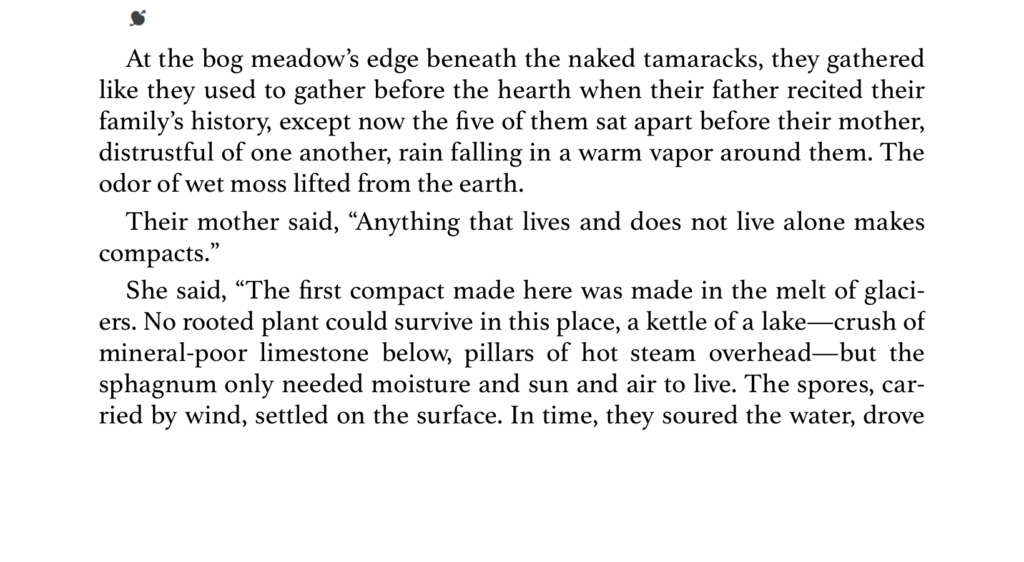
sept 29/HIKING

Took a great hike with Delia the dog this morning on the Winchell trail. Walking on the river road path between the 36th and 35th street parking lots, we walked under several trees lining the path. They seemed to be greeting us or maybe heralding the beginning of our walk, the opening to a ceremony or sacred ritual. I need to write more about this stretch of the path.

The marathon is on Sunday. Mostly, I’ve accepted the fact that I can’t run it, but I still can’t wait until it’s over so I can move on. Thinking about it, I composed to quick poems:

Consolation Prize

Maybe the best consolation
I can take from getting injured
and missing the marathon
is that right now,
sitting at my dining table,
a little over 24 hours before the race,
I’m not undone with anxiety,
overwhelmed with the what ifs,
unable to imagine how a human body
can run for more than 4 hours.
It’s a very small consolation
but I’ll take it.

Missing

almost 2 months ago
I misplaced my kneecap
only for a few minutes
it was gone
it came back
but not before
misplacing my marathon
I found the kneecap,
but not the marathon.

sept 26/WALKING

Walked with Delia the dog and decided to record my observations. Here’s a transcript of what I spoke into my iPhone memo app for our almost 20 minute walk (update: I turned it into a poem):

Sounds and Things I Pay Attention to on my Walk

The squeaking of the garage door
The glistening reflections on the wet pavement
The trickling water from the fountain in somebody’s backyard
The low, electric hum of the cicadas
An occasional chirping bird
My footfalls on the wet pavement
The trickling of the water in the sewer after the rain
The wheels of the stroller approaching me, almost feeling hostile and threatening
The whoosh of the water under the wheels
The clanging of Delia the dog’s tags on her leash
The big orange construction cone on the driveway, amidst the grayish brown wood and cement blocks
An occasional drip of water, sometimes a plop, sometimes just a drip
The traffic way in the distance
Some unspecified hums
A single yellow leaf falling off a tree already having lost most of its leaves
Burgundy and yellow flowers next to pink and light purple ones
Small puddles on the sidewalk
Darker black asphalt patches where the sidewalk has been repaired
Drips from the trees on my hat
A squirrel running quickly across the street even though there’s no danger of a car
Water rushing in the sewer
The not bright blue, not powder blue, maybe cornflower blue, Adirondack chairs
A runner running by, out in the street; fun to watch their stride—so graceful
and relaxed
The ugly purple leaves on the ground
A car just in the middle of the road for some unknown reason
Some cars approaching me with their lights on, some without
the Furry fuzz
Clanging from a truck, unloading scaffolding perhaps,
unloading some sort of equipment that I’m not turning around to see
It echoes in the otherwise calm, peaceful morning
Talk radio birthdays: T.S. Eliot, Ira Gershwin
I keep listening to hear what kind of talk radio it is
An interesting bark from a dog, deep and low and then high pitched and whiny
A gray car that’s been in an accident
Milkweed pods, some black and dead, others still green and ready to burst
A bright yellow school crossing sign
A slightly paler yellow seat, rope swing on a big tree with gnarled branches
A plane overhead
Walking through clumps of wet, dead leaves on the sidewalk
A bright red chair in front of a green house
The crunch of a walnut shell or a stick under my shoe
A squirrel running ahead of us on the path
Another bright red chair
and two red cars
A truck backing up
somewhere nearby
but not that close.
More drips.
Beautiful mums in pots on the front steps
The light from a front door still on. Was it left on by accident overnight, or is it on because it’s darker this morning?
A squirrel overhead, rustling in a tree branch
More planes and crows

Devoting my time to looking and listening to my surroundings and then describing them into my phone meant that I had no time for any broader ruminations. What would a walk where I randomly spoke what I was thinking into the phone be like?

sept 25/XT

bike: 25 minutes
bike stand, front room

In addition to biking for almost half an hour, I took my dog on 3(!) walks without my knee brace. No knee brace! Very exciting. I still can’t run for another two weeks, but it’s exciting to feel confident enough to walk without the brace. My knee and leg are getting stronger.

I have 2 weeks left before I can start running. I’d like to take that time to revisit some of my thinking about walking. Although I was very happy to be walking so much today, none of my walks were particularly transcendent.  Most of my time was divided between making sure my knee felt okay and making sure that Delia the dog kept moving. No brilliant thoughts. No poetic lines. No problems solved.

What did I notice?

  1. The gigantic cottonwood trees that made my neck ache and my head dizzy as I tried to look up at them.
  2. The huge hostas that encircled another cottonwood tree, a little further up the street.
  3. The burnt gold of the leaves of another tree. A maple, maybe or an oak? For the past few years, I’ve mostly seen glowing yellow leaves; these were golden.
  4. The bright pinks and yellows of the zinnias.
  5. The crows cawing as we walked through the Dowling community garden.
  6. The wooden camel lawn ornament in the yard of a house right next to the garden.
  7. The buzzing of the cicadas–more intensely electric in the morning, a slower hum in the afternoon
  8. A police siren.
  9. The walnut shells, broken up and discarded, that looked almost like mounds of poop, at least to me.
  10. The stillness of the air and the Mississippi river. No rowers on the river.
  11. The bright blue lights that framed the inside of the front window of a house.

That’s all I remember. How different would this list be if I had composed it right after getting back from my walk, or while I was on the walk?

sept 22/FINAL PT?

This afternoon, I have another physical therapy appointment. I’m hoping that this will be the last one and that I can start running again. Mostly, I feel optimistic because my knee doesn’t hurt and I seem to be able to walk normally, but I’m still nervous. My knee clicks a little and sometimes aches a little. What will my physical therapist tell me?

Started a new poetry class this week. So exciting! I’m really enjoying taking writing classes. For the assignment this week, I had to write an homage poem. I chose, “13 Ways of Looking at a Blackbird,” partly because I discovered this poem last spring and had created a writing assignment for myself using it as a model. Here’s what I posted:

13 Ways of Looking at a Tree While Running

1.
Among the veil of green
The only noticeable thing
Was the red leaf on the tree.

2.
Through the effort of running,
I was of no mind,
Absent, like the leaves on a tree
In midwinter.

3.
The tree sizzled in the hot breeze.
Mocking the already overheated runner.

4.
A runner and a path
Are one.
A runner and a path and the trees
Are one.

5.
I do not know which to prefer,
A mystery concealed
Or a mystery revealed,
The tree leaved in summer
Or bare in winter?

6.
The humidity hovered above me
With thick persistence.
The canopy of the tree
Trapped it on the running path.
The visibility
Lost in a fog
Of hazy air.

7.
O fit runners of Minneapolis,
Why do you seek inspiration from shiny PRs?
Do you not see how the tree
Releases oxygen
Making inspiration possible?

8.
I breathe out in jagged fits
And in steady, even rhythms.
I breathe, also,
Because the tree
s
Need me to.

9.
When the tree was no longer in view
The runner imagined
What it would do,
Now that she was not looking.

10.
At the sight of a towering tree
Swaying violently in the storm,
Even the most ardent nature-lover
Would reconsider hugging it.

11.
She ran below the tree
Grit crunching under her shoe.
Once, she freaked out
When she thought a falling walnut
Was a branch.

12.
The river is moving.
The trees are not.

13.
It was humid all morning.
It was hot.
And it was going to be hot.
The tree stood
Offering no shade.

Here are a few other versions that don’t quite fit Stevens’ structure:

1.
In the summer
the floodplain forest
at the bottom of the gorge
is covered with leaves—
a veil of green
almost, but not quite,
concealing my view of
the blue river as I run above it.

2.
When it rains
that same floodplain forest
glows in soft greens
and rich browns
dripping
thick
wet
mystery.

3.
Running by,
I never stop to study the trees.
If I did,
could I see them breathing,
their leaves acting as lungs
inhaling carbon dioxide
and exhaling oxygen?

4.
At a certain point
during my run,
I’m in a daze,
not seeing the trees
so much as feeling
how the shade of their leaves
cools the air.

5.
After a violent storm,
I cautiously ran under
the fallen limb
precariously propped
against another tree.

6.
Red or gold or orange leaves
are pretty on a tree
but not on the path
where they conceal
debris that lies in wait
ready to twist my ankle.

7.
Never trust
a path
without trees.

sept 19/OPEN SWIM!

open swim: 350 yards
bike: 8.5 miles
air temp: 75 degrees
water temp: 68 degrees

I didn’t swim much, because the water was pretty cold and it was very windy, but I swam in the lake again today! And I might try again tomorrow.

Listened to an on being episode with Maira Kalman and they talked about how wonderful trees are. I like the line: “We see trees. What more do we need?” I think I’d like to use that as the title of an essay about trees or as a line in a poem. I can’t wait until I can run by my favorite trees again.

sept 15/SWIM!

swim: 1/2 mile

Overcast. Calmer waters. Probably the last swim in the lake until next June. When I was done, I stood in the water, absorbing the view. First, staring at my open swim path across the blue-gray water to the little beach. And then, the tops of the trees, lining the shore all the way around. Some of the trees have already started to change color.

The only other people in the water when I was swimming were a couple of children, their caregiver and two guys in waders with metal detectors. It’s cool to hear the sound of the metal detector clicking (or would I call it scratching?) on the bottom of the lake as I swim by. I’m not sure that I would ever want to use a metal detector, but I can see the appeal. What an intimate knowledge of the lake floor they must have, it’s terrain—the dips and divots, the drop-offs—and the treasures it contains—coins, goggles, bobby pins and the two nose plugs that I lost this summer.

After swimming, I met up with Scott and we sat on the bench for a few minutes, barely talking, mostly looking out at the lake. We left when we smelled cigarette smoke. Later in the parking lot, Scott mentioned that the smoke came from the cigarette of an old guy in a wheelchair being pushed around by a nurse, probably a hospice nurse.

Overheard on the beach, just after exiting the water: “and that’s one thing you never do wen you go to an all-girls college!” What was the beginning of the story? What is the one thing?

Also overheard, from the metal detectors dudes, just before entering the water: “wow! that’s a big one! maybe one and half feet tall!” At first, I thought they were talking about a fish, which made me nervous about swimming, but later I decided it was something else. But what?

sept 14/OPEN SWIM!

open swim: 1 mile
biking: 8.5 miles

What a gift, to be able to swim three days this week at the lake in mid-September! Swam a mile today. The water was choppier during the second half of my loop, which made me to feel even more disconnected from the world. Couldn’t see or hear much. Just water rushing over me. I like that feeling of being disconnected. Occasionally had thoughts of some random lake creature emerging from the depths to eat me, even had visions of being the girl at the beginning of Jaws. It’s so funny how I can swim across the lake, way out into the middle, and never be worried about what’s swimming below me. But, swimming 70 or so yards out, on the edge of the swimming area, I imagine things lurking.

I’m working on a collage involving ritual, routine and habit, playing around with what constitutes the sacred and how running might allow me to access it. Here’s what I have so far: Ritual/Routine/Habit

sept 13/OPEN SWIM!

open swim: 1/2 mile (880 yards)
bike: 17 miles (to the lake twice)

Another 82 degree day at the lake. Windier than yesterday. Choppy water with waves. At one point, swimming far out, by the white buoys, at the edge of the swimming area, about 70 yards from the beach, some bigger waves rolled over me and I wondered: is this a bad idea, swimming alone and so far from shore, in this rough water? But it was fine, except for when I swam into leaves and vines. Or did they swim into me? With no warning, a red leaf suddenly appeared on my googles and freaked me out. Because the water was so rough, I modified my route: 2 loops next to the buoys, swimming with the waves, one direction, and against them the other. Then 2 loops from the shore out to one buoy, with the waves rocking me side to side both ways. Sitting on the beach after finishing my swim, I looked out at the water, struck by how ordinary and calm it seemed. Unless I had been in it, I would have had no idea how rough it was.


September 12/OPEN SWIM!

open swim: 1200 yards
bike: 8.5 miles

Last night, after lamenting to my family how open swim was over for the season, we drove by Lake Nokomis on the way to somewhere else and I noticed that the white cylindrical buoys were still in the water. So, today I biked over to the lake and relived summer for an hour. Air temperature: 82 degrees. Water temp: ? But it felt wonderful. Bright sun. Just a slight breeze. Freezing water for only the first 5 minutes. Why does summer have to be over? And why didn’t swim every single day at the big beach? Every year I ask that question and promise myself that I will do it next year. And of course, I don’t. But I did manage to swim at the lake several times every week this year. So maybe next year will be different and I’ll keep my promise.

I still have another week and a half before I can start running again. I’m ready to move and to write words that move too. Looking back over past log entries, I’ve been observing how my writing seems less mobile these day, just like me. No different versions of the wind or leaves noticed on the trees by the gorge or reporting on how I’m breathing or how humid it is or what critters I’ve witnessed. I need to get back out there on my favorite path. I am reminded on Nietzsche and his way of assessing writing, which I found in Frédéric Gros’s A Philosophy of Walking:

It is our habit to think outdoors–walking, leaping, climbing, dancing, preferably on lonely mountains or near the sea where even the trails become thoughtful. Our first questions about the value of a book, of a human being, or a musical composition are: Can they walk? Even more, can they dance?


sept 8/2 more weeks

My knee is looking better, according to my physical therapist, and, “in theory,” I should be able to start running in 2 weeks. Definitely not time to prepare for the marathon, which I already knew, but time to run by the river during the fall when the leaves are yellow and orange and flaming red. I’m excited to be inspired by the colors and the smells and the crisp, electric air.

Last week, after reading several poems that talked about changing your life, I decided to make a list.

Things that cause change:

  • Moving from Michigan to North Carolina to Southern Virginia to Northern Virginia to Iowa to Minnesota to California to Minnesota to Georgia and then back to Minnesota, for good.
  • Getting up from a chair too quickly, twisting your knee wrong, temporarily and partially dislocating your kneecap.
  • Being exposed to new ideas
  • Moments of clarity, moments of wonder, moments of calm
  • the seasons
  • the end of something: open swim, the summer, the semester, a book
  • the beginning of something: winter running, an online class, a poem
  • Giving the cashier a twenty dollar bill when what you’re buying only costs $18.50.
  • Breathing deeply.
  • Breathing at all.
  • Not breathing ever again on September 30, 2009.
  • the uncontrolled division of abnormal cells
  • Deciding not to cut your hair and seeing how long it can grow.
  • Binge-watching Community instead of Parks and Rec
  • Going to an animal shelter and adopting a dog
  • New presidents
  • a faulty gene in chromosome 11 (region 11q12-q13) which is also known as VMD2.
  • turning 42, then 43
  • new schools
  • leaving the house and turning to the right instead of the left when taking the dog for a walk
  • slowing down
  • accidentally spitting toothpaste on your shirt when brushing your teeth
  • erosion as the result of wind, water, freezing temperatures, a clogged gutter, a dangerously incompetent, narcissistic and hate-filled leader
  • no longer eating meat
  • switching from Avenir to Helvetica
  • asking a question: the right one or the wrong one
  • wetsuits, better goggles, nose plugs
  • changing the water filter in the refrigerator
  • choosing to laugh instead of cry
  • Memorizing a poem.
  • Swimming an extra loop at open swim and experiencing the glow of the sun lower in the sky.
  • Paying attention to the trees and their leaves
  • Cataloging the sounds and the smells and the landmarks on your run

sept 7/Better

This week I’ve been biking for 30 minutes every morning with my bike on the stand, in the front room. I’ve also been walking the dog twice a day. My knee is feeling much better. So much better that I was able to email my physical therapist yesterday and tell her I didn’t think I needed a doctor’s appointment or an MRI. Hopefully she’ll agree when she sees me tomorrow. I haven’t been as good at posting on this log, but I’ve continued to write and post on “my running stories” page. Here’s what I finished this morning: Better Words

sept 4/1 MONTH

One month ago today, I stood up too quickly and temporarily displaced my knee. I had temporarily displaced my knee several times before that without knowing it, sometimes causing injury, sometimes not. This was the first time I felt a lot of pain and knew that something had moved out of place.

This month has been very difficult. Not running. Not walking without a brace. Not knowing what was wrong or when it would stop being wrong. My current status is not quite known. I have one more day to decide if my knee is recovering enough to continue physical therapy or to schedule another doctor’s appointment and an MRI. Most of the time, my knee seems better, but then I’ll be walking and my kneecap will unexpectedly slip.

The best way for me to describe how it feels to walk around with a messed up kneecap that might suddenly, without warning, pop or pang or slide or shift, is this: Sometimes in the winter, when the sidewalks are covered with new ice, or covered with old ice that is hidden by freshly fallen snow, or covered with ice that was melted snow that refroze over night in jagged patches, I walk too carefully. My whole body is tense, waiting to fall. I ache in anticipation. My legs are tight. My movement forced, unnatural. Right now, in the first week of September, I am walking like it’s winter and there’s ice on the sidewalk.

Sept 1/RECAP

A Recap of the Week

  • Still not able to run.
  • Swam on Monday.
  • Biked to the State Fair and walked around it all day, then came home, not-so-smartly walked the dog without my leg brace and felt something pop again on Tuesday.
  • Biked to the lake, ripped my wetsuit as I was putting it on, took it off and swam around the buoys by the big beach anyway, then went to physical therapy and was told that my knee was still pissed and that we’d give it one more week and if it wasn’t better, I’d need to see the doctor again and probably get an MRI and maybe have knee surgery on Wednesday.
  • Took the dog on 2 walks, mowed the lawn, cleaned the house, went for dinner with my dad and his wife on Thursday.
  • Biking to the fair and then walking around it again today.

When the physical therapist mentioned an MRI, my first response was: will I have to be fully enclosed? I’ve never had an MRI and for years it has been on my list of things I never want to do because they will freak me out. Being trapped, unable to move, in a confined space? No thanks. But not being able to run again or to walk without my knee popping out is not an option, so if I need an MRI, I’ll get an MRI. To prepare myself for this possibility, I decided to derange the MRI, to take away some of the power of the letters to haunt and terrify me by rethinking the acronym.

MRI officially stands for Magnetic Resonance Imaging. But, it might also stand for:

Must Read Incessantly
Magical Realism Included
Musty Rusty Incubators
Mile Runs Impress
Mighty Rosie Inspires
Maybe risk injures?
More restored instruments
Myopic readers irritate
Must resist incumbents
Must resist injury!
Miniature Rhinos Incite
Monster Roosters Incant
Moody Radicals Impinge
Mustard Relish Infusion
Muffin Roll Invasion
Moldy Reed Infirmary
Musk Rat Infatuation
Minneapolis Re-evaluates Infrastructure
Mississippi River Island (Rosie’s suggestion)
Massive Recalls Impending
Mauve = red + indigo (Scott’s suggestion)
miffed redneck implodes
Multiple raisins ingested
Made really irate
Mountain rappelling Idiot
Mutant rats infiltrate

A note about mutant rats: this acronym was inspired by Scott’s story about how warmer weather is allowing rats to have longer breeding seasons and to produce bigger rats that could grow to the size of infants. Rats the size of infants? This will surely haunt my dreams sometime soon.

august 28/XT

swim: 1100 yards
bike: 8.5 miles

Swam at the lake in the afternoon while the kids were finishing up their first day of school. I’ll only be able to swim outside a few more times this year. It will start getting colder and, after next Monday (or sooner?), they’ll remove the buoys. Too soon.

Worked on turning my injury log into a non-linear story. A collage? I need to review my notes on the different forms to determine its form. I’m tentatively titling it, Subluxation, 16 Emotions. It’s a combination of lines of poetry, taken from the poems I memorized while recovering and fragments from my injury log.

august 23/XT

swim: 1450 yards
bike: 8.5 miles

No running at all this week, so I’m biking and swimming instead. What a beautiful morning to be at the lake! Swam in my wetsuit and my knee didn’t bother me. I love swimming in the lake. I will miss it, when it’s over, which is soon.

Here’s something I’m working as part of my recovery through poetry project. It’s a Cento, combining lines from many of the poems I’ve memorized over the past few weeks. I’m using Simone Weil’s essay “Attention and Will” as a way to frame it.

UNMIXED ATTENTION IS NOT WILL


UNMIXED ATTENTION is prayer is belief is faith is love is a million unopened fountains is obedience to a mystery is sweet scented stuff when the breeze draws across it is pausing to attend to the goldfinches who have gathered in a field for a musical battle is touching the face of every blossom, not choosing this blossom or that blossom is heeding the call, harsh and exciting, of the wild geese and the world is swimming one day in August is going down to the sea for the deepening and the quieting of the spirit is walking into words that have been waiting for us to enter is listening at his heart—little, less, nothing is grieving over golden grove unleaving is counting five mountain ranges, one behind the other is thinking of a sheep knitting a sweater is not clenched jaws is not stiffening muscles is not pride is not a miracle just beyond our heavy-headed grasp is not imagining that trees just stand and look like they look when we’re looking when we’re not looking is not walking, on your knees, for a hundred miles through the desert, repenting is not telling one’s name—the livelong June, to an admiring bog is not seeing all spoiled is not praising this but not that, loving this but not that and IS NOT WILL.

And something else I liked, that I read this morning, by Wendell Berry:

Accept what comes from silence.
Make the best you can of it.
Of the little words that come
out of silences, like prayers
prayed back to the ones who prayed,
make a poem that does not disturb
the silence from which it came.

And a few words I wrote down in my journal to describe the wind, which I listened to–did I, as Mary Oliver entreats, “listen convivially”?–yesterday.

Versions of the Wind

  • shimmering
  • sizzling
  • shshshshshshing or shushing
  • whooshing
  • swirling
  • coming in waves, swelling up and down, rolling over the trees
  • undulating in the air
  • agitating the air, stirring up the dust
  • a natural white noise machine
  • crackling, electric
  • wafting

august 22/PT

Physical Therapy

Some things I learned today at my physical therapy appointment:

  • I have a high tolerance for pain, according to my therapist.
  • I am particularly proud of the fact that I have a high tolerance for pain and I’m not totally sure why or if I should be proud.
  • I have an extra bony anatomy which makes me prone to subluxation of the kneecap.
  • My kneecap will probably be partially and temporarily dislocated again. And maybe again after that.
  • My first injury almost 2 years ago, was probably not the result of a bone spur, but a subluxation.
  • I should not run for the rest of the week.
  • I should not run through pain, even though my doctor told me I should.
  • My doctor and physical therapist have very different approaches.
  • My kneecap is pissed off at me right now. Strangely, I am not pissed at my kneecap. I’m not sure what I feel towards my kneecap. Concern? Love? Acceptance?
  • It typically takes about a month to recover from a subluxation of the kneecap.
  • Right now, I’m at two and a half weeks. If I have to wait a full month to run again, that would be September 4th, just four weeks before the marathon.
  • I might still be able to do the marathon. I might not.

Subluxation: partial dislocation
dislocation of the patella/kneecap
sub (nearly, slightly, partly)

dislocation: disruption, disturbance, disengagement, disconnection

A new fear introduced: subluxation. It could come back, you know. It’s possible this episode was not even the first. Perhaps my injury, a year and a half ago, was two injuries, two separate instances of subluxation?

Subluxation.
A sub par performance with no
sub-8 minute miles.
A substitution: speed out, stability in.
Now subject to more delays and derailments.
Submitting to the will of an extra bony anatomy.
Subliminal arguments between my right kneecap and the running path.
Subtraction and Addition: less grip and more gripe.
A subdued soul,
A submerged spirit.

A partial and temporary dislocation.
Out of the groove. The patellofemoral groove.
The fall to leap more groove.
The let a flap or a mole groove.
The poor tall female groove.
The fall poem or tale groove.
The tell a floor map groove.
The late morale flop groove.
The poet, leaf or mall groove.
The located on your femur bone between two bumps (femoral condyles) groove.

august 20/RECOVERY

Recovery mode.

Day Sixteen

Swim: 2750 yards
Bike: 8.5 miles

I biked to open swim and then swam 2 loops (2400 yards) with a wetsuit and then an extra 350 yards without one. I was even able to kick with my right leg! A week ago, I never would have imagined that I’d be able to swim again this summer. I feel such gratitude.

Sunday open swims are tough because you have the sun in your eyes when you’re swimming out to the little beach, where there aren’t any big landmarks. Today, I swam blind for probably 200-300 yards. By blind, I mean that I couldn’t see anything but water. No big orange buoys. No sandy shore of the little beach. Just blue-gray water and an endless tree line. But I was fine. I didn’t panic or get upset or stop and try to get my bearings. I just swam straight, like I knew that I could, and eventually I saw the orange buoy, 20 feet ahead of me.

Was able to lift my straight leg off of the ground a few times. Very hard.

august 18/RECOVERY

Recovery mode.

Day Fourteen

Now that I know it’s okay to feel pain, I’m okay pushing myself more. I’m realizing that sometimes I’m too cautious. I was so afraid that I would injure it more that I wasn’t willing to push it at all. Pushing through the fear is such a good thing for me. I don’t mind feeling pain, pain I can handle, as long as I believe that it’s not damaging me and that it will go away. Random: I use the word “that” a lot in my writing. I’m noticing it as I memorize poems by Mary Oliver. She hardly ever uses “that” but I frequently insert it in her lines as I recite them from memory. I want to eliminate unnecessary thats.

Repeat, minus the “thats”

I know it’s okay to feel pain now, so I’m okay pushing myself more. I’m realizing sometimes I’m too cautious. So afraid to injure it more, I was unwilling to push it at all. Pushing through the fear is such a good thing for me. I don’t mind feeling pain, pain I can handle, as long as I believe it’s not damaging me and it will go away.

Repeat, more refinement

It’s okay to feel pain. I know this now. So I’ll push myself more. I’m too cautious, too afraid, too unwilling to push past what’s seems safe. Pushing through fear is good for me. Pain is good for me, as long as I believe it’s not damaging, I believe it won’t stay forever.

Repeat

Pain is okay, sometimes. Like now. My pain doesn’t signal an injury, but muscles complaining as they wake up again. I won’t be afraid of it or tiptoe around it. I’ll embrace it, work though it, live with it. Pain is a part of living; it will end eventually.

I did the straight leg raise! I did the straight leg raise! Damn, it was hard. Hard to believe, but it took all my effort. And it hurt. A lot. Not a sharp pain, but a steady, uncomfortable one. But I did it!

Did a 2 mile walk with Delia the dog—my new favorite way to write her name. Tried to walk as briskly as I could. The one mile I timed was 20 minutes, although probably slightly faster if you don’t count the stops at corners to cross and the few times I let Delia the dog sniff something. Still slow, but progress.

Did you know that elite race walkers, the women and men, can walk much faster than I can run? My best 5K time is 24:54/8 minute pace. While racing for 20K or 50K, their 5K splits are 19 (men) and 22 (women) minutes. Wow. I had no idea. I know I’m not that fast, but under 25 minutes for a 5K is not slow. Can you imagine running a race while they walked it and having them lap you? What a sight! I almost want to see that.

Pain will you return it
I’ll say it again – pain
Pain will you return it
I won’t say it again (Depeche Mode, Strangelove).

Other words for Pain:

  • ache
  • irritation
  • discomfort
  • soreness
  • strain
  • burn
  • tenderness
  • twinge
  • crick
  • distress
  • pang
  • annoyance

I like pain when it gives off a slight warmth, when your muscles ache from use. This type of pain is not irritating or unwelcome. I like it and long for it, when it’s missing. Swimming is the best way I’ve found, to achieve this sort of tender, gentle burn.

Thinking about pain and reading Eula Biss’s essay “The Pain Scale.” When I first started teaching, I’d ask my students at the beginning of class, “How are you feeling, on a scale from 1 to 10?” I stopped, after one student said, “Can we not do the 1 to 10 thing? It reminds me of when I was in the hospital and the nurse would ask me that every morning.” I can’t remember what, if anything, I did after that to gauge people’s moods. Maybe nothing. Maybe I shouldn’t have stopped.

When the doctor told me that fear of pain was preventing my brain from sending the proper signals to my quads to activate, my first reaction was “wow.” Mind blown. I never would have expected my brain, and not my knee, to be the real problem here. So much to think about in terms of the relationship between the mind, the brain and other parts of the body. At the outset of my Run! writing project, I wanted to experiment with how I imagine and experience the relationship between mind and body. I wonder where, if at all, the mind fits into my current quad problem? Is there a conscious element to the fear of pain and the brain? Or, is it unconscious? Is a lack of will the problem, at all?

“During your recovery period your brain has mapped out a new neural network for pain-free walking, which has become a habit.” Uh oh. Is that why my brain has done? Is that why I can’t lift my leg? I don’t want a new neural network, I want the old one!

“When you run your brain creates a ‘neural map’ that, through repetition, will dictate your ‘natural gait’.” There is nothing natural about my current gait, with my right leg that won’t quite bend (source).

Search words to use: “neural map running injury” “running injury body maps”
another source.

Neural map
/Body Maps (the virtual body): “When you practice a movement, the body map representing the physical body part involved grows in size. However, if you stop using a particular body part, e.g. when you are injured and/or in pain, the body map for that particular body part becomes ‘blurred’ (also referred to as ‘smudged’).”

Biked for 30 minutes in the front room then tried to lift my straight leg again. Did it, but just barely. So difficult! Not just pain, but something more. A strongly resistant body. I’m sweaty and out of breath from effort.

A few hours ago, I figured out when I swing my right leg forward, it’s not straight and the knees not locked, which is what it’s supposed to do when you walk. When you run, your knees are bent, but when you walk, they should be straight. I do not know this because I’ve noticed it when I walk. I know this because I researched the biomechanics of walking a few months ago. And because I watched a replay of the 2016 Olympics 20K race walk a few days ago and the announcers kept talking about how the swinging straight leg was critical for a legal gait. No straight leg earns you a penalty and, eventually, disqualification.

Took another walk with Delia the dog. Rosie joined us this time. Then drove over to the lake and swam half a mile. Then went shopping with Scott and Rosie and walked a lot. I’m tired and sore.

Before going to bed, tried to do raise my straight right leg off of the ground again. Almost did it once.

august 17/YES!

Knee injury.

Day Thirteen

Today is the day that I hopefully find out what is wrong with my knee and how much longer I will not be able to exercise. I’m really nervous.

To help with my nerves, decided to write a poem. Today I’m trying out a ballad. Before writing my own, started to memorize “Casey at the Bat.” Only made it through the first stanza:

“The outlook wasn’t brilliant for the Mudville nine that day.
The score stood four to two, with but one inning more to play
And then when Cooney died at first, and Barrows did the same,
A pall-like silence fell upon the patrons of the game.”

Went to the doctor and I’m feeling much better. Got the best news I could hope for. I can start exercising right away. Swimming, biking and running. Yes, I can start running right now, as long as I can handle the pain. I begin physical therapy on Tuesday.

Decided to finish my ballad, combing stuff I wrote before and then after:

Before

She sat there in the waiting room, staring at her book,
wond’ring what would happen, when the doctor took a look.
Would he watch her as she entered, walking with her limp
and notice that her knee was swollen, blown up like a blimp?

Blimp is not quite true, I’d say, but swollen nonetheless.
Just enough to make it hard to walk without distress.
She would tell this when he asked, and others things as well
like all the times her knee gave out, and when she almost fell.

By all the times, I might add, she just means one or two
.
Sometimes when she tells a story, facts aren’t wholly true.
This happens when she’s nervous or is trying to make a rhyme.
Besides straight stories bore her, she hears them all the time.

Would he tell her to lay down and do the straight leg test?
Would she fail again and he’d say, “1 year of bed rest!”?
Oh, that dreaded straight leg test, haunter of her dreams!
Surely failing it cannot be as bad as seems?

After

She just met with the doctor, and could you even guess,
the outcome of the visit was almost pure success?
Her kneecap had slipped out, but then slipped back in place.
No lasting damage happened, she only needs a brace!

Things she heard were not all good, like the part about pain.
And how the quad’s not firing due to fear and the brain
refusing to send signals to tell the quad to move.
She’ll have to do lots of work to get it to improve.

She isn’t bothered by this news, she can take the pain.
All she cares is that the doctor told her she could train.
She won’t be running fast, or even every minute,
but, ‘bout the marathon, she still gets to be in it!

I swam a loop at open swim! I swam a loop at open swim! It was very windy and choppy. At one point, it felt like I was being lifted into the air. Pretty cool. I love swimming in rough water. Some day, I’ll have to swim in the ocean.

What I did today after finding out that my knee was okay and that any pain I felt was normal and not a warning of further injury:

  • Took Delia the dog on 2 walks.
  • Swam almost a mile.
  • Walked up and down the steps at full speed, and without bracing myself on the railing.
  • Walked over 4 miles total.

Answers to the questions I asked yesterday:

When can I start running again? NOW!
When can I start walking for more than a few blocks again? NOW!
When will I be able to swim again? NOW!
When will I be able to be outside again? NOW!
When can I walk my dog again? NOW!
When will I be able to stop reminding myself, every time that I get up from a chair or the couch: “nice and slow, Sara”? MAYBE NEVER, WELCOME TO 43 SARA.
When will I be able to write about more than injury or how stiff my leg is or how I failed the straight leg test again or about how long it’s been since I ran? NOW!
Is there any possibility, that if I walked most of it, that I could still do the marathon on Oct 1? YES!

Knee status: Much better. Feeling more pain because I’m pushing it harder.

Treatment: no RICE, just a brace and physical therapy starting next week.

august 16/?

Knee injury.

Day Twelve

Woke up a little sore, as usual, but managed to walk down the steps using both legs. Progress.

Had difficulty deciding which poem to memorize this morning, finally settled on the one I had intended, since yesterday evening in the car, to memorize: “Luke” by Mary Oliver. My method for memorizing is not to pick the most important poems ever!, but the ones that I want to keep. Tomorrow, I think I want to memorize another dog poem, this one by Jane Kenyon: “After an injury, walking the dog” (https://poetrying.wordpress.com/2011/05/27/after-an-illness-walking-the-dog-jane-kenyon/)

I love all of “Luke,” but especially:
and easily
she adored
every blossom,

not in the serious,
careful way
that we choose
this blossom, or that blossom—

the way we praise, or don’t praise—
the way we love
or don’t love—
but the way

we long to be—
that happy
in the heaven of earth—
that wild, that loving.

I have not run in 13 days.

Biked for 26 minutes. Felt pretty good. If I can’t run, hopefully I can keep biking.

Questions I’d like answered by my doctor, my body or both.

When can I start running again?
When can I start walking for more than a few blocks again?
When will I be able to swim again?
When will I be able to be outside again?
When can I walk my dog again?
When will I be able to stop reminding myself, every time that I get up from a chair or the couch: “nice and slow, Sara”?
When will I be able to write about more than injury or how stiff my leg is or how I failed the straight leg test again or about how long it’s been since I ran?
Is there any possibility, that if I walked most of it, that I could still do the marathon on Oct 1?

I’m hopeful that my drs appointment will go well tomorrow. My leg does seem to be getting better. What’s wrong with it, I wonder? Why can’t I pass the straight leg raise test? I’m sure it’s something that I couldn’t even imagine, something that I’ve never heard of or thought of.

Knee status: stiff, but better. can walk, mostly. failed straight leg test again.

Treatment: RICE

august 15/BORING

Knee injury.

Day Eleven

Seems like the rest helped some yesterday. My leg is feeling better. I think I might be getting a bit bored of writing about injury, since not much is happening with my leg.

I have not run in 12 days. 
I have not swam, more than a few hundred yards, in 14 days.
Will I be able to swim across the lake, at least one more time, before the end of the season? I hope so.

Memorized Robert Frost’s “Out Out” after randomly encountering it while browsing poets.org. Reading the first line, “The buzz saw snarled and rattled in the yard” I remembered that I had memorized this poem in high school. Was it for English class or just on my own, during the summer when I memorized poems and then recited them in the Iowa cornfields while detassling corn?

Biked for 16 minutes in the front room, with my bike on a stand. Watched the 2009 5000 meter women’s world championships. Felt good. After I was done, walking seemed a bit easier. Still trying to avoid walking too much today. I’m planning to try swimming again this afternoon.

Went to the lake to swim. Hard to kick, still. Managed to swim 400 yards by kicking with one leg and dragging the other. Not sure if my knee will be okay before the end of open swim season, but even if I can’t swim, I can go to the lake to walk in the water. I can almost walk normally in the water. It’s calming, even when it’s freezing, which it was yesterday. Reminds me of the lines from Mary Oliver’s poem, “Swimming, One Day in August”: “It is time, now, I said/for the deepening and the quieting of the spirit/among the flux of happenings” and “I went down in the afternoon/to the sea/which held me, until I grew easy.”

Knee status: walking must closer to normal, still slow but even less limp-y than before, can’t do a flutter kick in water without pain, failed the straight leg raise again.

Treatment: RICE.

august 14/REST

Knee injury.

Day Ten

3 days until my doctor’s appointment.

This morning, I memorized two more of Mary Oliver’s poems: “Swimming, One Day in August” and “Invitation.” I’m currently enamored with Oliver and her focus on attention and the natural world. Both of these poems come from her collection, Red Bird, which I love.

I’m hoping to do more resting and less walking today, especially stairs. I wonder, could this help me to heal faster? It’s so hard. How does one sit still and not go crazy?

Right now, I have too much
Energy.
Sitting still is so hard. I
Twitch my
Left leg, the non-injured one, repeatedly.
Every part of my body wants to move. I want to jump out of my
Skin! Who can just
Sit in a chair without moving?

This last acrostic poem is brought to you by restless legs, a little bit of anxiety and a lot of coffee. Maybe I would be less restless if I didn’t drink coffee in the morning?

I’m trying not to walk too much today. Finally am forcing the kids to walk the dog. Spent the morning on the couch with my leg straight. Reading Sophie Hannah’s Agatha Christie murder mystery, Closed Casket. Now, it’s the afternoon and I’ve moved upstairs. Sitting on the bed, with the computer on my lap. Writing and then reading. I hope this helps, because it’s no fun.

Knee status: still a bit stiff, doesn’t hurt at all. Continuing to walk slowly. Failed the straight leg raise again.

Treatment: more RICE (rest, ice, compression, elevate), with an emphasis on the rest.

august 13/DNF

Knee injury.

Day Nine

Today is the triathlon, the one that Rosie and I were supposed to do together. The one that would have started a tradition of racing and training together. We’re not racing, mainly because of my injury but also because we hadn’t trained enough. I am less disappointed and more resigned to the inevitability of our failure. If we attempt to do this again next year, we will need to train earlier.

Memorized two poems this morning: Emily Dickinson’s “Nobody” and Mary Oliver’s “Wild Geese.” Now I want to experiment with putting them together into a found poem:

You only have to Love.
I’m Nobody! Who are you?
Are you— Nobody—too?
Whoever you are, no matter how lonely,
tell me about the mountains and the rivers,
the clean blue air, the livelong June, an admiring Bog.

Whoever you are, no matter how good,
the world goes on, harsh and exciting.
Announcing despair, over and over, it calls to you.
How dreary! Don’t tell!

You do not have to advertise.
You only have to love the world
as it offers itself to your imagination:
the sun and the clear pebbles of the rain,
the landscapes and the deep trees.

You only have to love the family of things:
a Frog, the wild geese,
the soft animal of your body,
Somebody!
Nobody!

Walked around the block with Scott and Delia, the dog. So slow, but less limp-y. Discovered that uneven ground is difficult. Why is that? Tried to walk more than a block but my knee felt like it might give out, so we turned around.

As of noon, still can’t raise my straight leg. I’m invested in this test as a marker of progress, but is it? I wonder what the doctor will tell me on Thursday?

Tried biking, but it seemed like a bad idea, so I stopped.

Knee status: most likely not a quad tendon rupture, still sore and stiff, occasionally gives out, can walk very slowly, still can’t do the straight leg raise.

Treatment: RICE (rest, ice, compression, elevation), don’t try to do too much walking even when the dog looks at me with her big eyes, hoping that I’ll chase her around the house. Keep reading, crafting and memorizing poetry.

august 12/Relief

Knee injury.

Day Eight

Fluctuating mood. Fear and resignation, then optimism. It’s a rupture. It’s a tear. No, it’s neither. Something worse? Something better?

Memorized Shel Silverstein’s poem, Sick. So fun! I’m surprised at how much it has improved my mood and my energy level. I think I should memorize a new one every day.

Scott is running his 18 miles this morning. He’s almost done. I know this because I’m tracking him on my phone and because he’s been posting pictures to Instagram every time he stops to walk. I love his pictures. I’m slightly jealous, but only slightly. Those really long runs were never fun for me. Always a struggle. I’m a little relieved that I don’t have to run one this weekend or next weekend or until…? I’m also relieved that I can just appreciate and celebrate his effort and not worry about how my runs compare to his.

Walking feels scary. Like every step could do irreversible damage. Could it or is that just my overactive imagination? Thanks google and all of your “helpful” search results. Is there a word or a phrase for the hypochondria that is fueled by looking up conditions on google? Why yes, there is: cyberchondria. Wikipedia defines it as: “the unfounded escalation of concerns about common symptomology based on review of search results and literature online.”

Are my concerns unfounded? No, but they could be a bit exaggerated due to the number of times I’ve read over and over again that not being able to raise your straight leg while sitting on the ground is really, really bad news, which is something that I absolutely cannot do right now.

Decided to text my good friend, who happens to be a doctor, and get her opinion on my knee. She doesn’t think it’s a quad tendon rupture. Very relieved. Could be something with the patella tendon, which is not great, but doesn’t seem as bad as a quad rupture. She did not tell me to drop everything and get to the emergency room, which is all I care about right now. My doctor’s appointment is for this Thursday. I’m fine waiting to see a doctor until then. I feel instantly better knowing that it most likely is not a quad rupture.

Straight Leg Raise

  • rise starlight age
  • arise, great slight!
  • large tight raises
  • I light a grass tree
  • I get light as tears
  • eight large stairs
  • sigh, great art lies.

Knee status: most likely not a quad tendon rupture, still sore and stiff, occasionally gives out, can walk very slowly, still can’t do the straight leg raise.

Treatment: Chill knee with ice. Chill anxiety with bad television. Avoid Dr. Google. Keep reading, crafting and memorizing poetry.

august 11/Rupture?

Knee injury.

Day Seven

To race or not to race, that is the question.

Uh oh. I googled “knee injury can’t lift leg straight” and not being able to do this seems to be a bad sign. Fractured patella? Quadricep Tendon Rupture? I’m trying not to panic, but both of these usually require surgery.

I’m not experiencing much pain, so I think it’s doubtful that I have anything too severe. Other than the first few moments on Saturday night, I haven’t had much pain at all. Just stiffness and soreness. Even so, it’s stressing me out.

The big problem: my quad muscle isn’t working at all, or not firing, which is how they phrase it in injury-speak. It’s kind of freaky to test it out and to see how I can’t get it to contract at all.

Biked 3.5 miles with daughter to drop her off for her camp, then biked back. No pain. Except for when I had to unexpectedly stop and land on my bad leg. Not excruciating pain, but pain. I think I’ll spend a lot more time with the bike on the stand. It feels good to bike.

To race or not to race, that is not the question. To pick up my race packet even though I’m not racing, or not to pick up my race packet, that is the question.

Okay quad. 
Fire when ready.

Just requested a doctor’s appointment to make sure that I didn’t do anything really bad to my knee.

I don’t
Need this right now.
Just leave me alone, you
Unnecessary derailment. You
Repugnant spectre.
You destroyer of dreams.

I might be overreacting. Stirring up
Needless worry.
Judging every twinge of pain or limp as if it signaled my
Undoing, which it doesn’t. Not
Really. I’ll run again or swim or something.
Years from now this will make a good story.

When I hear rupture I think of spleens not quad tendons. 
Of course, I’m getting ahead of myself here. 
Who says I have a quad tendon rupture? 
No one. Yet. Or maybe never.

rupture: 1. open hostility or war, 2. tearing apart of a tissue, 3. sudden split, burst, complete break. Open hostility between mind and body. A battle between fear of what might be and a desire to stay calm and not worry until I actually need to. A ripping and shredding of the tendon and the possibility that I can race the triathlon with my daughter on Sunday. A bursting of a marathon bubble?

Knee status: until doctor’s appointment, unknown. My assessment is too distorted by fear and anxiety over whether or not I have a rupture and will need surgery and will be recovering for 6-9 months. If I hadn’t learned about this possibility, I’d probably say I was doing okay. Stiff, sore, not much pain. Walking without crutches.

Treatment: Remind yourself several times a day that it is very unlikely that you have a rupture and that you shouldn’t assume the worse until you meet with the doctor. Take lots of deep breaths. Distract yourself. Write, read and memorize more poetry.

august 10/BRRRR

Knee injury.

Day Six

My movement continues to improve. Still stiff and walking awkwardly, but not as much as yesterday. Feeling better, happier.

Progress!? Went swimming again with daughter. My knee felt weird and stiff and it hurt, a bit. What was wrong? Was it that I couldn’t bend my knee to do a kick? Or was it hard to have my knee extended while horizontal in the water? Not sure, but I mostly swam with my arms and, occasionally my left leg. I might have been upset about this but I wasn’t because when I got out of the lake, my knee felt much better than before I got in. I was able to walk over 1/2 mile with my daughter. I’m hoping to go swimming again this evening.

Maybe I’m feeling better because I had a good morning. Inspired by two separate online essays, I memorized a poem: Gerard Manly Hopkin’s “Spring and Fall.” I remember first reading this poem in high school and loving it. So fun to memorize. Trying to find a poem about injury/illness, I came across Shel Silerstein’s “Sick”: “I cannot go to school today/said little Peggy Ann McKay….” I think I need to memorize it next.

Today’s poetry challenge: Rondeau
15 lines: 1 quintet, 1 quatrain, 1 sestet
8-10 syllables
refrain (r): first few words or full first line of quintet
rhyme scheme: aabba aabr aabbar

A Morning Swim, After the Rain

The water is too cold today.
No sun to warm it, not a ray.
A drop of water hits me and
makes me long for warm, dry land.

Yet, knowing that I have no say,
that I must swim, I must obey,
I bravely enter as I’d planned.
But the water is too cold.

Just feet from shore, I feel dismay.
My googles fog, the world looks gray.
My hurt knee cries out a demand
of pain that is too much to stand.
That’s it! I leave without delay.
Besides, this water is too cold!

Swam again in the afternoon. This time, 440 yards. Knee still hurts to swim. Not sure why. Decided it was too risky to do a loop. What if my knee popped out in the middle of the lake? It was tough not to swim.

Discovered while sitting on the ground with my legs extended that I can easily lift my straightened left leg, but my right one refuses. It will not lift. And when I grab my right foot to raise it, it hurts. Is this a bad sign or just the last of the injury?

Knee status: continued improvement, still walking slowly, swimming is difficult.

Treatment: ice once for 10 minutes, no ibuprofen, loosening up leg in cold water.

august 9/Stiff

Knee injury.

Day Five

My knee felt a little sore in the night, but it seems okay in the morning. Mostly stiff, a bit swollen and occasionally weak. I feel like walking is easier and that I should try to stretch out my legs and work on walking normally, but is this a bad idea? Is it too soon?

Last night, walking all the way from the parking lot to the beach was challenging. I had to walk so slow! Or was everyone else walking too fast?

There once was a girl who felt free,
she could run, she could fly, she could be
then her knee she did hurt
shortly after dessert
now she’s stuck to the ground like a tree.

The theme for today is: stiff. I’m tired of using that word, over and over and over again. What are some other words I could use?

stiff.
if 
stiff 
is too stiff, 
and boring and tedious, 
why not try other words instead:
rigid,
tense,
firm,
inflexible,
graceless,
resistant,
tight,
unyielding,
unbending.

So many of these fit, but today, I think graceless works best. A lack of grace. Awkward. Clumsy. Forced. Inelegant. Rough. Ungainly. Today, my walk is graceless.

I googled “ways to describe knees sore legs,” hoping I might find some creative inspiration. Most of the top search results were about how to describe knee pain to your doctor. I should probably read through these articles because I’m always explaining things wrong. Or too oddly. I get strange looks from doctors and not too many answers. There’s a problem here: I like strange descriptions that are weird and wonderful and imaginative. And some part of me is stubbornly attached to this strangeness, making it hard to express myself clearly or simply. But, it would be nice to be understood, at least sometimes.

Walked with Ro and the dog to Ro’s old school and back, which is 1 1/2 blocks each way. 3 blocks in total. 3 graceless blocks that I’m very grateful for.

In gratitude:
today I walked 3 blocks.
3 graceless blocks.
that’s about 2 more blocks,
than I could walk yesterday
and 2 3/4 more blocks
than the day before that
and the day before that,
the day when my knee firmly decided
that walking was not happening?
3 more blocks than that day.
oh, these simple accomplishments!
so satisfying when noticed,
so taken for granted when ignored.
today, I noticed.
how could I not?

If day four is tedious, day five is dangerous. Feeling a little better, I could try to do too much. Feeling a little more hopeful, I could move beyond the is to the as, turning my actual feelings of pain, swelling, injury into simile or metaphor or life lesson. It would be easy to reduce my injury to a valuable and necessary reminder that I have limits and that I should always pay attention to my body and how I move it in the world. As Foucault says in one of my favorite lines of his: this shift to metaphor isn’t good or bad, it’s dangerous. Metaphor produces distance. A sense of removal. They offer a space to reflect and assess but can also signal a refusal to dwell in the discomfort and to, as Marie Howe explains in her interview with Krista Tippet, “actually endure the thing itself.”

Walked from the car to the studio at a pace that felt slower than a snail. Thinking about the super sprint triathlon I’m supposed to do with Rosie on Sunday. How will I be able to run—or even walk—a mile by then?

Did 15 minutes on the bike in the front room. Watched Alma Ayana, the Olympic champion, dominate the other runners in the 10000 meters at the World Championships. Wow! She lapped about half the field and finished almost a minute ahead of the next racer. My knee was okay. Actually, I enjoyed biking, except for the last few seconds when I felt a sharp pain. Was it my knee letting me know I was done biking?

Knee status: stiff, slight improvement in mobility, walking, but snail slow or sloth slow. A few incidents of my knee buckling without warning. For one of them, I (only slightly) hurt my shoulder and wrist as I braced against the oven to avoid falling. Increasing optimism.

Treatment: Ice knee 3 times for 20 minutes. No ibuprofen, extra beer instead. Try to not take out frustration on others. Watch and sing along to High School Musical 2 with daughter.