april 29/RUN

3.5 miles
marshall loop
44 degrees

Sometimes sunny, mostly overcast, cool. Back to winter tights under my shorts and 2 long-sleeved shirts. I think it’s supposed to warm up this week. I mean, I hope it’s supposed to warm up this week. Encountered the back of the Get in Gear 1/2 Marathon Race on the east side of the river. Heard some cheers farther south on the river.

10 Things I Noticed

  1. right before starting my run, overheard some people standing outside a house for sale — had they just gone for a showing? did they like the house? will they be my new neighbors?
  2. the loud knocking of a woodpecker somewhere in the gorge
  3. a traffic back-up on lake street, the bridge down to one lane because of the race
  4. lots of flashing lights from safety vehicles all around the course
  5. the sharp sound of a bat hitting a ball over at the St. Thomas field. I thought I heard the ball land over the fence, near the road
  6. encountering a woman, a dog, and a kid on the sidewalk. As I passed the woman said, you’re going the wrong way — meant as a joke, I think, because I was going down the hill, while the racers were running up it
  7. the strong smell of pot as I crossed the lake street bridge
  8. a runner with a flag — a pacer? — walking up the summit hill calling out hello to me
  9. a full sized mattress on the sidewalk propped up against the railing on the lake street bridge. Why is it here? What was it used for?
  10. the wind in my face for part of the run — was it ever at my back?

Love this poem I discovered today thanks to Ada Limón and her April selections for poem of the day at poets.org:

Playing with Bees/ RK Fauth

So the world turned
its one good eye

to watch the bees
take most of metaphor
with them.

        Swarms—
                    in all their airborne
                pointillism—
                            shifted on the breeze

for the last time. Of course,

the absence of bees
left behind significant holes
in ecology. Less

                                obvious
        were the indelible holes

in poems, which would come
later:

Our vast psychic habitat
shrunk. Nothing was

like nectar
for the gods

Nobody was warned by
a deep black dahlia, and nobody

grew like a weed.

Nobody felt spry as
a daisy, or blue
and princely
as a hyacinth; was lucid as
a moon flower. Nobody came home

and yelled honey! up the stairs,

And nothing in particular
by any other name would smell as sweet as—

Consider:
the verbal dearth
that is always a main ripple of extinction.

The lexicon of wilds goes on nixing its descriptions.
Slimming its index of references
for what is

super as a rhubarb, and juicy
as a peach,
or sunken as a
comb and ancient as an alder tree, or
conifer, or beech, what is royal
as jelly, dark as a wintering

hive, toxic as the jessamine vine
who weeps the way a willow does,
silently as wax
burned in the land of milk and

all the strong words in poems,
they were once

smeared on the mandible of a bee.

april 28/RUN

2.5 miles
river road, south/north
49 degrees / light rain

Thought I’d be able to get a run in before the rain returned but I was wrong. I didn’t mind the rain; I was wearing a cap with a long enough brim to keep my face dry and I had tights and long sleeves covering my arms and legs. There were very few people out on the trail. No runners, only a few walkers.

Listened to my “running: summer 2014” (which is different from my “summer 2014” playlist — why? not sure) as I ran, so I missed out hearing the splashes and whooshes and soft raindrops hitting the grass.

I know I looked at the river at least once, but I can’t remember what it looked like, other than that it was still high. Saw lots of cars, many of them with their headlights on in the wet gloom. The asphalt felt slippery, slick with rain and mud and grit. The path was full of puddles and menacing cracks. At least once I stutter-stepped when I miscalculated my stride and almost stepped in a whole. Twisted or rolled-over ankle narrowly avoided!

A. R. Ammon’s garbage

Just tried to finish the last section of garbage. I’ll have to try again on some other day — or never? So difficult to keep my eyes on the page, my mind on his meandering words. Maybe instead of finishing the book, I’ll return to some things in it that I find particularly interesting, like (the following are all phrases or paraphrases from sections of garbage)

Energy and motion. The spindle of energy, motion as spirit, all forms translated into energy: value systems, physical systems, artistic systems, from the heavy (stone) to the light (wind) and back again. Loops, returns, the constant recycling of stone to wind to stone, waste into something new then returning to waste, using words to find a moment of the eternal, losing it again, the words becoming waste to break down and rebuild. Always motion, flow, decomposing, returning. Always behind it all, the relief of indifferent stars: twinkle, twinkle: just a wonder. And old people dying, bodies falling apart, individual existence ending. All of it happening, whether we believe in or not. All of us motion: a whirlwind becoming gross body, all navel and nipple and knee, then vaporized, refined, distilled into a place not meaning yet or never to mean.

A few days ago, while searching around for interesting journals for submitting my work, I came across a wonderful essay (is it an essay?) in a very cool journal: Notes on Energy in A Velvet Giant. I love all the different definitions of energy that the author plays with in the piece. I want to remember it, and think more about it in relation to garbage and Ammons and energy in its many understandings.

april 27/RUN

5.3 miles
franklin hill turn around
58! degrees

Overcast, but much warmer today. I wore shorts and a short-sleeved t-shirt. Excellent. Greeted Dave, the Daily Walker, passed Daddy Long Legs. Noticed the river was all white foam and milk chocolate — or, did it look more like a latte? I’m breaking in a new pair of running shoes. My old ones (worn for 9 months, about 750 miles) died, that is, on both shoes, at the widest part of my foot where my bunions are, the shoe has ripped away from the rubber bottom. I remember feeling like something was flopping in my shoe when I was running 6 miles at the beginning of the week. At home, after the run, I checked. Yep. RIP black Saucony Rides. My new ones, which are also Rides, are white with bright blue laces, red tongues, and orange stripes. They look a bit dorky, but they were 1/2 the price of the other options, so I don’t care. With my vision, I can’t see color that well anyway.

peripheral vision

Straight on, the gorge looked gray, brown, green so dark it didn’t look green but dark gray or black. But out of the corner of my eye, I could see pops of bright green. Green at my feet: little sprouts shooting up. Green by my ear: new slick leaves unfurling. Green everywhere whispering hello.

Speaking of color, here’s a few I noticed: a runner in a bright blue pullover, another runner in a glowing bright yellow shirt.

River update: the river road in the flats is still closed, but the water seems a little lower, with more open road. How long will it be closed, I wonder?

Listened to woodpeckers and sizzling sand under my feet running north. Put on my “summer 2014” playlist running up franklin hill and heading south.

Yesterday, I memorized Sylvia Plath’s wonderful poem, Mushrooms. Why was it so difficult to memorize? I found a youtube clip of her reading it, which helped, especially with the lines, so many of us/so many of us. In her reading, she stresses the of. What a difference! Without her guidance, I would have stressed the so.

Ammons’ garbage

Returned to Ammons yesterday afternoon and this morning. Here are some passages from sections 17 and 18 that I’d like to remember:

from 17

poetry is itself like an installation at Marine

Shale: It reaches down into the dead pit
and cool oil of stale recognition and words and

brings up hauls of stringy gook which it arrays
with light and strings with shiny syllables and

gets the mind back into vital relationship with
communication channels: but, of course there

is some untransformed material, namely the poem
itself; the minute its transmutations end, it

becomes a relic sometimes only generations or
acts of countrywide generations can degrade:

a real stick in the fluencies: a leftover light
that hinders the light stream: poems themselves

processing, revitalizing so much dead material
become a dead-material concentrate time’s

longest actions sometimes can’t dissolve: not
to worry: the universe is expected to return

and the heat concentrate then will ashen wispy poetry
wispier: actually, the planet is going to
be fine, as soon as the people get off:

from 18

you can’t classify except by
breaking down: some people say some things are

sacred and others secular and some say everything
is sacred or everything is secular: but if

everything is sacred (or secular), then what is
that: words, which attach to edges, cannot

represent wholeness, so if all is all, the it
just is:

accepted!

Returned from my run to discover that 2 mood ring poems I submitted earlier this week for a journal have been accepted! Also this week, a fun poem I wrote about the swan boats at the lake is coming out. What a wonderful dream to be a published poet, especially with poems that are so important to me. I’ve had 5 snellen chart poems published and now 4 mood rings. Hopefully, I can get some colorblind plates ones published soon too.

april 25/RUN

3.75 miles
2 trails + extra*
42 degrees

*extra = instead of ending the run at the 38th street steps, I kept going past the oak savanna and the overlook, down through the tunnel of trees, over the double bridge, before crossing over to edmund at 32nd and running back home

Felt warmer than 42 degrees with the sun and too many layers — black running tights, black shorts, long-sleeved bright yellow shirt, bright orange pull-over. The thing I noticed most today were the shadows. Heavy shadows everywhere. The shadows of trees, some stretching across the path, others leaning down, just above me. The shadow of a flying bird, a waiting lamppost.

10 Other Things I Remember from my Run

  1. the loud knocking of a woodpecker
  2. someone complaining to someone else on the phone. I first heard them up ahead of me near the old stone steps, then as I passed them on the trail, then about 10 minutes later from across the river road as I ran on the grass near edmund
  3. the river, blue with less foam, not quite as high. I was planning to admire its sparkle near the south entrance to the winchell trail but I was distracted by 2 walkers just ahead of me on the trail
  4. lower on the winchell trail the gorge below me was all river, no shore in sight
  5. a trickle of water at the 44th st sewer, gushing at 42nd
  6. kids playing at the school playground, yelling, laughing. one adult chanting something
  7. the leaning trees I noticed a few weeks ago are still leaning, almost blocking the trail. A few times, I had to duck to avoid small branches
  8. music playing (not loud enough to describe it as blasting) out of a car’s radio — some sort of rock music that I didn’t recognize
  9. one section of the split rail fence — where? I can’t remember — is broken and needs to be repaired
  10. most walkers I encountered were overdressed in winter coats, hats, gloves

Having finished my series of colorblind plates and feeling unmotivated to read the final sections of Ammons’ garbage, I’m project-less. Not a problem, except the lack of focus makes my mind wander everywhere. Here are just some of the things I thought about before my run this morning:

a new-ish bio

Once or twice a year, I take some time to submit poems to different literary journals. Not sure about the exact math, but I’d say I have about a 5% acceptance rate, which I don’t think is that unusual. I got used to rejection as an academic. Still stings though. Maybe that’s why I don’t submit that often. I think I also haven’t submitted a lot because I don’t care that much about being published, especially as a way to achieve fancy poetry status. But, I’d like to share my poems with a wider audience and if I only post them on my blog they don’t get read by a lot of people and I can no longer submit them to journals (most of the journals I’m encountering consider posting a poem on your personal blog as it being published already). I’d also like to apply for a grant and do an exhibit/installation of my vision test poems and I think having some of them published might help me to get that grant. So, with all that in mind, I’m currently sending poems out to different journals. As part of the submission, you write a cover letter and include a 50-150 word bio. A few days ago, I started playing around with my bio — I included a few in a post log entry on here. This morning I was still thinking about the bio. I was hoping my run would help me find another sentence for this unfinished bio:

Sara Lynne Puotinen lives in south Minneapolis near the Mississippi River Gorge where she enjoys conducting experiments in writing while moving, moving while writing, and doing both while losing her central vision. Sometimes she composes chants while running up hills, or uses her breathing patterns as she swims across a local lake to shape her lines. 

The run didn’t help. In fact, I forgot to even think about my bio. Oh well.

april 21, 2022

As part of my daily, “on this day” review, I was reading through past log entries early this morning. Last year’s was especially good (I almost wrote fire, but thought better of it — okay, I did actually write it, but then deleted it). So many things to put in my ongoing projects list!

First, this:

While I ran, I wanted to try and think about fungi as hidden, always in motion/doing (a verb, not a noun), and below. Had flashes of thought about what’s beneath us, and how I’m often looking down through my peripheral, even as I look ahead with my central vision. 

an experiment to try: While moving outside, give special attention to what’s beneath you, what you see, feel, hear at your feet. Make a list in your log entry.

variation: while trying don’t give attention to anything in particular. Just move. Then, in your log entry, try to remember 10 things you noticed below you.

Second:

I heard the creaking, squeaking branches and thought about old, rusty, long hidden/forgotten doors being opening — a trap door in the forest floor. I didn’t imagine past the open door or the idea that it led to the river basement (using basement here like ED in “I started Early — Took my Dog”). Still, I enjoyed thinking that I could access this door and something in my moving outside was opening a long shut door.

a question to consider: what doors await me in the gorge? where do they lead? how can I open them?

This morning, I was refreshing my memory of a Carl Sandburg poem I memorized a few years ago called “Doors.” If a door is open and you want it open, why shut it? If a door is shut and you want it shut, why open it?

Third: I love this poem — Mushrooms/ Sylvia Plath

Fourth:

An idea I have right now (25 april 2022, that is) for a poem involves playing off of these lines from Mary Oliver:

Listen, I don’t think we’re going to rise
in gauze and halos. 
Maybe as grass, and slowly. 
Maybe as the long leaved, beautiful grass

And this bit from Arthur Sze in an interview with David Naiman:

I began to think I love this idea that the mycelium is below the surface. It’s like the subconscious, then when the mushroom fruits pops up above ground, maybe that’s like this spontaneous outpouring of a poem or whatever.

Between the Covers Interview with Arthur Sze

Something like this?

Maybe like mushrooms, we rise
or not rise, flare
brief burst from below
then a return 
to swim in the dirt…

I (sara in 2023) would like to do something with this fragment, maybe tie it together with some of my thoughts about Ammons and garbage?

grass

Mary Oliver’s mention of grass reminded me of a poem I like by Victoria Chang, which led me to a log entry from Jan 11, 2022:

Left Open / Victoria Chang

We can’t see beyond
the crest of the wooden gate.
We are carriers
of grass yet to be grown. We
aren’t made of cells, but of fields. 

I like this idea of being a carrier of grass yet to be grown. My first thought was of grass on graves — Whitman’s “uncut hair of graves” or Dickinson’s “The color of the grave is green”. Then I thought of Gwendolyn Brooks’ “To the Young Who Want to Die”:

Graves grow no green that you can use.
Remember, green’s your color. You are Spring.

Of course, all this grass talk also reminded me of this part of the cento I just created as one of my colorblind plate poems:

The world mostly g
one, I make it what I want: I 
empty my mind. I stuff it with grass. 
I’m green, I repeat. I grow in green, burst u
p in bonfires of green, whirl and hurl my green
over the rocks of this imaginary life.

This cento is made out of lines from poems I’ve gathered for this log:
The world mostly gone, I make it what I want (Psalm with Near Blindness/ Julia B. Levine)
I empty my mind. I stuff it with grass. I’m green, I repeat. (Becoming Moss/Ella Frears)
I grow in green (Paean to Place/ Lorine Niedecker)
burst up in bonfires of green (The Enkindled Spring/ D. H. Lawrence
whirl and hurl my green over the rocks (Oread)
this imaginary life (The Green Eye/ James Merrill)

addendum, 26 april 2023: Reading back through my entries about A. R. Ammons as I prepare to post my monthly challenge for April, I encountered these lines from Ammons’ pome “Grassy Sound.” How could I have already forgotten them?!

The wind came as grassy sound 
and between its
grassy teeth
spoke words said with grass

Happy Birthday Ted Kooser!

Discovered via twitter that today would* have been Ted Kooser’s 84th birthday. What a wonderful poet! I’ve gathered 6 of his poems for this log:

  1. Grasshopper/ Ted Kooser
  2. The Early Bird/ Ted Kooser
  3. A Heron/ Ted Kooser
  4. In the Basement of the Goodwill Store/ Ted Kooser
  5. Carrie / Ted Kooser
  6. Turkey Vultures/ Ted Kooser

*I realized on 25 april 2024, that Ted Kooser was still alive. Thank goodness!

april 24/RUN

6 miles
ford loop
40 degrees

Hooray for sun and low wind and clear paths! Ran the entire food loop without stopping to walk. My legs were sore by the end but mostly, I felt good. Ran past all the orange “road closed” signs for the Get in Gear this weekend. Scott and I were considering signing up for it, but he’s not trained up enough yet and I’m not that big into races anymore. Too many people, packed too tightly. Plus, they’re expensive. Greeted Dave, the Daily Walker at the beginning of the run and a few other walkers and runners along the route.

10 Things I Noticed

  1. the river is still high, but not as much fast moving foam. On the lake street bridge, it was a contemplative blue with swirls of something just under the surface — or were they on the surface — reflected clouds?
  2. sometimes it was sunny, sometimes it wasn’t. didn’t see my shadow
  3. also, didn’t hear the bells over at St. Thomas
  4. checked my watch: from the bottom of the hill, just off the steps of the lake street bridge, to the top, right by the entrance to the shadow falls trail, is .65 miles
  5. one goose, flying low and honking awkwardly
  6. encountered 3 or 4 runners on the east side of the river
  7. a loud leaf blower below me, on the locks and dam #1 trail
  8. water — some gushing, some trickling out of sewer pipes and limestone, some traveling through the ravine and down to the river
  9. heard the loud knocking of a woodpecker down in the gorge
  10. overheard: one woman walker talking to another: we were in Norway without a hotel. I was on the phone for 3 hours… [laughter]

Tried to read the last few sections of A. R. Ammons’ garbage, but can’t seem to do it. Too many words. Instead, I found myself (how? I can’t remember now) reading through some of Dan Beachy-Quick’s poems and thinking, not for the first time, that he writes a lot about eyes and blindness and (not) seeing. Is he writing from experience, or is it all a convenient metaphor? A google search of his name and “eyes” or “vision problems” or “blindness” has yielded no useful results.

This Nest, Swift Passerine / Dan Beachy-Quick

But how find how as it flew onward
& the mountains gave back the sound
to say what I mean the call of the bird
& the echoe after
to say I’ve seen?

Raven hungers and calls and the mountain
Hungers back and calls
The whole range of peaks in the bird’s beak.
Raven lonely and the mountain rings
Loneliness & the echoe after we could see
him no longer

The echo after we could see Light in echo the eye sees
also through the ear a double infinity

The italicized line in the first stanza is a reference to a journal entry from Dorothy Wordsworth that William used in a poem.

I like the last line, the eye sees also through the ear

april 23/RUN

2.5 miles
down franklin hill and back
32 degrees

Cold, but it felt like spring with the sun and the birds and the buds on the trees almost open. Ran with Scott. Started near Lake Street to the franklin hill to check out the flooding in the flats. The river is high and moving fast, but not much worse than it was earlier in the week. Scott took a video with my phone:

We ran back up the hill — the entire 1/2 mile back to the very top, then kept on going until we reached the trestle and 2.5 miles. A nice run.

The thing I remember most about looking down at the river from high up on the gorge was the fast moving foam. And the thing I remember most about running beside it was the way the water (almost) roared as it gathered itself under the I-95 bridge.

overheard

one walker to another at the top of the franklin hill: That’s the problem with late capitalism, it doesn’t encourage community.

I love our neighborhood where people walk around critiquing capitalism. As we ran down the hill, I asked Scott: Is that just a problem with late capitalism? Then I mentioned how it seems that community is often defined too narrowly and only as a response to the limits of capitalism. And, right before reaching the flooding, we discussed Go Fund Me.

Author Bio

Inspired by a bio request I encountered on the submissions page of a journal — don’t tell us how many degrees you have or where you’ve been published; in 3 sentences tell us about the real you and what spurs you on — I decided to have some fun. Here are a few I came up with:

Since the start of the pandemic, Sara Lynne Puotinen has been keeping a series of commonplace books that she has named the Plague Notebooks. The 15 of them she has completed so far are not about the pandemic, but include interesting words she’s encountered or ideas for poems. Occasionally she uses them to practice drawing the perfect block-numbered 6, which is surprisingly harder than she imagined. 

When Sara Lynne Puotinen wakes up, she usually has one of three songs stuck in her head: the theme from the TV show Alice, the sunrise service hymn “Let There Be Peace on Earth,” or “Oh What a Beautiful Morning” from Oklahoma

Even though she’s way too old to think this and knows it’s impossible, Sara Lynne Puotinen still glances down at the bottom of the pool when she’s swimming laps to make sure Jaws isn’t popping out of one of the drains. Swimming in the lake, she can’t see what’s below her, but she wonders if Jaws might be down there too.

Sara Lynne Puotinen wants to know which one of her parents decided her first name didn’t need an h but her middle name did need an e. She’d like to thank them. Also, she just learned that Lynne means lake in Welsh and wonders if said parent knew this too.

Here are three things that Sara Lynne Puotinen has decided will make for a good day: a wild turkey running through a field, its head bobbling awkwardly; the ski poles of a roller skier clicking rhythmically on the asphalt; the very rare rumbling of a train crossing over the trestle above the mississippi river gorge.

After reading the line, the tree outside my window, in too many poems, Sara Lynne Puotinen can’t help but notice the tree outside her window. She thinks, but is not sure, that it is a pussy willow tree. When she looks out at it, she thinks of her mother-in-law who died last year because she loved pussy willows.  

Sara Lynne Puotinen has decided she likes the wisdom that comes with getting older but not the aches or pain or fear. Or all the people dying from cancer.

Sara Lynne Puotinen enjoys composing poems while running up hills. She also enjoys composing them while running down hills. In other words, she likes making things that are hard even more difficult, and things that are easy less so.

Love this poem I found the other day on Have Has Had:

WITH ALL DUE RESPECT TO KRIS KRISTOFFERSON, JESUS WAS A LEO/ Paula Turcotte

The facts of this case are murky at best so let the record show
the Church was riding the coattails of Saturnalia and
December 25 proxied for the solstice well enough. The water
into wine thing: grandstanding if I ever saw it. Show me
a Capricorn and I’ll show you the guy rowing the boat,
not the spectacle walking on water. I’d also like
to submit into evidence the carpenter to superstar glow
up. It’s textbook Leo—just ask his siblings. Oh,
you haven’t heard of them? Your honor, the state rests.

april 21/RUN

5.5 miles
franklin hill turn around
38 degrees
snow flurries

Strange weather. Overcast, then sun, then snow pellets — graupels. A few times, I saw the faintest trace of my shadow. Almost impossible to believe that a week ago it was 67 and I was running in shorts and a tank top.

Ran through the tunnel of trees and noticed several of the trees had bent branches. Still attached but split. I only noticed them because of how the split part was much lighter than the rest of the tree. As I ran by, I kept seeing flashes of light where a branch was bent. A strange sight. Must have been all the wind last week.

Looking down from high up on the gorge, I could see how full the river was. Water stretching far into the floodplains, moving fast downstream. Lots of white foam. I tried to think of what metal to compare the river to, but decided it was too dull to be metallic. It looked like chocolate milk (and not in a good way, if there is a good way to look like chocolate milk). At the bottom of the hill, the water wasn’t any higher than it had been on Monday.

There were 2 runners on the hill doing hill sprint repeats. Both running fast. Most vivid image: one runner (who might have been Olympian Carrie Tollefson?) sprinting up the hill, her greenish-gray gloves rhythmically moving back and forth as she pumped her arms.

Greeted Dave the Daily Walker at the beginning of the run — Good morning Dave! Passed Daddy Long Legs — in black with a bright orange jacket — at the top of the hill.

I can’t remember listening to anything on the way to Franklin, listened to “swim meet motivation” playlist on the way home.

Had some fleeting thoughts about my vision poems — now in 3 different forms: Snellen Charts, Amsler Grids with scotomas, and Ishihara colorblind plates — and how to put them altogether. Then I started to think more about forms and how it’s difficult for me to see/read some of my own poems, how certain forms are dissolving as words become more difficult to read. I wondered what it would like, sound like, feel like, to write even sparser poems, with even fewer words?

A. R. Ammons’ garbage

I’ve lost a little momentum with the final sections of garbage — too meandering? I’ll try to finish it, but not today. I have about 20 pages left. First, Ammons’ full name = Archie Randolph Ammons. Second, I decided to return to the poem that inspired me to read garbage in the first place: “Corsons Inlet.” I’m hoping that reading so much of garbage might give me more insight into “Corsons.” Reading it again, just now, I’m reminded of a line and a poem that I was reviewing this morning as I attempted to re-memorize it: Rita Dove’s “Voiceover” and the opening lines:

Impossible to hold a landscape in your head.
Try it: all you’ll get is pieces.

And here are some parts of Ammons poem that fit with Dove’s lines:

Overall is beyond me: is the sum of these events
I cannot draw, the ledger I cannot keep, the accounting
beyond the account:

and

but in the large view, no
lines or changeless shapes: the working in and out, together   
and against, of millions of events: this,
so that I make 
no form of
formlessness:

and                       

I will try
to fasten into order enlarging grasps of disorder, widening
scope, but enjoying the freedom that
Scope eludes my grasp, that there is no finality of vision,
that I have perceived nothing completely,
that tomorrow a new walk is a new walk.

april 20/RUN

3.65 miles
locks and dam #1 hill loop
38 degrees

It’s supposed to rain all day, starting around 9 am, so I went out for a shorter run at 8. Made it back before it started. Dark and damp. Long line-ups of cars, commuters heading to work, I suppose. I liked watching their bright headlights cut through the gray air. At 42nd street a runner whose cadence sounded much faster than mine passed me. I enjoyed watching the steady, relaxed rhythm of her feet rising and falling, up down, up down. Such grace!

I remember looking at the river and wondering how high it was, but I don’t remember much else about it, except: at the bottom of the locks and dam hill, right by the closed gate, the water was foaming and contained some trash. Yuck.

Heard traffic rushing by, water gushing out of the sewer pipe at 42nd, and my feet shuffling on the grit as I ran south. After running up the hill I stopped to put in music — Kool and the Gang Essentials — and discovered that the soft rubber for my right ear bud was missing. Bummer. Decided just to put the left one in and listen to the gorge and Kool and the Gang as I ran back north.

Yesterday I finished a solid draft of my 8th Ishihara plate poem. Hooray! Very happy with it, especially how I was able to finally (after 2 years of trying) to find a place for a lovely image of the sparkle a swimmer makes as their hands enter the water and light bounces off the ripple they create. Here’s my description in the poem, which I’m tentatively titling, “The Glitter Effect”:

all around swimmers’ hands pierce the 
water, stroke after stroke. Each point of contact be
tween lake finger and light sparks in amber and bu
ilds a glittery bridge from body to body to body 
until we reach the other side.

Should it be sparks in amber or sparks amber? Maybe it should our hands instead of swimmers’ hands? And, what about until the other side is reached? (too passive?)

I also like the ending, although I think the poem might need to do a little more work to get to it:

This is not a 
poem mourning the loss of cone cells. 
This is not even a poem. Th 
is a compass.

Maybe it should be, This is not even a poem, but a compass or This is not even a poem. It is a compass?

Found this poem the other day. Birds!

How Far Away We Are/ Anushka Shah

After “How Far Away We Are,” by Ada Limòn

So we might understand each other better,
I’ve given up on trying to listen for birds
in the morning. But, I am never without them.
The internet is a pocket forest: a green parrot
named Tico who harmonizes in soaring vibrato
to classic rock songs, woolen baby emperor penguins
with prehistoric feet, potoo birds whose fluty songs
haunt even after their diamond mouths close,
a raven named Fable who inflates her blue-black head
feathers before she declares practiced “Mwahs!”
in the same tone as her keeper, and a cockatiel
who sings an Apple ringtone (you know the one)
when it’s upset. How incredible it is that they all
perch together. How to tell you: It’s been years since
I’ve wanted to die, but I still don’t understand why
sometimes it feels so difficult to brush my teeth,
start my day, end my day. Why I always miss you,
but sometimes I can’t even think of you. Why, when
we are separated, when my mind is difficult,
birds are easy. Today, after watching ten videos
of hummingbirds before noon, I feel light enough to push
off my comforter’s irresistible smother and flit around
the house. I want the whir of a sequined green body,
red-adoring eyes, and narrow tongue coiling into skull,
as much as I want the steady sleep-twitch of your
warm body pressed against me. I’m passing this idea
to you: One day, maybe we could plant zinnias
and cardinal flowers in a ruby cluster and wait
for hummingbirds to unfurl and flick their tongues
into an easy sweetness. We could fill two glasses
with cold water and put them on the nightstand.
We could watch together, even on a palm-sized screen—
floating swans, a white, crested pet pigeon waddling
herself to bed, sprinting ostriches, a parakeet father
insistently squawking, “iloveyoubabies gonnafeedthebabies.”

Lines I love and want to remember:
The internet is a pocket forest:
when my mind is difficult,/birds are easy.
I want the whir of a sequined green body,/red-adoring eyes, and narrow tongue coiling into skull,

follow-up, a few hours later: Scrolling through Instagram, I came across a wonderful poem by Naomi Shihab Nye. Around 5 or 6 years ago, when I lost enough cone cells that I could no longer ignore that something wasn’t right with my eyes, I would always pretend to see the bird that someone else was pointing out. Now, I’m more likely to admit I can’t see it. Perhaps when the novelty of knowing what’s wrong with me and not having to pretend to see what I can’t wears off, I’ll go back to saying Yes!

Lying While Birding/ Naomi Shihab Nye

Yes       Yes

        I see it

so they won’t keep telling you

           where it is

note: Nye’s reading of the poem on the site is wonderful.


april 18/RUN

5.3 miles
franklin hill turn around
44 degrees

Great weather for a run! Sunny, low wind, crisp air. Felt strong, relaxed, steady. Kept track of the river as I ran north. Decided I’d run as far on the river road trail as I could before it was closed for flooding. I made it to the bottom of the hill. Wow! How long before the river crests? I looked it up; not until Sunday. Wow! The river is rising because of how fast the snow melted last week.

Before heading back up the hill, I checked out the water and took a picture:

a walking and biking trail half flooded with river water

A few other people — some walkers, 2 dogs, a runner with a jogging stroller — were down here checking it out too.

As I ran north, I listened to the birds, the traffic, the silence. Heading back up franklin hill and running south, I listened to Taylor Swift’s 1989.

Shadows!

First it was the shadow of a bird flying over my head. Then my sharp shadow just in front of me. Then sprawling tree shadows stretched across the trail. I started seeing shadows everywhere and thinking about how they help me to navigate the world — how, when I can’t see something, I might be able to see its shadow cast on the sidewalk. I feel like there was another distinctive shadow, but I can’t seem to remember what it was.

Rust

At the very end of the run, Taylor Swift’s “Bad Blood” came on and I heard these lines:

I was thinking that you could be trusted
Did you have to ruin
What was shiny? Now it’s all rusted

And I remembered, yes, I’m very interested in rust as a color too. I last mentioned in on March 13, 2023 with Schuyler and ED’s “elemental Rust.” I’m thinking of it less as a color-as-noun (like brownish reddish orange), more as color-as-verb and in relation to erosion, decomposing, crumbling — this is where it connects with texture. Does this make any sense, even to me? Not sure, but it seems helpful to think of rust in relation to shiny. Are they in contrast to each other? Only if you imagine shiny and sparkling as new, which isn’t always the case.

Currently, I’m in the weird, all-over-the-place space with my 8th Ishihara plate poem. Trying to consider different possibilities, not shut out ideas, letting my mind meander and take strange (wrong?) turns. This morning I had big ideas about creating a playlist of sparkling, shimmering, dazzling, glittering songs that could help me to find a way into the poem (this method worked with listening to frank ocean’s channel ORANGE as I wrote orange). Not sure it’s working, it’s harder to find “glitter” songs that aren’t by Mariah Carey. Plus, I do better when my inspirations are more slanted, less direct, less literal.

In the hopes of offering a little focus, here are some non-music inspirations and ideas I’m currently drawing from and that I’ve listed in my notes:

1

Eamon Grennan’s beautiful silver ribbon in “Lark-Luster”: when summer happens, you’d almost see the long silver ribbons of song the bird braids as if binding lit air to earth that is all shadows, to keep us (as we walk our grounded passages down here) alive to what is over our heads—song and silence—and the lot of us leaning up: mind-defeated again, just harking to it.

2

Tell me how do I steady my gaze when everything I want is motion? Saccadic Masking/ Paige Lewis

3

dazzle
razzle-dazzle
radiate
gleam (as in gleaming bronze)
glimmer
spangle
catch the light
twinkle
glint
reflect, echo, bounce

4

texture — unsteady rough, not smooth ridged, not flat, patterned — and its influence on light: bird feathers, wind on water/waves, crumbling pavement potholes asphalt pools (puddles), gray depressions — holes/pits in snow casting shadows that look gray

5

heat energy flame burn flicker flare: a. giving forth dazzling, unsteady light, b. sudden outburst, short-lived, intense, c. gradual widening, spreading out, display in expanded form

6

A. R. Ammons and another wordless language, not made up of reds and blues and yellows: mutual glistening in a breezy grove of spring aspen speech

There are more influences to come, but I’ve run out of time, so I’ll stop at 6.

april 17/RUN

4.25 miles
minnehaha falls and back
37 degrees / feels like 32
wind: 21 mph

It snowed most of the day yesterday, only a dusting. Today it’s windy and much colder than a week ago. That wind! My ears ache from it now, sitting at my desk, 20 minutes after finishing.

Difficult to pay attention to anything other than the wind. In the first mile, I started chanting, I am the wind and the wind is invisible. All the leaves tremble, but I am invisible. Then I thought about how I might not be able to see the wind, but I could sure feel it! At that point, I began to wander a little. I’ll try to remember: I can’t see wind, but I believe in it/not seeing is believing/what you see is not what you get/belief/last year’s monthly challenge — wysiwyg

Tried to notice things that moved or sparkled but got distracted. Instead I gave attention to the shadows and thought about contrast — distinct lines, sharp divisions, dark shadows / light pavement, ground, grass

Forgot to look at the river. I bet it was sparkling.

The falls were roaring. The park was crowded. Lots of kids at the playground. An adult playing “hot/cold” with someone. I could hear her calling out, hot! warm warm cold! cold!

Ran on some grit, listened to it sizzle.

Encountered some walkers and runners. I don’t remember seeing any bikers — was that because of all the wind, or did I just forget that I saw them?

For the last mile of the run, I was slowly creeping up on another runner. I tried to slow down so I could keep an even (and far) distance behind him, but I still kept creeping up. Finally, I crossed over to edmund so we were running parallel to each other, divided by the boulevard and the parkway. Within 30 seconds, I passed him.

Tracked the Boston Marathon this morning. Happy that Helen Obiri won and that Emma Bates ran so well. Bummed that Des Linden and Eluid Kipchoge didn’t have great days.

Listened to the rushing wind, yelling kids, sizzling sand, gushing water on the way to the falls. Listened to my swim meet motivation playlist on the way back north.

A. R. Ammonds’ garbage

Onto section 14 today.

the leavings…

anything
thrown out to the chickens will be ground fine

in gizzards or taken underground by beetles and
ants: this will be transmuted into the filigree

of any feelers’ energy vaporizations: chunk and
smear, grease and glob will boil refined in

time’s and guts alembics

alembics = a distilling apparatus used in alchemy

I love the pairing of time and guts here.

on meaningless:

meaningless = a place not meaning yet OR never to mean, which is the emptiness and endlessness of space, the distances of stars OR what to make of so many meanings

it is
fashionable now to mean nothing, not to exist,

because meaning doesn’t hold, and we do not exist
forever; this is forever, we are now in it;

Not sure what to do with this section, except this: I don’t want to try and summarize it. Even as I didn’t grasp everything, I enjoyed reading it, like his references back to earlier parts of the poem, including his love of the baked potato. starch (in Arch) in the potato/meets with my chemistry to enliven by chemistry and the comfort he finds in being free of the complexes of big meaning. And I love his vivid descriptions of breaking down/decomposing. garbage is influencing my writing of my colorblind plate poems, but in slight, slant, off to the side ways.

a final colorblind plate (the 8th)

I have decided that I have one more plate poem to write. It will be about silver and the glitter effect and seeing color as movement and contrast and poetry. Inspired by something I heard on my new favorite show (Escape to the Chateau), I searched “luster” on the Poetry Foundation and found a wonderful poem by another one of my favorite poets, Eamon Grennan. (The line I heard was: Dorothy does glitter, I do luster. It was spoken by mom Angel and refers to her 5 year-old daughter Dorothy. I might have to find room for the differences between glitter and luster in my poem!)

Lark-Luster/ Eamon Grennan

Gravity-defying, the lark in the clear air of a June morning stays aloft on a hoist of song only, and only when song goes as breath gives out does the bird let itself down the blue chute of air in such an aftermath silence so profound you’d think it was a double-life creature: one life aloft in blue, all clarity, the other hidden in the green swaddle of any rocky field out here where, when summer happens, you’d almost see the long silver ribbons of song the bird braids as if binding lit air to earth that is all shadows, to keep us (as we walk our grounded passages down here) alive to what is over our heads—song and silence—and the lot of us leaning up: mind-defeated again, just harking to it.

Oh, that long silver ribbon of song that you can almost see! Love it.

april 15/RUN

3.8 miles
marshall loop
45 degrees
drizzle?

As expected, much cooler today. It is supposed to rain until late afternoon, so I’m happy I managed to run between raindrops. I think it started drizzling towards the end of the run, but it was hard to tell because I was overheated and sweating. Yesterday I wore a tank top and shorts, today the same shorts but with tights, a long sleeved shirt and my winter vest. Tomorrow it might snow. April in Minnesota.

Listened to “swim meet motivation” playlist so I didn’t give much attention to the world. I took my headphones out for a few seconds and heard lots of birds. What else?

10 Things I Noticed

  1. near St. Thomas, 2 runners in red jackets on the other side of Cretin, sprinting down the sidewalk
  2. the river: brown, dull, flat
  3. later, exiting the lake street bridge, I noticed an unusual number of cars turning off from the river road. An event somewhere?
  4. I think a house I always pass by on this loop has a new fence, or has it always been there and I just noticed it today?
  5. the sky was dark and gloomy
  6. most of the cars had their headlights on. I could see them through the bare trees on the other side of the ravine by shadow falls
  7. one car didn’t have their headlights on and I could barely see them
  8. 2 different lime scooters parked in awkward spots, one blocking part of the sidewalk on marshall, the other up against the railing on the lake street bridge
  9. no eagle perched on the dead tree on the east side of the lake street bridge
  10. mud + leafy muck + water collecting at the sidewalk curb entrances. a few times I stepped right in it

A. R. Ammons’ garbage

Section 13 took me a few read throughs to find a way in. In section 12, Ammons had railed against words, too many words! In section 13, he describes two types of men who use too many words: the blabbermouth and the loudmouth. Then he ends with this:

whirlwind, not human, I’m the whirlwind: the
creaking hills, not human, my silence cracks and

creaks: the flow of clouds not mine, my
motions trained clear by clouds: and the

streams’ yielding bending fathers my winding:
and the semicircles’ gusts before storms make

grassclumps draw in the sand—these are the
going closures that organize mind, allowing

and limiting, my mind’s ways: the rabbit’s
leaps and halts, listenings, are prosody of

a poem floating around the mind’s brush: I
mix my motions in with the mix of motions, all

motions cousins, conveyors, purveyors, surveyors,
rising from the land, eddying coils of wash,

bristling with fine-backed black clarity as with
brookripples over stone, spreading out, evaporating

or seeping in under, soaking, salt flats, the
turkey buzzard whirling, the wind whirling,

the giant “stills” of the sea and I, and sand,
whirling, stalling, breaking out, getting on,

coming round—cousins, not silent, either,
communicative, but not with human sound,

communicative motions making sounds, much mutual
glistening in a breezy grove of spring aspen speech

prosody: I know I know this word, having encountered dozens of times, but somehow I still forget what it means. I looked it up: the patterns of rhythm and sound used on poetry

This bit reminds me of Ammons’ earlier discussion in section 7 about non-human languages — whales, horses, birds. Here it’s the language of motions. I love this last line:

much mutual
glistening in a breezy grove of spring aspen speech

Spring aspen speech? So good. Reading this part about all the motion, I’m thinking of one of my introductions to Ammons and the initial inspiration for studying him this month: “Corsons Inlet.” Once I finish garbage I’ll have to read that poem again.

april 14/RUN

3.1 miles
2 trails
67 degrees

The last summer-warm day for a while. I wore black shorts and a light green tank top and was too warm. Was able to run the winchell trail today! Got a closer look at the river. At first, heading down to the southern entrance of the trail, the river was blue with a streak of silver sparkles. Later, heading north, it gleamed bronze.

Lots of trees hanging ominously over the trail. Would one fall on me? When will the parks people come through and remove them. I think I counted at least five.

At least one of the trees on the edge of the trail in the tunnel of trees was sprouting green leaves.

Surfaces run on: grass, dirt, cracked asphalt, crumbling asphalt, smooth asphalt, dry leaves, road, sidewalk, roots.

Heard: a conversation between 2 women I can’t remember now, kids yelling at the playground, a man on a bench talking on his phone, the sizzle of my feet striking grit, a bike shifting gears, the trickle of water out of the sewer pipe at 44th, the gush of water out of sewer pipe at 42nd

A. R. Ammons’ garbage

section 12, the beginning:

a waste of words, a flattened-down, smoothed-
over mesa of styrofoam verbiage; since words were

introduced here things have gone poorly for the
planet: it’s been between words and rivers,

section 12, the middle:

we must have the biggest machine,

fifty miles round, find the smallest particles,
and the ditchwork of the deepest degradation

reflects waters brighter than common ground:
poetry to no purpose! all this garbage! all

these words:

section 12, the end:

imagine, though we think

ourselves purposeless, we may be the thinnest
cross-section of an upcoming announcement, and

though we cannot imagine what the purpose might
be, even now it may be extruding itself, tiny

threads of weak energy fields, right through
us: first an earth in peace; then, hundreds of

years looking for other wars: strife and peace,
love and grief, departure and return: gliding

we’ll kick the l out of world and cuddle
up with the avenues and byways of the word:

Again, this reminds me of Mary Oliver’s conflicted feelings about words and being a poet in The Leaf and the Cloud, minus all the garbage. I like the effect of Ammons’ excessive words — his garbage, even as I find it a lot to read.

Discovered a new poet this morning: Fay Dillof. Here’s one of her wonderful poems:

Little Infinities/ Fay Dillof

1.
Remember The Twilight Zone episode
in which a couple tries to escape town on a train
that loops them back to the same station?

Like that, there are tracks in my brain.

2.
Halted on the highway,
my friend Amy says We’re not in traffic,
we are traffic.

3.
I try not to look at the man in the park, doing pull-ups
on the limb of a tree. Sweaty,
bare-chested—he’s always there.

Not that it’s always the same guy.
Or the same poor tree.

4.
My father’s cousin, when he still could speak,
asked How big is your now?
but I was already looking back on the moment

from some sad future.

5.
The gratitude journal I keep by my bed is empty
because every night its the same:
trees.

6.
In the final reveal, the couple is trapped
in an endless game
being played by a giant child.

7.
Well, at least she never stopped
trying, my gravestone might read.

8.
When I say soul,
I mean like a photobooth photo—
quick this, this, this, oh, this.

a breakthrough!?

Before my run, I was thinking about my colorblind plates and the hidden message I might put behind the dots. What about having each plate hide 1-2 words that, when put together, create a sentence/another poem? Here’s the poem:

Can you see me? I cannot see you.

I’d break it up this way. 7 plate poems, words hidden in each plate:

  1. Can
  2. you see
  3. me?
  4. I
  5. can
  6. not see
  7. you.

Or, should it be:

I cannot see you. Can you not see me?

  1. I
  2. can
  3. not see
  4. you.
  5. Can you
  6. not see
  7. me?

Not sure, but I think I like the second version better. I’ll keep playing with it, but I really like this idea! I think it finally does something with this form that is more than just a gimmick. I imagine the you here as ambiguous. It could mean the hidden numbers or the reader of the poem/taker of the test. I also like the idea of breaking up cannot see into can not see, where “not seeing” is something I can do, I was relieved to do, because it enabled me to finally understand that something was strange about my vision/eyes. It’s so exciting to have figured this out! I’ve been working on it, letting it simmer, since September.

addendum, 26 april 2023: After thinking about it more, I wasn’t satisfied with this hidden poem. I came up with a much better one (no spoilers)!

april 13/RUN

2.5 miles
lake nokomis
62 degrees

After walking around Lake Nokomis yesterday afternoon and hearing the ice shattering and melting, then seeing some loons bobbing in the water, Scott and I decided to return this morning for a run. We started running before 8 am, which is early for me these days. It was windy and sunny and beautiful. The water was an intense blue and getting close to being iced out. Someone already had their canoe out. I wonder what the water temperature is? Open swim begins in 2 months!

When we finished the run, we walked up the hill to Nokomis Beach coffee. I used to get coffee here a lot when we lived closer to the lake, but it’s been years. When was the last time I was in here? Everything looked almost exactly the same. A strange feeling of time not passing.

On the way, we encountered a wonderful display of yard weirdness. Scott took a picture:

dozens of figurines displayed at the edge of a yard, including an owl, a gnome, several mushrooms, and the helm of a ship hanging from a tree.

A. R. Ammons’ garbage

1

at the end of section 10 (68):

oh, well: argument is like dining:
mess with a nice dinner long enough, it’s garbage.

2

in section 11 (70-71):

this is

we at our best, not killing, scheming, abusing,
running over, tearing down, burning up: why

did invention ever bother with all this, why
does the huge beech by the water come back every

year: oh, the sweet pleasures, the kiss, the letter from

someone, the word of sympathy or praise, or just
the shared settled look between us, that here

we are together, such as it is, cautious and
courageous, wily with genuine desire, policed

by how we behave, all out of eternity, into
eternity, but here now, where we make the most

of it:

3

at the end of section 11 (73):

I don’t
care whether anybody believes me or not: I

don’t know anything I want anybody to believe or
in: but if you will sit with me in the light

of speech, I will sit with you: I would rather
do this than eat your ice cream

colorblind plates

I continue to work on my colorblind poems. Inspired by some words in a section of garbage, I finished a solid draft of another one yesterday. Here’s a bit of it:

I look at the plate
and see nothing but a mass of
different size dots. No hidden numbers
or hand-painted hiragana. I stare harder and
the dots turn into loops able to map new routes
for making meaning out of electrical impulses.

april 12/RUN

5.85 miles
ford loop
68 degrees

Hot. Bright sun. No shade. All the snow melted, all the walking paths clear and open. I ran with my shadow today. Above shadow falls she stuck tight to my side, but farther south she dropped down into the gorge. My favorite part of the run was the river, burning silver in the sun and the wind. Second favorite thing: the intense blue of the sky — wow! — against the deep green of an evergreen tree, then the shuffle of my feet over the grit and the dry dirt, and the stopping at the overlook on the east side. Least favorite things: sweating so much and how the heat made my knees stiffen and swell after I was done.

Listened to other people’s conversations, traffic, the wind, geese for the first half of the run. Listened to an old playlist (Jan/Feb long run) for the second half.

A. R. Ammons’ garbage

some lines to remember:

1

let’s study the motions (55)

motions today: wind, waves, shimmery river, a soaring honking goose, the clicking and clacking or a roller skis poles, falling water seeping out of the limestone, light bouncing off the roof of a building on the other side, flashing lights from a truck, the long-reaching gait of a tall runner, the compact swing of a short runner.

2

when I learned
about poetry, I must have recognized a means

to command silence in them, the means so to
combine thinking and feeling, imagination and

movement as to spell them out of speech:
people would buy the enchantment and get the

point reason couldn’t, the point delivered below
the level of argument, straight into the fat

of feeling (55-56)

For me, silence = a silencing of judgment and the impulse to always dismiss or tear apart or not take seriously, to listen and let the words move you and make you wonder

delivered below/the level of argument, straight into the fat/of feeling. Love it!

Here’s a poem I encountered on twitter that I’d like to remember (and maybe memorize):

Equinox/ Diannely Antigua

The next spring iI said No.
I said no to the melting snow, the pile
making streams in the grocery store parking lot.
I said no to the sparrow at the birdfeeder, no
to its beak, the small seed it held, no
to the hem of my yellow skirt,
the one my grandmother could’ve sewed,
thread dangling down my thigh.
Then I said no to the sight of green—
the grass covered in winter’s salt, the still wet
lettuce on a plate, the static
glow in the corners of the TV.
But I didn’t know what to say
as I watched the praying mantis
feeding the eggs inside her
their father’s head.

april 10/RUN

5.1 miles
bottom of franklin and up again
56 degrees

Shorts! I wore shorts this morning with no tights! My first bare legs since (most likely) October 27th of last year when I wrote about wearing shorts. All the walking paths were open. Ran past the Welcoming Oaks. Hello friends! Down by the sprawling oak to the tunnel of trees. No green yet, only yellow and brown. Passed right above the Rowing Club. Overheard 2 different bike conversations:

3 older women at the top of the franklin hill, getting ready to descend:
biker 1: yes, let’s bike along the flats, I’m done with hills.
biker 2: oh, they’re not so bad.
biker 3: that’s easy for you to say!

a man and a woman, younger than the older women bikers, at the top of the hill near the tunnel of trees, just beginning their descent:
woman biker: now this is the part I like!

In my plague notebook, I wrote something about my run that started with each letter of the alphabet. Wasn’t sure why, it just seemed like it might be helpful. It was. When I got to x, I remembered something that I might otherwise have forgotten. Out of all the images/moments from today’s run (the blue river, the sibilant shuffling over grit, the warm air, the finally open trails, the absence of snow), it’s what I’d most like to remember:

The knocking of a woodpecker on dead wood somewhere in the gorge, sounding like a bone Xylophone.

I remember hearing the loud hollow drumming and imagining that the woodpecker was playing a xylophone with the keys made out of old bones.

Running north, I listened to the cars, the birds, the buzz of spring finally arriving. Running back south, I listened to an old playlist.

A. R. Ammons’ garbage

before the run

As I read the sections in garbage, I’m trying to figure out the best way to make note of this on this log. So much meandering and wandering and finding a thread then losing it again! Today I’ll try a summary, or summaries.

section 7 summary (first attempt)

the future of life is pain and suffering — strokes, hip replacements, insulin shots. we’re designed to fall apart (we’re garbage). but, there’s wonder too, and death and the end of existence, which brings relief. these facts (which exist whether we believe in them or not) are too brutal to be felt bare, so we create languages to soften them — “to warn, inform, reassure, compare, present.” humans construct language out of words, but words aren’t the only way. Other beings — birds, whales, horses, elephants — have created languages too, whale songs and horse whinnies and elephant sounds too low for our ears. we (humans) think words are the world, and they do have the power to change/manipulate the worlds of other beings, but they are not the truth of everything:

our language is something to write home about:

but is not the world: grooming does for
baboons most of what words do for us.

It seems useful to have a summary, to keep track of all Ammons’ meandering, but a summary leaves a lot of the best stuff out:

After opening with some words about life as boring until it’s disrupted by tragedy, he writes:

meanwhile, baked potatoes are still fine,

split down the middles, buttered up, the two white
cakes steaming, the butter (or sour cream) oozing

down and sex is, if any, good, and there’s that time
between dawn and day when idle birds assert song

whereas a little while later they’re quiet at
hunt or nest: and when during the drying out after

rains the trickle in the ditch bottom
quivers by a twig-built strait, the

wonder of it all returns

I love how he starts with meanwhile, which reminds me of Mary Oliver and her wonderful use of meanwhile in “Wild Geese”:

Meanwhile the world goes on.
Meanwhile the sun and the clear pebbles of the rain
are moving across the landscapes,

Meanwhile the geese, high in the clean blue air,
are heading home again.

Meanwhile as both/and, as delight and grief at the same time.

I also love how Ammon describes the baked potato: 2 white steaming cakes oozing butter (or sour cream) — why not both?

Here’s another way Ammons describes wonder: it is a tiny/wriggle of light in the mind what says, “go on”:/that’s what it says: that’s all it says:

section 7 summary (second attempt)

humility and humiliation: you can write your poetry, thinking it enables you to transcend the bare facts of your existence ending. you can’t.

one thinks, slapping down the lines, making time
with eternity, one will thrive beyond the brink but

beyond the brink is no recollection but a wide
giving way into silver that filters farther away

into nothing

section 7 summary (third attempt):

So much of what Ammons is discussing in this book and in this section reminds me of Mary Oliver and her discussion of the work of the poet and the difference between words and the world in The Leaf and the Cloud. I decided to search, “Ammons and Mary Oliver.” The first result didn’t seem to include Oliver, but it caught my attention anyway, with its Ammons’ poem, “Play.” This poem seems to provide another ways for Ammons to say what he’s trying to say about existence, especially in terms of this line in section 7:

then existence recalls with relief that existence
ends, that our windy houses crack their frames

and spill, that nothing, not even cold killing bothers
the stars: twinkle twinkle: just a wonder

Play/ A. R. Ammons

Nothing’s going to become of anyone
except death:
therefore: it’s okay
to yearn
too high:
the grave accommodates
swell rambunctiousness &

ruin’s not
compromised by magnificence:

the cut-off point
liberates us to the
common disaster: so
       pick a perch —
apple bough for example in bloom —
tune up
and if you like

drill imagination right through necessity:
it’s all right:
it’s been taken care of:

is allowed, considering

after the run, hours later, sitting on the my deck and listening to the cardinals

Sitting in the warm sun, reading through section 7 of Ammons’ garbage some more, my mind began to wander and I had some ideas for my Ishihara colorblind plates poems. I’m not sure which of Ammons’ lines or ideas triggered my new thoughts, but I wrote 2 pages in my plague notebook about Ishihara’s test and colorblind plates, starting with some thoughts about looking behind and beyond the circles to some other meaning within my plate poem. The Ammons’ line that distracted me might have been this: what is most beyond must be seen into.

This wandering offered me a new way into a plate poem that I’ve been struggling to find. I like doing close readings of a poem with the hopes of getting distracted by some of its words and then wandering off somewhere else. I’ll call it reading sideways or slantways or besides.

april 9/RUN

2 miles
dogwood run
50 degrees

Spring! Ran with Scott this morning. Heard lots of different birds — woodpeckers, crows, bluejays, cardinals. Forgot to look down at the river. Talked about being colorblind and an article he sent me the other day, Designing for Colorblindness. Ran on more of the walking path. Greeted Mr. Morning! Anything else? I’m writing this at the end of the day (after driving to St. Peter to bring FWA back to school), so I can’t remember.

A. R. Ammons’ garbage

Yesterday afternoon, I kept reading and got through a few more sections (4 – most of 7). With Schuyler’s Hymn to Life, I focused on each section at a time. For Ammons, I think I’ll be jumping around more. Here’s something from section 3 I’d like to think about on my run:

note: after writing this sentence above, I asked Scott if he wanted to run together. He said yes and I forgot about Ammons as we ran and talked.

scientific and materialistic notion of the
spindle of energy: when energy is gross,

rocklike, it resembles the gross, and when
fine it mists away into mystical refinements,

sometimes passes right out of material
recognizability and becomes, what?, motion,

spirit, all forms translate into energy, as at
the bottom of Dante’s hell all motion is

translated into form: so, in value systems,
physical systems, artistic systems, always this

same disposition from the heavy to the light,
and then the returns form the light downward

to the staid gross: stone to wind, wind to
stone, there is no need for “outside,” hegemonic

derivations of value: nothing need be invented
or imposed: the aesthetic, scentific, moral

are organized like a muff along this spindle,
might as well relax: thus, the job done, the

mind having found its way through and marked
out the course, the intellect can be put by:

one can turn to tongue, crotch, boob, navel,
armpit, rock, slit, roseate rearend

I’m thinking about the relationship between mind, body, and spirit here, and then where I see motion fitting in. The idea of motion as spirit is interesting to me. Because I rely on peripheral vision, I’ve been thinking a lot about motion (which is detected in your peripheral). In terms of motion, I’m also thinking about my restlessness and my inability to sit still for too long, especially at night. Waking up every few hours to move around before going back to sleep. And I’m thinking about motion is relation to color, especially with my study of the ancient greeks and their ideas about color and the idea of “the glitter effect” (See The Sea Was Never Blue).

april 8/RUN

3.85 miles
marshall loop
42 degrees

Less layers this morning! Bright sun and lots of noisy birds. Hooray for Spring! By next Saturday will all the snow be melted and lake nokomis be iced out? I hope so. Speaking of birds, I heard a caw-cophony near the river. Yes, a bad pun. Not crows, but seagulls, I think. I’ve heard seagulls in grocery store parking lots, but rarely down by the river.

And here’s another story about birds. This one’s from yesterday. Walking Delia the dog with my son FWA in the afternoon, I noticed 2 crows, high in the sky, harassing another bird. They seemed to be running into it mid-air while cawing furiously. A block later, we saw them again, still at it. Then, a few blocks further, just one crow, which both FWA and I assumed was one of the combative crows. It flew by, cawing, then perched on a lamp post and looked down at us. It had something in its mouth. FWA quipped, the other bird’s eyeball. My response: Yes! In my world, that’s exactly what it is. As we kept walking the caw continued to look at us, almost to say, watch out or I’ll take your eyeballs next!

Anything else about today’s run? Wet, muddy, filled with fast moving cars, other runners in bright orange running shirts, and walkers. Smelled waffles as I passed by Black Coffee and Waffles. Heard kids down by Shadow Falls.

A.R. Ammons’ garbage

before the run

Starting with section 3 today. Here are some thoughts:

In yesterday’s post, I wanted to distinguish humility from humiliation, which was inspired by these lines:

where but in the very asshole of comedown is
redemption: as where but brought low, where

but in the grief of failure, loss, error do we
discern the savage afflictions that turn us around:

where but in the arrangements love crawls us
through, not a thing left in our self-display

unhumiliated, do we find the sweet seed of
new routes

This morning, reading through my post for april 8, 2022, I was reminded of dirt and decomposition and a Ross Gay interview where he describes our entanglement (interconnectedness/dependence) with the world and the decomposition of the self, not as a loss, or a humiliation, but a recognition of our connections and dependence on each other. Humility in terms of vulnerability and openness instead of just humiliation and weakness.

Reading these lines again, I’m also reminded of CAConrad’s “Ignition Chronicles” and the idea that it is not grief/loss/despair that enables new routes, but how that grief disrupts our routines and forces us to focus. The key is focus not despair. So, we don’t need grief, or in the case of Ammons humiliation/breaking down, for new routes. We need focus, which maybe is another word for attention here?

One reason I’m reading this poem is to learn more about how poets write. Poetry is not just a matter of line breaks and rhymes, poetry is about how you approach stories, subjects, the way you use language to make something or do something. For me, this means studying lots of lines (I’m a slow thinker, a ruminator, and mostly new to poetry, so I need lots of lines) to see how poets use language in ways that are very different than I’m used to with my decades of training in academic writing. One small example, here’s how Ammons describes dead/decomposing worms in a puddle after the rain:

young earthworms,

drowned up in macadam pools by spring rains, moisten
out white in a day or so and, round spots,

look like sputum or creamy-rich, broken-up cold
clams.

I particularly like the idea of puddles as macadma pools, but this whole description is delightfully gross!

Studying poets and poems is also about thinking about what they’re doing and making. In section 3, Ammons writes:

no use to linger over beauty or simple effect:
this is just a poem with a job to do: and that

is to declare, however roundabout, sideways,
or meanderingly (or in those ways) the perfect

scientific and materialistic notion of the
spindle of energy

I love all of Ammons’ discussion of roundabouts, sideways, meanderings, and the periphery:

keeping the aberrant periphery worked

clear so the central current may shift or slow
or rouse adjusting to the necessary dynamic

But, even as I love this idea of wandering and the periphery, I’m a bit overwhelmed by the length of his roundabouts and sidetracks. So many words! So many pages! Too many doors opened by too many ideas! I might need to read through these sections faster or I’ll get too tired or too lost and never make it to the end!

All of Ammons talk about garbage and poetry makes me wonder about his book’s connection to eco-poetry. I found a helpful article to read: The Semiotics of Garbage, East and West: A Case Study of A. R. Ammons and Choi Sung-ho

april 7/RUN

3.5 miles
locks and dam #1
39 degrees

Tomorrow starts the warmer weather. A high of 59, then 78 by Wednesday. I’m sure this spring weather won’t last, but at least we are getting some warm days.

A good run. I was overdressed. Ran south to the locks and dam #1 parking lot, then down the hill to the entrance to the dam and back up it. A quick walk break to put in my headphones, Bruno Mars Essentials on apple music, and to admire the river. Then back north to home.

Running south, I heard some birds singing. It sounded like the melody to Weather Report’s Birdland. Is that possible? The song is about the nightclub and Charlie Parker, but is also about birds? Probably not. Oh well, today that’s what I heard: some birds singing the melody to Birdland.

Anything else? More melted snow, sharp shadows, sandy grit. More time on the walking trail. Heard kids on the playground, felt my hands bumping against the zipper pull on my pockets, saw a kid sitting on the top of a big boulder.

A. R. Ammons’ garbage

written before the run:

Yesterday I wrote about wanting to revise my mannequin poem and submit it to a journal. Yesterday I was enthusiastic. Today, I am not. I’m stuck. Instead of staying stuck, I’m returning to my other project: reading Ammons’ garbage. It’s an intimidating poem — long (17 sections, 121 pages), strange. I’m not sure if I will (or can) read the entire thing, but I decided to start it, at least. I read section 1 the other day, so today I’m starting with section 2. I did this same, starting with section 2, thing when I read Schuyler’s Hymn to Life. Is a new approach?

Starting a poem like this, or maybe any poem, involves a moment of mild panic — what the hell is he talking about? I don’t understand! — then a deep breath and a belief that something will make some sort of sense if I just keep going. One foot in front of the other, step by step, bird by bird, word by word. In the case of section 2, it took a lot of words to find a way in, two whole pages of them.

I read about garbage as the poem of our time, then trash in Florida, then a question about how to write the poem. Finally, at the top of page 20, I found a phrase that I wanted to look up: “the poem/is about the pre-socratic idea of the/dispositional axis from stone to wind, wind/to stone” I think I was compelled to look it up because I took a class on the pre-Socratics almost 30 years ago in college and I wanted to remember what I had forgotten. As I understand it, Ammons is referring to the pre-socratic foundational belief (sloppy shorthand for dispositional axis) in material monism, or that everything can be reduced to one element. Water (Thales), limitlessness (Anaximander), Air (Anaximenes). For Ammons, it’s garbage. Is this right? Some of my research for this comes from Wikipedia, almost none of it from my memory of that Intro to Philosophy class with a wonderful adjunct professor (Corinne Bedecarre) who referred to animals as critters.

Anyway, looking up this line and thinking about garbage as the single element, encouraged me to slow down and wonder about more of Ammons’ words. I started writing in the margins, wandering in more directions with my thoughts. Thinking about Mary Oliver’s eternity, Elizabeth Bishop’s fish eye, and humility as not the same as humiliation (unlike Ammons, it seems).

His discussion of eternity and the other “heaven we mostly/want, though, is this jet-hoveled hell back,/heaven’s daunting asshole,” reminds me of Mary Oliver and her distinction between ordinary and eternal time. Much of his connection between ordinary/garbage time and writing poetry reminds me of Mary Oliver’s The Leaf and the Cloud. I’d like to read them together.

After his line about garbage as the element, and his questions about how he should write this poem — short, a small popping of/duplexes, or long, hunting wide, coming home/late, losing the trail and recovering it, he writes this:

I needn’t
myself hurry into brevity, though a weary reader

might briefly be done: the axis will be clear
enough daubed here and there with a little ink

or fined out into every shade and form of its
revelation

As I read this long poem, I want to remember these lines and look for what’s daubed here and there or fined out into every shade in order to describe his basic principle: garbage has to be the poem of our time or, everything is/comes from garbage.

after the run:

As an aside to hopefully return to: I appreciate the turn to garbage. When I was a professor, teaching queer ethics to grad students, I was intrigued by some theories that focused on shit, both literally and metaphorically as excess, waste, what we consume and expel. I don’t have time to look for sources right now, but maybe I can later?

a few more things to remember:

  • a new word: macadam, aggregate road surface, compacted stone held together with a binder, like asphalt or concrete…not mixed in. Or, tar, as in tarmac. Nice!
  • the line that inspired my search: “young earthworms/drowned up in macadam pools” instead of potholes filled with water, macadam pools. I might have to use that with asphalt.

april 6/RUN

5.5 miles
franklin loop
25 degrees

Brr. It’s cold today, with a cold wind. Wore my winter layers: long sleeved green shirt, black running tights, purple jacket, black winter cap, gray buff, black gloves. The 12 mph wind felt stronger, especially when I was running into it. My favorite part of the run: the river. Running east over the franklin bridge, it was blue with a wide strip of sparkling silver. Later, running west over the lake street bridge, it was a deep shiny bronze. When I reached the 36th street parking lot, I walked over to the bluff and admired the silver water glittering through the trees.

Heard a woodpecker, its loud knock echoing through the gorge. Also heard some honking geese. Saw the white flash of plane then the broad wingspan of a flying goose.

Smelled cigarette smoke as I passed by a parks worker in a bright orange vest.

Got a side stitch on the east side. Tried to run though it for a few minutes, then stopped near the railroad trestle to walk.

Parts of this run were difficult. At first, my back, then my left hamstring were a little sore. Later, feeling the wind in my face, a thought flashed: can I really keep running for another 2.5 miles? But most of it felt good, and I’m glad I went out there to be with the river and the birds and the bare ground. And, Mr. Morning! who I was able to good morning! for the first time in at least a month.

the mannequins return!

Last night I got the idea that I wanted to turn my mannequin poem (about the mannequins at the state fair) into a strange, uncanny prose poem and submit to a great literary journal I just discovered, Hex. Before I went out for my run, I was working on it and hoping to think about it while I ran. I probably did have a thought or two, but I don’t remember — too busy trying to stay relaxed and notice the river.

Before the run, I was thinking about the mannequins as delightful Crones, including one with Tammy Faye eyes who presides over an uncanny valley of other past-their-prime mannequins and vanquishes an army of J-Lo looking mannequins that arrive one fateful summer.

I looked up “crone” on the poetry foundation site and found some wonderful lines that I won’t use, but that I’d like to remember:

And when she laughs she makes a sound like things
That children are afraid of on the stairs.
(from Crone/ George O’Neil)

These lines remind me of a favorite memory from when RJP was a little girl — maybe 6 or 7? We were at a local coffee roastery. An old man who worked there was at the roaster and when RJP asked him what he was doing he replied, roasting little girls. I laughed and loved that he said that (it didn’t scare RJP).

And here’s a poem I found last week, part of a series on curse poems, that inspires me:

Misty Eyed Woman At The Carnival Tells Me I’m April’s Fool/ Lemmy Ya’akova

you will live long! it will not always feel like living.
if you put your hands on top of your need
you will remember what it is you are about to do.
this is completely normal behaviour.
these are your mad works, you must protect
your madness! all of it, yes you heard me, is forgivable!
it may or may not be who you want to be,
it is who you are in that moment.
one day the heron will arrive all long legged & blue—
you will know why it chose the water.

april 4/RUN

5.6 miles
hidden falls loop (short)
35 degrees

The first time running the Hidden Falls loop since nov 7th. Windy, overcast, brisk. Off and on, it started to snow sharp pellets. Very glad I brought my buff to cover my ears. The river looked bronze again today, metallic brown with a soft shine. Had a rare sighting of Santa Claus — the tall runner with the longish white beard. Encountered several other runners, including one coming from behind, running much faster than me. I could feel, in my own steps, how much faster his cadence was. Passed the pine tree that fell in last weekend’s snowstorm and had been blocking the trail. Not anymore; someone had moved it off to the side. Heading east over the ford bridge, I heard some gushing water. I stopped to check it out — a cascade seeping out of the limestone! Running above the gorge on east river parkway, I glanced down at the gorge and saw trees with a white floor. Will it melt by next week? Near hidden falls, the wind picked up. I could hear it rushing through the pine trees.

Listened to the wind, my breathing, cars, and fragments of conversation as I ran to hidden falls. Put in “Summer 2014” playlist on the way back.

A breakthrough in my orange poem! This morning I recorded myself reciting a draft of it, then listened to it right before I headed out the door for my run. Not quite finished, but getting closer. Working on word choice and what to title it. In terms of the title, I trying to use it to help with my indirect reference to the story of the butterfly. One option:

When I Can’t See the Orange Buoy on the Lake, I Imagine it’s the Missing Mountain and I’m the Monarch

Yesterday, one of my favorite poetry people, Heather Christle, posted a question about a poem: “If you had to pick 1-6 lines from David Berman’s “Self-Portrait at 28” to share with someone who knew nothing of his work in order to tantalize them into reading the poem in its entirety, what would they be?” Of course I read the whole thing and it was amazing! Can I pick only 1-6 lines out of so many wonderful ones? Nope, but I can pick 3 sets of 1-6 lines:

1

You see, there is a window by my desk 
I stare out when I’m stuck, 
though the outdoors has rarely inspired me to write 
and I don’t know why I keep staring at it. 

2

I’m just letting the day be what it is: 
a place for a large number of things 
to gather and interact — 
not even a place but an occasion, 
a reality for real things. 

3

The hill out my window is still looking beautiful, 
suffused in a kind of gold national park light, 
and it seems to say, 
I’m sorry the world could not possibly 
use another poem about Orpheus 
but I’m available if you’re not working 
on a self-portrait or anything. 

Self-Portrait at 28/ David Berman

I know it’s a bad title 
but I’m giving it to myself as a gift 
on a day nearly canceled by sunlight 
when the entire hill is approaching 
the ideal of Virginia 
brochured with goldenrod and loblolly 
and I think “at least I have not woken up 
with a bloody knife in my hand” 
by then having absently wandered 
one hundred yards from the house 
while still seated in this chair 
with my eyes closed. 

It is a certain hill. 
The one I imagine when I hear the word “hill,” 
and if the apocalypse turns out 
to be a world-wide nervous breakdown, 
if our five billion minds collapse at once, 
well I’d call that a surprise ending 
and this hill would still be beautiful, 
a place I wouldn’t mind dying 
alone or with you. 

I am trying to get at something 
and I want to talk very plainly to you 
so that we are both comforted by the honesty. 

You see, there is a window by my desk 
I stare out when I’m stuck, 
though the outdoors has rarely inspired me to write 
and I don’t know why I keep staring at it. 

My childhood hasn’t made good material either, 
mostly being a mulch of white minutes 
with a few stand out moments: 
popping tar bubbles on the driveway in the summer, 
a certain amount of pride at school 
everytime they called it “our sun,” 
and playing football when the only play 

was “go out long” are what stand out now. 
If squeezed for more information 
I can remember old clock radios 
with flipping metal numbers 
and an entree called Surf and Turf. 

As a way of getting in touch with my origins, 
every night I set the alarm clock 
for the time I was born, so that waking up 
becomes a historical reenactment 

and the first thing I do 
is take a reading of the day 
and try to flow with it, 
like when you’re riding a mechanical bull 
and you strain to learn the pattern quickly 
so you don’t inadvertently resist it. 

II.

I can’t remember being born 
and no one else can remember it either 
even the doctor who I met years later 
at a cocktail party. 

It’s one of the little disappointments 
that makes you think about getting away, 
going to Holly Springs or Coral Gables 
and taking a room on the square 
with a landlady whose hands are scored 
by disinfectant, telling the people you meet 
that you are from Alaska, and listen 
to what they have to say about Alaska 
until you have learned much more about Alaska 
than you ever will about Holly Springs or Coral Gables. 

Sometimes I’m buying a newspaper 
in a strange city and think 
“I am about to learn what it’s like to live here.” 
Oftentimes there’s a news item 
about the complaints of homeowners 
who live beside the airport 
and I realize that I read an article 
on this subject nearly once a year 
and always receive the same image: 

I am in bed late at night 
in my house near the airport 
listening to the jets fly overhead, 
a strange wife sleeping beside me. 
In my mind the bedroom is an amalgamation 
of various cold medicine commercial sets 
(there is always a box of tissue on the nightstand). 

I know these recurring news articles are clues, 
flaws in the design, though I haven’t figured out 
how to string them together yet. 
But I’m noticing that the same people 
are dying over and over again,
for instance, Minnie Pearl 
who died this year 
for the fourth time in four years. 

III.

Today is the first day of Lent 
and once again I’m not really sure what it is. 
How many more years will I let pass 
before I take the trouble to ask someone? 

It reminds me of this morning 
when you were getting ready for work. 
I was sitting by the space heater, 
numbly watching you dress, 
and when you asked why I never wear a robe 
I had so many good reasons 
I didn’t know where to begin. 

If you were cool in high school 
you didn’t ask too many questions. 
You could tell who’d been to last night’s 
big metal concert by the new t-shirts in the hallways. 
You didn’t have to ask 
and that’s what cool was: 
the ability to deduce, 
to know without asking. 
And the pressure to simulate coolness 
means not asking when you don’t know, 
which is why kids grow ever more stupid. 

A yearbook’s endpages, filled with promises 
to stay in touch, stand as proof of the uselessness 
of a teenager’s promise. Not like I’m dying 
for a letter from the class stoner 
ten years on but… 

Do you remember the way the girls 
would call out “love you!” 
conveniently leaving out the “I” 
as if they didn’t want to commit 
to their own declaration. 

I agree that the “I” is a pretty heavy concept 
and hope you won’t get uncomfortable 
if I should go into some deeper stuff here. 

IV.

There are things I’ve given up on 
like recording funny answering-machine messages. 
It’s part of growing older 
and the human race as a group 
has matured along the same lines. 
It seems our comedy dates the quickest. 
If you laugh out loud at Shakespeare’s jokes 
I hope you won’t be insulted 
if I say you’re trying too hard. 
Even sketches from the original Saturday Night Live 
seem slow-witted and obvious now. 

It’s just that our advances are irrepressible. 
Nowadays little kids can’t even set up lemonade stands. 
It makes people too self-conscious about the past, 
though try explaining that to a kid. 

I’m not saying it should be this way. 

All this new technology 
will eventually give us new feelings 
that will never completely displace the old ones, 
leaving everyone feeling quite nervous 
and split in two. 

We will travel to Mars 
even as folks on Earth 
are still ripping open potato chip 
bags with their teeth. 
Why? I don’t have the time or intelligence 
to make all the connections, 
like my friend Gordon 
(this is a true story) 
who, having grown up in Braintree, Massachusetts, 
had never pictured a brain snagged in a tree 
until I brought it up. 
He’d never broken the name down to its parts. 
By then it was too late. 
He had moved to Coral Gables. 

V.

The hill out my window is still looking beautiful, 
suffused in a kind of gold national park light, 
and it seems to say, 
I’m sorry the world could not possibly 
use another poem about Orpheus 
but I’m available if you’re not working 
on a self-portrait or anything. 

I’m watching my dog have nightmares, 
twitching and whining on the office floor, 
and I try to imagine what beast 
has cornered him in the meadow 
where his dreams are set. 

I’m just letting the day be what it is: 
a place for a large number of things 
to gather and interact — 
not even a place but an occasion, 
a reality for real things. 

Friends warned me not to get too psychedelic 
or religious with this piece: 
“they won’t accept it if it’s too psychedelic 
or religious,” but these are valid topics 
and I’m the one with the dog twitching on the floor, 
possibly dreaming of me, 
that part of me that would beat a dog 
for no good reason, 
no reason that a dog could see. 

I am trying to get at something so simple 
that I have to talk plainly 
so the words don’t disfigure it, 
and if it turns out that what I say is untrue, 
then at least let it be harmless 
like a leaky boat in the reeds 
that is bothering no one. 

VI.

I can’t trust the accuracy of my own memories, 
many of them having blended with sentimental 
telephone and margarine commercials, 
plainly ruined by Madison Avenue, 
though no one seems to call the advertising world 
“Madison Avenue” anymore. Have they moved? 
I need an update on this. 

But first I have some business to take care of. 

I walked out to the hill behind our house 
which looks positively Alaskan today, 
and it would be easier to explain this 
if I had a picture to show you, 
but I was with our young dog 
and he was running through the tall grass 
like running through the tall grass 
is all of life together, 
until a bird calls or he finds a beer can 
and that thing fills all the space in his head. 

You see, 
his mind can only hold one thought at a time 
and when he finally hears me call his name 
he looks up and cocks his head. 
For a single moment 
my voice is everything: 

Self-portrait at 28.

Weather update: As I sit at my desk watching a frantic squirrel run by and the reflection of branches swaying in the wind on the glass top of my desk, I’m struck by the strange weather. Hail, then sun, then thunder, then quiet. This cycle has happened a few times already.
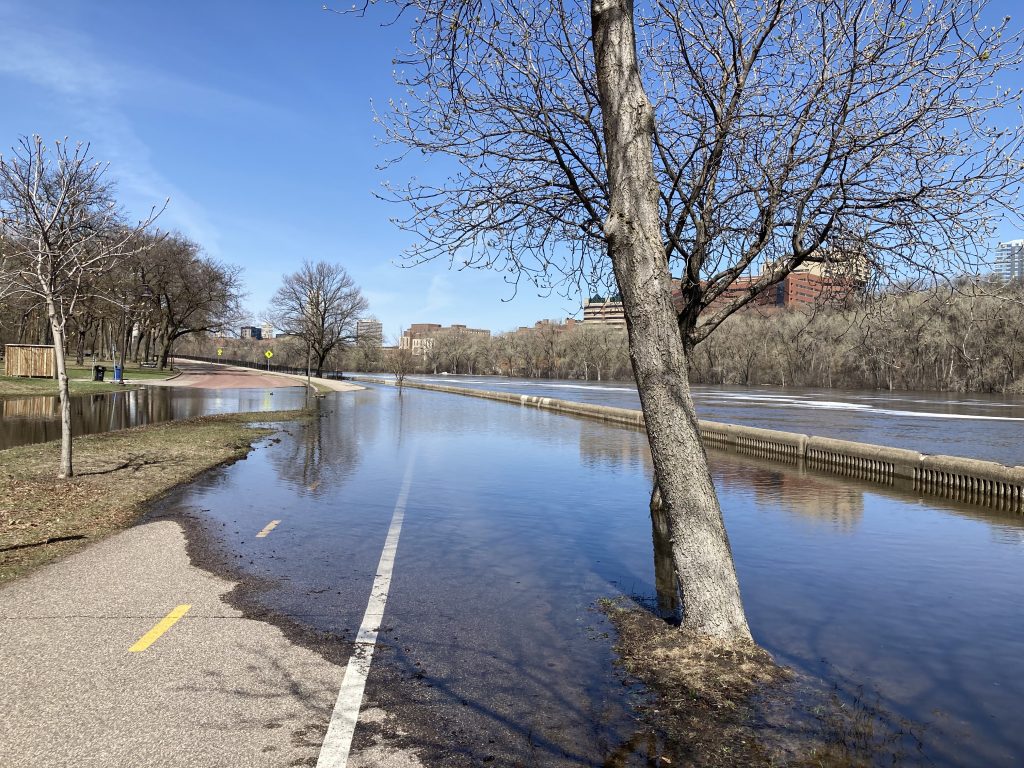
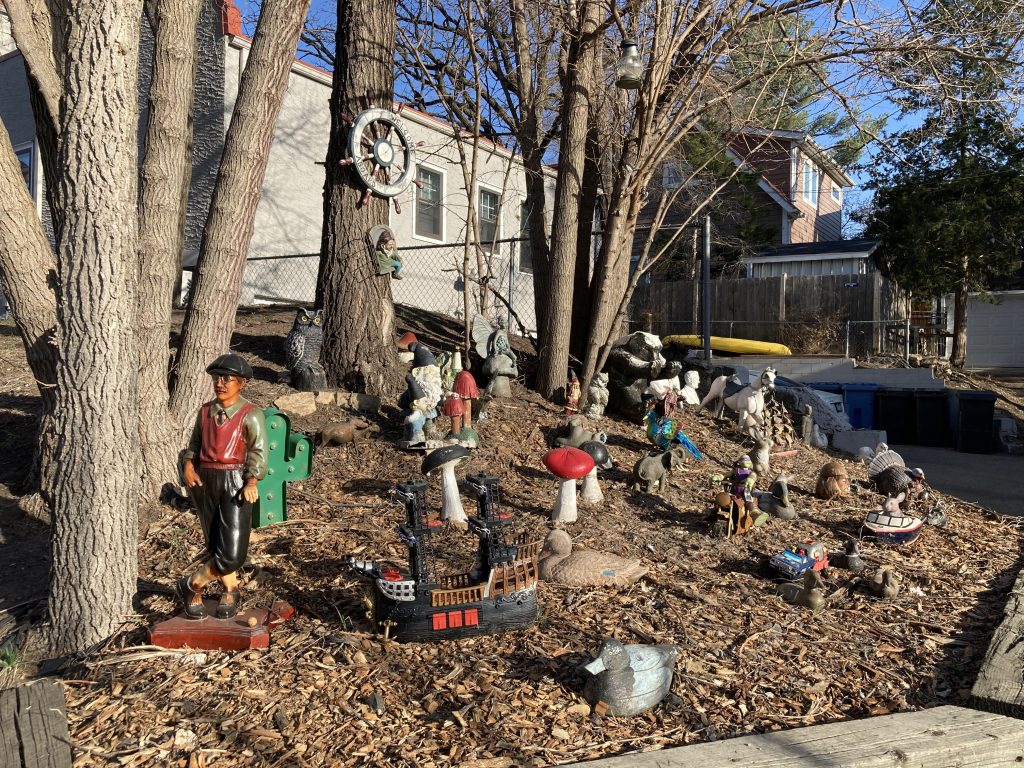
april 3/WALKYARD WORK

walk: 40 minutes
neighborhood with Scott and Delia
40 degrees

Feeling springier every day. Scott and I discussed how this last snow on Friday moved the twin cities up to the 3rd snowiest winter in history. Too much snow. It’s melting fast. Will everything be green by the end of next week, when we’re supposed to have a stretch of 50s and 60s? As we walked through the neighborhood, we looked at the colors of all of the houses; we’re getting our house repainted next month and trying to decide on which dark gray and whether to have a raspberry red, parakeet green, or copper harbor orange door. Mostly, I can’t really see the color on the door, but I’m fine with any of these three. It would seem fitting, though, to paint the door orange since I’m so obsessed with the color. And, copper harbor orange — where I was born in the UP!

Speaking of orange, I’m still working on my orange poem. Such a struggle. Not quite able to find the way in yet. For inspiration, I decided to search for orange songs, settled on Frank Ocean’s channel ORANGE. Will it help or distract?

Also trying to take a different approach to this poem. In my notes and on this log a few days ago, I wrote I orbit the orange. In terms of open water swimming, this is literally true. I loop around the orange buoys all summer — or 5-6 times a week, more than 100 loops. It is also true as a metaphor: in trying to write about the color orange, I circle around it again and again, wanting to make sense of what orange means to me, searching for ways to be able to see it or to sense it or to find a way around or through it when seeing it is not possible. This orbiting also provides one definition for poetry, which I also wrote about last week:

One thing poetry is about is orbiting things that you can’t quite find the words to describe or pin down with meaning. Becoming obsessed with them. Writing around them again and again. 

log entry from march 31, 2023

Later, I wrote in my notes a possible title for an orange poem, Orange, an ars poetica. Orange as more than a color, but a method, the void that my words are trying to encircle. Not white space or blank space on a page, but orange space, orange breaths, an orange too full to rhyme or offer back an echo. A source, a center, the place where I practice learning to be without seeing or to see in new ways.

I want to channel the orange, conjure it into existence, inhabit its invisible space, learn to see it new ways.

Think citrus fruit leaves in late fall turmeric
Think cheese puffs Planters cheese balls extra sharp cheddar cheese
Think candied slices from the Sears candy counter sherbet Betty Crocker au gratin potatoes
Think surprise pumpkins growing in the back yard candy corn pumpkins before a swim meet
Think construction cones road closed signs for races spray paint around cracks in the asphalt
Think almost red 1974 VW bugs
Think buoys butterflies missing mountains
Think orange orange orange orange orange

yard work: 30 minutes
backyard
43 degrees

After all the discussion about yard work (Schuyler) and everyday chores (Ammons), I decided to document my yard work today. While Scott tried to figure out a way to straighten are tall trees (arborvitae) which are leaning too far to stage left (if you’re looking from inside the house and out the window), I was on poop patrol. In past winters, I’ve tried to stay on top of this relentless task, watching where Delia pooped and digging it out of the snow. Not this year. Did I ever pick it up? I don’t think so. As a result, the yard is filled with poop, and because everything is thawing now, it’s soggy, gooey poop. Gross, I guess. It doesn’t really bother me. I filled up entire Target plastic bag with poop, then decided I might wait until it all dries out a bit more. At one point, in awe of the amount of poop on the ground, I called out to Scott without thinking, Holy shit! Literally.

I looked through a few more A. R. Ammons poems this morning, but they were all so long. Garbage should be arriving in the mail today, so I’ll wait for that to study him more. Instead, here’s a great poem by Gary Snyder from is collection Riprap, which I’ve been thinking of buying for a few years now.

Thin Ice/ Gary Synder

Walking in February
A warm day after a long freeze
On an old logging road
Below Sumas Mountain
Cut a walking stick of alder,
Looked down through clouds
On wet fields of the Nooksack—
And stepped on the ice
Of a frozen pool across the road.
It creaked
The white air under
Sprang away, long cracks
Shot out in the black,
My cleated mountain boots
Slipped on the hard slick
—like thin ice—the sudden
Feel of an old phrase made real—
Instant of frozen leaf,
Icewater, and staff in hand.
“Like walking on thin ice—”
I yelled back to a friend,
It broke and I dropped
Eight inches in

april 2/RUN

4 miles
minnehaha falls and back
38 degrees
99% clear path

Yesterday we woke up to more than 1/2 foot (7 inches?) of wet, heavy snow. I opened the curtain and our service berry bush, which looks more like a tree to me, was so weighed down with snow that it drooped over the deck and blocked the steps down to the yard. Back by the garage, the four tall, narrow trees were bent over, looking like an ice spider. Scott took a video:

the aftermath of April snow

Of course, because this is April snow, it was all melted by the time I went out for a run this morning around 10:30. Hooray! By the end of next week, it might be close to 60. I am ready for spring.

Before I went out for my run, I read this poem by A. R. Ammons:

Grassy Sound/ A. R. Ammons

It occurred to me there are no sharp corners
in the wind
and I was very glad to think
I had so close a neighbor
to my thoughts but decided to sleep before
inquiring

The next morning I got up early
and after yesterday had come
clear again went
down to the salt marshes
to talk with
the straight wind there
I have observed I said
your formlessness
and am

enchanted to know how
you manage loose to be
so influential

The wind came as grassy sound
and between its
grassy teeth
spoke words said with grass
and read itself
on tidal creeks as on
the screens of oscilloscopes
A heron opposing
it rose wing to wind

turned and glided to another creek
so I named a body of water
Grassy Sound
and came home dissatisfied there
had been no direct reply
but rubbed with my soul an
apple to eat
till it shone

some favorite lines:
there are no sharp corners in the wind
after yesterday had come clear again
wind as grassy sound with grassy teeth speaking grassy words
it rose wing to wind

I gave myself a task for my run on a windy (12 mph) day: observe how the wind speaks. I tried, but all I could hear was the wind rushing past my ears as I ran east toward the river. It didn’t speak as grass or swaying trees or wind chimes, just hissing whispers in my ears. By the time I reached the river I had already forgotten the task.

Running south to the falls, I listened to the birds, shuffling feet, and the fragment of a conversation that I hoped to remember, but have forgotten. On the way back, I put in a Taylor Swift playlist.

10 Things I Noticed

  1. the cardinal’s torpedoed call (a line from Didi Jackson’s “Listen”), not coming in slow waves, not coming in waves at all, but one rapid trill — too many notes coming too fast to count
  2. the river, a beautiful shiny bronze
  3. right after I reached the river, encountering 2 walkers pushing strollers, taking up almost the entire path
  4. at least 2 fat tires
  5. almost everywhere, the path was clear and dry, except for at the double-bridge where it was almost completely covered with lumpy snow
  6. a big pine tree down at locks and dam #1, blocking the running path. As I ducked under it, I noticed where it the trunk had split — was that the only tree that was down? Had there been more, or had they already cleared them?
  7. at the falls, someone was driving a giant snowblower and shooting snow off to the side of the trail. I could see a blur of white, hear the whirr of the snow flying through the air
  8. I know I stopped to look at the falls, but I can’t remember what it looked like, or how it sounded
  9. at least one runner (male) in shorts
  10. no mud or dirt or bare grass, everything covered (again) in snow

Back to Ammons’ poem:

oscilloscopes a device for viewing oscillations, as of electrical voltage or current, by a display on the screen of a cathode ray tube.

I’m thinking about how the narrator in Ammons’ poem is dissatisfied that the wind didn’t answer his question directly. My thought, did you really expect the wind to reveal its secrets? Such arrogance! Then I thought about a poem I read the other day by Denise Levertov:

The Secret/ Denise Levertov

Two girls discover
the secret of life
in a sudden line of
poetry.

I who don’t know the
secret wrote
the line. They
told me

(through a third person)
they had found it
but not what it was
not even

what line it was. No doubt
by now, more than a week
later, they have forgotten
the secret,

the line, the name of
the poem. I love them
for finding what
I can’t find,

and for loving me
for the line I wrote,
and for forgetting it
so that

a thousand times, till death
finds them, they may
discover it again, in other
lines

in other
happenings. And for
wanting to know it,
for

assuming there is
such a secret, yes,
for that
most of all.

I love the contrast between the Ammons and Levertov poems, their different perspectives on indirect communication — Ammons’ disappointed arrogance, Levertov’s grateful delight. Here, I’m on team Levertov. How boring to receive a direct, final answer. Much better to perceive incomplete answers that are soon forgotten and must be discovered again and again.

I’ll forgive Ammons for his arrogance though because of his wonderful image of the wind speaking as/with/through grass. I’d like to learn to speak as grass too or learn to listen for it. And, sometime when I’m running beside a field of tall grass, I’d like to recite his beautiful lines back to it:

The wind came as grassy sound
and between its
grassy teeth
spoke words said with grass