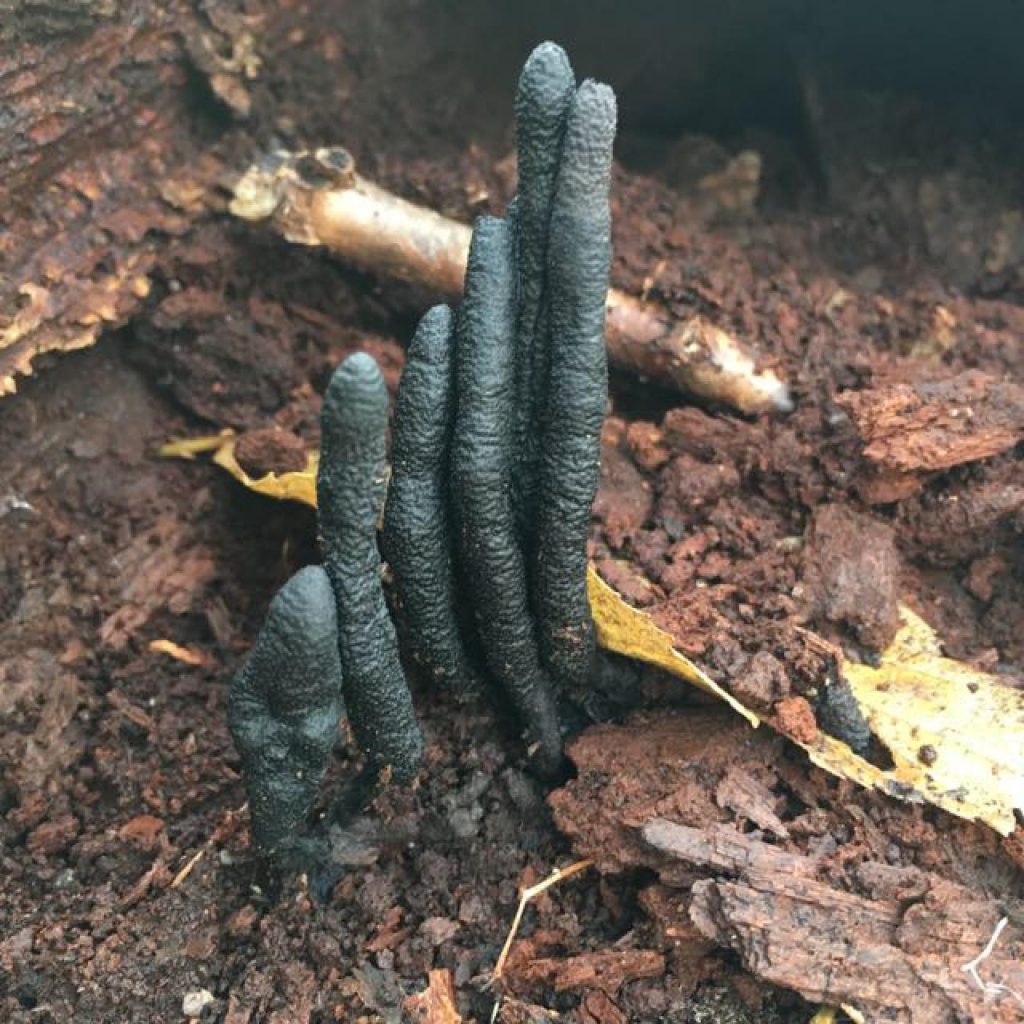
jan 11/RUNICEGETOUT

3 miles
ywca track

Still too slippery out on the sidewalk, so back to the y for another track workout. I don’t like running at the track as much as outside, but it’s better than the treadmill in the basement or nothing. Today it was crowded with lots of maneuvering around clueless walkers. I wasn’t angered by it, but it still took energy to speed up and shift and make sure I wasn’t running into anyone. I listened to my moment playlist and tried to stay relaxed. This year, running on the track feels strange — I struggle in the beginning to find my rhythm and my legs are sore when I’m done. But even though it was awkward and not nearly as fun as being by the gorge, it felt so good to be moving and getting my heart rate up.

Before offering so more context for future Sara, here’s a post from a former student that offers a beautiful description of the love here in Minneapolis:

LONG LIVE MINNEAPOLIS…

“…And the restaurateurs refusing ICE service;
The elected officials demanding access to detention facilities;
Long live the mutual aid runners organizing food caravans;
The hospital staff working to keep ICE away from patients and attorneys working to keep ICE out of our courts;
Long live our students pelting ICE with snowballs when they invade school grounds;
The teachers & school admins offering our youth hybrid & e-learning;
The noise makers keeping ICE awake in their hotels all night;
The generous folks handing out samosas, whistles, legal aid, hand warmers, & coffee at rallies;
Long live the immigrant rights orgs, working overtime for weeks to conduct ICE watches, coordinate legal service & comms among separated families, & prevent evictions under occupation;
The Signal coordinators fielding thousands of requests for rapid response alerts;
The artists opening their studios for poster-painting & sharing free downloads & screenprints of their images;
The city council leaders joining the frontlines despite utter exhaustion and risks to their own safety and wellbeing;
The veterans showing up at Whipple to denounce ICE’s abhorrent conduct;
The small business owners speaking out, at risk to their livelihoods;
The journalists upholding truth in the face of massive, state-sanctioned media repression & rubber bullets;
Ordinary folks braving single digit wind chills to lift their voices & march for hours;
Long live every immigrant to Minneapolis, & every child of immigrants.

Despite the truly unfathomable terror and violence unleashed by Trump and his supporters:

There are too many resistors to count. Too many resistors to thank.

We have The Many.”

More context for ICE in Minnesota

In my effort to educate myself about what’s happening in Minneapolis right now, I decided to look for more information about the latest ICE push by the US government here.

(6 January) The Trump administration has launched what officials describe as the largest federal immigration enforcement operation ever carried out, preparing to deploy as many as 2,000 federal agents and officers to the Minneapolis area for a sweeping crackdown tied in part to allegations of fraud involving Somali residents.

2,000 federal agents sent to Minneapolis area to carry out ‘largest immigration operation ever,’ ICE says

The fraud allegations have been simmering here for at least the last month, becoming very nasty, and getting so bad that it has led to violence against Somali residents:

The Council on American-Islamic Relations (CAIR) and its Minnesota chapter (CAIR-MN) today called on law enforcement authorities and public officials to take concrete actions to protect Somali-American day care centers and businesses that have been targeted with threats and harassment as children return to these centers in the wake of the holiday season ending.

A controversial and largely-debunked social media video of a conservative influencer showing up outside of day care centers in Minnesota has sparked a wave of copycat incidents in which white supremacists and social media influencers show up at similar institutions and demand access to children.

CAIR, CAIR-MN Call for Protection of Somali-American Day Care Centers Facing Copycat Harassment

It has also put so much pressure on Governor Walz that even though he is not directly connected to the fraud claims, he is not running for office again next year. The general sense among many Minnesotans is that the state, and Minneapolis and St. Paul, are being punished because Walz was the vice presidential candidate.

Along with the increased presence of ICE here,

The Trump administration has escalated its campaign against alleged benefits fraud, freezing social services funding for five Democratic-led states and announcing a new fraud-focused position in the Justice Department that will report directly to the White House. Officials also point, without evidence, to immigrants as the primary drivers of the fraud.

Influencer, White House welfare fraud claims are distorted, but the system has risks

added an hour or two later: Just read Heather Cox Richardson’s update on Facebook and this part was particularly pertinent:

Trump and his allies have singled out Minnesota in large part because of its large Somali-American population, represented in Congress by Omar, a lawmaker Trump has repeatedly attacked, from a population Trump has called “garbage.” As Chabeli Carrazana explained in 19th News, shortly after Christmas, right-wing YouTuber Nick Shirley posted a video that he claimed showed day care centers run by Somali Americans were taking money from the government without providing services.

The video has been widely debunked. In 2019, a state investigation found fraud taking place in the child care system and charged a number of people for defrauding the state. After that, the state tightened oversight, and state investigators have conducted unannounced visits to the day cares Shirley hit in his videos, where they found normal operations. Shirley claimed fraud when the centers would not let him in, but child care centers lock their doors and obscure the windows for the safety of the children, and would not let a strange man inside the facility to videotape.

But Trump used the frenzy to justify cutting $10 billion in antipoverty funding to five states led by Democrats—California, Colorado, Illinois, Minnesota, and New York—only to have a federal judge block his order yesterday. Secretary of Agriculture Brooke Rollins promptly announced she was withholding $129 billion in federal funding from Minnesota, alleging fraud.

Jane Hirshfield

Revisiting Jane Hirshfield’s wonderful poem, “Interruption: An Assay” that I posted on this day in 2024 and thinking about her definitions of interruption in relation to non-interruption, then disruption, then a break — break as a pause, a momentary stopping / break as a rupture, a split, a gap — a break in the trees, a break in the limestone.

What is the difference between interruption and disruption? Looking to Hirshfield for an answer, or as Mary Oliver puts it, a suggestion, I found a discussion of the periphery vs. the center. Wow!

INTERVIEWER

Your line “less to solve than to speak of what needs solving” reminds me of Chekhov’s statement, “Art does not provide answers, it can only formulate questions correctly.” What does this mean for an artist in our specific moment? One of your earlier poems, “In Praise of Coldness,” begins with another quote from Chekhov, “If you wish to move your reader, you must write more coldly.” It is a beautiful poem. “In sorrow, pretend to be fearless,” you say. “In happiness, tremble.” How do you relate to this statement from Chekhov now, after having written equally beautiful—but not at all cold—poems in Ledger that do, I think, provide answers, despite what you’ve said. I’m thinking of poems such as “Let them Not Say,” for instance, or “On the Fifth Day.”

HIRSHFIELD

Perhaps an answer in the realm of the arts is different from the right or wrong solution we bring to a problem in chemistry or mathematics. Arts “answers,” but in that word’s other sense of response, of reply. Both the poems you’ve named are bells rung hard. They summon attention. When you see a fire, you can’t stay silent.

I, though, do feel in them Chekhov’s coldness. A poem’s meaning requires an engineered, structural soundness, not so different from that of a building or bridge. Language, syntax, verb tense, soundscape, the placing of ink and ink’s absence on a page, are material things, just as steel is. Words experienced as comprehensible, consequential, do follow rules, though they are rules that a writer, like an architect, can test, press toward their outer limits. New materials bring new shapes of meaning and feeling. Those two poems feel strongly, but they are not an uncontrolled weeping. They argue, in the old-fashioned, rhetorical sense of that word, for something that matters, and make their argument in the ways art mostly does—from the side. I think it’s a good thing that poets work far from the center of our celebrity- and economics-driven culture. From the periphery, you can see more of the whole. From the center, any view will be partial. A poem is not a frontal assault, it is the root tendrils of ivy making their way into the heart’s walls’ mortar.

A Poem is Not a Frontal Assault: An Interview with Jane Hirshfield / The Paris Review

From the periphery, you can see more of the whole. From the center, any view will be partial.

A poem is not a frontal assault, it is the root tendrils of ivy making their way into the heart ‘s walls’ mortar. Yes! Hirshfield has another poem, In Praise of Being Peripheral, that I am reminded of here. Now I want to give more attention the peripheral, but later.
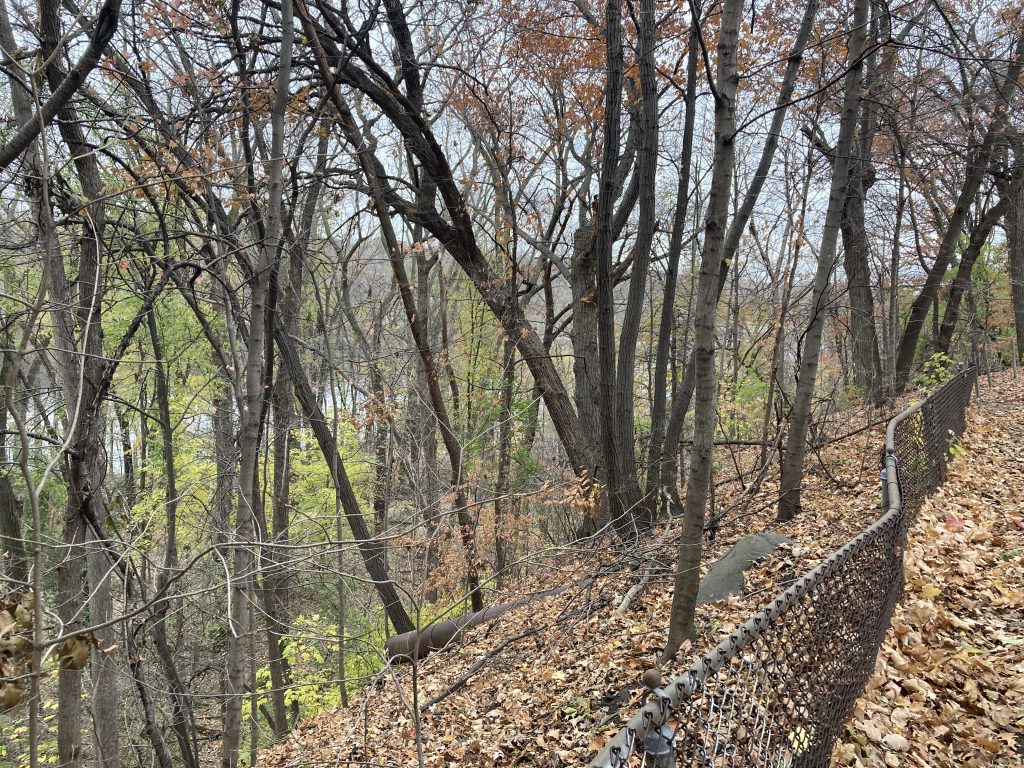
march 8/BIKEWALK

40 minutes
basement

Good job Sara! You wanted to run outside even though you should give it at least another day for your back to recover, and you didn’t. You biked instead. And you biked for 5 more minutes today, which was the plan. I felt stronger than yesterday. Could this be the spring/summer I bike more?

Watched more of Fame. Somehow I missed the screen that read, Junior Year. Did they have one? They didn’t have a great speech by the acting teacher, describing the focus of the year. Bummer.

I watched the rest of sophomore and all of junior year. Doris and Ralph get together, Irene Cara sings “Out Here On My Own,” Leroy hooks up with the waspy ballerina. The Rocky Horror Picture Show — a cool documenting of the history of it. As I listened to “Time Warp” I thought about creating a Time playlist — “Too Much Time On Hands,” “Time Warp,” “Summertime,” Hazy Shade of Winter,” “Seasons of Love,” “Time After Time.” I think this interest in time is always there, simmering beneath the surface, but today it’s here for two other reasons: 1. talking to my older sister recently and hearing about her latest work on time travel and 2. the lines/ideas I gathered about time in past entries and just reread — 6 march 2024, 8 march 2024.

Time. Moments. Minutes. Pace. Linear, circular, looping. Dragging. Flying. Seasons. Beats — foot strikes, heart rate. Inside Outside On the Edge of. Too much. Too little.

If nothing else, it’s time to gather together my discussions of time and post them on unDISCIPLINED.

more OR

Yesterday afternoon Scott and I went to Arbeiter Tap Room to write and drink beer. I picked out some favorites from my “or” list:

At Any Given Moment You Might Feel This or This or This, but Rarely at the Same Time

Ardor arbor or
forest fortitude
or sorrow’s origins or
porphyrion interiors
or befores or
no mores or
mortal organs
or distorted mirrors’
evaporating forms
or spores adored or
dictators abhorred
or terror ignored
or

walk: 40 minutes
neighborhood
45 degrees

A blue sky, empty, at the start. A blue sky, mixed with fluffy and streaky clouds, halfway through. Bright, warmer, breezy. The snow on the streets is almost all melted. Only a few streaks. The field at Cooper has a flat layer of snow but no mini-mountains this year. This is the field where the plows dump the snow. Usually by March it has transformed into the badlands, with lumps and hills and jagged craters of dirty snow. Not much snow to plow or dump in the winter of 2024-25.

added, 9 march 2025: This morning, as I read past 9 march entries, I remembered a few more things from the walk:

  • the wind passing through the brittle leaves on a tree, sounding like water falling — not like rain, but like a cataract
  • the wind passing through a giant cottonwood causes it to sing like a door creaking open — creeeaaak
  • a white plastic bag stuck high in the tree — the quick flash of white reminded me of the moon

peripheral vision

I’m reading Peter Swanson’s book The Kind Worth Killing and this reference to peripheral vision came up:

A few years earlier I’d gone out fishing with a colleague, a fellow dot-com speculator who was the best open water fisherman I’d ever known. He could stare out at the surface of the ocean and know exactly where the fish were. He told me that his trick was to unfocus his eyes, to take in everything in his visual range all at once, and by doing that he could catch flickers of movement, disturbances in the water. . . . I decided to use this same trick on my own house. I let everything sort of blur in front of my eyes, waiting for any motion to draw attention to itself, and after I’d been staring at the house for less than a minute I caught some movement through the high window. . . .

My eyes are always mostly out of focus and I often see flashes of movement. In fact, it can be very distracting and irritating how my eyes, without wanting to, are drawn to the movement. One particularly form of movement I can’t not see: someone’s twitching legs, especially out of the corner of my eye at a band concert.

march 20/RUN

4 miles
trestle+ turn around
22 degrees
wind: 21 mph gusts

Straight into the wind running north. Not fun, but not nearly as bad as yesterday. Felt stronger, faster for parts of it. Running up the hill just south of the lake street bridge my calf tightened up a little. I stopped, walked, then started again, more cautious this time. Thought about Thomas Gardner and Poverty Creek Journal and his brief descriptions of sore calves after a tough session of hill repeats. After lots of anxiety for weeks, calf pain is now just a normal/regular part of my running. I’m glad — not for the off and on pain, but for the everydayness of it.

Some shadows — soft, crooked, in motion: birds, gnarled tree branches, broken fence rails. Other shadows — dark, on trees, looking like someone standing there. Don’t remember seeing the river but I do remember the floodplain forest — open, bare, beautiful. No chain across the top of the old stone steps. Wondered what will happen in a few days; big snow predicted, well, possible.

Listened to birds and cars and grit on the trail running north, my winter playlist running south.

before the run

Encountered these lines on twitter this morning, from Charles Wright:

When what you write about is what you see, what do you write about when it’s dark?

Charles Wright

I like thinking/reading/writing about the dark. Imagining it otherwise, not as the absence of light, where light = life and happiness and safety, but as where more things are possible, outside the scrutiny of those watching and judging and classifying. The dark, soft. The dark, no need for sharp vision or eye contact. The Dark, where Emily Dickinson’s little men hurry home to their house unperceived and robins in a trundle bed try and fail to hide their wings under their nightgowns. Where Carl Phillip’s willow wants more for compassion than for company. The dark: the moon, the stars, louder silence. The dark, where reds and greens and blues and yellows are no longer necessary —

A strange thing I’ve realized about my color vision. I can still see colors — the light green placemat my computer sits on, the purplish-reddish-blueish of my computer desktop, my bright blue hydroflask. And I can still see when things are in color. But, when something lacks color, like a movie in black and white or the middle of the night in my bedroom, I can’t tell that there isn’t any color. It looks and feels the same.

4 moments when I noticed this:

one and two: from a log entry on 13 nov 2022

1 Yesterday afternoon, in the chapel at Gustavus, which was not dim but not bright either, I started to notice that looking one direction, toward the far window on the other side, the only color I could see was an occasional red square embedded in the walls (I double-checked with Scott; there were also a bunch of blue squares too). The hymnals 15-20 feet away, which I know are red, looked dark but colorless. Staring out at the crowd of people, everyone looked like they were dressed in dark or light — not quite black or white, just dark clothes or light clothes. No variation, no purples or blues or oranges or anything but dark and light. It was strange, partly because it didn’t feel strange. It wasn’t like I thought, where is all the color?

2 It felt more like when I wake up in the dark and, after my eyes adjust, I see the room and it looks like the room, but just darker, dimmer and without color. And, usually I don’t think there’s no color — sometimes I might even think I see color because I know my robe is purple or the pillow is yellow, or I don’t see yellow, but I recognize the pillow on the couch as that yellow pillow because I already know it’s yellow.

three: from a log entry on 12 jan 2024

The other day, Scott, FWA, and I were discussing the scenes in Better Call Saul that are set in the present day and are in black and white. Scott and FWA both agreed that those were harder to watch — they had to pay more careful attention — because they lacked color, which is harder because visual stories often rely heavily on color to communicate ideas/details. I said I didn’t realize that they were in black and white; they didn’t look any different to me than the other scenes, which are in vivid color (at least that’s what they tell me). I realized something: it’s not that I don’t see color, it just doesn’t communicate anything to me, or if it communicates it’s so quiet that I don’t notice what it’s saying.

four: this week

A few days ago, we decided to finally watch Maestro. Wow! We haven’t finished it yet, but Scott and I are really enjoying it. The first scene is in color, which is intended to represent the present, at least the present as it exists in the movie. The second scene is in black and white and represents Bernstein just before his big break. After watching it for a minute or two Scott said, you see that this in black and white, right? And I said, oh, is it? I didn’t notice. I was focused on the contrast — the dark, closed-curtain window and the outline of brightness around it.

Color exists, it just doesn’t speak to me in the same ways (as it used to, or as it does to other people). It’s not a foreign language, it is just turned down, whispering. Yes, it does make it harder to understand visual stories that rely on color to tell part of the story — a favorite: present times = color; the past = black and white — but it doesn’t bother me that much. Instead, I find it fascinating, the opportunity to notice the constructs of color and to see the world (and color) differently.

Okay, that was a long ramble about color and black and white, but I think I’d like to write another color poem about it.

Now back to the quote from Charles Wright on twitter. As is often the case, there was no mention of where it came from, other than it was from Charles Wright. I always find this frustrating. But, I found it easily enough: Littlefoot, 32 in The New Yorker, 2007. Such a wonderful poem!

Back yard, my old station, the dusk invisible in the trees,
But there in its stylish tint,
Everything etched and precise before the acid bath
—Hemlocks and hedgerows—
Of just about half an hour from now,
Night in its soak and dissolve.
Pipistrello, and gun of motorcycles downhill,
A flirt and a gritty punctuation to the day’s demise
And one-starred exhalation,

V of geese going south,
My mind in their backwash, going north.

my old station: love this way of describing a usual spot to sit
the stylish tint: oh, the softness of near-night!
everything etched and precise: I love walking at night in the winter and noticing the contrast between the sky and the bare branches, which I can see more clearly than at any other time. During the day, those branches are a fuzzy blur, but at night they are etched!
Hemlocks and Hedgerows: sounds like a musical act or a comedy duo Scott adds: proto Prog rock/psychedelic band, Margaret’s Electric Forest or Garden, first album: Hemlocks & Hedgerows
a pipistrello is Italian for bat, or “small mouse-like animal that flies”
sounds of day’s demise: a flirt of a bat, the gritting punctuation of a motorcycle’s gun downhill
one-starred exhalation: me, almost every night — o, look at the stars!
I love hearing, then seeing, a V of geese in the evening. The choice of backwash instead of wake is interesting — and flying south/mind going north is a wonderful way to suggest being out of sync

Wow, that is one packed first stanza! I’ll skip the next one to get to the quoted lines:

When what you write about is what you see,
what do you write about when it’s dark?
Paradise, Pound said, was real to Dante because he saw it.
Nothing invented.
One loves a story like that, whether it’s true or not.
Whenever I open my eyes at night, outside,
flames edge at the edge
Of everything, like the sides of a nineteenth-century negative.
If time is a black dog, and it is,
Why do I always see its breath,
its orange, rectangular breath
In the dark?
It’s what I see, you might say, it’s got to be what my eyes see.

I’ll have to think about these lines some more. Right now I wonder, when your peripheral vision is fraying, do you see strange things, like flames, at the edges? What do edges look like to me in the dark? I’ll try to remember to notice when I wake up in the middle of the night tonight, like every night. In the light, they are fuzzy and dance a soft shimmy.

It’s real because we see it? Different ways to respond to this. I’m thinking about how so much of what our eyes see is illusion or guessing based on habits and repeated practice and context and other brain tricks. Even so, most people believe that what they are seeing is real. If they believe, and act as if what they are seeing is real, why can’t I believe and act as if what I’m seeing is real too? All those soft, generous things; those strange headless and legless torsos walking towards me; that river burning with a white heat that sets the trees on fire?

Okay, it’s almost 11 am. I need to go out for my run before I finish this!

during the run

Did I think about this poem at all while I was running? I can’t remember.

after the run

During the run, I noticed bird shadows crossing my feet, both of us flying, the birds in the air, be just above the trail. I decided to add it into a fun poem I’m writing called “Birding.” It’s a series of small verses in my 3/2 form in which I describe how I see birds with my cone-dead eyes.

Not sure if this works:

vi.

a shadow
travels

over feet
running

downhill — flight
4 ways:

the moving
shadow

the descending
runner

a belief
shadows

signal some

thing and

the small form
gliding

closer to

the sun.

shadows

1

And just like that, my plan to return to Wright’s poem will have to wait. Instead, I’m thinking about shadows, which is something I’ve wanted to do ever since I realized, earlier this month, that shadows see more real to me (as in, having more substance, easier to see as solid) than the object from which they’re cast — is that the most awkward way to say that? Here’s what I wrote on march 9, 2024:

As I was admiring the fence railing shadows I thought about how clear and real they seemed to me. Much more there than the actual fence railing, which was staticky and vague.

log / 9 march 2024
2

So, in the draft of my poem, I wrote: a belief/shadows/signal some/thing. In a different version, I wrote: a belief/shadows/have substance. Do I like that better? I can’t decide. I think it was inspired by a passage I read in Becoming Animal (which was a recommendation from my super smart niece):

One of the marks of our obliviousness, one of the countless signs that our thinking minds have grown estranged from the intelligence of our sensing bodies, is that today a great many people seem to believe that shadows are flat. If I am strolling along a street on a cloudless afternoon and I notice a shapeshifting patch of darkness accompanying me as I walk, splayed out on the road perpendicular to my upright self, its appendages stretching and shrinking with the swinging of my limbs, I instantly identify this horizontal swath as my shadow. As thought a shadow was merely this flatness, this kinetic pancake, this creature of two dimensions whom one might peel of the street and drape over the nearest telephone wire.

Becoming Animal / David Abram

I haven’t finished the chapter yet, but I was able to access it through the reading sample on amazon — so I’ll return to finish later.

3

The line about draping the shadow over a telephone wire enabled me to remember a delight poem I read by Paige Lewis a few years ago:

When I Tell My Husband I Miss the Sun, He Knows/ Paige Lewis

what I really mean. He paints my name

across the floral bed sheet and ties the bottom corners
to my ankles. Then he paints another

for himself. We walk into town and play the shadow game,
saying Oh! I’m sorry for stepping on your

shadow! and Please be careful! My shadow is caught in the wheels
of your shopping cart.
It’s all very polite.

Our shadows get dirty just like anyone’s, so we take
them to the Laundromat—the one with

the 1996 Olympics themed pinball machine—
and watch our shadows warm

against each other. We bring the shadow game home
and (this is my favorite part) when we

stretch our shadows across the bed, we get so tangled
my husband grips his own wrist,

certain it’s my wrist, and kisses it.


march 9/RUN

4 miles
river road, north/south
25 degrees

Oh, I love running in weather like it was this morning! Sunny, calm, crisp air. So many shadows, some sharp some soft. Sparkling, shimmering, simmering river. Today my legs didn’t feel heavy and my calf was quiet, or maybe it was humming happily? My IT band didn’t hurt either! No compression sleeve while I ran, just after, for recovery.

I felt good. When I reached 2 miles I stopped, spoke a few notes into my phone, put on Beyoncé’s Renaissance and ran south.

10 Things

  1. shadows of the fence railing above the ravine, 1: 3 slightly crooked lines on the path, very solid and sturdy and thick
  2. fence railing, 2: the 3 lines became straight and crisp, seeming more real than the actual fence railing to my eyes
  3. shadow, 3: another solid sharp thick line from a tree’s branch
  4. shadow, 4: a soft, almost fluffy, form made from a cluster of small branches
  5. shadow, 5: a flash of dark overhead — a big bird in flight?
  6. shadow, 6: not a flash, but a flutter or flurry of movement — a few darting birds?
  7. a small white dot in the sky — was it a plane? the moon? I tried to find it in my peripheral vision but couldn’t
  8. something dark and plastic looking down below on the winchell trail — a sleeping person?
  9. young voices rising up from longfellow flats
  10. hopefully mis-overheard — one older woman to another: I farted and then the diaper filled with blood — what?

As I was admiring the fence railing shadows I thought about how clear and real they seemed to me. Much more there than the actual fence railing, which was staticky and vague.

At some point in the run, I had an idea for the triptych poem I was working on earlier this morning: intentionally do not mention the type of bird I’m writing about. It’s all about these different ways that I see birds through my peripheral — swishing wings, a call/cry/sound?, a sense of feathers and a shadow. Yes!

This weekend, I need to finish the wonderful book I’m listening to before it gets automatically returned to the library: The Ten Thousand Doors of January. I’m thinking about doors a lot lately. Wrote this before breakfast:

an open
door says

come in and
a shut

door says who
are you

but a door
opening

does not speak, 
it sings.

Does it work? Not sure. And here’s a wonderful poem by W.S. Merwin:

Door/ W.S. Merwin

This is a place where a door might be
here where I am standing
In the light outside all the walls

there would be a shadow here
all day long
and a door into it
where now there is me

and somebody would come and knock
on this air
long after I have gone
and there in front of me
a life would open

feb 24/RUN

1.25 miles
neighborhood
27 degrees

A short run to see how my calf was doing. I think it’s okay. No pain. My heel felt a little strange by the end, but that could be from the cold — I didn’t run long enough to warm it up. (a cautious) Hooray!

My favorite parts of today’s run: cresting the hill on edmund and seeing the river burning a bright silvery white in the distance; the comforting smell of a fire burning in someone’s fireplace; and the wind chimes echoing through the alley as I walked home.

before the run

While searching for calf stretches I came across this delightful fact: the calf is often referred to as the peripheral heart!

Throughout the calf muscles is a network of veins, arteries and nerves. The calf muscles and the deep veins have a network of valves and pumps. This system is called your “peripheral heart.” This is because, when you’re in an upright position, the calf muscles work against gravity to close the valves – contracting and driving blood from your legs towards your heart.

Sore Calves: A Full Guide

Very helpful. I remember reading about calf heart attacks and I wondered why they were called that. Now it makes sense! Also good to remember: the calf is made up of 2 muscles: gastrocnemius (bulging one) and soleus (flat, underneath).

Before heading out for my run, I tried out these stretches. I liked them:

after the run: fun with medical terms!

I haven’t done one of these for some time. I want to turn gastrocnemius and soleus into something else. Inspired by Mia Farrow in Rosemary’s Baby, I’ve pulled out my scrabble letters and I’m making new words or phrases.

  • gout ocular messiness
  • regulate moss cousins
  • smile across us tongue
  • oust uncola’s regimes! this has an extra s that I couldn’t fit, but it was too good not to mention

That’s all I have right now. I think I’ll keep working on it later today. It’s fun, but the tiles are harder to see than I thought.

feb 6/RUN/WALK

6.2 miles
dog park and back
44 degrees

Another warm, spring-like day. More mud, no snow. Overcast. The wonderful sounds of birds. For 2/3 of the run, I listened to cars and my feet striking and voices and water gushing. For the last 1/3, I put in a playlist — Winter 2024.

I felt good — so much better than yesterday. Most of the time, I was zoned out, listening but not looking more than I needed to. I know that I glanced down at the river, but all I remember is that it was open. Somewhere near the shore little strips of snow still remained.

I felt strong and sore and not amazing, but certain that I’d be able to keep running.

A few hours later, RJP and I took Delia on a walk. I often ask and RJP rarely says yes, so today was a nice surprise. We ended up taking the old stone steps down to the river at Longfellow flats — a fitting destination because I just found out today that my poem about these steps and the spot by the river will be published in Scrawl Place. Wonderful news! The poem is titled `112 steps — the number of steps you take to get to the bottom. I counted 111 today, but I think I forgot to count the top step.

added the next morning: I almost forgot about the turkeys! Running south, somewhere near locks and dam no. 1, I saw them: 6 or 7 turkeys crossing the path. One of them sped up to pass before I got to them — a half walk half run that was more efficient than the human version but just as awkward. Hooray for wild turkeys!

peripheral

some notes from The Plentitude of Distraction

William James: (in his Laws of Habit lecture) the ability to experience subtle degrees of emotion depends on practice, on a regular encounter with non-teleological ways of apprehending the world. Once the brain stops cultivating gratuitous pursuits–music, poetry, painting–and limits its range to the recording of facts, to the single-minded quest for information, then its emotional and aesthetic elasticity deteriorates.

Work, unlike leisure, usually follows one direction and points toward a clear goal. This endows it with a reassuring automaticity. Art and play, on the other hand, tap into untried areas of the brain, calling for greater effort and elasticity not readily available to the untrained mind.

He believes in mental, not just physical aerobics, pushing for a veritable gymnastics of the spirit.

what might a poetics and spiritual gymnastics — that involves the body too — look like?

a problem: when attention is more about busyness than wonder

disengaged engagement

a heightened yet singularly unfocused relationship to phenomena

slow, not fast-paced result-oriented engagement, requires a particular sort of endurance — boredom as a necessary step to lasting absorption

endurance exercises to practice — I love this idea of thinking about disengaged engagement as an exercise, one to be added to my exercise plan: runs, core, stretching, building up ways to be distracted

being human means to inhabit a presence-absence mood — detached attentiveness, letting the minor and major coexist, active and passive

listening to furniture music from Erik Satie

Montaigne: no linear thinking, float along with the light, winged flights of fancy…nothing worthwhile can be harvested immediately — important: this type of wandering/distraction is not the same as our current culture of distraction (finger swipes and taps on screens)

Walter Benjamin: delicious idleness

Focus is useless without distraction, and distraction, without motivation and a pinch of single-mindedness, rapidly dwindles into listless lethargy.

Virginia Woolf, from A Room of One’s Own: “It is in our idleness, in our dreams, that the submerged truth sometimes comes to the top.”

If you set your goals of efficiency and productivity aside, if you stop measuring your days by what you can report to your boss or to your conscience, you might be ready to call your symptoms of distraction by another name—reverie, daydreaming, ruminating.

Now listening to the score for Better Call Saul.

Roland Barthes and emptiness training — stepping away, slowing down, slowly gaining access to a world that will eventually demand focus

inventiveness can only be culled from the outer margins of consumerism

All this talk of slowness and gradual focus and learning how to not understand the plot right away or to make sense of everything instantly is a key part of my seeing through peripheral vision. Or, is it? Could it be more about not seeing, as opposed to seeing differently? I’ll think about that.

key themes for distraction: slow, gradual, idle, non-linear, reverie/daydreaming, a practice/skill

Aerial View/ Jericho Brown

People who romanticize an Africa
They’ve never seen
Like to identify themselves
With lions. It’s all roar and hunt,
Quick fucks and blond manes.
People love the word pride.
Haven’t you seen the parades?
Everybody adores a lion
But me. I want to be a giraffe.
I’m already tall and long-necked.
In the real Sahara, a giraffe beats
A lion’s ass every day
On Instagram. I’ve seen
A giraffe shake the leaping cat
Off its back and toss it like litter.
I’ve seen a giraffe stomp hooves
Down hard on the lion’s face
Before it got the chance
To meow. I want to be a giraffe
And eat greens of every variety
Straight out the tree. I already
Like to get high. Lions need
Animals like us. We need no prey.
I already won’t chase anybody
For my food. But maybe
I can still be romantic. Maybe
I can still be romantic in spite
Of my pride. Someone will notice.
Up the sky, not down the street.
You can watch me while I watch you
And the rest of the savanna
From my aerial view. Lord,
Let me get higher. Just one of me
Is a parade.

What a beautiful poem! I love Jericho Brown’s work and his interviews and the brief podcast he did about Dickinson. I wish I would have been at Emory when he was there — would I have been brave enough to take one of his classes?

feb 5/RUN

3.2 miles
locks and dam no. 1 and back
45 degrees

Ran in the afternoon. 45 degrees and no snow. Spotted one lone chunk of ice floating in the river. Very mild. I was overheated in my layers: black tights, black shorts, long-sleeved green shirt, orange sweatshirt. For a few minutes of the run I felt good, but for most of it I felt off. Some gastro thing, I think.

In my state of discomfort and distraction, did I happen to notice 10 things?

10 Things

  1. overheard, one woman walker to another: It’s been five years and a lot has changed
  2. kids yelling on the playground
  3. a flash of white car up ahead — were they driving the wrong way in the parking lot? No, the car I was seeing was on the road, on the other side of the ravine
  4. someone roller blading — not roller skiing
  5. the short dirt trail where folwell climbs up to the top of the bluff then back down again was all mud
  6. lots of bikers on the bike path
  7. lots of walkers down below on winchell
  8. (as mentioned above) the river was open except for one big chunk of ice
  9. playing chicken with a walker who was walking on my side until the last minute — were they playing chicken too or just oblivious?
  10. no grit on the path or shadows or honking geese or regulars

today’s peripheral: just a distraction

daydreams reveries distractions

When ideas float in our mind, without any reflection or regard of the understanding, it is that which the French call reverie; our langauge has scarce a name for it.

John Locke, cited in The Plentitude of Distraction

To make a prairie/ Emily Dickinson

To make a prairie it takes a clover and one bee,
One clover, and a bee.
And revery.
The revery alone will do,
If bees are few.

This short book takes a second look at distraction, extracting untold pleasures and insights from its alleged dangers, defending and celebrating the unfocused life for the small and great miracles it can deliver.

The Plentitude of Distraction/ Marina can Zuylen

Reverie in Open Air/ Rita Dove

I acknowledge my status as a stranger:
Inappropriate clothes, odd habits
Out of sync with wasp and wren.
I admit I don’t know how
To sit still or move without purpose.
I prefer books to moonlight, statuary to trees.

But this lawn has been leveled for looking,
So I kick off my sandals and walk its cool green.
Who claims we’re mere muscle and fluids?
My feet are the primitives here.
As for the rest—ah, the air now
Is a tonic of absence, bearing nothing
But news of a breeze.

feb 4/CORE

30 minutes

30 minutes of squats and planks and leg lifts and clam shells and bridges. This is my second time doing the workout; it felt much easier (but not easy!) than the first time.

Today’s example of peripheral is a journal I discovered a few months ago: Peripheries. Here’s a description from their About page:

Peripheries is a non-profit literary and arts journal established in 2017 that publishes artistic work that is, broadly understood, “peripheral”; work that explores the interstices between discourses, traditions, languages, forms, and genres. In this spirit, along with publishing poetry, visual art, and short stories, our scope is expansive, including translations, interviews, reviews, aphorisms, recipes, instructions, and manifestos; we also enjoy material peripheral to published work, such as storyboards, drafts, sketches, and word lists. We encourage formal experimentation that is in a mutually-informing, organic relation to the artist’s topic or question, which might also explore the peripheral: the marginal, the incidental, the boundary-experience, the tangential, the borderline, and particularly the metaxical spaces (that both attract and repel) between artistry, theological speculation, mystical experience, and religious traditions. We are excited to expand these discussions in whatever way is meaningful to you and bring your myriad interpretations into dialogue on our pages. 

peripheral as interstices — a space that intervenes between things, especially closely spaced things / a gap or break in something generally continuous / a short space of time between events — I really like this idea of interstices … Scott is just informing me that interstitial is commonly used in web development. It’s a page you get sent to when you’re clicking on a link that will take you to another site. It warns you that you’re leaving their site so they’re no longer responsible for what happens to you.

I don’t have any more time to write about this now, but I’d like to return to it — think more about what it means and read at least one of the issues that I already downloaded (3).


feb 3/RUN

5 miles
ford loop
38 degrees

Ran with Scott on the ford loop. Today I talked about the US Olympic Marathon Trials, which I watched this morning. A runner from Minnesota, Dakotah Lindwurm, got third. Scott talked about the music project he worked on before the run — a little jam with his new keyboard and bass. We also mentioned slippery mud, tight shins (Scott), cramped toes (me), running up the Summit hill during the marathon, and mistaking a fire hydrant (Scott) and a black fence (me) for people. I was surprised that there weren’t more people out running — it’s not that cold and the paths are clear. Maybe it was the time of day — 12:30?

10 Things

  1. an empty bench on the bluff
  2. a wide (r than I remembered) expanse of grass between the path and the edge
  3. the crack trail
  4. some strange decorations on the fence in front of the church — yarn? paper chains?
  5. a car blasting music at an overlook parking lot — the only lyric I remember was senorita
  6. a wide open view of the river and the other side
  7. a double lamp post on the ford bridge — one light was on, the other was not
  8. the dead-leafed branch that’s been pushed up agains the other side of the double bridge for months — still there with all of its dead leaves
  9. no poem on the poetry window — have they stopped doing it? was it just for the pandemic?
  10. ice on river, near the east shore, one chunk almost the shape of a right triangle

Searching “peripheral” on the Poetry Foundation site, I found this interesting blurb:

Poet Tan Lin edited issue 6 of EOAGH, for which he invited contributors to submit a piece of “peripheral” writing – that is, a text that doesn’t directly supply the material or inspiration for the authors’ work, but is in some tangential, peripheral, or ambient way, related.

blurb

I would like to play around with this idea of the peripheral text in my own writing. What are the peripheral texts, ideas, practices that contribute to my poems, especially my Haunts poems?

feb 2/RUN

4.7 miles
river road trail, north/south
35 degrees

Another beautiful and disturbingly mild late morning. No snow or ice. Glancing over at the gorge, it looked like April not January. Noticed my shadow — first she was in front of me, then behind and off to the side. Heard a pileated woodpecker laughing somewhere above me. Smelled something sour just below me, near the rowing club. Almost slipped on some mud.

I thought about, and tried emphasizing, my peripheral vision as I ran. What did I see? I can’t remember.

Listened to birds and traffic and my striking feet as I ran north. Put in Jesus Christ Superstar running south.

Peripheral

This month’s challenge: peripheral. The first thing I did was to search through my old entries and tag any mention of the peripheral.

The next thing I wanted to do was to create a playlist of peripheral songs, like I did with windows last month, but not much was coming up — except poet-singer Fiona Apple’s excellent Periphery. So, I’m taking a different approach: peripheral music = incidental music or ambient or background music. Maybe even a movie or tv score? Erik Satie’s furniture music (I discovered this term on apple music last year when I was searching for “chill” music). Here’s something about Satie that I found:

the idea of “music to be ignored” was first articulated by Erik Satie, who wrote what he called “furniture music” (musique d’ameublement).   This was music which had no set form and sections could be re-arranged as a performer or conductor wished, much like furniture in a room, and to act as part of the ambiance or furnishings.

Antecedents of Ambient Music

As I write this, I’m listening to one of the most well-known of the background/ambient genre: Ambient 1: Music for Airports by Brian Eno. In an article about ambient music, Open Culture offers these words from Eno in an interview:

“For me, the central idea was about music as a place you go to,” he said in an interview about his recent ambient album Reflection. “Not a narrative, not a sequence that has some sort of teleological direction to it — verse, chorus, this, that, and the other. It’s really based on abstract expressionism: Instead of the picture being a structured perspective, where your eye is expected to go in certain directions, it’s a field, and you wander sonically over the field.”

Hear the Very First Piences of Ambient, Erik Satie’s Furniture Music

Yes! I love things that aren’t driven by a narrow story or purpose — no teleology — but create a place to inhabit. Poems are often described as places — a house or an open field. The idea of the eye (or the ear) wandering through a field immediately makes me think of peripheral vision — it doesn’t offer focused, detailed images, but a broader sense of the whole picture — less the trees, more the forest.

All this writing about ambient music makes me think of one of Eno’s longtime collaborators, Robert Fripp. In 2020, he released an ambient track, culled from his decades of recording, every Friday. I’m listening to a playlist of them on Apple Music right now: Music for Quiet Moments 1: Pastorale (Mendoza 3rd June 2007). I love what Fripp writes about these moments on his blog (I like the design of his blog too!)

Music For Quiet Moments…

I

A Quiet Moment is how we experience a moment: the moment which is here, now and available.

Quiet moments are when we put time aside to be quiet;
and also where we find them.
Sometimes quiet moments find us.

Some places have an indwelling spirit, where quiet is a feature of the space:
perhaps natural features in the landscape;
perhaps intentionally created, as in a garden;
perhaps where a spirit of place has come into being over time, as in an English country churchyard.

Quiet may be experienced with sound, and also through sound;
in a place we hold to be sacred, maybe on a crowded subway train hurtling towards Piccadilly or Times Square.

A Quiet Moment is more to do with how we experience time than how we experience sound.

A Quiet Moment prepares the space where Silence may enter.

Silence is timeless.

II

My own quiet moments, over fifty-one years of being a touring player, have been mostly in public places where, increasingly, a layer of noise has intentionally overlaid and saturated the sonic environment.

III

Quiet Moments of my musical life, expressed in Soundscapes, are deeply personal; yet utterly impersonal: they address the concerns we share within our common humanity.   

Paradoxically, they have mostly taken place in public contexts inimical and unsupportive of quiet.

Some of these Soundscapes are inward-looking, reflective.
Some move outwards, with affirmation.
Some go nowhere, simply being where they are.

Robert Fripp’s blog post

The peripheral as the space/time where these quiet moments are possible.

jan 31/RUN

4 miles
minnehaha falls and back
43 degrees

Feels like spring today. Sun, warm air, less layers. Today: black tights, black shorts, long-sleeved green shirt, orange sweatshirt, hat, buff, headband.

No gloves. No winter jacket. No snow on the path. Lots of birds and darting squirrels and shimmering water.

I felt sore from the 30 minute workout I did yesterday, but not too sore. Maybe I’ll try it a few more times.

Thought about how strange it was to be running in January with no snow and such warm air. It’s not just that it’s warm today — we’ve had warm days in past Januarys, but that it’s been warm like this for 4 or 5 days and will continue to be this warm for the next week. And, there’s no snow. Bad for the trees; they’re starting to bud. RJP came home the other day from school and told me how one of her friends was very scared about the warm weather — we’re all going to be dead by the time we’re 30, he said. How terrible to be coming of age in this time, when statements like this are felt so intensely by so many people.

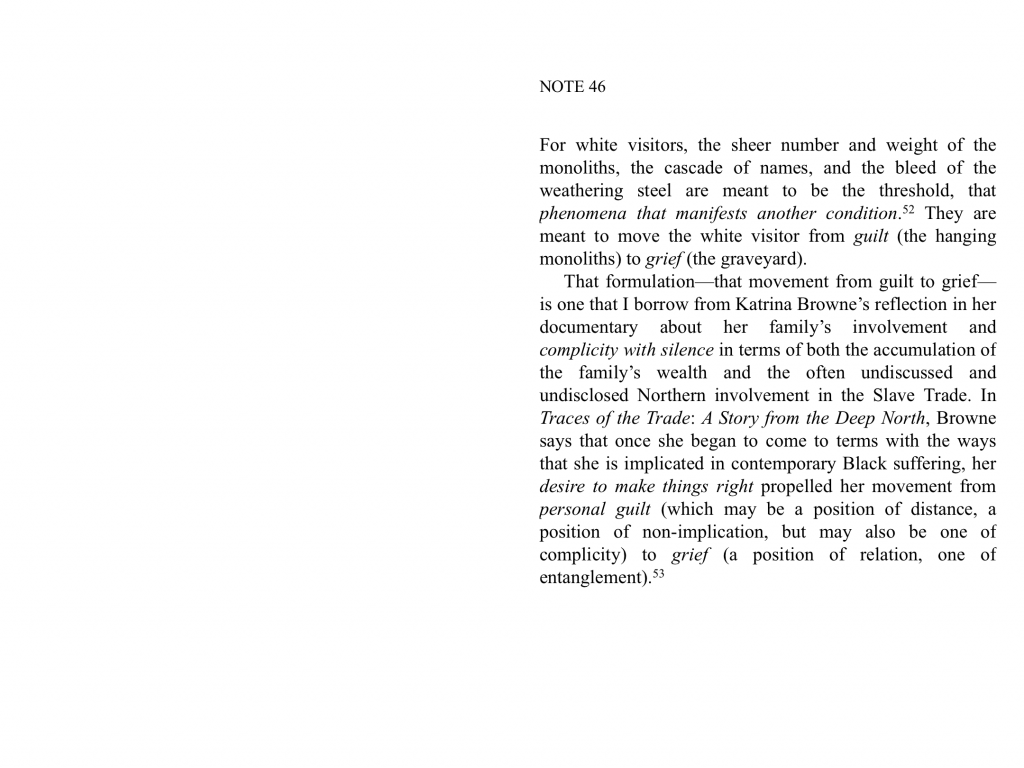
Yesterday, while rereading my July entries from 2023, I was reminded of Christina Sharpe’s amazing book, Ordinary Notes. I read it while quarantining for COVID. I posted a note from it on July 4th:

a screen shot of Christina Sharpe's Note 46

I was particularly struck by her discussion of the shift from guilt to grief because Scott and I just watched (on Monday night) a beautiful story on PBS about Rita Davern and her efforts to reckon with her family’s buying of Pike Island, a sacred space for the Dakota people known as Bdote which was illegally “purchased” by Zebulon Pike in 1805. I’m not sure if Rita utters that exact phrase, but the idea of moving from guilt to grief was a big focus. After reading Sharpe’s note again, I decided to find and watch the documentary she mentions, Traces of the Trade. Found it online from my local library — public libraries for the win! — and watched it yesterday afternoon. It was amazing. One thing I kept thinking as I watched it was Marie Howe’s entreaty: don’t look away. Guilt gives us distance and prevents us from witnessing/beholding. Grief enables us to feel — not just the pain of others, but our own pain — the pain of silence, complicity, denial of connection, fear, helplessness.

I’m not a big fan of guilt; it’s not helpful as a foundation for ethics or politics. As I thought this, I suddenly remembered a feminist ethicist I read/liked, back in the day: Elizabeth Spelman. She wrote a chapter titled “Good Grief” and it was about ways of grappling with racism. She was critical of guilt as a response — what did she like instead? I’m sure I have the article somewhere. Oh well.

Speaking of rereading old entries, I’ve been encountering the idea of the peripheral a lot lately. It’s giving me the itch to work seriously on some peripheral poems. Maybe this could be the February challenge? Maybe this poem could get me started?

In Praise of Being Peripheral/ Jane Hirshfield

Without philosophy,
tragedy,
history,

a gray squirrel
looks
very busy.

Light as a soul
released
from a painting by Bosch,
its greens
and vermilions stripped off it.

He climbs a tree
that is equally ahistoric.

His heart works harder.

This last line about his heart working harder reminds me of something else I’m reading: The Plenitude of Distraction. In it, Marina Can Zuylen argues for the value of distraction. In a bit I read last night she praises how the slowness that distraction demands — wandering through the peripheral and away from one’s central task. Maybe I should read this too — I’ll try; it has a lot of words for my weak eyes.

jan 23/RUN

4.1 miles
minnhehaha falls
31 degrees / 50+% thin, slippery ice
wintery mix

Stepped outside and felt the sidewalk — at first, it seemed fine, but at the end of the block I realized a lot of it was covered in an invisible sheen of ice. Oh well, too late to turn back. It was never really a problem, although it was pretty slick on the cobblestones at the falls. But I didn’t fall; barely even slipped! Waved a greeting to Santa Claus, heard the kids at the playground, noticed 2 people hiking below under the falls. I watched them step over the rope blocking off the trail.

Stopped at my favorite spot to put in a playlist. Before I started running again on the ice, I took this short footage of the falls:

the falls falling between 2 columns of ice / 23 jan 2024

10 Things Not Seen

  1. the thin layer of ice on the sidewalk and the path
  2. the exact temperature, but I knew it was warm because of how energetic the kids on the playground were
  3. a runner, approaching. I thought I had seen a biker so I was looking for them, meanwhile a runner was approaching me and I had no idea. Saw him a couple seconds before I might have run into him
  4. open water — the river is iced over
  5. the light rail, but I heard its bell as I ran through the park
  6. my shadow — too gloomy and gray
  7. light rain falling — barely felt it either
  8. no fat tires or Daily Walkers or bright blue running tights
  9. the woodpecker knocking on dead wood in the gorge
  10. my breath — too warm today for that!

before the run

I was just about to write that I’ve moved on from windows — my January challenge — to assays and not seing but in midst of thinking it I conjured a new version of windows that I’d like to ruminate on for a moment: a window opening. I like the slight difference that exists between an open window and a window opening. An open window is already open, but a window opening captures the moment when the air first enters and new understandings arrive.

Side note: Suddenly while writing this, I remembered a mention of windows that is almost entirely unrelated to the last paragraph except for it involves windows and not knowing how to open them. I just finished the gothic horror novel. A House with Good Bones by T. Kingfisher. I don’t want to spoil it for anyone else reading this, but near the end some monstrous creatures are attempting to open a window but they don’t know how. If they did, it would be the end for the main character and her companions. I’ve already returned the book (bummer) or I’d post the actual description here of the strong creatures flailing and not understanding the concept of a window — it’s gross and disturbing and compelling and not recommended when you’re eating lunch (which I was).

I’m about to go out for a run. I’ll try to think about opening windows or windows opening.

during the run

I imagined I might have a few moments where something I noticed felt like a window opening. I didn’t. About a mile in, I decided to do triple beat chants with the word: op en ing/ op en ing — then, op en ing/wel com ing/ won der ing. Thought about the openness of opening versus the confinement of closed, or even closing. After chanting opening for a few minutes, I remember lifting out of my hips and leading with my chest — an opening of my body.

after the run

Walking back after I finished my run, I listened to The Woman in the Window. I heard this and it got me thinking:

“And what’s going with the rest of the block?”

I realize I have no idea. The Takedas, the Millers, even the Wassermen–they haven’t so much as pinged my radar this last week. A curtain has fallen on the street; the homes across the road are veiled, vanished; all that exists are my house and the Russells’ house and the park between us.

Not seeing: being so preoccupied/obsessed with something that everything else doesn’t exist.

Then the narrator continued and I thought some more:

I wonder what’s become of Rita’s contractor. I wonder which book Mrs. Gray has selected for her reading group. I used to log their every activity, my neighbors, used to chronicle each entrance and exit. I’ve got whole chapters of their lives stored on my memory card.

Before the run I had been thinking about what it means to not see. I’d also been thinking about what it means for me to see. I might turn both “Not Seeing” and “Seeing” into poems and submit them to Couplet Poetry for their submissions window next month. Anyway, listening to the first bit from The Woman in the Window, I suddenly thought about how an obsession, being preoccupied with something, like whether a neighbor has been murdered, makes one myopic. And then listening to the second bit, I thought about the new way I see by making note of everything, slowly, habitually noticing all the small, seemingly unimportant and peripheral moments. This is how I see now: moment on moment on moment.

Here’s a poem by Jane Hirshfield. It’s in her “assay” form, which I’ve been studying for the past few days. As I understand it, an assay explores, imagines, tries out different meanings of a word or a concept. Is this an assay about “moment” or am I’m misunderstanding the poem?

Assay Only Glimpsable for an Instant/ Jane Hirshfield

Moment. Moment. Moment.

–equal inside you, moment,
the velocitous mountains and cities rising and falling,
songs of children, iridescence even of beetles.

It is not you the locust can strip of all leaf.

Untouchable green at the center,
the wolf too lopes past you and through you as he eats.

Insult to mourn you, you who mourn no one, unable.

Without transformation,
yours the role of the chorus, to whom nothing happens.
The living step forward: choosing to enter, to lose.

I who am made of you only
speak these words against your unmasterable instruction–

A knife cannot cut itself open,
yet you ask me both to be you and know you.

jan 16/RUN

4.25 miles
minnehaha falls and back
0 degrees / feels like -20

Brr. I really bundled up for this one, even busted out the big guns: toe and finger warmers. They worked!

layers: 2 pairs of black running tights, a green base layer shirt, pink jacket with hood, purple jacket zipped up to my chin, black fleece cap with ear flaps, pink and orange buff covering my mouth, 2 pairs of socks — gray, white — with toe warmers in between them, 1 pair of black gloves, 1 pair of pink/red/green mittens, hand warmers, sunglasses

My forehead felt a little cold at the beginning, but mostly I felt warm enough. My legs started to get sore near the end, which I think was because of the cold: not enough blood to my calf/thigh because it was going to my vital organs — I read that somewhere a few years ago.

10+ Things

  1. a regular! the runner, Santa Claus
  2. the river, frozen — light brown mixed with white, flat
  3. the feebee call of the black-capped chickadee
  4. a few squirrels, scampering
  5. running straight into the sun: my sharp shadow, so sharp I could see the shadow of my breath
  6. one biker — brrr
  7. brittle leaves, scratching on the pavement
  8. a sharp squeak, almost like a little bunny crying out: trees creaking in the wind
  9. the falls, near the ledge: half frozen, sounding like the spray hose on a kitchen sink
  10. the falls, by the overlook: gushing, rushing past the ice, flushing out the bottom
  11. beep beep beep of a truck backing up, sounding flat and smaller than usual
  12. the light rail across Hiawatha rushing by — I wondered how cold the commuters were
  13. almost forgot this one: the wind moving fast through dead leaves on some trees sounded like sizzling heat. I heard it just as the wind was blowing in my face and I felt particularly cold. I imagined it was so cold that it was hot

before my run

I’m in the slow process of reviewing my entries from 2023, a month at a time. Right now, April. On April 18th, I wrote about some ideas from writers/poets that were inspiring my thoughts about an eighth colorblind plate poem on the glitter effect. Paige Lewis and A.R. Ammons and flares and flames and rust. And now I’m thinking about writing one more colorblind plate poem that describes how my own color system works using texture and movement and contrast. It replaces ROYGBIV. Maybe I’ll try and think about it more as I run — when I’m not thinking about how cold I am!

a process note: Rereading all of my entries for the year and summarizing them takes a long time, but it’s worth it. Not only does it offer useful summaries, but going back and reencountering words/ideas/experiences offers new inspiration or old, half-finished projects (like the colorblind plates). And the laborious process of doing this structured task sometimes opens me up to wandering and remembering and imagining that can lead to new words and new ways in.

task: on my run, try to think about motion and texture

during my run

As predicted, I focused mostly on noticing the cold and the wind — such a cold wind in my face! I do remember thinking that the river was flat and stuck, with no sparkle or motion. I thought about contrast with the shadows. Leaves shaking in the wind. Oh — and I thought about how the small things I notice — the little flashes of movement, sound, texture — accumulate into something bigger. This is part of the conversation I started yesterday about flares versus slow burns and whether or not to dazzle. None of the things I notice Dazzle! in a quick burst, but together they add up to something special. After thinking of this idea, I remember Hannah Emerson’s poem, “Peripheral” and the lines:

Direct looking just is too
much killing of the moment.

Looking oblique littles
the moment into many

helpful moments.
Moment moment moment

moment keep in the moment.

after the run

And now, remembering all of these ideas, I’m suddenly thinking of Emily Dickinson’s poem, “Tell all the truth but tell it slant –”

The truth must dazzle gradually
Or every man be blind —

Yes, dazzle means to be temporarily blinded by light, or overpowered with light. What does this have to do with what I’m working on right now? Not sure.

And now, back to windows. Here’s a small poem I found the other day that I like. It’s part of a larger series of poems titled, Still Life:

Window/ Phillip Murray

Through the dark
Glassly
It is light
Falling

jan 6/RUN

4.15 miles
bottom of franklin hill (short)
32 degrees

Another Saturday run with Scott. Last night, we got a light dusting of snow which made everything frosty and a little slick at the start. Scott talked about the latest mash-up he’s arranging with the theme from Taxi and Green Day’s Brain Stew, Chicago’s 25 or 6 to 4. Then I talked about my latest focus on doors and windows and how it is allowing me to engage with things (poems, essays, ideas) that I’ve collected previously but were buried in a file folder or a log entry.

As we ran down the hill I mentioned something I had read in an essay by George Orwell, Why I Write. He describes how when he was an undergrad at Berkeley* he wanted to be an intellectual, but when he was supposed to be reading Hegel he would always be looking out the window, admiring the flowers instead.

*Scott didn’t hear anything after I said Orwell went to Berkeley; he was confused, believing that Orwell never left England. I checked the essay when I got home and realized that there were two versions of “Why I Write” in the document, one by Orwell, one by Joan Didion. The reference to Berkeley was from Joan Didion. Sometimes I get frustrated with Scott’s attention to details, but he’s usually right and I’m grateful that he caught this mistake (which was my fault, but not totally; the essays were placed one after the other in a document that was not well marked. His almost always being right can be irritating, but that’s more my problem than his, I guess.

Here’s the quote:

During the years when I was an undergraduate at Berkeley I tried, with a kind of hopeless late-adolescent energy, to buy some temporary visa into the world of ideas, to forge for myself a mind that could deal with the abstract.

In short I tried to think. I failed. My attention veered inexorably back to the specific, to the tangible, to what was generally considered, by everyone I knew then and for that matter have known since, the peripheral.

Why I Write/ Joan Didion

I love her mention of the peripheral. That’s where I spend all of my time too — literally and figuratively.

10 Things

  1. stretches of the trail were slick and my feet slipped a few times
  2. the knocking of a woodpecker — the sound echoed through an empty field
  3. the ice chunks on the river yesterday had melted and were replaced with swirls of foam
  4. the quiet thuds of a faster runner approaching from behind
  5. after he passed us, he kicked a big branch off to the side (we were grateful and impressed that he was able to do it while running fast down the hill)
  6. there was a thin layer of snow on the top of the concrete wall next to the river
  7. the suspended path on the other side — in the east river flats — looked inviting — I’d like to run it before it’s closed for the winter — maybe it already is?
  8. passing by the ghost bike hanging from the trestle
  9. the curved fence above the big sewer pipe was easy to see below us — no more leaves blocking our view
  10. passing a guy walking a dog on the sidewalk, saying good morning — realizing it was not morning but afternoon — 12:30 — we went out for the run a little later than usual

At the bottom of the franklin hill, Scott used my phone to take some video of the foamy, fast-moving water. Here’s a short clip:

fast moving foam / 5 jan 2024

Here are two passages from Virginia Woolf’s Street Haunting that include windows and doors:

But when the door shuts on us, all that vanishes. The shell–like covering which our souls have excreted to house themselves, to make for themselves a shape distinct from others, is broken, and there is left of all these wrinkles and roughnesses a central oyster of perceptiveness, an enormous eye. How beautiful a street is in winter! It is at once revealed and obscured. Here vaguely one can trace symmetrical straight avenues of doors and windows; here under the lamps are floating islands of pale light through which pass quickly bright men and women, who, for all their poverty and shabbiness, wear a certain look of unreality, an air of triumph, as if they had given life the slip, so that life, deceived of her prey, blunders on without them. But, after all, we are only gliding smoothly on the surface. The eye is not a miner, not a diver, not a seeker after buried treasure. It floats us smoothly down a stream; resting, pausing, the brain sleeps perhaps as it looks. 

That is true: to escape is the greatest of pleasures; street haunting in winter the greatest of adventures. Still as we approach our own doorstep again, it is comfortingto feel the old possessions, the old prejudices, fold us round; and the self, which has been blown about at so many street corners, which has battered like a moth at the flame of so many inaccessible lanterns, sheltered and enclosed. Here again is the usual door 

jan 5/RUN

5.15 miles
bottom of franklin hill turn around
30 degrees

Yes! A great run. A brief runner’s high around mile 4. At the beginning it felt cold, but almost early spring-like: chirping birds, soft shadows, humid air, clear paths. In certain spots the path was dotted with ice.

Passed a group of 4 or 5 runners twice. Smelled cigarette smoke. Watched a car driving over the I-94 bridge. Listened to the group of women laughing, cars passing, ice sizzling heading north. Put it Billie Eilish essentials on the way back — maybe I’m, maybe I’m, maybe I’m the problem.

Something to try today, from Richard Siken: one image

The heart of lyric poetry is music and image. Music is hard to talk about but image is easy. It’s not too late to start an exercise. Write down one image every day that was striking. It’s good as a resource to pull from for writing or just for remembering. Date them. >

Today’s image: sizzling ice on the river chunks? sheets? just starting to form, floating on the surface. I took a video:

ice on the mississippi / 5 jan 2024

Standing there, holding my phone, the ice was moving slowly downstream and sizzling. In the video, I can’t see it moving and all I can hear is the traffic from the I-94 bridge just above. I wish I just kept the phone still; it’s moving around too much. The sizzle sounded like the sizzle I heard in my head after I fainted last week. A sizzle or crackle or static-y sound. The movement of the ice was slow and gentle and persistent (or insistent?).

windows and doors

Yesterday, it came to me: windows and doors. That’s what the theme for January should be. Will it stick? Not sure, but today I begin by thinking about windows and doors as I ran. I held onto a few thoughts and recorded them into my phone right after I finished my run:

Windows as in the frame and how often I see what’s just outside of the frame because I feel it off to the far edge (mainly because of my heightened peripheral vision).

A door as being open — focus on what’s through the other door, the room on the other side, as opposed to the door as framing what you see. Whereas the window is about the frame and about this thing in between you and the is/real. The frame is language, our access to the real. The framing of something as a useful limitation, helping to focus a form. The window is a form where the energy goes, where it’s held in, so the poem still has heat.

I’ve collected door and window poems before on this log, so this isn’t a new idea, I’m just adding to it. Here’s a door and window poem for today — actually, an excerpt from an amazing poem by Victoria Chang:

excerpt from Today/ Victoria Chang

Feb.10.2022
Today the river is in crisis, no
horizon dares to go near it. Today
my father is in a small jar. At dusk,
I went into a painter’s studio,
saw his stretched canvas on the table, white,
empty. What are we without those who made
us? May his memory be your blessing,
people emailed me all week. The artist
was painting a series of doors, which were
so real that I walked through the one that was
slightly open. Inside the room was my
breath that I had held since January
13, an eyelid, a loose eyeball, the
knob the eye fell on, the girl’s hands that tried
to catch him, which were charred and still waving.

Feb.11.2022
The white truck went from one frame to the next
and I thought of the time when someone lied
about me. How day and night I cared so
much about the lie that it split into
two, one part went out the left window frame,
the other out the right. Like the blue car
that disappears at the same time as the
white one, yet I can see both at once. When
they burned my father’s body, I wondered
if the eyeballs spread so far on each side
that they could see Wyoming, these two panes,
me on a small brown chair, looking out the
windows, waiting for oblivion to
travel through with its eighteen wheels and truth.

Feb.12.2022
At the beginning of our family tree
was hope. Or maybe it was just an owl.

Feb.13.2022
The same wind was blowing here eighty years
ago, always snapping families in half.

Feb.14.2022
If I keep the window closed, I am stuck
inside with language as it buzzes back
and forth, trying to get out and start wars.

First, so much of what she writes here (and in the rest of the poem) is echoed in other things I read earlier today and yesterday by Viola Cordova and Jake Skeets. Wow.

Second, at the beginning of the poem, Chang writes: On Kawara’s “Today” Series. Looked it up and found: Paintings: Today Series / Date Paintings

On January 4, 1966, On Kawara began his Today series, or Date Paintings. He worked on the series for nearly five decades. A Date Painting is a monochromatic canvas of red, blue, or gray with the date on which it was made inscribed in white. Date Paintings range in size from 8 x 10 inches to 61 x 89 inches. The date is composed in the language and convention of the place where Kawara made the painting. When he was in a country with a non-Roman alphabet, he used Esperanto. He did not create a painting every day, but some days he made two, even three. The paintings were produced meticulously over the course of many hours according to a series of steps that never varied. If a painting was not finished by midnight, he destroyed it. The quasi-mechanical element of his routine makes the production of each painting an exercise in meditation.1 Kawara fabricated a cardboard storage box for each Date Painting. Many boxes are lined with a cutting from a local newspaper. Works were often given subtitles, many of which he drew from the daily press.

Paintings: Today Series / Date Paintings

In the article, I also found this classroom activity suggestion:

Subtitle Your Days

Many of the Date Paintings have subtitles. Some of these titles record personal anecdotes, such as “I played ‘Monopoly’ with Joseph, Christine and Hiroko this afternoon. We ate a lot of spaghetti” (January 1, 1968). Others record current events, some of them momentous, such as the Apollo 11 moon landing in 1969. Still other subtitles refer to the Date Paintings themselves; one reads, “I am afraid of my ‘Today’ paintings” (May 29, 1966). For this activity, challenge students to record a subtitle for each day of the week for two weeks. These subtitles can be personal, historical, or even arbitrary. What is it like to capture a day with a subtitle?

I like the idea of combining Siken’s suggestion of an image a day with Kawara’s date poems and Chang’s reading of the date as a door into somewhere else. A date as door, an image as door.

dec 3/RUN

4 miles
marshall loop (to cleveland)
34 degrees

Humid, hazy. Smells like snow even though no snow is in the forecast. The light strange. Another good run. I felt strong and comfortable and relaxed. Ran through the neighborhood to lake street then over the bridge and up marshall to cleveland. I haven’t done a marshall loop since October?

After I finished, as I walked home, I pulled out my phone and recorded 10 things I noticed:

10 Things

  1. a person walking out to their car. I could see in my peripheral vision that their jacket was blue, but when I looked at them through my central vision, the jacket looked grayish-white. Looked again through my peripheral, blue. Then straight: white
  2. running up the marshall hill: a strange green thing in the grass — a sculpture? no a gardening tool
  3. across the street as I walk home: one dog is pooping and the other dog’s name is Rosie
  4. running across the lake street bridge, the water was perfectly still and flat and brown and empty
  5. sprinting on summit to make the light — I made it
  6. after sprinting, my legs felt great and relaxed
  7. hearing the bells of St. Thomas near the beginning of my run
  8. running by a house I walk by often, seeing the door looking different — a new color? orange? have they painted their house or is the light just weird for me today?
  9. no bells heard when I was running by St. Thomas
  10. running down a hill to below the marshall/lake street bridge, looking at how the bridge was reflected in the still water, the arch smiling

Here’s a wonderful poem I discovered the other day. I love Larkin’s reading of it — such gentle, beautiful rhymes.

An Arundel Tomb/ Philip Larkin

Side by side, their faces blurred,
The earl and countess lie in stone,
Their proper habits vaguely shown
As jointed armour, stiffened pleat,
And that faint hint of the absurd—
The little dogs under their feet.

Such plainness of the pre-baroque
Hardly involves the eye, until
It meets his left-hand gauntlet, still
Clasped empty in the other; and
One sees, with a sharp tender shock,
His hand withdrawn, holding her hand.

They would not think to lie so long.
Such faithfulness in effigy
Was just a detail friends would see:
A sculptor’s sweet commissioned grace
Thrown off in helping to prolong
The Latin names around the base.

They would not guess how early in
Their supine stationary voyage
The air would change to soundless damage,
Turn the old tenantry away;
How soon succeeding eyes begin
To look, not read. Rigidly they

Persisted, linked, through lengths and breadths
Of time. Snow fell, undated. Light
Each summer thronged the glass. A bright
Litter of birdcalls strewed the same
Bone-riddled ground. And up the paths
The endless altered people came,

Washing at their identity.
Now, helpless in the hollow of
An unarmorial age, a trough
Of smoke in slow suspended skeins
Above their scrap of history,
Only an attitude remains:

Time has transfigured them into
Untruth. The stone fidelity
They hardly meant has come to be
Their final blazon, and to prove
Our almost-instinct almost true:
What will survive of us is love.

nov 10/RUN

5.1 miles
franklin loop
37 degrees

More excellent November weather! A solid, relaxed, non-stop (except for walking up the bridge steps) run. Greeted Dave, the Daily Walker and, later, another friendly runner — Hi! Admired the blue river and the occasional flash of red in the trees. Took deep breaths of fresh, cold air. Listened, without headphones, to the traffic and a chirping bird, rustling leaves and an alarm beeping somewhere.

10 Things

  1. a clear view of the forest floor from above
  2. so many green leaves still on the trees on the east side — light, glowing green
  3. somber (or reverent?) wind chimes
  4. smell 1: stinky, sour sewer gas, faint
  5. smell 2: either skunk or weed, probably weed
  6. smell 3: hot chocolate
  7. bright yellow headlights from cars, cutting through the trees
  8. some part of a machine scraping on a sidewalk somewhere in the distance
  9. a tree that I thought might be a person until I saw it in my periphery: a tree with one branch holding a hat at head-height
  10. a woman walker in bright orange pants

At the end of my run, I took a picture from the top of the hill, above the tunnel of trees, across from the ancient boulder:

Overlooking a forest that winds down to the river, which is a faint white -- or no color, just the absence of brown branches and yellowed leaves. Mostly bare branches and a brown ground covered in fallen leaves. In the lower right-hand corner a chain link fence stretches. This fence marks where the Winchell Trail used to go after coming up from the ravine. Now it's barely a trail, mostly hidden by leaves, no longer maintained. Just outside of the frame on the left, a green leaf flutters in the wind.
a view to the river near the 35th street parking lot / 10 november 2023

I love this poem by Donika Kelly, and I love what magic she can do with words!

I love you. I miss you. Please get out of my house. / Donika Kelly

Nothing today hasn’t happened before:
I woke alone, bundled the old dog
into his early winter coat, watered him,
fed him, left him to his cage for the day
closing just now. My eye drifts
to the buff belly of a hawk wheeling,
as they do, in a late fall light that melts
against the turning oak and smelts
its leaves bronze.
Before you left,
I bent to my task, fixed in my mind
the slopes and planes of your face;
fitted, in some essential geography,
your belly’s stretch and collapse
against my own, your scent familiar
as a thousand evenings.
Another time,
I might have dismissed as hunger
this cataloguing, this fitting, this fixing,
but today I crest the hill, secure in the company
of my longing. What binds us, stretches:
a tautness I’ve missed as a sapling,
supple, misses the wind.

I love all the work the title does to set up the poem, how she describes it as watering the dog (and not giving the dog water), and these verbs: cataloging/fitting/fixing. My favorite sentence, and the reason I wanted to post this poem today, is this:

My eye drifts
to the buff belly of a hawk wheeling,
as they do, in a late fall light that melts
against the turning oak and smelts
its leaves bronze.

A late fall light that melts against the tree and smelts it leaves bronze? Wow. I want tp remember that line. I’d also like to find an example of it out by the gorge on my run today (I’m writing this bit before my run), but there’s no autumn sunlight today, just gray gray gray. I wonder, what does gray to those leaves?

during the run: I hoped to think about this question of what gray does to the leaves, but I got distracted, or maybe, it didn’t do much, at least not today. Most of the leaves were gold or orangish-brown, no shimmering or sizzling, just soft and flat.

Instead of thinking about what gray does to the leaves, I was thinking about some lines I’d like to add to my Haunts poem:

A girl runs
four blocks
to the gorge.
She’s all
muscle bone
and breath,
foot strikes and
arm swings.
The river
and ghosts
wait.

transcript: During the run I was thinking about ghosts and girls and the gorge. And I was thinking that what I’m really trying to convey is that there’s a heaviness and a solidness and a there-ness that is both good and too heavy. So there’s a desire to lighten up. What I want to do is convey the heaviness, so maybe using the word, “heavy,” heavy foot strikes. Then I was thinking of Lizzy McAlpine and her song, “all my ghosts.” And then I was thinking about how all these ghosts aren’t primarily a bad thing, but there are a few ghosts I struggle with more than others. I think the ghost of cancer is haunting me the most right now.

the chorus from McAlpine’s “all my ghosts”:

And all my ghosts were with me
I know you felt them too
Watchin’ as I started to get dizzy
‘Cause I hate all of my habits
But I happen to love you
I hope that’s true

another version of my lines:

A girl runs.
She’s all
muscle bone
and breath,
heavy foot
falls and
swinging arms.
At the
river her
ghosts wait.

oct 19/RUN

4.1 miles
minnehaha falls and back
51 degrees / light rain

Ran to the falls. Everything yellow, red, orange. Wow! Encountered some walkers as I got closer to the falls, one or two runners. Chanted triple berries — strawberry/ raspberry/ blueberry. Also recited Mary Oliver’s “Can You Imagine.” I remember starting it, but I don’t think I finished it, and I can’t remember where I stopped. The Minneapolis park workers were out again, patching up cracks in the asphalt with stinky, steaming tar. The falls were gushing. As I ran by them, 3 teenage boys sprinted past me, on their way to the steps. The mother in me hoped they didn’t fall down the slippery stairs. I stopped at my favorite spot on the other side of the park, near where Longfellow’s “The Song of Hiawatha” is etched into the limestone wall, to admire the falls. Today, before starting to run again, I decided to take some video of my view:

The view from my favorite spot of Minnehaha Falls

notes about what I saw: As I was taking this video I saw a flash of movement below: it was one of the teenage boys running over the bridge that crosses the creek after it’s fallen. I tried to pan down to capture him on video, but I can’t see him. Can you? Also, to the left of this frame, there was a person with an easel set up, painting this view from a different angle. When I had approached the spot, I knew there was something/someone else there but I couldn’t tell what/who it was and I didn’t want to stare. It was only after I started walking away and saw the person through my peripheral vision that I figured out what was there.

The rain came in the last mile of my run, right after I finished filming myself running up the edge of the world. (Oops. I screwed up the camera by not starting it when I thought I did. I’ll have to try filming this view some other day). Good timing! I didn’t mind getting wet — I already was, from sweat.

I listened to water dripping, kids yelling from across the road, a dog yipping, the falls rushing, leaves squeaking on the way to the falls. I put in Beyoncé’s “Renaissance” on the way back, but took it out and listened to more water and wheels and my own breathing while running on the Winchell Trail.

We’re getting closer to the end of October and the cold is coming. Looking back through old entries, it had already snowed by this day in past years. Here’s a poem I found in the New Yorker that gets me in the mood for that cold — and it features the color blue!

Childhood/ David Baker

I miss the cold, but not the cold breaking,
not the small limbs sheared, nor the icepick cold
white wind working its whole way through you
no matter your coat and gloves, and no matter
the blue scarf someone tied and tucked tight.

The same cold blue all day in the sky. Frozen
blue through limbs of the two standing elms.
Brilliant each blue. Blue the color of new
snow like wafers on the fields. Come in cold then,
and the dark comes with you, kick off your boots

and someone is rubbing your feet so they
sting, then stop stinging. Now the bruised-apple-
red bottle at the foot of your bed, steaming,
and come morning woodsmoke in the kitchen.
I miss the cold then, so cold there is singing.

sept 22/RUN

3.8 miles
river road, north/south
70 degrees

Gloomy, everything looking dark and mysterious. I like these overcast mornings, especially when running beside the gorge. All the colors feel more intense — dark greens, yellows, reds, oranges. Today I saw at least 3 different versions of orange: orange leaves pale and almost pink; then orange leaves like a neon crayola; finally the classic orange — what I call orange orange — of construction cones and a sidewalk closed sign.

Greeted Dave, the Daily Walker. Smiled at a dozen walkers and runners. Forgot to try and see the river. Heard some birds (more about that below), the clicking and clacking of ski poles from a roller skier, the irritating squish of a walker’s slides. Smelled tar. Noticed that the path was covered in green leaves.

I felt relaxed and dreamy at the beginning, sweaty and a little sore at the end.

before the run

More with Forrest Gander and his circumambulation. Today, the next few stanzas of Circumambulation of Mt. Tamalpas:

 as we hike upward mist holds
the butterscotch taste of Jeffrey pine 
to the air until we reach a serpentine
barren, redbud lilac and open sky, a crust
of frost on low-lying clumps of manzanita

mist holds/the butterscotch taste of Jeffrey pine I rarely think about (or remember if it happened) tasting the air. What might the air taste like on my run today?

Serpentine — another word for winding or twisting? Are there any parts of my running route that are serpentine? I’ll try to pay attention.

at Redwood Creek, two
tandem runners cross
a wooden bridge over
the stream ahead of us the raspy
check check check of a scrub jay

Looked up scrub jays. Also called California scrub jays. Like the blue jays here, which are just called blue jays (at least, that’s what I found in my minimal research), they are LOUD. Here’s what the Cornell Lab writes about their sounds:

CALLS

California Scrub-Jays, like other jays, are extremely vocal. Behaviorists have described more than 20 separate types of calls for this and the closely related Woodhouse’s Scrub-Jay. Examples include a weep uttered during flight, while carrying nesting material, or while taking cover from a flying predator; a bell-like shlenk used antagonistically, a quiet kuk exchanged between mates, and loud, rasping scolds for mobbing predators.

OTHER SOUNDS

Scrub-jays often clack their bill mandibles together to make a sharp rapping. Their wings make a whooshing sound on takeoff, and they exaggerated this during altercations.

California Scrub-Jay: Sounds

Gander’s rasping check check check must be the Cornell Lab’s rasping scolds. You can also hear the delightfully irritating clicking of the bill mandibles and the exaggerated flapping of their wings.

hewing to the Dipsea path while
a plane’s slow groan diminishes bayward,
my sweat-wet shirt going cool
around my torso as another runner
goes by, his cocked arms held too high

hew = adhere, conform…a plane’s slow groan — I’ve never heard a plane as groaning. Usually I write roar or buzz — a boom? I’ll have to listen for groaning planes today.

Yesterday when I was running, and it has too hot and sticky, I checked to see if my shirt was sticking to me. Nope. Not or long enough to have that happen. Does it ever happen? I sweat a lot, but rarely to the point where my shirt is soaked and stuck. With this brief description, I know that Gander’s circumambulation has been going on for a long time and that it is really HOT.

I like Gander’s last line about the cocked arms held too high. I often give attention to walkers’ and runners’ gaits and how they hold their arms. Some small part of it might be out of judgment, but primarily it’s about: admiring moving bodies, especially graceful ones; studying them to see what doesn’t feel right — this is a way to work through my vision limitations and to determine what I am actually seeing; and as a way to identify different movers out by the gorge. I can’t see faces clearly enough to recognize people (not even my husband or my kids), so I rely on other methods, like wide arm swings (that’s how I identify the Daily Walker) or gangly legs (the long- legged walker I call Daddy Long Legs).

Okay, so during my run today if I can, I’d like to think about/notice the following:

  1. tasting the gorge
  2. looking for serpentines
  3. listening for blue jays and groaning planes
  4. noticing how and where (and if) my sweat collects
  5. making note of the different gaits of walkers and runners

during the run

I wasn’t sure how I would try to notice all of the things I wanted to — a taste, a twist, an irritating sound, where my sweat collects, and a distinctive gait — but as I ran, I just started collecting images. It became a game or a scavenger hunt. Here’s how I did it: First, I tried to be open to things on my list. Not searching too hard for them, but being ready if they appeared. Then I briefly stopped at the end of each mile (roughly), and recorded the images I collected — I described them on a voice memo app. I was able to collect all 5, with taste being the last to be found.

mile 1

serpentine twist: looking up, noticing the trees winding through the air, almost like a river reversed.

irritating bird: Heard the clicking of a bird and I’ve been wondering (for some time) what bird makes those clicking sounds and I think it might be the clicking of the bill mandibles of a blue jay!

mile 2

My sweat is collecting on the side of my nose. I can sometimes see it through my peripheral vision. Now it’s dripping down my cheeks.

a gait: Passed a runner with very fast cadence — short, little steps. This inspired me to pick up my cadence.

right after recording these two images, I took a picture of my view, down on the Winchell Trail at a small overlook, perched above a sewer pipe:

a black railing, a leaf-covered trail, some red leaves on a tree. On the left side, above the railing, a sliver of river
a view from the Winchell Trail between Lake Street and Franklin Avenue

mile 3

taste: Bitter burnt toast coming from the tar they were using to cover the cracks near the trestle.

Bonus: a blue umbrella

A bright blue umbrella on a bench, looking strange and out of place. I noticed someone sitting next to the umbrella. I found this umbrella wonderful for the pop of color it brought to the gloomy gorge, for how unexpected it was, and for how it made me wonder about its companion: a person who likes to be prepared? who loves walking by the gorge so much that they’ll go even if it’s about to rain? who loves the rain? And, why did they leave the umbrella open — to give us all a gift of bright blue? they despise closing umbrellas? the umbrella is broken? Maybe if I was standing still, some of these questions would have been answered, but I like the mystery that moving made!

after the run

This “game” was a lot of fun, and I’d like to try doing it again. Would it work as well the next time? I’ll have to see. It made the run go by faster and helped me notice and remember things I might not have otherwise.

Also: I don’t taste a lot of things while I’m running. I should try and work on that by practicing and maybe reading more of other peoples’ words about tasting the world.

sept 18/RUN

2.5 miles
2 trails
75 degrees

Recorded the lecture for my class this morning, so I had to run in the afternoon, when it’s warmer. Hot! Sunny! Everything dry and dusty, thirsty — the dirt trail, the dead leaves, me.

Listened to a playlist until I reached the south entrance to the Winchell Trail, then to the gorge. Dripping pipes, striking feet, my breathing, falling acorns.

10 Peripheral Things — above, below, and beside

  1. dirt flying up on my ankles as I ran on the dusty trail
  2. brittle red leaves, crunching underfoot
  3. the shadow of a bird flying overhead
  4. frantic rustling in the bushes — I flinched in anticipation of a darting squirrel that never arrived
  5. a walker moving over to the edge of the path for me to pass — thank you! / you’re welcome
  6. a slash of red just below — a changing leaf
  7. flashes of orange all around — construction signs
  8. to my right and below: dribble dribble dribble — water falling down a limestone ledge in the ravine
  9. shrill squeaking under the metal grate in the ravine as I crossed over it — a chipmunk?
  10. is this peripheral? breaking through several spider webs on the winchell trail, about chest height

For the second week of my class, which starts this Wednesday!, I’m offering alliteration as one way into the words for describing/conjuring/communicating wonder (along with abecedarians and triple berry chants). This poem-of-the-day on poems.com (Poetry Daily), is a great example of what’s possible when you write only words starting with one letter — in this case, a:

Autobiography/ Michael Dumanis

Attempted avoiding abysses, assorted
abrasions and apertures, abscesses.

At adolescence, acted absurd: acid,
amphetamines. Amorously aching

after an arguably arbitrary Abigail,
authored an awful aubade.

Am always arabesquing after Abigails.
Am always afraid: an affliction?

Animals augur an avalanche. Animals
apprehend abattoirs. Am, as an animal,

anxious. Appendages always aflutter,
am an amazing accident: alive.

Attired as an apprentice aerialist,
addressed acrophobic audiences.

Aspiring, as an adult, after applause,
attracted an angelic acolyte.

After an affirming affair, an abortion.
After an asinine affair, Avowed Agnostic
approached, alone, an abbey’s altarpiece,

asking Alleged Almighty about afterlife.
Ambled, adagio, around an arena.
Admired an ancient aqueduct. Ate aspic.
Adored and ate assorted animals.
Ascended an alp. Affected an accent.
Acquired an accountant, an abacus, assets.
Attempted atonal arpeggios

There’s also an essay about how Dumanis wrote this poem, which I haven’t had time to read yet. Very excited to check it out! Okay, I just skimmed it. Here are some resources from the end that I might want to explore:

A few terrific examples of letter-constraint-based contemporary poems include Phillip B. Williams’s tour de force “Mush-mouf’s Maybe Crown,” where all the words begin with M (or, occasionally, “em” or “im”); Izzy Casey’s univocalic “I’m Piss Witch”; several terrific single-vowel lyrics in Cathy Park Hong’s collection Engine Empire including “Ballad in A”; Harryette Mullen’s linguistic experiments, such as “Any Lit,” in her collection Sleeping with the Dictionary, and, of course, Christian Bök’s virtuosic book-length project Eunoia, in which, among other idiosyncratic constraints, every chapter can only use a single vowel. All such projects derive at least some of their inspiration from the mid-20th century French avant-garde collective Oulipo, or Ouvroir de littérature potentielle, a “workshop of potential literature,” which encouraged systematic, sometimes arbitrary, language-based constraint in the composition of texts. For my Oulipian autobiography, it was especially important to me that every individual narrative moment made clear semantic sense despite the constraint, that the alliteration did not overly affect the speaker’s syntax or natural cadence, that taken together they told the story of a life.

sept 7/RUN

3.4 miles
2 trails
59 degrees

59 degrees! A great temperature for a run. Overcast, misting, low wind. Tried to relax and release the tension in my shoulders (cause: failing to get a girl to go to school) and keep a slow, steady pace for my left IT band. Mostly it worked. I had my headphones set up to put in but never did.

6 Things Heard, 1 Smelled, 3 Unseen

  1. SCREECH! SCREECH! — bluejays
  2. tat tat tat tat tat — a roofer’s nailgun
  3. drip drip drip — the sewer at 42nd
  4. there’ve been so many drownings there — a woman walking and talking on the phone
  5. thump kerplunk — falling acorns
  6. good boy! — a woman talking to her dog as she stopped to let me pass on the narrow trail
  7. sickly sweet, slightly off, a hint of rotten egg — sewer smells near the ravine
  8. the voices of kids playing above and across the road (unseen: only voices drifting down, heard but not seen)
  9. a black shirt left on a bench (unseen: the shirt being left behind/the person who left it)
  10. a bare rock (unseen: no stones stacked, yesterday’s wind that must have knocked the stacked stones off)

before the run

I just started a new thing in the morning with my wordle habit. I’m calling it birdle and the only rule is this: the first five letter guess must be a bird. So far I’ve used: finch, robin, goose, eagle, egret, and quail. Confession: I don’t know or couldn’t think of many bird names so I had to look it up after goose. I suppose that could be part of the point of this goofy game: to learn more bird names.

Some others 5 letter bird names I’ll try:

  • crane
  • heron
  • junco
  • owlet
  • raven
  • swift
  • stork
  • vireo
  • veery

Veery reminds me of a delightful little poem I posted on july 13, 2021 from Lorine Niedecker (I love her!):

We are what the seas
have made us
longing immense
the very veery 
on the fence

Two things via Heather Christle on twitter this morning while drinking my coffee out on the deck: a poem and a concept

MORE SWANS AND MORE WOMEN/ Heather Christle

A swan makes a bad pet It is a murderer
but very beautiful just like a woman
If you see a woman moving in the water
you must run away very fast to a mountain
It happened to me once and there
are no swans on a mountain
This made it lonely and natural so
I was very safe but I forgot
how to talk and when I came home
people could not see I was a woman
although I made a lot of statues to explain
and I live by myself in a cottage and
the water is no longer working It won’t
make me beautiful just wet and the same

As of 2 or 3 readings, I don’t yet understand what this poem means. I’m not sure I need to. I like it for the swans and the swimming woman and the idea of the water no longer working, although I hope I never get to a place where the water is no longer working for me. Also: water making you wet and the same (like everyone else — all bodies floating freely and free from ailments/injuries, all together, a congregation) is magical, isn’t it?

concept — via negativa

Taught child about concept of via negativa this morning and had SO much fun watching her looking all around the bus stop, making silent notes to herself of what was not there.

Heather Christle on twitter

I’m sure I encountered the idea of via negativa in one of my theology classes, but I’ve forgotten it. And now, after some very brief searches, I’m not sure I totally understand it, or that what I think it means is complex enough to capture what it really means. Regardless, for right now, I like thinking about via negativa in terms of the gorge and what’s present in its absence (does that make sense?).

Looking up “via negativity and poetry,” I found a great site, Via Negativa, which led me to many wonderful poems by Luisa A. Igloria, including this one:

Talisman/ Luisa A. Igloria

Even now, at what we believe is near the end, my mother is what kids today might describe as #fighting, A month in the hospital and she’s rallied and flailed, flailed and rallied. Through intravenous feeding, oxygen delivery, antibiotics, everything short of TPN. Who is Patty? my cousin and the nurses ask. My mother has been calling the names of the dead, names of the living, names of all the remembered ghosts in her life. Perhaps more than death or dying, the ghost of our own approaching absence is the most difficult piece of the puzzle. She still knows the difference between the clothed and naked body, how the taste and texture of water on the tongue disappears like a stolen jewel. Once, she fashioned for me an ugly name in a second baptism meant to confuse and repel the gods. She embroidered it on towels and the inside of my collars as she mouthed it like a spell. Sometimes, I still start at my shadow on the wall, blue and sick from being shorn from light.

I’ve thought a lot about fighting death this last month as Scott’s dad was dying. I remembered how my mom fought it for almost a year and how difficult that was for everyone. I hoped that Scott’s dad wouldn’t fight it too, wouldn’t linger in an almost dead state for months. He didn’t.

during the run

Inspired by my brief exploration of via negativa, ideas of the gorge as an absence that is present and embracing — or centering? — the unknown kept flaring in my mind. Then I wandered with these ideas, moving beyond (or beside?) via negativa, thinking about the unknown as what we can never access (never see) but also what we might be able to see if we slowed down and opened ourselves to the world. I thought about Robin Wall Kimmerer and her chapter in Becoming Moss, “Learning to See,” how being patient and present in the world can enable us to see things that were previously invisible to us. And I thought about the periphery and what dwells there (both the unknown and the known-made-strange).

august 18/BIKESWIMBIKE

bike: 8.5 miles
lake nokomis and back
63/70 degrees
air quality: 127

A little cool this morning biking to the lake. Canadian wildfires have made the air quality index rise to the “unhealthy for sensitive groups.” Not sure if it was that or something else, but my nose started closing up mid-bike and I had to breathe mostly through my mouth.

The ride was fine. I had some difficulty making sense of what I was seeing but because I’m always cautious — biking relatively slowly (11-12 mph) and making sure I stay far to the right in my lane, it didn’t matter that I couldn’t totally see what the bikers approaching me were doing.

Some rodent — probably a squirrel but maybe something else? — darted out of the bushes as I biked by and crossed the path just in front of me. Jesus! I exclaimed. Then I stewed over why squirrels seem to have a death wish. Or, do they like messing with humans?

On my bike ride back I had to go around 3 bikers (possibly kids) who had stopped and were spread out on the bridge at the bottom of the hill. They were looking over the side at something in Lake Hiawatha. At first, I wondered why they were stopped at such a dangerous spot. Then I wondered what they were looking at down there? Was it something strange?

swim: 3 loops
lake nokomis open swim
68 degrees

All the buoys were up this morning. Hooray! Bright sun, some wind. By the third loop the wind had picked up quite a bit and there were more waves then I’d like in the water. Hard to be buoyant, to breathe. Today is the last Friday swim of the season. I’m sad that it’s almost over, but I’m also tired and sore and my body — my back and right shoulder in particular — are ready for a break.

10 Things

  1. passing over the rope that tethers the green buoy to the lake floor, looking pale and dim in the opaque water
  2. more flashes, some might be fish, but others might be rays of light
  3. my favorite part of the swim: the stretch between the last green buoy and the first orange buoy
  4. a plane hovering in the sky
  5. reciting the line, It is time now, I said, for the deepening and quieting of the spirit among the flux of happenings, and feeling a deepness and sense of quiet briefly before losing it in the effort to stay high in the wavy water
  6. seeing the first green buoy without any problems — steady and bright
  7. not seeing the orange buoy — just water and sky in front of me — then briefly seeing it in that same spot, then having it disappear again
  8. instead of lining up their backpacks around the safety boat, most of today’s swimmers put their backpacks in the boat
  9. 2 kids swimming and playing near me at the end of my swim. One was obnoxious and was irritating the other
  10. a taller tree in the tree line on the far shore loomed in my periphery. I kept thinking it was a person on a paddle board

overheard: 2 swimmers near the shore, one coaching the other
coach: saying a bunch of stuff about streamlining and force and pushing through the water, then kick kick kick! Now swim to the orange buoy!
coached: I can’t do it! You’re pushing me too hard!
coach: Okay, swim to the white buoy instead

Did he swim to the white buoy? I’m not sure; I started swimming again before I could find it.

july 28/SWIM

4 loops
lake nokomis open swim
71 degrees

Yesterday, it was very windy and HOT — upper 90s with feels like temp of over 100 — so I decided to skip open swim last night. I’m glad I did. I think I would have been sore and tired, having battled the wind and the waves. Instead today was a great swim. Calm water and not too crowded. I felt strong and fast and confident.

Again, I couldn’t see the orange buoys, but it didn’t matter. I was fine. I’ve been writing for years about how I can’t see those buoys. Slowly, what it means to “not see the buoys” has changed. It used to be, I only see the buoys every few minutes, not all the time, or, I only see the flash of orange or a small orange dot. But today, on the way to the little beach, swimming into the sun, I only saw the buoys out of my peripheral as I swam by them, never when I was trying to sight with them. Looking straight ahead, using my central vision, I only saw glare and water, trees, and sky. This did not worry me at all. The only time I could see an orange buoy with my central vision, and again, just barely, was after I rounded the second green buoy as I swam back to the start of the loop. Mostly I could see the green buoys as the idea of green or a small green dot. One time, as I got closer (but I was still 50+ yards away), I knew I was heading toward the second green buoy but I couldn’t actually see it. I paused, lifted my head high out of the water, then turned to look out of my peripheral. There it was. When I looked through my central vision again, I could see it because now my brain knew where it was. That’s one way my brain compensates for bad cones.

On the back half of loops 3 and 4, I recited A Oswald’s “Evaporations,” A Sexton’s “A Nude Swim,” and T Hoagland’s “The Social Life of Water.” Fun! I like reciting these poems. I thought about Sexton’s line, we let our bodies lose all their loneliness and Hoaglund’s lines, all water is a part of other water and no water is lonely water. Also thought about Ed Bok Lee and his idea of water as wise, ebullient, and generous in “Water in Love.” I tried to love like the lake loves, open and generous to everything and everyone. I gave attention to feeling not lonely — connected, entangled, beholding and beholden by the fish or the lifeguards, the other swimmers, the buoys.

10+ Lake Companions

  1. the woman who, as she neared the safety boat by the lifeguard stand on the beach to drop off her stuff, called out, I forgot my cap in the car! Then later, when I asked, pointed out the far orange buoy to me
  2. the lifeguard on the shore, speaking into her walkie talkie, instructing the lifeguards where to place the buoys
  3. the swan boat, far off to my left
  4. the plane sharply ascending above me
  5. the small piece of debris that I accidentally swallowed then felt as it briefly got stuck in my throat
  6. the small piece of debris that somehow got trapped in my googles, then in my eye until I blinked it out
  7. the swimmers with bright pink buoys tethered to their torsos
  8. one of the few swimmers wearing a wet suit on this warm morning
  9. the breaststrokers
  10. the women giggling and calling out to each other as they approached the first orange buoy
  11. the woman discussing her swim with another swimmer after she was done, I’m slow, very very slow

All of us, together, loving the lake and each other.

Before my swim, I read a great interview between two writers discussing illness and the writing life, Sick and Writing: Two Poets Converse. Here are some passages from it that I’d like to remember and reflect on:

detection, diagnosis, disease

poetry is not so much a means of healing as it is a method of detection, occasionally therapeutic but essentially diagnostic. Which of course implies that poetry is rooted not only in dis-ease but in causes hidden.

Jennifer Sperry Steinorth

to articulate what this singular life is like, in the thick of it

Not that we’re writing to solve the mystery of being; it’s more the need to see clearly. To look at the undersides of leaves, to watch butterflies emerge from their chrysalises. To be amazed. To look at the adventure of our infirmities, even. As Marianne Boruch said, it’s about detection.

*

I’ve wondered if I write them [emotions] to feel in control, to feel in connection with others who suffer, or simply to articulate what this singular life is like, in the thick of it.

Fleda Brown

on erasures

I like the idea of receptivity with regard to erasure. I have often used the metaphor of excavation to speak of that work, though I too balk at the idea that I am digging up something that already exists, something latent in the text. Rather, it is as if I am excavating the dead from a text that buried them—a kind of channeling.

JSS

trying to find the awe in awful

The word awful has awe in it, but when I feel awful it doesn’t feel like awe—maybe it should. Pain alienates us from one another, from ourselves, and from language. It disrupts connectivity. But through writing or other forms of making, we struggle against that disconnect.

jss

on taking walks in order to face the lion

 I sometimes need multiple walks a day; movement outside in the ordinary splendor of the world allows me to enter the tragic spaces of the past and the ongoing darkness in the world and in myself, without being swallowed by it. Jane Hirshfield talks about this in her wonderful essay “Facing the Lion,” inspired in part by Allen Ginsberg’s poem “The Lion for Real,” “The trick then is to let the lion into the house without abandoning one’s allegiance to the world of the living: to live amid the overpowering scent of its knowledge, yet not be dragged entirely into its realm.” Moving my body out in the world—outside the intimate spaces where I write—being in conversation with others—all of these help me hold the dark and light together. That this work demands so much discipline—even when I feel otherwise stable—speaks to the toll our work can take.

jss

the relief of a diagnosis

 Sometimes when I tell people my diagnoses they tell me they are sorry, and I understand they think the diagnoses are awful, and I get that, but I am so thankful for the diagnoses. It’s such a relief to know what’s wrong—even when nothing can be done to fix it.

Maybe knowing what’s wrong—the diagnosis—helps us—if not to fix what’s wrong, then to adjust our mind to new uncertainties—to let something go?

jss

Discovered that Fleda Brown has a wonderful blog, The Wobbly Bicycle. I’ll have to keep checking it out!

Here’s the poem-of-the-day from yesterday. If I had swam last night, I would have posted it then. It’s fitting for my swim this morning, thinking about my love for/of others in the water. Also, it’s a nice nod to the swimmer I heard after I exited the lake who said she was slow, very very slow.

Romance/ Susan Browne

I swim my laps today, slowly, slowly,
reaching my arms out & over, my fleshly oars,
the water silken on my skin, my body still able
to be a body & resting at the pool’s lip,
I watch other bodies slip through the blue,
how fast the young are
& how old they become, floating, floating,
forgetting the weight of years
while palm trees sway above us,
a little wind in the fronds, children playing
in the fountains, one is crying, one is eating
a peanut butter & jelly sandwich, I’m hungry
& wonder, has everything important happened
& what is more important than this,
like a secret adventure, like an affair I’m having
with everyone I see, their soft or washboard bellies,
their flat or rounded butts, their rippling hair
or shiny domes, their fragile ankles,
their beautiful bones, all our atoms swimming, swimming
& making us visible & I shove off the wall,
reaching my arms out, embracing the whole
magic show, with ten more laps to go.

july 15/RUN

2.5 miles
mini marshall loop
70 degrees

Ran with Scott up the marshall hill to cleveland, then over to St. Thomas and back down to Cretin. We were planning to get some coffee at Black, but it looked very crowded. Instead we walked down the hill to Loons and got it there. We ran most of it, except for the stretch of hill from the bottom to cretin. We walked that section.

10 Things

  1. bad air quality from the canadian wildfires, 1: a strange orangish pinkish light
  2. bad air quality, 2: hazy over the river — the river was sparkling in the sun, but dulled, not sharp
  3. bad air quality, 3: a haze over the St. Thomas campus, like a strange fog, not thick but fuzzy
  4. interesting patterns on the water’s surface — little grids of waves from the wind
  5. crossing over to st. paul, the river was empty of rowers
  6. crossing back over to minneapolis, Scott mentioned there were rowers. At first, I didn’t see them, but a few minutes later, I noticed a bump in the water in my periphery. Rowers! Suddenly I saw them: 2 small shells with 2 people each off in the hazy distance — this is the strange way my vision works
  7. no bells at St. Thomas
  8. a woman, possibly drunk, singing dude looks like a lady and then yelling out (to us?), I paid for my kids to go to this school! I wanted to speculate on what she meant, Scott did not
  9. an irritating crosswalk that kept barking (in a low voice) wait wait wait but then, when the light changed, didn’t reciprocate go go go, but emitted a rapid series of sounds, making me imagine a round of bullets being fired but not think, Oh, I can walk now
  10. a grand house on cleveland being gutted but not torn down and replaced with an ugly, over-sized new house (nice!, we both agreed)

a life update for future Sara to remember

On Thursday and Friday, Scott and I were in Rochester cleaning out and giving away the last bit of stuff from his parent’s apartment: lamps, chairs, a desk, cleaning supplies, a couch. The end of an era, his mom dead, his dad now in assisted living in the twin cities. Strange to say good-bye to all of this and to be reminded of how little much of your stuff matters to others once you die.

june 28/BIKESWIMBIKE

bike: 8.5 miles
lake nokomis and back
75 degrees

Another day of bad air quality (165). Smoke from the fires in Canada. I felt it a little in my lungs while I was biking.

No worries about seeing as I biked. Relaxed. Just like on Monday, my left kneecap didn’t want to stay in the groove while I pedaled. The tendons around the left knee were aching. Pain, not sharp but dull discomfort.

Nearing the beach it got much windier. The wind! Suddenly I remembered what I had forgotten on my bike ride on Monday — in that entry, I wrote about how I had forgotten the thing I wanted to remember — the wind rushing or roaring or howling in my ears as I biked. So loud! Not quite as loud today, but still vigorous and noisy.

I could only catch a few quick glimpses of the river through the thick thatch of green, but what I did see was strange: a hazy, smoky, barely visible gorge. The smoke was even worse around and in the lake. I wonder what the visibility was there?

As I biked home, happy from my swim, I thought about something I’d mentioned to Scott last night: I’d like to be the poet laureate of lake nokomis. Is this a thing I could do? Maybe I could write a grant to do some sort of public readings/programs around my writing about lake nokomis? Maybe I should start with something less ambitious than poet laureate? Poet-in-residence for open swim?

swim: 1.5 loops (1 mile / 7 mini loops)
lake nokomis main beach
78 degrees

Lots of waves. Swimming north around the white buoys was much easier than swimming south with the waves crashing into me. I liked swimming into the waves, partly because it made me feel strong and partly for how the roughness heading north helped me appreciate the smoother water heading south.

I practiced my new habit (first tried out last night at open swim): when I think I’m done or want to be done or feel like I’m too tired to not be done, I’ll take a short break near shore, then swim one more loop. I did this last night by taking a minute break after 2 loops, and then swimming a third loop. Today it was stopping after 6, then doing a 7th. I’d like to swim longer during open swim — I’m sure I’m capable — so I’m hoping this habit can stick and will help me get to my ultimate goal: to stay and swim for the full 2 hours, from 5:30 to 7:30.

10 Things About the Kayakers

  1. When I first arrived to the beach, I noticed 2 (or maybe 3?) kayakers hovering near the white buoys, just past the swimming area. What were they doing?
  2. Also spotted: the silhouette of swimmer by the far orange ball buoys, only their head and shoulders poking out of the water and a dark buoy — a metal detecter guy?
  3. When I got in the water, the kayakers moved farther from the buoys out into the middle of the lake. Later they returned
  4. It was difficult to see them in the choppy water and the smoky air. I’m pretty sure they could see me, with my bright green and pink cap and yellow buoy tethered to my waist
  5. As I swam I tried to keep an eye on them, imagining scenarios where they ran into me. In one, I was knocked out when they accidentally rowed into me. My inert body floated in the water, held up by my swim buoy
  6. Mostly they appeared as hulking, dark shapes — was it color I just wasn’t seeing, or were they mostly dark?
  7. More dark, hulking shapes appeared in a line — 4 or 5? Was it a group? Were they plotting something?
  8. Near the end of my swim, 2 kayakers swam parallel to me, close to the white buoys. I raced them
  9. Another random kayaker, not looking as dark as the others, crossed right in front of me making me have to stop and wait for them to pass
  10. Even though the voiceless, hulking, hovering, strange shapes seemed menacing it was cool to see them appear as dark dots on the water in my peripheral vision

wordle challenge

3 tries:

twist
treat
TRACT

twist & turn
tapioca treat
tiresome tract

I can’t remember how often she did it, but my mom made tapioca pudding for dessert when I was a kid. She also made chocolate pudding from scratch and homemade hot fudge sundaes. We had dessert almost every night. Why?

terrible twist
traitorous treaty
tract take over

The Mississippi River Gorge has a troubled history of stolen land, illegal treaties, and destruction of sacred islands. The Falls Initiative is trying to offer some healing.

may 24/RUN

4.5 miles
longfellow gardens and back
67 degrees

For today’s run, I decided to go past the falls to Longfellow Gardens. Since I was reading Mary Ruefle’s prose poem about purple sadness, my plan was to visit my favorite purple flowers. When I reached the gardens I discovered that they haven’t been planted yet. Thanks strange spring with your late snow storms and unending cold weather in April!

Another one of those wonderful spring days with sunshine and birdsong. A week ago I would have added “no bugs,” but they’ve arrived. All this week, mosquitoes have been feasting on my elbows, under my knees, my wrist. Today a gnat died on the side of my nose. I could see it through my peripheral vision. Another flew into my eye. Yuck!

My right big toe hurt again for a few minutes, then it was fine.

Heard the wind, water gushing out of the sewer pipes, the falls roaring, kids laughing at the playground, one little kid in a stroller that was over everything, a giant mower or weed whacker or some other noisy machine near the Longfellow House.

Smelled cigarette smoke as I passed a guy on the trail. Was he smoking or was it just his clothes?

surfaces: tightly packed dirt, half buried tree roots, grass, hay, asphalt, concrete, road, street, sidewalk, brick, dead leaves, crumbling asphalt — some mostly asphalt, some with big chunks of asphalt mixed with leaves and dirt, some rubble, limestone steps

Mary Ruefle, Immortal Cupboards, Windows, Offerings, and a Purple Wood

Today I’m reading Ruefle’s lecture, “My Emily Dickinson” and her purple sadness poem.

immortal cupboards

J. D. Salinger once remarked, “A writer, when he’s asked to discuss his craft, ought to get up and call out in a loud voice just the names of the writers he loves…”

My Emily Dickinson” / Mary Ruefle, page 150

That lovely little book. I’ve had nothing affect me quite so much since I discovered haiku. But then you come from Japan! You now inhabit a corner of my immortal cupboard with LZ (especially the short poems), Emily Dickinson, Thoreau, Lucretius, Marcus Aurelius, John Muir, bits from Santayana, D.H. Lawrence, Dahlberg, William Carlos Williams, and haiku. These knew “when / to listen / what falls / glistens now / in the ear.”

Lorine Niedecker in a letter to Cid Corman

Emily Dickinson is also in my immortal cupboard, along with Mary Oliver, Lorine Niedecker, Marie Howe, possibly Alice Oswald, definitely Rita Dove.

windows

Emily Dickinson often looked out of her bedroom window, and many of her poems, if not her worldview, seem framed by this fact; so much has been made of this there is little I can add; to argue whether a window is the emblem of complete objectivity (removal and distance) or complete subjectivity (framing and viewpoint) is an argument without end, for every window has two sides, and they are subsumed in the window, the way yearning, a subsidiary of the window, is subsumed in both the object yearned for, and the subject of its own activity.

“My Emily Dickinson”/ Mary Ruefle, page 151

offerings

But she has a common grave, and I like to go there and leave things, and when I did, I see that many other people have done the same.

“My Emily Dickinson” / Mary Ruefle, page 182

list of offerings left (real or imagined) throughout Ruefle’s lecture:

  • a stone, a penny, a small bronze alien
  • two plastic champagne glasses, pink and purple larkspur, an ear
  • a lemon, a dime, a diamond ring, a parachute
  • a white rose, a fortune-telling passionate fish, ice cream for astronauts
  • a sheaf of flowers from the florist with a thank-you note attached, a plastic fly, a nickel, an egg
  • A stick of gum wrapped in foil. A shard of glass.
  • a plastic watch, a feather, some Kleenex
  • Nothing.
  • lilacs, a spool of thread, a book of matches, a mood ring
  • an envelope, addressed but otherwise empty, a piece of gum in silver paper, a packet of nasturtium seeds, and a button
  • a thimble, an acorn, a quarter, and many, many daffodils
  • yellow snapdragons. A robin made of tin. A child’s block with the letter E. A pen. A pinecone. A tiny hat. An Austrailian coin.
  • a paratrooper, a cork
  • s piece of coal, a candle stub, a chrysanthemum
  • a small gargoyle, a rubber heart, an old key, a guitar pick a sequin, a sprig of heather, and a piece of hair
  • A doorknob.

a purple wood

A lane of yellow led the eye
Unto a Purple Wood
Whose soft inhabitants to be
Surpasses solitude
(Emily Dickinson)

from My Private Property/ Mary Ruefle

Purple sadness is the sadness of classical music and eggplant, the stroke
of midnight, human organs, ports cut off for a part of every year, words
with too many meanings, incense, insomnia, and the crescent moon. It is
the sadness of play money, and icebergs seen from a canoe. It is possible
to dance to purple sadness, though slowly, as slowly as it takes to dig a pit
to hold a sleeping giant. Purple sadness is pervasive, and goes deeper into
the interior than the world’s greatest nickel deposits, or any other sadness
on earth. It is the sadness of depositories, and heels echoing down a long
corridor, it it the sound of your mother closing the door at night, leaving
you alone.

Just discovered how the ends of her lines create another poem:

Stroke
words
it is possible
to dig a pit
deeper into
sadness
a long
leaving

The last words, leaving you alone, reminds me of Ruefle’s discussion of Emily Bronté, and Emily Dickinson in My Emily Dickinson:

Emily Dickinson never lived alone for a single day in her life.
Emily Bronté never lived alone for a single day in her life.

before the run

Today on my run, I want to think about purple, and I plan to run the 2+ miles it takes to get to longfellow gardens where some of my favorite purple flowers dwell (or have dwelled in past springs). What are these flowers called? I have no idea.

other purples to think about: heels echoing, doors creaking closed, deep pits.

during the run

No flowers. well, I did find some flowers that were white, but looked like they could be or would be or should be turning purple. Also, a reddish-purple plant. I took some pictures:

2 trees in the background, a flowering bush with faint purple flowers in the foreground
tiny purple flowers (if you really believe)
a reddish purplish plant
a reddish, purplish plant

I can’t really see any purple in these, or much of anything, but maybe you can?

Other purple things I remember encountering: the gentle, queer curve of a branch towering over the trail — as I ran under it I thought, that’s very purple. Then the face of a child in the midst of bellowing frustration — I didn’t see their face, but I imagined it could be a deep purple. Purple whispers in the trees.

No purple cars or shirts or shoes or bikes or signs or birds or left behind objects in the grass. Mostly just green and blue.

after the run

Apparently the leaving of strange offerings at Emily Dickinson’s grave is a thing. In her play on Susan Howe’s My Emily Dickinson and Ruefle’s My Emily Dickinson, Meg Shevenock writes, in My My Emily Dickinson:

Then, there’s this: after visiting Emily’s house, my friends and I made a small parade to visit her grave, and the objects I knew would be there, were there. Best of all, a white plastic pen with white cap from a hotel. Or best of all, a blue pencil cracked and dried, that had weathered so much snow. We all want her to say more, write more, about who she was; or, we want to say, I get it, I’m a writer too, and we also know it’s impossible, so we leave an object from the world, from a day long beyond her breathing, to get as close to touching as stone.

My My Emily Dickinson/ Meg Shevenock

april 27/RUN

5.3 miles
franklin hill turn around
58! degrees

Overcast, but much warmer today. I wore shorts and a short-sleeved t-shirt. Excellent. Greeted Dave, the Daily Walker, passed Daddy Long Legs. Noticed the river was all white foam and milk chocolate — or, did it look more like a latte? I’m breaking in a new pair of running shoes. My old ones (worn for 9 months, about 750 miles) died, that is, on both shoes, at the widest part of my foot where my bunions are, the shoe has ripped away from the rubber bottom. I remember feeling like something was flopping in my shoe when I was running 6 miles at the beginning of the week. At home, after the run, I checked. Yep. RIP black Saucony Rides. My new ones, which are also Rides, are white with bright blue laces, red tongues, and orange stripes. They look a bit dorky, but they were 1/2 the price of the other options, so I don’t care. With my vision, I can’t see color that well anyway.

peripheral vision

Straight on, the gorge looked gray, brown, green so dark it didn’t look green but dark gray or black. But out of the corner of my eye, I could see pops of bright green. Green at my feet: little sprouts shooting up. Green by my ear: new slick leaves unfurling. Green everywhere whispering hello.

Speaking of color, here’s a few I noticed: a runner in a bright blue pullover, another runner in a glowing bright yellow shirt.

River update: the river road in the flats is still closed, but the water seems a little lower, with more open road. How long will it be closed, I wonder?

Listened to woodpeckers and sizzling sand under my feet running north. Put on my “summer 2014” playlist running up franklin hill and heading south.

Yesterday, I memorized Sylvia Plath’s wonderful poem, Mushrooms. Why was it so difficult to memorize? I found a youtube clip of her reading it, which helped, especially with the lines, so many of us/so many of us. In her reading, she stresses the of. What a difference! Without her guidance, I would have stressed the so.

Ammons’ garbage

Returned to Ammons yesterday afternoon and this morning. Here are some passages from sections 17 and 18 that I’d like to remember:

from 17

poetry is itself like an installation at Marine

Shale: It reaches down into the dead pit
and cool oil of stale recognition and words and

brings up hauls of stringy gook which it arrays
with light and strings with shiny syllables and

gets the mind back into vital relationship with
communication channels: but, of course there

is some untransformed material, namely the poem
itself; the minute its transmutations end, it

becomes a relic sometimes only generations or
acts of countrywide generations can degrade:

a real stick in the fluencies: a leftover light
that hinders the light stream: poems themselves

processing, revitalizing so much dead material
become a dead-material concentrate time’s

longest actions sometimes can’t dissolve: not
to worry: the universe is expected to return

and the heat concentrate then will ashen wispy poetry
wispier: actually, the planet is going to
be fine, as soon as the people get off:

from 18

you can’t classify except by
breaking down: some people say some things are

sacred and others secular and some say everything
is sacred or everything is secular: but if

everything is sacred (or secular), then what is
that: words, which attach to edges, cannot

represent wholeness, so if all is all, the it
just is:

accepted!

Returned from my run to discover that 2 mood ring poems I submitted earlier this week for a journal have been accepted! Also this week, a fun poem I wrote about the swan boats at the lake is coming out. What a wonderful dream to be a published poet, especially with poems that are so important to me. I’ve had 5 snellen chart poems published and now 4 mood rings. Hopefully, I can get some colorblind plates ones published soon too.

april 25/RUN

3.75 miles
2 trails + extra*
42 degrees

*extra = instead of ending the run at the 38th street steps, I kept going past the oak savanna and the overlook, down through the tunnel of trees, over the double bridge, before crossing over to edmund at 32nd and running back home

Felt warmer than 42 degrees with the sun and too many layers — black running tights, black shorts, long-sleeved bright yellow shirt, bright orange pull-over. The thing I noticed most today were the shadows. Heavy shadows everywhere. The shadows of trees, some stretching across the path, others leaning down, just above me. The shadow of a flying bird, a waiting lamppost.

10 Other Things I Remember from my Run

  1. the loud knocking of a woodpecker
  2. someone complaining to someone else on the phone. I first heard them up ahead of me near the old stone steps, then as I passed them on the trail, then about 10 minutes later from across the river road as I ran on the grass near edmund
  3. the river, blue with less foam, not quite as high. I was planning to admire its sparkle near the south entrance to the winchell trail but I was distracted by 2 walkers just ahead of me on the trail
  4. lower on the winchell trail the gorge below me was all river, no shore in sight
  5. a trickle of water at the 44th st sewer, gushing at 42nd
  6. kids playing at the school playground, yelling, laughing. one adult chanting something
  7. the leaning trees I noticed a few weeks ago are still leaning, almost blocking the trail. A few times, I had to duck to avoid small branches
  8. music playing (not loud enough to describe it as blasting) out of a car’s radio — some sort of rock music that I didn’t recognize
  9. one section of the split rail fence — where? I can’t remember — is broken and needs to be repaired
  10. most walkers I encountered were overdressed in winter coats, hats, gloves

Having finished my series of colorblind plates and feeling unmotivated to read the final sections of Ammons’ garbage, I’m project-less. Not a problem, except the lack of focus makes my mind wander everywhere. Here are just some of the things I thought about before my run this morning:

a new-ish bio

Once or twice a year, I take some time to submit poems to different literary journals. Not sure about the exact math, but I’d say I have about a 5% acceptance rate, which I don’t think is that unusual. I got used to rejection as an academic. Still stings though. Maybe that’s why I don’t submit that often. I think I also haven’t submitted a lot because I don’t care that much about being published, especially as a way to achieve fancy poetry status. But, I’d like to share my poems with a wider audience and if I only post them on my blog they don’t get read by a lot of people and I can no longer submit them to journals (most of the journals I’m encountering consider posting a poem on your personal blog as it being published already). I’d also like to apply for a grant and do an exhibit/installation of my vision test poems and I think having some of them published might help me to get that grant. So, with all that in mind, I’m currently sending poems out to different journals. As part of the submission, you write a cover letter and include a 50-150 word bio. A few days ago, I started playing around with my bio — I included a few in a post log entry on here. This morning I was still thinking about the bio. I was hoping my run would help me find another sentence for this unfinished bio:

Sara Lynne Puotinen lives in south Minneapolis near the Mississippi River Gorge where she enjoys conducting experiments in writing while moving, moving while writing, and doing both while losing her central vision. Sometimes she composes chants while running up hills, or uses her breathing patterns as she swims across a local lake to shape her lines. 

The run didn’t help. In fact, I forgot to even think about my bio. Oh well.

april 21, 2022

As part of my daily, “on this day” review, I was reading through past log entries early this morning. Last year’s was especially good (I almost wrote fire, but thought better of it — okay, I did actually write it, but then deleted it). So many things to put in my ongoing projects list!

First, this:

While I ran, I wanted to try and think about fungi as hidden, always in motion/doing (a verb, not a noun), and below. Had flashes of thought about what’s beneath us, and how I’m often looking down through my peripheral, even as I look ahead with my central vision. 

an experiment to try: While moving outside, give special attention to what’s beneath you, what you see, feel, hear at your feet. Make a list in your log entry.

variation: while trying don’t give attention to anything in particular. Just move. Then, in your log entry, try to remember 10 things you noticed below you.

Second:

I heard the creaking, squeaking branches and thought about old, rusty, long hidden/forgotten doors being opening — a trap door in the forest floor. I didn’t imagine past the open door or the idea that it led to the river basement (using basement here like ED in “I started Early — Took my Dog”). Still, I enjoyed thinking that I could access this door and something in my moving outside was opening a long shut door.

a question to consider: what doors await me in the gorge? where do they lead? how can I open them?

This morning, I was refreshing my memory of a Carl Sandburg poem I memorized a few years ago called “Doors.” If a door is open and you want it open, why shut it? If a door is shut and you want it shut, why open it?

Third: I love this poem — Mushrooms/ Sylvia Plath

Fourth:

An idea I have right now (25 april 2022, that is) for a poem involves playing off of these lines from Mary Oliver:

Listen, I don’t think we’re going to rise
in gauze and halos. 
Maybe as grass, and slowly. 
Maybe as the long leaved, beautiful grass

And this bit from Arthur Sze in an interview with David Naiman:

I began to think I love this idea that the mycelium is below the surface. It’s like the subconscious, then when the mushroom fruits pops up above ground, maybe that’s like this spontaneous outpouring of a poem or whatever.

Between the Covers Interview with Arthur Sze

Something like this?

Maybe like mushrooms, we rise
or not rise, flare
brief burst from below
then a return 
to swim in the dirt…

I (sara in 2023) would like to do something with this fragment, maybe tie it together with some of my thoughts about Ammons and garbage?

grass

Mary Oliver’s mention of grass reminded me of a poem I like by Victoria Chang, which led me to a log entry from Jan 11, 2022:

Left Open / Victoria Chang

We can’t see beyond
the crest of the wooden gate.
We are carriers
of grass yet to be grown. We
aren’t made of cells, but of fields. 

I like this idea of being a carrier of grass yet to be grown. My first thought was of grass on graves — Whitman’s “uncut hair of graves” or Dickinson’s “The color of the grave is green”. Then I thought of Gwendolyn Brooks’ “To the Young Who Want to Die”:

Graves grow no green that you can use.
Remember, green’s your color. You are Spring.

Of course, all this grass talk also reminded me of this part of the cento I just created as one of my colorblind plate poems:

The world mostly g
one, I make it what I want: I 
empty my mind. I stuff it with grass. 
I’m green, I repeat. I grow in green, burst u
p in bonfires of green, whirl and hurl my green
over the rocks of this imaginary life.

This cento is made out of lines from poems I’ve gathered for this log:
The world mostly gone, I make it what I want (Psalm with Near Blindness/ Julia B. Levine)
I empty my mind. I stuff it with grass. I’m green, I repeat. (Becoming Moss/Ella Frears)
I grow in green (Paean to Place/ Lorine Niedecker)
burst up in bonfires of green (The Enkindled Spring/ D. H. Lawrence
whirl and hurl my green over the rocks (Oread)
this imaginary life (The Green Eye/ James Merrill)

addendum, 26 april 2023: Reading back through my entries about A. R. Ammons as I prepare to post my monthly challenge for April, I encountered these lines from Ammons’ pome “Grassy Sound.” How could I have already forgotten them?!

The wind came as grassy sound 
and between its
grassy teeth
spoke words said with grass

Happy Birthday Ted Kooser!

Discovered via twitter that today would* have been Ted Kooser’s 84th birthday. What a wonderful poet! I’ve gathered 6 of his poems for this log:

  1. Grasshopper/ Ted Kooser
  2. The Early Bird/ Ted Kooser
  3. A Heron/ Ted Kooser
  4. In the Basement of the Goodwill Store/ Ted Kooser
  5. Carrie / Ted Kooser
  6. Turkey Vultures/ Ted Kooser

*I realized on 25 april 2024, that Ted Kooser was still alive. Thank goodness!

april 9/RUN

2 miles
dogwood run
50 degrees

Spring! Ran with Scott this morning. Heard lots of different birds — woodpeckers, crows, bluejays, cardinals. Forgot to look down at the river. Talked about being colorblind and an article he sent me the other day, Designing for Colorblindness. Ran on more of the walking path. Greeted Mr. Morning! Anything else? I’m writing this at the end of the day (after driving to St. Peter to bring FWA back to school), so I can’t remember.

A. R. Ammons’ garbage

Yesterday afternoon, I kept reading and got through a few more sections (4 – most of 7). With Schuyler’s Hymn to Life, I focused on each section at a time. For Ammons, I think I’ll be jumping around more. Here’s something from section 3 I’d like to think about on my run:

note: after writing this sentence above, I asked Scott if he wanted to run together. He said yes and I forgot about Ammons as we ran and talked.

scientific and materialistic notion of the
spindle of energy: when energy is gross,

rocklike, it resembles the gross, and when
fine it mists away into mystical refinements,

sometimes passes right out of material
recognizability and becomes, what?, motion,

spirit, all forms translate into energy, as at
the bottom of Dante’s hell all motion is

translated into form: so, in value systems,
physical systems, artistic systems, always this

same disposition from the heavy to the light,
and then the returns form the light downward

to the staid gross: stone to wind, wind to
stone, there is no need for “outside,” hegemonic

derivations of value: nothing need be invented
or imposed: the aesthetic, scentific, moral

are organized like a muff along this spindle,
might as well relax: thus, the job done, the

mind having found its way through and marked
out the course, the intellect can be put by:

one can turn to tongue, crotch, boob, navel,
armpit, rock, slit, roseate rearend

I’m thinking about the relationship between mind, body, and spirit here, and then where I see motion fitting in. The idea of motion as spirit is interesting to me. Because I rely on peripheral vision, I’ve been thinking a lot about motion (which is detected in your peripheral). In terms of motion, I’m also thinking about my restlessness and my inability to sit still for too long, especially at night. Waking up every few hours to move around before going back to sleep. And I’m thinking about motion is relation to color, especially with my study of the ancient greeks and their ideas about color and the idea of “the glitter effect” (See The Sea Was Never Blue).

april 8/RUN

3.85 miles
marshall loop
42 degrees

Less layers this morning! Bright sun and lots of noisy birds. Hooray for Spring! By next Saturday will all the snow be melted and lake nokomis be iced out? I hope so. Speaking of birds, I heard a caw-cophony near the river. Yes, a bad pun. Not crows, but seagulls, I think. I’ve heard seagulls in grocery store parking lots, but rarely down by the river.

And here’s another story about birds. This one’s from yesterday. Walking Delia the dog with my son FWA in the afternoon, I noticed 2 crows, high in the sky, harassing another bird. They seemed to be running into it mid-air while cawing furiously. A block later, we saw them again, still at it. Then, a few blocks further, just one crow, which both FWA and I assumed was one of the combative crows. It flew by, cawing, then perched on a lamp post and looked down at us. It had something in its mouth. FWA quipped, the other bird’s eyeball. My response: Yes! In my world, that’s exactly what it is. As we kept walking the caw continued to look at us, almost to say, watch out or I’ll take your eyeballs next!

Anything else about today’s run? Wet, muddy, filled with fast moving cars, other runners in bright orange running shirts, and walkers. Smelled waffles as I passed by Black Coffee and Waffles. Heard kids down by Shadow Falls.

A.R. Ammons’ garbage

before the run

Starting with section 3 today. Here are some thoughts:

In yesterday’s post, I wanted to distinguish humility from humiliation, which was inspired by these lines:

where but in the very asshole of comedown is
redemption: as where but brought low, where

but in the grief of failure, loss, error do we
discern the savage afflictions that turn us around:

where but in the arrangements love crawls us
through, not a thing left in our self-display

unhumiliated, do we find the sweet seed of
new routes

This morning, reading through my post for april 8, 2022, I was reminded of dirt and decomposition and a Ross Gay interview where he describes our entanglement (interconnectedness/dependence) with the world and the decomposition of the self, not as a loss, or a humiliation, but a recognition of our connections and dependence on each other. Humility in terms of vulnerability and openness instead of just humiliation and weakness.

Reading these lines again, I’m also reminded of CAConrad’s “Ignition Chronicles” and the idea that it is not grief/loss/despair that enables new routes, but how that grief disrupts our routines and forces us to focus. The key is focus not despair. So, we don’t need grief, or in the case of Ammons humiliation/breaking down, for new routes. We need focus, which maybe is another word for attention here?

One reason I’m reading this poem is to learn more about how poets write. Poetry is not just a matter of line breaks and rhymes, poetry is about how you approach stories, subjects, the way you use language to make something or do something. For me, this means studying lots of lines (I’m a slow thinker, a ruminator, and mostly new to poetry, so I need lots of lines) to see how poets use language in ways that are very different than I’m used to with my decades of training in academic writing. One small example, here’s how Ammons describes dead/decomposing worms in a puddle after the rain:

young earthworms,

drowned up in macadam pools by spring rains, moisten
out white in a day or so and, round spots,

look like sputum or creamy-rich, broken-up cold
clams.

I particularly like the idea of puddles as macadma pools, but this whole description is delightfully gross!

Studying poets and poems is also about thinking about what they’re doing and making. In section 3, Ammons writes:

no use to linger over beauty or simple effect:
this is just a poem with a job to do: and that

is to declare, however roundabout, sideways,
or meanderingly (or in those ways) the perfect

scientific and materialistic notion of the
spindle of energy

I love all of Ammons’ discussion of roundabouts, sideways, meanderings, and the periphery:

keeping the aberrant periphery worked

clear so the central current may shift or slow
or rouse adjusting to the necessary dynamic

But, even as I love this idea of wandering and the periphery, I’m a bit overwhelmed by the length of his roundabouts and sidetracks. So many words! So many pages! Too many doors opened by too many ideas! I might need to read through these sections faster or I’ll get too tired or too lost and never make it to the end!

All of Ammons talk about garbage and poetry makes me wonder about his book’s connection to eco-poetry. I found a helpful article to read: The Semiotics of Garbage, East and West: A Case Study of A. R. Ammons and Choi Sung-ho

march 29/RUN

5.3 miles
bottom of franklin hill and back
18 degrees

Yes, 18 degrees. Brr. Yesterday the weather app predicted 20 inches of snow for next week. Thankfully today it’s predicting 2 inches of rain instead. Who knows what will actually fall (please, please, no snow!).

A nice run. Mostly relaxed, although my left hip/knee was a little tight. No headphones for the first 3 miles, then a playlist for the last 2.

Noticed the river — open and brown just off to the side as I ran down Franklin hill, a bright blue far off in front of me. Also noticed an orange sign announcing a road closure for a race this weekend at the bottom of the hill and to the left. I kept moving my eyes — straight ahead, then off to the right, off to the left — to see how that would change what I saw. Not much, although the orange did seem to disappear in my peripheral a few times. Strange.

Heard the knocking of a woodpecker on some dead wood in the gorge. Ran on more of the walking path. Shuffled on some grit. Felt a cold wind on my face.

Look!

Just restarting my run near the top of the hill, a woman stopped me and asked if I wanted to see a baby screech owl. It was 10 or 12 feet up in a small hollow in a tree. I was worried that I wouldn’t be able to see it, but I did! It looked like a little bat to me. I thanked the woman for stopping to show it to me, wished her a great morning, then began running again with a big smile on my face. I have wanted to stop and answer someone’s kind look! for some time now, but I’ve never managed to do it; I’ve just kept running, too intent on keeping moving. Today I stopped and it felt good.

Happy Birthday to my 2 wonderful kids, FWA (20) and RJP (17), born on the same day 3 years apart. I rarely mention their birthdays on my blogs — I just spent the last 5 minutes looking through Trouble, Story, and RUN! and found only 2 instances of it. It’s hard to believe that I started this log, and found poetry again, when FWA was 14 and RJP 11.

before the run

I’m still trying to work on a series of color poems. Right now: orange, later in May: green. It’s a lot of showing up, sitting in front of the page, trying to find a way into ideas about orange as the color that takes up the most space in my practical life. Orange, everywhere. Rarely bright orange — no pops of vermillion or citrus — but orange as usually (not always) the only color that registers as color, something other than gray or dark. In the midst of trying to figure this out, I returned to an essay I remembered reading last year (see: april 16, 2022) about poetry and the void. I thought of it because so much of seeing orange, especially when swimming across the lake in the summer, is about feeling its absence.

sometimes when I’m swimming across the lake I feel a presence that I can’t see — the idea of orange, a hulking shape…I look but nothing is there…yet, I feel its absence…something is there — the trees don’t look quite right

june 26, 2022: hardly ever saw the orange of the orange buoy, mostly just a hulking shape or a void surrounded by a “normal” view — there was no buoy, just an empty space that disrupted the expanse of sky and trees. 

from my notes for Orange

Elisa Gabbert offers this interesting line about poetry:

I think poetry leaves something out. All texts leave something out, of course — otherwise they’d be infinite — but most of the time, more is left out of a poem.

The Shape of the Void: Toward a Definition of Poetry/Elisa Gabbert

At this point, I was planning to write more, but it was already 10:45 and I wanted to go out for a run before it got much later, so I stopped. If I had kept writing, I would have included more from Gabbert, like this:

Verse, by forcing more white space on the page, is constantly reminding you of what’s not there. This absence of something, this hyper-present absence, is why prose poems take up less space than other prose forms; the longer they get, the less they feel like poems. It’s why fragments are automatically poetic: Erasure turns prose into poems. It’s why any text that’s alluringly cryptic or elusive — a road sign, assembly instructions — is described as poetic. The poetic is not merely beauty in language, but beauty in incoherence, in resistance to common sense. The missingness of poetry slows readers down, making them search for what can’t be found. 

The hyper-present absence of something (orange orange everywhere) as poetry. Its inability to reveal itself in “normal” and straightforward ways to me (as in: look with my eyes and see orange). Its missingness makes me notice/attend to it even more.

In the next line, Gabbert suggests that the frustration of incoherence, mystery, not being able to make sense of something is alluring, erotic. It’s why many of us are drawn to poetry — to slow down, notice, get the chance to dwell in the unknown. Before I left for my run, I was thinking about how my perspective is slightly different. I don’t need to be encouraged to slow down or given the chance to embrace incoherence, resist common sense. Because of failing vision and my overworked brain, I am already slow. Much of what I see is incoherent — or never quite coherent. Common sense ideas of how we see or how to be in the world have already been upended for me. I see poetry, and its way of navigating or negotiating or communicating/finding meaning not as desirable, but as necessary, practical, useful, a way to be that speaks to where I already am.

during the run

I started out thinking about the hyper-presence of an absence as I ran in terms of the open space of the gorge, but these thoughts didn’t last long. I became distracted by my effort. Did I ever return to them? If I did, I can’t remember.

after the run

After highlighting two delightful letters by poets Emily Dickinson and Rainer Marie Rilke, Gabbert writes:

In these letter-poems, poetry reveals itself as more a mode of writing, a mode of thinking, even a mode of being, than a genre. The poem is not the only unit of poetry; poetic lines in isolation are still poetry. The poem is a vessel; poetry is liquid.

Poetry as a mode of writing, thinking, being. Made of more than just poems. Yes! I do feel that often my way of navigating losing my vision, finding a way to be when I cannot see, is through the approach of poetry and embracing uncertainty and the unknown.

The architect Christopher Alexander thought big plate glass windows were a mistake, because “they alienate us from the view”: “The smaller the windows are, and the smaller the panes are, the more intensely windows help connect us with what is on the other side. This is an important paradox.” To state the Forsterian obvious again, adding breaks to a paragraph is not always going to make an interesting poem — but most poets don’t write that way. They write in the line, in the company of the void. That changes how you write — and more profoundly, how you think, and even how you are, your mode of being. When you write in the line, there is always an awareness of the mystery, of what is left out. This is why, I suppose, poems can be so confounding. Empty space on the page, that absence of language, provides no clues. But it doesn’t communicate nothing — rather, it communicates nothing. It speaks void, it telegraphs mystery.

To write, to think, to be in the company of the void — the absence that leaves a residue or that can’t be seen but is always felt.

This idea of communicating nothing (with nothing not as no thing but as something in and of itself) reminds me of something else I read earlier this year about “making nothing happen” but couldn’t remember where I had read it. It took me almost an hour to track it down yesterday. The “make nothing happen” is in W. H. Auden poem for Yeats:

from In Memory of W. B. Yeats/ W. H. Auden

II

You were silly like us; your gift survived it all:
The parish of rich women, physical decay,
Yourself. Mad Ireland hurt you into poetry.
Now Ireland has her madness and her weather still,
For poetry makes nothing happen: it survives
In the valley of its making where executives
Would never want to tamper, flows on south
From ranches of isolation and the busy griefs,
Raw towns that we believe and die in; it survives,
A way of happening, a mouth.

And the reading about it comes from Ross Gay and one of his incitements in Inciting Joy, which I first read as an essay for the October 2022 issue of Poetry:

I can’t tell you how many times I’ve heard conversations about W. H. Auden’s famous line from his poem “In Memory of W.B. Yeats”: “poetry makes nothing happen.”…At some point, probably I heard someone else say it,7 it occurred to me that all these poets, and all these conversations, were misreading Auden’s line, and that he was really talking about (inasmuch as a poem is him talking about something) what poetry makes, the sometimes product or effect or wake or artifact of poetry, of a poem. Granted the line feels emphatic, grand, provocative even—seriously, I can’t tell you how many tweed-jacketed refutations to Auden’s line I have endured; no one has ever explained to me the elbow patch—but what the line makes made is not nothing, but nothing happening. Or rather, nothing happening. The happening it makes is nothing. In other words, a poem, or poetry, can stop time, or so-called time at least. First of all, what a good reminder it is that a poem is an action, and as Auden has it, a powerful one, too. Secondly, and not for nothing, this is one of the suite of poems Auden wrote in the late thirties and early forties, a period when one might have wanted so-called time—the clock, the airplanes, the trains, the perfectly diabolical synchronous goosestep rhythm of time itself—to stop.

Out of Time (Time: The Fourth Incitement)/ Ross Gay

He adds:

you, too, might’ve been praying for a way to stop the march of so-called time, and poems, sometimes, might do that. Poems are made of lines, which are actually breaths, and so the poem’s rhythms, its time, is at the scale and pace and tempo of the body, the tempo of our bodies lit with our dying. And poems are communicated, ultimately, body to body, voice to ear, heart to heart.9 Even if those hearts are not next to one another, in space or time. It makes them so. All of which is to say a poem might bring time back to its bodily, its earthly proportions. Poetry might make nothing happen. Inside of which anything can happen, maybe most dangerously, our actual fealties, our actual devotions and obligations, which is to the most rambunctious, mongrel, inconceivable assemblage of each other we could imagine.

Perhaps I’m wandering too far away from the orange void here? Poetry as speaking the void, making Nothing happen, existing outside of the normal/rational/obvious/taken-for-granted. Gay’s explicit connection to time and against capitalism resonates deeply for me. Stop those clocks, those planes, that machinery we’re using to destroy the planet, the future.

The poem’s lines as breaths, as bodily rhythms. In a poem about the color gray I mentioned gray breaths. What are orange breaths? Orange time, orange rhythm?Orange devotions and obligations?

One last thing, and a return to Gabbert’s essay. Gabbert claims that the mystery of poetry is not simply metaphor or making things strange, but how we use or don’t use language to shape our relationship to the Void. And, she suggests it is the missing mountain in Shane McCrae’s “The Butterflies the Mountain and the Lake”:

the / Butterflies monarch butterflies huge swarms they
Migrate and as they migrate south as they
Cross Lake Superior instead of flying

South straight across they fly
South over the water then fly east
still over the water then fly south again / And now
biologists believe they turn to avoid a mountain
That disappeared millennia ago.

The missing mountain is still there. The no longer visible orange buoy is still there too.

added a few hours later: Trying to find a source for this cool butterfly fact, I discovered that it was written about in Annie Dillard’s Pilgrim at Tinker Creek:

Monarchs are “tough and powerful, as butterflies go.” They fly over Lake Superior without resting; in fact, observers there have discovered a curious thing. Instead of flying directly south, the monarchs crossing high over the water take an inexplicable turn towards the east. Then when they reach an invisible point, they all veer south again. Each successive swarm repeats this mysterious dogleg movement, year after year. Entomologists actually think that the butterflies might be “remembering” the position of a long-gone, looming glacier. In another book I read that geologists think that Lake Superior marks the site of the highest mountain that ever existed on this continent. I don’t know. I’d like to see it. Or I’d like to be it, to feel when to turn.

Pilgrim at Tinker Creek, page 253-254 in the 1988 edition

Even as I’m disappointed that Dillard didn’t offer any sources for her facts here, I LOVE her last lines: I don’t know. I’d like to see it. Or I’d like to be it to feel when to turn. Not to see, but to be it, to feel it. Wow — this idea is going in my orange poem, for sure. Not to see orange, but to be it, or to feel when to turn around it. I do feel that, but can I ever put it into words?

feb 25/RUN

5k
ywca track

Ran on the track with Scott this morning, not together but at the same time. I thought about swimming, but knew it would be crowded, so I ran. Listened to a playlist titled, Sara 2020. Started with Tower of Power’s “What is Hip” and ended with Prince’s “Let’s Go Crazy.” Focused on my cadence, arm swing, and not running into people as I passed them, including 2 runners who were running in the far lane. There were soccer games going on below me in the big gym, but I didn’t notice them at all. Too lost in my run.

The thing I noticed the most were the people:

  1. a man with white hair, wearing shorts and a tank top, running
  2. a woman in turquoise shorts and a tank top, running in the far lane, making it difficult to pass
  3. another runner in dark sweatpants and a light shirt running in the far lane
  4. 2 people walking, one of them carrying dumbells
  5. another pair of women, the one in the middle lane wearing a bright blue shirt
  6. a woman in mid-calf light blue patterned running tights and a white tank top running in the middle lane
  7. someone in tan shorts walking faster than the other walkers
  8. a woman stretching her calf muscles on the steps in the far corner
  9. a guy in gray, walking
  10. someone in red (I think?) sitting on the bench near the punching bag and the exit

I was listening to music, so I couldn’t hear what anyone was saying, but Scott told me that he overheard 3 interesting things from the pair of women walkers (#5 above). He called them chatty Cathys, he guessed they were in college, and he heard them say this: First, just as he passed them, he overheard one of them call out in disgust, Yuck! Next time, They’ll see it on your transcripts. Finally, You should really stop binging. Binging a show, food, alcohol? What will they see on your transcripts, and is this a good thing, or a bad thing? I love overheard conversations and imagining what they’re about.

Here are two poems I discovered today that move in opposite directions:

Rain/Jack Gilbert

Suddenly this defeat.
This rain.
The blues gone gray
And the browns gone gray
And yellow
A terrible amber.
In the cold streets
Your warm body.
In whatever room
Your warm body.
Among all the people
Your absence
The people who are always
Not you.

I have been easy with trees
Too long.
Too familiar with mountains.
Joy has been a habit.
Now
Suddenly
This rain.

Love: I have been easy with trees/too long.

Opera Singer/Ross Gay

Today my heart is so goddamned fat with grief
that I’ve begun hauling it in a wheelbarrow. No. It’s an anvil
dragging from my neck as I swim
through choppy waters swollen with the putrid corpses of hippos,
which means lurking, somewhere below, is the hungry
snout of a croc waiting to spin me into an oblivion
worse than this run-on simile, which means only to say:
I’m sad. And everyone knows what that means.

And in my sadness I’ll walk to a café,
and not see light in the trees, nor finger the bills in my pocket
as I pass the boarded houses on the block. No,
I will be slogging through the obscure country of my sadness
in all its monotone flourish, and so imagine my surprise
when my self-absorption gets usurped
by the sound of opera streaming from an open window,
and the sun peeks ever-so-slightly from behind his shawl,
and this singing is getting closer, so that I can hear the
delicately rolled r’s like a hummingbird fluttering the tongue
which means a language more beautiful than my own,
and I don’t recognize the song
though I’m jogging toward it and can hear the woman’s
breathing through the record’s imperfections and above me
two bluebirds dive and dart and a rogue mulberry branch
leaning over an abandoned lot drags itself across my face,
staining it purple and looking, now, like a mad warrior of glee
and relief I run down the street, and I forgot to mention
the fifty or so kids running behind me, some in diapers,
some barefoot, all of them winged and waving their pacifiers
and training wheels and nearly trampling me
when in a doorway I see a woman in slippers and a floral housedress
blowing in the warm breeze who is maybe seventy painting the doorway
and friends, it is not too much to say
it was heaven sailing from her mouth and all the fish in the sea
and giraffe saunter and sugar in my tea and the forgotten angles
of love and every name of the unborn and dead
from this abuelita only glancing at me
before turning back to her earnest work of brushstroke and lullaby
and because we all know the tongue’s clumsy thudding
makes of miracles anecdotes let me stop here
and tell you I said thank you.

This poem! The beauty that interrupts us and forces us out of ourselves and into the world! Ross Gay is wonderful.

My Emily Dickinson, part two

a new grammar grounded in humility and hesitation

Emily Dickinson took the scraps from the separate “higher” female education many bright women of her time were increasingly resenting, combined them with voracious and “unladylike” outside reading, and used the combination. She built a new poetic form from her fractured sense of being eternally on inteIlectual borders, where confident masculine voices buzzed an alluring and inaccessible discourse, backward through history into aboriginal anagogy. Pulling pieces of geometry, geology, alchemy, philosophy, politics, biography, biology, mythology, and philology from alien territory, a “sheltered” woman audaciously invented a new grammar grounded in humility and hesitation. HESITATE from the Latin, meaning to stick. Stammer. To hold back in doubt, have difficulty speaking. “He may pause but he must not hesitate”-Ruskin. Hesitation circled back and surrounded everyone in that confident age of aggressive industrial expansion and brutal Empire building. Hesitation and Separation. The Civil War had split American in two. He might pause, She hesitated. Sexual, racial, and geographical separation are at the heart of Definition.

Here’s something I wrote about this passage on March 17, 2021:

I really like this idea of hesitation and humility and aboriginal anagogy as a sharp contrast to progress, aggression, confidence/hubris, and time as always moving forwards (teleology). I tried to find a source that could explain exactly what Howe means by aboriginal anagogy but I couldn’t. I discovered that anagogy means mystical or a deeper religious sense and so, when I connect it to aboriginal, I’m thinking that she means that ED imbues pre-Industrial times (pre Progress!, where progress means trains and machines and cities and Empires and factories and plantations and the enslavement of groups of people and the increased mechanization of time and bodies and meaning and, importantly, grammar) with the sacred. Is that right? Is it clear what I’m saying?

A few paragraphs later, Howe writes this about ED’s grammar of “hesitation and humility”:

Naked sensibilities at the extremest periphery. Narrative expanding contracting dissolving. Nearer to know less before afterward schism in sum. No hierarchy, no notion of polarity. Perception of an object means loosing and losing it. …Trust absence, allegory, mystery–the setting not the rising sun is Beauty. No outside editor/”robber.” Conventional punctuation was abolished not to add “soigne stitchery” but to subtract arbitrary authority. Dashes drew liberty of interruption inside the structure of each poem. Hush of hesitation for breath and for breathing….only Mutability certain.

Some of this is starting to make sense. The periphery, the dashes as hesitation, mystery. I was curious about her take on sunsets over sunrises so I googled it and found this ED poem and helpful account from the Prowling Bee (love her!). She includes a list of ED’s sunset poems.

Howe ends Part One with one more description of ED’s hesitation and humility:

Forcing, abbreviating, pushing, padding, subtraction, riddling, interrogating, re-writing, she pulled text from text (29).

feb 13/RUN

5.8 miles
franklin loop
39 degrees
25% puddles

More spring-like weather. Above freezing. Sun. The sound of snow melting everywhere, especially under the lake street bridge. I checked and the last time I ran the franklin loop was on December 13th. It’s nice to get this view of the river again.

Felt relaxed. My knees ached a little — not an injury, just grumbling over the month of uneven, icy paths. Speaking of paths, the trail on the east side of the river was rough — ice, deep puddles — between Franklin and the trestle. I had to stop and walk a few times.

10+ Things I Noticed

  1. a V of geese above me. When I first noticed them through my peripheral vision, I thought they were a plane
  2. a white form up in the air. A cloud? No, a plane. It took me a minute to finally see it in my central vision
  3. crossing the Franklin bridge, the river was covered in a steel blue ice
  4. the bridge trail was mostly clear. The part shaded by the railing was not
  5. everywhere the moisture on the path shone so bright that I couldn’t tell if it was only water or slippery ice. (it was mostly water)
  6. crossing under the railroad trestle on the west side, I heard the beep beep beep of the alarm. I wondered if a train was coming. (I never saw or heard one)
  7. heard some bike wheels behind me, then voices calling out Ice! I moved over and stopped to let them pass, then watched as they slowly navigated the ice on their thin wheels
  8. lots of whooshing wheels and noises that sounded like sploosh! as cars drove through the puddles collecting on the edge of the road
  9. a favorite late fall spot: right before the meeker dam, there’s an opening in the trees and a clear, broad view of the river and the other side
  10. the river down below the trestle on the east side looked like an otherwordly wasteland. Brown, riddled with broken up ice
  11. crossing back over the lake street bridge from east to west, the river looked like an ice rink that had been skated on for too long and needed a Zamboni
  12. running down the hill from the bridge to the path, a woman crossing the river road called out, Oh! As I neared her, I stopped and she said, It’s slippery!

When I stopped running to walk up the lake street bridge steps, I could hear and see the water gushing down through the pipe under the bridge. I had to stop and record it.

feb 13, 2023 / gushing water

Here’s my Pastan poem for the day. I found it before I went out for my run. My goal was to try and listen for voices out there by the gorge, and I did, somewhat. The woman who cried out when she almost slipped. 2 women walking on the bridge above, when I was below. The biker calling out Ice! A tree, its dead leaves rustling in the breeze. The soft not quite gushing of the limestone seeping melting snow. The drip drip drip of water off the bridge.

For Miriam, Who Hears Voices/ Linda Pastan

If the voices are there
you can’t ignore them,
whether they come up through the floorboard
on a conduit of music
or in a rattle of words that make sounds
but no sense.

They can be messages from the sky
in the form of rain at the window, or in the cold
silent statements of snow.
Sometimes it’s the dead talking,
and there is comfort in that

like listening to your parents in the next room,
and perhaps it’s the same parents still talking
years after they’ve gone.

If you’re lucky, the vowels
you hear are shaped like sleep–
simple cries from the thicket
of your dreams. You lie in bed.
If the voices are there, you listen.

I am always looking for poems about love (not necessarily “love” poems). This one popped up on my twitter feed this morning. As a bonus, it’s about winter and fits with my theme of layers for next week AND it has wild turkeys in it!

How to Love/ January Gil O’Neil

After stepping into the world again,
there is that question of how to love, 
how to bundle yourself against the frosted morning—
the crunch of icy grass underfoot, the scrape 
of cold wipers along the windshield—
and convert time into distance. 

What song to sing down an empty road
as you begin your morning commute?
And is there enough in you to see, really see, 
the three wild turkeys crossing the street 
with their featherless heads and stilt-like legs
in search of a morning meal? Nothing to do 
but hunker down, wait for them to safely cross. 

As they amble away, you wonder if they want 
to be startled back into this world. Maybe you do, too, 
waiting for all this to give way to love itself, 
to look into the eyes of another and feel something— 
the pleasure of a new lover in the unbroken night, 
your wings folded around him, on the other side 
of this ragged January, as if a long sleep has ended.

As a bonus, this poem also has another thing I’m always trying to find: a reference to the idea of looking into someone’s eyes and really seeing them as (one of) the key metaphors for being fully human. I’m collecting these examples because they bother me. With my failing central vision, I can’t really look into a person’s eyes and see them. Does this mean I can’t be fully human?

feb 6/SWIM

2 miles
ywca pool

Met RJP at the pool again after she was done with her classes. Added in about 1000 yards of swimming with the pull buoy. I tried reciting the poem I memorized yesterday — Linda Pastan’s “Vertical” — while I swam, but it was difficult. I couldn’t sync up the lines with my breathing rhythms. I don’t think I was ever able to recite the whole thing, only the first bit: “Perhaps the purpose of leaves is to conceal the verticality of trees which we notice in December as if for the first time: row after row of dark forms yearning upwards.”

10 Things

  1. cloudy water, at least as much, maybe more?, crud than the last time I swam: floating hairballs, some strange stain on the wall tiles in my lane
  2. when I got in the pool, there was only one other swimmer. More people came, then left. At one point, most of the lanes were filled, but it was never too crowded
  3. I could see that a storm was moving in by how the pool floor kept getting darker then lighter as the thickening clouds moved past the sun
  4. heard a click underwater several times. Decided it was caused by the swimmer next to me — her knee of elbow clicking as she did the breaststroke
  5. watching my daughter swimming freestyle underwater — looking strong and serious. Once as I passed her, I kept my head below looking over at her until she looked back
  6. doing my starting ritual of pushing off and them swimming underwater until I reached the blue line and the end of the shallow water, I held my arms out straight in front of me, almost squeezing my ears. I felt like I could have stayed underwater until I reached the wall
  7. the muscle I felt most while I was swimming today was my calf, and especially as I kicked harder during my first lap. It wasn’t sore, and it didn’t hurt, I just felt it more
  8. following behind my daughter, trying to stay slow and never pass her, I started my flip turn then stayed at the wall, suspended underwater
  9. worked on my flip turn, trying to flip with my core, and not my arms
  10. every so often, when the sun came out from behind the clouds, I saw a circle of light on the pool floor

Yesterday I posted a poem from Linda Pastan that describes a sparrow as “brief as a haiku.” That made me think of the first poem in her final collection, Almost an Elegy:

Memory of a Bird/ Linda Pastan

Paul Klee, watercolor and pencil on paper

What is left is a beak,
a wing,
a sense of feathers,

the rest lost
in a pointillist blur of tiny
rectangles.

The bird has flown,
leaving behind
an absence.

This is the very
essence
of flight—a bird

so swift
that only memory
can capture it.

All of this quick movement and the brevity of the bird in flight, also made me think of another poem by Pastan I discovered today:

The Birds/ Linda Pastan

are heading south, pulled
by a compass in the genes.
They are not fooled
by this odd November summer,
though we stand in our doorways
wearing cotton dresses.
We are watching them

as they swoop and gather—
the shadow of wings
falls over the heart.
When they rustle among
the empty branches, the trees
must think their lost leaves
have come back.

The birds are heading south,
instinct is the oldest story.
They fly over their doubles,
the mute weathervanes,
teaching all of us
with their tailfeathers
the true north.

Because of my interest in peripheral vision and what it means to see movement (as opposed to sharp, fixed details), I’m always trying to find poems that offer details and descriptions of movement. I love how much Pastan focuses on how the birds move — they swoop and gather, cast wing shadows, rustle like leaves. She doesn’t offer any descriptions of their color, size, or sound. She doesn’t even name them. I don’t miss those details. The description of their movement is enough.

I love all of this poem, but today, especially this:

They fly over their doubles,
the mute weathervanes,
teaching all of us
with their tailfeathers
the true north.

Their doubles, the mute weathervanes? Tailfeathers as teachers? So good!

feb 1/RUN

4.5 miles
minnehaha falls and back
13 degrees / feels like 6
75% snow and ice-covered

Warmer this morning. Even the feels like temperature was above 0. Sunny, not too much wind. Only slipped a few times, even though the path was an ice rink. Heard lots of birds — a few I could name, pileated woodpecker, black capped chickadee, a lot I couldn’t.

I ran south again today. A few winters ago, I ran north all the time. I wanted to avoid the double bridge near the 44th street parking lot because they never cleared it. Now I mostly run south, trying to avoid the uneven stretch between lake street and the trestle. Encountered a fat tire, some runners, and a few walkers, including a guy near the falls, blasting some loud, dissonant music that I couldn’t quite place.

Devoted a lot of time to staying aware of the icy path, looking out for hard chunks of snow or smooth, slick patches of ice. Forgot to look at the river, or forgot to remember I was looking at the river.

10 Things I Heard

  1. the loon-ish (at least to me) song of a pileated woodpecker
  2. the feebee song of a black-capped chickadee
  3. some strange high-pitched whine coming from the new apartment building across from the falls — the one they’ve been working on for way too long and that blocked the bike path in the summer so that FWA and I had to bike through the grass
  4. construction noise coming from that same apartment building — was it a nail gun? a truck backing up? loud pounding? I can’t remember anything about it but that it made me think, construction noise
  5. the loud, not quite heavy metal or hard rock but something like that, music coming from a walker near the falls
  6. the hard crunch of my feet on the month-old snow
  7. kids yelling and laughing and playing during recess at Minnehaha Academy
  8. a runner calling out some greeting after I waved at him
  9. the creaking and crunching of car wheels behind me from a truck driving over the lingering snow
  10. the faintest jingle of my house key in the pocket of my orange running shirt

Anything else about the path? The worst stretch, as in most uneven and icy, was right after 38th heading south. All slick ice. I wondered (and worried) about what will happen when it gets warmer and this ice melts. Noticing the shin-high wall of tightly packed snow lining the side of the path closest to the road, I imagined the water having nowhere to go and turning into a little lake.

Found this great passage by Roland Barthes from a poetry person on twitter. I want to collect it now, return to it later. It makes me think of passive attention, telling the truth slant, my peripheral vision, and distraction:

To be with the one I love and to think of something else: this is how I have my best ideas, how I best invent what is necessary to my work. Likewise for the test: it produces, in me, the best pleasure if it manages to make itself heard indirectly; if, reading it, I am led to look up often, to listen to something else. I am not necessarily captivated by the text of pleasure; it can be an act that is slight, complex, tenuous, almost scatterbrained: a sudden movement of the head like a bird who understands nothing of what we hear, who hears what we do not understand.

The Pleasure of the Text/ Roland Barthes

When I mentioned distraction above, I was partly thinking of an article about poetry and distraction that I posted here a few years ago. I found it again and discovered that this article begins with the quote from Barthes. Nice!

In Search of Distraction

dec 23/BIKERUN

bike: 10 minute warm-up
run: 3.35 miles
basement
outside temp: -7 / feels like -25

Scott, RJP, and I braved the cold and drove over to the Y. Empty parking lot. Closed early for the holidays because of the extreme cold and wind. Oh well. Drove back home and did another treadmill workout. Covered the display panel, turned on a running podcast, and ran with hardly any idea of how long I was moving. I wanted to check my watch a few times, but I decided to wait until there was a pause in the podcast for the sponsor. Almost 33 minutes. Wow, I had no idea I had been running for that long. Mostly listened to the Olympic 1500 runner Heather MacLean discuss being an introvert, talking to the trees in a Flagstaff forest, and struggling with the pressure of running at the Olympics. I tried to think about color and the idea of orange and buoys.

This morning I had thought about orange in relation to navigation and reorienting myself in terms of open water swimming and life and wanting to become a bird (using quantum mechanics and blue light for navigation) or one of the monarch butterflies that fly across lake superior on a route designed to avoid a mountain that hasn’t existed for centuries. Orange, literally and figuratively, is about navigation and orientation for me. It’s the first color I couldn’t see that started my awareness that something was wrong with my vision. It’s the color of the buoys that I’ve used every summer since I was diagnosed for practicing “how to be when I cannot see” — learning how to negotiate/navigate without the certainty of sight. It’s the color that I’ve noticed the most when I tracking how my peripheral vision works and is helping me use the remaining bits of central vision.

2 past entries to review:

On bird navigation and quantum mechanics
On monarch butterflies and missing mountains

Found this poem the other day on Poets.org:

Owl/ Anne Haven McDonnell

In winter, we find her invisible 
against the furrows 
of cottonwood bark. Her swivel 
and lean follow us until 
we sit on the old polished log 
we call creature. She blinks, 
swells her feathers out, shakes and settles. 

It’s a good day when I see an owl. 
We watch until she drops—a fall 
opening to swoop and glide. What is it 
with lesbians and owls? Someone 
asked. I’ll leave the question 
there. There’s a world 

the old trees make of water 
and air. I like to feel the day 
undress its cool oblivion, currents 
moving the one mind of leaves, 
shadows deeper with the breath 
of owls. Just the chance she might 
be there watching makes me 
love—no—makes me loved.

So much I love about this poem: the short lines, economy of words, how the narrator has named the log creature, that it’s a good day when she sees an owl (not because it’s an owl, although that’s cool, but because she thinks that if she sees a certain something, she’ll have a good day. Mine is roller skiers or turkeys), the cool oblivion, the breath of owls, shadows as both (?) a noun and a verb, the ending line.

nov 26/RUN

5.6 miles
fairview loop
42 degrees

A little warmer today so I wore the late fall, early winter layers: black tights, black sorts, long-sleeved green shirt, orange sweatshirt, black and white polka dot baseball cap. Sunny, quiet. Almost all of the trail and sidewalks were completely clear. Only a few spots of ice on the Marshall hill just before reaching Cretin. Managed to get greens at all of the stoplights climbing the marshall hill– no quick breaks for me. Had to stop at the two on Summit.

10 Things I Noticed

  1. heard the bells at St. Thomas at both 10 and 10:15
  2. was dazzled by the light burning bright off the river
  3. felt the wind pushing me from the side as I crossed the bridge
  4. the strong smell of bacon or ham as I neared longfellow grill
  5. a few stretches of ice on marshall, some patches of wet sidewalk that looked like ice but was only a trick of the light
  6. a bus stopped, a few passengers getting out
  7. statues at the end of the walk of fancy houses on Summit: pineapples, lions
  8. a kid’s voice somewhere below in the ravine leading to shadow falls
  9. a runner stopped on the bridge to take a picture of the river as it shimmered with a wide swath of bright light
  10. a woman and a dog carefully making their way under the chain closing off the old stone steps

Climbing the short hill that starts at the Monument and ends at an entrance to Shadow Falls, I suddenly had a thought about yellow that made me stop and pull out my phone to record it:

Thinking about colors and yellow and then I was thinking about how sometimes it used to be this warning, this shout, like watch out, be careful and now it’s become more of a whisper or a soft cry or more hushed and it’s increasingly getting that way so colors are more muted and muffled… [the other voices in the recording are 2 bikers and 2 then 2 runners].

yellow/ 26 nov 2022

Not sure what happened with the recording here, but I remember saying more about how distant yellow seems now. I never see it as bright, but faded, from the past, or through the gauzy veil of my damaged cones. Sometimes only the association with objects. I might not see that something is yellow but I know that it is because I know safety vests or crosswalk signs or the middle light on a stoplight are yellow. Orange works differently for me. It’s not faded, but it often only appears as a blip or flash or slash or flare in my peripheral vision. Again, yellow offers a soft, constant glow. I was also thinking about Van Gogh and his idea that every color is ultimately a variation of gray.

excerpt from Yellow Lullaby/ Leontia Flynn

A spill of sunlight and a yellow dress.
A yolk.
A yellow flower.                                                
A candle flame.
A moth-light, moon-like,
in the nursery’s darkness . . .

october 31/RUN

5.2 miles
franklin loop
44 degrees

Whew! On the last day of the month I reached my goal. To stay on track for 1000 miles by the end of the year, I needed to run 840 miles by the end of October. I’m at 840.1. Now I have 2 months to run the remaining 160 miles. Five out of the six years of this log, my goal has been 1000 miles. I have achieved it once: year 4, 2020. Some sort of calf/hip/knee injury has forced me to cut back on my mileage the other years. I’ve never been off by that much.

Year 1 = 950 miles, couldn’t run almost all of August and September
Year 2 = 928.85 miles, IT band in November
Year 3 = 900.65 miles, can’t remember why it didn’t happen this year
Year 4 = 1003 miles
Year 5 = 850 miles, focused on a big swimming goal instead (100 miles during 10 week open swim season)

I think 1000 miles is about all that my body can take in a year. I know that bodies are built differently, and that some people have an easier time running lots of miles each week, but I am still amazed at other regular (non-pro) runners who can run 30 or 40 or more miles every week. 20 miles is an average of almost 3 miles every day of the year!

A perfect morning for a run! I thought it might feel colder so I wore one too many layers. I ran north on the river road, through the tunnel of trees, under the lake street bridge, above white sands beach. Then over the franklin bridge and south on the east river road until reaching lake street again. No rowers or roller skiers or fat tires. No geese, but at least one black capped chickadee doing the fee bee call. Never a response. Thought about the endless echo of this unanswered call.

My kneecap: mostly very good. At least one or two shifts, and a few grumbles, but that’s it.

10+ Things I Remember

  1. there was a slight haze in the air, everything dreamy and soft. I think the sun was burning off some early morning fog?
  2. a runner approaching me during the start of my run was listening to music without headphones. At first I thought it was some strange chant, but later, as I continued to hear it across the ravine, it sounded vaguely like some pop song I’ve heard before
  3. running over the franklin bridge, I marveled at the river. A shimmering arrow of light was pointing downstream on its surface. Other than the light, the river was empty. No rowers
  4. running back over the lake street bridge I could see the sun shining off some parked cars on the west river road, no longer hidden from view by leaves
  5. the Welcoming Oaks are bare
  6. all the construction is done over on the east side of the river near franklin
  7. the steady beat of approaching feet from behind, then passing me. I called out good morning and he replied, morning.
  8. encountering 2 walkers. The woman called out good morning! It always seems to be the women who add the good to their morning greetings
  9. on the edge of the gorge, near the meeker island dog park, I could hear a rushing sound. Was it wind in the trees or water dropping out of the sewer or from an underground creek? I decided it was water
  10. the green city sign near the franklin bridge that directs drivers up the hill to franklin avenue was spray painted with white words. I think it might have said Boo?
  11. My shadow joined me today, running just ahead as we headed north. No faint trace, but a dark and defined form

Throughout the run, I chanted triple berries. Lots of strawberry/blackberry/blueberry or strawberry/raspberry/blueberry. Also some, chocolate or chocolate sauce/ice cream cone/whipping cream. Once, cream that’s whipped, which made me think of Devo’s “Whip it.” Wondered about working on a poem/series of poems using this triple rhythm. Also wondered about the difference between chanting these 3, versus chanting 3 then 2. How often do I actually chant 3/2 when I’m running or do I chant more in triples?

Here’s something I’ve been intending to mention for a few days, but keep forgetting: Last week, Scott and I were watching a Halloween episode of Murder, She Wrote. In it, a jerky/mysterious guy living in an old mansion at the edge of town, usually only going outside at night, and wearing sunglasses when he does have to be out in the sun, is accused of being a vampire, then killed with a stake through his heart. I asked Scott how many people with photophobia (light sensitivity) were accused of being vampires. A lot, he thought. At the end of the episode, Jessica revealed that this guy was not a vampire, but had photophobia! I had been thinking of photophobia after encountering the site of a young woman with cone dystrophy. One of the main symptoms for her: photophobia and being completely blinded in the daylight. I do not have this problem. I can look directly at the light without any problems. A few years ago, it bothered me a little, but not anymore. Anyway, I mention this story because I would never have considered the connection between photophobia and being accused of being a vampire if I hadn’t started researching vision after my vision diagnosis. I didn’t even know what photophobia was before my diagnosis. I remembered during my run that I wanted to mention photophobia in my log — while I was running across a bridge — which made me think about how losing my central vision has opened doors into new worlds and helped me to wonder in new ways. This is not to say that my vision loss is a good thing, or some bullshit like it’s part of a larger plan, but it’s also not all a totally bad thing either.

One more thing I just remembered: Most of my triple chants were berries or desserts, but every so often I chanted other things too: history, mystery, intellect then I am girl/I am ghost/I am gorge.

Here’s a poem I discovered today that makes me want to write more about the relationship between the eye and the brain:

A Woman’s Glass Eye/ Richard Weaver (page 66 in journal)

troubled her one day, suddenly filtering light
into colors, depth, and shape. She was
unprepared for such visions from an eye
absent since birth, and interchangeable.
Still, it was, exciting. Enticing even.
She wondered if peripherality was next.
And then is was, with a literal flash.
So astonished was Brain that it considered
hibernation. Or a sleep-induced protective coma.
But Brain too was intrigued. Enchanted.
Beguiled. Hungry for a more powerful
field in which to shape and reshape the world. A
nd so the co-conspiracy began between Eye
and Brain. Never to end. Even in dark dream.
Or total eclipse. Dark become light. Ever after.

oct 20/RUN

3.1 miles
marshall loop
61 degrees!

Ran with Scott in the late afternoon. Wore shorts and my bright yellow 10 mile race shirt that I’ve been looking for this whole month. Finally found it. Excellent. A nice, relaxed run. Well, mostly relaxed. I was worried about my knees throughout the run because they were complaining a little, but they weren’t sliding so no worries. The thing I remember most about the run is the river. Running across the lake street bridge, heading east, the water was blue and dark and calm, with only very small ripples. Running back, heading west, it looked much rougher, brighter, and the sun was spread across half of it. What a contrast! Same river, different angle, much different view.

Threshold Gods/ Jenny George

I saw a bat in a dream and then later that week
I saw a real bat, crawling on its elbows
across the porch like a goblin.
It was early evening. I want to ask about death.
But first I want to ask about flying.

The swimmers talk quietly, standing waist-deep in the dark lake.
It’s time to come in but they keep talking quietly.
Above them, early bats driving low over the water.
From here the voices are undifferentiated.
The dark is full of purring moths,

Think of it—to navigate by adjustment, by the beauty
of adjustment. All those shifts and echoes.
The bats veer and dive. Their eyes are tiny golden fruits.
They capture the moths in their teeth.

Summer is ending. The orchard is carved with the names of girls.
Wind fingers the leaves softly, like torn clothes.
Remember, desire was the first creature
that flew from the crevice
back when the earth and the sky were pinned together
like two rocks.

Now, I open the screen door and there it is-
a leather change purse
moving across the floorboards.

But in the dream you were large and you opened
the translucent hide of your body
and you folded me
in your long arms. And held me for a while.
As a bat might hold a small, dying bat. As
the lake
holds the night upside down in its mouth.

Found this poem on twitter the other day. I don’t totally understand it, but that’s okay. I might get there after a few more readings of it. I picked it for the threshold, the bats, the swimmers in the lake, and these lines, which fit with my current vision project on adjusting and growing accustomed to new ways of seeing/not seeing:

Think of it—to navigate by adjustment, by the beauty
of adjustment. All those shifts and echoes.
The bats veer and dive. Their eyes are tiny golden fruits.
They capture the moths in their teeth.

Adjustments. Shifts and echoes. Always moving — veering and diving. All of this fits so well with my thoughts on seeing and peripheral vision right now!

sept 14/RUN

5.6 miles
the flats and back
62 degrees / humidity: 80%

Fall running. Still wearing my summer attire — shorts and a tank top — but it felt cooler, easier. I ran 3 miles, all the way down the franklin hill and into the flats, then turned around at the steps. Ran below, right by the river, on the uneven path until I reached 3.3 miles. Walked up about half of the hill. Put in Beyoncé’s Renaissance and ran most of the way back.

Fairly early into the run, I realized that my eyes were drawn to things in the bottom of my periphery. All things on the ground: changing leaves, bright blue tarps, wildflowers.

10 Things I Noticed

  1. a green glow
  2. slashes of red near my feet
  3. the strong smell of urine at a spot somewhere between the franklin and lake st bridges
  4. a big white tarp next the trash can near the WPA sign and the lake street bridge
  5. more goldenrod
  6. a lone goose up in the sky, honking
  7. an old car, puttering behind me, sounding like a rickity bike. I thought it was a bike, until it passed me
  8. Mr. Unicycle! As I neared the franklin hill, I saw him powering up the hill on his one-wheeled bike
  9. a runner ahead of me, running on the white line that divides the bike and walking paths. 2 fast bikers, speeding down the hill, swerving wide to avoid him
  10. 4 or 5 stones stacked on the ancient boulder. The top one bigger than the rest — nice balance!
a big boulder with several small stones stacked on it. The top stone, much bigger than the one just beneath it.
5, or is just 4?, stones stacked on the ancient boulder.

It’s not that much cooler than some summer days. And, I’m wearing my summer running stuff. Yet, you can tell fall is almost here (or is already here?). How? What makes the difference? I love this poem by W.S. Merwin that I first posted a few years ago for giving some answers:

To the Light of September/ W.S. Merwin

When you are already here
you appear to be only
a name that tells of you
whether you are present or not

and for now it seems as though
you are still summer
still the high familiar
endless summer
yet with a glint
of bronze in the chill mornings
and the late yellow petals
of the mullein fluttering
on the stalks that lean
over their broken
shadows across the cracked ground

but they all know
that you have come
the seed heads of the sage
the whispering birds
with nowhere to hide you
to keep you for later

you
who fly with them

you who are neither
before nor after
you who arrive
with blue plums
that have fallen through the night

perfect in the dew

Looked up mullein. It grows in Minnesota. Have I seen it? Possibly, I can’t quite tell.

a possible exercise: Go out for a run in early fall, when it still seems like summer. How do you know fall is coming/here?

  • quality of the light, a softer glow
  • slashes of red
  • kids biking to school
  • goldenrod
  • busy squirrels
  • geese

I feel a little stuck on the poem about my love of choppy water and the fun of punching the waves that I’ve been working on, without much progress, for the last week. Why do I like doing this? It’s not out of agression or frustration or grief. I’m not trying to hurt myself or break something. It’s about using/working my body, testing my strength, spending some energy. During the run, I had a thought: it’s not an expression of power, but of belief — belief in strong shoulders and my ability to hit a wall and not fall. Later, after I turned on the music, the song “Energy,” came on. Listening to the lyrics, I thought about how energy fits in with punching waves. I decided that when I got back from my run, I’d look up the lyrics and think about them some more. Beyoncé’s energy is a bit different than mine, but it is helping me to think more broadly about what the term could mean.

Energy/ Beyoncé

On stage rockin’, I’m stir crazy
Coco flow like 1980s
Come, let’s tell a drop lazy
None of that maybe energy (nah)
Energy
Energy
Just vibe
Votin’ out forty-five
Don’t get outta line (yeah)
Ooh, ooh, ooh, ooh
Pick a side
Only double lines we cross is dollar signs (yeah)
Ooh, ooh, ooh, ooh (hold up)
Wait, I hear you just got paid
Make it rain energy
She more Cancun, he more St. Tropez
Big wave in the room, the crowd gon’ move
Look around everybody on mute
Look around it’s me and my crew
Big energy
He was on stop mode, got froze
Froze front page Vogue, no pose
Chat too much, full clip unload
That’s that Kodak energy
Energy
Energy
Energy
Yeah, yeah
Gold links, raw denim
You know that we do it grande
You know that I’m gon’ be extra
When that camera go pop-pop-pop-pop-pop-pop
Keep ’em waitin’ like dot-dot-dot-dot-dot-dot
Ooh, la, la, la
That’s the way them boys sound when I walk through the block-block-block
Then I Uzi that doozy, shot-shot-shot
We was chillin’, mindin’ our business
Poppin’ our pain and champagne through the ceiling
Sippin’ it up, flickin’ it up
All this good energy got you all in your feelings, feelings
I’m crazy, I’m swearin’
I’m darin’, your man starin’
I just entered the country with Derringers
‘Cause them Karens just turned into terrorists
You was on stop mode, got froze
Froze front page Vogue, no pose
Chat too much, full clip unload
That’s that Kodak energy (go, let’s go, let’s go, let’s go)
Energy
Energy (go, let’s go, let’s go, let’s go)
Energy
Yeah, yeah

no maybe energy, vital, alive, extra, not frozen or stopped, less talk more action

august 17/RUNSWIM

run: 5 miles
franklin loop
70 degrees
9:00 am

Such a nice morning for a run! Sunny, with lots of shade. No stiff wind, only a welcoming breeze. Heard the rowers on the river. Yesterday, as Scott and I were driving on the river road, we encountered a truck with a trailer filled with 4 (or more?) big, 8-person rowing boats — they’re called octuple sculls. So long. Wow!

Can I remember 10 things from my run? I’ll try…

10 Things I Noticed

  1. a revving chainsaw in the gorge, near the floodplain forest
  2. a coxswain’s distorted voice, counting off drills
  3. someone cutting across the trail, then disappearing through a hole in the treeline
  4. cracked open acorns underfoot
  5. 4 or 5 stones stacked on the cairn
  6. a slash of orange spray paint marking a tree’s trunk — will it be cut down soon?
  7. crossing the franklin bridge, a sign: roadwork ahead (RJP’s perpetual joke: Road work ahead? I sure hope so!). Then, a few trucks parked on the side of the road
  8. the ravine smelling like a porta potty or a poorly venitilated outhouse
  9. my toe — the one next to the big toe on my left foot. Ouch! After my swim on Monday, I thought I had completely washed the sand from between my toes before I went out for a run. Nope. A few miles in, I got a blister. That blister popped and become a raw sore that ached today, even through the bandaid
  10. no geese, no music, no roller skiers

Last night, Scott and I started watching the second season of Only Murders in the Building. So good! In the second episode, a character played by Shirley MacLaine describes her vision:

I have a bill of sale here somewhere that I… when I first bought it from the artist, and…

Oh God. Here! You find it! ( grunts )

I’ve got macular degeneration. I…

Nothing but a big bubble in my middle vision, and…

But I have very accurate peripheral vision, so you just…

Scott and I agreed that we had never heard vision/macular degeneration described in that way before on television. Very cool, and accurate. Such a great thing to include as a way to educate people on different ways of seeing.

I found a wonderful craft essay this morning by Amorak Huey: The Prose Poem & the Startling Image. I hope to write more about it soon. For now, here’s a prose poem he includes in his discussion of finding images that startle:

poem about water/ sam sax

i get it. your body is blah blah blah percent water. oceans levitate, clouds urinate on the ground that grows our food. this is considered a miracle – this is a problem of language. i could go on for days with facts about the ocean and it will always sound like i’m talking about love. i could say: no man has ever seen its deepest trenches, we know less about its floor than the stars, if you could go deep enough all your softest organs will be forced out of your mouth. you can be swallowed alive and no one will hear a sound. last summer three boys drowned in the sound and no one remembers their names, they came up white and soft as plastic grocery bags. i guess you could call that love. you’d be wrong.

Now I’ve started reading more of sam sax’s work. Water is a big theme in their collection, Bury it. And, how about this wonderful image in their poem, Prayer for the Mutilated World?

after phone lines do nothing
but cut the sky into sheet music
& our phones are just expensive
bricks of metal & glass

Or how water works in this poem:

swim: 1 small loop = .5 loop
cedar lake open swim
76 degrees
6:00 pm

Went to open swim with FWA. Just as we arrived, it started to rain. Then it rained harder. We almost turned back, but we didn’t. By the time we made it to the water, the rain had stopped and the sun was peeking through the clouds. The water wasn’t as clear as it has been, but still much clearer than Lake Nokomis. When we reached the far beach, we stopped for a few minutes. FWA picked up some rocks (with his feet, underwater), and started knocking them together. They made a sharp satisfying clicking noise that we could hear above water. I wonder if other swimmer could hear it below, and from how far away? Did it bother the fish?

july 28/RUNBIKESWIMBIKE

3.35 miles
trestle turn around
62 degrees / humidity: 71%
8:00 am

Another beautiful, cool morning! All in the shade with only a few dancing dots of sun. I looked for the tree that resembles a tuning fork amongst the Welcoming Oaks but couldn’t find it today. Wondered if I’d feel out of tune during this run. Nope. It was great. Maybe it’s because of the new shoes? From the beginning, I’ve worn Saucony Grid Cohesions. But the latest re-design (I think I’ve been through 10 re-designs) does not work for my wide feet, so I upgraded to the Rides. Excellent, especially since I got them for 1/2 price!

10 Things I Noticed

  1. a roller skier, their poles clicking once, then sliding across the asphalt, or skittering across — no, maybe scraping
  2. the shimmering water peeking through a gap in the leaves
  3. a biker listening to something on the radio — a bike race? but not the Tour; that’s over
  4. a newspaper, rolled up and in the bag, on the stones just under the lake street bridge. What was it doing there?
  5. rowers, down below
  6. the wind — shimmering or simmering or sizzling
  7. someone pushing a stroller slowly, someone else pushing a stroller quickly
  8. a tall man with carrying a bag of newspapers on the path, a few blocks from the lake street bridge. Did he deliver the newspaper to the bridge? Why? (see #4)
  9. in the tunnel of trees: a bright orange construction sign, sometimes tipped over, sometimes upright. Placed there about a month ago when they were doing road work above and needed to re-route bikers below. Did they forget about it, or are they leaving it for later, when they’ll need it again?
  10. a biker with their front bike light on, approaching

As I listened to the wind in the trees, I wondered about one of my favorite sounds: the creaking of branches rubbing together, sounding like a door opening. I wondered: does this only happen when the trees are bare, or less covered with leaves? Do I ever hear this creaking in the summer? I can’t remember; I’ll have to start listening more deliberately for it.

Found on twitter this morning:

I think that in the process of writing, all kinds of unexpected things happen that shift the poet away from his plan and that these accidents are really what we mean when we talk about poetry.

John Ashbery

I really like this idea of the accidents. Often it feels like poetry is what happens when you’re trying to do something else. The something else = off to the side, on the side, not in the center but the periphery, not a matter of strong will but of surrender. A goal: get yourself in a space where you’re open to the accidents.

Also, this bit from a poem by Diane Seuss

What can memory be in these terrible times?
Only instruction. Not a dwelling.

Weeds/ Diane Seuss

Here are some cool facts about crickets that I just discovered from the mnstateparksandtrails instagram account:

Crickets are cold-blooded — their body temp changes along with the air temp. As the temp rises, their metabolism increases and they can contract their chirp-creating muscles faster. Heatwaves? More chirps! Temp dipping? Fewer chirps.

You need to be listening to a single cricket – this doesn’t work very well if you’re hearing a whole orchestra. (Officially a group of crickets is called a “crackle.”) Count the number of chirps for 14 seconds and add 40 to get the temp in Fahrenheit. It’s surprisingly accurate.

“Better grab a sweater for the campfire, it’s only 22 crickets out tonight. Brr!”

I want to measure the temperature in cricket chirps! Ok, in theory I want to. I’m not sure I could actually count the chirps. Also in this delightful description:

a group of crickets is called a crackle!

bike: 8.5 miles
swim: 2 loops
lake nokomis open swim
73 degrees / 5:30 pm

A little windy, but still a nice night for a bike and a swim.

10 Things I Noticed

  1. a black plane
  2. a white plane
  3. a few menacing white sailboats, looking too close to the swimming area
  4. a flash of yellow ahead of me: someone’s safety buoy
  5. hardly any people at the beach — too cold? the green blue algae advisory?
  6. clear goggles, a noseplug that didn’t want to stay on (had to stop twice in the middle of the lake to adjust it)
  7. a little choppy on the way back from the little beach to the big beach
  8. spray as my arms entered the water. I noticed it as I turned to breathe
  9. clang clang clang a loud banging over by the menancing swan peddle boats — what were they doing?
  10. breathed every 5, except for when I breathed every 3 or 4

july 13/BIKESWIMBIKEBIKE

bike, round 1: 8 miles
lake nokomis and back
66 degrees
9:00 am

Biked to the lake with FWA for our swim training. I can tell he’s getting more fit on the bike, which is great. As we biked on the side streets he told me all about the walking dead episode he just watched. All I remember it that it was a beautiful day and that I felt so happy to watch as the lake come into view. Such a wonderful lake!

swim: 3 white buoy loops (= .5 loops)
lake nokomis big beach
68 degrees
9:30 am

Told FWA he had to push himself a little more. He did 3 loops with almost no stops. For the last 1/2 loop, we raced. As he said, “I really went for it.” I think he’s almost ready to try swimming across. How wonderful it is to be able to share this with him, and to spend this time with him!

bike, round 2: 17 miles
river road/hidden falls/crosby farm/st. paul riverfront/summit/river road
78 degrees
2:00 pm

It was such a nice day, that I asked Scott if we wanted to go for a bike ride. We biked to our favorite tap room, City House, right on the river in St. Paul. Very cool. The biking was definitely harder in terms of seeing, but I did it. Biking through Crosby Farm was bumpy and hard to see potholes, but it was beautiful. I heard so many wonderful birds! We biked around a lake on a wooden boardwalk that was overgrown — so strange and cool.

10 Things I Noticed

  1. big, fluffy clouds
  2. chirping, trilling, singing birds!
  3. the smell of pot
  4. rowers on the river, 1 or 2 at a time. One pair was taking it very slow. I watched (and heard) their paddles double-slap the water
  5. protestors on the lake street bridge — no war with Russia
  6. the huge houses on summit ave — thinking about how my grandpa would drive my mom down summit every sunday and dream about having one of these houses
  7. going the wrong way on an overgrown, crater-filled path in Crosby Farm
  8. a plane, very high in the sky, white. With my vision, I first thought it might be the moon. For a few glances, I could see it in my peripheral, but not my central vision. Finally, it appeared.
  9. lots of speedy, e-bikes in the bike lane as we biked back on Summit
  10. a tall, crooked, flagless flagpole at the University Club

june 13/RUN

5K
2 trails variation*
73 degrees
humidity: 83% / dew point: 67
10:30 am

*variation = south on paved river road trail/turn around under ford bridge/north on paved trail until I reached the parking lot at 44th and the entrance to the Winchell Trail/up the 38th st steps/north on the river road paved trail/back into the neighborhood at 36th

A run between raindrops. Rain, earlier this morning. Rain expected this afternoon. Everything was green and wet and sticky. By the end of the run, my skin felt like one of those damp pads you use for moistening stamps. Yuck! The dew point didn’t bother too much while I was running because I stopped a few times to speak my thoughts into my phone. Not too many people out on the trails. Quiet, except for the birds, a few kids, an occasional jackhammer.

a noise as a clue

I’ve been thinking a lot about my senses and my brain and how they alert me to what’s around me in the world. Today’s small example: walking up the 38th steps, unable to see what was above me because of all the vegetation. I heard the flash of a distinctive sound: the jingling of a dog collar. The jingling sound was quick, quiet, easy to ignore, but somehow I noticed, and it prepared me for not being surprised when I encountered the dog and their human at the top of the steps.

a new experiment

Still working on my class. Today is about attention, especially passive attention. Before I headed out I listened to a recording of a draft of my lecture so far, then I ran. About 10 minutes in, I started having interesting thoughts about attention and my class and noticing in unexpected and/or passive ways. I decided to stop and record my thoughts. About 4 or 5 minutes later, I stopped again to record more thoughts. Here’s the recording and a transcript:

june 13th

Wow, I had no idea I said this much!

June 13th, a little over a mile and a half into a run in humid, muggy weather. Between raindrops, I’ve stopped to walk and record this. I’m working this morning on how to describe passive attention or soft attention or being available to seeing or attending to. I was thinking about how moving helps that and that it’s really hard to hold onto a thought. Concentration and will are a difficult thing to do, so it can help train you to do better, to be more effective, in that passive absorption. Because you don’t have a choice, you can’t really pay attention to things.

The other thing I was thinking about, just ’cause this is all jumbled, associated thoughts — I was thinking about how one of the problems with attention is the idea that we have a limited amount, and that we need to use it wisely. It’s a commodity that we spend and that we pay and therefore it’s a limited resource. But, if you think about attention differently, as not paying but giving, and you think about not holding onto or hoarding attention, but growing it or having it epand or letting go or letting it pass through you, it is no longer a commodity or limited resource. It’s something that we can expand and give in more ways than we are.

So, another thing I was thinking about was the connection between passive attention and peripheral sight and how you’re looking to the edges of what you can see. If you’re looking straight ahead, you’re thinking or noticing more what’s happening below you or above you or off to the side, even while you’re looking forward. And I was thinking about how one of the first things the ophthalmologist said to me was I’d need to learn to see people by looking at their shoulders [note: to see them through my peripheral vision]. So how does that change what we see and what we can do with that sight?

I stopped recording and started running again.

Okay, I’m about 1/2 a mile, 3/4 of a mile further. I’m by the ravine where the water gushes, or does more than trickle. And that’s because..I think it’s by more houses, and also because it has rained an hour ago. Anyway, I wanted to stop so I wouldn’t forget this. So I was thinking, as I started the Winchell Trail, about how I’m talking a lot about moving and how it can help us tap into that passive attention or these different forms of giving attention, but I’m not talking about being outside, what outside does. I was thinking, if nothing else — and there’s much more — if offers more interruptions, potentially more interesting interruptions, to any focused concentration we might be having. There’s more to be distracted by, or be interrupted by, to listen to….Then I was thinking about how these interruptions and these different modes of paying attention and having all of them, also how it can be beneficial to our work to be outside moving. But it’s also good for our health, and it helps us with our lives, being able to pay attention in different ways. This is not multi-tasking in the way that it’s understood, where we’re expected to do more and more things all at once and be responsible. It’s not multi-tasking, it’s some other way, because we’re not holding onto this attention. I had a word for it when I was running and I’ve forgotten it already.

Okay, I just thought of one more thing: It’s the idea of what I’m doing right now where I’ve kind of in some ways spontaneously deciding I will run and walk then stop and talk and record these thoughts. In some ways, that’s experimenting and spontaneous, but it’s built off of all this training and showing up and building up that endurance and the ability to do that. It makes me think of how in running if you’re wanting to run longer distances, you need to have a base layer. You need to do slow, long, steady miles and build up your body so that it’s able to handle that. But that’s an important part of the process, is building up that base layer, and we can try to translate that into what’s happening with attention and these experiments.

It’s funny how some of what I was saying made much more sense when I was saying it then it does now that I’m listening and transcribing it. Regardless, recording these thoughts was helpful — and thinking about passive attention was too!

Spending time reviewing my thoughts, I’m remembering more. I remember running in a bit of a fog, partly because of the thick air, the gray sky, the deep green, and feeling present on the path, then being interrupted by a kid’s cry, or a bird’s chirp, or the rumble of a jackhammer. I’m also thinking about part of the long poem I wrote this past fall (Haunts) and my description of this space of passive attention.

may 31/RUN

4 miles
minnehaha falls and back
68 degrees
wind: 16 mph / gusts: 25 mph

Windy today. Ran south to the falls without headphones, stopped in the park and put in headphones, then took them back out when I reached the Winchell Trail.

10 Things I Noticed: Sounds

  1. my breathing — often jagged
  2. the wind howling past my ears
  3. a few kids at the playground — not too loud or too exuberant. Were they subdued by the wind? — either their spirits or voices?
  4. a faint bagpipe from somewhere over on the other side, in St. Paul — a Monday after Memorial Day ceremony?
  5. the falls rushing and gushing
  6. the sewer pipe trickling
  7. my left foot striking the ground a littler harder than my right
  8. “Eye of the Tiger” (when I briefly put my headphones in)
  9. “I Knew You Were Trouble”
  10. cars whizzing by

I thought it would, but the wind didn’t bother me that much. Everything was green and fuzzy in the grayish light. Lots of squishy mud on the Winchell Trail and leaning trees. Evidence from last night’s thunderstorm. The river was such a pale blue that it almost looked white. No rowers. No roller skiers. No groups of runners. Lots of people at the falls. As I passed by a woman with a young kid, I wondered how they were enjoying the falls, with all of the big wind gusts. No turkeys or black-capped chickadees. I do remember (now that I wrote that last sentence about birds) encountering a bird on the Winchell Trail. They were on the path just in front of me, not wanting to have to move. Half-heartedly they hopped from the sidewalk to the fence and back. Finally, they decided I was too close and flew on the other side of the fence and down the bluff a bit. I remember seeing the blur of their body as it flashed across my peripheral. I’m not sure what kind of bird it was, but I think it was a robin. I always think it’s a robin or a cardinal.

The other day, I discovered that Harryette Mullen wrote a collection of tanka poems as part of her daily practice of walking and writing poetry. Very cool! It’s called Urban Tumbleweed, and I’m planning to use it in the class I’m teaching at the end of this month.

Here’s some of her introduction:

Merging my wish to write poetry every day with a willingess to step outdoors, my hope was that each exercise would support the other.

She wrote a tanka a day, inspired by a walk, for roughly a year.

This is a record of meditatios and migrations across the diverse terrain of southern California’s urban, suburban, and rural communities, its mountains, deserts, ocean, and beaches.

I just began reading through them. So wonderful!

The morning news landed in the driveway, folded,
rolled, and rubber-banded, wrapped in plastic
for protection from the morning dews.

When I first read this tanka, I thought the last bit was “for protection from the morning news” — meaning the walker was protected from the harm of the morning news. This misreading seems to fit with another of her tankas:

Instead of scanning newspaper headlines,
I spend the morning reading names
of flowers and trees in the botanical garden.

Here are 2 others that struck me:

Chain-link fence, locked gate protect this urban
garden. Fugitive fragrance of honeysuckle
escapes to tempt the passing stranger.

Why should I care about my neighbor’s
riotous dandelions? Does he concern himself
with my slovenly jacaranda?

may 28/RUN

3.25 miles
turkey hollow loop
72 degrees

A later start on a Saturday. Decided to avoid the crowds by running on edmund to turkey hollow instead. Everything is drying out from the morning rain. Nothing is that wet, but there’s mud and moisture. The run felt hard when I started — hot — but it got easier the longer I went. It felt good to push through when I wanted to stop and walk about 20 minutes in.

10 Things I Noticed

  1. a turkey! — not in turkey hollow, but near beckettwood, not too far from the spot where Scott and I saw the eagle a few weeks ago
  2. running parallel to another runner — I was on the dirt trail in the grassy boulevard, they were across the river road on the trail. Not totally consciously, I sped up to distance myself from the distraction of their constant presence in my peripheral vision
  3. wore my older running shoes because of the mud. When I started, it felt like my feel were striking the pavement directly: no cushion
  4. screeching blue jays, whirring (?) cardinals
  5. rushing wind through the trees
  6. my jagged breathing and flushed face
  7. squishy mud near minnehaha academy
  8. some kids playing in a front yard, screaming (in delight?) as I ran by
  9. a motorized scooter passing me, then turning around in the Dowling Elementary parking lot — did they go the wrong way? were they confused by the construction on 38th?
  10. almost forgot the honking geese, but remembered when I added “Above, the Geese” to this entry. Not sure how many there were or how high in the sky, but their honking made me curious: are they heading north now?

I never got close enough to see the river or hear if there were any rowers. No bikes or roller skiers or overheard conversations. I prefer to run earlier, when it’s cooler and less crowded, but it was okay today.

Above, the Geese/ Gillian Sze

Watch as winter’s footman scurries off,

the winged spring melt rushing beneath long plates of ice.

Look at the water

pregnant with twigs and lost coins.

Where the trunk meets the ground—this snow is the first to go.

A tree carries its warmth through the winter,

each one a point de capiton

around which footprints stitch themselves.For an instant—all is convinced

before moonlight kneels, as it does,to cast each day away.

may 20/RUN

4.25 miles
minnehaha falls and back
56 degrees

Hailed this morning for a few minutes. Small pellets today. Yesterday afternoon, golf ball sized ones flinging themselves against the windows. A thunderous noise. Strange weather.

Ran to the falls. Didn’t realize it until much later, but my watch died 30 seconds in. I need to get a new watch, or stop wearing a watch. I’m thinking about the latter. Earlier on, wearing a watch and tracking my miles, pace, minutes exercised, calories burned seemed important as motivation. Now I don’t really need it…or want it. Maybe I’ll try not having it this summer and see how that works (or doesn’t work).

Ran to the falls without headphones, listening to the kids playing at the Dowling Elementary School playground. A few weeks ago, I wrote about the kids at the Minnehaha Academy playground and how their yells seemed menancing and mean. Today’s kids were not mean but out of control with exuberance. Not completely joyful, but not unjoyful either. As I listened to the “woo woo woos” and the “aaaaaaaahhhhhhs” I thought about being unhinged or out of control and how it can be connected to a sense of freedom or letting go.

I also thought about soft attention and noticing through the peripheral, not focusing on the edges, but making note of what’s happening there — what’s off to the side or below you. Looking ahead at the trail, I noticed a walker across the road and off to the side of me. I think they were waving their arms. Was it at me as a greeting. Not sure.

There was lots of debris on the sidewalks and the trail from the violent rain/hail last night. Not any big branches, just lots of leaves and twigs and muck. Yuck! Did I see any worms? I don’t think so. Did I look at the river? I think so, but I can’t remember what color it was or if it had any foam on it.

I ran by Minnehaha Creek right before it spilled over the falls. It was high and rushing. I didn’t look at the falls, but I could hear them gushing — or, I felt they were gushing? A school group was there somewhere, but I didn’t run into any of the kids. 2 long rows of porta potties lined the path, ready for the “Women Run the Cities” race tomorrow. I ran it a few pre-pandemic years ago.

When I entered Minnehaha Regional Park, I looped around the falls, then stopped to take off my sweatshirt and put in my headphones. The first song I listened to was Paramore’s “Misery Business.” It’s 173 bpm and helps me lock into a quick, steady rhythm. After that, Foo Fighter’s “The Pretender” helped me keep that rhythm. No more thinking about anything, just steadily moving.

10 Things I Noticed

  1. a frantic squirrel almost jumped out in front of me, but quickly turned and ran up the tree next to me
  2. I just remembered that the school group I mentioned above was below me, at the spot where the creek collects and kids wade in the summer
  3. a few big puddles on the path — I avoided all of them
  4. the sewer pipes were all dripping or gushing
  5. I waved to at least 2 other runners
  6. a biker whizzed by me from behind — it felt close!
  7. I encountered a tall runner in shorts and a t-shirt — I think they were both gray — twice, once heading south and once heading north
  8. no kids at the Minnehaha Falls playground
  9. someone was stopped at the water fountain in the 36th street parking lot, filling up a water bottle
  10. At the start and end of my run, as I neared the river, a street crew was blowing smoke through the manhole, checking for sewer cracks and leaks. Smoke billowed up and spreading out across the street

That list of 10 things was hard to create, probably because I had already described so many things I noticed. I can’t believe I almost forgot about the sewer smoke. It was a very memorable sight.

In the Clearing/ Patricia Hopper

After last night’s rain the woods
smell sensual—a mixture of leaves and musk.
The morels have disappeared, and soon I’ll come across
those yellow chanterelles, the kind they sell
in town at the farmers’ market. Once I saw
the Swedish woman who raises her own food
foraging for them, two blond boys
quarreling near the pickup, and the next morning
they were selling them from their stand beside the road.

Out here, among last year’s dead
leaves with the new shoots of spruces
poking through them, I’ve come to the place where light
brightens a glade of ferns and the log someone else
placed here—carved “B.W.”—where I sometimes sit
to listen to the birds. Today the sun is breaking through
the wet branches, revealing a clean sky,
brilliant, cerulean. Then, suddenly, a raft of scudding clouds

promising more rain. If it comes, I’ll read all afternoon—
Henry James, or maybe Eudora Welty’s
Delta Wedding, where so many characters
vie for attention I can never keep them straight.
Here, there’s no one else, no one to worry over
or argue with or love. Maybe the earth was meant
only for this: small comings and goings
on the forest floor, the understory astir
with its own secret life. If I sit still enough
among the damp trees, sometimes I see the world
without myself in it, and—it always surprises me—
nothing at all is lost.

I love how this poem describes the clearing so clearly, and the last few lines about seeing the world without myself in it.

april 29/RUN

3.5 miles
2 trails + extra
53 degrees
wind: 13 mph with 23 mph gusts

Windy. Sometimes sunny, sometimes not. Ran south up above, north below. Just after turning down onto the Winchell Trail, spotted a runner heading even deeper into the gorge. Wow, I’ve hiked that bit, right down by the water, with Scott. There’s not much of a trail and it’s steep and rocky. As I ran above, I looked for them again. Nothing. Had I imagined it? I don’t think so.

Ran over some mud; it rained last night. Past the 38th street steps, nearing the oak savanna, I noticed even more mud and spots where it looked like the trail was eroding. I wondered, how soon before this bit of the trail is impassable?

Almost finished, running on Edmund above the trail, I heard a man on a bike call out, “good job guys!” At first I thought he was a coach, calling out to his athletes, but then I realized he was talking to some young kids (his kids?) biking with him. I also heard him say something like, “you need to push down harder on the pedals to go fast!”

As I passed by the short hill near 42nd, I heard some black capped chickadees singing to each other. Usually it’s a fee bee song, with the first bird singing 2 ascending descending notes of equal length, and the second bird singing 2 descending notes back*. Today I heard one bird follow the formula of “fee bee.” The other responded with one flat note. Was this second bird a different type of bird? Do they ever respond with one note? Was it a juvenile just learning how to sing? Not sure, but it was strange and delightful to hear this new song.

*sometime in April of 2024, I finally realized that the first set of fee bees were not ascending but descending from a higher note than the second set. Now, whenever I’m reading through an old entry that describes them incorrectly, I’m fixing it.

before the run

One final before/during/after for the month. Yesterday I took a break from running, but not from thinking about entanglement and mycelium and hyphae and dirt. Here are some of the things I thought about:

1 — fungi at the mississippi gorge

Earlier in the month I wrote about the mushroom caves in St. Paul, but I was curious what other fungi is around here so I googled it and found an amazing picture of “Dead Man’s Fingers,” or Xylaria polymorpha (“Xylaria” means it grows on wood, “poly-” means “many,” and “morpha” means “shapes”).

a fungus coming out of the ground that looks like human fingers

Dead man’s fingers is found in deciduous forests throughout North America and Europe where it grows at the base of rotting tree stumps. The FMR conservation team found this spooky looking fungus deep in the oak forest ravines at Pine Bend Bluffs Scientific and Natural Area in Inver Grove Heights. Maple trees seem to be their preferred host in our area, but they also favor oak, locust, elm and apple.

While most fungi either consume the cellulose of wood or the lignins, dead man’s fingers is somewhat unusual in that it digests the glucans or “glues” that bind the cells together. As they feed, they literally help break down dead or dying trees in the forest. 

Friends of the Mississippi River (FMR)

Very cool. This was found at Pine Bend Bluffs Scientific and Natural Area, which is farther north on the Mississippi. This summer, I’d like to check it out.

Then I found this:

9/13/2012: Harriet Island/Lilydale Regional Park Hike (St. Paul)

Join the hiking group for a hike along the south bank of the Mississippi River west from St. Paul’s historic Harriet Island through the former Lilydale town site. The hike passes a three-kilometer reach of the Mississippi River gorge that is known locally as “Mushroom Valley” because of the abundance of man-made mushroom caves carved into the sandstone bluffs. Mushroom growing lasted a century, from its introduction by Parisian immigrants in the 1880’s until the last cave ceased production in the 1980’s, during the creation of the Lilydale Regional Park. Some of the approximately 50 caves originated as sand mines, but other common uses were the aging of cheese (Land O’ Lakes,) the lagering of beer (Yoerg’s Brewery,) and storage (Villaume Box & Lumber.) The Lilydale Regional Park area was settled early in Minnesota’s history, but because of repeated flooding, the original town was moved up on top of the bluff. In the Lilydale Regional Park, a mesic prairie has been recreated along the Mississippi River floodplain. Shale beds in the Lilydale Regional Park also are a good place to find fossils.

Directions: From I-94 on the east side of downtown St. Paul, take the Highway 52/Lafayette freeway exit south and cross the Mississippi River on the Lafayette bridge to the Plato Boulevard exit. Go west on Plato Boulevard about 2/3rds mile to Wabasha Street and turn north (right). Proceed a short distance to Water Street and turn east (right) and then turn left onto Levee Road. Proceed on Levee Road under the Wabasha Street bridge. The parking lot is on the left.

source

This is another place I need to hike around this summer! Here’s one more link from Greg Brick, the Subterranean Twin Cities guy, with information: Lilydale Caves / Mushroom Valley

2 — mushrooms are strong!

They can burst through asphalt!

The rapid growth of mushrooms is well known, how they can come up overnight, but how they exert such force is not so obvious. The hollow stalk of the mushroom is made up of vertically arranged hyphae that grow at their tips, much like those balloon used to make balloon animals. The wall of a hypha is composed of fibres of chitin that are arranged helically and limits the ability of the hypha to expand in width. All the pressure of growth is through elongation and growth at the tip (Isaac 1999). It is this concerted pressure applied by each expanding hypha that can create the pressure to lift the pavement.

source

3 — polyphony

In Entangled Life, Merlin Sheldrake discusses polyphony (Anna Tsing does too). He mention this recording:

and discusses how each woman sings a different melody, each voice tells a different musical story. Many melodies intertwine without ceasing to be many. Voices flow around other voices, twisting into and beside one another. There is no central planning, nevertheless a form emerges….attention becomes less focused, more distributed — mycelium is polyphony in bodily form, when streams of embodiment come together and commingle.

I wrote this in my notes:

I’m thinking about this in relation to peripheral vision and movement and distribution, less focused and singular, involving a bigger picture, encompassing many voices, images, organisms, happenings (?) — the idea of learning how to hold these different voices together into a form — what would it look like to try and grasp/notice/attend to a world this way? How does that change what we notice, and how we notice it? How we experience delight? wonder? awe? how we understand the relationships between a self and other selves/communities? Less interested in the details, the focus on one person, more interested in the form we create together — the bigger picture…

I imagine this as part of my larger project on shifting away from central vision (which barely works for me anymore) and toward peripheral vision. How does peripheral vision enable me to see things in a new, potentially highly beneficial, way?

4 — more whimsy, please!

I found this poem that other day that delighted me, and reminded me that I’d like to write more stuff that taps into my strange and wonderful whimsy. Often, the things I write are too serious (I think). I’d like to write something about fungi and mushrooms that tapped into my delight of how strange and alien and gross they are.)

I’d Rather Be / Mitchell Nobis

The small blue Nissan ahead of
Me at the stoplight has a plastic
License plate holder that says I’D
RATHER BE AT A RICK SPRINGFIELD
CONCERT, and buddy, wouldn’t we
All rather be catching a tan
In the summertime lawn seats at
Some amphitheater off the

Highway, wearing sunglasses to
Protect our eyes form the sun and
The gleam of Rick’s professional
Teeth, watching his wavy dyed brown

Septuagenarian goatee
Frame his mouth as it sings “Jessie’s
Girl” with his mind on autopilot,
Wondering what he’ll have for dinner

Later as he croons Where can I
Find a woman like that?
for the
100,000th time as we
Dream of this life we’re in for the

100,000th time instead
Of cubicles and gray, teh beige
Hallways we walk for decades before
Demise? We dream, relaxed in the

Warm air we ignore for another
Decade as some gulls try to steal
Fries from a couple who are busy
Groping their fifty something bodies,

Their bodies here still, soft & alive,
Sagging in the lawn but fifteen
Again and lost in their friend’s basement
Again making out on the bean bag

In the corner, frantic in hazy
Afterschool limbo before
The friend’s parents get home from work.
They know over what’s left of a

Margarita in a can. It
Trickles green through the grass as Rick’s
Band cuts straight to the opening
Riff for “Love Somebody.” The drummer

Pounds the toms, the thuds summoning
1984 as the guitar
Chimes and harmonies swoop in and
Swallow the heating air. You better

Love somebody / it’s late, the frogs
Evaporating in the wetlands
By the offramp.

during the run

I thought about melodies and voices and sounds I was hearing simultaneously, sometimes difficult to distinguish, blending into each other. At the beginning of the run: birds, a car, my breathing, my feet striking the ground, the wind through the trees. I’m not sure if that was all of the sounds. Now I wish I had stopped and recorded some of my thoughts.

I also thought about dirt and what, under my feet and deeper in the ground, I might be disturbing/disrupting/destroying as I ran.

I probably thought about more, but I’ve forgotten it now. It scattered in the wind, I guess.

after the run

Now, after the run and after writing this log up to this point, I’m thinking about lichen and Forrest Gander and telling everyone in the house about how lichen can be killed, but if it has what it needs, it might never die (which I heard him say on a podcast I listened to this morning while doing the dishes). I wouldn’t want to live forever, but I like imagining a world in which inevitable death didn’t overshadow almost everything else. I’m not consumed by it, but it’s in all of our stories, our understandings, our philosophies, how we frame and experience joy and delight. How would we orient ourselves without that endpoint, without that guaranteed conclusion?

I’m also thinking about something I read about the biggest fungi in the world — at least the biggest that has been found and documented by scientists, the “Oregon Humongous Fungus.” Everything else I’ve heard about this fungus, and the one in Crystal Falls, MI, involves awe and fascination and wonder. In contrast, this report describes the fungus “as the baddest fungus on the block.” It’s killing tons of trees in the forest and, even after diligently trying for 40 years, they can’t get rid of it. The perspective here seems to be from timber companies who are losing all their trees/assets/profit. Interesting…

Oregon Humongous Fungus Sets Record As Largest Single Living Organism On Earth (click on link to see video of the news report + a transcript)

april 25/RUN

6.1 miles
hidden falls scenic overlook loop*
32 degrees / feels like 25 degrees
wind: 12 mph

*a new route! river road, south/up to wabun/over ford bridge (south side)/mississippi boulevard, north/hidden falls scenic overlook/mississippi boulevard, south/ford bridge (north side)/river road, north

Ran a new route today. It’s nice to check out a different part of the mississippi river. I’ve walked on this trail at least once, and biked it several times, but never done this exact loop. Up above, it’s steep and without many fences or railings. Very cool. Noticed a few squirrels, a darting chipmunk. Heard: a robin, crows, some cardinals, the teacher’s whistle at the Minnehaha Academy playground, trickling water. Ran straight into the wind crossing back over the ford bridge.

Before my run, I began gathering notes and quotes and poems about entanglement to put under the glass on my desk. Hopefully it will help me write this poem by the end of the week. While I ran, I wanted to try and think about fungi as hidden, always in motion/doing (a verb, not a noun), and below. Had flashes of thought about what’s beneath us, and how I’m often looking down through my peripheral, even as I look ahead with my central vision. At some point, I decided I didn’t want to try and think about entanglement, but to stop thinking and see what happened. No brilliant thoughts, but now that I’m done, I feel more relaxed and happy and motivated to keep working.

I almost forgot, but then remembered when I was reviewing my notes: several times, I heard the creaking, squeaking branches and thought about old, rusty, long hidden/forgotten doors being opening — a trap door in the forest floor. I didn’t imagine past the open door or the idea that it led to the river basement (using basement here like ED in “I started Early — Took my Dog”). Still, I enjoyed thinking that I could access this door and something in my moving outside was opening a long shut door.

The idea I have right now for a poem involves playing off of these lines from Mary Oliver:

Listen, I don’t think we’re going to rise
in gauze and halos. 
Maybe as grass, and slowly. 
Maybe as the long leaved, beautiful grass

And this bit from Arthur Sze in an interview with David Naiman:

I began to think I love this idea that the mycelium is below the surface. It’s like the subconscious, then when the mushroom fruits pops up above ground, maybe that’s like this spontaneous outpouring of a poem or whatever.

Something like this?

Maybe like mushrooms, we rise
or not rise, flare
brief burst from below
then a return 
to swim in the dirt…

I want to think more about what fungi do and how mushrooms grow, and how to think about that in relation to human subjectivity/agency and a self that is connected/joined but not subsumed by this connection.

The other thing I’d like to think about more is this line from Tsing:

In this time of diminished expectations, I look for disturbance-based ecologies in which many species live together without either harmony or conquest (5).

These disturbance-based ecologies involves ecosystems that develop in the wake of a disturbance, like matsutake mushrooms that grow on pine in forests that have been clearcut. They aren’t part of what Tsing calls the cycle of promise and ruin, or deplete then move on, but something else, the something that comes in after a place has been abandoned by Progress.

Mushrooms/ Sylvia Plath

Overnight, very
Whitely, discreetly,
Very quietly

Our toes, our noses
Take hold on the loam,
Acquire the air.

Nobody sees us,
Stops us, betrays us;
The small grains make room.

Soft fists insist on
Heaving the needles,
The leafy bedding,

Even the paving.
Our hammers, our rams,
Earless and eyeless,

Perfectly voiceless,
Widen the crannies,
Shoulder through holes. We

Diet on water,
On crumbs of shadow,
Bland-mannered, asking

Little or nothing.
So many of us!
So many of us!

We are shelves, we are
Tables, we are meek,
We are edible,

Nudgers and shovers
In spite of ourselves.
Our kind multiplies:

We shall by morning
Inherit the earth.
Our foot’s in the door.

april 1/RUN

5.7 miles
franklin loop
36 degrees

With the sun and hardly any wind, 36 degrees felt warm and like spring. Ran north on the river road trail, noticing how the floor of the floodplain forest was covered with snow. The river was calm, brown in the middle, pale then darker blue as it reached the shore.

Tracked a plane in the sky in my peripheral vision. When I tried to spot in my central vision it disappeared. Visible from my peripheral, then hidden in my central. It took 3 times of switching between the two before it showed up in my central. Was that because my brain adjusted, or because it had reached a part of my central vision that still has cones cells?

4 distinct smells:

  1. cigarette smoke from a passing car
  2. pot down in the gorge
  3. breakfast — sausage, I think, from Longfellow Grill
  4. fresh paint from the railing on the steps leading up to the lake street bridge, being painted as I ran by

Noticed how the snow and ice emerging from cracks and caves in the bluff made them easy to spot from across the river.

Before the Run

I wrote the following shortly before heading outside for my run:

A new month, time for a new challenge. As is often the case, I have too many ideas at the beginning of the month. It takes a few days (at least) to settle into something. I could read The Odyssey, then Oswald’s Nobody, but I think I’d like to wait until it’s warmer and I’m in the water for open swims. I’ve also thought about doing more on walking, starting with Cole Swenson’s chapbook, Walking, or reading the book on green that I bought last month. I’m unsure. Just now, I came up with another idea, after looking up a quotation from Emily Dickinson that I found on twitter the other day: Reading through some of ED’s correspondence with Higginson. Will this stick? Who knows.

Here’s the ED quotation that inspired my search, as it appeared at the end of a twitter thread by the wonderful poet Chen Chen:

To live is so startling, it leaves but little room for other occupations

@chenchenwrites

And here’s the original in ED’s letter to Thomas Wentworth Higginson from late 1872 (14 years before her death in 1886):

To live is so startling, it leaves but little room for other occupations though Friends are if possible an event more fair.

letter

I’m thinking about what, if any, difference it makes to add that last bit about Friends. My first reactions: adding it depicts ED as a social being, not the recluse she is popularly known as, and it tempers the pursuit of astonishment as the only one we do/should have time for. Second reaction: is it mostly (or simply) a polite (and/or affectionate) acknowledgement of Higginson and his friendship? Third, and related to my first reaction: being startled/astonished/in wonder needs to be tempered. To be in that state all the time is too much, at least for me.

Reading Chen Chen’s thread, I found this great idea: “deep delight as a compass, a map.” I really like this, and I’m thinking about how I might switch out the word delight for wonder. Now I need to revisit the terms “delight,” “wonder,” “astonishment,” “joy,” and “surprise.” That might be a great challenge for the month too: thinking/reading/working through these different terms?

Getting back to ED’s letter, I found a description of the change is season from summer to winter in it that I’d like to remember:

When I saw you last, it was Mighty Summer‹Now the Grass is Glass and the Meadow Stucco, and “Still Waters” in the Pool where the Frog drinks.

letter

Grass is Glass and the Meadow Stucco? Love it!

I just looked up “startle” in Ed’s lexicon. Here are the two definitions offered:

  1. Shake or twitch due to terror or unexpected surprise.
  2. Be filled with fright; become shocked.

It also directed me to see “start.” Here are those definitions:

start (-ed), v. [OE ‘to overthrow, overturn, empty, to pour out, to rush, to gush out’.] (webplay: quick, quickened).

  1. Spring to attention.
  2. Become active; to come into motion.
  3. Begin; to come into being.
  4. Incite; startle; suddenly bother; abruptly rouse with alarm; movement of body involuntarily due to surprise, fright, etc.
  5. Begin a trip or journey to a certain destination.

And, here’s a poem from ED with startled grass:

PRESENTIMENT is that long shadow on the lawn
Indicative that suns go down;
The notice to the startled grass
That darkness is about to pass.

note: presentiment = foreboding

Returning to the letter and connecting to something else I found in an article titled, “The Sound of Startled Grass” about how composers are inspire by ED:

But I think composers are attracted to more than just her [ED] poems’ musicality. She repeatedly presents herself as a music-maker, surrounded by music. Her experience is constantly musical.

The Sound of Startled Grass

Connected to this quotation, here’s something ED writes in the letter:

These Behaviors of the Year hurt almost like Music – shifting when it ease us most. Thank you for the “Lesson.”

letter

During the Run

I think I only thought about some of these themes very briefly as I ran. I recall running, listening to birds singing, feeling the sun shining, and then wondering about how it would feel, at this moment, to be startled by a darting squirrel or a lunging dog or a reckless bike. I wasn’t, and I soon forgot about being startled. I also remember thinking about the sound of startled grass — how would that sound? And then I thought about what startled grass might look like, how it might startle us. Then I thought about the grass on graves and Whitman’s uncut hair and ED’s “The Color of the Grave is Green”:

The Color of the Grave is Green –
The Outer Grave –  I mean – 
You would not know it from the Field –
Except it own a Stone –

To help the fond –  to find it – 
Too infinite asleep
To stop and tell them where it is – 
But just a Daisy –  deep – 

After the Run

After bookmarking it at least a week ago, I finally read Diane Seuss’s fabulous Commencement Address to the Bennington Writing Seminars posted on LitHub. I didn’t anticipate how it might fit with my before and during run thoughts, but it does, particularly the bit about grass and graves and the dead speaking to us, and us giving our attention.

A thought: Could we be the startled grass, surprised, shocked, fearful, but astonished, in wonder, alive and willing to reach down to the dead to give attention and life to their stories and to tell our own? For this to make sense, I should probably spend a little more time with Seuss’s speech…

Wow, I’m no closer to figuring out what my theme will be for this month. Here are the possibilities that I discovered in the midst of writing this entry:

  1. Read, explore ED’s correspondence with Higginson
  2. Define delight, wonder, astonishment, joy, surprise. Find poems that offer definitions
  3. Grass (dirt is also mentioned in the speech)

addendum: 5:20 pm

So, I have figured out what I want to do for my challenge this month. In honor of National Poetry month, I’d like to return to where my recent love of poetry began: with Bernadette Mayer’s list of writing prompts that I discovered in an amazing class in the spring of 2017. I’m hoping to try a different experiment every day. I want to do this so I can push myself to be stranger or more whimsical or ridiculous (in the wonderful Mary Oliver way) in my writing. Lately, it seems like I’m too serious. A goal: to craft a poem that I feel is wonderfully strange enough to submit to Okay Donkey.