may 7/RUN

3.4 miles
2 trails
52 degrees

52 in the afternoon is not warm enough for spring, but it was fine for my run. Sunny, still, beautiful shadows. All over the sidewalk: little explosions of shadow buds on the tips of branches. While on the upper trail I listened to my “Sight Songs” playlist, when I went below I listened to voices floating above, rustling below, and the warning cries of black-capped chickadees.

I took the lower trail through the oak savanna, past the ravine, up the gravel trail to the ancient boulder, down to the tunnel of trees, then down the old stone steps to the river.

10 Things

  1. rustling below — an animal, maybe a turkey? No, a human in a bright red jacket
  2. ruts and cracks all over the few parts of the lower trail that are paved
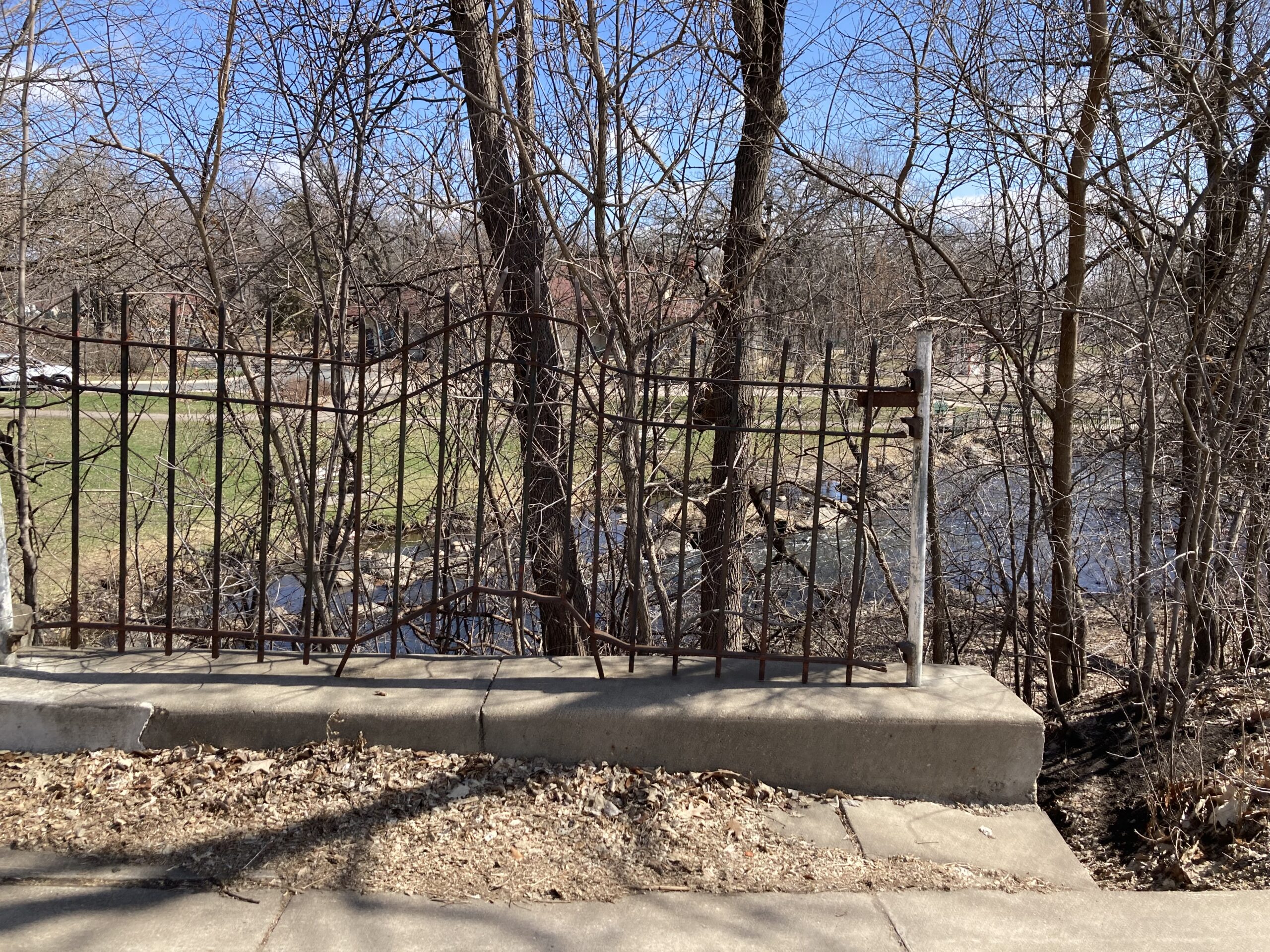
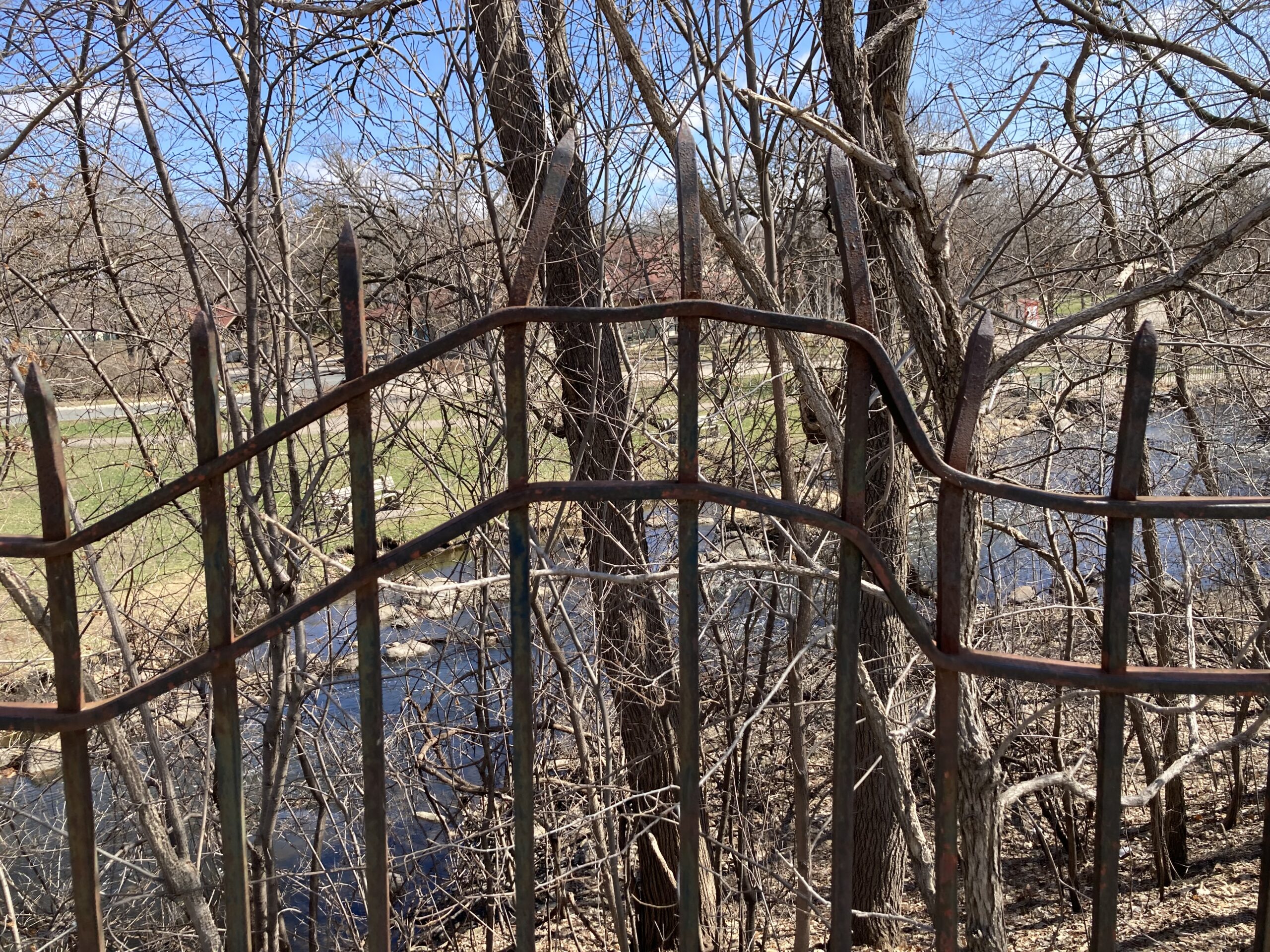
  3. green exploding everywhere, new leafs on a tree, pushing through the slats of the wrought iron fence
  4. voices of kids, playing at the school playground
  5. blue water
  6. tree shadows, some sprawling, some exploding
  7. a new layer of gravel
  8. ran through a small cloud of gnats and trapped at least two in my eye juice — yuck!
  9. very soft and deep sand on the small trail winding through the floodplain forest
  10. loose gravel on the hill out of the ravine, making it more challenging to run

more holes

Still playing around with how to visualize the different hole poems and how to introduce/present the different elements: word, line/string/thread, hole. A wild idea last night that I can barely imagine executing. For a poem in which I have a double grid — one grid drawn directly over the poem, another created out of thread elevated above it — I would use needles instead of pins for stringing the thread. Yes, this is ridiculous — if I’m doing the math right, that would be 84 needles to thread, which I will never have enough spoons for. But wait — what if I put 2 needles on the center dot and used pins for the perimeter? How would this look? I’ve been thinking of the needle as eye ever since I used the phrase, threading the eye of a needle. Hmm, that idea needs to simmer some more.

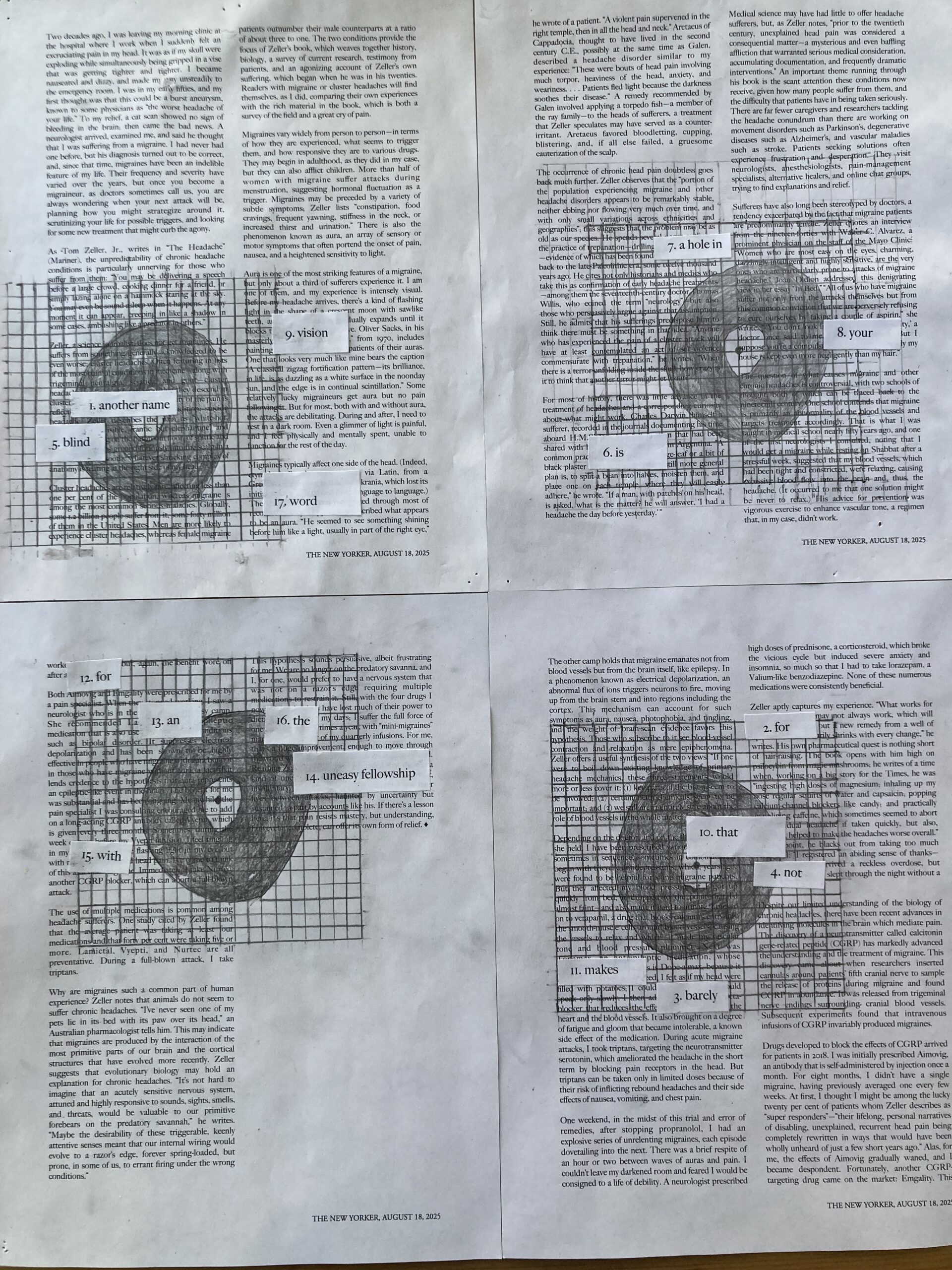
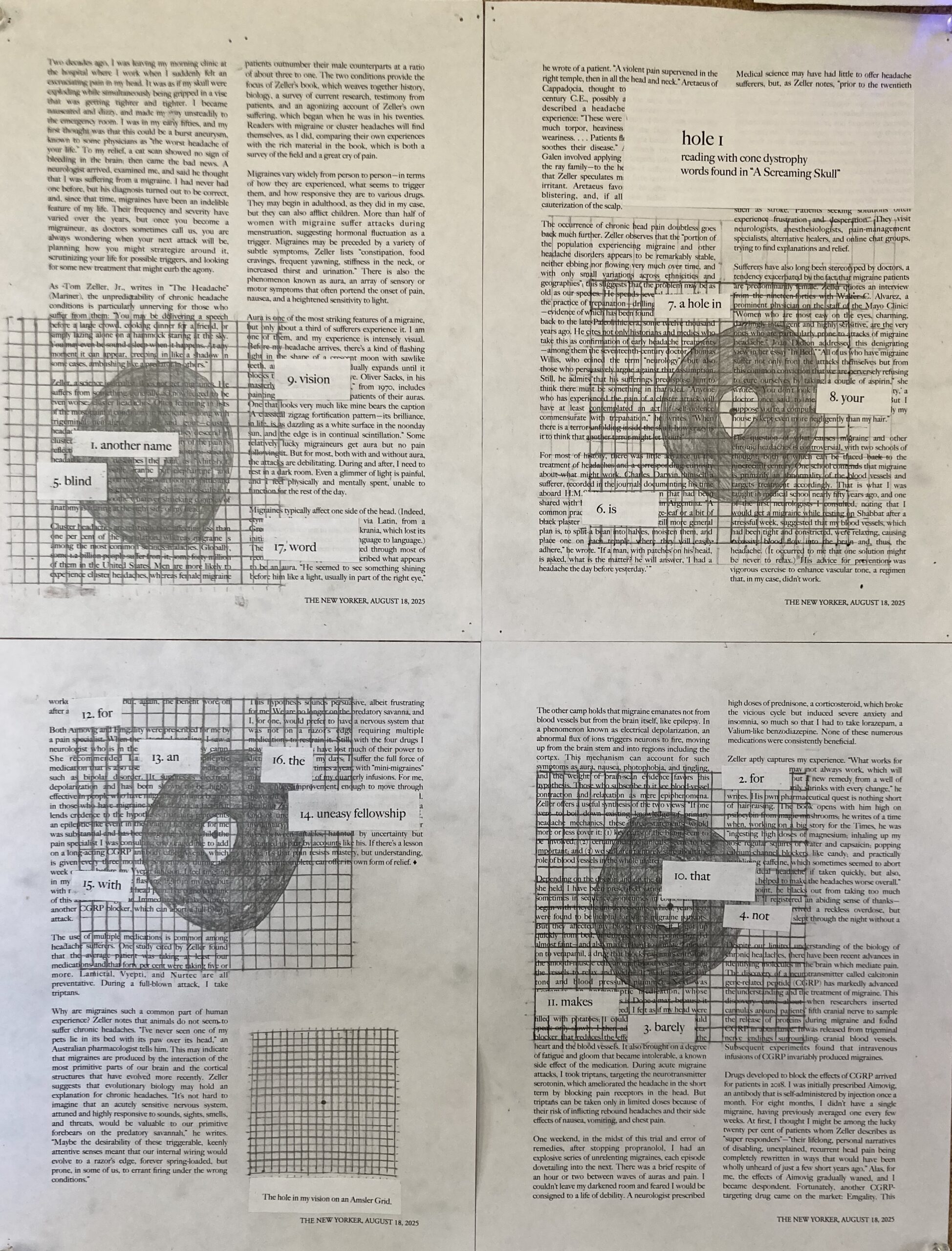
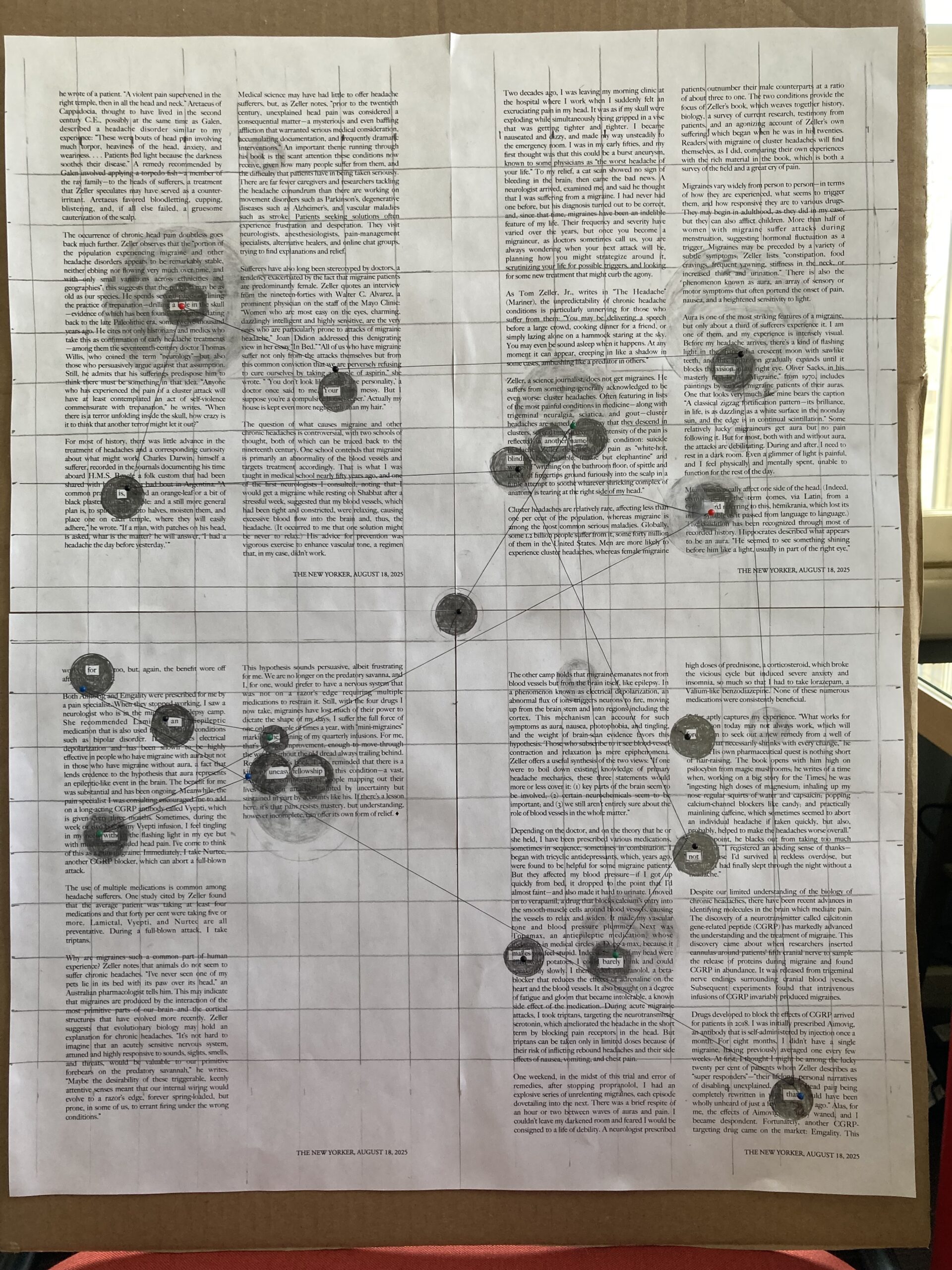
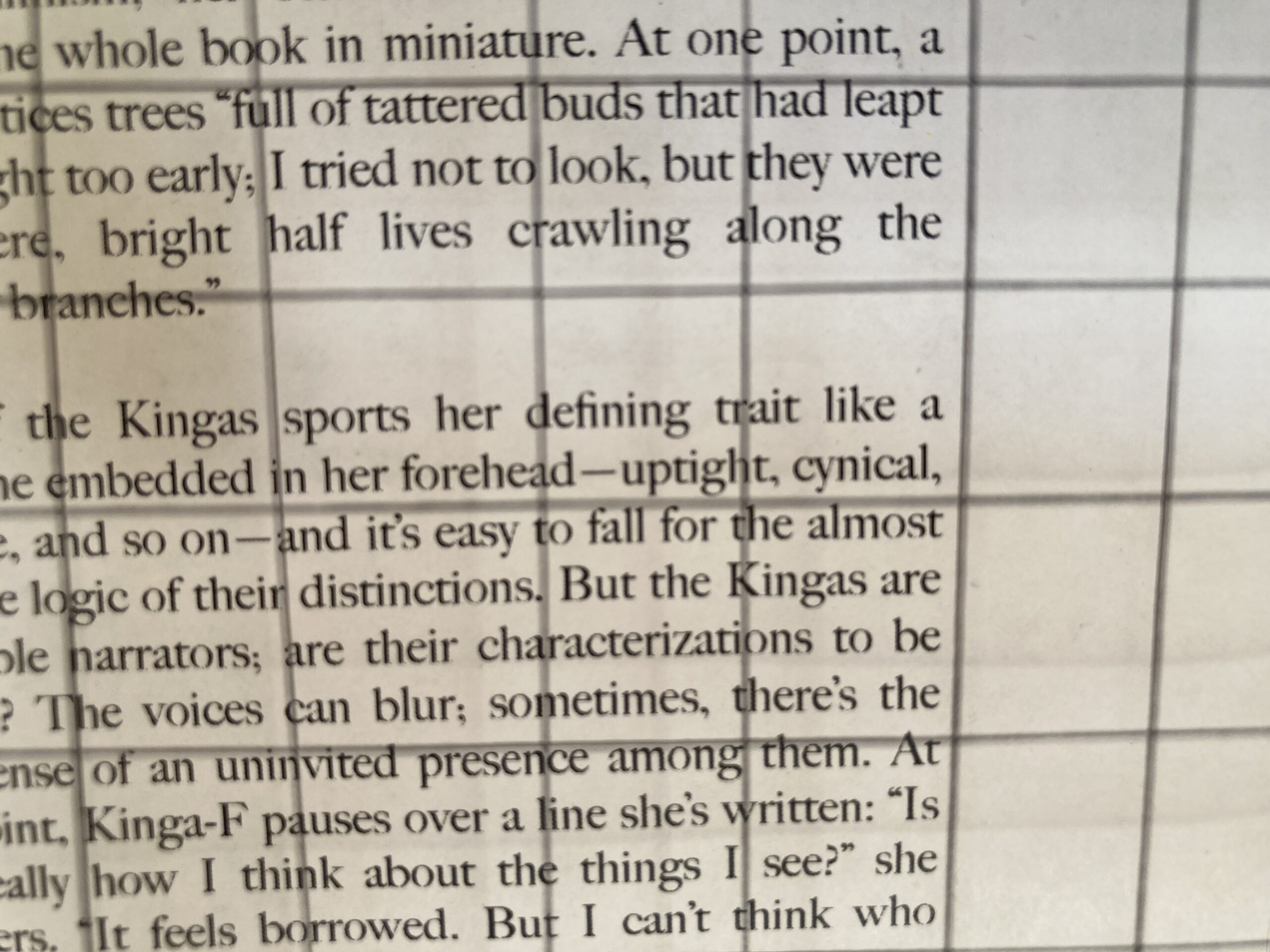
This morning, I returned to Holes 1 and thought about how to find the words on the pages of the New Yorker essay. This poem was the start of this w/hole journey, so I imagine it as an introduction to the series and to the key elements — in particular: hole = blind spot and line/string = lines of amsler grid. Sara this second has decided on this plan: a grid with my blind spot on it for each panel, drawn over the words of the poem / the words printed out on other paper, then cut out and pasted on top of the grid, each numbered / an additional grid with blindspot/hole drawn at bottom as key/for explanation. Here’s the first stage:

text with 4 grids, each containing a dark blob (my blind spot) and the words: another name for barely not blind is a hole in your vision that makes for an uneasy fellowship with the word.
Holes 1 / phase 1 (7 may)

an hour or two later . . . Next, I drew on an Amsler Grid then glued on a caption and the title of the poem. I still need to draw the hole in my vision directly on the grid. This will require scaling the hole down. I’m thinking of trying out the Chuck Close grid method on another amsler then cutting it out and tracing it on the “real” one. That’s post-run Sara’s job.

holes 2 : phase 2, 7 may

I like it! I was able to (very) roughly approximate my hole to fit in the smaller grid, but I won’t post it here until it has been published somewhere.

may 6/RUN

4.7 miles
veterans home in reverse
42 degrees

Brr. Was glad I wore my winter tights this early afternoon. I almost wish I had had gloves near the beginning. Saw the parks crew out near the savanna, looking like they were getting ready for another controlled burn. Overcast, windy.

10 Things

  1. the smell of freshly cut grass somewhere — was it near Wabun, or was that at my last run through Wabun
  2. the top of a wooden fence, missing
  3. another fence top, broken and slanted
  4. gushing water below, 1: on the bridge connecting the veterans home and the river road
  5. gushing water below, 2: above the falls, the creek below
  6. gushing water below, 3: the sewer pipe in the 42nd street ravine
  7. shshshsh of the soft suface on the dirt trail next to the paved path
  8. the very LOUD monthly severe weather siren that blasts the first Wednesday of every month
  9. a few school buses in the falls parking lot, at least one group of people clustered above the falls
  10. empty benches

grids and holes 1

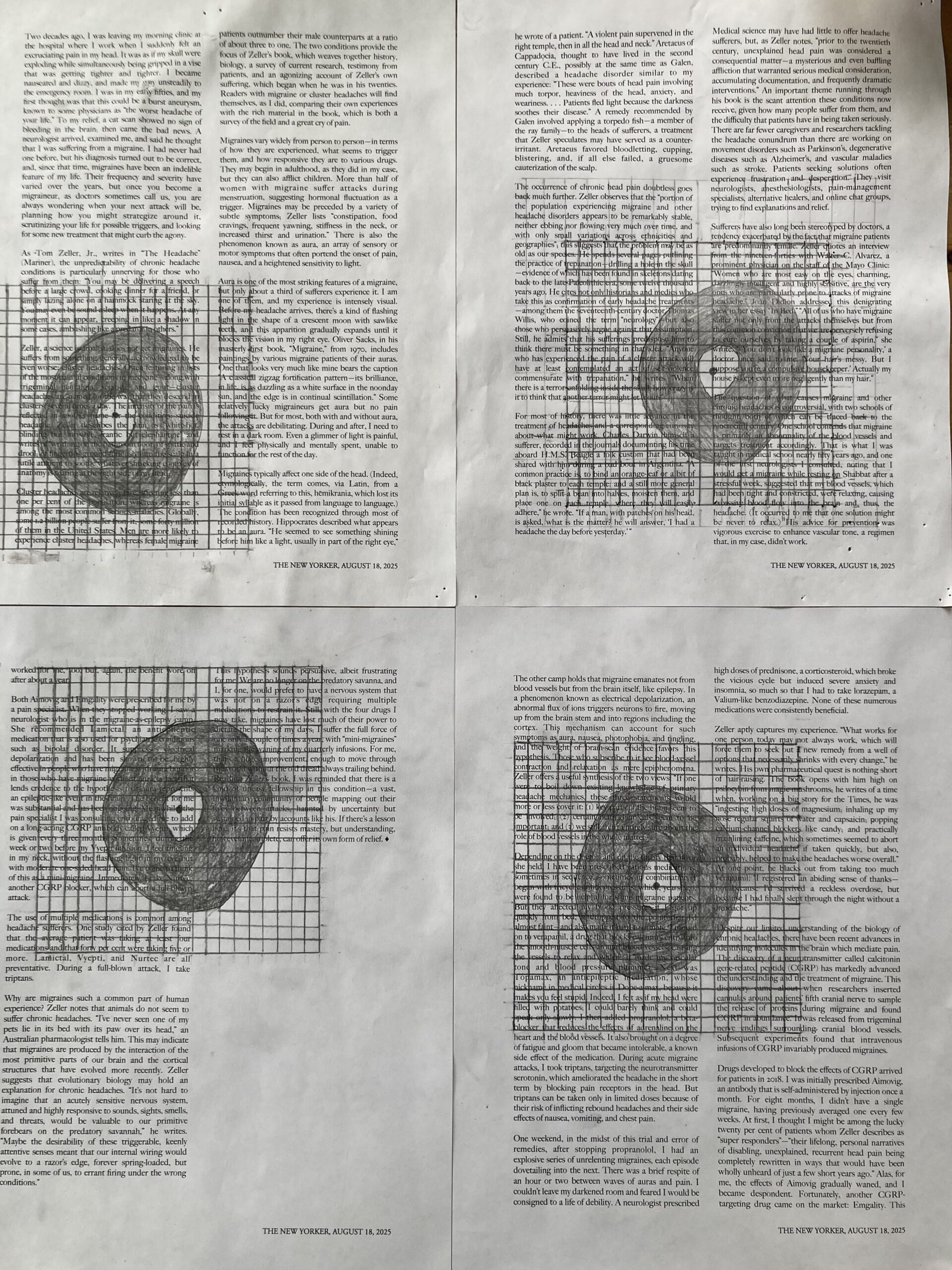
A favorite journal, Unlost, is open for submissions. They feature found and visual poems. I’d like to submit a few of my found poems, so today I started fine-tuning holes 1. First I finished drawing grids and my blind spot/hole on the panels of the essay:

holes 1 / 5 grids

I could keep all the pages intact, then place some plastic over all them OR I could cut out the grids, put plastic over each, then place them beside each other to create the poem. I also like the idea of the double grid with pins and thread. Maybe I’ll try the pins tomorrow (and maybe I’ll leave the plastic for non-hole poems?).

may 5/RUN

5.2 miles
franklin loop
42 degrees

Initially I was planning to run south but then I remembered that Scott and RJP had seen a cool art display near the trestle so I ran north to find it. First I ran through the neighborhood, past the daycare playground which was empty of kids, and over the lake street bridge to the east side of the river. Then I ran north to franklin, west over the bridge, and then south to the trestle.

A beautiful morning! Ran into the wind for the first half, with it behind me for the second half. I had to adjust my cap a few times to make sure it wouldn’t fly off, but otherwise the wind didn’t bother me. In fact, I liked what it did to the surface of the water as I ran over the lake street bridge: a wide stretch of rough scales.

I did 9/11 and it helped me to not run too fast. I felt strong, especially in the second half of the run.

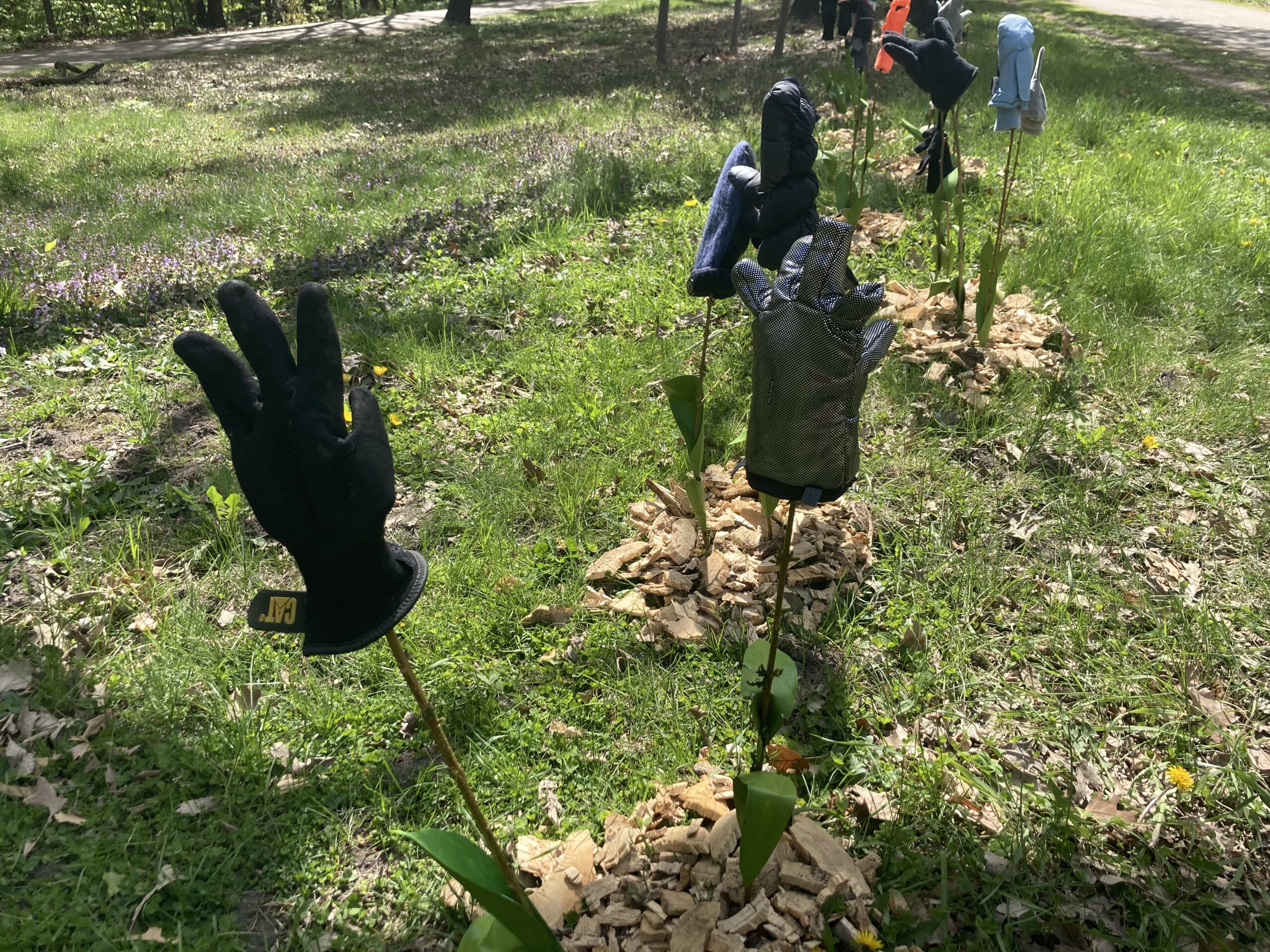
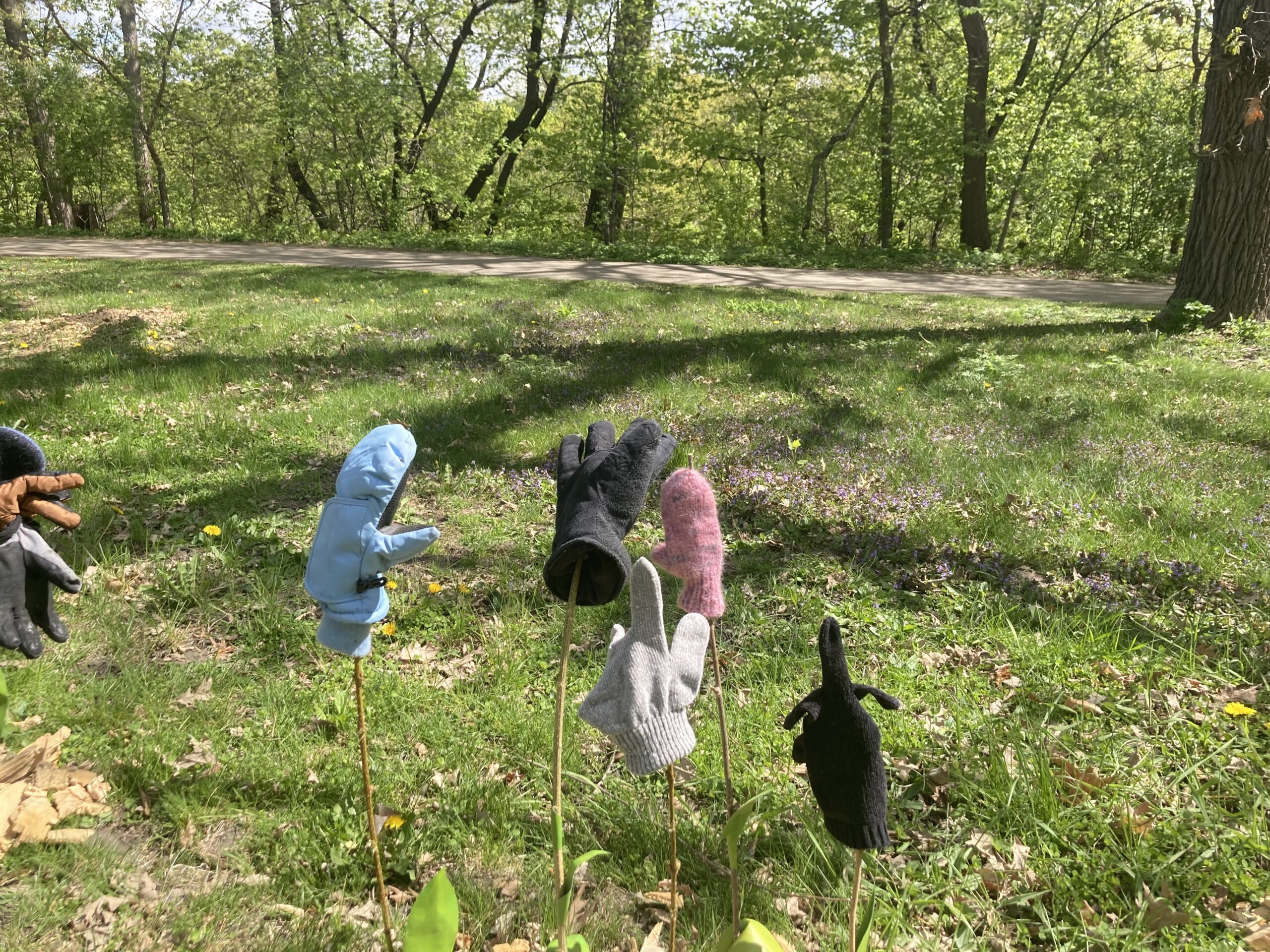
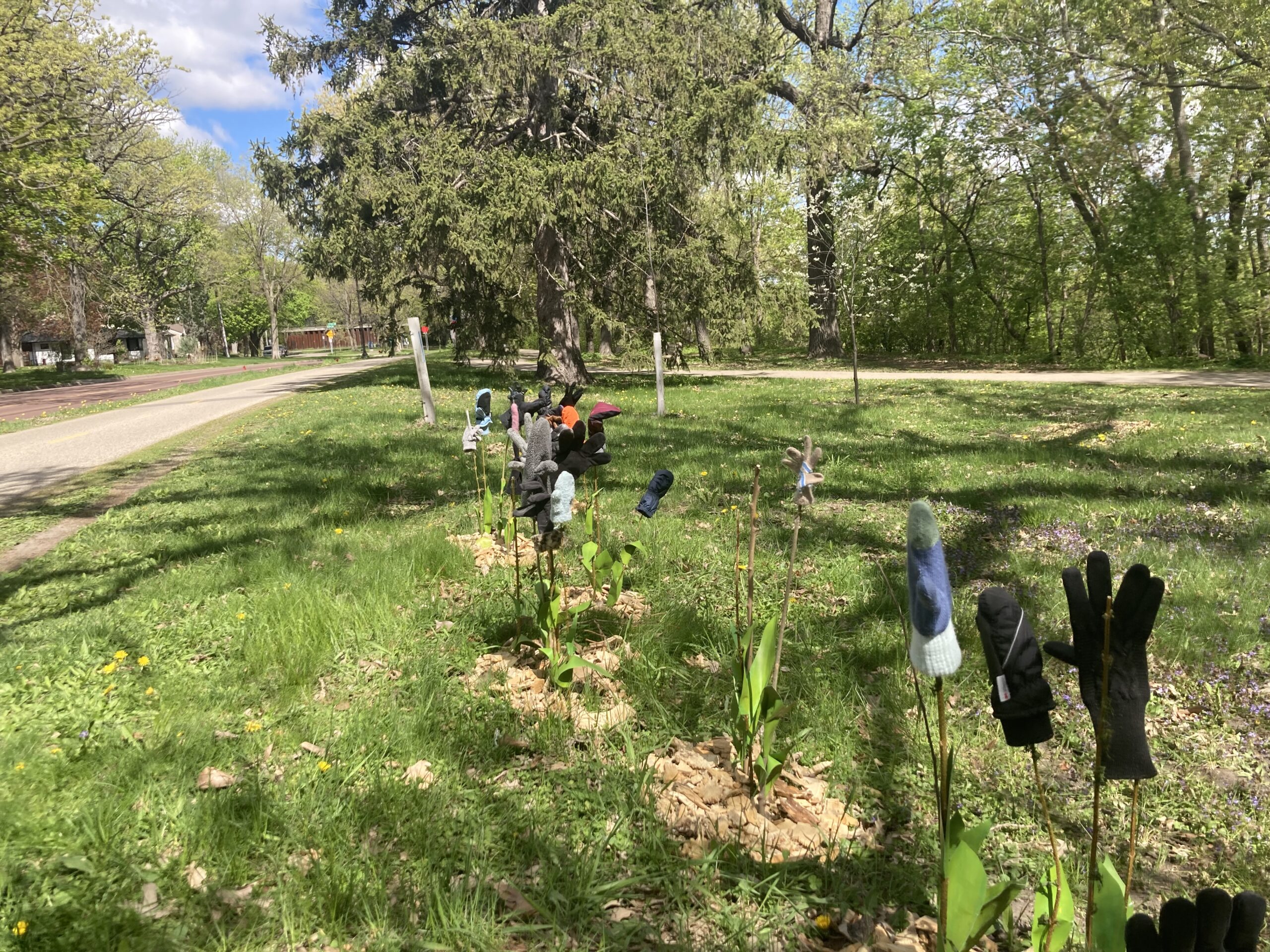
As I neared the trestle from the north, I began looking for the art display. I finally found it in a grassy stretch near the part of the walking trail that splits from the bike trail. It’s a cluster of mitten tulips! We’re not sure who did it, or why, but I love it!

After stopping to take these pictures, I kept running south. As I neared the tunnel of trees, I saw that the road was closed. Then I saw smoke — a lot of smoke. Were they smoking the sewers in the neighborhood. Then I heard the crackling of fire on the hill below lena smith boulevard. Oh — a controlled burn. I stopped to take some video. For some reason, most of it is in slow motion again. Only the first five and last five seconds of it are at normal speed.

controlled burn / 5 may 2026

holes, grids, other worlds and other mothers

Yesterday I gave myself a task: weave thread through the plastic grid, sew thread on paper, sew thread on a plastic bag. A preliminary2 verdict: thin yarn on the plastic grid is possible iff I find the right purpose; paper might work if I think more deliberately about it; plastic has a lot of possibility. I’d like to try replicating a drug-induced spider web on it! My sewing skills are very limited — limited = 7th grade home-ec class + the occasional darning of pants/shirts + sewing up the rip on the brand new couch that Delia the dog made when we first got her 10 years ago. Will that stop me? Maybe in the past, but not today! I’ve already cleared the first hurdle: I threaded a needle! Yes, with my very bad vision, I managed to thread the eye of a tiny needle. Oh — the eye of a needle?! That’s an interesting connection to this project and my poem about the string that ties eye to words to world.

eye = needle / string = thread

I posted about this last week (I think?), but I’m reminded of Wallace Stevens’ poem, “Tattoo,” again and the lines, light is like a spider . . . it crawls under your eyelids/And spreads its webs there–/Its two webs./The webs of your eyes Spiders and threads and eyes. Now thread = light = that invisible thing that connects us to words and meaning. So good!

Maybe I should also try creating the web on the latch hook grid? I don’t have a needle with an eye big enough for the thin yarn I’m using, so I’ll try to do it with my hands.

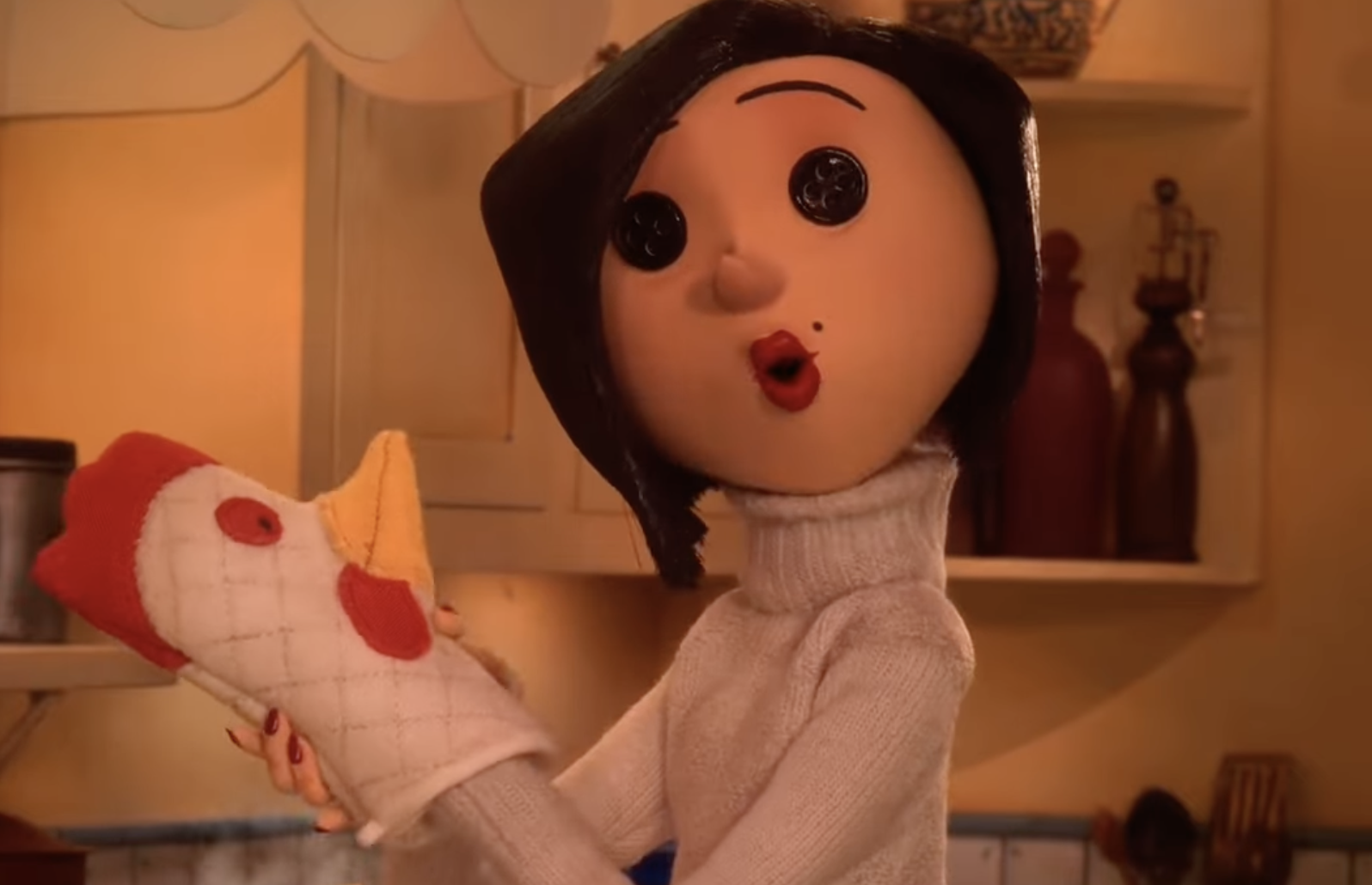
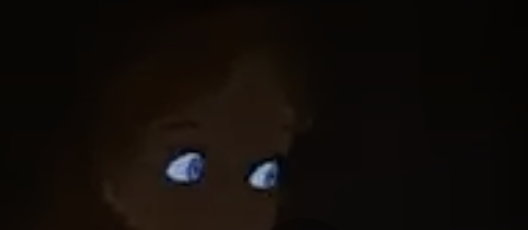
I just watched a clip from Coraline on YouTube titled, “Coraline — Meeting “Other Mother.” I want to think more about the other mother’s button eyes and the idea of the hole as a portal between the world of her mother and other mother. Question: So far, I’ve taken inspiration from Alice in Wonderland and Coraline about holes to other worlds, but what other classic kid movies/books feature a hole/portal? Just as I wrote those last words I recalled Narnia and “The Lion, the Witch, and the Wardrobe,” which I loved reading as kid. A connection: the portal/hole/door is in a wardrobe, closet and through clothes. Is the thread/cloth connection significant?

  1. 9 minutes of running, 1 minute of walking ↩︎
  2. preliminary = spending about 1 or 2 minutes trying each out ↩︎

may 4/HIKE

55 minutes
minnehaha off-leash dog park
59 degrees

More green, less dogs, a lot of wind, loose sand. Delia the dog was in her element — such joy in her body as she ran and leaped and sparred with other dogs. FWA and I talked about a distracted dog owner who failed to recognize that her big dog was overwhelming Delia. We both noticed how the beach was much smaller and the river much larger. Most of the mucky shoreline gone.

As we headed back, there was shouting ahead, then an older woman approached us and asked if she could walk with us. She explained that when she asked a man to get his big dog away from her small dog he called her a cunt and then yelled at her, then he kept harassing her. She didn’t feel safe. When the red-faced man (that is, according to FWA; I couldn’t see his face) paused and denied what happened, FWA successfully de-escalated the situation, saying to the man, just walk away. He did and we walked part of the way with the woman and her dog, Scotchie, short for Butterscotch. Love that name! After we parted ways, FWA and I analyzed our re/actions. I’m proud of FWA and I’m glad the situation was quickly defused.

We heard the pileated woodpecker, black-capped chickadees, and some corvid that didn’t sound like a crow and wasn’t screechy enough to be a blue jay.

grids

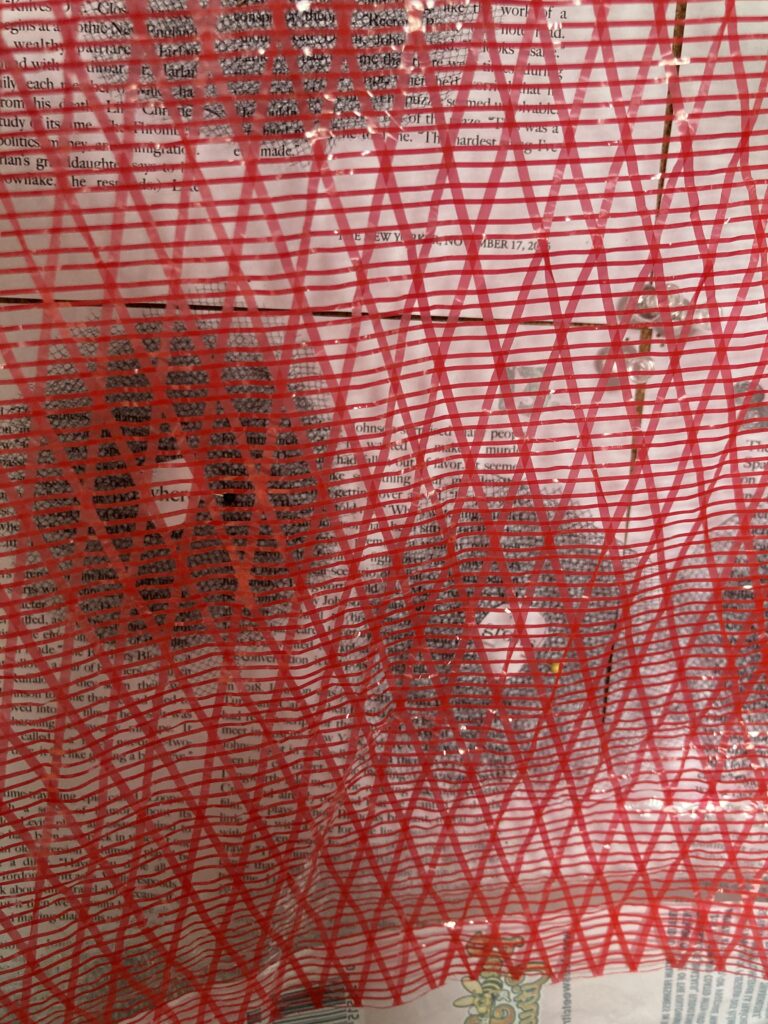
Scott and I went to Costco and loaded up on Grapefruit. I noticed a lattice/grid on the bag. Can I use it? It’s red (or orange? or pink?) so I’m not sure, but maybe?

grapefruit bag grid

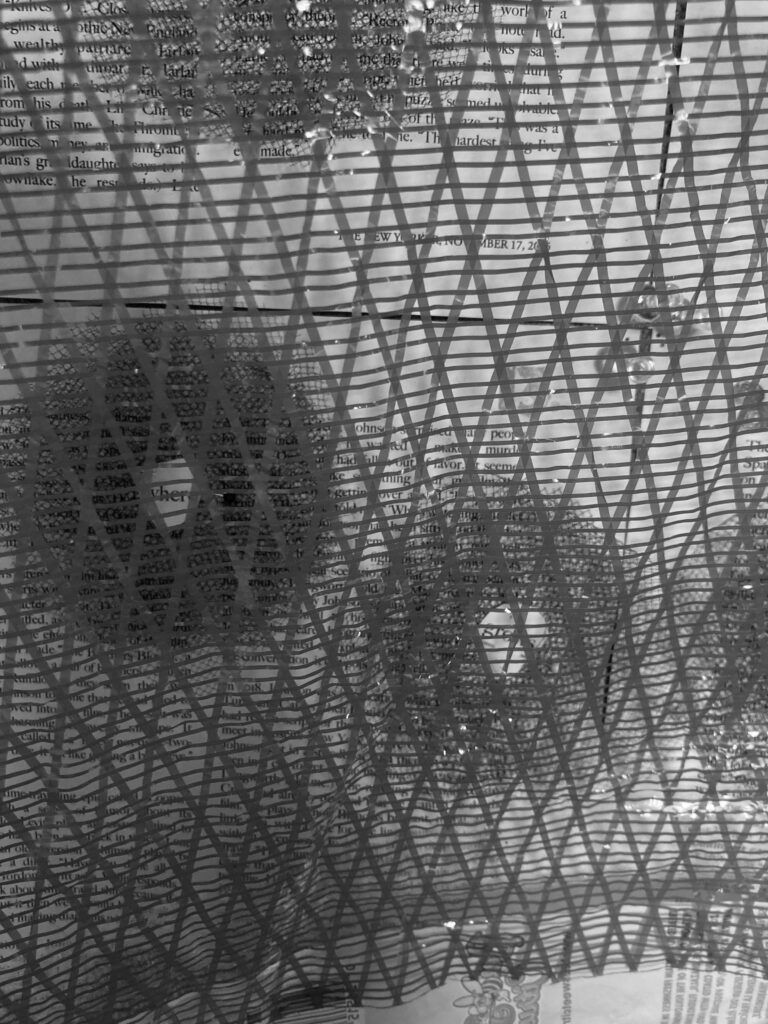
I placed the grid directly over another holes poem just to see what it would look like. A thought: if this visual poem was in black and white, how would it look?

grapefruit bag grid — black and white

One inspiration for this switch to black and white: a story from Scott about the set on the Adams Family tv show1. While the show was in black and white to make it look more gothic, the actual set was in crazy colors. Nice!

While gathering a few different plastic bags from our Costco shopping to play around with, I thought about how my interest in plastic bags — because they seem to be an effective way to describe the distance between me and words and the world — is giving me a chance to give attention to the (over) use of plastic in packaging. So much plastic. More broadly, my interest in using everyday objects in my visual poetry is helping to give attention to objects that I would otherwise not notice. A door to a new way of being in the world is opening!

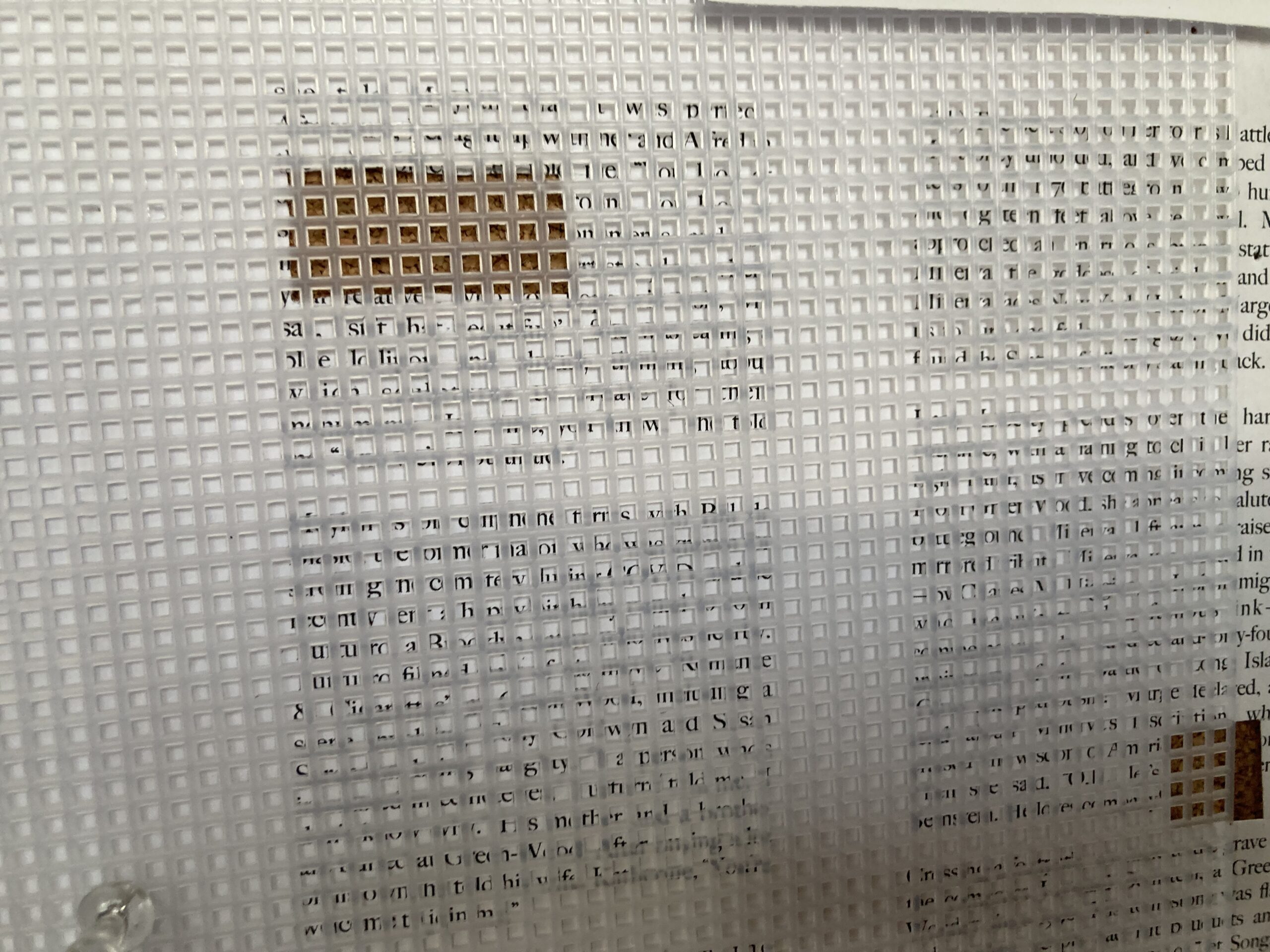
I almost forgot about another grid I discovered. Yesterday, RJP and I were at Michaels picking up a few supplies — yarn for her, needles and pins (no, not The Searchers song) for me. Sudden inspiration hit: what about the grids used in latch hook?!2 We asked a very helpful employee and found them. Yes! There is potential, I think, for using this in my Holes 4 poem. I wish I would have bought more than one!

1: panel with words of poem cut out
2: panel with bigger words of poem pasted on
3: both panels

I’m wondering what it would look like to play around with thread or yarn woven through the holes?

tomorrow’s plan: weave thread through plastic grid; sew with thread through/on plastic bag; sew with thread through/on printer paper.

  1. Fun fact: I loved watching this show when it was on reruns; I had a crush on Gomez/John Astin. ↩︎
  2. I know about latch hooking from my older sister MLP who loved to do it so much that once she latch hooked a map of China for a school report! ↩︎

may 2/RUN

7 miles
lake superior boardwalk, duluth
37 degrees

An impromptu trip to Duluth with Scott. Our first trip alone since last April when we went to visit my best friend in Iowa. We need more of these. This morning, we ran together above Lake Superior through Leif Erikson park and 3 miles north, then turned around and headed back. As we ran, I told Scott that the theme of the run was water.

10 Water Things

  1. thin sheets of ice on the water! earlier from the window of our room, I had noticed the texture of the water and wondered what was causing the strips of rough water amongst the smooth stretches
  2. water gushing out of a sewer pipe embedded in a ravine
  3. crack crackle crackle the ice sheet butting up against the rocks near shore and cracking — such a cool sound!
  4. drip drip drip water dripping out of some pipe deep in a backyard
  5. the rushing of the creek under the high wooden bridge we ran over
  6. Lake Superior — blue and beautiful, one giant ship, anchored miles from shore
  7. drip drip drip sweat dripping off my face
  8. a pool of water on the floor of the port-a-potty
  9. benches dotted on the bluff, filled with people enjoying the view
  10. almost all of the ice gone — I thought all of it was, until I noticed a few sheets still on the surface as we walked up the steps after the run

While we ran, we talked about our kids and Star Trek and an article Scott had read about fraternal twin girls with the same mother but different fathers. I saw my shadow and started singing Me and my Shadow. Scott asked who had sung it and when I said, I wasn’t sure but I had a version with Frank Sinatra and Sammy Davis on my shadows playlist, he said, Sammy Davis Jr. is his shadow? Yikes. And I said, Jesus, how have I never noticed that before. Then a string of associations: I mentioned that they sang it on a tv special which led to a discussion of the Andy Williams Christmas special, then the kids in it, which reminded Scott of the scared kid on the Ray Coniff Christmas Special who hears a creepy story about a little gray lamb read to her by the guy who played Wilbur on Mr. Ed — Scott couldn’t remember the actor’s name. Scott started reminiscing about watching Mr. Ed with his mom on Nick at Nite, which prompted me to start singing the theme song from “The Patty Duke Show” — because, of course I would.

It was a good run, and a great mental victory. As I said to Scott, I’m excited to push myself mentally to run these longer distances. It is a wonderful feeling to successfully push through these tough moments.

a quick note about grids

Yesterday, while driving back from 2 Harbors to our hotel in Duluth we started talking about the show Alone and then what it means to be “off the grid,” Yes — another meaning of grids! How can I play around with this in my exploration of grids?!

april 17/RUN

5.25 miles
franklin loop
63 degrees / drizzle
humidty: 85%

I beat the storm! Yes, there was drizzle, but no strong wind or thunder, so I’ll take the victory. Today I felt strong and relaxed and capable. Not anxious or overwhelmed. Today I also feel vulnerable and open to the world, ready to embrace any slight shifts in perspective.

Image of the Day: Running north on the east bank, looking down at the river: a sea of bright, fresh green. On this side of the gorge, between lake and franklin, there used to be a park down below, so there’s wide stretches of cleared land and open grass. Even knowing that, the green looked like water not grass to me, high up on the bluff.

Realization of the day: Returning to the west bank, running south, admiring the straight-ish ridge line across the gorge and wondering how it could be almost uniform, I realized something: this ridge line was made by humans — leveled after logging and road and residence building. What did it look like before settler colonists arrived?

on training for the marathon: Today I ran 9, walked 1. After crossing over Franklin, I did a 5 minute walk to get my heart rate below 170. Then another 9/1. After this last one I checked how long it took to get my heart rate down to 135: 2 minutes. A goal for future Sara: cut that time in half, or even more.

10 Things

  1. flashes of white flowers on the edge of the bluff: the spring ephemerals!
  2. little kid voices, laughing, somewhere deep in the gorge
  3. a guy yelling near a car parked across the parkwy on seabury — was it “fun” yelling as he played with a kid, or “unhinged” yelling at someone?
  4. chickadeedeedee
  5. a verbal greeting with a walker: good moring! / good morring!
  6. honking geese, a honking car horm
  7. a grayish-brownish-blue river, empty
  8. bright LED headlights, cutting through the thick gray air
  9. slashes of bright green are beginning to appear in the floodplain forest!
  10. several stones stacked on the ancient boulder

grids and strings and threads (oh my)

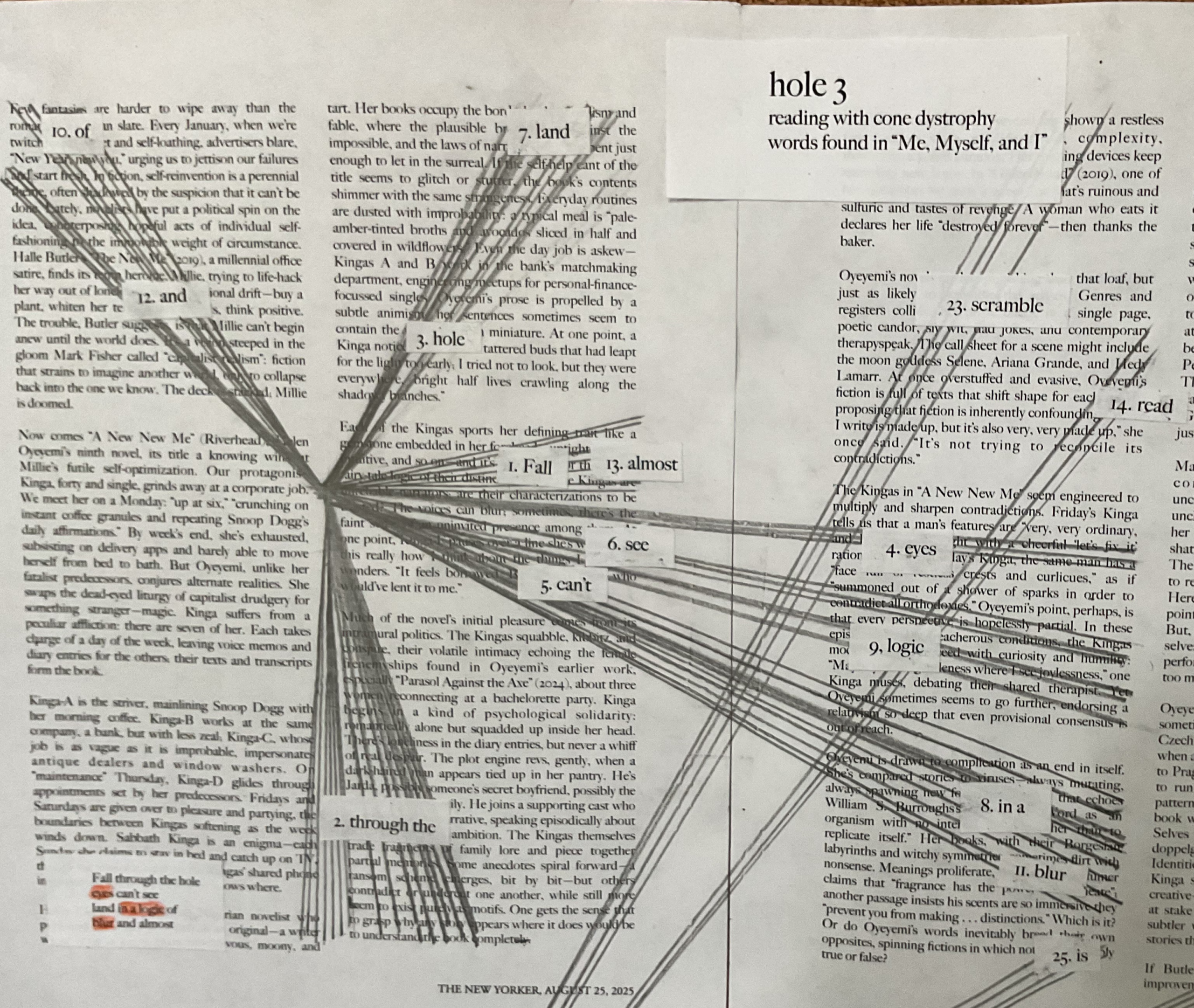
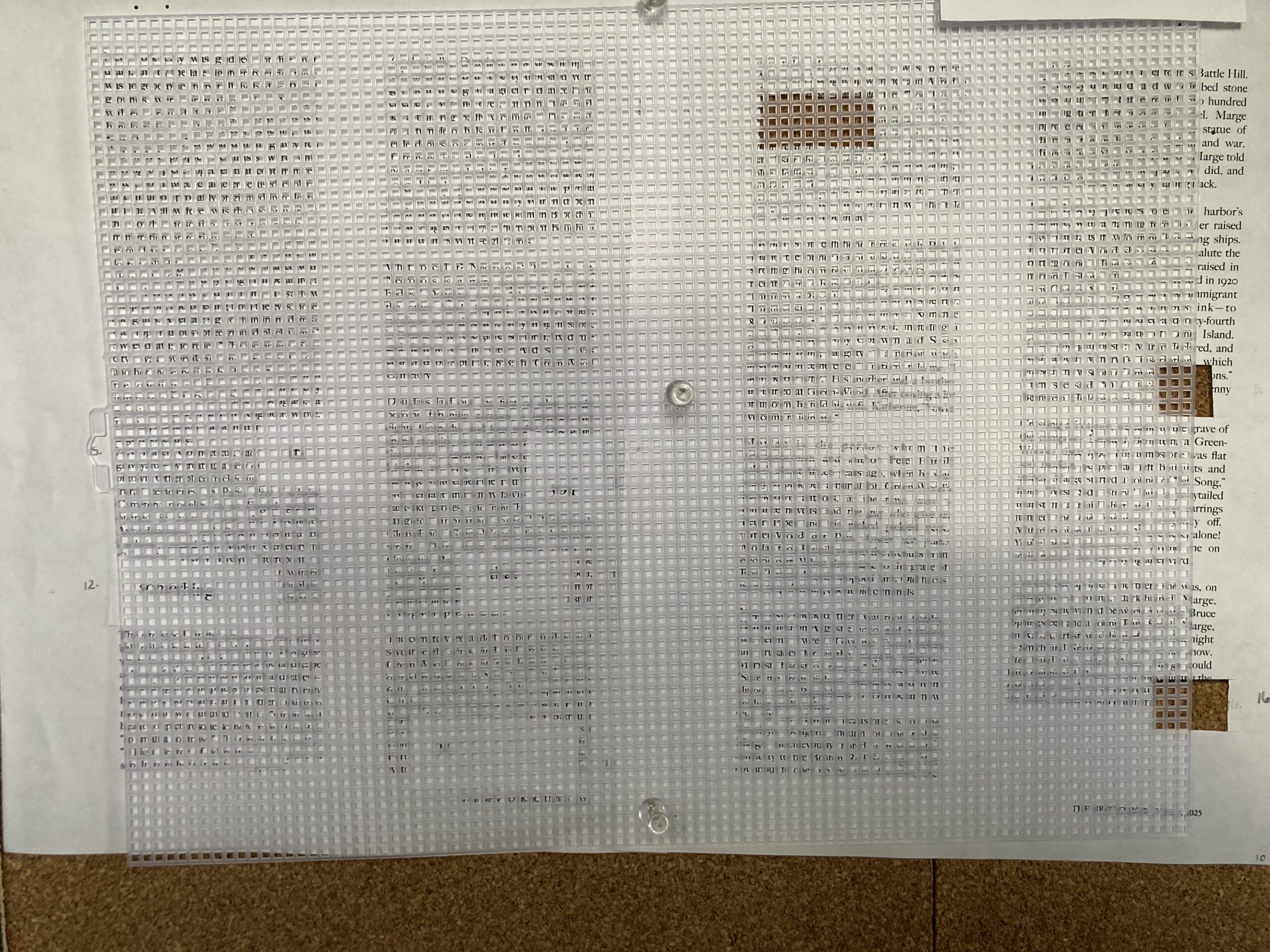
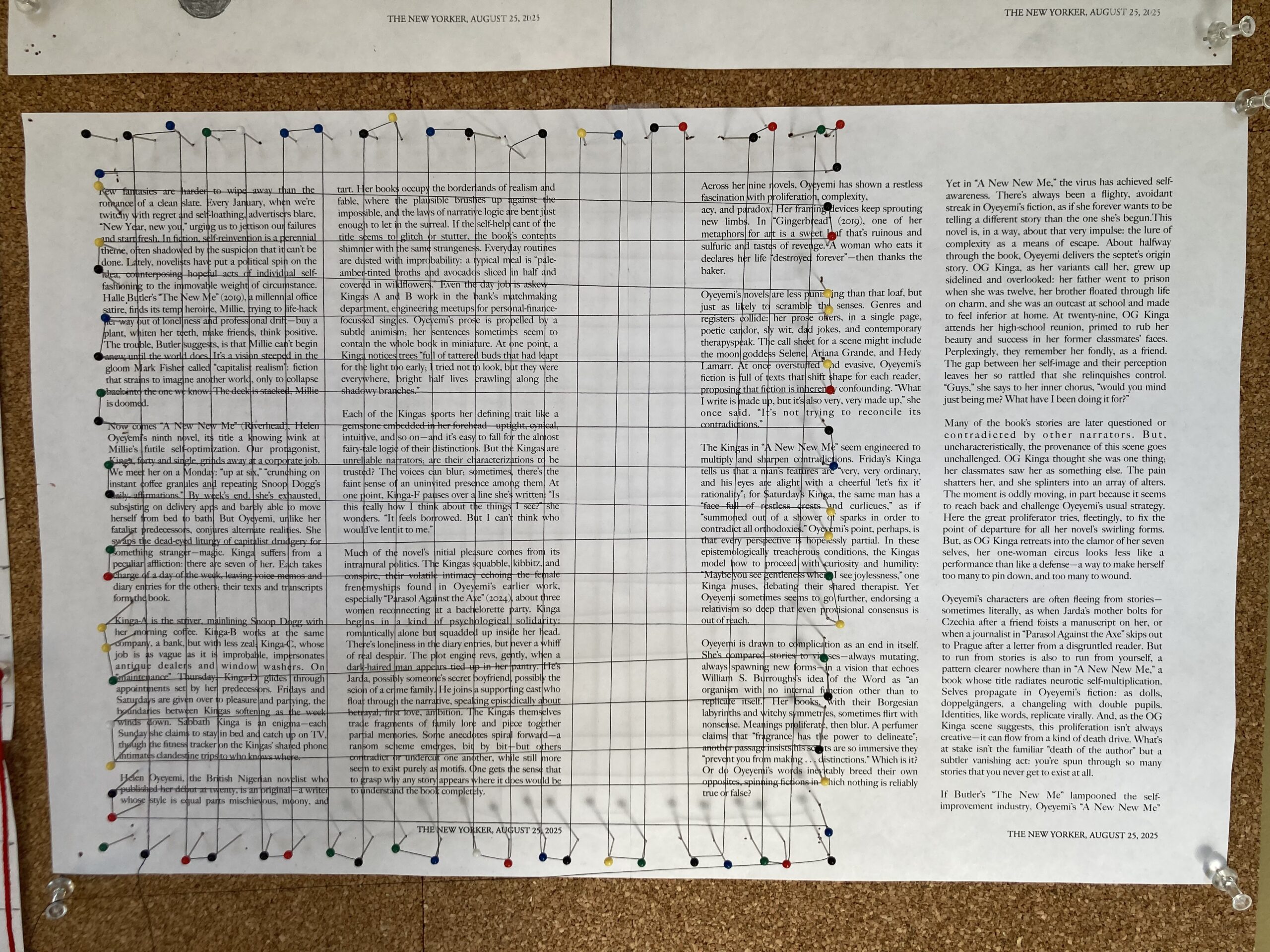
It’s a few hours after I returned from my run and it’s hailed twice and thundered and dropped 15 degrees since then. Boo. I tried a new thing with Holes 3: drew a graph directly on the words, mapped the words on the xy axis, lightly shaded in the words, repinned the grid over that, and then used thread to finish it. I like the doubling, almost out of focus feeling that the pencil grid and the string grid create. I don’t think the words are clear enough yet. I’ll have to keep working on that.

double grid
double grid, a slightly closer look (find fall and almost)

Here’s something else I tried: encasing the words in circles (using a penny) then roughly erasing the circles:

ghost hole effect

Another thought: map the words on a grid, then color in the rest of the grid box around the word or phrase from the poem. How would that look? Maybe I’ll try it on a smaller scale?

april 15/RUN

4.65 miles
ford overlook and back
63 degrees

Hot! Time to start running much earlier in the day! Yes, a return to morning running could be the next step in my efforts to regain some healthy discipline.

Earlier today I found another song to add to my “Remember to Forget” playlist — Forget Me Nots / Patrice Rushen, so I decided to listen to it while I ran for 9 minutes, then walked one. Midway through the playlist, “Forget Me Nots” came on and as I listened to it, I thought about Emily Dickinson’s “If recollecting were forgetting”. Listening to Elvis Costello’s “Veronica” about a woman with dementia, I thought about how the new name Scott came up with for present Sara, Sara this second, has a much different meaning when applied to someone who has no memory beyond the now.

10 Things

  1. flashes of bright green in my periphery as I ran by trees with new buds
  2. hot sun
  3. music coming from the grassy boulevard: people sitting in chairs, listening to music
  4. squirrels squawking at each other
  5. a loud thumping noise at the skate park
  6. someone in white sitting on the ledge looking over the river
  7. a biker in an orange shirt, biking very slowly over the ford bridge
  8. the voices of kids laughing and yelling on the playground
  9. a biker in a winter coat with a stocking cap and gloves on
  10. the desire path on the grassy boulevard is a mix of packed dirt, mud, roots, and greening grass

holes and grids and threads

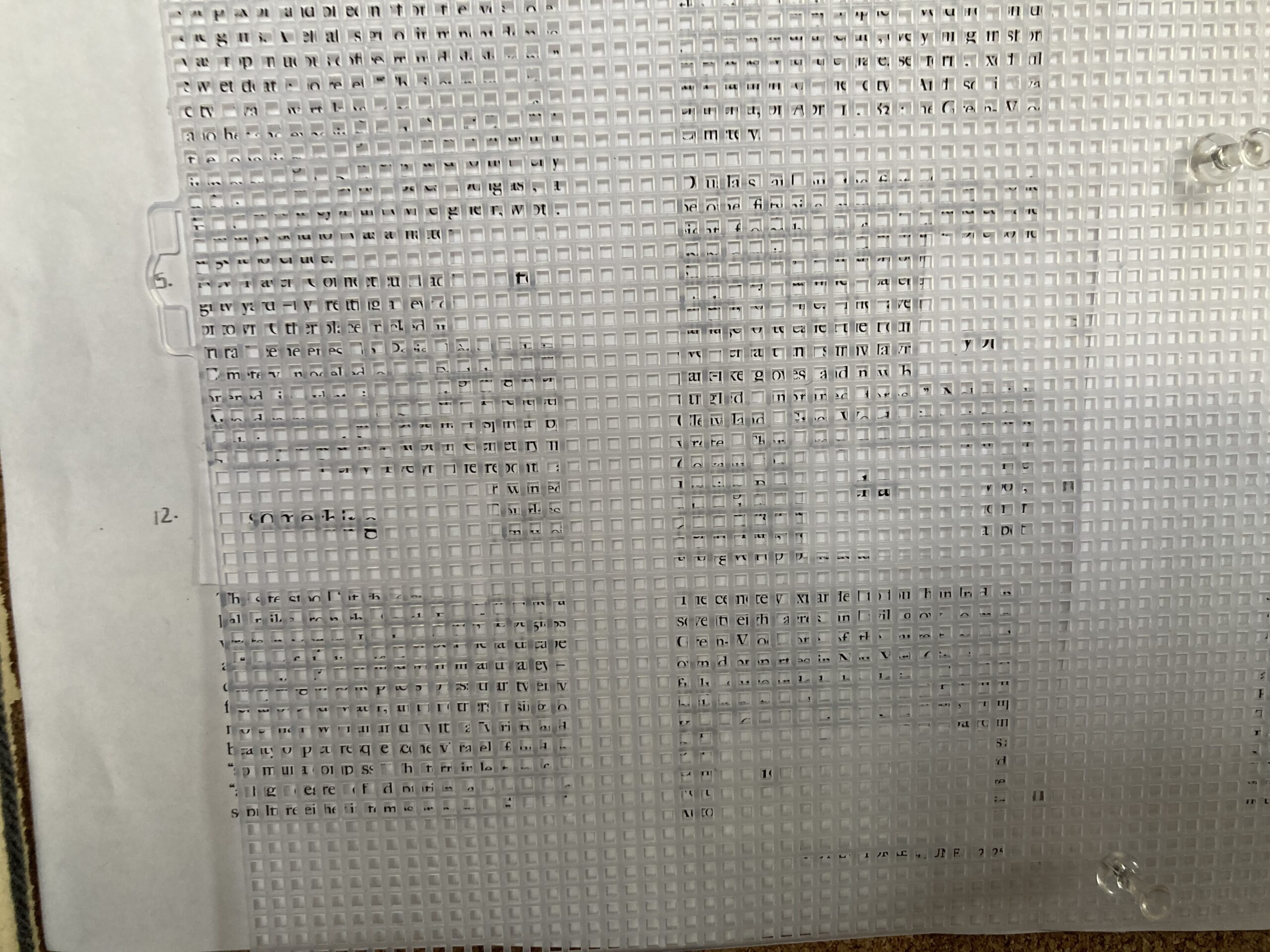
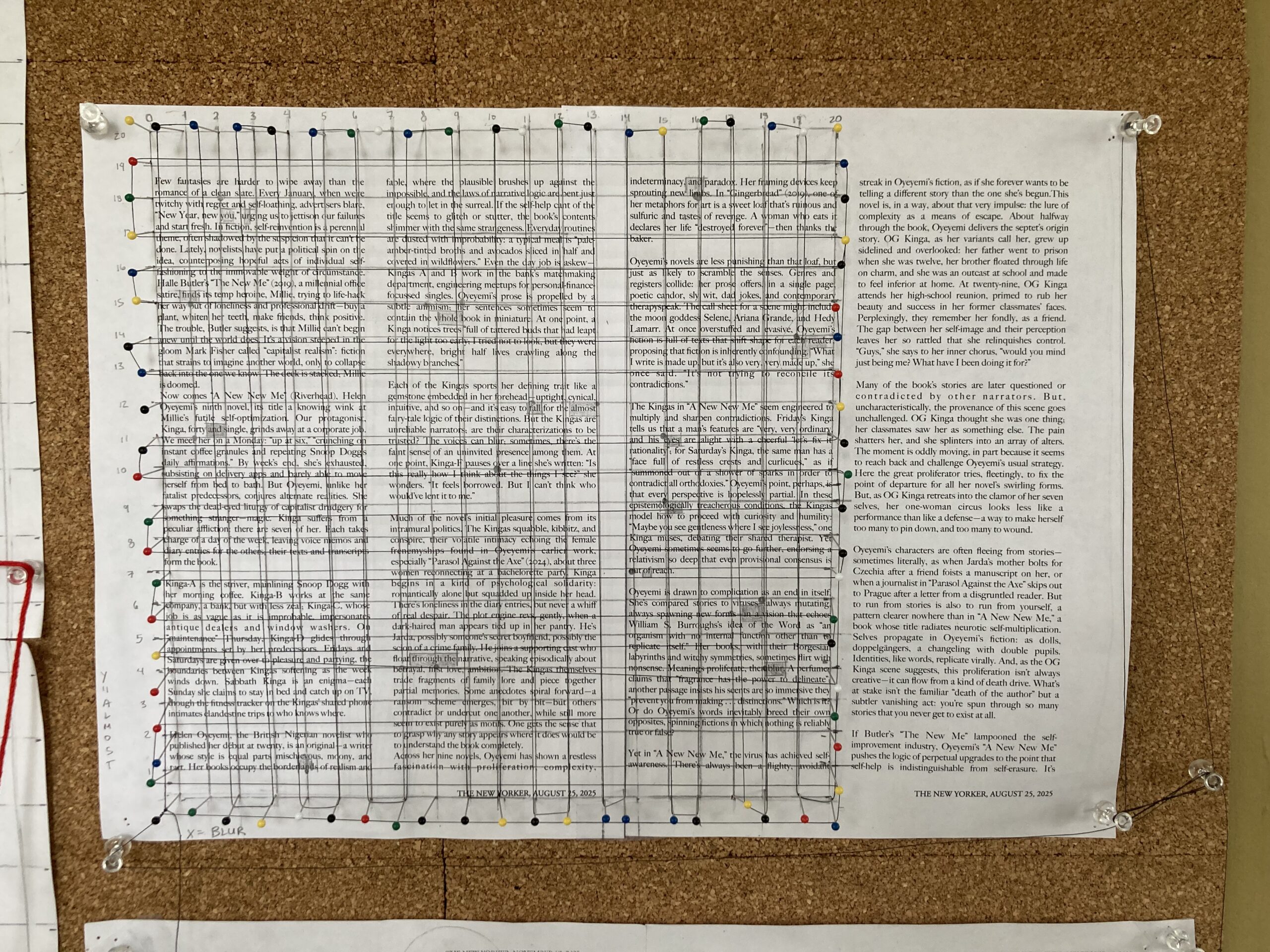
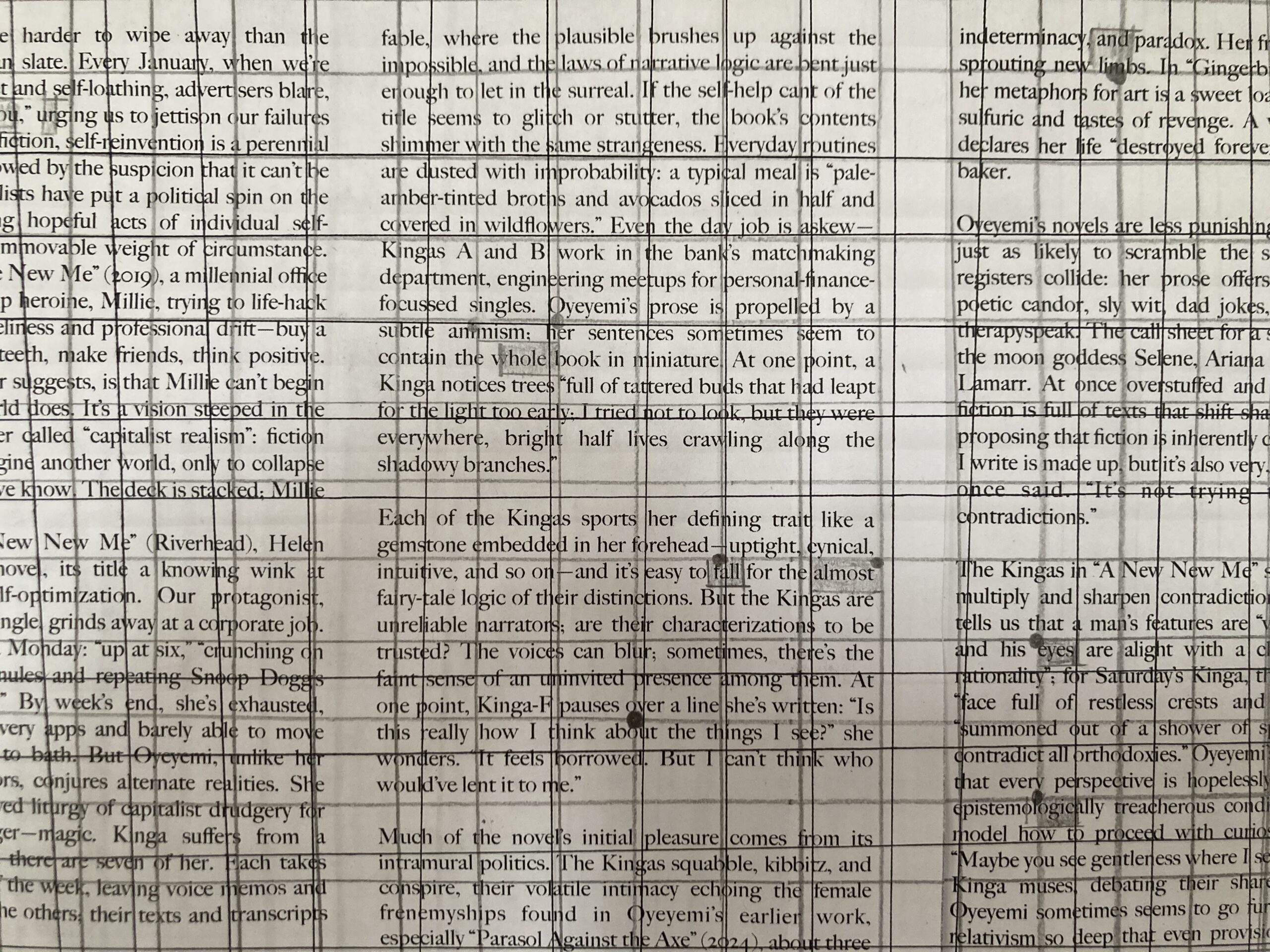
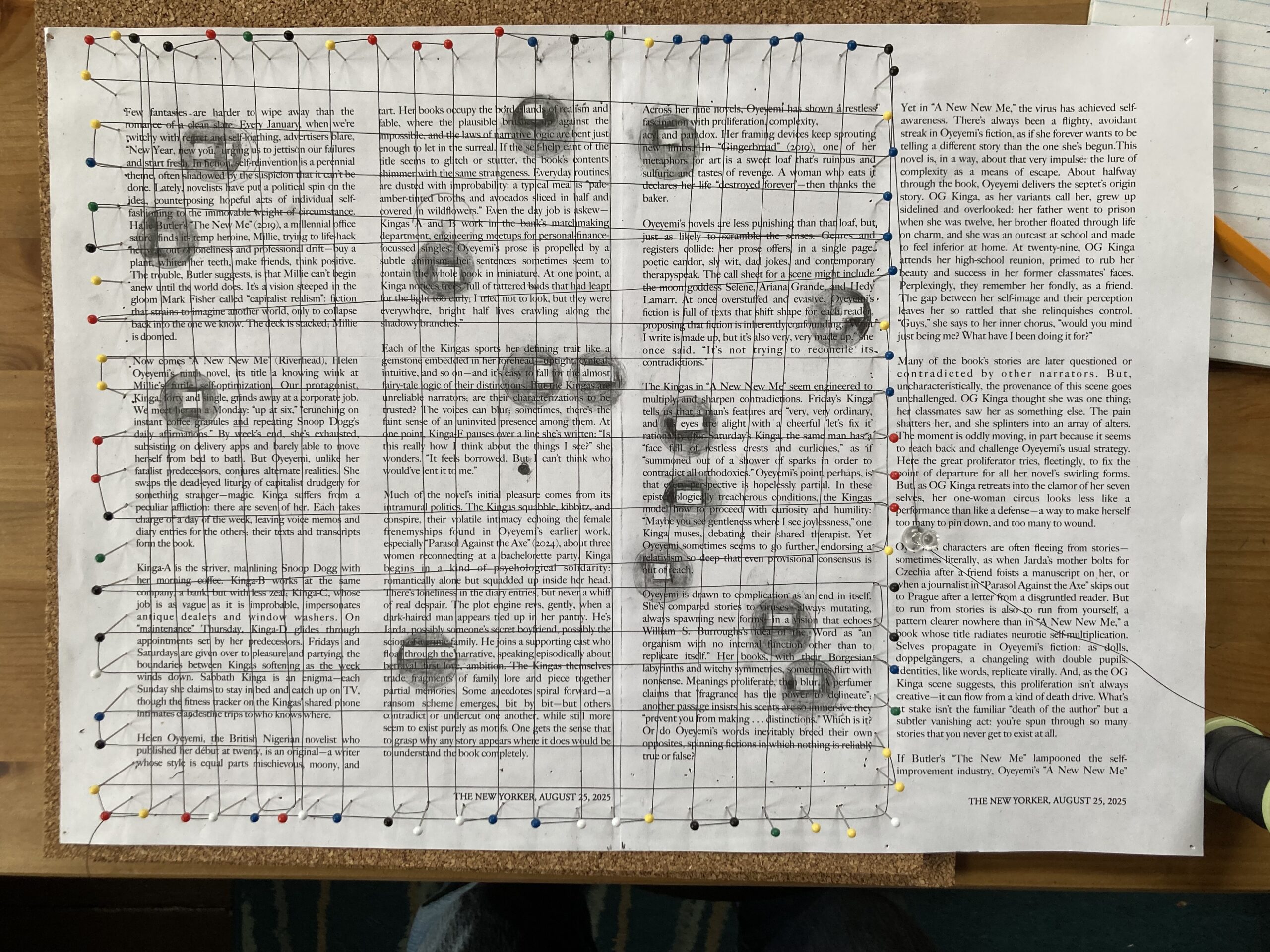
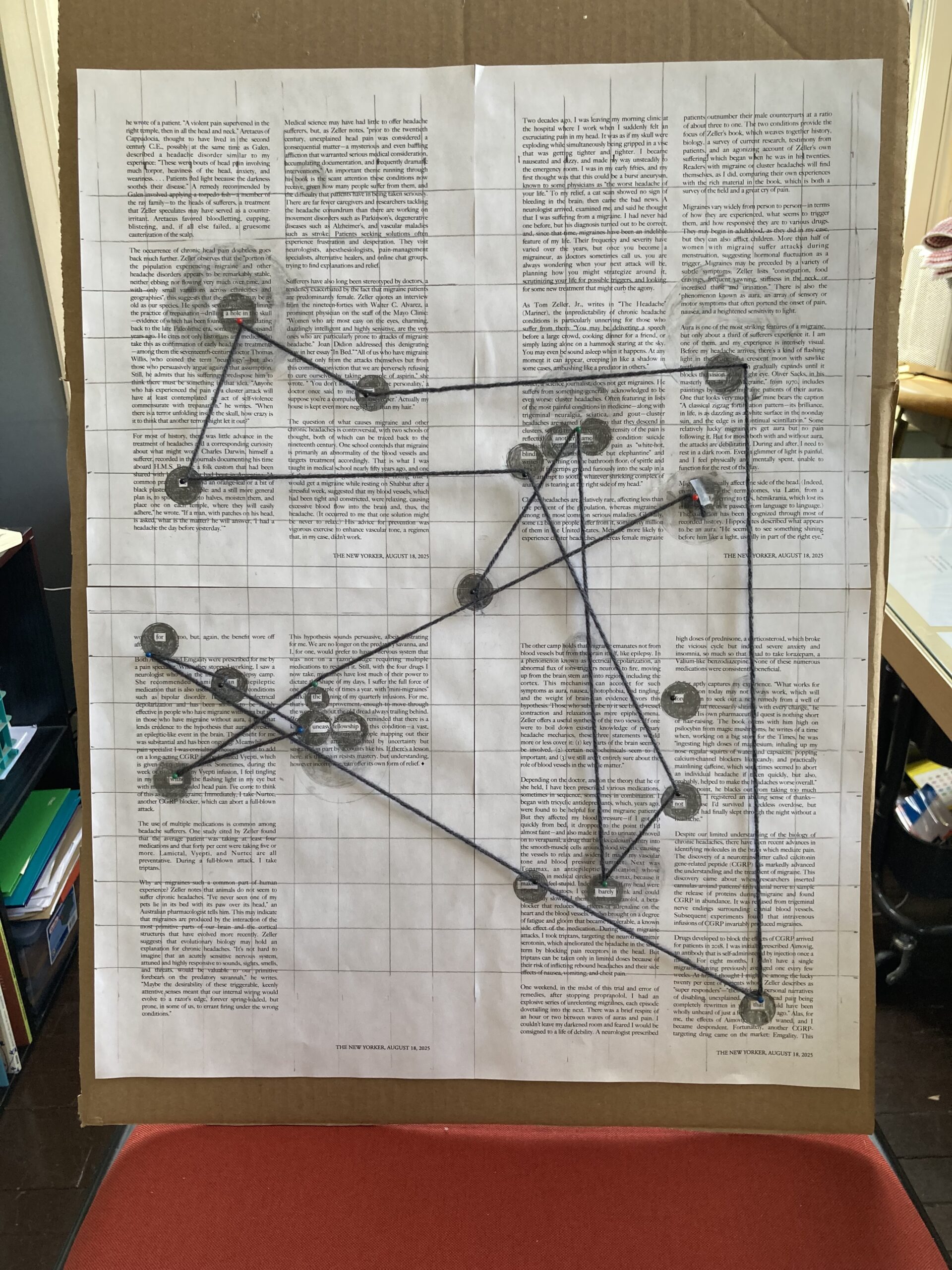
The saga continues. I said to Scott earlier, after pushing my eyes to the limit with measuring 9/16th of an inch and attempting to cut straight slits and placing 84 pins 1/2 inch apart to create a grid, why I am so stubbornly committed to this project when it is to fiddly and challenging for my limited vision? I am not sure, but something in me won’t quit. I want to make a series of visual poems that use grids made out of thread and string and yarn and that require skills far beyond my ability (at least my ability right now) and that are exhausting and frustrating and take a lot of time. And, I WILL make it, dammit! I could use graph paper for the grid, but I want to use thread/string and have the lines be 3-dimensional. The thread/yard is partly as a connection to my fiber artist mom and my fiber artist daughter. The 3D is for the shadows and for what the floatinggrid boxes do to how we see/don’t see the words within them. I just finished my first attempt on placing the grid over Holes 3. I measured a 10×10 square over the words and then placed 21 pins on each of the 4 sides. Then I wound the thread around the pins to create the grid.

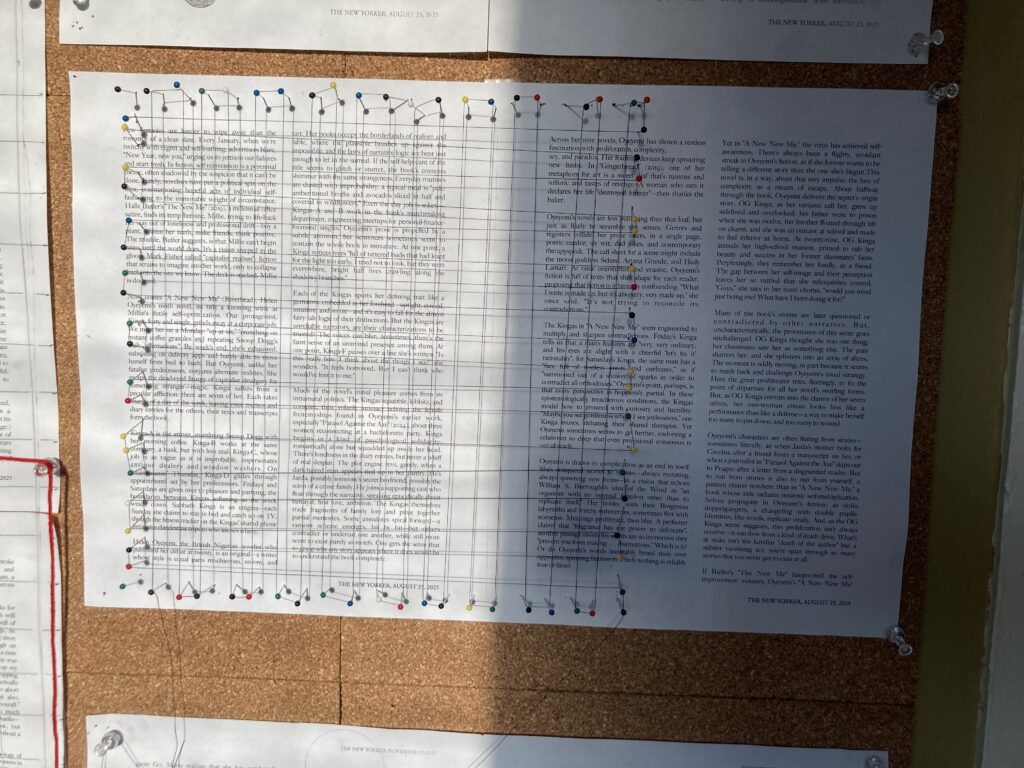
a 10×10 grid made of black thread and pins, placed over a NYer book review of Helen Oyeyemi’s new book
a closer look at the grid and the first word of the poem, fall

I really like this grid overlay, even as I recognize that I need to do more to it to make it make sense to a reader/viewer. The pins are difficult to work with on the thin cork board. They twist and bend out of place. What will I use for a different/the final version of this poem? I showed it to Scott and he suggested a frosted plexiglass layer with only the words of the poem visible. At least, I think that’s how he described it; I’m not quite understanding what he means. I’m wondering if encasing the words in a small dot (both a reference to the center dot of an Amsler grid AND xy coordinates on a graph) might work. One problem: I don’t want to remove the pins and draw the dot in, then have to re-string/pin the grid. I need a better solution for that!

I do like the elevated grid and the way you have to look through and around it to find the right word. I also like the thin thread that you almost can’t see. That’s how my vision often works: it’s not a solid wall of black, but the faint trace of something, sometimes feeling like a net or a screen that makes it harder to focus on anything. One more thing: when I ‘m reading, it does feel like each word or phrase is encase in a grid, with nothing outside of the grid in focus.

note: I’m warming to Scott’s plexiglass idea, even as I’m still not totally understanding what Scott means. What does the plexiglass do to the effect of the grid-thread? The focus on this poem is the graph-grid and the x = blur, y = almost coordinates.

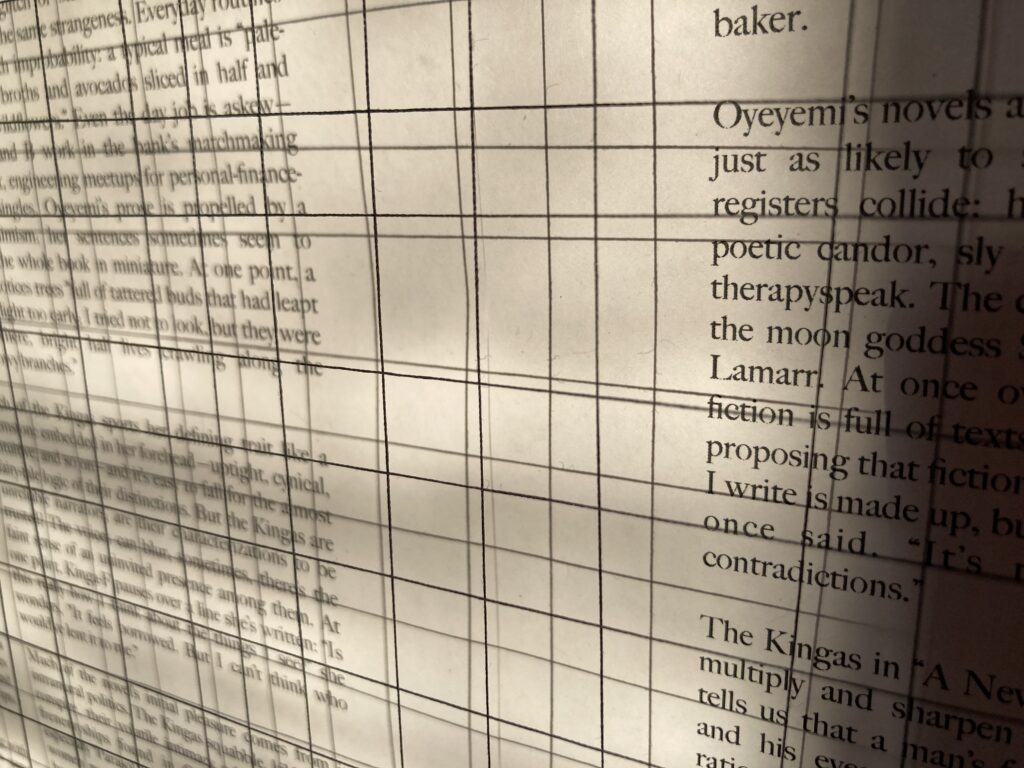
It’s 5:38 and the sun is streaming in my front room studio. I’m waiting for it to hit my grid poem, and hoping it leads to cool grid shadows!

It’s 6:38 pm and some shadows have finally arrived! I asked Scott to take the picture because I wasn’t sure I could capture it effectively.

pin shadows

At first I didn’t notice the pin shadows, I just thought the pins had become twisted out of shape. But no — the pins are fine; it’s their shadows that are all askew. Nice!

Delighted by the result, I decided to take my own picture:

grid shadows in the early evening sun

april 14/RUN

4.3 miles
falls and back
56 degrees

Only 56 degrees? It felt much warmer than that! My hair is soaked with sweat, my face feels flushed still, minutes after finishing. Spring is here! I listened to a piece we’re playing for community band concert in a week, Bookmarks as I ran south, and my “Doin’ Time” playlist running north.

I waved and smiled at as many people I encountered as I could. Did I ever speak? I think I did, once. Even with my music playing, I could hear the kids having fun on the playground and the roar of the falls at the park. At least a dozen people were walking around the park, 4 of them were standing at my usual spot. As I stopped to take off my sweatshirt, I heard a thump thump thump behind me: a young kid running over to the steps. They were fast! A few minutes later, I heard several people calling out, woooooo or weeeeee, close to those steps. It sounded like someone was being swung in the air, or lifted up and down.

Anything else? Several of the benches were occupied, but not the one above the edge of the world. I stopped there to admire the river. I don’t remember what it looked like, just that it was open and wide and peaceful.

at the clinic (earlier this morning)

Today I had to go to the clinic to get two cervical polyps removed. No big deal — an easy procedure with only a 1% chance that the polyps would be cancerous. I was hardly anxious at all, even when they took my blood pressure, which is huge improvement from my last visit in early February. Hooray!

A few observations: Passing by a door, hearing a kid on the other side losing their shit. Hearing them a minute later while in the bathroom at the lab. This was never verified, but I think they were also at the lab, getting blood drawn. Yikes for the drawer of that blood and for the one getting it drawn!

Heading towards the lobby, passing an older woman (with all gray hair) about to be weighed, taking off her shoes and jacket, saying, hold on, I want to take off as much as possible to weigh as little as I can! I’m kidding. Was she, though? Hearing this, I though about my mom and how, when she was on chemo for stage 4 pancreatic cancer, she desperately didn’t want to lose weight because she was already too thin, and I thought about the doctor on a Facebook post who specializes in peri/menopausal discussing how being strong is so much more important than being skinny, especially for older women. With these thoughts, I wasn’t giving shade to the woman getting weighed; I was reflecting on the discord with older women’s bodies and the impact of oppressive beauty standards on their bodies.

Anything else? Oh — on my back on the table, feet in the stirrups, I looked up at the ceiling and noticed a dot. I stared at it, trying to imagine the Amsler Grid and to see my blind spot. Did I? I can’t remember now.
Driving home, I struggled to find a fun/pleasing/alliterative way to describe Sara in the present moment. I mentioned to Scott how well it worked with our daughter’s name: RJP right now. Scott suggested two awesome versions for me:

Sara this second
Sara since Saturday

I love both of these so much. How much? Enough to try and write a poem about them! I’ll try to think about them on my run1. One reason I like Sara this second is because I love the idea that I have so many present Saras that they can’t be contained in minutes; I need seconds! And Sara since Saturday? I said to Scott, this is an example of alliteration helping you to find more meaning. Sara last Saturday isn’t nearly as awesome as Sara since Saturday!

grids holes thread

I was planning to work on the grid for Holes 3 this afternoon — current options: drawing a grid directly on the text OR creating a loom frame and making a grid out of thread to place over the text — but I’m not sure I have enough energy or vision for it. Maybe I need some more food?! The snack has happened, some water too. A recharge! I want to start with a loom frame for my 2 panel poem. I’ve cut out the frame and figured out the measurements for the grid, but now I’ve run out of time!

  1. Well, I tried to think about them, but I forgot before I reached the river. I recall a flash of Sara since Saturday and then wondering why he chose Saturday, with 3 syllables, instead of Sunday, with two. Is it because Sunday doesn’t sound quite right? ↩︎

april 13/HIKE

60 minutes
Minnehaha Falls Off Leash Dog Park
62 degrees

Another great hike beside the river and through the sand flats of the dog park. Much warmer than last time. Humid too. Not quite still, but quiet, calm, overcast. At the end of the walk, as we ascended a hill I described what I saw to FWA: the sky was bluer at the bottom of the sky near the fence; it faded to white as your eyes traveled higher. Was it just my strange vision? No, FWA saw it that way too.

We talked about one of FWA’s favorite teachers from High School. We agreed that she was one of the few teachers who really saw FWA and his neurodivergence. This led to discussing roommates and how hard it is to be understood by them when your brain is not neurotypical. We talked about our senior years of college and our desire to be done. And, like always, we talked about One Piece and other dogs and strange looking trees.

10 Things

  1. brackish water at the beach on the edge of the park
  2. soft sand that seemed deeper — had Minneapolis Parks dumped some dredged sand down since we were here last?
  3. a motor boat traveling slowly up river, making waves
  4. Delia doing my favorite thing: jumping over a log while running, her front and back paws stretched straing out like Superdog
  5. the water looked soft and brown and flat
  6. the faintest flashes of green all around — new buds on the trees!
  7. a woodpecker knocking on dead wood
  8. dots of green on the ground — moss, new grass — everywhere
  9. rolling over several rocks on the ground — not falling or twisting anything
  10. a woman walking a dog on a leash, calling out to them: no, you can’t! you lost your privileges when you ran away from me!

Grids

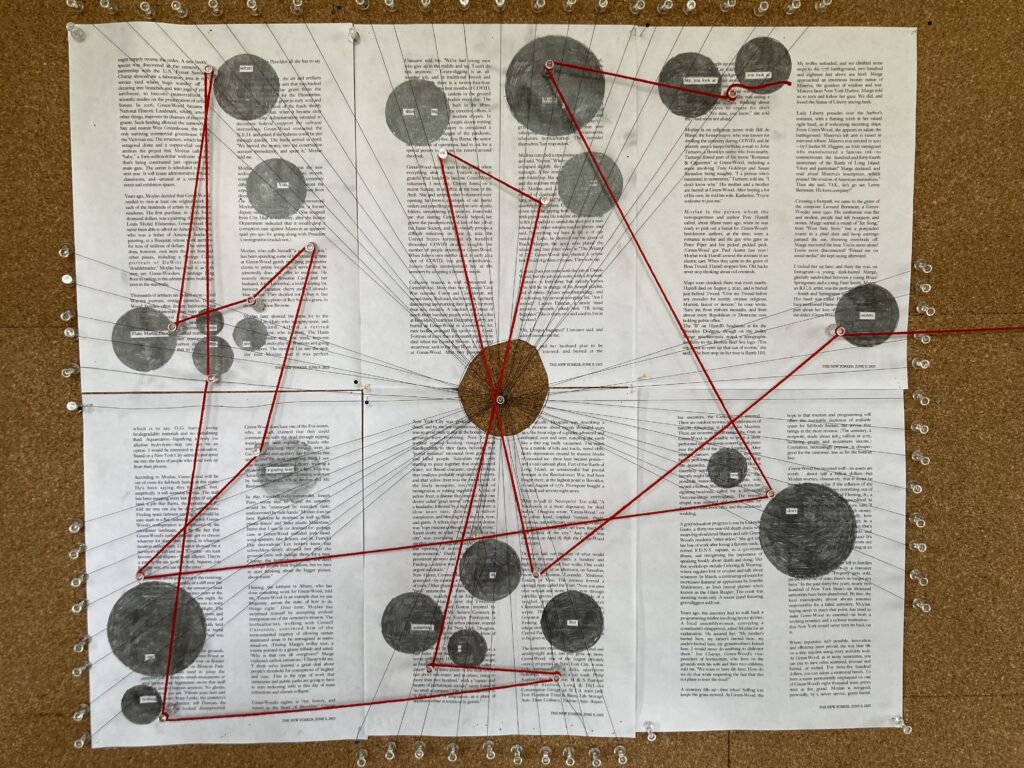
a summary: I’ve been playing around with Holes 4. I put it on my new corkboard wall and tried different thread/yarn/string. Then I played around with how to have the thread (which represents the lines of an Amsler Grid and being mapped in space/time) emerge from my blind spot in the center of the panels. Then I added red yarn and connected the words of the poem to each other.

more experiments with Holes 4 / 13 april 2026

I discussed it with RJP, which was fun, and we both decided that this black thread/red line effect was didn’t fit with the words of Holes 4. They were better suited to Holes 5 — maybe 5b? I want to print out the poems for each of these holes and post them on my board; this might help me keep track of all of them. The text from Holes 4 describes not seeing the hole or any lines, but everything as seltzer fizz and nothing that is something not sharing its secrets. That poem should have lots of little circles (seltzer bubbles/fizz) and create an optical illusion — you stare at the dark dots and then you see them everywhere else, almost like an after image. This poem might also have the words as enlarged?

note: I love my new board and being able to discuss my ideas with my kids; they have some very interesting ideas. Also, I think returning to a study of grids and learning how other people — artists and scientists — have used them could help guide my next steps.

what’s next:

  1. I want to continue studying grids; I’ll start by reading (or trying to read) the book for the Charles Gaines exhibit.
  2. I also want to keep pushing at my poems, so I’ll continue working on Holes 6, which is Lines 1.
  3. And, I want to think more about lines, which means it is time for a lines/strings/thread playlist!

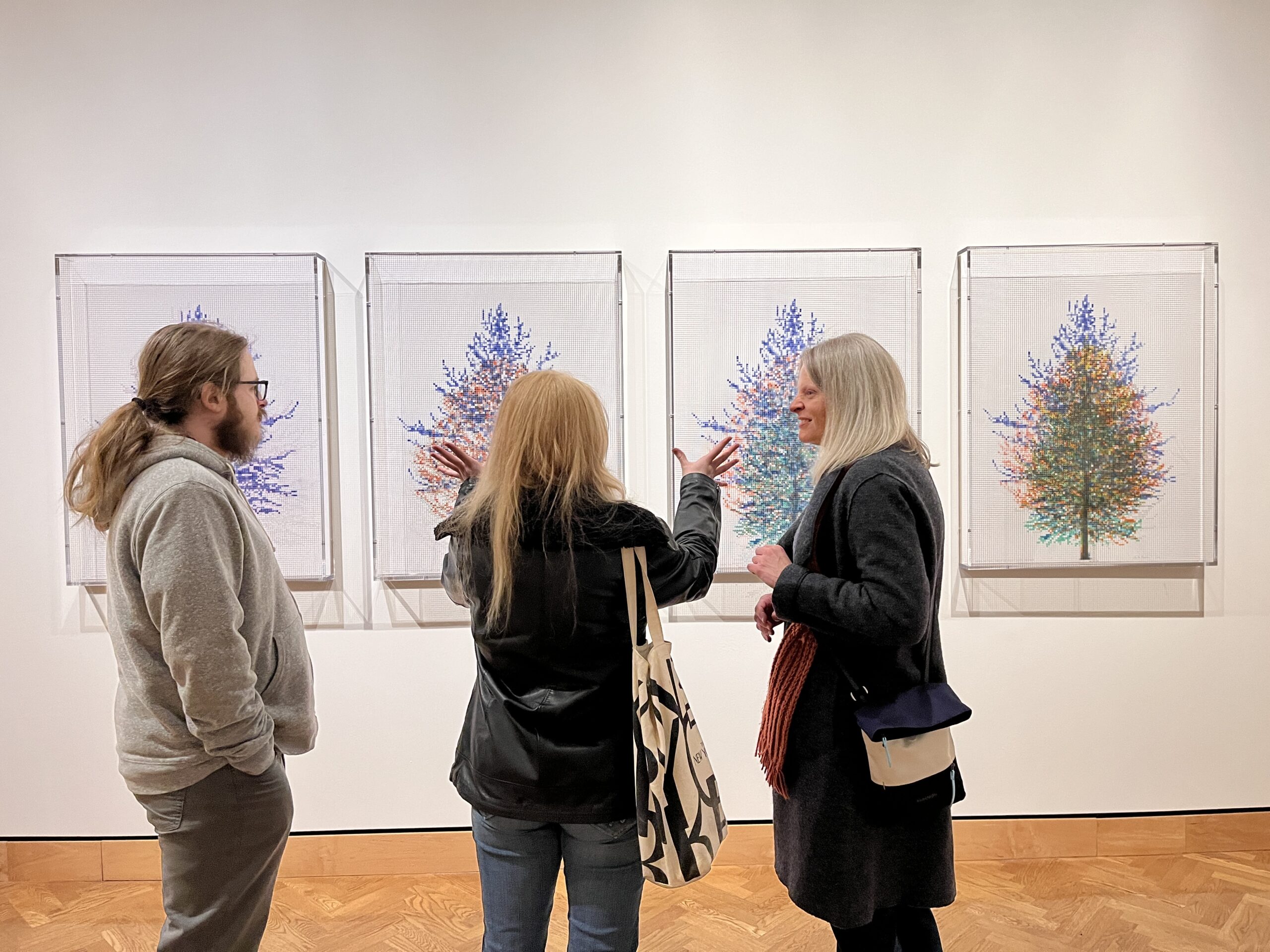
Charles Gaines and Gridwork

In the intoduction to the book, summary descriptions are offered for his works:

1 — Regression

28 drawing / 4 sets of 7

An arbitrary shape was chosen, and numbers were assigned to different squares of the graph according to their position. The numbers were then employed in simple arithmetic calculaitons to generate the form used in the next drawing in the sires. As the numbers threatened to overflow the parameters of the drawing, Gaines used what he calls a “radical divider” to contain teh propagation of his system. The final drawing in each set determined the starting point for the next, and so from any arbitrary starting point an infinitely expanding number of drawings could result.

Gridwork: An Introduction

Gaines was “interested in where systems fail or regress, revealing the innate contradiction of the objective or scientific enterprise. In other words, his work reveals the limations of systems.

2 — Walnut Tree Orchard

Each, a triptych — a photograph of a tree, a drawing in which the photograph is transcribed into numbers plotted onto a grid, and a second drawing that overlays all the previous grid drawings in the set onto the image from the second drawing.

This line, this series “makes visible the limits of photography, highlighting its single-point perspective, its flattening of space, gave me an idea: should I read/think about how reading happens and/or how we believe it happens, and play with that in my series?

3 — Incomplete Texts

used literary texts, picked ones that appear to supply information in a straightforward, truthful manner and submit them to processes of abstraction that complicate meaning

based on a page from Roy Nickerson’s Brother Whale
he systematically removed letters from copies of they typeset page and transferred them to a grid
this transformed the text into a series of fragments recalling whistles/clicks of whale song

note: It is difficult for me to actually see his grid images, so I’m struggling to understand what Gaines is doing in his different series. I want to dig deeper into his interview and other discussions of his grid system so I can understand how/why he’s using it1. This understanding might help me clarify how/why I’m using it — or, will it take me too deep into academic Sara territory?

Decided to google, “artists who use grids” and found this awesome exhibit that was at the High: Off the Grid. Very cool! I lived in Atlanta for almost 4 years and I never once went to this museum. Why not?

a flash of an idea: what if I turned Holes 3 into a “straight” grid, where the x-axis is blur, and the y-axis is almost. I could number the grid boxes with x and y coordinates and then have those coordinates next to the corresponding words in a poem key? I could either print out graph paper OR create a grid on the paper with string and a loom?

the poem for Holes 3:

Fall through the hole
your reading eyes find
and land in a logic
of blur and almost.

Yes! The new experiment to try: the two pages from the New Yorker essay on a cardboard loom/grid, under a grid made out of black embroidery thread. I might add the shadow (a faint trace) of my blind spot drawn on the essay. The grid is also a graph with x-axis and y-axis named, blur (x) and almost (y). Each of the grid boxes has numbered x and y coordinates. Next to the graph/grid is a key/map with the xy coordinates. You look up the xy coordinates to find the words of the poem. Will this work? Consulting with Scott, he had some additional ideas: put the words in alphabetical order + put a pin and a number (signaling the order of words) next to the word — Scott compared it to dots on a map).

I like this idea and how it forces the reader to slow down and read the poem one word at a time. This isn’t quite how I read, but it gives a sense of how much slower I read, how many less words I can read. I also like the idea of a map, because part of why I am drawn to the grid is because of the way it enables me to locate and visualize my blind spot and vision loss.

  1. Reading the interview will have to wait for tomorrow. My eyes are tired from what I’ve already read, which was only about a dozen pages. ↩︎

april 10/RUN

2.8 miles
2 trails
50 degrees

Sun and shadows and spring air. Also: chirping birds, bare earth, buds. A beautiful afternoon for a run, after a morning having fun making a grid and reading an essay backwards and thinking about threads and strings and scotomas.

The river was a blueish-gray, the sky was empty of clouds. Now, sitting at my dining room table, I hear cardinals, but out near the gorge I think it was wrens, or could it have been sparrows? Oh — at least one pileated woodpecker and the feebee of a chickadee.

tmi note for marathon-training Sara: the run was made difficult by unfinished business. I need to do more work on figuring this problem out!

My favorite image: Walking and running back through the neighborhood, I noticed (and not for the first time) a delightful maple tree. A straight and solid trunk then 2 thick branches rising out of it. One of them slanted only slightly to the side, the other bent midway up, looking almost like a knee. Yes! This tree offers a classic example of the tree looking like an upside down person, their head, shoulders buried in the dirt, only their torso and crotch and legs sticking out of the ground. Oh, why didn’t I bring my phone today so I could take a picture of it?! I’ll have to go back. It’s on 35th street between 46th and 45th avenue. I wonder, will anyone else be able to see what I see in a picture of it? when standing beside the tree?

grids and lines and strings and threads

note: I’m starting this in the morning just after a big breakfast. I’m listening to early The Kinks, “Arthur or the Decline and Fall of the British Empire” from 1969 and “The Kinks Are teh Cillage Green Preservation Society” from 1968. I love early The Kinks!

Continuing a discussion I began yesterday but wasn’t able to continue:

I found this quote from Chuck Close about why he used the grid method:

Almost every decision I’ve made as an artist is an outcome
of my particular learning disorders. I’m overwhelmed by
the whole. How do you make a big head? How do you make
a nose? I’m not sure! But by breaking the image down into
small units, I make each decision into a bite-size decision.
I don’t have to reinvent the wheel every day. It’s an on-
going process. The system liberates and allows for intuition.

National Gallery of Art

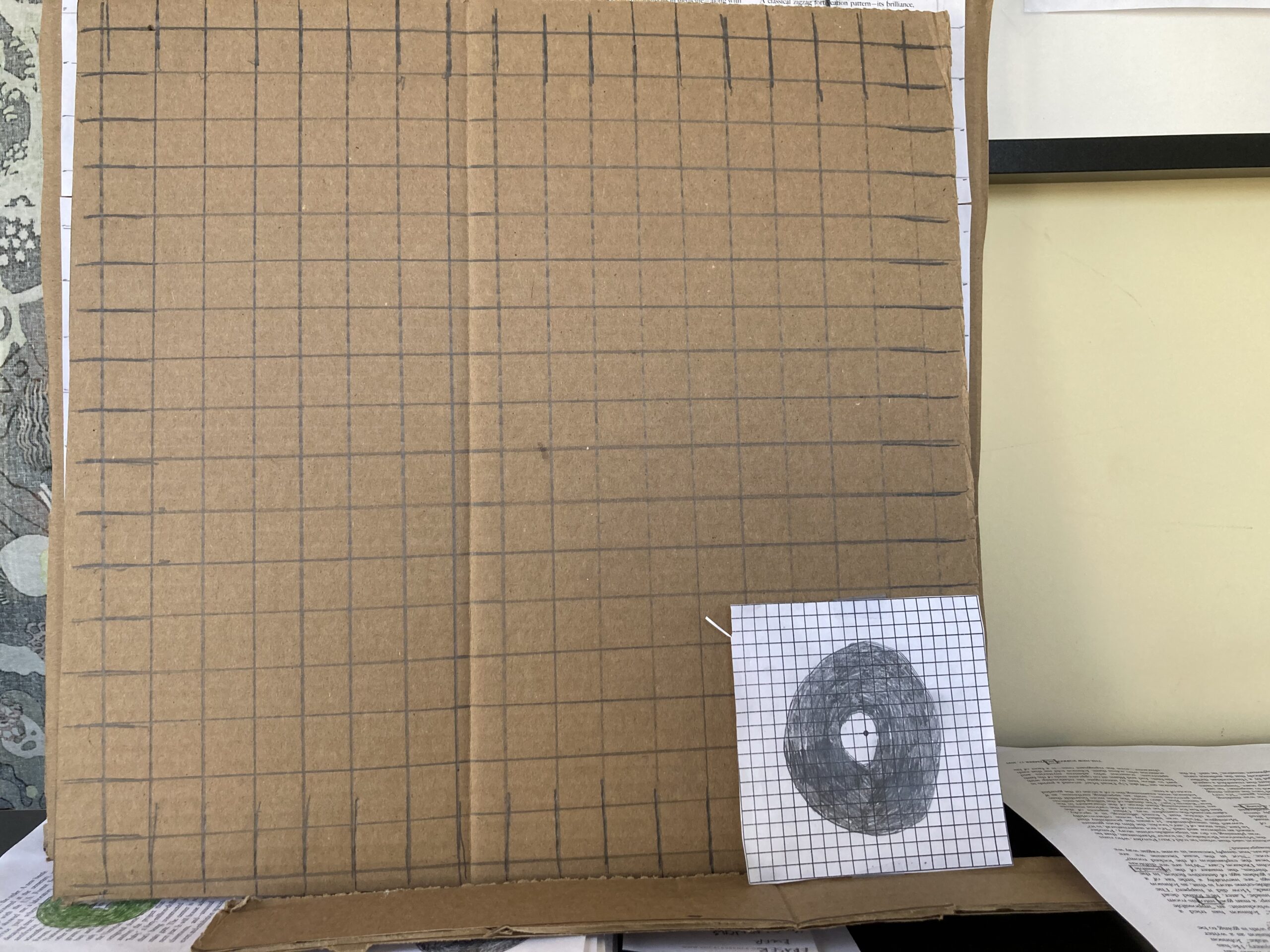
Breaking the image down into small units. Working in small units and seeing fine detail — those are functions of central vision. Peripheral vision is the big picture, that big head, those whole noses. Most of what I see these days is big picture — whole, fuzzy forms. The central vision I have is very small and seems to be very near the center of my central vision. How big is the one grid — that tiny island surrounded by gray water — that allows me to see anything as more than an almost form? The only detail I can really see (I think?) is a word in small print.

Just gave about an hour to creating the grid for the bigger version of my scotoma. In the “normal” sized one, each grid is .25 x .25. In this grid, it’s .8 x .8. I’m listening to a 1970 album by The Kinks, “Lola Versus Poerman and the Moneygoround, Part One.”

The grid is fiddly and involves a lot of measuring. It is slow, repetitive work. As I measured and drew line after line, I thought about how this work might open me up to new ideas and that this process by me, Sara-barely-not-blind, is part of the work I am creating. It is not only the finished product of a visual poem, but all of the labor that went into it that makes the meaning. Much of that work is invisible (although I’m documenting it), but it colors and haunts and shapes what I am trying to communicate.

2 grids, a bigger one drawn with pencil on cardboard, a smaller one made from ink with by blind spot drawn on it
2 grids and a blind spot

Now, it’s time to use the grid to create a super-sized scotoma, and then, to play around with different materials for laying the scotoma over the words of Holes 5b! Possible materials: trace the scotoma directly onto the paper and then color it in. Cut out different types of plastic — ziploc? a grocery bag? cling wrap? What about a very, very small grid made out of black thread? Fiddly, but fun!

Before I return to that, I need a break, so I’ll return to my close reading of a book review on memoirs by daughters about their fraught relationships with their mothers. I picked this selection from the NYer because: it’s a book review, and I love book reviews!; it uses a lot of language about connections and separations; and it uses hole, thread, and line.

My close reading = start with the last paragraph of the essay, then the second to last, then the third to last, etc. So, backwards. It’s a strange way of reading, being thrown into ideas that are presented as familiar, but haven’t been introduced yet. Slowly, the more I read, the more sense it makes.

Misfits / The Kinks (1978)

I started my close reading of the NYer book review, What to Make of the Mother Who Made You/Rebecca Mead, yesterday afternoon while drinking a surprisingly good NA beer at Arbeiter. Here’s a list of words/phrases I found during that reading, along with my additional words from today’s reading:

  • when the facts are unbearable, it’s natural to escape into
  • coordinates
  • accomodate
  • (to) make sense to myself
  • disorientation
  • knowledge
  • ghost
  • humbled
  • should be
  • to write one’s way out of
  • shedding
  • knotted
  • threads
  • familiar
  • searching
  • hunt it down like prey
  • in the other room
  • readers
  • almost blind
  • estranged
  • against
  • reframing
  • obedience
  • en chant ment
  • elsewhere
  • world made whole again
  • inheritances
  • family
  • moves
  • opens
  • traces
  • artificially formed
  • origins
  • sober
  • square
  • closed
  • door
  • discomfort
  • feelings
  • slither
  • seize d
  • character
  • disembowel eat
  • spotted
  • rupture
  • alone
  • defiance
  • entanglements
  • kinship
  • matriarch
  • loom
  • shadows and absences
  • ordinariness tempo
  • lens
  • locating
  • mess ily
  • tending
  • cancer
  • seen
  • naked
  • con found ing
  • pro CLAIM
  • think about
  • offspring
  • runs through
  • nothing, subdued
  • account
  • assumes command
  • between
  • emerge
  • maintain ed distance
  • light
  • center
  • entwined
  • depend
  • reckon

Again, these words speak to a strained relationship between daughter and mother. I’m thinking that my mother here is written language and the words on a page to be read with failing/failed eyes. A distant mother, a daughter uncertain as to how to reconnect (or to keep the connection), or even if she wants to stay connected.

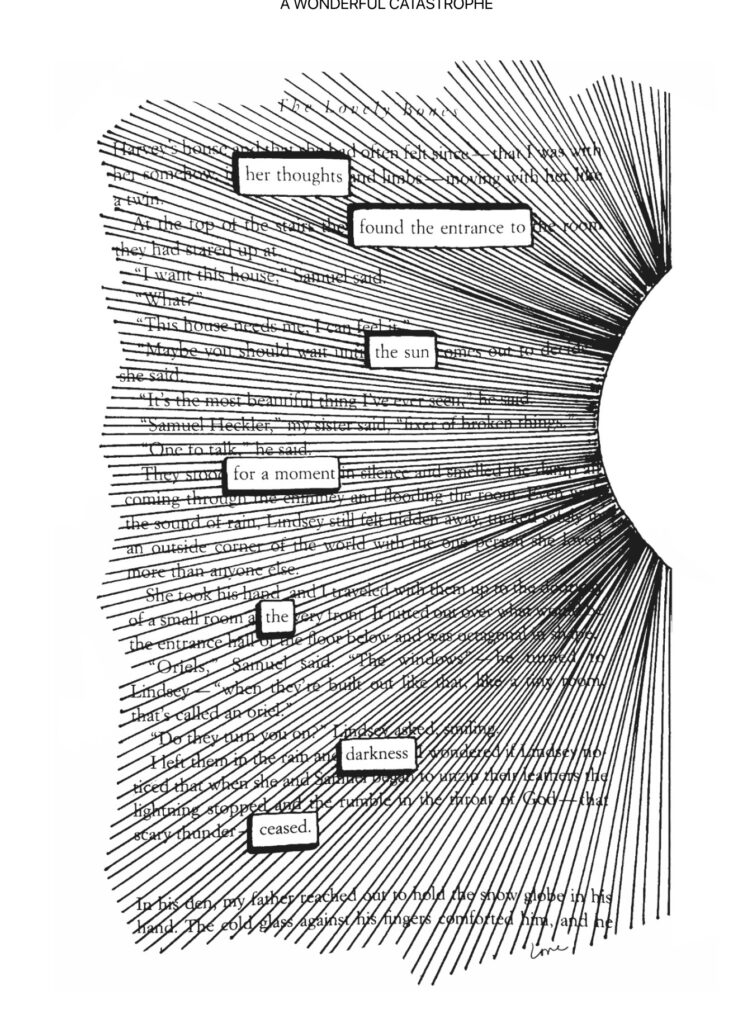
In the midst of all of this, I’m also wanting to get more inspiration from a collection of erasure poems that I discovered last fall and have been hugely influenced by: a wonderful catastrophe / Colette Love Hilliard. Here’s one of her found poems that uses lines:

a poem from a wonderful catastrophe/ colette love hilliard

I like how the lines are slanted and all coming out of one source which resembles the sun. I might try having lines of black thread emerging from a center hole in a 4 panel poem. The threads just barely covering all of the words, the words of the poem printed on circles attached (pinned?, sewn?) on top of the strings. I want to try that now! Can I do that AND make my super-sized scotoma?

a few minutes later: I will do the scotoma tomorrow; the sun is too bright in the room for me to see the grid! And, before I can try out the black threads, I need to remap Holes 4. So, tomorrow for both of these.

RJP just stopped by and when I showed her what I was working on, she reminded me about Coraline and her other mother who lives on the other side of the door (here, instead of Alice’s hole, there is Coraline’s door). The other mother has buttons for eyes which reminded RJP of the holes I traced on my Holes 5. So cool! I could try adding buttons to my Holes 6, which is using a text about mothers and daughters!

summary of the day: A lot of great ideas, a few plans, a little making.

David Bowie Essentials — the last song heard, “Suffragette City”