april 4/RUN

4.3 miles
minnehaha falls and back
39 degrees

Ran in the early afternoon. This morning it snowed. By the time I went out to the gorge, it had all melted. Ran south to the falls, listening to the birds. When I got there, I ran by the creek and the statue of Minnehaha and Hiawatha. The creek was high. Not rumbling over rocks, making its way to the falls, but flowing and oozing and spreading across the grass. Noticed an adult taking video of some kid near a bench. A thought flashed: watch out (the kid was fine). Then I heard the falls, roaring. Wow. I glanced at them but I don’t remember how they looked, just how they sounded. Too small of a falls to be deafening, but much more than rushing or gushing.

before the run

Day 2 on dirt. Uh oh. I can feel myself becoming overwhelmed with ideas and directions. This morning I learned about humus (and remembered reading about it in a poem recently that I can’t seem to find right now…where was it? something about a few feet or 2 feet of humus?). Thought about soil and gardening and things decomposing and recycling. Started with a re-reading of a poem I found the other day:

Ode to Dirt/ Sharon Olds

Dear dirt, I am sorry I slighted you,
I thought that you were only the background
for the leading characters—the plants
and animals and human animals.
It’s as if I had loved only the stars
and not the sky which gave them space
in which to shine. Subtle, various,
sensitive, you are the skin of our terrain,
you’re our democracy. When I understood
I had never honored you as a living
equal, I was ashamed of myself,
as if I had not recognized
a character who looked so different from me,
but now I can see us all, made of the
same basic materials—
cousins of that first exploding from nothing—
in our intricate equation together. O dirt,
help us find ways to serve your life,
you who have brought us forth, and fed us,
and who at the end will take us in
and rotate with us, and wobble, and orbit.

Love this line:

It’s as if I had loved only the stars
and not the sky which gave them space
in which to shine.

And the idea of dirt as the skin of our terrain, made of the same basic materials — our democracy, taking us in at the end and rotating wobbling orbiting with us.

After reading this poem, I decided to look up “dirt” in the Emily Dickinson lexicon.

dirt, n. [ME.]

Earth; mud; soil; humus; ground; [fig.] grave.

Emily Dickinson lexicon

Remembered reading humus in some poem (will I ever remember where) and decided to dig (ugh) into it some more:

ˈhyü-məs
geology a brown or black complex variable material resulting from partial decomposition of plant or animal matter and forming the organic (see ORGANICentry 1 sense 1a(2)) portion of soil

Merriam-Webster dictionary

Then I found an article by Lulu Miller for Guernica:

Traditionally, humus was believed to be the dark matter left behind in soil after all organic material — leaf litter, dead bugs, acorns, etc. — had finished decomposing. It was thought of as a shadow of life. A liminal layer, whose betweenness gave it great power. Its molecules were of no interest to microbes or rock eaters, and thus could remain stable for centuries. Gardeners spoke of humus with reverence. Soil rich in humus was healthy soil; it held water and air and prevented the leaching of nutrients. It was a site of transfiguration, where inhabitant became architecture, where the ground beneath your feet remained, in some defiance of Chaos, the ground beneath your feet.

How exactly does humus evade the unforgiving forces of decay? That’s when jargon tends to roll in. Scientists speak of “humification,” “humic acid,” “humin.” They reference the pH levels of humus, its negative electrical charge. Hold tight, though, through the glazing of your eyes, and you might hear a tremble in an expert’s breath. Play the jargon backward, at double speed, and you might hear the word “ALCHEMY.”The catch, as scientists Johannes Lehmann and Markus Kleber argued in a study published in Nature, is that humus doesn’t exist. The molecules that comprise it are more like, as Lehmann puts it, “a smoothie.” A blend of various microorganisms, their bodies and residues becoming so small — so like molecular dust — that even hungry microbes can’t easily find them. There is nothing so numinous about humus. Its strength comes from the diminutive, in molecules that go unnoticed.

Humus / Lulu Miller

…which led me to a podcast I’m hoping to listen to soon with one of the scientists Miller mentions in this essay: Dr. Johannes Lehman – Soil Humus | In Search of Soil #12

Another search yielded this great essay on The Fat of the Land blog about humus. When I read this passage, I instantly thought of an interview I had just read with Alice Oswald.

First, from The Fat of the Land:

Soil is slow but never still. Its myriad processes never start or finish, they renew. Like the ocean, its movement is fluid. Indeed, the same forces that influence the ocean’s tides pull at the water table, mimicking that briny ebb and flow the way a sloth mimics a monkey.

humus / The Fat of the Land

Then what Oswald says:

What is the I of a landscape? It’s always water. Everything being tidal — fields and woods. Ebb and flow/ up and down. Everything as a tide, even the seasons, watching the leaves coming onto the trees, day by day, like a tide.
The thinking part of a landscape is the way the water levels are changing

Also in The Fat of the Land post, she describes the differences between dirt and soil:

Dirt is what gets on your hands in the garden, what splashes onto the sides of the car or tracks into the house on your shoes. Soil is a dance: lifeless minerals animated by electrostatic reactions, architectural aggregates constructed by chemical and biological bonds, microorganisms and invertebrates endlessly consuming and converting plant residue into nutrient-rich organic matter, a million miles of tiny root hairs tunneling and conversing by exchange with the forum of particles that surrounds them. One fingernail-full of soil is more complex than Shakespeare’s entire canon, and its poetry is just as striking.

This distinction between dirt and soil made here reminds me of something else I stumbled across as I tunneled through rabbit hole after rabbit hole: dirty nature writing:

a genre of fiction called “dirty nature writing,” a term coined by Huebert and fellow writer Tom Cull in the New Quartely, a Canadian literary journal. Nature writing, popularized by authors such as David Thoreau, refers to works that focus on the natural environment. This genre includes essays of solitude, natural history essays and travel/adventure writing. 

“Nature writing traditionally imagines nature as this pristine thing … that exists outside of us and outside of human impact,” says Huebert. 

Alternatively, dirty nature writing acknowledges the messiness of nature today, explains Huebert. “To think of nature as something separate from human nature isactually problematic in a lot of ways”, he says. “I try to confront nature in its contaminated state honestly and openly, [and] not believe in a false binary between nature and human existence.” 

‘Dirty Nature Writing’: Your New Favorite Genre?

Often (as much as possible) present in my thinking and writing about dirt or soil or the gorge or water or “nature,” is the awareness of the messy, complicated, entangled relationships that exist between the natural world and humans.

At some point during a search, I found a link describing the difference between compost and humus:

Humus is the end result of the decompositions process, whereas compost is a word that identifies a phase of the decomposition process where decomposing plant material provides the most benefit to the soil. 

Humus vs. Compost: What’s the difference?

The article continues by describing the differences between organic material (dead animal/plant materials that are in an active stage of decomposition) and organic matter (final, fibrous, stable material left after organic material has completely decomposed — humus). Then it offers this image of bones/skeleton:

Organic matter has been broken down so completely that it cannot release any more nutrients into the soil, so its only function is to help maintain a spongey, porous soil structure.

Organic matter is essentially the bones of organic material. Once the meat has been completely broken down and absorbed into the soil, all that remains is a skeleton.

Humus vs. Compost: What’s the difference?

And suddenly, I remembered a poem that I posted a few years ago that I’d like put beside these discussions of decomposition as organic material breaking down. This poem fits with my discussion yesterday, adding flies and maggots to the list of beautiful creatures:

Life is Beautiful/DORIANNE LAUX                           

and remote, and useful,
if only to itself. Take the fly, angel
of the ordinary house, laying its bright
eggs on the trash, pressing each jewel out
delicately along a crust of buttered toast.
Bagged, the whole mess travels to the nearest
dump where other flies have gathered, singing
over stained newsprint and reeking
fruit. Rapt on air they execute an intricate
ballet above the clashing pirouettes
of heavy machinery. They hum with life.
While inside rumpled sacks pure white
maggots writhe and spiral from a rip,
a tear-shaped hole that drools and drips
a living froth onto the buried earth.
The warm days pass, gulls scree and pitch,
rats manage the crevices, feral cats abandon
their litters for a morsel of torn fur, stranded
dogs roam open fields, sniff the fragrant edges,
a tossed lacework of bones and shredded flesh.
And the maggots tumble at the center, ripening,
husks membrane-thin, embryos darkening
and shifting within, wings curled and wet,
the open air pungent and ready to receive them
in their fecund iridescence. And so, of our homely hosts,
a bag of jewels is born again into the world. Come, lost
children of the sun-drenched kitchen, your parents
soundly sleep along the windowsill, content,
wings at rest, nestled in against the warm glass.
Everywhere the good life oozes from the useless
waste we make when we create—our streets teem
with human young, rafts of pigeons streaming
over the squirrel-burdened trees. If there is
a purpose, maybe there are too many of us
to see it, though we can, from a distance,
hear the dull thrum of generation’s industry,
feel its fleshly wheel churn the fire inside us, pushing
the world forward toward its ragged edge, rushing
like a swollen river into multitude and rank disorder.
Such abundance. We are gorged, engorging, and gorgeous.

during the run

I have a vague feeling that I thought about soil and humus and decomposing leaves the trail, but I don’t remember any specific thoughts. When I reached the falls, I put in my headphones and listened to the podcast about humus that I mentioned earlier. I enjoyed listening to it as I ran, but I kept getting distracted, which is not unusual for me with science stuff. I’ll have to try listening to it again.

after the run

Finishing up this entry, about 6 hours after my run, I’m returning to the worms and the maggots and the flies and wanting to understood more about the “dance” (that The Fat of the Land blog mentions, cited above) and how it happens.

“Soil is a dance”:

  • lifeless minerals animated by electrostatic reactions
  • architectural aggregates constructed by chemical and biological bonds
  • microorganisms and invertebrates endlessly consuming and converting plant residue into nutrient-rich organic matter
  • a million miles of tiny root hairs tunneling and conversing by exchange with the forum of particles that surrounds them

I’m finding poetry about the invertebrates. Can I find some about the other parts?

april 1/RUN

5.7 miles
franklin loop
36 degrees

With the sun and hardly any wind, 36 degrees felt warm and like spring. Ran north on the river road trail, noticing how the floor of the floodplain forest was covered with snow. The river was calm, brown in the middle, pale then darker blue as it reached the shore.

Tracked a plane in the sky in my peripheral vision. When I tried to spot in my central vision it disappeared. Visible from my peripheral, then hidden in my central. It took 3 times of switching between the two before it showed up in my central. Was that because my brain adjusted, or because it had reached a part of my central vision that still has cones cells?

4 distinct smells:

  1. cigarette smoke from a passing car
  2. pot down in the gorge
  3. breakfast — sausage, I think, from Longfellow Grill
  4. fresh paint from the railing on the steps leading up to the lake street bridge, being painted as I ran by

Noticed how the snow and ice emerging from cracks and caves in the bluff made them easy to spot from across the river.

Before the Run

I wrote the following shortly before heading outside for my run:

A new month, time for a new challenge. As is often the case, I have too many ideas at the beginning of the month. It takes a few days (at least) to settle into something. I could read The Odyssey, then Oswald’s Nobody, but I think I’d like to wait until it’s warmer and I’m in the water for open swims. I’ve also thought about doing more on walking, starting with Cole Swenson’s chapbook, Walking, or reading the book on green that I bought last month. I’m unsure. Just now, I came up with another idea, after looking up a quotation from Emily Dickinson that I found on twitter the other day: Reading through some of ED’s correspondence with Higginson. Will this stick? Who knows.

Here’s the ED quotation that inspired my search, as it appeared at the end of a twitter thread by the wonderful poet Chen Chen:

To live is so startling, it leaves but little room for other occupations

@chenchenwrites

And here’s the original in ED’s letter to Thomas Wentworth Higginson from late 1872 (14 years before her death in 1886):

To live is so startling, it leaves but little room for other occupations though Friends are if possible an event more fair.

letter

I’m thinking about what, if any, difference it makes to add that last bit about Friends. My first reactions: adding it depicts ED as a social being, not the recluse she is popularly known as, and it tempers the pursuit of astonishment as the only one we do/should have time for. Second reaction: is it mostly (or simply) a polite (and/or affectionate) acknowledgement of Higginson and his friendship? Third, and related to my first reaction: being startled/astonished/in wonder needs to be tempered. To be in that state all the time is too much, at least for me.

Reading Chen Chen’s thread, I found this great idea: “deep delight as a compass, a map.” I really like this, and I’m thinking about how I might switch out the word delight for wonder. Now I need to revisit the terms “delight,” “wonder,” “astonishment,” “joy,” and “surprise.” That might be a great challenge for the month too: thinking/reading/working through these different terms?

Getting back to ED’s letter, I found a description of the change is season from summer to winter in it that I’d like to remember:

When I saw you last, it was Mighty Summer‹Now the Grass is Glass and the Meadow Stucco, and “Still Waters” in the Pool where the Frog drinks.

letter

Grass is Glass and the Meadow Stucco? Love it!

I just looked up “startle” in Ed’s lexicon. Here are the two definitions offered:

  1. Shake or twitch due to terror or unexpected surprise.
  2. Be filled with fright; become shocked.

It also directed me to see “start.” Here are those definitions:

start (-ed), v. [OE ‘to overthrow, overturn, empty, to pour out, to rush, to gush out’.] (webplay: quick, quickened).

  1. Spring to attention.
  2. Become active; to come into motion.
  3. Begin; to come into being.
  4. Incite; startle; suddenly bother; abruptly rouse with alarm; movement of body involuntarily due to surprise, fright, etc.
  5. Begin a trip or journey to a certain destination.

And, here’s a poem from ED with startled grass:

PRESENTIMENT is that long shadow on the lawn
Indicative that suns go down;
The notice to the startled grass
That darkness is about to pass.

note: presentiment = foreboding

Returning to the letter and connecting to something else I found in an article titled, “The Sound of Startled Grass” about how composers are inspire by ED:

But I think composers are attracted to more than just her [ED] poems’ musicality. She repeatedly presents herself as a music-maker, surrounded by music. Her experience is constantly musical.

The Sound of Startled Grass

Connected to this quotation, here’s something ED writes in the letter:

These Behaviors of the Year hurt almost like Music – shifting when it ease us most. Thank you for the “Lesson.”

letter

During the Run

I think I only thought about some of these themes very briefly as I ran. I recall running, listening to birds singing, feeling the sun shining, and then wondering about how it would feel, at this moment, to be startled by a darting squirrel or a lunging dog or a reckless bike. I wasn’t, and I soon forgot about being startled. I also remember thinking about the sound of startled grass — how would that sound? And then I thought about what startled grass might look like, how it might startle us. Then I thought about the grass on graves and Whitman’s uncut hair and ED’s “The Color of the Grave is Green”:

The Color of the Grave is Green –
The Outer Grave –  I mean – 
You would not know it from the Field –
Except it own a Stone –

To help the fond –  to find it – 
Too infinite asleep
To stop and tell them where it is – 
But just a Daisy –  deep – 

After the Run

After bookmarking it at least a week ago, I finally read Diane Seuss’s fabulous Commencement Address to the Bennington Writing Seminars posted on LitHub. I didn’t anticipate how it might fit with my before and during run thoughts, but it does, particularly the bit about grass and graves and the dead speaking to us, and us giving our attention.

A thought: Could we be the startled grass, surprised, shocked, fearful, but astonished, in wonder, alive and willing to reach down to the dead to give attention and life to their stories and to tell our own? For this to make sense, I should probably spend a little more time with Seuss’s speech…

Wow, I’m no closer to figuring out what my theme will be for this month. Here are the possibilities that I discovered in the midst of writing this entry:

  1. Read, explore ED’s correspondence with Higginson
  2. Define delight, wonder, astonishment, joy, surprise. Find poems that offer definitions
  3. Grass (dirt is also mentioned in the speech)

addendum: 5:20 pm

So, I have figured out what I want to do for my challenge this month. In honor of National Poetry month, I’d like to return to where my recent love of poetry began: with Bernadette Mayer’s list of writing prompts that I discovered in an amazing class in the spring of 2017. I’m hoping to try a different experiment every day. I want to do this so I can push myself to be stranger or more whimsical or ridiculous (in the wonderful Mary Oliver way) in my writing. Lately, it seems like I’m too serious. A goal: to craft a poem that I feel is wonderfully strange enough to submit to Okay Donkey.

march 26/RUN

4.8 miles
Veteran’s Home Loop
22 degrees / feels like 11
wind: 14 mph / 22 mph gusts

Sunny and cold and windy. Wore lots of layers: vest, jacket, long-sleeved shirt, tights, gloves, buff, winter cap. My watched died 1 1/2 miles in so I don’t know exactly how far I ran or how fast. It doesn’t really matter. Ran to the falls, over the creek, under the arbor, behind John Stevens’ House, across the tall bridge, up to the bluff, beside the river, through the edge of turkey hollow, past Beckettwood with its bright red sign that looks newly painted (or brighter in the early spring sun). A nice run. I didn’t feel fantastic the entire time, but not miserable either. And now, being done, I feel glad to have gone outside in this blustery weather.

Thinking about this line I reread this morning before my run:

your eyes are made mostly of movement

Dart / Alice Oswald (45)

I deduced to make this my task for noticing the world on my run today: What is moving on my run (besides me)?

10 Things I Noticed: Movement

  1. swirling leaves (seen)
  2. a woodpecker’s bill rapidly pecking on hollow wood (heard)
  3. the rush of fast-moving air on my arm (felt)
  4. Minnehaha Creek bouncing off of the limestone ledge then falling over the falls (seen)
  5. the river moving swiftly downstream under the Ford Bridge, encouraged by the wind (seen)
  6. dead leaves in a tree, shaking (heard)
  7. a shadow barely creeping over the creek under the tall bridge (seen)
  8. a black truck crossing the bridge then turning right (seen)
  9. many runners, including one moving slightly slower than me over by the gorge, as I ran on Edmund (seen)
  10. a flag at half mast (for Madeline Albright) waving gently (I expected it to be flapping in this wind, but it wasn’t) (seen)

No flashes. And the shadows I did see, tree trunks, lamp posts, stop signs, were all still. No darting squirrels, or dancing water, or soaring birds.

One other imagine I’d like to remember: the big rock that stands next to the lonely and inviting bench — the one I always wanted to stop at but never did during my early pandemic runs — looked like it had inched closer to the path. This rock is BIG so this is very unlikely. A closer look: its shadow was creeping onto the trail.

Back to movement. Here are two poems that fit with the theme of movement and eyes. One of them I read today, the other I posted a few months ago:

The Rock that Is Not a Rabbit/ Corey Marks

The rock that is not a rabbit suns itself
in the field, its brown coat that isn’t fur
furred with light. The rock that isn’t a rabbit
would be warm to a palm but wouldn’t
quicken or strain from touch. It doesn’t ache
with hunger or pine with rabbit-lust,
doesn’t breathe the world in, translating
scent into some rabbit understanding.
The world is beyond its understanding.
And yet the rock that is not a rabbit will
outlast the hawk banking above, the fox
sloughing free of its den, the wheel nicking
off the road to disturb the gravel berm,
the mower coughing up the neighbor’s yard.
Even so, its ears fold back against its body
as if to make itself small, a secret,
though when a breeze disorders the grass,
the rock’s stillness appears like wild motion.

Had to look up berm:

noun

a flat strip of land, raised bank, or terrace bordering a river or canal.

a path or grass strip beside a road.

an artificial ridge or embankment, e.g., as a defense against tanks.”berms of shoveled earth”

Saccadic Masking/ Paige Lewis from Space Struck

a phenomenon where the brain blocks out blurred images created by movement of the eye

All constellations are organisms
and all organisms are divine
and unfixed. I am spending 
my night in the kitchen. There
is blood in the batter—dark
strands stretch like vocal 
cords telling me I am missing
so much with these blurred
visions: a syringe flick, the tremor
of my wrist—raised veins silked
green. I have seen the wings
of a purple finch wavering
around its body, stuck, burned
to the grill of my car, which means
I have failed to notice its flight—
a lesson on infinities, a lesson I 
am trying to learn. I am trying.
Tell me, how do I steady my gaze
when everything I want is motion?

march 16/RUN

3.1 miles
austin, mn
57! degrees

57 degrees? Wow, was I over-dressed. Shorts + tights + shirt + jacket. Ran with Scott through Austin, ending at the coffee place downtown (as usual). No snow on the ground, hardly any puddles on the sidewalk. Returned to Minneapolis in the afternoon: a mucky mess! Lots of snow and puddles. Still, spring is coming.

What a morning. After talking with one parent about anxiety, and another about the gamma ray that obliterated their small brain tumor, I only read a few pages today of Dart. Here’s some of my favorite lines:

woodman working on your own
knocking the long shadows down
and all day the river’s eyes
peep and pry among the trees

when the lithe water turns
and its tongue flatters the ferns
do you speak this kind of sound:
whirlpool whisking round?

woodman working on the crags
alone among increasing twigs
notice this, next time you pause
to drink a flask and file the saws

feb 28/RUN

4.25 miles
minnehaha falls and back
35 degrees
30% puddle-covered

Another wonderful, spring-like day, if you consider 35 degrees and white ground everywhere spring-like, which I do. When the sun is this warm, the sky this blue, the birds this chatty, how can you not think of spring? Everywhere, wet: drips, drops, wide puddles stretched across the trail soaking my socks.

10 Things I Noticed

  1. that same bird call that I’ve been hearing and wondering about happened again, right before I reached the river. I heard it, then hoped it would be followed by some drumming. It was! I’m calling it; this sound is a pileated woodpecker
  2. a distant goose, or geese?
  3. cawing crows
  4. cardinals, doing at least 3 or 4 of their 16 (is it 16?) songs
  5. black-capped chickadees
  6. my shadow: off to the side, then behind, then finally in front of me
  7. the shadow of the old-fashioned lamp posts on the trail. So big, they almost looked ,\like giant potholes to me
  8. the river slowly opening. Still white, but darkening and thinning
  9. a kid yelling at the playground. At first, I thought they were a siren — so high-pitched and insistent!
  10. a mixing of sounds: an airplane, a bobcat, a crow, a kid, all crying out

As I left for my run, I remembered something I didn’t want to forget. I’m pleased that I still remember what it was after my run. Scott and I watched the first episode of After Party last night. Very good. Anyway, this episode focused on Aniq. For much of the episode he looked ridiculous: someone/s had drawn cat whiskers and ears on his face, along with the word “nerd” in big letters. It’s very obvious and a crucial element in understanding who he is as a character. Because of my vision problems — my lack of cone cells, limited central vision — I did not see any of this on his face until someone, the detective, finally referenced it. Up to that point, about 40 minutes, it was all invisible to me. I could see his face (well, roughly, I guess) and mostly follow what was going on, but I had no idea anyone had drawn on him. He looked “normal” to me. I wanted to remember this as an example of how my vision works, or doesn’t work, how much I miss that I’m not aware of. It doesn’t seem like that big of a deal, but you miss out on a lot of what’s happening and how it’s being communicated when you can’t see certain things and don’t even realize you’re not seeing them (and no one else realizes you’re not seeing them either; they just think you’re not paying attention or being stupid, or that you don’t care).

Here are two poems featuring birds that I encountered today. Both wonderful, both about much more than birds.

Egrets/ Kevin Young

Some say beauty
may be the egret
in the field

who follows after
the cows
sensing slaughter—

but I believe
the soul is neither
air nor water, not

this winged thing
nor the cattle
who moan

to make themselves
known.
Instead, the horses

standing almost fifteen
hands high—
like regret they come

most the time
when called.
Hungry, the greys eat

from your palm,
tender-toothed—
their surprising

plum-dark tongues
flashing quick
& rough as a match—

striking your hand,
your arm, startled
into flame.

In her discussion of the poem for The Slowdown Show, Ada Limón discusses the soul:

The Portuguese writer José Saramago wrote: “Inside us there is something that has no name, that something is what we are.” This seems clear enough. The soul is the part of you that you cannot name. One of the reasons I love the obsession that writers have with the soul is that their interest is not confined to what happens to the soul after you die. Rather, writers seem to be interested in what the soul is doing right now. Can the soul have likes or dislikes, coffee or tea, can one soul connect to another in what is called a soul mate? Is our soul only alive in relation to others, in community with nature, with something larger?

And here’s the other poem. It’s about cardinals. I heard, but never saw, many cardinals this morning on my run.

Statement of Teaching Philosophy/ Keith Leonard

In February’s stillness, under fresh snow,
two bright red cardinals leaping 
inside a honeysuckle bush.
All day I’ve thought that would make
for a good image in a poem. 
Washing the dishes, I thought of cardinals.
Folding the laundry, cardinals.
Bright red cardinals while I drank hot cocoa.
But the poem would want something else.
Something unfortunate to balance it,
to make it honest. A recognition of death
maybe. Or hunger. Poems are hungry things.
It can’t just be dessert, says the adult in me.
It can’t just be joy. But the schools are closed
and despite the cold, the children are sledding.
The sound of boots tamping snow are the hinges 
of many doors being opened. The small flames 
of cardinals and their good talk in the honeysuckle.

Wow, do I love this line: “The sound of boots tamping snow are the hinges/of many doors being opened.”

One more thing. After my run was done, and I was home, I went outside on my back deck and sat in the sun. Then I recorded this moment of sound. I’m calling it, Spring coming, drip by drip. As I listen back to it, I’m disappointed that trucks are so much louder than the drips.

spring coming, drip by drip / 28 feb 2022

feb 15/RUN

5.5 miles
bottom of franklin and back
21 degree / feels like 10

At first, I was planning to bike and run in the basement this morning, but I decided outside was better. And it was. The paths were slick in spots, but I was fine. Yesterday when I went running at around this time, late morning, I was hungry. I thought I’d be fine, but halfway through the run, I felt very tired. Again today, I was hungry, but I ate a cookie before I left and it made all the difference. (The cookie was a snickerdoodle from a batch I baked yesterday for Valentine’s Day.) I had energy for the whole run.

More cardinals today, no black-capped chickadees. The sun was out, then not, streaks of blue sky in the cracks of the clouds. I could see my shadow. She was not sharp, but soft, a little more than the idea of her there, a little less than her solid presence. The gorge was still white, and so was the river, except for some cracks in the ice, especially near the bridges — lake and franklin. On the way down to the flats, I cross under the I-94 bridge. Someone painted graffitied letters in lime green a few months ago and now, in the dreary dregs of winter, right above the dark gray water, they look sad and tired.

I don’t remembering noticing any critters, although I do recall hearing some rustling in the brush across the road as I entered the flats. I looked, but couldn’t see anyone or anything. Smelled a strong wave of pot. Encountered several runners and walkers. Near the end of my run, I passed a runner stopped by the side of the trail, waiting while her dog pooped in the snow.

Anything else? I think I devoted a lot of energy to watching the trail, and making sure I was avoiding ice, especially the big, concrete-like chunks that blend into the white background. At least, for me — do they for people with normal vision? One of the bigger chunks could do some serious damage to my foot.

Almost forgot: As I was finishing up, running on the sidewalks, trying to avoid the sheets of ice stretching across parts of the path, I thought about how I can usually see the ice. It’s because my peripheral vision is fine, and that’s where I spot the ice. And, to see ice — that is, “warning! ice ahead, watch out!” — doesn’t require a highly focused, precise image. Ice is often a blob or a discoloration on the path. I don’t need cone cells to see that. And, the way I, and probably a lot of other people, detect ice is by noticing how the light reflects off of it differently than the bare sidewalk. The sun on ice shimmers and sparkles more. Gray-ish light on ice is duller, flatter.

I think I finished my mannequins poem, I’m titling it, “Praise Improbable Things,” after lucille clifton’s poem, Praises, and its refrain, “Praise impossible things.” I’m barely halfway done with the month, so I have time to explore other meanings of WYSIWYG. I’m thinking of sticking with the mannequins, but exploring alt-text for them.

Here are some sources for alt-text that I want to use/refer back to:

feb 3/RUN

4.6 miles
minnehaha falls and back
0 degrees / feels like 0
0% snow-covered

It was cold today, but there was sun, and no wind, so I decided to run outside above the gorge. It felt colder than 0 to me, especially at the beginning. I started to get a slight headache from the cold air on the bridge of my nose. Once I warmed up, it went away. The other part of me that was cold for a few minutes: my feet.

layers (extra cold version)

  • one pair of socks
  • 2 pairs of gloves, 1 black, 1 hot pink with white stripes + hand warmers
  • 2 pairs black running tights
  • green base layer long-sleeved shirt
  • black 3/4 pull-over
  • pink jacket with hood
  • gray jacket
  • buff
  • black cap
  • sunglasses

Mostly, I was alone on the trail. When I did encounter people, it was almost always walkers alone, or in pairs, often in clusters — one walker, then a few seconds later, another walker, etc. At the falls, there were a few more people. At least 2 of them had big cameras. The falls were totally frozen, so was the creek up above. Almost everywhere, it was quiet and still.

This month, I’ve decided to read and write about a phrase that is also the theme for a call for poems from a journal that I’m submitting to: “what you see is what you get.” I’m hoping to approach this from as many angles as I can think of (and have time for). As I ran, I thought about in two ways:

what you see is what you get = whatever it is you can see (with your cone dystrophy), is all you get to work with for figuring out how to make sense of something. With the limited data I get from cone cells, that will involve some guessing, and relying on other senses + past experiences

what you see is what you get = what you see is not what you get, or what is real is not seen, but sensed in other ways, like air and wind. You can’t see wind or air, but you know it’s there. I think I was thinking about another example — maybe something to do with shadows? — but I’ve forgotten now.

10 Things I Noticed

  1. School kids on the playground — in 0 degrees. Minnesota kids are hearty
  2. The collar of my jacket rubbing against my hood
  3. My breath, labored as I ran up a hill
  4. Some sort of bird chirping, sounding like spring
  5. A car’s wheel whooshing on the river road
  6. A low, almost shrill and sharp, buzz just barely noticeable near the DQ
  7. The soft shuffle of my feet striking the grit on the path
  8. Someone on the walking side of the double-bridge holding a snowboard (I think?), then a thud, then that someone yelling something that sounded slightly distressed, but mostly not. What were they doing?
  9. Returning 20 minutes later to the bridge, hearing some scraping or pounding in the ravine below. I don’t know what the noise was, but I imagined snowboard dude, along with some other snowboard dudes, was chipping ice, or climbing an ice column, or doing something else to ice to make it possible for them to get back up to the bridge. Will I ever know what was going on?
  10. (not related to sound): a walker, or runner, I couldn’t tell, below me on the winchell trail. As I ran I wondered, was there even someone there, or was I imagining it?
  11. one more: my shadow, behind me as I ran south. Sharp, well-defined

Another thing I did in relation to “what you see is what you get” was to do some research on Groundhog Day. I’ll add the notes to my February page; I’ve spent too much time in front of my computer right now. Some interesting stuff. I wanted to think about Groundhog Day because it was yesterday, and also it fits the theme. In the U.S. if it’s sunny and the groundhog sees his shadow on Feb 2, there will be 6 more weeks of winter. If it’s cloudy, and he doesn’t, spring is coming. As Scott pointed out, this tradition is not an instance of, “what you see is what you get,” but the opposite: “what you see, is what you don’t get.” note: If the groundhog sees his shadow, most people across the country are bummed. Ugh, 6 more weeks of winter! But, here in Minnesota, it’s cause for celebration. Only 6 more weeks of winter? Hooray!

jan 28/BIKERUN

bike: 15 minutes
bike stand
run: 2.2 miles
treadmill

Watched the rest of the Dickinson episode about fame, which includes ED in a carriage with Death (Wiz Khalifa) and recently deceased, Edgar Allen Poe (Nick Kroll), who tells her how unsatisfying fame is, to which she utters: “Fame is a bee.” Nice. I wish they would have had the bee in the carriage too.

Fame is a bee./ Emily Dickinson

Fame is a bee.
It has a song—
It has a sting—
Ah, too, it has a wing.

Ran to my new playlist. Again, didn’t think about much, or if I did think about anything, I don’t remember what it was. Returning to Dickinson, here’s a poem that includes doors (I mentioned a twitter thread a few days ago about doors in poetry) and ghosts!

One need not be a Chamber — to be Haunted —/ Emily Dickinson

One need not be a Chamber — to be Haunted —
One need not be a House —
The Brain has Corridors — surpassing
Material Place —

Far safer, of a Midnight Meeting
External Ghost
Than its interior Confronting —
That Cooler Host.

Far safer, through an Abbey gallop,
The Stones a’chase —
Than Unarmed, one’s a’self encounter —
In lonesome Place —

Ourself behind ourself, concealed —
Should startle most —
Assassin hid in our Apartment
Be Horror’s least.

The Body — borrows a Revolver —
He bolts the Door —
O’erlooking a superior spectre —
Or More —

And, here’s another poem that includes both doors and ghosts that I’ve posted before:

Doors/ Carl Sandburg

An open door says, “Come in.” 
A shut door says, “Who are you?” 
Shadows and ghosts go through shut doors. 
If a door is shut and you want it shut,
why open it? 
If a door is open and you want it open,
why shut it? 
Doors forget but only doors know what it is
doors forget.

jan 19/BIKERUN

bike: 20 minutes
bike stand, basement
run: 2.1 miles
treadmill

Watched the Spartan Women’s World Championships in Abu Dhabi while I biked. I just discovered these races the other day, and I’m hooked. I don’t think I’d ever want to do one, but they’re fun to watch. This one took place in the desert, on the “world’s largest sand dune” (according to the announcer). They ran up soft sand so steep that they weren’t running, but crawling on their hands and knees. They climbed 8 ft walls, swung on monkey bars, lept over fire (right before the finish), carried heavy sandbags, and threw a spear at a target. The penalty for missing? 30 burpies. Some of the footage came from drones, and some of it came from some dude running behind or beside them, holding a small camera. Pretty sweet. Sometimes, I could see his shadow, and sometimes I could hear him breathing heavily. The women in these races are such badasses. They made it almost look easy.

Right before I started running, I listened to another haunt poem I wrote yesterday and today. I wanted to think about it while I ran. It worked; I had a few good ideas while on the treadmill, including one about pairing the poem I just wrote that begins

Before I
was ghost

I was girl

with

Before I
was girl

I was ghost

Poem one is about my badass, soccer-loving, fearless 8 year old self. Poem two will be about inheriting cone dystrophy from a past relative (the scramble in the DNA is the ghost).

Just discovered Brigit Pegeen Kelly this morning while reading through twitter. In a twitter thread about poets who create their own fables, the poet BPK was mentioned. I wondered who that was, and decided to look it up. Awesome. Here’s one of her poems:

Song/ Brigit Pegeen Kelly

Listen: there was a goat’s head hanging by ropes in a tree.
All night it hung there and sang. And those who heard it
Felt a hurt in their hearts and thought they were hearing
The song of a night bird. They sat up in their beds, and then
They lay back down again. In the night wind, the goat’s head
Swayed back and forth, and from far off it shone faintly
The way the moonlight shone on the train track miles away
Beside which the goat’s headless body lay. Some boys
Had hacked its head off. It was harder work than they had imagined.
The goat cried like a man and struggled hard. But they
Finished the job. They hung the bleeding head by the school
And then ran off into the darkness that seems to hide everything.
The head hung in the tree. The body lay by the tracks.
The head called to the body. The body to the head.
They missed each other. The missing grew large between them,
Until it pulled the heart right out of the body, until
The drawn heart flew toward the head, flew as a bird flies
Back to its cage and the familiar perch from which it trills.
Then the heart sang in the head, softly at first and then louder,
Sang long and low until the morning light came up over
The school and over the tree, and then the singing stopped….
The goat had belonged to a small girl. She named
The goat Broken Thorn Sweet Blackberry, named it after
The night’s bush of stars, because the goat’s silky hair
Was dark as well water, because it had eyes like wild fruit.
The girl lived near a high railroad track. At night
She heard the trains passing, the sweet sound of the train’s horn
Pouring softly over her bed, and each morning she woke
To give the bleating goat his pail of warm milk. She sang
Him songs about girls with ropes and cooks in boats.
She brushed him with a stiff brush. She dreamed daily
That he grew bigger, and he did. She thought her dreaming
Made it so. But one night the girl didn’t hear the train’s horn,
And the next morning she woke to an empty yard. The goat
Was gone. Everything looked strange. It was as if a storm
Had passed through while she slept, wind and stones, rain
Stripping the branches of fruit. She knew that someone
Had stolen the goat and that he had come to harm. She called
To him. All morning and into the afternoon, she called
And called. She walked and walked. In her chest a bad feeling
Like the feeling of the stones gouging the soft undersides
Of her bare feet. Then somebody found the goat’s body
By the high tracks, the flies already filling their soft bottles
At the goat’s torn neck. Then somebody found the head
Hanging in a tree by the school. They hurried to take
These things away so that the girl would not see them.
They hurried to raise money to buy the girl another goat.
They hurried to find the boys who had done this, to hear
Them say it was a joke, a joke, it was nothing but a joke….
But listen: here is the point. The boys thought to have
Their fun and be done with it. It was harder work than they
Had imagined, this silly sacrifice, but they finished the job,
Whistling as they washed their large hands in the dark.
What they didn’t know was that the goat’s head was already
Singing behind them in the tree. What they didn’t know
Was that the goat’s head would go on singing, just for them,
Long after the ropes were down, and that they would learn to listen,
Pail after pail, stroke after patient stroke. They would
Wake in the night thinking they heard the wind in the trees
Or a night bird, but their hearts beating harder. There
Would be a whistle, a hum, a high murmur, and, at last, a song,
The low song a lost boy sings remembering his mother’s call.
Not a cruel song, no, no, not cruel at all. This song
Is sweet. It is sweet. The heart dies of this sweetness.

jan 15/RUN

4.4 miles
minnehaha falls and back
10 degrees / feels like 1
100% snow-covered

Cold, but not cold enough to freeze snot, sunny. Lots of birds singing: some chickadees, cardinals (I think?). The shadows were sharp, strong. I noticed them heading south: the shadows of a sign, then a fence post. Heading north, my shadow, beside me. The path was covered in snow, some parts of it tamped down, others loose and soft. Hard work. Happy to be outside, remembering how much I love the snow, how it connects me to my north woods roots.

10 Things I Noticed

  1. at least a dozen people walking around the falls, some of them up above, a few below, 2 walking across the frozen creek
  2. the river, heading south: such a bright white, glowing, shining, blinding
  3. lots of people on the Winchell Trail — the trees were so bare that I could see them clearly: someone with a dog, later someone in a bright orange or red jacket
  4. the Winchell Trail between 42nd and 44th was hidden by snow
  5. a sharp, loud bark from a dog somewhere below me, way down by the river?
  6. 1 or 2 fat tires
  7. a man talking on a bluetooth headset, just exiting the walking part of the double bridge
  8. A guy walking a dog, carrying a kid in a backpack
  9. the sky, bright blue, cloudless
  10. the river, heading north: flat, dull, looking more like a white field

Found these on Couplet Poetry:

Ekphrasis as Eye Test/ Jane Zwart

If you wake to a Rothko where the windows
should be, to the dark wearing an indistinct belt
between uneven sashes of glass, one oxblood
shoe-polish, one midnight blue, the problem
is refraction. The light–what little outruns
the dark–has turned its ankle on the retina,
bouncing false on a trampoline inside your eye.

Of course some afflictions also disappear in the dark,
which swallows the man whole. At night a Reinhardt,
in day the fellow’s fifty-year-old face is a Rembrandt,
an oval of flesh glaucoma vignettes; blindness
likes to lick the outskirts of likeness first.

Other losses begin in the middle of the field:
redacting the kiss at a picture’s center–
wrapping lovers’ heads in pillow slips; hovering doves
at eye level anywhere hatted men stand.
They could be anyone, the strangers Magritte painted
almost as their mothers, maculas wasted, would see them.

But usually the picture dims proportionally, cataracts
stirring gray into haystacks and ground and dust-ruffle
sky. Maybe you will finally understand Monet, his play
in thirty acts, his slow lowering of the lights in Giverny.
At last there is nothing left to squint against.

Ekphrasis as Eye-Test/ Amit Majmudar

Ecstasy is not to see a stranger’s vision but to say it,
Echolocating, in your own voice’s
Existential mirror,
Ecstasy.

Ecstasy means to stand outside the
Ecstatic moment itself. You have to
Ache toward the vision whose
Ekphrasis

Awakens phrases in you that dead
Reckon the unseen by way of the seen.
Echo-shaped, you take on the vision’s
Edges, take an

Axe to the lake that froze around your legs
Decades ago. The eye that
Examines is your self. The stranger’s vision you
Recreate through

Ekphrasis
Expresses through
Ecstasy
Ecstasy.

jan 14/RUN

3.5 miles
trestle turnaround
16 degrees / feels like 4
snowing
100% snow-covered, at least an inch of loose snow

Snowing all day today. Usually, I wait until it stops and the trails have been plowed before I go out for a run, but not today. Decided to dig out my oldest yak trak and run through the snow. Loved it! A few parts weren’t fun: the wind blowing sharp shards of snow on my face, into my eyes, how slick and soft and difficult it was to run through. The rest of it was great. Quiet, calm, dreamy.

10 Things I Noticed

  1. the regular, Santa Claus, bundled up in a bright orange jacket, with black running tights
  2. a fat tire, their light cutting through the grayish white
  3. almost everything looked soft, blanketed in snow; many things felt hard, sharp pellets of icy snow stinging my face
  4. a car disappearing into the falling snow, near the trestle
  5. a runner in glowing yellow
  6. geese overhead, honking
  7. impatient chickadees, their fee bee calls overlapping
  8. the river: a lot of white, with streaks of dark, open water
  9. 4 people emerging from the forest below, crossing the river road
  10. running on the road, at the end, mesmerized by the endless, blank white beneath me, feeling like I was running in place, or running through nothing, or not moving, just suspended in white

Time for another Chang/Merwin combo. I love this chance to reflect on Victoria Chang’s short poems, and be introduced to more of W.S. Merwin’s work. Today’s pairing starts with Chang’s “Daylight.” I couldn’t find a poem by Merwin with that exact title, so I settled for “The Wings of Daylight.” Is it the poem Chang is referencing? Not sure.

Daylight/ Victoria Chang

One by one, days died,
even they weren’t protected.
They have no symptoms
but keep dying. They want to
fix melancholy,
to keep coming back to no
answers, to take the
depositions of orchards.

The Wings of Daylight/ W. S. Merwin

Brightness appears showing us everything
it reveals the splendors it calls everything
but shows it to each of us alone
and only once and only to look at
not to touch or hold in our shadows
what we see is never what we touch
what we take turns out to be something else
what we see that one time departs untouched
while other shadows gather around us
the world’s shadows mingle with our own
we had forgotten them but they know us
they remember us as we always were
they were at home here before the first came
everything will leave us except the shadows
but the shadows carry the whole story
at first daybreak they open their long wings

jan 11/RUN

5.6 miles
franklin loop
17 degrees / feels like 0
50% snow-covered

Warm air, warm sun. Another good run. Headed north and decided, at the last minute, to do the Franklin loop. Heard some geese, their honks congregating under the lake street bridge. Maybe some crows too? I know I heard another bird, but I can’t remember now. A black-capped chickadee? Definitely no woodpeckers. Running over the franklin bridge, I studied the river: all white, mostly flat, the edges a silvery shimmer. Later, nearing the trestle, I saw a few bits of black: open water. Encountered some other runners, walkers, at least one fat tire. As I reached the lake street bridge, I came up with a line for a swimming poem that I’m revisiting. I stopped on the bridge to record it into my phone.

Anything else? Most of what happened, what I thought about, got left somewhere out on the trail.

This morning, just as I was leaving for my run, the mail came, bringing the chapbook by Victoria Chang I ordered last week. I think they only made 200+ of them. It’s a small square book, bound with thin red twine. Very cool. I’d like to try making something like this. Titled, Another Lost Year, it is made up of short poems, all with W.S. Merwin titles. So many great ones. Here’s one I especially like. It happens to fall in the very middle of the book, where the red twine is exposed and tied in a knot.

Left Open / Victoria Chang

We can’t see beyond
the crest of the wooden gate.
We are carriers
of grass yet to be grown. We
aren’t made of cells, but of fields.

I like this idea of being a carrier of grass yet to be grown. My first thought was of grass on graves — Whitman’s “uncut hair of graves” or Dickinson’s “The color of the grave is green”. Then I thought of Gwendolyn Brooks’ “To the Young Who Want to Die”:

Graves grow no green that you can use.
Remember, green’s your color. You are Spring.

I like the idea of being made of fields, not cells. Here’s the original Merwin poem:

Left Open / W.S. Merwin

The shutters are rusted open on the north
kitchen window ivy has grown over
the fastenings the casements are hooked open
in the stone frame high above the river
looking out across the tops of plum trees
tangled on their steep slope branches furred
with green moss gray lichens the plums falling
through them and beyond them the ancient
walnut trees standing each alone on its
own shadow in the plowed red field full
of amber September light after so
long unattended dead boughs still hold
places of old seasons high out of the leaves
under which in the still day the first walnuts
from this last summer are starting to fall
beyond the bare limbs the river looks
motionless like the far clouds that were not
there before and will not be there again

jan 9/BIKERUN

bike: 15 minutes
bike stand, basement
run: 2.4 miles
treadmill
2 degrees / feels like -11

For most of the day, the feels like temp was hovering around -20. I have decided that that is too cold for me. So, I stayed inside. Watched a race while I biked, listened to a playlist and part of the Aack Cast by Jamie Loftus while I ran. It’s about the comic strip Cathy and it’s really good.

Some Things I Noticed*

  1. my shadow, flashing, off to my left side, as I ran
  2. in addition to my shadow, some sort of silvery something flashing or streaking or appearing in my left peripheral
  3. the loud whir of the treadmill when I stepped off it to change my playlist (maybe it’s because of my vision, but I cannot pick new music on spotify when I’m in motion). The whirr almost sounded like a plane revving its engine before take off
  4. my fine hair, falling out of my ponytail, felt like a spider web
  5. before I warmed up, it was very cold in the basement
  6. the soft space between beats felt continuous
  7. sometimes my foot strikes were quiet, sometimes they were loud

*It’s difficult to notice things in a boring, dark, unfinished basement, especially when I’m listening to music. Maybe I should try to use my treadmill time for remembering thoughts or ideas?

Found this poem yesterday. Paige Lewis is wonderful, especially how they find delight in small things, and do such strange things with words!

THE MOMENT I SAW A PELICAN DEVOUR/ PAIGE LEWIS

a seagull—wings swallowing wings—I learned
that a miracle is anything that God forgot
to forbid. So when you tell me that saints

are splintered into bone bits smaller than
the freckles on your wrist and that each speck
is sold to the rich, I know to marvel at this

and not the fact that these same saints are still
wholly intact and fresh-faced in their Plexiglas
tomb displays. We holy our own fragments

when we can—trepanation patients wear their
skull spirals as amulets, mothers frame the dried
foreskin of their firstborn, and I’ve seen you

swirl my name on your tongue like a thirst pebble.
Still, I try to hold on to nothing for fear of being
crushed by what can be taken because sometimes

not even our mouths belong to us. Listen, in
the early 1920s, women were paid to paint radium
onto watch dials so that men wouldn’t have to ask

the time in dark alleys. They were told it was safe,
told to lick their brushes into sharp points. These
women painted their nails, their faces, and judged

whose skin shined brightest. They coated their
teeth so their boyfriends could see their bites
with the lights turned down. The miracle here

is not that these women swallowed light. It’s that,
when their skin dissolved and their jaws fell off,
the Radium Corporation claimed they all died

from syphilis. It’s that you’re telling me about
the dull slivers of dead saints, while these
women are glowing beneath our feet.

dec 28/RUN

5 miles
franklin bridge turn around
14 degrees / feels like 3
85% snow-covered / snowing

Even though a lot of the sidewalks were bare on our block, I decided to wear my yak trax. Very good call. The trail was almost completely covered with snow from yesterday, and the quickly accumulating snow that was falling now. Having spikes helped a lot.

Lots of layers. I felt like a stuffed sausage: gray tank top for extra coverage on my stomach which is often red at the end of a cold run; green shirt, black 3/4 zip-up; pink jacket; black vest; 2 pairs of tights; 2 pairs of socks; 2 pairs of gloves; buff; hood; black cap. Once I got moving the layers didn’t bother me — not too cumbersome, not too hot.

10 Things I Noticed

  1. The river was mostly white, with a few black streaks
  2. At least 2 tall people were sledding down the steep slope between edmund and the river road
  3. The walking path was mostly okay but had a few slick spots, hidden under the snow
  4. At least one fat tire
  5. Greeted Dave the Daily Walker, saw Daddy Long Legs
  6. Heard some hammering or nail-gunning or some sort of scraping at a fancy house on the other side of the river road
  7. Below the Franklin Bridge, the flats had disappeared in the falling snow
  8. After stopping to put in my headphones for the second half of the run, I felt like I was floating or flying, barely touching ground, finding that soft space between foot strikes
  9. Lots of walkers with dogs
  10. Snow flakes were flying into my eyes, some of them freezing on my eyelashes. At one point in the run, looking off to my left side, I saw something that looked almost like my faint shadow. Was it, or was I seeing some of my crusty eyelash, or my nose? I couldn’t decide.

Omicron update: read some twitter feeds this morning about it, which was probably a mistake? — not sure. Also following a facebook friend who is fully vaxed (2 doses + booster) but got it anyway. It’s a “mild” case, but sounds completely miserable — exhausting, painful. I don’t feel nearly as anxious about this as a did in 2020, but I’m still ready for this to be over (like everyone else). I wonder what will happen next week when RJP is back in high school.

Here’s a wonderful poem from Maggie Smith’s Goldenrod. I love her writing.

In the Grand Scheme of Things/ Maggie Smith

It sounds like someone wound up the wrens
and let them go, let them chatter across your lawn

like cheap toys, and from here an airplane
seems to fly only from one tree to another, barely

chalking a line between then. We say the naked eye
as if the eye could be clothed, as if it isn’t the world

that refuses to undress unless we turn our backs.
It shows us what it chooses, nothing more,

and it’s not waxing pastoral. There is too much
now at stake. The skeletal rattle you hear

at the window could be only the hellion roses
in the wind, their thorns etching the glass,

but it could be bones. The country we call ours
isn’t, and it’s full of them. Every year you dig

that goddamn rose bush from the bed, spoon it
from soil like a tumor, and every year it grows back

thick and wild. We say in the grand scheme of things
as if there were one. We say that’s not how

the world works as if the world works.

I had a rose bush at my old house that I tried to dig out every year. Like in this poem, it never worked. It always came back. It’s easy to read its reoccurrence as an annoying problem, but it could also be read as resilience, persistence, refusal to give into a world that doesn’t (seem to?) work. It feels like Smith allows for both of these readings.

nov 28/RUN

5.6 miles
minnehaha regional park and back*
27 degrees / feels like 20

*south on river road trail to the falls/ up the steps and over the bridge past John Stevens House/ turn around at 3 miles and the entrance to the trail that leads to a steep set of many steps down to the mississippi / back by the falls/ north on the river road trail

A cold wind this morning making it harder to breathe. Sunny, uncrowded, clear trails. Another nice run. Still thinking about ghosts. Thought about possessing, dispossessing, repossessing and then this reminder popped into my head: you can’t ever truly own (or possess, as in own, control, take over) something. The river gorge, for example, can be maintained, managed, exploited but it always exceeds that control. It spills over, invades, resists, refuses to be tamed.

10 Things I Noticed

  1. At the start of my run, before the sky had fully cleared, heading south, the sun was illuminating the river. The water was all silvery white with a few dark spots, caused by the reflection of a tree or a building
  2. All the trees are bare, nothing blocking the view to the Winchell Trail and the river below
  3. My shadow was clearly visible in front of me, not the faint hint of a shadow, but a full, almost solid form
  4. The falls: water still rushing over the rocks, but also big columns of ice falling down too
  5. After running under the ford bridge, I noticed — not for the first time — a dirt trail that winds through the small woods between ford parkway above and west river parkway below. For much of the year, this trail is hidden behind leaves
  6. The dinging of the train bells at the 50th street station on the other side of Hiawatha — not real bells, but a recording. A hollow, fake sound
  7. Voices from runners approaching. It took a long time for me to tell if they were coming from in front of or behind me
  8. The sidewalk/walking path that winds above the gorge between the Veteran’s Home and the dog park often undulates — up up doooowwwwnnn
  9. Running parallel to someone below on the Winchell trail, hearing the leaves rustle as they ran through them
  10. At the end of my run: the clicking and clacking of a roller skier’s poles

Finally, after getting this book in July of 2020, I’m reading Victoria Chang’s amazing Obit. Here’s one that mentions a shadow:

Victoria Chang–died unknowingly on
June 24, 2009 on the I-405 freeway.
Born in the Motor City, it is fitting
she died on a freeway. When her
mother called about her father’s heart
attack, she was living an indented
life, a swallow that didn’t dip. This
was not her first death. All her deaths
had creases except this one. It didn’t
matter that her mother was wrong (it
was a stroke) but that Victoria Chang
had to ask whether she should drive to
see the frontal lobe. When her mother
said yes, Victoria Chang had the
feeling of not wanting to. Someone
heard that feeling. Because he did
not die but all of his words did. At the
hospital, Victoria Change cried when
her father no longer made sense. This
was before she understood the cruelty
of his disease. It would be the last time
she cried in front of it. She switched
places with her shadow because
suffering changes shape and happens
secretly.

nov 17/RUN

5.35 miles
franklin loop
39 degrees / feels like 32
wind: 15 mph / 28 mph gusts

Blustery but bright with a warming sun. My left knee has been stiff at the end of my runs for the past few weeks (months?) and my left foot hurt at the beginning — the result of my new shoes and the strange redesign that is too tight on my toe. Who cares?! It was a great run. Mid to late November when all the leaves are gone and the sun can reach every corner of the forest is my favorite time to run. My love for it is heightened by the knowledge that soon snow will come and these lower trails will be un-runnable until March or April.

Starting sometime last week, I began a series of poems on haunting and haunted. I’ve been using my runs to help me figure out some of the lines. Today, again, it worked. I went out for my run wanting to work on this unfinished line: what is a ghost but… About a mile and a half in, I came up with some ideas: a part of the past we carry with us visible to anyone who notices. I also came up with an ending, connected to these lines: I am both haunting and haunted. I’m very pleased with how helpful my runs have been for my writing lately.

10 Things I Noticed

  1. Running on the east side, near the U, the knocking of a woodpecker somewhere on a wooden kiosk. Was it on the top of the roof? Inside or outside? I stopped to look, but couldn’t tell
  2. Shadows, 1: running above the floodplain forest, the sun was shining down casting shadows everywhere
  3. Shadows, 2: Following my sharp, defined shadow right in front of me
  4. Crossing the franklin bridge: the river was blue and slightly rough from the wind
  5. A city/park/state truck repainting the white line for the bike lane
  6. A city worker halfway up the bridge steps, painting the railing
  7. 2 orange cones and some tape blocking the entrance to the steps
  8. A pile of dead leaves pushed by wind up against the bridge railing
  9. Someone stopped at the overlook on the bridge
  10. Looking down from the lake street bridge at the rowing club: a little cove, dark blue water, a white dock, a line of stone slabs in the river

Here’s a poem that feels very right for today and my thoughts about knees and carrying history with us:

In Passing/ MATTHEW SHENODA

There is something inside
each of us
that scurries toward the past
in our bodies a rooted history
perhaps in the balls of our feet
a microscopic yearning
that floats inside that sphere
yearning in a language we’ve forgotten.

History is too in our knees
in the ball that pops
& twists as we journey.

And for those of us blessed to be old
& for those of us blessed to be young
it lives inside the tiny ball of skin
deep inside the belly button
tickles recollections from our tongues
stories of stories from then—

history lives in circles & spheres

floating

always suspended

waiting for release.

nov 8/RUN

6 miles
ford loop
50 degrees

Another nice, late fall run. My cold is almost gone. Sun, not too much wind, lower humidity. I have decided that the ford loop is my favorite fall loop for 2021.

10+ Things I Noticed

  1. Sibilant sounds coming up from the ravine where Shadow Falls is located — possibly wind, but most likely falling water
  2. On the lake street bridge: a trail and some sort of disruption of the water. In my periphery, it always looked like something was there, but when I turned to use my central vision, nothing. Dead cones or faulty peripheral vision?
  3. The memorial plastic flowers leaning on the railing on the st. paul side are slowly falling apart
  4. The view down into the ravine by shadow falls is much clearer than before: a veil lifted. Looking down from the trail above, the gorge isn’t deep but wide and strangely shaped
  5. Also from the view above the ravine: the direction of the sun cast my shadow down in the ravine. As I ran above, she ran below next to the trickling water
  6. A small plaque on a random rock that I didn’t stop to read
  7. The tangy smell of decomposing leaves. Sometimes this smell is sweet, or almost too sweet, but today it was sharp and not quite salty — sour?
  8. At the last parking lot before reaching the ford bridge: an information sign with the history of the forming of the gorge. Some accounts claim the river warren arrived to carve the gorge starting 10,000 years, some 12,000 years, this sign: 13,000 years
  9. My aching toe! The toe box of my new shoe is rubbing against my big toe. It hurt whenever I ran downhill
  10. Crossing the ford bridge: small ripples on the very dark blue water caused by the wind, making a pattern I could see, a texture I could almost feel
  11. The stretch of the sky covered with a ripped veil of clouds

Thinking more about #5, my shadow down in the ravine. As I watched it below me, I thought about ghosts and shadows and faint traces of things not quite here. I imagined the shadow as a different version of me, having the chance to run below in the ravine. And I thought (again, because I’m sure I’ve thought this before) about these quick moments or flashes of something else — shadows, faint trails, breaks in the trees, a disembodied sound coming from somewhere un-locatable — as opportunities, possibilities, evidence of other ways of being or doing. Are these things real? That’s not the point. They’re suggestions or indications, other options.

Before I went out for my run, I skimmed through Mary Oliver’s The Leaf and the Cloud. I was trying to get myself primed for thinking about veils and lifting them. I settled on this bit at the end of a section titled, “Work”:

I will sing for the veil that never lifts.
I will sing for the veil that begins, once in a lifetime,
maybe, to lift.
I will sing for the rent in the veil.
I will sing for what is in front of the veil, the
floating light.
I will sing for what is behind the veil—
light, light, and more light.

This is the world, and this is the work of the world.

These are the lines that I read on the window of neighbor’s house that inspired to find this book and to devote a month to Mary Oliver.

Rent: to rend, or tear, split violently, break apart, wrest, pierce

One of the reasons I love late fall, after the leaves have fallen and before the snow comes, is because it is when I have the best view of the river, the gorge, the other side. The veil of leaves and excessive greenery has temporarily lifted. For a few years, I’ve been trying to understand why I like it so much, especially when it seems to be a time of sadness and loss and dread for so many other people. I think this lifting of the veil is a useful way for me to think about it: a better view, more space, a chance to breathe and stretch and connect with things usually hidden, covered, concealed. I like the idea of lifting much better than renting/rending. This lifting is not violent or destructive.

One (boring?) thing I’ve been noticing that I never see when the trees are choked with leaves: cars parked at parking lots on the other side of the river. Today I noticed a white car, glimmering in the sunlight, positioned amongst a line of bare tree trunks. Why do I find this interesting? Maybe because it helps to orient me in relation to the other side or because it’s evidence that more than trees are over there (usually a view of the other side seems the same: tree after tree after tree, and nothing else).

nov 6/RUN

3.1 miles
marshall loop
46 degrees

Ran with Scott up the Marshall hill and around Shadow Falls on the east side of the river. Stopped a little short. Warmer this morning. Still humid. We both greeted Dave the Daily Walker. I felt over-dressed a few minutes in. Tried out my new Saucony’s: black with light pink soles. Very nice. I’ve wanted black shoes for a couple of years now.

10 Things I Noticed

  1. River, 1: Running over the lake street bridge, the water was a few different shades of blue: dark blue near the bridge, then gradually lightening as it moved downstream
  2. River, 2: The white heat of water through a break in the trees. Mostly woods, with one sliver of the river
  3. River, 3: Sparkly, shiny, a cylinder of light traveling from one shore to the other
  4. Passing by a full black garbage bag on the bridge
  5. The clicking and clacking of roller skier approaching from behind
  6. At least 3 different small packs of runners on the east side of the river
  7. No rowers, no geese, no crows
  8. My shadow, off the side, her pony-tail swishing
  9. Passing lots of walkers on the bridge without worrying about covid
  10. Leaving the house, about the start the run, admiring our front tree on full display: brighter than gold

Yesterday, I started working on a poem (or a series of poems?) based on my October focus on ghosts and haunting. I’ve decided to use my rhythmic breathing pattern as the form: couplets with 1 three syllable line and 1 two syllable line (3/2). Here’s a bit that I like about going over the same trail, again and again that doesn’t fit in my current poem (and maybe doesn’t quite work?):

retread. Thread
needle

after need-
le stitch

stitch after
stitch use

the pattern
follow

directions
stay straight

but not quite
keeping

track losing
your place

untethered
let loose

oct 26/RUN

6 miles
ford loop
42 degrees
humidity: 72%


Damp. Cool, but not cold. A nice, relaxed run. Overcast, windy. Ran north through the welcoming oaks, the tunnel of trees, past the old stone steps, above the winchell trail that steeply climbs out of the gorge, up to the lake street bridge. Over the bridge, down the steps, up the hill — past one of my favorite, uncluttered views, on the st. paul side; past the bench perched above the river; above shadow falls — to the top. Then down the other side of the deep ravine. Around the World War Monument, beside the river on one side, fancy houses the other. A brief stop at the overview, around another ravine, over to the ford bridge. Through the smaller tunnel of trees above the locks and dam, north on the river road, and then, another brief tunnel of trees just before reaching the double bridge and the start of the Winchell Trail. Through the woods, up and down and up and down the undulating path, then finishing on the upper trail near the 35th st parking lot.

10 Things I Noticed

  1. Almost all of the welcoming oaks are bare limbed, the ground covered in crunchy, crispy leaves
  2. The river a pleasing pale blue, not smooth but slightly rippled, except for at one spot where it’s smooth
  3. The trees along the shore have all changed color
  4. The ravine near Shadow Falls, looking very fall-ish, so many yellow leaves
  5. Running up the long hill, hearing the bell at St. Thomas singing the clock song: ding dong ding dong/ding dong ding dong/ ding dong ding dong — stopping short because it was 9:45, not 10
  6. Running beside the fancy houses on east river parkway, hearing a women’s voice call out to someone else, “what a beautiful day!” Immediate thoughts: It’s windy and cool. Is it a beautiful day? (then thinking: yes, it is. I love this end of fall weather.) Also: actual people who notice and enjoy the weather, really live in this impossibly large and pretentious house?
  7. At the overlook near the entrance to the winchell trail, noticing the river. Farther away, it looked white, almost like snow or ice. Closer, and at a different spot, it sparkled and burned bright and white
  8. 2 squirrels crossing my path, managing to not double back and trip me
  9. So many dirt trails and breaks in the trees leading into the woods on the edge of the bluff on the st. paul side
  10. After ascending the steps of the overlook on the st. paul side, stopping at a bench and seeing a plaque embedded in the sidewalk for Brian Bates, who died in 2008, about a year before my mom did
seen on the St. Paul side of the river, near an overlook

I was curious, so I looked him up:

Age 60 Died June 12th of Cancer Brian was born July 14, 1947 in St. Paul and was a graduate of Notre Dame University. He spent his early business career in San Francisco. After returning to St. Paul in the early 1980’s, Brian received his law degree from Hamline University. He was active on the Mac/Groveland City Council, Scenic Minnesota, Scenic St. Paul, Clean Air MN, the DFL and other political and environmental endeavors. Brian’s work on environmental issues led him to become well-known in the St. Paul area. He was instrumental in the fight against billboards calling them “litter on a stick”.

Obituary (2008)

Not too long after hearing the bells of St. Thomas (as I climbed the Summit Hill), I decided to take out my phone and record myself mid-run. At the point of recording, I was probably running a 9 minute pace, with my heart rate at 170 (which seems to be my standard heart rate for running):

9:45

Running up
summit hill
I heard
bells
at st. thomas chime.
Was it 10 o’clock or
sometime
in 9?
9:45

reciting 9:45

I’ll have to keep working on these. It’s difficult to overcome my self-consciousness over other people see me do this, and my reluctance to slow down enough to get out my phone.

One more thing I almost forgot: Running north on the west river road through the small tunnel of trees before the double bridge, I suddenly noticed the faintest trace of my shadow ahead of me. At first, I wasn’t sure. Had I really seen my shadow or just imagined it? Then, it appeared again, and I noticed the sun had come out. I glimpsed it a few more times, always faint, casting itself on the thick-littered trail. Writing this paragraph, I suddenly wonder about how many times we think we’ve seen something but then discount it with, “it was just my imagination.” More often than not, we are seeing something and it is not being imagined; we just don’t have the right words to describe it, and we don’t trust how our brains see so much more than we realize (or fully process).

Periodically throughout my run, I recited Emily Dickinson’s We grow accustomed to the Dark –, which I re-memorized and then wrote about this morning. At one point, for a few minutes, I stumbled over the 3rd verse. I had no problem with:

And so of larger – Darkness –

But, I couldn’t quite remember the next line: I knew it wasn’t, The Darkness of the Brain or The dimming of the Brain, but the word wasn’t coming to me. Suddenly, it did: evenings:

Those Evenings of the Brain –

Yes. Such a brilliant line, and so helpful and rewarding to spend time thinking about word choice — the right word, so precise and effective, matters.

oct 25/RUN

5.3 miles
franklin loop
37 degrees
humidity: 87%

Breezier and cooler today but humid, so no cold, fresh air. Sunny. Possibly more leaves on the ground than on the trees. Wore my winter running tights, a bright yellow shirt, black vest, black gloves, a baseball cap that used to be black but is now a dingy gray, a bright pink headband, and a not bright orange and pink and cream buff. No stacked stones. No view through the floodplain forest of the water. No geese in the sky.

10 Things I Noticed (about the river)

  1. Shimmering white heat through the small gap in the trees
  2. Running over the Franklin bridge, the light reflecting on the water was hitting my peripheral vision just right, or just wrong — painfully, irritatingly bright
  3. The surface was a smooth, flat, unmoving blue (above on the franklin bridge)
  4. No rowers
  5. Shadows from the trees on the east side darkened the river at its edges
  6. Reflections of the golden trees on the west side brightened the water, coloring it yellow
  7. A circle of light on the water’s surface followed me as I ran south, mostly staying ahead of me, occasionally beside
  8. Most of the trees along the shore have changed colors, many yellows, a few reds, hardly any oranges
  9. Running above the paved trail below on the east side, I couldn’t see it or the water until I reached the trestle
  10. Looking ahead of me at the path, everything looked fuzzy, barely formed. Looking below me on the bridge, the river looked intense, sharp, clear, solid

As I ran, I thought about echoes and rings, circles and cycles, shadows as evidence of something else t/here. I also thought about how the tracing of a paved trail/loop can’t happen on the surface — unless it’s raining or snowing, the hard asphalt leaves no evidence of my footfalls. Instead the evidence is found in my memory, my familiarity with the path in my mind and body:

Familiarity has begun. One has made a relationship with the landscape, and the form and the symbol and the enactment of the relationship is the path. These paths of mind are seldom worn on the ground. They are habits of mind, directions and turns. They are as personal as old shoes. My feet are comfortable in them. 

“A Native Hill”/ Wendell Berry

Returning to the rings:

A Ring/ W.S. Merwin

At this moment and through every moment
this planet which for all we know

is the only one in the vault of darkness
with life on it is wound in a fine veil

of whispered voices groping the frayed waves
of absence they keep flying up like flares

out of hope entwined with its opposite
to wander in ignorance as we do

when we are looking for what we have lost
one moment touching the earth and the next

straying far out past the orbits and webs
and the static of knowledge they go on

without being able to tell whether
they are addressing the past or the future

or where they are ever heard these currents
that are the living talking to the dead

oct 17/RUN

3.6 miles
minnehaha falls and back
41 degrees
humidity: 87%

Another cooler, wonderful morning. Wore running tights + running shorts + bright yellow long-sleeved shirt + bright orange sweatshirt + buff. It was humid, so even with the cool air, I was sweating. Starting my run, heading into the sun, I could see the moisture in the air. Hovering. Ran south on the path and noticed the river burning through the trees. Such a cool sight. The falls were falling, not quite a gush, but more water than the last time I was here. Encountered a roller skier, a few bikes, lots of walkers, a runner or two, dogs. Watched the back end of a squirrel darting back into the bushes as I approached.

As I ran back north, after the falls, I tried looking up higher so that more of peripheral vision was seeing the path. Last night, watching the 4th Harry Potter movie, I started looking at it through my periphery and was amazed at how much more I could see. I aimed my eyes off the side of the television and the images weren’t sharp and clear, but I could see more of them. Colors were more intense too. Strange–and a strange way to watch a movie, looking off at the wall.

Ending my run, crossing over to the grass between the river road and edmund, I watched my shadow ahead of me and thought about shadows and ghosts and how my shadow sometimes leads me, sometimes follows. Then I thought about the dirt trail I was walking on and wondered how long it had been there. And I thought about how it was formed where it was and not somewhere else on the wide expanse of grass. How many feet (or wheels) were needed to establish this trail as the unofficial path to take when walking or running on this grass? I also briefly thought about the Oregon Trail and how, when we were visiting Scott’s Bluff in Nebraska, you could still see and walk that trail, over 150 years later. Earlier this morning, I had also thought about trails, imagining them as a collaborative poem that walkers/runners offer to the gorge with their feet.

At some point on the path, I also thought about Robert Frost’s classic path poem—maybe it was right after I recited his, “Nothing Gold Can Stay”?

The Road Not Taken/ Robert Frost

Two roads diverged in a yellow wood,
And sorry I could not travel both
And be one traveler, long I stood
And looked down one as far as I could
To where it bent in the undergrowth;

Then took the other, as just as fair,
And having perhaps the better claim,
Because it was grassy and wanted wear;
Though as for that the passing there
Had worn them really about the same,

And both that morning equally lay
In leaves no step had trodden black.
Oh, I kept the first for another day!
Yet knowing how way leads on to way,
I doubted if I should ever come back.

I shall be telling this with a sigh
Somewhere ages and ages hence:
Two roads diverged in a wood, and I—
I took the one less traveled by,
And that has made all the difference.

I found an essay about this poem that I’d like to spend more time with, maybe later today or tomorrow?:

You’re Probably Misreading Robert Frost’s Most Famous Poem

oct 12/RUN

4 miles
minnehaha falls and back
59 degrees
humidity: 78%

Overcast today. No sun. I like how this makes the colors — the reds, golds, greens — glow more. Almost peak color in the trees. When I started my run, I felt awkward, almost like my limbs were working against instead of with each other. By the time I reached the river it was fine. Ran south to the falls on the trail, which I’ve been trying to avoid, and it was crowded. 4 roller skiers, skiing 2 x 2 were causing all sorts of problems for bikers and me as I encountered the bikers. Made it to the falls, stopped to check out the statue of Minnehaha and Hiawatha. Hardly any water in the creek. Ran north, heading home. Took the Winchell Trail and admired the leaves — their intense colors and the fact that many of them had already fallen. My view is coming back!

10 Things I Noticed

  1. The slow approaching clicking and clacking of ski poles. Click clack click clack
  2. A squirrel emerging from the trees then darting back in as I neared
  3. The lights from a bike coming closer, a sharp contrast with the gray gloom
  4. The trickle of the sewer pipe near 42nd. Drip drip drip
  5. Many leaves on the ground. In some spots erasing the trail
  6. 2 spindly, bare branches poking out from behind a golden tree, reaching up to the sky
  7. A clicking or rattling noise coming from some animal, probably a squirrel. Sounding a little like the rattle of a rattlesnake
  8. The falls barely falling. Hardly any water
  9. Kids laughing, yelling, talking at playgrounds — Minnehaha Academy and Minnehaha Falls. More kids playing tag around the fountain and the benches with parts of “Song of Hiawatha” etched on them
  10. Winchell Trail in full color — a perfect fall scene (can this perfection last for more than a day?)

As I ran, I was thinking more about the act of haunting (frequenting) a place, returning to it and then about trails and how I might want to write more route/trail/loop poems that play with ideas of haunting. At the end of my run, I recorded some of my thoughts. Here’s a transcript:

I’m thinking about trails and frequenting and haunting. And then I was thinking as I was running over the leaves, how the trails are hidden, can’t see the cracks or the trail at all. But then, when the leaves are gone and the snow starts to fall, when it’s just barely flurrying and there’s just a dusting on the ground, it illuminates the trails. You can only see that when the leaves are off and it’s just a dusting of snow. Thinking about how I want to play with that as part of this tracing. And also thinking about the different ways I can see — the visible and not visible. When is it a matter of seeing and when is it a matter of feeling? And thinking about the type of seeing I can do with the peripheral, which detects movement and gives you a larger sense of the terrain. What does that mean for these well-worn trails and how I experience them?

Voice Memo Notes / 12 Oct 2021
after run notes / 12 oct 2021

Here’s my ghost/haunt poem for today:

Seven Types of Shadow – an extract / U A Fanthorpe 

Part iii

This is a country of ghosts. Down the eastern shore
Lie the drowned villages, drowned luggers, drowned sailors.

After a hot summer, fields grow talkative.
Wheat speaks in crop marks, grasses in parch marks.

Wheat or grass, what they tell is the truth
Of things that lay underneath five thousand years ago,

The forts, the barrows, the barns, the shrines, the walls.
These are the native ghosts. After a hot summer.

No haunting. No rattle of chains. They just lie there
In their rigid truthfulness, the ghosts of things.

Part iv

We carry our human ghosts around with us.
As we grow we face the mirrors, and see

The spectre of a great-aunt, a vague look
Known only from sepia snapshots. The hands we’re used to –

Yes, these – their contours came by way of a long retinue
Of dust. We are photofits of the past,

And the future eyes us sideways as we eye ourselves.
We are the ghosts of great-aunts and grand-nephews.

We are ghosts of what is dead and not yet born.

Part vi

Ghosts of past, present, future.
But the ones the living would like to meet are the echoes
Of moments of small dead joys still quick in the streets,

Voices calling I’ve passed / We won / QED /
It didn’t hurt much, Mum / They’ve given me the job /
I have decided to name this apple Bramley;

And the women convicts singing their Holloway march,
While Ethel Smyth conducts from her cell with a toothbrush.

Part vii

These are the ghosts the living would prefer,
Ghosts who’d improve our ratings. Ghosts
Of the great innocent songs of freedom
That shoulder their way round the world like humpback whales,

Ghosts of the singers, the dancers, the liberated,
Holding hands and cheering in parks, while the tanks
Squat immobilized. Ghosts of the women on the fish quay
Hugging each other when at last the boats come in.

Ghosts of the last night of the Proms. And ghosts of lovers,
Wandering round London, so happy that they could
Have danced danced danced all night.

Like this bit: “And the future eyes us sideways as we eye ourselves.
We are the ghosts of great-aunts and grand-nephews./ We are ghosts of what is dead and not yet born.” Love this way of messing with linear time. On a smaller scale, I think about this with past, present, and future Saras.

october 11/RUN

5.25 miles
franklin loop
52 degrees

Still a little warm, but fall is here. Another great morning — sunny and cooler than last week. I wore shorts and a long sleeve shirt (my bright yellow 10 mile race shirt from a few years ago). For the first few minutes, I was chilly, but I warmed up quickly. I wouldn’t mind running in this weather every day. Frequently counted to 4. Sometimes felt strong, sometimes tired.

10 Things I Noticed

  1. The Welcoming Oaks have lost most of their golden leaves
  2. The tunnel of trees and my favorite spot above the floodplain forest is slowly turning yellow. Still lots of green and no view of the river yet
  3. The new asphalt, put down only last year, near the trestle is cracking already. In addition to the long cracks, people have spray-painted a peace sign, an anarchy sign, and something else that looks like squiggly lines to me
  4. Running over the franklin bridge, thought I saw a rower on the river, but the railing blocked my view. Every time I turned back, I could almost see it, believed it was there, but could never fully see it. Finally, almost across the bridge, I looked back and there it was: a single shell
  5. The river was mostly a pale blue with the dark edges — the result of trees on the shore casting their shadows into the water like fishermen
  6. A dog barking below
  7. No stones stacked on the ancient boulder
  8. Another regular: the guy with big headphones on who I used to see on the track at the Y. Last week I saw him near the east side of the trestle, today it was below the lake st bridge on the marshall side
  9. Running back over the lake st bridge, I admired the rowers on the river. 6 rowers. 2 single shells and 2 doubles
  10. An older man running on the other side of the bridge, shirtless

My shadow was running in front of me for part of the time. I thought about her as a ghost, or me as a ghost, then about all of the running or walking feet that have landed on this path. I thought about other people — the ones still alive who frequent the trail, like me, and the ones who are dead. I wondered about the old woman whose death, caused by a speeding bike in the 70s, resulted in separate biking and running trails on the west side of the river. Where was she struck? I looked it up, and the only thing I had correct: a woman was struck and killed by a bike and the outrage over her death led to the creation of separate bike trails. BUT, it was not on the river road, but at Lake Harriet, and she wasn’t old, but 58. (Source) I thought about all of the past Saras that have run this trail too. How many of us are there?

sept 15/RUN

5 miles
franklin loop
56 degrees
humidity: 81%

Fall! It doesn’t quite look like fall yet, but it’s starting to feel like it. A solid, wonderful run around the river.

1 Thing I Noticed

Running over the marshall/lake street bridge back to Minneapolis, I looked down at the river. Near the shore, on the St. Paul side, some towering trees were casting a shadow on the root beer colored water. As I left the shore, the water lightened to a brownish green (or greenish brown?). Looking downstream, the river gradually turned blue as it met the sky. A single rower with a bright orange shirt was rowing across from minneapolis to st. paul. Perpendicular to shore instead of parallel. At the last minute, just before leaving the bridge, I remembered to check the trees lining each shore to see if they were changing colors. Not yet, but soon.

Returning to the theme of approximate (sort of). Thinking about the idea of exact or definite as leading to understanding and the goal of making sense of things. The amazing poet Carl Phillips — I’m reading his collection of essays on craft, Daring, right now too — tweeted this poem the other day:

May Day Midnight/ Michael Palmer

In the light of day
perhaps all of this
will make sense.

But have we come this far,
come this close to death,
just to make sense?

I love this poem, especially it’s use of just in the last line. Making sense is important/necessary, but it’s not all we can/should do. How does the approximate, almost or not quite, the not exact or fixed or finished, enable us to do more (or less) than make sense?

sept 11/SWIM

1 mile
lake nokomis main beach
70 degrees

Another chance to swim in the lake this morning! Every swim now is a bonus. Much less choppy today but still not smooth. Overcast. I kept seeing silver streaks below me, most likely fish. I’ve been writing/revising some poetry lately about being in and one with the lake and the fish, but it takes me a few minutes to get over my fear of fish below. Most of them are small, probably all of them are harmless, but there are a few bigger fish that could bump into me. It’s a bit ridiculous, I suppose. It didn’t stop me from swimming, although it might have been the reason I only swam 1 mile and not 2. As I felt a little panic in the first loop I thought, how could I ever swim in the ocean or across a bigger lake, if these silver streaks are freaking me out? Then I remember an essay I read by Lauren Groff about swimming in the ocean and how the fear of the unknown below you and learning how to manage it or embrace it is part of the point. I was unsettled, but I still swam, so maybe I could swim in the ocean…

10 Things I Noticed

  1. A seagull perched on a white buoy, flying away only seconds before I reached it
  2. Small undulations in the water, sometimes looking like waves, sometimes something else (a fish?a stick? another swimmer?)
  3. A few small vines brushing my shoulder, a leaf touching my finger
  4. A family of 3 on a kayak or a canoe or a paddle board — I couldn’t tell with my eyes half in, half out of the water
  5. Drums beating across the lake from the Monarch Butterfly Festival
  6. A little girl repeatedly singing while in the water, “Swim with me in the sea!” as I waded out from the beach
  7. Fluffy, shredded clouds covering the mostly blue sky
  8. A plane flying fast overhead
  9. The bubbles from my hand as it entered the water and pushed down below my torso
  10. The dude standing on some motorized paddle board/hoverboard, speeding across the lake after my swim — a strange, unreal sight

Getting back to the fish below me, before I went swimming, I was working with one of my favorite lines from Anne Sexton’s wonderful poem, “The Nude Swim:”

All the fish in us
had escaped for a minute.
The real fish did not mind.
We did not disturb their personal life.
We calmly trailed over them
and under them

As I was swimming, pretending to be a fish for 30 minutes, I wondered what the real fish below me thought. Were there any real fish there? If so, what did I look like to them, up above on the surface? Did my form cast a shadow below? In the turgid water, could they even sense me above?

In a document named “fragmentsforswimminglatefall,” I found the start of a poem based on the first bit from Sexton’s poem: All the fish in us/ had escaped for a minute.”

At the lake
I let loose the fish in me
all winter she has waited
barely alive
under the surface
of my icy skin
now in june
she is restless
together we enter
the cold water
before I take
my first stroke
she is gone
reborn in endless blue
remembering her fins
forgetting january

This poem needs some work, but I like the idea of letting loose the fish in me.

august 18/RUNSWIM

run: 3.15 miles
2 trails
78 degrees / dew point 67
sunny

Started and ended with Queen (Another One Bites the Dust) and a running playlist, in the middle, sounds from the gorge — laughing kids at a playground, scurrying animals in the dry brush, crunching gravel, trickling sewer pipes.

Now, sitting at my desk, I’m hearing the electric buzz of the cicadas. …and now, one or two minutes later, they’ve stopped. Now I hear birds–pretty sure it’s cardinals–and a kid repeatedly saying, “Uh oh uh oh uh oh!” An adult in a cooing voice: “Do you need help?” and “You’re not a baby, you’re a BIG girl!”

When I was running on the Winchell Trail, at the steepest part without a railing, I tried looking quickly at the river. Blue. Decided it was better to absorb it through my peripheral. Safer. I thought about how I like these bodily experiments (tracking my thoughts, what I notice) I’m doing as I run and swim. How they enable me to apply theories I’ve been playing around with for decades about epistemology and ontology and ethics.

I’ve been listening to an interview with Kaveh Akbar on Between the Covers, and I was struck by his definition of work in terms of revolutionary poetics:

One thing that I think about a lot is that a revolution comes in two parts; there’s the overthrow and the rebuild. Without either of those parts, it’s not a revolution. There has to be something being turned over and then there has to be something being set up in its place. It’s very easy to inhabit the carapace of revolutionary rhetoric without advancing something new. That, in and of itself by definition, isn’t revolutionary because there’s no rebuild. There’s no gesture towards a rebuild. I’ve talked to my students and my friends and the people with whom I’ve had this conversation in these discussions. I think a lot about the physics definition of work which is the force applied to an object in order to move it. If there’s force applied to an object and nothing moves, that’s not work. Similarly, if an object moves but you haven’t applied force to it, then you haven’t done work. If I say to a room full of people who agree with me, “F*ck Trump,” and I say that in a room full of poetry people, probably the majority of them will be like, “Yeah, f*ck Trump.” I haven’t really caused anything to move. I’ve inhabited the form of revolutionary rhetoric but I haven’t actually moved anything. By the physics definition of work, probably that’s not doing much or any work. 

Kaveh Akbar Interview

I think I’ll add this definition to my work page on undisciplined.

swim: 2 miles / 2 loops
cedar lake open swim
88 degrees / windy

Another windy day, another wave-filled lake. I’d like to be able to compare this to the sea or ocean. I know cedar lake waves are gentle swells, but how much more gentle, how much less choppy than a normal swim in the sea? Tonight, I did a better job of staying on my side of the lake as I swam towards the far beach. For the first few minutes of the swim, I felt weightless, light, but it didn’t take long for the water to drag my body down into the water. I didn’t want to, but I felt like I was having a fight with the water. Every stroke felt slightly off, not smooth, not easy.

Even struggling, it was a great swim. What a wonderful thing to be able to swim so much this summer! Already this week, 4 days in a row. I enjoyed glancing up at the sky sometimes when I breathed. It was mostly sunny, with some hulking clouds. One big cloud hovered behind me as I swam across. It loomed, almost menacingly, but I didn’t mind. I noticed the soft forms of the tree tops to my left and imagined fall coming (too?) soon. To my right, as I headed back, I could see something, not quite shining–I determined it was a small gap in the trees with the sun barely peeking through. Because of the bright sun and my vision, the orange buoy was completely invisible–was it to everyone else? Probably a little, but not as much as it was to me. I knew it was there, so I kept swimming, but I couldn’t see it until I was almost to it. This not-seeing is happening more this summer. It barely bothers me. It’s tiring, but I know I’m swimming the right way–using other landmarks and my established map of the route–so I don’t worry.

I do not like breaststroke. I recognize its value, especially in choppy water, and how it makes some swimmers feel more comfortable in the water, but I dislike being around breaststrokers. The irritating bobbing, which is hardly ever smooth, but jerky. The wide, strong kick. And the way that as I approach someone swimming breaststroke, it always seems very hard to pass them. They seem to be racing me for a bit, then they disappear. I know this is just how I see them–and perhaps it’s distorted by bad vision–and I know that it is ridiculous to dislike breaststroke for these reasons, but I do.

how could I forget this moment?

Had to revisit this log entry to add something that I almost forgot: after I finished swimming, as I was drying off, there was a young kid–less than 5, I think?–who kept repeating, “nanana boo boo.” At least 50 times. In the best (as in most effectively embodying) version of a bratty voice I’ve ever heard. Wow. STA walked by the kid and said he looked and sounded like a cartoon character of a bratty kid. He was not saying this to us, but to another kid, or to himself. Over and over and over again. It was both annoying and delightful. I’m glad I witnessed it and I’m glad it’s over.

The Swimmer/ Mary Oliver

All winter the water
has crashed over
the cold the cold sand. Now
it breaks over the thin

branch of your body.
You plunge down, you swim
two or three strokes, you dream
of lingering

in the luminous undertow
but can’t; you splash
through the bursting
white blossoms,

the silk sheets—gasping,
you rise and struggle
lightward, finding your way
through the blue ribs back

to the sun, and emerge
as though for the first time.
Poor fish,
poor flesh

you can never forget.
Once every wall was water,
the soft strings filled
with a perfect nourishment,

pumping your body full
of appetite, elaborating
your stubby bones, tucking in,
like stars,

the seeds of restlessness
that made you, finally,
swim toward the world,
kicking and shouting

but trailing a mossy darkness—
a dream that would never breathe air
and was hinged to your wildest joy
like a shadow.

Not sure how I feel about this water-as-womb idea. I like the idea of imaging a time before I/we were so separated from everything else, but not sure about the womb imagery. I like the line, “Poor fish,/ poor flesh./ You can never forget.”

august 17/SWIM

2 miles / 2 loops
lake nokomis open swim
88 degrees / windy

Another choppy night. No problems for me. I like the rocking of the waves and the chance to punch the water–not to release any anger, but energy. Heading back to the big beach on the first loop, I noticed a menacing sailboat. I wondered how close they would get–I find it hard to tell. Rounding the final green buoy right off the big beach was fun. It felt like a fast moving lazy river or a log ride. Wild. During the second loop my nose plug was too loose. I tried to stop mid-lake to fix it, but it didn’t help. As air leaked out, it made a strange, strangled noise. Sometimes my nose sounded like it was yelling underwater. I wonder if anyone else could hear it. How far do swimmers’ sounds travel? If I yelled underwater could anyone else hear it?

This month I’m trying to think about love in other forms, but I’m struggling. I think I’ve been distracted. And it’s been hard to find poems that speak to me. And maybe addressing love straight on is too difficult. Maybe I do better when I’m looking for other things, then love can appear on its own terms. Here is a series of 5 poems by Amorak Huey, all about a famous logjam. I love that they wrote not 1 or 2 but 5 poems about the logjam. I read about logging along the Mississippi River gorge in the mid to late 1800s, before the timber was depleted and the flour mills took over. At first, I wasn’t sure how this fit into the theme of love, but love (and water, another recent theme) is in several of the poems.

5 Poems/ Amorak Huey

LOGJAM

               The 1883 logjam on Michigan’s Grand River 
               was one of the biggest in the history of logging.

Listen: one hundred fifty million feet of logs: skew and splinter thirty feet high for seven river-miles. Sky of only lightning, mouth of only teeth, all bite and churn, thrust and spear, the kind of mess made by men who have men to clean up their messes. It rains. Thirty-seven million tons of white pine clears its throat. Water rises. The bridges will go soon. Listen closely: underneath the knock and clatter, the trees still sing. The song is a violence. 

LIKE GREAT HARPS ON WHICH THE WIND MAKES MUSIC

                                         —Henry David Thoreau, on the Eastern White Pine

Dark ghosts, tall as moonlight.
Shadows without shadows.
Listen. This wind will not last.
Such music will never play again.

The smallness of a man
who enters a forest to destroy a forest;
who believes that to name a tree
is to claim its strength as his own—

across the lake, a city burns. 

O-WASH-TA-NONG, MEANING FAR-AWAY-WATER

Across Happy Hollow Road, across Gillespie’s pasture, past barbwire and tree line, the river of my childhood still twists and eddies south toward the gulf, cold as memory’s fist, even on the sunniest day, even decades later as I cross a new river each day, the same river, the only river, the river I’ve invented, shaped and poured to quench my thirst to be loved, a filled trench, a scar left 11,000 years ago as the great glaciers crawled north, meltwater left to find its own way to the lake. The story of a river in America is always a story of destruction.  

“A HUNDRED DOLLARS TO AN OLD HAT SHE HOLDS”

                                      —Local paper, predicting an iron railroad bridge 
                                      would withstand the logjam; the bridge was swept 
                                      away while the ink was still wet.

What if I’ve learned the wrong lesson from every story?
What if a flood, after all, is only a flood, cleansing nothing? 

What if our sins cannot be washed away so easily,
if all our stumbling will leave us lost, still?

Somewhere I learned to love the kind of man I am not. 
Knuckle-scar. Thick forearms. Beer-bottle-dark eyes

and a sense of duty. The strength to hold a tugboat steady in rushing water
while other men sledgehammer pilings into place, an obstacle

to catch what comes our way, it’s a matter of time—
all that’s upstream breaks free.

THE ENGINEER WHO FIXED THE LOGJAM RECEIVES A GOLD WATCH FOR HIS TROUBLE

I know so much about how water moves 
it leaves me dizzy. I know time and rivers
are tools the rich use to make fools 
of the rest of us; no limit to the weight a man 
can heave onto the backs of other men.
What else to do but decide to survive?
Water has no memory, is only memory,
is the world’s purest form of desire,
the relentless drive to return home
whatever the cost. It’s all any of us want,
to have a smoke and finish the job,
carry our weary bodies to a hearth
somewhere, a resting place
and the warmth of someone who loves us.
If water cannot go through, it goes around.

I want to spend more time with these poems to think through some of the lines, like the last one: “If water cannot go through, it goes around.” How does this fit with water as the world’s purest form of desire that can quench our thirst to be loved but never saves or cleanses us, but keeps us lost.

And now I’m wondering about the differences between types of water–the water in a lake as compared to a river, the sea, an ocean, a glass, a pool, a stream, a ditch? How do they express (embody?) love in different ways?

july 31/RUN

4 miles
marshall loop
69 degrees / smoky

Keeping up the Saturday tradition of running the marshall loop. Got a later start so it was sunnier, with less shade. Listened to a iTunes playlist that I created a few years back–The Black Keys, Fall Out Boy, Billy Joel, ACDC, Pat Benatar, Jamirquai, and perfect timing for John Williams’ Theme from Raiders of the Lost Ark: running up the last stretch of the marshall hill, almost at the top.

Running over the lake street bridge to St. Paul, I watched a big bird–I think it was a turkey vulture–soaring high above the river. Running back over the lake street bridge to Minneapolis, I looked down at several shells. Rowers! Right below me, just crossing under the bridge heading south, was a single scull. The rower was wearing a bright orange shirt. Since they were facing me, I thought about waving, but then decided I was too high up and moving too fast.

Reaching the top of marshall, running by Black Coffee and Waffles, I could smell the waffles and their sweet bakery smell. I used to love waffles, piled high with whipped cream and chocolate. Now that much sugar gives me a headache. What a drag it is getting old.

There is still a lot of smoke in the air. It didn’t bother my breathing too much. Crossing the bridge, the smoke made everything hazy and the sky was almost white.

Sea Poem/ Alice Oswald

what is water in the eyes of water
loose inquisitive fragile anxious
a wave, a winged form
splitting up into sharp glances

what is the sound of water
after the rain stops you can hear the sea
washing rid of the world’s increasing complexity,
making it perfect again out of perfect sand

oscillation endlessly shaken
into an entirely new structure
what is the depth of water
from which time has been rooted out

the depth is the strength of water
it can break glass or sink steel
treading drowners inwards down
what does it taste of

water deep in it sown world
steep shafts warm streams
coal salt cod weed
dispersed outflows and flytipping

and the sun and its reflexion
throwing two shadows
what is the beauty of water
sky is its beauty

june 27/RUN

4.3 miles
minneahaha falls and back
66 degrees/ dew point: 62
light rain

Ran south on the river road trail past the falls and stopped at the big statue just past the pergola garden. When I would walk or bike the kids over here, about 10 years ago, we (or was it mostly me?) called this statue “big feet” because all the kids could see was his big feet. There was also a little feet (John Stevens)–a much smaller statue not too far way. Today I wanted to find out who Big Feet actually was. I assumed he might be someone connected to Fort Snelling–Zebulon Pike or Snelling or Franklin. Nope. Gunner Wennenberg, a Swedish composer, poet, and politician. This statue was erected on June 24th, 1914. Looking him up online, I am amused by this last paragraph in the wikipedia entry (originally found in an old Encyclopedia Britannica):

Wennerberg was a most remarkable type of the lyrical, ardent Swedish aristocrat, full of the joy of life and the beauty of it. In the long roll of his eighty-four years there was scarcely a crumpled rose-leaf. His poems, to which their musical accompaniment is almost essential, have not ceased, in half a century, to be universally pleasing to Swedish ears; outside Sweden it would be difficult to make their peculiarly local charm intelligible.

Difficult to make their peculiarly local charm intelligible? Ouch. I’m not sure if any part of my ears are Swedish–Finnish and Czech and Norwegian–but I listened to one of his hymns, and I thought it was nice (I don’t like the word nice here but I’m not sure I could go so far as to say it was beautiful).

During this run, I felt strong and relaxed and sweaty. So much sweat. The temp was 66, the dew point 62. Difficult for sweat to evaporate and cool me off. I listened to a playlist so I didn’t hear any trickling or gushing water. No rowers or birds or small bits of conversation. I did feel the light rain cooling me off sometimes.

For today’s water and stone poem, I decided to search for a Swedish poet. I found Tomas Tranströmer, the 2011 Nobel Prize Winner for Poetry.

excerpt from The Half Finished Heaven/ Tomas Tranströmer

Each man is a half-open door
leading to a room for everyone.

The endless ground under us.

The water is shining among the trees.

The lake is a window into the earth.

Under Pressure/ Tomas Tranströmer

The blue sky’s engine-drone is deafening.
We’re living here on a shuddering work-site
where the ocean depths can suddenly open up –
shells and telephones hiss.

You can see beauty only from the side, hastily,
The dense grain on the field, many colours in a yellow stream.
The restless shadows in my head are drawn there.
They want to creep into the grain and turn to gold.

Darkness falls. At midnight I go to bed.
The smaller boat puts out from the larger boat.
You are alone on the water.
Society’s dark hull drifts further and further away.

may 12/RUN

5 miles
Franklin Hill Turn-around
58 degrees

What a wonderful morning for a run! Hardly any wind, warm, sunny, green. I wasn’t planning to run to the Franklin Hill, only the trestle, but when I reached the trestle, I just kept going. They’ve repaved the trail at this spot and replaced the crumbling steps leading down to the Winchell Trail. Nice! I’ll have to try out those steps sometime soon. As I approached the Franklin Hill, I heard some voices below on the river. Rowers! As I reached the bottom of the hill, I caught a glimpse of the shell with eight rowers illuminated by the sun. Running up the hill wasn’t too hard. I can’t remember the last time I ran up this hill–was it just before the pandemic hit last March? No, I looked it up: last October 4th. Reading the log entry, I remember the geese, but I don’t remember seeing them just this past fall. Thanks again, past Sara, for keeping a record of these runs so I can remember them!

Running south, after cresting the hill, I overheard a few people talking, one asking the other something that I’m assuming was about what they had seen. Seen what? The answer was something like, “the red stars” or the “red starts”? Was it about rowers with red shirts or migrating birds called red stars? Close–I looked it up and I’m pretty sure they were talking about the American Redstart, which is a bird that, according to Dave Zumeta’s handy list, breeds near the gorge. Very cool!

A lively warbler that hops among tree branches in search of insects, the male American Redstart is coal-black with vivid orange patches on the sides, wings, and tail. True to its Halloween-themed color scheme, the redstart seems to startle its prey out of the foliage by flashing its strikingly patterned tail and wing feathers. Females and immature males have more subdued yellow “flash patterns” on a gray background. These sweet-singing warblers nest in open woodlands across much of North America.

Reading further about them, I saw this helpful backyard tip:

In late summer, redstarts visit plants with small berries and fruits, such as serviceberry and magnolia.

Excellent! We have two big serviceberry trees right at the edge of our deck and birds often visit them in the summer.

Birdcall/ Alicia Ostriker – 1937-

    —for Elizabeth Bishop

Tuwee, calls a bird near the house,
Tuwee, cries another, downhill in the woods.
No wind, early September, beeches and pines,

Sumac aflame, tuwee, tuwee, a question and a faint
But definite response, tuwee, tuwee, as if engaged
In a conversation expected to continue all afternoon,

Where is?—I’m here?—an upward inflection in
Query and in response, a genetic libretto rehearsed
Tens of thousands of years beginning to leave its indelible trace,

Clawprint of language, ritual, dense winged seed,
Or as someone were slowly buttoning a shirt.
I am happy to lie in the grass and listen, as if at the dawn of reason,

To the clear communal command
That is flinging creaturely will into existence,
Designing itself to desire survival,

Liberty, companionship,
Then the bird near me, my bird, stops inquiring, while the other
Off in the woods continues calling faintly, but with that upward

Inflection, I’m here, I’m here,
I’m here, here, the call opens a path through boughs still clothed
By foliage, until it sounds like entreaty, like anxiety, like life

Imitating the pivotal move of Whitman’s “Out of the Cradle,”
Where the lovebird’s futile song to its absent mate teaches the child
Death—which the ocean also whispers—

Death, death, death it softly whispers,
Like an old crone bending aside over a cradle, Whitman says,
Or the like the teapot in Elizabeth Bishop’s grandmother’s kitchen,

Here at one end of the chain of being,
That whistles a song of presence and departure,
Creating comfort but also calling for tears.

Reference to Elizabeth Bishop: Sestina
Reference to Walt Whitman: Out of the Cradle Endlessly Rocking

may 11/WALK

Took Delia the dog for a walk: through the neighborhood, down the worn wooden steps, up to a spot with a warped chainlink fence and a view of the ravine and the oak savanna, but not the river—too many leaves already. Down around the ravine, up the other side to another overlook with a sliver of sparkling river, past the ancient boulder with no stacked stones, down through the tunnel of trees and beside the crumbling rocks. We crossed the river road just before the old stone steps and made our way to Seven Oaks to be with the birds. Stopped. Listened. Watched for motion. Heard lots of chirping and tweeting and trilling and rustling. Saw some branches moving. Didn’t really try to identify bird sounds, just let all the music envelop me.

Earlier heading down to the ravine, I noticed another downy woodpecker on a tree, trying to find a good spot to drum. It’s amazing how such a tiny bird can produce such a loud sound! Today, they flew away before drumming, but yesterday I was able to see a little head rapidly striking the trunk. Sometimes it’s hard to believe how much I can still see, and how much I can’t. Noticed a few bikers. It’s time to get out my bike and try it. I’m nervous, because I haven’t biked in 2 years. How difficult will it be with my vision–will it be harder? scarier?

This morning I’m revisiting an essay I read at least 2 years ago and appreciating it so much more: Thirteen Ways of Looking at a Black Bird by Naomi Cohn. I discovered Cohn when I read her work Cell in the Feb 2019 issue of Poetry. She is legally blind and writes about her vision loss, which began in her 30s and happened over several decades. She’s local—I think she lives less than 2 miles from me–and I’ve been wanting to email her for some time now. I haven’t yet, but I should. Why not?

It’s so great to reread this piece while in the midst of my month of birds. Here are a few passages that especially resonated:

Back then I was drawn to see the rare, the out-of-place, the new to my eyes, the precious sight of feathers that could be added to my life list, a check mark in my field guide, its pages ruffled with a history of rainy wetlands. Wilderness tamed by naming.

I had no need to “collect” another red-winged blackbird, but stopped to look.

I like the statement: wilderness tamed by naming. I don’t really miss this taming—scrutinizing, staring, owning, collecting. And mostly, I’m okay with not being able to see details, sometimes mixing up or missing color. Of course, reading Cohn’s essay, I kept thinking about how much better my vision is than hers–at least, for now. I was able to see that small downy woodpecker on the tree today, after all.

The eye listens. The song of the red-winged blackbird translated to a sonogram, a shape on a page, a whistle heard in the head that has shape and volume. It triggers a mental image of yellow feet clutching a cattail, of a red quarter circle, so red against glossy black.

An ear sees. As the decay progressed, I began to learn bird song. I invested in “birding by ear” CDs, the little platters spinning endlessly in my cheap boom box. At my most tuned up, I probably knew 150 songs.

I would have kept the old way of looking at a blackbird if I could–it takes a good sized hole in your life to fill all those hours listening to bird tapes.

But there is this to looking at a bird through its song: Your eye, even a good eye, only looks at one thing at a time, only focusses on one bird at a time, but the ear listens in all directions. Paddling across a Canadian lake, red and white pines tall around the shore, the bird song comes from every direction, every compass point, every point on the whole half dome of the world above the water and shore.

Yes. I love this idea of sound coming from every direction, while sight can only come from one. As I was standing at the edge of the sink hole, I was listening in all directions. Sight encourages singularity: single ideas, single perspectives, either this or that but not both at the same time. Hearing encourages plurality: both/and, this and that, multiple perspectives at once.

To see a bird demands both perception and attention. For years I supplied the relatively subtle gaps of perception with attention. Over time, this was not enough. Motion was less my friend. I needed time to make things out, to dart my eye back and forth and up and down to try to get a glimpse of something, to see around the edges of my blind spots,  sending a set of broken, incomplete messages to my visual cortex, which on a good day, would assemble a convincing hypothesis of what I was perceiving.

This is all any of us ever do.

Yes! I think this line “This is all any of us ever do” is important. You can read it as metaphor, with blind spots representing those limitations in everyone’s understandings and perspectives. But you can also read it as literal. The more I read about how we see, the more I learn how complicated it is for everyone–good vision or bad—to make sense of images. The brain guesses a lot. Of course, those guesses are better when the brain is given more data, but even then, the brain guesses.

The title of this essay is referring to the famous poem of the same name by Wallace Stevens. I’ve read it several times; I even did an homage poem of it for a class 3 years ago. Anyway, here’s the original:

Thirteen Ways of Looking at a Blackbird/ WALLACE STEVENS

I
Among twenty snowy mountains,   
The only moving thing   
Was the eye of the blackbird.   

II
I was of three minds,   
Like a tree   
In which there are three blackbirds.   

III
The blackbird whirled in the autumn winds.   
It was a small part of the pantomime.   

IV
A man and a woman   
Are one.   
A man and a woman and a blackbird   
Are one.   

V
I do not know which to prefer,   
The beauty of inflections   
Or the beauty of innuendoes,   
The blackbird whistling   
Or just after.   

VI
Icicles filled the long window   
With barbaric glass.   
The shadow of the blackbird   
Crossed it, to and fro.   
The mood   
Traced in the shadow   
An indecipherable cause.   

VII
O thin men of Haddam,   
Why do you imagine golden birds?   
Do you not see how the blackbird   
Walks around the feet   
Of the women about you?   

VIII
I know noble accents   
And lucid, inescapable rhythms;   
But I know, too,   
That the blackbird is involved   
In what I know.   

IX
When the blackbird flew out of sight,   
It marked the edge   
Of one of many circles.   

X
At the sight of blackbirds   
Flying in a green light,   
Even the bawds of euphony   
Would cry out sharply.   

XI
He rode over Connecticut   
In a glass coach.   
Once, a fear pierced him,   
In that he mistook   
The shadow of his equipage   
For blackbirds.   

XII
The river is moving.   
The blackbird must be flying.   

XIII
It was evening all afternoon.   
It was snowing   
And it was going to snow.   
The blackbird sat   
In the cedar-limbs.
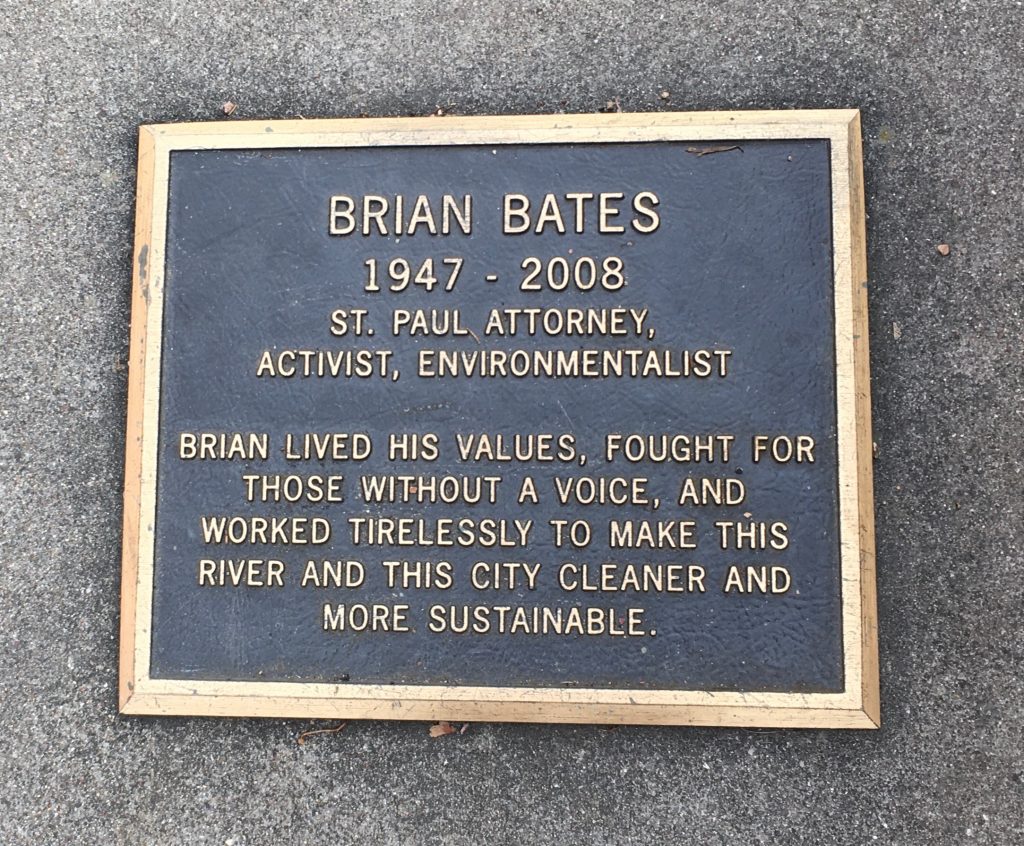
may 10/RUN

3.6 miles
turkey hollow + Seven Oaks
46 degrees

Ran on the trail but barely noticed the river. Distracted by walkers, and dog collars, and a noise that I think was a bird song but could have been someone whistling in the savanna. Heard a bird song that reminded me of the feebee call but was very different. Tried to find some words to match it, but couldn’t. A long note then a few shorter ones. No turkeys in turkey hollow, no red-breasted nuthatches near Becketwood. As I ran north on edmund, I thought about the poem I posted yesterday (which I actually posted this morning) about bird names. In trying to identify birds and birdsongs am I just trying to collect them? What might it mean to resist that urge to name, to know? Then I thought about the value of names, of knowing and noticing. Both–not knowing and knowing–have value. I also thought about different ways of noticing and being with birds that don’t involve staring and studying and collecting. Feeling the shadow of a bird flying overhead, sensing their graceful and frenetic motions.

Ended my run at Seven Oaks again to be with the birds. I think stopping there will be my new thing for May. So many sounds, so much movement all around–flying and rustling. Noticed a tiny bird–some sort of warbler?–just above me. I couldn’t see any distinctive colors on its head or feather and it didn’t call out. Watched a downy woodpecker slowly climbing up a tree. Moved when I was stared down by a squirrel, then returned when I heard the quiet drumming of the black and white feathered bird. Very cool. What an amazing way to end my run!

Here are two recordings I took as I walked around the rim of the Seven Oaks’ sink hole:

May 10/ birds, 1
May 10/ birds, 2

I think I might hear a cardinal and a robin, but what else? And are those birds even there, or am I just hearing robins and cardinals everywhere?

For the Birds/ JOHN SHOPTAW

For the abundant along with the rare birds at my feeder of late
For all kinds of birds I’ve lived with here are turning rarer
For the chestnut-backed chickadee, who carries her sunflower chip to the buckthorn to dine on between her toes
For the chickadees once came to my feeder in bunches
For the big round plain brown pair of California towhees who eat in parallel from the bird-crumb table
For though they crumb it clean without a glance or a cheep, I believe this remote old couple is as entwined as any two polarized photons
For the fearsome indigo Steller’s jays, black hooded and crested, Tapper and Sly, as I call them
For Tapper taps twice on an overhanging plum branch at two clucks from my tongue so I’ll know him
For Sly hangs back and shrieks me over and only shows himself after I place on the table their morning quincunx of unsalted peanuts
For he knows Tapper will quack to announce them and then squawk indignantly when he slyly swoops in
For the vast majority
For the dark-eyed juncos, the wide-eyed titmice, the narrow-eyed redbreasted nuthatches, who feed right-side up as they see it, the other birds upside down
For Audubon’s yellow-rumped, Wilson’s and Townsend’s warblers, nobody’s birds, who feed, drink and breed as they can
For the song sparrow’s song and the sparrow who exults in singing it
For a song—how long will that phrase mean what it means
For them all I refill the feeder, even this morning, when all blown-down things crackle underfoot and the Diablo wind seems to growl diabolically and scrape from all corners at once against a sky the color of flint
For the lesser goldfinches, symbolically fierce, who part their beaks at any other kind who would peck a chip in their presence
For the pine siskins, their symbolic match, who used to expose their underwings back at them with its dreadful yellow stripe
For two years running, no siskins at the feeder
For the brown-crowned, as-yet-unkindled sparrows, wintering from Oregon or the Farallon Islands, I sing my two-note welcome, hel-low, pointless
For they won’t learn it with my face masked against wild smoke migrating from the north
For the species too little or big or otherwise unsuited for the feeder
For Anna’s hummingbirds, who love to suck on our pineapple sage
For the red-tailed hawk perched in the smoke-fogged redwood
For soon it’ll be pestered by a twister of crows cawing hawkawkawkawkaw
For a red-tailed hawk I mistook it—something larger, ruffled molten
For the golden eagle it turned out to be—weird—hunched in the chill
For another flew up out of thick air and followed it south out of eyeshot
For those two—not migrants—evacuees clasping their emotional baggage
For the birds, then, what have I to offer
For what kind of refuge is my catalog
For I can’t reckon how to make good their losses
For I meant not to make a life list I meant
For others to partake in my pleasure
For it pleases me to look after the birds

This poem makes me think of the question I was pondering while I ran about collecting bird identifications. “For I mean not to make a life list”. Here’s an explanation of a life list:

life list

A life list is a cumulative record of the bird species an individual birder successfully identifies, and keeping a list is the easiest way to track which birds you have seen. Birders often keep life lists for other reasons as well, however, such as for motivation to see a greater number of species or to garner the prestige that comes from having higher count numbers. Life lists can also be submitted to some birding organizations for recognition or for contest purposes. For most birders, however, it is just fun to keep a life list and add up how many bird species you have seen.

What Species Can Count for a Bird Life List?

The article suggests that you can create your list however you want, but if you want the “prestige” of having it officially recognized, there are rules, which you can read in the article. I am not interested in creating a life list, of cataloging the birds I’ve seen as proof that I’m a good noticer. I like how this poem offers an alternative reason for why you would compile a list–a memory of what has been lost, a celebration of delights, a catalog of unabashed gratitude (the name of a collection by Ross Gay).

The line “For a song—how long will that phrase mean what it means” reminds me of the idea of dead metaphors, like “at a glacial pace”, that no longer have meaning because of dramatic/violent shifts in ecosystems and the destruction of the environment. Does Shoptaw mean it in this way?

april 1/RUN

3.25 miles
turkey hollow
31 degrees

Much less wind today–5 mph instead of 12-15. So bright, cool, not too crowded. Encountered a few people on the trail but was able to keep at least 6 ft of distance. Is 6 ft still the recommended distance? I know it is probably very low risk to run past another person, only being close to them for a second, but I’m still uneasy when I encounter someone. During the run, I think it was near Becketwood, I imagined how relieved I’ll be when I finally get the vaccine. I will run on the trails with much less anxiety, still keeping a distance (I’ve always done that, even in the before times), but not worrying that every person I met is a loaded gun (loaded with a deadly virus). That day may be coming soon–vaccines are open to everyone as of March 30th. After I write the entry, I’m putting us on all the waiting lists.

Heard lots of birds as I ran, especially cardinals and black-capped chickadees. After reaching turkey hollow and heading up the hill on 47th, I was welcomed with a symphony of bird sounds. Not sure what all the chirps and trills and tweets were, but I loved having their motivating and distracting soundtrack as I climbed. Other things I remember hearing: the sharp, brittle crack of a branch as I ran on it, the shuffling of my feet on the gritty sand, and dog collars clanging below me on the Winchell trail and off to the right, in the grass between the river road and edmund.

I ran on the trail, above the oak savanna, the Winchell trail, and the river. It was sunny so the river was sparkling. Today I remember it looking brown. Is that right? Shouldn’t it be blue? Pretty sure I remember it as brown with a shimmer of light. Also noticed several of the benches, perched on the edge of the bluff, staring out through the bare branches to the other side. And, I took note of shadows, not mine, but the shadows of birds flying over my head. Quick flashes of dark moving past me. I can’t remember if they were big shadows or small shadows; they were just bird shadows.

I’m thinking of spending another month with Emily Dickinson, or at least partially with ED. I want to focus on the peripheral–peripheral vision, ED’s circumference, other ideas about slant/sideways/beside as they are used and expressed in poetry (and maybe lyric essays too?).

Here’s a poem not directly related to that topic, but that I found in The New Yorker and wanted to remember:

Privacy/ Ada Limón

On the black wet branches of the linden,
still clinging to umber leaves of late fall,
two crows land. They say, “Stop,” and still I want
to make them into something they are not.
Odin’s ravens, the bruja’s eyes. What news
are they bringing of our world to the world
of the gods? It can’t be good. More suffering
all around, more stinging nettles and toxic
blades shoved into the scarred parts of us,
the minor ones underneath the trees. Rain
comes while I’m still standing, a trickle of water
from whatever we believe is beyond the sky.
The crows seem enormous but only because
I am watching them too closely. They do not
care to be seen as symbols. A shake of a wing,
and both of them are gone. There was no message
given, no message I was asked to give, only
their great absence and my sad privacy
returning like the bracing, empty wind
on the black wet branches of the linden.

This reminds me of Ada Limón’s intereview on VS. podcast, where she talks about trying to let birds be birds, and that birds aren’t going to save her (or us) or serve as metaphors she thinks she needs. I love her use of the words still and stand/ing in proximity to each other. It reminds me of my favorite October poem (October/ May Swenson) when she writes: “Stand still, stare hard.” When Limón writes, “I’m still standing,” of course I first thought of Elton John’s song (ha ha), but then I read those words, maybe for the first time, not as “I’m continuing to stand” but as “I’m a still-stander or someone who is engaged in the practice of standing without moving, standing still.” Very cool. I like the idea of being a still-stander. Speaking of the word still, I like how she uses it three times. I imagine it as a hidden message: be still, as in calm, quiet, not expecting or worrying about anything, just being where you are, not moving or doing.

march 24/RUN

2.7 miles
43rd ave, north/32nd st, east/edmund, south/river road trail, south/edmund, north
41 degrees
light rain

Sometimes dripping, sometimes drizzly, always windy. The rain wasn’t supposed to stop until 3 or 4, but when it looked like it was letting up a little, I decided to go for a run. A few other walkers, one runner with 2 dogs. Spent a lot of time dodging puddles on the sidewalk. Success. No wet socks. Ran through the tunnel of trees and, unlike yesterday when I felt as if I was buried in brown, today I noticed a slender slash of blue river. Why didn’t I see it yesterday? Must have been the light and the color of the river. Both yesterday and today I ran through the Welcoming Oaks; yesterday I remembered to greet them, today I forgot. I stopped at the split rail fence above the ravine and listened to the water rushing down the limestone and concrete ledges. I glanced down at the oak savanna as I ran above it, noticing the muddy trail at the bottom. Was planning to pay attention to one of my favorite spots, where the mesa slopes down to meet the Winchell trail and the river is revealed, but I was distracted by an approaching pedestrian. Stopped at the bench near Folwell–the one on the rutted dirt path that links two parts of the Winchell trail and that I wrote about in a haibun that didn’t make it into my Mississippi Gorge haibuns–and stared at the river, framed by a few bare branches. Crossed over the river road and the grassy boulevard and headed home, north on Edmund, running straight into the wind. As I neared the parking lot by the oak savanna, I saw some lights that looked like they were coming from somewhere on the bluff. I recalled how the road curves here, around a ravine, and that those lights were the headlights of cars on the river road. A strange, delightful sight.

I chanted a bit from the Emily Dickinson poem I’m reading today, ‘Tis so much joy! ‘Tis so much joy!:

Life is but Life! And Death, but Death!
Bliss is, but Bliss, and Breath but Breath!

‘Tis so much joy! ‘Tis so much joy!/ Emily Dickinson

‘Tis so much joy! ‘Tis so much joy!
If I should fail, what poverty!
And yet, as poor as I,
Have ventured all upon a throw!
Have gained! Yes! Hesitated so –
This side the Victory!

Life is but Life! And Death, but Death!
Bliss is, but Bliss, and Breath but Breath!
And if indeed I fail,
At least, to know the worst, is sweet!
Defeat means nothing but Defeat,
No drearier, can befall!

And if I gain! Oh Gun at Sea!
Oh Bells, that in the steeples be!
At first, repeat it slow!
For Heaven is a different thing,
Conjectured, and waked sudden in –
And might extinguish me!

I like the Prowling Bee’s introduction to her analysis of this poem:

Something big has happened and the reader is not given much of a clue as to the nature of the big thing. The poet has gambled everything – “ventured all upon a throw!” – and is in a state of ecstatic waiting. There are sixteen exclamation marks in eighteen lines and that is a lot of excitement.

Yes, that is a lot of excitement. For the rest of her analysis, the Prowling Bee (PB) speculates on what ED has done to cause such excitement. PB decides it has to do with love and cites the 3 mysterious letters ED wrote to “Master.” These letters come up in the book I’m listening to right now, Lives like Loaded Guns, and more obliquely in the show, Dickinson (I’m not sure because I haven’t watched these episodes yet, but I think that the show is suggesting that the newspaper editor Samuel Bowles is “Master”–will these letters be cited in any of the episodes? I’ll have to keep watching to find out.). Googling it, I found this great article from The Rumpus:

There is no evidence that the letters—written between 1858 and 1862 and discovered shortly after Dickinson’s death in 1886—were ever sent, although they may have been drafts of versions that were posted. No one knows to whom they were intended. Perhaps the Reverend Charles Wadsworth (they had a correspondence, none of which survives), or Samuel Bowles, the editor of a newspaper in Springfield and a family friend, or a professor named William Smith Clarke. Or perhaps they are not to a person at all, but to God. Or the Devil. For nearly twenty years I’ve taught Dickinson and the Master Letters in my early American literature course, always hoping to come closer to the source of the mystery. Instead, just the opposite has happened. The mystery has deepened. The more I study them, the more we hash them out in class, the longer the shadows grow and deepen over their meaning.

The Dark Mystery of Emily Dickinson’s “Master” Letters

I like that scholars, even after decades of scrutiny, can’t quite figure ED out. Nice work ED! While I can appreciate being curious about this “dark mystery,” right now I don’t really care what she’s talking about here. I like the little chant about life and death, bliss and breath, and I might try to lean on it when I’m struggling during a run, or attempting to block out worrisome thoughts so I can fall asleep, or feeling panic over yet another sinus infection.

march 13/RUN

3 miles
Hiawatha and Howe loops
44 degrees

A wonderful morning. Sunny and mostly calm. Not too crowded. Started on the river road trail but as I encountered more people, I moved over to Edmund. I heard the black-capped chickadees singing their feebee song. Don’t remember much else. When I reached Hiawatha, I put in my headphones and listened to a spotify playlist. Experienced a slight runner’s high as I picked up the pace, the kind that makes me feel my smile all the way down to my toes. Sprinted the last block. I bet I looked strange.

Yesterday, I listened to a great podcast with the poet Paige Lewis. So much good stuff. I especially liked this:

And that’s what I kind of care about putting into poems. I want to learn things and I want to learn little snippets of facts and then I want to be able to share those facts with people. Or, if I see something, I want someone around so I can be like look at that thing that’s happening right now. It’s still happening, you have to look. Look what that fish is doing. Look what that flower is doing. I just want to be pointing. Like I just want to be, look at this thing. Look at this thing. Look at this thing. Which is why I’m really bad at writing essays because I’m just like look at what this guy is doing. And then look at this. And they’re like, why does it matter? I’m like, I don’t know, but look at it.

Just like look at these beautiful tiny things and what we can take from them is maybe sometimes just enjoyment and I don’t know that I have anything more intelligent to say about that thing and what it’s doing and what it reflects about anything about us as humans. But like just look at it.

Paige Lewis in Paige Lewis Vs. Tiny Things

I agree with Lewis that the enjoyment of noticing and sharing these beautiful tiny things is enough, but I also think that this practice, when repeated and turned into a habit, has an additional importance: it encourages us to care about and care for the world, to be invested in its continued flourishing and also our own. I was thinking about this earlier today as I worked on my “How to Be” project and gathered ideas for the knowledge section. What is knowing facts for? More than demonstrating how smart we are, knowing facts can connect us and astonish us and encourage us to care about more than ourselves and our individual survival.

random thought I remember: At some point during the run, I noticed the shadow of a bird on the sidewalk in front of me. I love seeing these shadows and knowing a bird is flying overhead without looking up to see it. This shadow is too vague and fuzzy to indicate what kind of bird it is; it’s just a bird. It reminded me of how sometimes when I’m sitting at my desk, which has a glass top (a top I recycled from an old IKEA coffee table), I see the reflection of a bird flying outside the window. It’s a quick flash of motion that I could miss if I wasn’t paying attention and if my peripheral vision had become heightened because of my central vision loss. Such a cool thing to see.

Have you got a Brook in your little heart/Emily Dickinson

Have you got a Brook in your little heart,
Where bashful flowers blow,
And blushing birds go down to drink,
And shadows tremble so—

And nobody knows, so still it flows,
That any brook is there,
And yet your little draught of life
Is daily drunken there—

Why – look out for the little brook in March,
When the rivers overflow,
And the snows come hurrying from the hills,
And the bridges often go—

And later, in August it may be,
When the meadows parching lie,
Beware, lest this little brook of life,
Some burning noon go dry!

The Prowling Bee doesn’t like this poem with it’s “lazy” rhymes (flipping the sentence order to create the rhyme, ex: “so still it flows”) and the idea of such a “little” brook, as opposed to some more robust form of water like a river. I’m not sure how I feel about it. I think I like the quiet brook that doesn’t announce itself to the world, it’s just there doing its thing–helping the flowers and the birds and the shadows. What if it were a stream instead? Decided to google it. Favorite answer was by a naturalist, responding to the question, what’s the difference between a stream, a creek, and a river?:

So, we enter into the somewhat nebulus topic of stream classification.

Consulting a few sources, the common term for all downhill flowing ribbons of water is stream.  They’re all streams. Streams are classified, not by width, depth or length, but by a system known as stream ordering.  The common terms are quite subjective depending on region and local history.

First order streams: the smallest streams that have no tributaries. We could call these brooks or rivulets.  Little streams that you can hop across and not get wet. (GPD example: Pebble Brook in The West Woods)

Second order streams: result from the merging of two first order streams. Often designated as creeks, these small streams require a bridge, stepping stones or wading to cross. (GPD examples: Big Creek, Swine Creek, Silver Creek)

Third order streams: larger streams formed from the merger of two second order streams or creeks if you will. Streams that would have to be bridged, waded or even swam across. Referred to as branches in the headwater regions of watersheds. (Geauga examples:  East Branch and Aurora Branches of the Chagrin River, East and West Branches of the Cuyahoga River)

Fourth order: streams formed by the merging of two third order streams. These streams would qualify as rivers, requiring big bridges, boats or swimming to cross.

Geauga Park District in Ohio, also see River, Streams, and Creeks

I find brooks interesting as a first order stream because they have no connection to other sources of water, no tributaries. They also don’t cause much of a fuss–you don’t need a bridge for them and you should be able to hop across them without getting wet. How do these first order streams come to be? Where does the water come from?

Another interesting thing about brooks: as a verb, the word means to use, tolerate, find agreeable. I don’t like the word tolerate or this understanding of a body of water disconnected from everything else, so I guess I don’t want to have a little brook in my heart. It doesn’t sound as pretty, but I think I’d prefer a creek–but not a crick!

a moment of sound

After my run, I sat on the deck and enjoyed the sun and the quiet. Here’s how that sounded:

march 13, 2021

march 4/RUN

1.65 miles
43rd ave, north/32nd st, east/edmund, south/35th st, west
46 degrees

A short run outside in the afternoon sun. Very wet, with a few slick spots still remaining on the sidewalk. Felt like spring again today. I don’t remember much about the run. I didn’t see the river or hear any woodpeckers or smell any smoke. Encountered a few runners and walkers. No kids walking home from school. I did run by a school bus, idling in front of Minneaha Academy. Noticed lots of cars driving on the river road, enjoying the spring-like weather.

a moment of sound

march 4, 2021

Before my run, I took Delia the dog out for a walk. Near 7 oaks, I heard a wonderful bird song that I couldn’t identify. I took out my phone to record it, but it stopped before I could start. In this recording, I mostly hear the rustling of my coat as I walk, which is annoying. I also hear my feet striking the gritty, crunchy sidewalk, which is delightful.

There’s a certain Slant of light (258)/ Emily Dickinson – 1830-1886

There’s a certain Slant of light,
Winter Afternoons –
That oppresses, like the Heft
Of Cathedral Tunes –

Heavenly Hurt, it gives us –
We can find no scar,
But internal difference,
Where the Meanings, are –

None may teach it – Any –
‘Tis the Seal Despair –
An imperial affliction
Sent us of the Air –

When it comes, the Landscape listens –
Shadows – hold their breath –
When it goes, ’tis like the Distance
On the look of Death –

Winter’s slanted light is quickly leaving; during today’s run the sun was bright and overhead and warmed my face and back. Listened to 2 versions of this poem on youtube and both of them replaced heft with weight and Any with anything. Heft is much better, I think. My favorite line: the Landscape listens. I love the idea of a landscape listening.

feb 15/RUN

2.75 miles
river road, south/edmund, north
-7 degrees/ feels like -10

Brr. Decided to go for it and run outside. Didn’t look too bad when I checked the forecast: low wind, bright sun. According to my watch, the wind is 2mph. I’m dubious. I felt a cold wind blowing in my face almost the entire run. It wasn’t a stiff wind, but it was more than a gentle breeze. Today felt uncomfortably cold, especially on my fingers. Still, it was nice to be out there. Was able to run right above the river. It’s all white, frozen, looking more like a snowy field than anything else.

Things I Remember Most

  • 2 different woodpeckers, with 2 different drumming sounds. 1. the sharp, rapid rat a tat tat on a hollow (or dead?) tree trunk and 2. a dull, slow thump thump thump on another tree.
  • The salt on the road kept tricking me–is it dried salt staining the road or tightly packed snow or slick ice? I don’t remember it ever being slippery but I do remember frequently mistaking salt for snow and snow for salt.
  • Only encountered 1 other runner the entire time, but saw a few walkers. I think every walker was with a dog.
  • I heard the trilling of a northern cardinal.
  • My eyes watered a lot, but didn’t freeze into icicles. Condensation froze on the inside of my sunglasses, making it hard to see my shadow ahead of me.
  • My toes weren’t froze but my fingers were; I had to ball up my hands inside of my gloves to warm them up. The empty fingers of my gloves flopped in the wind.

I wore many layers (from top to bottom):

  • a purplish-blueish-grayish hood*
  • an ugly black hat that fits/looks like a thick black swim cap*
  • a gray buff*
  • gray “sports dad” sunglasses
  • a olive-gray with lime green zippers outer jacket**
  • a purplish-blueish-grayish micro-fiber pullover (that has the hood) *
  • an orange thick running shirt
  • a lime sherbet green base layer shirt
  • 2 pairs of gloves: one black and designed for running, the other hot pink with white stripes, not designed for running or lasting–slowly one end is unraveling; I cut the loose thread every couple of runs
  • 2 pairs of black tights–one with pockets, one with zippers at the ankles and a drawstring**
  • a black running belt with a phone and my keys in it
  • 2 pairs of socks: one pair gray*, the other mis-matched–both white but one with a green logo and one with blue
  • gray (with a tinge of blue) running shoes

* running swag from a race
**inherited from Scott

Mostly, all of this kept me warm. The only parts of me that were really cold: my face (and my lungs?), and my fingers. My face stayed cold, but my fingers warmed up enough for me to take the hot pink gloves off.

a moment of sound

This very cold morning, while sitting in the front room at my desk, I could hear a low rumble. It rumbled and rumbled, rattling in the inside of my head, low and steady and unrelenting for at least 20 minutes. This sound was so low and quiet that I felt it more than I heard it. It was caused by a pick-up truck idling in front of a neighbor’s house two doors away and it was very irritating. I decided to open the front door and record the sound. My moment only lasted 16 seconds because it was too cold outside and because the truck was producing a lot of exhaust that was invading my lungs, making it hard to breathe.

Feb 15, 2021

Perhaps you don’t even notice the rumble? Maybe you just hear the birds, who don’t seem to be bothered. O, to be a bird who can ignore rumbling trucks and the bitter cold, and keep singing like it’s spring!

feb 8/BIKERUN

bike: 20 minutes
run: 2.3 miles
basement
outside temp: -2 degrees/ feels like -14

Took Delia the dog for her first walk in a few days. It’s cold, but there’s no wind. Briefly thought about running outside, then decided it was still cold and slippery. Another day in the basement. No Dickinson today; the episode wouldn’t load. Watched a few races instead. Listened to my audio book again while I ran. Running while listening to a book and at a slower pace really helps.

Forgot to mention yesterday: I ran with my shadow. I could see her dark shape on the towel I put on the treadmill to cover the display. We waved to each other. Saw her again today. There’s a lightbulb on the ceiling just above and behind me as I run which casts a shadow, sometimes on the towel, other times on a far wall. I like watching the shadow flicker n front of me, slightly off to my left side.

Found a useful quotation about paying attention and the attention economy via twitter this morning:

Attention is a limited resource, so pay attention to where you pay attention.

Howard Rheingold, read in Attention Shoppers

a moment of sound

When I took Delia out for a walk around noon, there were lots of birds chirping and calling:

Feb 8, 2021

dec 14/BIKERUN

bike: 18 minutes
bike stand, basement
run: 5k
treadmill, basement

Because I’m feeling extra sore at the end of the year and because it’s icy and cold (feels like 5) outside, I biked and ran in the basement this morning. While I biked, I watched more of Netflix’s Prom. Still not sure if I like it, but it’s good to watch while biking. A nice distraction. Near the end of my biking, I stopped the movie, pulled out my phone, and recorded myself reciting an excerpt of “Halos.” Several mistakes, but not too bad. I love this poem with its myopic me and soul ubiquitous like water and the idea that “to the dead, we’re the ghosts.”

Reciting Halos/ Biking, heart rate 120 bpm

While running I listened to a spotify playlist that included some Harry Styles, Janelle Monae, Demi Lovato, and ended with Miley Cyrus’s “Party in the U.S.A.” Wow, that last song. Not too bad to run to, with its slow steady beat, but those lyrics. Yikes. That was a particularly bad phase for Cyrus–so much troubling cultural appropriation. Wore my new berry red shoes and felt fast and free–even though my app claimed I was running slow. Pretty sure that my speed on the treadmill is always faster than it says. I ran for a little over 30 minutes–that’s a lot for me on the treadmill.

Today the electoral college votes. Foolishly I had assumed that that would be it, all of the doubt and unsubstantiated claims about the election will end. But then I reviewed how all of this works and realized that we still have the potential shit show of January 6th, when Congress can chose to debate the results. Of course, it couldn’t be resolved in 2020–2020 must continue to (mostly) suck.

Here’s a poem I’ve been meaning to post for some time now; I wanted to wait until it was winter, or at least felt like winter: cold, with snow on the ground. It’s from December 1972.

In Wiry Winter/ James Schuyler

The shadow of a bird
upon the yard upun
a house: it’s gone.
Through a pane a
beam like a warm hand
laid upon an arm.
A thin shell, trans-
parent, blue: the
atmosphere in which
to swim. Burr. A
cold plunge. The bird
is back. All the same,
to swim, plunging
upward, arms as wings,
into calm cold. Warm
within the act,
threading air, a
shadow on the yard.
Or floating, gliding,
a shadow on the roofs
and drives, in action
warm, the shadow cold
but brief. To swim
in air. No, Not in
this wiry winter air.
A beam comes in the
glass, a hand to
warm an arm. A hand
upon the glass
finds it a kind
of ice. The Shadow
of a bird less cold.
Window, miraculous
contrivance, sun
hot wires in
meshed cold.
The bird goes
quick as a wish
to swim up
and cast, like
it, a shadow
on the years.

nov 8/RUN

3 miles
around the neighborhood
58 degrees

BIDEN DEFEATS TRUMP! Such a wonderful, needed headline. Sitting upstairs at my desk, working on my poem in the late morning yesterday, Scott called out, “He did it” or “It’s over” or “He won,” I can’t remember which. I started walking down the stairs, stopped, then began to cry. So much relief and joy. It will take weeks for all the fear and despair to leak out, I think. I recognize this is not the end of all that, just the beginning of a renewed hope in the world and the belief that we can avoid the darkest timeline.

Very windy and warm this morning. Noticed my shadow a few times. She’s very excited about Biden and Harris (Harris!) winning too–I could see it in how she held her frame as she ran. Listened to a playlist and felt happy to be outside moving. I wore shorts. I might be able to do that again tomorrow, but after that it’s running tights. We might get snow on Tuesday.

Admired the sparkling river as I ran above on Edmund. I can’t wait until I can run by the river again without worrying about getting too close to people. Next spring?

Scrolling through twitter, one of my favorite poetry people just tweeted: An open gate. Love it! Possibility…not guaranteed, but a chance to enter a new world, a new era, somewhere other than where we’ve been for the past 4 years. Reminds me of a poem I memorized this summer (and have already almost forgotten, sadly…I’ll have to review it a few times):

The Gate/ MARIE HOWE

I had no idea that the gate I would step through
to finally enter this world

would be the space my brother’s body made. He was
a little taller than me: a young man

but grown, himself by then,
done at twenty-eight, having folded every sheet,

rinsed every glass he would ever rinse under the cold
and running water.

This is what you have been waiting for, he used to say to me.
And I’d say, What?

And he’d say, This—holding up my cheese and mustard sandwich.
And I’d say, What?

And he’d say, This, sort of looking around.

nov 4/RUN

2 miles
43rd ave, north/32nd st, east/edmund, north/37th st, west
60 degrees

Added a little more distance to my run this late morning. Legs are feeling okay, although everything seems slightly harder. Is it sore legs or anxiety over the still undecided election? I have not checked any news or social media this morning; I’m relying on Scott to tell me good news or when it’s all over. Trying to stay hopeful and prepare for the worst. In situations like this, I retreat.

When I took Delia on a walk, it was very still. I remember hearing only a few intermittent bird calls. Later when I ran, especially on Edmund, I heard all sorts of birds calling and singing. Also heard several rakes scraping against the sidewalk, a few violins and cellos or violas practicing outside, some leaf blowers whining, joyful kids at the playground near Cooper Field laughing and yelling, a dog’s collar clanging.

As I noticed my shadow running in front of me, I thought about the first lines from Black Cat by Rilke that I memorized this morning:

A ghost, although invisible, still is like a place
your sight can knock on, echoing;

Thought about another mood ring poem. This one, about feeling like a ghost, a shadow. Fading, faded. Unmoored, floating in the world. Ephemeral. Unable to see concretely, or feel like anything around me is solid. It all shifts–or does it echo endlessly–the trace of something that once was there, but isn’t any longer? I feel this way a lot when I’m running but also when I’m walking. This floating, dreamy feeling can be cool to experience but it can also be disorienting, unsettling. Too difficult to find solid ground.

oct 25/RUN

3.15 miles
turkey hollow
28 degrees
snow flurries

Another colder day with some snow flurries. Ran by turkey hollow. Forgot to check for turkeys. Distracted by a dog with its owner on the far sidewalk. I do remember wondering (again) where the turkeys go in the snow. Are they up in the trees? Listened to a playlist as I ran. Started on the trail right above the river but when I encountered some people, crossed over to the grass between the river road and edmund. Cold, hard, packed dirt with some snow in the ruts. Not too difficult to run on. Yesterday’s snow was wet and steady, today’s was intermittent flurries swirling in the wind and in my face as I ran north. Noticed at least one bike but no fat tires or roller skiers. No groups of runners. No peloton on the road. Anything else? Noticed that I had a clearer view of the Oak Savanna. I wonder if one of my favorite winter views is clear? It’s the spot where the hill in the Savanna slopes down and suddenly the river appears.

Surfaces I Ran On

  • clear sidewalk
  • cold, hard road–I could hear my feet loudly striking the pavement
  • yellow leaves slightly slick with snow
  • green leaves, thick and soft
  • rutted, hard dirt
  • brittle grass

Watching the Vuelta a España with Scott. Today Primož Roglič crapped out on the final climb and lost the red jersey. Bummer. So strange to be watching a bike race while it’s snowing. It looked very wet and cold for the cyclists as they climbed the mountains.

Here’s a poem I discovered this morning. So lovely with such quiet grace.

Beginning/ JAMES WRIGHT

The moon drops one or two feathers into the field.   
The dark wheat listens.
Be still.
Now.
There they are, the moon’s young, trying
Their wings.
Between trees, a slender woman lifts up the lovely shadow
Of her face, and now she steps into the air, now she is gone
Wholly, into the air.
I stand alone by an elder tree, I do not dare breathe
Or move.
I listen.
The wheat leans back toward its own darkness,
And I lean toward mine.

oct 15/RUN

5 miles
franklin loop
50 degrees

Felt colder than 50 degrees with the wind and the occasional brief downpour. A beautiful fall morning. Because of the wind and rain, there weren’t too many people out on the trail. Running above the river was wonderful–so much more of a view as the leaves leave. I love late fall. More of a view, winter and winter running are coming, less people will be on the trail which means less fear and distraction over keeping a safe distance.

Things I Remember

  • The sun just barely glowing through the clouds behind me, enough to enable my shadow to make a faint appearance in front of me. Hello friend!
  • So much wind on the Lake Street bridge that I was blown across the sidewalk and had to hold onto my hat for several minutes
  • The river! Every year I forgot how wonderful the view is, having not seen it since May. Open, airy, a chance to breathe, to stare at the water as it winds down the gorge!
  • Glancing down at the floodplain forest from the tunnel of trees and admiring the soft glow of yellow leaves
  • Noticing the dog park at Meeker Island is open
  • The curve of the black wrought iron fence at an overlook on the Winchell Trail not too far from Franklin
  • Being able to see the entire trestle, stretching to the other side, wondering when/if a train would cross it
  • Running at least 10-12 feet from some walkers and smelling the perfume of one of them, being reminded of how far someone’s presence/scent/air can travel, wondering if I should be wearing a mask when I run

Today’s October Surprise

Last night, walking through the neighborhood, Scott and I heard a dog barking–I think it was a french bulldog or a boxer?–whose bark sounded like they were yelling out the word bark. “Bark! Bark! Bark!” It made me giggle. Some day I would like to have a dog that I named Bob Barker.

Working on my fourth mood ring poem today. As I ran, I reflected on a line about what, in a face, indicates life–a glimmer in the eye? the raising of an eyebrow? a slight head nod? the curve of a mouth?

Speaking of head nods, I have been intending to post this poem for several months. It seems fitting today as I think about how people connect through gestures:

Ode to the Head Nod/ Elizabeth Acevedo

the slight angling up of the forehead
neck extension quick jut of chin

meeting the strangers’ eyes
a gilded curtsy to the sunfill in another

in yourself tithe of respect
in an early version the copy editor deleted

the word “head” from the title
the copy editor says it’s implied

the copy editor means well
the copy editor means

she is only fluent in one language of gestures
i do not explain i feel sad for her

limited understanding of greetings & maybe
this is why my acknowledgements are so long;

didn’t we learn this early?
to look at white spaces

thank god o thank god for

you

are here

sept 13/RUN

2.5 miles
river road, south/42nd st, west/around Hiawatha Elementary/43rd ave, north
56 degrees

Another good morning for running. I don’t remember much. Too busy looking out for other people. Started on the trail but it was too crowded so I moved over to Edmund and then ran up 42nd. Didn’t see the river or hear any memorable birds. No dropping acorns or honking geese. No clickity-clacking roller skiers or bikes blasting Jimmy Buffet songs. Saw a runner I’ve seen at least once before on the trail who annoyingly takes over the entire path and doesn’t move over. He has a strange, bouncy stride. Heard some yipping, spazzy dogs at the Hiawatha playground. Smelled some cigarette smoke and wondered if it was coming from the walker ahead of me. Ran by the door that my kids used to come out when they were done with school. All the students would bunch around the teacher trying to point out their parents so they could leave. I remember waiting forever because my kids (like me) weren’t aggressive enough to get the teacher’s attention. I was very happy when they got older and I didn’t have to wait for them near that door anymore.

Blind (r) ing

I haven’t been memorizing poems for a few weeks now. I’ve moved into working on my mood ring project. Yesterday I did some more research and found out a few things I’d like to play around with:

A blind spot in the central vision is also called a scotoma. Here’s a longer definition from Enhanced Vision:

A central scotoma is a blind spot that occurs in the center of one’s vision.  It can appear in several different ways.  It may look like a black or gray spot for some and for others it may be a blurred smudge or a distorted view in one’s straight ahead vision.  Scotomas may start out as a small nuisance and then get larger or there may be several blind spots or scotomas that block one’s field of vision. 

Right now, I think my scotoma is somewhere between a blurred smudge and a distorted view. At the end of the brief article, they offer a few tips, including:

Find and use your preferred retinal locus.  A person looks slightly to the side so that the blind spot or scotoma is not in their central field of vision. One author describes it as “not looking at what you want to see.”

Not looking at what you want to see.

So much I want to do with this idea of not looking at what you want to see. Thinking about Dickinson and “tell all the truth but tell it slant” and the periphery and soft attention. I’m also thinking about how sometimes when I’m talking to Scott and I can’t see his face, I will look just a little to the side, over his shoulder. Then I can see his features. He says this looks strange. I bet.

Another useful term/idea is filling in: The manner in which the brain deals with inexplicable gaps in the retinal image. When an object enters your blind spot and disappears, instead of seeing a shadow or dark spot, the absence is filled in with the background color. So you can’t see that you’re not seeing. Because my blind spot is larger and in my central vision, I experience this a lot more than “normally” sighted people. Sometimes I wonder how often I’m not seeing without knowing.

At the end of an article about filling in and the various experiments you can do to see it, the authors conclude:

These experiments show how little information the brain actually takes in while you inspect the world and how much is supplied by your brain. The richness of our individual experience is largely illusory; we actually “see” very little and rely on educated guesswork to do the rest.

I love this idea of how limited everyone’s vision is and the incorrect assumptions many have when thinking about what it means to “see.” I’m not sure I would have spent much time thinking about any of this if I hadn’t lost my central vision. The last line about educated guesswork reminds me of Aldous Huxley’s book The Art of Seeing and his writing about Dr. W.H. Bates’ visual education method.

In the preface, Aldous writes:

Ever since ophthalmology became a science, its practitioners have been obsessively preoccupied with only one aspect of the total, complex process of seeing—the physiological. They have paid attention exclusively to eyes, not at all to the mind which makes use of the eyes to see with.

Bates’ method pays attention to the “mental side of seeing.”

And here’s another great definition of filling in from this helpful article:

What is filling-in? It is the phenomenon in which an empty region of visual space appears to be filled with the color, brightness or texture of its surround. The brain is capable of filling-in the blind spot, borders, surfaces and objects.

Okay, I’ll stop here for now.

sept 4/RUN

2.25 miles
43rd ave, north/lake st, east/47th ave, south/32nd st, east/edmund, south/the hill
66 degrees

Feeling like fall these days. Ran north on 43rd to Lake Street then over to 47th through the parking lot at Minnehaha Academy. Completely packed with cars. In-person school. I can’t imagine being a teacher and having to teach in classroom during this pandemic. Ran down to Edmund. Too crowded, especially on the stretch between 34th and 36th. I had thought about doing the tunnel of trees; it was probably empty. Anything I noticed? Lake Street was empty, even the bridge. More acorns on the sidewalk. No squirrels. No more changing leaves…yet. Right as I started, I heard a chainsaw far off, felling a big tree–at least it sounded big. Lots of bikes heading down the hill near the tunnel of trees. One biker was going very fast, trying to pass the slower bikes in front of me before the path narrowed near the construction. I heard him call out, “On your left” and wondered if he would make it in time. At the very end of my run, right after I stopped, I saw a runner wearing the same race shirt I was (the 2020 1 mile). After he passed, I imagined what he might have done if I had called out, “nice shirt!”

I posted this poem last September (25 Sept 2019), but it’s worth posting again and spending some time with:

To the Light of September/ W. S. MERWIN

When you are already here 
you appear to be only 
a name that tells of you 
whether you are present or not 

and for now it seems as though 
you are still summer 
still the high familiar 
endless summer 
yet with a glint 
of bronze in the chill mornings 
and the late yellow petals 
of the mullein fluttering 
on the stalks that lean 
over their broken 
shadows across the cracked ground 

but they all know 
that you have come 
the seed heads of the sage 
the whispering birds 
with nowhere to hide you 
to keep you for later 

you 
who fly with them 

you who are neither 
before nor after 
you who arrive 
with blue plums 
that have fallen through the night 

perfect in the dew

I will memorize this poem, along with September First Again.

Continue to work on my mood ring poems. The first one is Wonder. Here’s a draft with a quick, crude sketching in of my blind spot/ring. I haven’t figured out how I want it to be yet: white space where the ring is? Dark space? A ring superimposed?

Version 1
Version 2

Do I want to try and rework it so that the center part is another poem? Is that too much? I like the challenge of it, but I don’t want it to be overly clever.

sept 1/RUN

2.5 miles
river road, south/edmund, south/edmund, north/the hill
62 degrees

Another nice morning for a run. Started on the trail but it was too crowded. Had a moment when there were 2 runners and 2 bikers approaching me at the same time. I had to fit through the small sliver in-between them. Ugh. I’m tired of having to focus so much attention on avoiding people. It would be nice if I could figure out the best time to run when no one else was. Does that exist? Oh well, it’s still not too bad and I am happy to get out for a run almost every day. I have a streak of almost a month straight going–my last day off was August 8th. I might try to keep going until I reach a month. I think I’m able to do it because I’m not running too much–only about 4-5K a day (2.5-3.1 miles).

I listened to a playlist so I don’t remember much of the run. Anything? Can’t remember if I could see the river. Don’t think I saw any roller skiers. Was it sunny or cloudy? I can’t remember that either. I know it was cool-ish and that I had to run into the wind for a bit. That’s all.

September First Again/Phillip Levin

Blighted light at the tip
Of a branch, why so early
Do you turn?—leaf
Dipped in vermillion,
Close to the end, you point
To a sidewalk wet
Once with names
Signed in cement to seal,
For all time, a vow
Uttered by two
Standing under the crown
Of a tree you cleave to still,
For now: solitary witness
Standing alone, limbs
Crisscrossing in shadows
Beginning to scrawl
Lines to a world hell-
Bent (with or without intent)
On obscuring
Whatever they meant.
Blighted light
At the topmost bough,
Little flag hailing
Another day, do not go
So early to ruin, green,
Do not turn so soon.

Found this wonderful poem on my instagram feed this morning. Unlike the poet, I am not lamenting the turning of the leaves. Begone gluttonous green! I’m ready for my views of the river and the other side again. I’m thinking that I should memorize another series of poems to recite while running about changing leaves, early fall, and the end of green?

august 3/RUN

3.5 miles
2 loops (36th to 42nd)
62 degrees

Since they’re opening the road back up to cars any day now, I thought I would do 2 loops. Back when they closed the road in early May, I had visions of running loops all summer. I even created a loops page. But it didn’t take me long to realize that I don’t like running loops, or at least multiple loops at once. Halfway through the first loop, I start thinking about how I’m going to have to run another loop and then I think, “How am I going to do another loop?” and I usually stop early. I am often willing to stop something early when I don’t think it’s working. Sometimes this is a good thing–why torture yourself doing something you hate just because you said you’d do it? Sometimes it’s a bad thing–why is it so easy for me to stop when I don’t like it? Mostly I’m fine with my tendency to stop–probably because I usually find something to like about what I have to do so I get the things done I need to and because my willingness to stop early doesn’t reflect a lack of passion or commitment. I’m very committed to my writing and running and family and thinking/living/acting with critical awareness and care.

So–back to the point of this digression–I accept that I don’t like running loops and I don’t run them. But today, I thought I’d try something different. I ran one loop with no headphones, then one loop with a playlist.

loop one

The first loop was about a minute slower. I focused on birds (heard a black capped chickadee) and trees (especially the trees on the boulevard that lean in towards the river road offering more shade, listening in to check how heavily I was breathing) and the big boulders in the grass. I tried to stay relaxed and avoid thinking about how I was still just on the first loop and that I was planning to do another one. I checked out my shadow a few times. She was on my right side, slightly behind me. I decided the best shade was between 38th and 36th.

loop two

Before starting the second loop, I stopped to find a playlist–an older one titled, “august run.” First song: “Misery Business” by Paramore. I remember listening to this my first year of running, nine years ago. To match my foot strikes to the beat, I picked up my cadence. Didn’t think about anything or notice where I was as I ran. What a wonderful thing to get lost in the effort of moving! Lifting my knees, focusing more on driving my left leg. Swinging my arms evenly. Also listened to “Hurt Feelings” by Flight of the Concords and laughed at the lyrics, “I’m Still Standing” by Elton John and thought about how much I loved this song when I was kid.

I like this idea of running one loop listening to the gorge and one loop listening to music. It might be fun to try doing one loop reciting one poem and then another loop reciting a different poem. I think I’ve tried something like this already–have I (no, but after looking through old entries, I discovered I had proposed this very idea of may 22nd). I’m glad I found this entry because in it I posted a poem I’d like to memorize: Push the button, hear the sound I think I’d like to do a series of 4 or 5 poems on listening.

Listen, the long list

I’ll have to narrow this list down to 4.

july 30/RUN

2.5 miles
river road, south/north
68 degrees

Walking down to the end of the block before starting my run, I marveled at the slightly cool breeze and the soft sun. What a morning to be outside! Perfect for walking, slightly too warm for running. Ran south on the river road. Heard the birds–which birds? Not sure. Glanced at the river for the brief moment I was able to run on the trail. Saw my shadow. Tried to stay calm and block out the relentless worry, simmering under the surface, about pandemics and tyrants and upcoming elections. Was mostly successful.

Running past the steps at 38th street that lead to the lower trail, closer to the river, I longed for last summer when I regularly ran the 2 trails route. O, to be closer to the river, below the road on the undulating trail!

Recited the rest of Halos this morning. The rhythm of this poem doesn’t work well with running and I found it hard to keep reciting the lines in a steady flow. Lots of stopping and starting. Was this also because of the heat or the effort or my still shaky grasp of the words?

I like, whenever I wish, strolling past
the myopic me
in a window or a mirror or whatever

reflects back to believe the soul is
ubiquitous like water
in our voices, our cells.

How else, when blinded by life,
would I remember:
to the dead, we’re the ghosts?

I am not sure what he means here or what to do with souls as ubiquitous as water or the idea that we’re the ghosts to the dead. What does it mean to be a ghost?

Ghost (noun), definition (OED)

  1. The soul or spirit, as the principle of life (to give up the ghost)
  2. Philosophy.  the ghost in the machine: (Gilbert Ryle’s name for) the mind viewed as separate from the body 
  3. The soul of a deceased person, spoken of as appearing in a visible form, or otherwise manifesting its presence, to the living. (Now the prevailing sense.)
  4. A shadowy outline or semblance, an unsubstantial image (of something); hence, a slight trace or vestige, esp. in phrase  (not) the ghost of a chance.

Ghost (verb), definition (OED)

  1. to expire
  2. to haunt
  3. to scare with pretended apparitions
  4. To flit about, prowl as a ghost. Also  to ghost it.  to ghost away: to steal away like a ghost.

Ghost (Colloquial), definition (Wikipedia)

Ghosting is a colloquial term used to describe the practice of ceasing all communication and contact with a partner, friend, or similar individual without any apparent warning or justification and subsequently ignoring any attempts to reach out or communicate made by said partner, friend, or individual.

I would like to use the phrase, “to ghost it” somewhere. Also, having stared at the word “ghost” for too long, the letters seem strange, especially the g and h right beside each other.

Thinking about being “ubiquitous like water” I was reminded of Bruce Lee and his great poem? speech? about being like water. Then I was reminded of the poem by Ed Bok Lee that I discovered yesterday and just listened to right now, “Ode to Bruce Lee” from his collection Whorled. In the poem, he says:

Boxer and cha cha champion
style of no style
teacher, waiter, philosopher, dragon

Style of no style is also in Halos. I want to think some more about what this phrase means–to him, what it might mean to me. Fluid, not trapped any identity or label or “box”, flowing like water?

Here’s a recording of me reciting Lee’s “Halos” after I returned from my run. I still have a few extra/wrong words to fix:

Halos, July 30

july 15/RUN

4 miles
river road, north/south
66 degrees
humidity: 83%

Ah! Such nice weather this morning. Still humid, but cooler. Almost sunny. A thin layer of clouds covered most of the sky. So thin that the sun was still casting shadows on the road. A strange sight. Is there a word for that? I tried looking it up just now and I couldn’t find anything.

I was able to run above the river for a few minutes and saw some blue through the green. Heard several roller skiers, a few bikers, runners, walkers. No music coming out of bike radios or snippets of conversation that made me curious. No rushing water, hardly any birds. I’m sure I heard traffic but I don’t remember that either—actually, thinking about it for a few minutes, I do remember some traffic. As I ran down the hill and under the lake street bridge, I heard cars and trucks on the bridge and kept thinking they were on the river road, just behind me. Noticed many cars in the parking lot at Minnehaha Academy–are they planning to open the campus this fall? I hope not. Also saw soccer practice on the field. Ran past the railroad trestle almost to Franklin. Felt relaxed and strong.

As I ran, I tried thinking about the idea of the dream-like state and Howe’s line, “this might be all we know of forgiveness, this small time when you can forget what you are.” What is this small time? Is forgetting what we are a type of getting lost in a (day) dream (Emily Dickinson’s revery*?) or practicing pure attention (another line from Howe: “speaking for the sound alone”?). And, what is it that we are, that we must forget? Yesterday I suggested that we are creatures who struggle against their solitude, suffering, and the inevitability of death. Here’s another answer from Marilyn Nelson in “Crows”:

What if to taste and see, to notice things,
to stand each is up against the emptiness
for a moment of an eternity—
images collected in consciousness,
like a tree alone on the horizon—
is the main reason we’re on the planet.

*To make a prairie/Emily Dickinson

To make a prairie it takes a clover, one bee,
One clover, and a bee.
And revery.
The revery alone will do,
If bees are few.

june 18/RUN

2.5 miles
river road path, south/north
74 degrees

One more day of hotter weather. Decided to run with my headphones in, listening to an old playlist. Was able to run right by the river for a few minutes. So much green, barely any view through to the river. Felt strong. Read somewhere that the river road will open back up in about a month because they will have used up all they money they had budgeted for it (apparently the money was for renting road closed signs?). Bummer. Better enjoy it while I can.

Because I’m feeling the stress of COVID-19 and how many people don’t seem to be taking it seriously and how Trump is pushing for schools to reopen too soon in the fall, I need a delightful poem so here’s an abecedarian from one of my favorite poets:

HUMMINGBIRD ABECEDARIAN/ Aimee Nezhukumatathil

Arriving with throats like nipped roses, like a tiny
bloom fastened to each neck, nothing else
cuts the air quite like this thrum to make the small
dog at my feet whine and yelp. So we wait—no
excitement pinned to the sky so needled and our days open
full of rain for weeks. Nothing yet from the ground speaks
green except weeds. But soon you see a familiar shadow
hovering where the glass feeders you brought
inside used to hang because the ice might shatter the pollen
junk and leaf bits collected after this windiest, wildest of winters.
Kin across the ocean surely felt this little jump of blood, this
little heartbeat, perhaps brushed across my grandmother’s
mostly grey braid snaked down her brown
neck and back across the Indian and the widest part of the Pacific 
ocean, across the Mississippi, and back underneath my
patio. I’ve lost track of the times I’ve been silent in my lungs,
quiet as a salamander. Those times I wanted to decipher the mutter
rolled off a stranger’s full and beautiful lips. I only knew they
spoke in Malayalam—my father’s language—and how
terrific it’d sound if I could make my own slow mouth
ululate like that in utter sorrow or joy. I’m certain I’d be 
voracious with each light and peppered syllable 
winged back to me in the form of this sort of faith, a gift like
xenia offered to me. And now I must give it back to this tiny bird, its
yield far greener and greater than I could ever repay—a light like
zirconia—hoping for something so simple and sweet to sip.

aspen eyes

Every day, in the late afternoon around 5, Scott and I take Delia the dog on a long walk between Edmund Boulevard and the River Road. This week, while stopped near the upper campus of Minnehaha Academy–the one that was recently rebuilt after the old building exploded a few years ago, Scott noticed all the eyes on an aspen tree and took a picture of it:

https://www.instagram.com/p/CBbu1DHH6z8

I remember remarking, “oh, I bet there’s a name for that. I’ll have to look it up.” I finally did just now. The most popular answer? Aspen eyes. According to several sites I found, these eyes are formed through self-grooming, when aspens shed their smallest branches. I wanted to see if one of my favorite nature writers had a name for it. Of course, Rob Macfarlane posted it as a word of the day on twitter. He calls it, “The Watchful Tree.”

june 17/RUN

3 miles
36th to 42nd to 36th
74 degrees
dew point: 57

It’s going to be another hot one today. Already before 8 it’s 70 degrees. Surprisingly, it didn’t bother me that much. A nice run near the river road. Green and shady. Was able to glance over at my shadow a few times. She was running beside me today. Don’t remember hearing any birds just a few random people and hovering helicopters to the south. I wonder what’s happening? Briefly thought about running on the tunnel of trees trail but then decided I didn’t want to risk getting that close to another runner or walker. Not sure if I’ll ever get down there this year.

Right now, I have two poems I recently memorized that I want to think about while I run: Carl Sandburg’s “Doors” and Mary Oliver’s “Praying.” Decided to recite “Doors” for the first half of the run, “Praying” for the second half.

Doors

I noticed the rhythm more. I like how the line, “Shadows and ghosts go through shut doors”–partly because the rhyme of go through with the previous line’s “who are you” and partly because he begins with shadows (shadows and ghosts) instead of ghosts (ghosts and shadows). It sounds much better this way to me. Also thought about the use of shut instead of closed for the doors that aren’t open. Shut is a much firmer, sharper, stronger sound than closed.

Praying

As I recited Praying I thought about how simple and beautiful it is as a statement about paying attention. In her book Long Life Oliver talks about her poems as little alleluias. In one of my chapbooks, I turned her explanation into a tanka:

an alleluia
on the page that’s what these poems are
not trying to
explain anything just here
breathing and offering thanks


Oliver’s poem is a little alleluia. Nothing elaborate, intended to be mined for hidden meaning, but an offering of thanks. A prayer to be repeated and lived and remembered. This fits with her own language in the poem–“this is not a contest”. Yes! I love the idea of writing for these reasons and not about being elaborate or clever or deep. I think I’d like to recite a series of poem on the idea of joy, delight, and thanks. (I have too many ideas and not enough little gray cells to devote to them!)

I also love her image of the doorway here–a doorway into thanks. I’ve been thinking about doors as possibility in general terms, but haven’t thought specifically and concretely about them-what doorways does moving and paying attention and reading/writing/breathing poetry give me and where do those doorways lead–into what?

After finishing my run, as I was walking back, I recited both poems into my phone. There were a few minor errors in the Oliver that I need to work on:

Doors and Praying, june 17