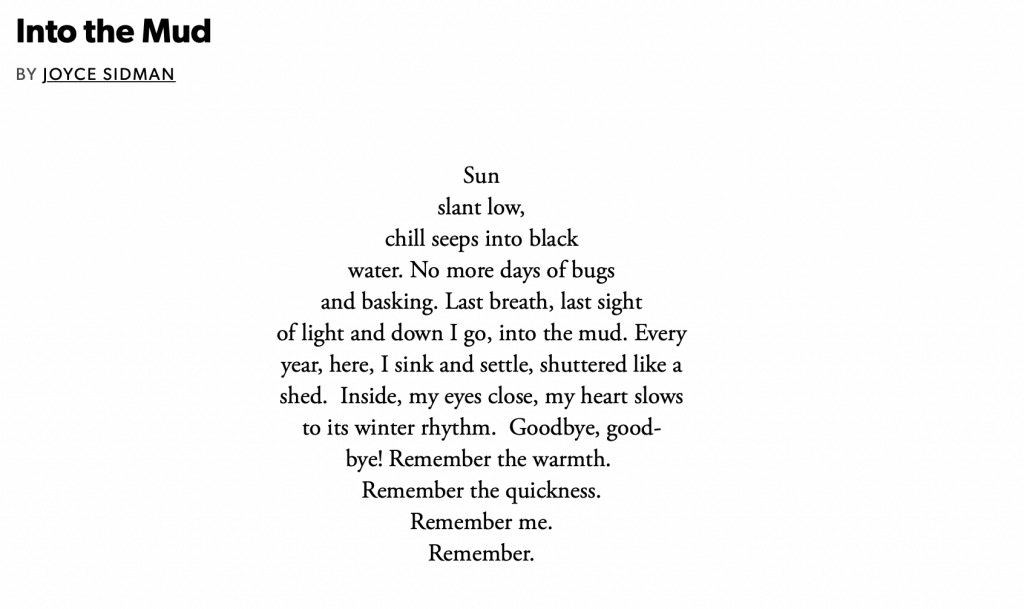
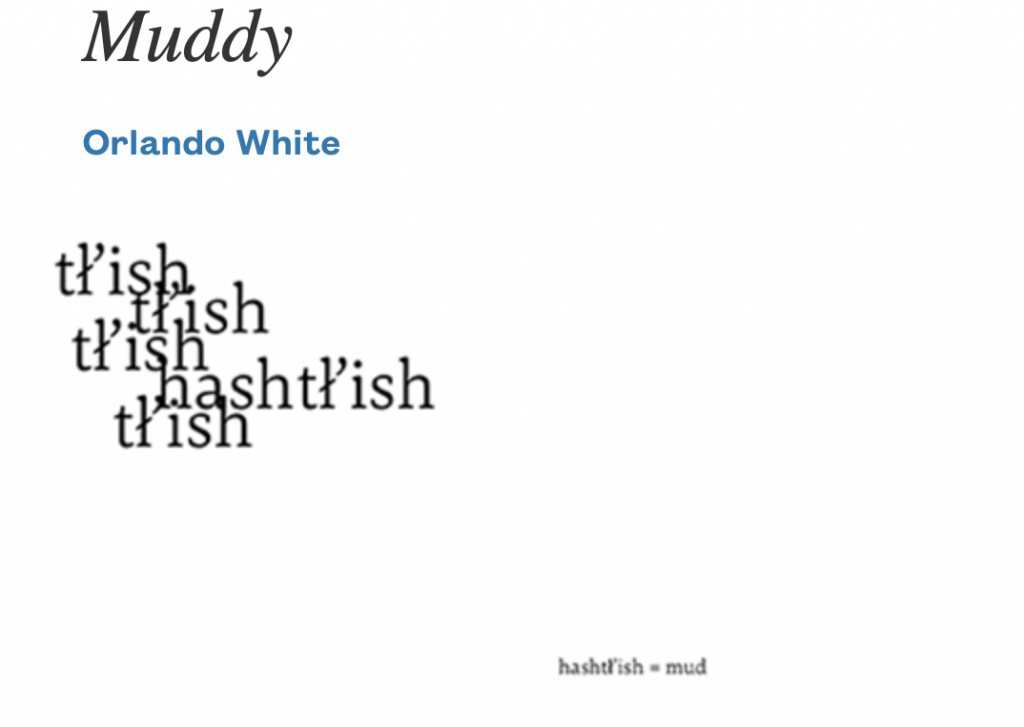
*extra = instead of ending the run at the 38th street steps, I kept going past the oak savanna and the overlook, down through the tunnel of trees, over the double bridge, before crossing over to edmund at 32nd and running back home
Felt warmer than 42 degrees with the sun and too many layers — black running tights, black shorts, long-sleeved bright yellow shirt, bright orange pull-over. The thing I noticed most today were the shadows. Heavy shadows everywhere. The shadows of trees, some stretching across the path, others leaning down, just above me. The shadow of a flying bird, a waiting lamppost.
10 Other Things I Remember from my Run
the loud knocking of a woodpecker
someone complaining to someone else on the phone. I first heard them up ahead of me near the old stone steps, then as I passed them on the trail, then about 10 minutes later from across the river road as I ran on the grass near edmund
the river, blue with less foam, not quite as high. I was planning to admire its sparkle near the south entrance to the winchell trail but I was distracted by 2 walkers just ahead of me on the trail
lower on the winchell trail the gorge below me was all river, no shore in sight
a trickle of water at the 44th st sewer, gushing at 42nd
kids playing at the school playground, yelling, laughing. one adult chanting something
the leaning trees I noticed a few weeks ago are still leaning, almost blocking the trail. A few times, I had to duck to avoid small branches
music playing (not loud enough to describe it as blasting) out of a car’s radio — some sort of rock music that I didn’t recognize
one section of the split rail fence — where? I can’t remember — is broken and needs to be repaired
most walkers I encountered were overdressed in winter coats, hats, gloves
Having finished my series of colorblind plates and feeling unmotivated to read the final sections of Ammons’ garbage, I’m project-less. Not a problem, except the lack of focus makes my mind wander everywhere. Here are just some of the things I thought about before my run this morning:
a new-ish bio
Once or twice a year, I take some time to submit poems to different literary journals. Not sure about the exact math, but I’d say I have about a 5% acceptance rate, which I don’t think is that unusual. I got used to rejection as an academic. Still stings though. Maybe that’s why I don’t submit that often. I think I also haven’t submitted a lot because I don’t care that much about being published, especially as a way to achieve fancy poetry status. But, I’d like to share my poems with a wider audience and if I only post them on my blog they don’t get read by a lot of people and I can no longer submit them to journals (most of the journals I’m encountering consider posting a poem on your personal blog as it being published already). I’d also like to apply for a grant and do an exhibit/installation of my vision test poems and I think having some of them published might help me to get that grant. So, with all that in mind, I’m currently sending poems out to different journals. As part of the submission, you write a cover letter and include a 50-150 word bio. A few days ago, I started playing around with my bio — I included a few in a post log entry on here. This morning I was still thinking about the bio. I was hoping my run would help me find another sentence for this unfinished bio:
Sara Lynne Puotinen lives in south Minneapolis near the Mississippi River Gorge where she enjoys conducting experiments in writing while moving, moving while writing, and doing both while losing her central vision. Sometimes she composes chants while running up hills, or uses her breathing patterns as she swims across a local lake to shape her lines.
The run didn’t help. In fact, I forgot to even think about my bio. Oh well.
april 21, 2022
As part of my daily, “on this day” review, I was reading through past log entries early this morning. Last year’s was especially good (I almost wrote fire, but thought better of it — okay, I did actually write it, but then deleted it). So many things to put in my ongoing projects list!
First, this:
While I ran, I wanted to try and think about fungi as hidden, always in motion/doing (a verb, not a noun), and below. Had flashes of thought about what’s beneath us, and how I’m often looking down through my peripheral, even as I look ahead with my central vision.
an experiment to try: While moving outside, give special attention to what’s beneath you, what you see, feel, hear at your feet. Make a list in your log entry.
variation: while trying don’t give attention to anything in particular. Just move. Then, in your log entry, try to remember 10 things you noticed below you.
Second:
I heard the creaking, squeaking branches and thought about old, rusty, long hidden/forgotten doors being opening — a trap door in the forest floor. I didn’t imagine past the open door or the idea that it led to the river basement (using basement here like ED in “I started Early — Took my Dog”). Still, I enjoyed thinking that I could access this door and something in my moving outside was opening a long shut door.
a question to consider: what doors await me in the gorge? where do they lead? how can I open them?
This morning, I was refreshing my memory of a Carl Sandburg poem I memorized a few years ago called “Doors.” If a door is open and you want it open, why shut it? If a door is shut and you want it shut, why open it?
An idea I have right now (25 april 2022, that is) for a poem involves playing off of these lines from Mary Oliver:
Listen, I don’t think we’re going to rise in gauze and halos. Maybe as grass, and slowly. Maybe as the long leaved, beautiful grass
And this bit from Arthur Sze in an interview with David Naiman:
I began to think I love this idea that the mycelium is below the surface. It’s like the subconscious, then when the mushroom fruits pops up above ground, maybe that’s like this spontaneous outpouring of a poem or whatever.
Maybe like mushrooms, we rise or not rise, flare brief burst from below then a return to swim in the dirt…
I (sara in 2023) would like to do something with this fragment, maybe tie it together with some of my thoughts about Ammons and garbage?
grass
Mary Oliver’s mention of grass reminded me of a poem I like by Victoria Chang, which led me to a log entry from Jan 11, 2022:
Left Open / Victoria Chang
We can’t see beyond the crest of the wooden gate. We are carriers of grass yet to be grown. We aren’t made of cells, but of fields.
I like this idea of being a carrier of grass yet to be grown. My first thought was of grass on graves — Whitman’s “uncut hair of graves” or Dickinson’s “The color of the grave is green”. Then I thought of Gwendolyn Brooks’ “To the Young Who Want to Die”:
Graves grow no green that you can use. Remember, green’s your color. You are Spring.
Of course, all this grass talk also reminded me of this part of the cento I just created as one of my colorblind plate poems:
The world mostly g one, I make it what I want: I empty my mind. I stuff it with grass. I’m green, I repeat. I grow in green, burst u p in bonfires of green, whirl and hurl my green over the rocks of this imaginary life.
This cento is made out of lines from poems I’ve gathered for this log: The world mostly gone, I make it what I want (Psalm with Near Blindness/ Julia B. Levine) I empty my mind. I stuff it with grass. I’m green, I repeat. (Becoming Moss/Ella Frears) I grow in green (Paean to Place/ Lorine Niedecker) burst up in bonfires of green (The Enkindled Spring/ D. H. Lawrence whirl and hurl my green over the rocks (Oread) this imaginary life (The Green Eye/ James Merrill)
addendum, 26 april 2023: Reading back through my entries about A. R. Ammons as I prepare to post my monthly challenge for April, I encountered these lines from Ammons’ pome “Grassy Sound.” How could I have already forgotten them?!
The wind came as grassy sound and between its grassy teeth spoke words said with grass
Happy Birthday Ted Kooser!
Discovered via twitter that today would* have been Ted Kooser’s 84th birthday. What a wonderful poet! I’ve gathered 6 of his poems for this log:
run: 3.1 miles dogwood coffee run 66 degrees 6:45 am
An early run with Scott to beat the heat. We ran north on the river road trail, then over to Brackett Park, then to Dogwood Coffee. We stopped to admire my stacked stones at the ancient boulder. Heard some bluejays. Noticed the sun sparkling on the water, and cutting through the thick, humid air. Heard the loud whooshing? thrashing? of an eliptigo as it sped past us on the bike trail. Scott said he thought it sounded like two lumberjacks were sawing down a tree, with one of those big saws that you hold on either end and push back and forth. I remember thinking Scott’s acting out of this saw was entertaining.
swim: 3 loops lake nokomis open swim 80 degrees 5:30 pm
Another great swim, even though it was very choppy on the way back from the little beach. Managed to stay on course with barely any sighting of the orange buoys. I write about this so much, but it’s always strange and amazing to be able to swim straight and keep going when I can’t really see where I am.
Half the sky was blue and clear, the other half looked like a storm was moving in. Later, after we left the lake, it poured. I wondered how much it would have to be raining for them to cancel open swim. Usually they only cancel it when there’s thunder or lightening.
Saw more silver flashes below me. Also, a dark shadow as I swam around one of the buoys. At some point, I heard a squeak. Someone else’s wetsuit? I got to punch the water a few times, when I swam straight into it. Fun! Breathed every 5, then when it got choppier, every 4, or 3 then 4 then 3 again. I don’t remember seeing any swan boats or sail boats or paddle boarders. No music or yelling, laughing kids.
Back in April, I collected poems about dirt — soil, humus, fungi, and dust. Here’s another poem to add to the dust pile. It’s by Ted Kooser. He is such a wonderful poet!
“There’s never an end to dust and dusting,” my aunt would say as her rag, like a thunderhead, scudded across the yellow oak of her little house. There she lived seventy years with a ball of compulsion closed in her fist, and an elbow that creaked and popped like a branch in a storm. Now dust is her hands and dust her heart. There’s never an end to it.
I love his line breaks and his beautiful first sentences. I should check out his collected works and study him more.
3.5 miles 2 trails + extra 53 degrees wind: 13 mph with 23 mph gusts
Windy. Sometimes sunny, sometimes not. Ran south up above, north below. Just after turning down onto the Winchell Trail, spotted a runner heading even deeper into the gorge. Wow, I’ve hiked that bit, right down by the water, with Scott. There’s not much of a trail and it’s steep and rocky. As I ran above, I looked for them again. Nothing. Had I imagined it? I don’t think so.
Ran over some mud; it rained last night. Past the 38th street steps, nearing the oak savanna, I noticed even more mud and spots where it looked like the trail was eroding. I wondered, how soon before this bit of the trail is impassable?
Almost finished, running on Edmund above the trail, I heard a man on a bike call out, “good job guys!” At first I thought he was a coach, calling out to his athletes, but then I realized he was talking to some young kids (his kids?) biking with him. I also heard him say something like, “you need to push down harder on the pedals to go fast!”
As I passed by the short hill near 42nd, I heard some black capped chickadees singing to each other. Usually it’s a fee bee song, with the first bird singing 2 ascending descending notes of equal length, and the second bird singing 2 descending notes back*. Today I heard one bird follow the formula of “fee bee.” The other responded with one flat note. Was this second bird a different type of bird? Do they ever respond with one note? Was it a juvenile just learning how to sing? Not sure, but it was strange and delightful to hear this new song.
*sometime in April of 2024, I finally realized that the first set of fee bees were not ascending but descending from a higher note than the second set. Now, whenever I’m reading through an old entry that describes them incorrectly, I’m fixing it.
before the run
One final before/during/after for the month. Yesterday I took a break from running, but not from thinking about entanglement and mycelium and hyphae and dirt. Here are some of the things I thought about:
1 — fungi at the mississippi gorge
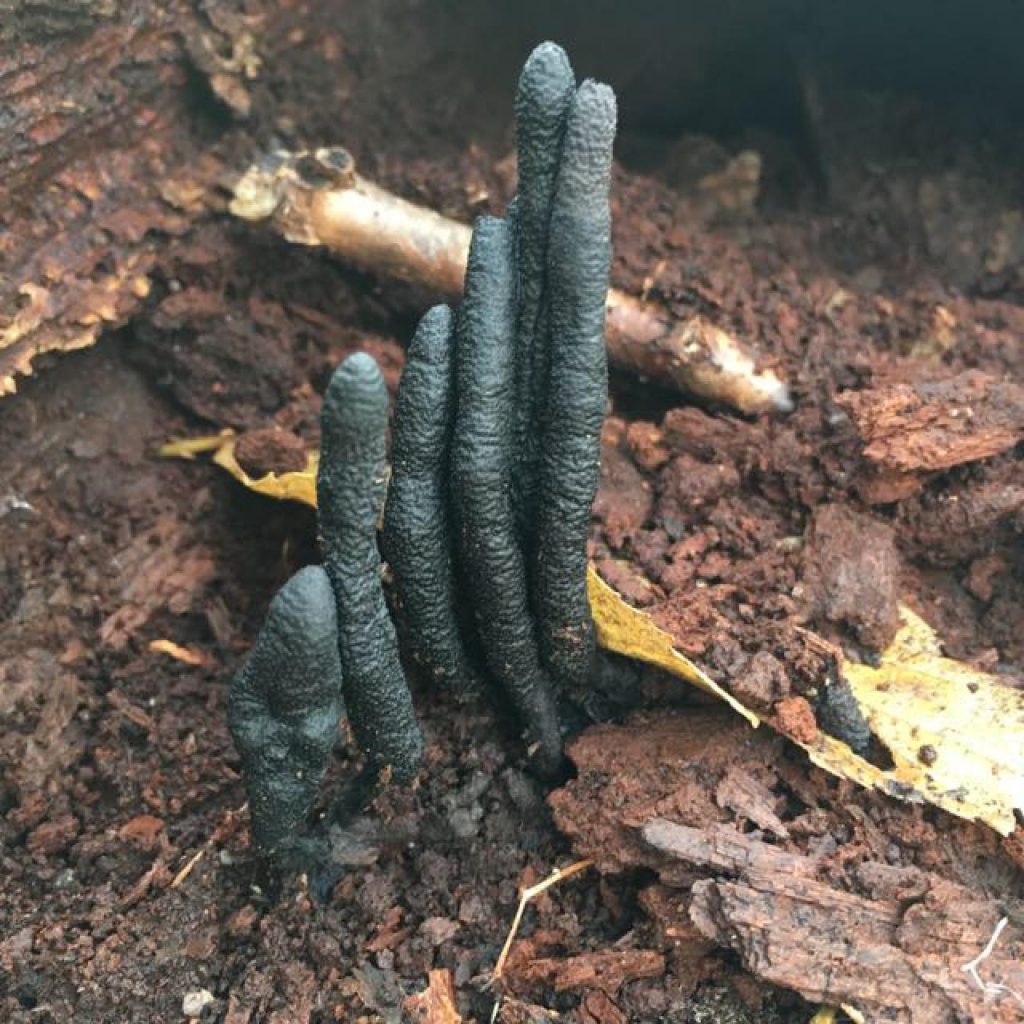
Earlier in the month I wrote about the mushroom caves in St. Paul, but I was curious what other fungi is around here so I googled it and found an amazing picture of “Dead Man’s Fingers,” or Xylaria polymorpha (“Xylaria” means it grows on wood, “poly-” means “many,” and “morpha” means “shapes”).
Dead man’s fingers is found in deciduous forests throughout North America and Europe where it grows at the base of rotting tree stumps. The FMR conservation team found this spooky looking fungus deep in the oak forest ravines at Pine Bend Bluffs Scientific and Natural Area in Inver Grove Heights. Maple trees seem to be their preferred host in our area, but they also favor oak, locust, elm and apple.
While most fungi either consume the cellulose of wood or the lignins, dead man’s fingers is somewhat unusual in that it digests the glucans or “glues” that bind the cells together. As they feed, they literally help break down dead or dying trees in the forest.
9/13/2012: Harriet Island/Lilydale Regional Park Hike (St. Paul)
Join the hiking group for a hike along the south bank of the Mississippi River west from St. Paul’s historic Harriet Island through the former Lilydale town site. The hike passes a three-kilometer reach of the Mississippi River gorge that is known locally as “Mushroom Valley” because of the abundance of man-made mushroom caves carved into the sandstone bluffs. Mushroom growing lasted a century, from its introduction by Parisian immigrants in the 1880’s until the last cave ceased production in the 1980’s, during the creation of the Lilydale Regional Park. Some of the approximately 50 caves originated as sand mines, but other common uses were the aging of cheese (Land O’ Lakes,) the lagering of beer (Yoerg’s Brewery,) and storage (Villaume Box & Lumber.) The Lilydale Regional Park area was settled early in Minnesota’s history, but because of repeated flooding, the original town was moved up on top of the bluff. In the Lilydale Regional Park, a mesic prairie has been recreated along the Mississippi River floodplain. Shale beds in the Lilydale Regional Park also are a good place to find fossils.
Directions: From I-94 on the east side of downtown St. Paul, take the Highway 52/Lafayette freeway exit south and cross the Mississippi River on the Lafayette bridge to the Plato Boulevard exit. Go west on Plato Boulevard about 2/3rds mile to Wabasha Street and turn north (right). Proceed a short distance to Water Street and turn east (right) and then turn left onto Levee Road. Proceed on Levee Road under the Wabasha Street bridge. The parking lot is on the left.
This is another place I need to hike around this summer! Here’s one more link from Greg Brick, the Subterranean Twin Cities guy, with information: Lilydale Caves / Mushroom Valley
2 — mushrooms are strong!
They can burst through asphalt!
The rapid growth of mushrooms is well known, how they can come up overnight, but how they exert such force is not so obvious. The hollow stalk of the mushroom is made up of vertically arranged hyphae that grow at their tips, much like those balloon used to make balloon animals. The wall of a hypha is composed of fibres of chitin that are arranged helically and limits the ability of the hypha to expand in width. All the pressure of growth is through elongation and growth at the tip (Isaac 1999). It is this concerted pressure applied by each expanding hypha that can create the pressure to lift the pavement.
In Entangled Life, Merlin Sheldrake discusses polyphony (Anna Tsing does too). He mention this recording:
and discusses how each woman sings a different melody, each voice tells a different musical story. Many melodies intertwine without ceasing to be many. Voices flow around other voices, twisting into and beside one another. There is no central planning, nevertheless a form emerges….attention becomes less focused, more distributed — mycelium is polyphony in bodily form, when streams of embodiment come together and commingle.
I wrote this in my notes:
I’m thinking about this in relation to peripheral vision and movement and distribution, less focused and singular, involving a bigger picture, encompassing many voices, images, organisms, happenings (?) — the idea of learning how to hold these different voices together into a form — what would it look like to try and grasp/notice/attend to a world this way? How does that change what we notice, and how we notice it? How we experience delight? wonder? awe? how we understand the relationships between a self and other selves/communities? Less interested in the details, the focus on one person, more interested in the form we create together — the bigger picture…
I imagine this as part of my larger project on shifting away from central vision (which barely works for me anymore) and toward peripheral vision. How does peripheral vision enable me to see things in a new, potentially highly beneficial, way?
4 — more whimsy, please!
I found this poem that other day that delighted me, and reminded me that I’d like to write more stuff that taps into my strange and wonderful whimsy. Often, the things I write are too serious (I think). I’d like to write something about fungi and mushrooms that tapped into my delight of how strange and alien and gross they are.)
The small blue Nissan ahead of Me at the stoplight has a plastic License plate holder that says I’D RATHER BE AT A RICK SPRINGFIELD CONCERT, and buddy, wouldn’t we All rather be catching a tan In the summertime lawn seats at Some amphitheater off the
Highway, wearing sunglasses to Protect our eyes form the sun and The gleam of Rick’s professional Teeth, watching his wavy dyed brown
Septuagenarian goatee Frame his mouth as it sings “Jessie’s Girl” with his mind on autopilot, Wondering what he’ll have for dinner
Later as he croons Where can I Find a woman like that? for the 100,000th time as we Dream of this life we’re in for the
100,000th time instead Of cubicles and gray, teh beige Hallways we walk for decades before Demise? We dream, relaxed in the
Warm air we ignore for another Decade as some gulls try to steal Fries from a couple who are busy Groping their fifty something bodies,
Their bodies here still, soft & alive, Sagging in the lawn but fifteen Again and lost in their friend’s basement Again making out on the bean bag
In the corner, frantic in hazy Afterschool limbo before The friend’s parents get home from work. They know over what’s left of a
Margarita in a can. It Trickles green through the grass as Rick’s Band cuts straight to the opening Riff for “Love Somebody.” The drummer
Pounds the toms, the thuds summoning 1984 as the guitar Chimes and harmonies swoop in and Swallow the heating air. You better
Love somebody / it’s late, the frogs Evaporating in the wetlands By the offramp.
during the run
I thought about melodies and voices and sounds I was hearing simultaneously, sometimes difficult to distinguish, blending into each other. At the beginning of the run: birds, a car, my breathing, my feet striking the ground, the wind through the trees. I’m not sure if that was all of the sounds. Now I wish I had stopped and recorded some of my thoughts.
I also thought about dirt and what, under my feet and deeper in the ground, I might be disturbing/disrupting/destroying as I ran.
I probably thought about more, but I’ve forgotten it now. It scattered in the wind, I guess.
after the run
Now, after the run and after writing this log up to this point, I’m thinking about lichen and Forrest Gander and telling everyone in the house about how lichen can be killed, but if it has what it needs, it might never die (which I heard him say on a podcast I listened to this morning while doing the dishes). I wouldn’t want to live forever, but I like imagining a world in which inevitable death didn’t overshadow almost everything else. I’m not consumed by it, but it’s in all of our stories, our understandings, our philosophies, how we frame and experience joy and delight. How would we orient ourselves without that endpoint, without that guaranteed conclusion?
I’m also thinking about something I read about the biggest fungi in the world — at least the biggest that has been found and documented by scientists, the “Oregon Humongous Fungus.” Everything else I’ve heard about this fungus, and the one in Crystal Falls, MI, involves awe and fascination and wonder. In contrast, this report describes the fungus “as the baddest fungus on the block.” It’s killing tons of trees in the forest and, even after diligently trying for 40 years, they can’t get rid of it. The perspective here seems to be from timber companies who are losing all their trees/assets/profit. Interesting…
Still wearing running tights and winter vest, but it’s getting warmer and sunnier and spring feels almost here. I warmed up quickly and had a good run.
10 Things I Noticed
a new neighbor has repositioned a drain pipe so that water from their basement dumps out on the sidewalk I take for almost every run, soaking it. A few weeks ago, when it was colder, this water quickly turned to ice, now it’s only an irritating puddle
running west over the lake street bridge, the river was broad and blue and rippling
running east, the river was brown and flat
no smells from Black Coffee, at the top of the marshall hill
the branches of the trees reaching up from below the trail on the east side looked silver and dead or dormant or nowhere close to sprouting leaves
wind rustling through some dead leaves, but no sound of water above shadow falls
don’t remember hearing any birds or seeing any squirrels
they are doing some sewer work near 7 oaks — I heard the beep beep beep of a truck backing up, then saw a huge concrete cylinder waiting to be buried below the street — how long will all of this take?
encountered at least 3 pairs of walkers — I think I heard some of their conversations, but I can’t remember any words now
my zipper pull was banging against my shirt at the beginning of my run, making a dull thud that I couldn’t not hear. Did it stop, or was I able to tune it out?
Things I Didn’t Notice, either because I forgot or they weren’t there: geese, black-capped chickadees, crows, dogs, anything green, other runners, purple flowers, roller skiers, sewer smells, planes, the sky, clouds, my own breathing
Writing this list of things I didn’t notice, I suddenly remember something I almost forgot: bird shadows! At least twice, I noticed the shadows of incredibly fast moving birds, passing below me. Very cool and very fast! I wondered, were these birds being helped by the wind, or were they just that fast?
Yesterday I checked out Merlin Sheldrake’s Entangled Life from the library. I’ve read the introduction so far and I’m really enjoying it. A few things to remember:
Our bodies (we) are ecosystems, composed of — and decomposed by — an ecology of microbes.
Biology — the study of living organisms — has been transformed into ecology — the study of relationships between living organisms.
I came across many complicated relationships between field biologists and the organisms they studied. I joked with the bat scientists that in staying up all night and sleeping all day they were learning bat habits. They asked how the fungi were imprinting themselves on me. I’m still not sure. But I continue to wonder how, in our total dependence on fungi — as regenerators, recyclers, and networkers that stitch worlds together — we might dance to their tune more often than we realize.
Scientists are — and have always been — emotional, creative, intuitive, whole human beings, asking questions about a world that was never made to be catalogued and systematized.
4.25 miles top of franklin hill and back 32 degrees
Full winter running clothes: black running tights, green base layer shirt, pink hooded jacket, black running vest, “black” baseball cap (well, it was black, but now has faded to a brown-ish gray. I imagine, although can’t really see with my vision, that it looks gross and I should be embarrassed to wear it — mostly, I don’t care, but I am looking for a new hat), pink headband, black gloves, dark gray buff. Brr. I am over winter-in-April. Normally, I’m not too bothered by the weather, but this never-ending cold is wearing me out. I want to sit on the deck in my new chair without a coat on! I want to run in shorts!
I was cold for the first 15 minutes, but once I warmed up, it was fine. I felt strong and relaxed and grateful to be outside breathing in fresh air, being with the birds. They don’t seem to be bothered by the cold. Thought about rot and noticed all the trees down just below me. How long does it take fungi to move in and begin breaking down the wood to digest the needed nutrients? Looked it up and found an article, How Fungi Make Nutrients Available to the World, which is helpful for understanding how fungi break down trees, but not how long it takes.
Running under the lake street bridge, I saw a few Minneapolis Parks vehicles, heard chainsaws down by the river, then noticed one of the trucks was filled with twigs and branches. I thought about the fungi and all the food they weren’t getting with the removal of the dead/dying limbs. I also thought about important it is to remove those branches so they don’t fall on my head while I’m running under them.
On the stretch between the trestle and Franklin, I thought about what it might mean to shift my values away from progress and toward the fungi, including thinking about motion/moving as not always producing something “useful” for capitalism, or aimed at progress (like running to be faster or better). How do we understand and value movement — making, doing, moving — outside of the goal of improving or mastery or being used by others?
I also thought about an article someone posted on twitter this morning about tapping into spinach’s ability to sense a compound that is often found in landmines by attaching censors to them that, when triggered, send an email back to a lab. The article was terribly titled, Scientists have taught spinach to send emails, and as I read it I thought about how often these pop science articles view plants (or fungi or “nature”) only as resources/assets for maintaining or improving the lives of humans. Fungi is only valuable because of what it does for us, how it might save us from the terrible mess we’ve made of the planet, not because it’s just amazing. How dreary to think of spinach having to send emails! And, this is not teaching spinach to send emails but hacking into their communication networks to receive the data they’re sending elsewhere.
I’ve written a lot about mushrooms and fungi, here’s a poem about lichen. Lichen is another big deal for poets.
Back then, what did I know? The names of subway lines, busses. How long it took to walk 20 blocks.
Uptown and downtown. Not north, not south, not you.
When I saw you, later, seaweed reefed in the air, you were grey-green, incomprehensible, old. What you clung to, hung from: old. Trees looking half-dead, stones.
Marriage of fungi and algae, chemists of air, changers of nitrogen-unusable into nitrogen-usable.
Like those nameless ones who kept painting, shaping, engraving, unseen, unread, unremembered. Not caring if they were no good, if they were past it.
Rock wools, water fans, earth scale, mouse ears, dust, ash-of-the-woods. Transformers unvalued, uncounted. Cell by cell, word by word, making a world they could live in.
6.1 miles hidden falls scenic overlook loop* 32 degrees / feels like 25 degrees wind: 12 mph
*a new route! river road, south/up to wabun/over ford bridge (south side)/mississippi boulevard, north/hidden falls scenic overlook/mississippi boulevard, south/ford bridge (north side)/river road, north
Ran a new route today. It’s nice to check out a different part of the mississippi river. I’ve walked on this trail at least once, and biked it several times, but never done this exact loop. Up above, it’s steep and without many fences or railings. Very cool. Noticed a few squirrels, a darting chipmunk. Heard: a robin, crows, some cardinals, the teacher’s whistle at the Minnehaha Academy playground, trickling water. Ran straight into the wind crossing back over the ford bridge.
Before my run, I began gathering notes and quotes and poems about entanglement to put under the glass on my desk. Hopefully it will help me write this poem by the end of the week. While I ran, I wanted to try and think about fungi as hidden, always in motion/doing (a verb, not a noun), and below. Had flashes of thought about what’s beneath us, and how I’m often looking down through my peripheral, even as I look ahead with my central vision. At some point, I decided I didn’t want to try and think about entanglement, but to stop thinking and see what happened. No brilliant thoughts, but now that I’m done, I feel more relaxed and happy and motivated to keep working.
I almost forgot, but then remembered when I was reviewing my notes: several times, I heard the creaking, squeaking branches and thought about old, rusty, long hidden/forgotten doors being opening — a trap door in the forest floor. I didn’t imagine past the open door or the idea that it led to the river basement (using basement here like ED in “I started Early — Took my Dog”). Still, I enjoyed thinking that I could access this door and something in my moving outside was opening a long shut door.
The idea I have right now for a poem involves playing off of these lines from Mary Oliver:
Listen, I don’t think we’re going to rise in gauze and halos. Maybe as grass, and slowly. Maybe as the long leaved, beautiful grass
And this bit from Arthur Sze in an interview with David Naiman:
I began to think I love this idea that the mycelium is below the surface. It’s like the subconscious, then when the mushroom fruits pops up above ground, maybe that’s like this spontaneous outpouring of a poem or whatever.
Something like this?
Maybe like mushrooms, we rise or not rise, flare brief burst from below then a return to swim in the dirt…
I want to think more about what fungi do and how mushrooms grow, and how to think about that in relation to human subjectivity/agency and a self that is connected/joined but not subsumed by this connection.
The other thing I’d like to think about more is this line from Tsing:
In this time of diminished expectations, I look for disturbance-based ecologies in which many species live together without either harmony or conquest (5).
These disturbance-based ecologies involves ecosystems that develop in the wake of a disturbance, like matsutake mushrooms that grow on pine in forests that have been clearcut. They aren’t part of what Tsing calls the cycle of promise and ruin, or deplete then move on, but something else, the something that comes in after a place has been abandoned by Progress.
Mushrooms/ Sylvia Plath
Overnight, very Whitely, discreetly, Very quietly
Our toes, our noses Take hold on the loam, Acquire the air.
Nobody sees us, Stops us, betrays us; The small grains make room.
Soft fists insist on Heaving the needles, The leafy bedding,
Even the paving. Our hammers, our rams, Earless and eyeless,
Perfectly voiceless, Widen the crannies, Shoulder through holes. We
Diet on water, On crumbs of shadow, Bland-mannered, asking
Little or nothing. So many of us! So many of us!
We are shelves, we are Tables, we are meek, We are edible,
Nudgers and shovers In spite of ourselves. Our kind multiplies:
We shall by morning Inherit the earth. Our foot’s in the door.
3 miles marshall loop in reverse 66! degrees wind: 20 mph
Ran with Scott after the rain stopped on a (finally) warm spring morning. It was so windy I had to hold my hat then take it off while running on the lake street bridge. It was warm and sunny and wonderful. We talked about Debussy (Scott) and mycelium (me) and tried to avoid loud-talking-only-slighter-faster-than-us runners. Didn’t hear any rowers or roller skiers or radios blasting from bikes. Did hear some geese honking and some crows cawing and wind howling.
Spent the morning reviewing my notes and re-reading descriptions of fungi and mushrooms and mycelium. Here are a few notes I took:
a different sort of We, not a me or an I, but a we, an us
a different way of looking/sensing/becoming aware: not seeing straight on, but feeling, looking across and to the side, down, beneath and below
stop looking up to the heavens, start feeling/sensing what’s below
a hope that is not predicated on evidence, when evidence = seeing and Knowing and fully understanding (seeing things as parts or discrete categories or individual things)
entangled is not separate or pure but messy and enmeshed
this is why we are all here — from my haibun and what I heard coming out of the little old lady’s phone
this why we all here
why = curiosity, wonder
The why is not an explanation — this is why/this is THE reason — but an invitation to imagine differently, expansively, wildly.
we all = ecosystems, organisms, networks, asemblages
Organisms are ecosystems. I find myself surrounded by patchiness, that is, a mosaic of open-ended assemblages of entangled ways of life, with each further opening into a mosaic of temporal rhythms and spatial arcs (Tsing, 4) .
here = a place, located in history, a specific place, not transferable or easily translatable, can’t be scaled up or turned into assets
3.5 miles 2 trails + tunnel of trees 43 degrees light rain / wind: 15 mph
Raining today. When it stopped, I headed out to the gorge. Within a few minutes: more rain. I could barely feel it. I was more bothered by the wind. Even that didn’t bother me that much. Everything was wet and dripping. I looked at the river, but I can’t remember what color it was or how the surface looked as the rain fell. I probably couldn’t have seen that anyway because I was too far away.
Heard lots of water rushing through the sewers in the street, then water falling from the sewer pipes in the ravines at 36th, 44th, and 42nd. Just after I turned around at the 44th street parking lot, I stopped at a bench overlooking the river. It was at a slight angle above the Winchell Trail and faced St. Paul, on the other side. Next month the view from this bench will only be green leaves, but today I could see the river (even if I don’t remember what it looked like), and the trail below, and the other side.
Didn’t see Dave the Daily Walker this morning, but I did say “good morning” to one walker, and then laughed in recognition when another walker said, “What is it? Hot or cold?”
Thinking about revising a haibun I wrote a few years ago and submitting it. Could I shape it into something that speaks to ideas of entanglement and nets and mutuality?
On the Dirt Path Near Folwell Avenue
Even if you try to time it just right, when you climb the steep, short hill up to the dirt packed path you cannot avoid the swarming swath of sex-crazed gnats or the little old lady slowly shuffling by, swinging her hiking poles, a voice TED-talking out of her phone’s speaker reminding you that this is why we are all here. Do not bother the bench resting on the rim of the gorge to ask what this is. If looking through the thickly thatched oak leaves to gather glimpses of the silvery river sparkling in the morning sun doesn’t already answer everything, the bench certainly won’t be able to help.
Bugs and old ladies wake early in July but so does the river.
I think I especially need to rework the last sentence and the idea of what this is. Maybe also the haiku at the end? Looking through my pages documents, I found some notes I took while trying to figure out how to write about this encounter with the little old lady. The second paragraph reminds me of a great sentence I read in an article describing entanglement. Every organism is an ecosystem.
which reminds us why we are all here…
We are here. Me and joints and muscles and bones and ligaments and lungs. Us. me and blood and cells and electrolytes and sweat and saliva. we. me and hands and feet, a heart, two diseased eyes, a knee that displaces. we. me worn out running shoes, threadbare worries. we. me and those oak trees, that wrought iron fence, this rutted, dirt path, that short, steep hill. we. me river. that we are here with the old woman who slowly shuffles in her straw hat with her hiking poles and a voice that calls out from her radio speakers, “which reminds us why we are all here.” here. above the river and the gorge and the floodplain forest, below the bike path and the road, the cars and the boulevard. here. in this heat and humidity and haze. here. on a monday morning. here.
We are all here.
Me bones joints muscles ligaments blood, sweat, saliva inhaling exhaling lungs lungs and heart and hands diseased eyes, easily displaced kneecaps feet, worn out running shoes, threadbare worries Us. All. Here. oak trees wrought iron fence rutted, rooted, packed dirt path short, steep hill an old woman slowly shuffling in a straw hat with hiking poles Us. All. Here. The river gorge
The mention of the phone TED-talking is a central aspect of my poem and its critique (of what? something about sound bites and the monstrous mixing of self-help and spirituality and capitalism and the idea of blasting these words on an early morning walk outside by the gorge) seems central to what I’m trying to say in this poem and how it fits with entanglement, especially as Anna Tsing describes it. Decided to do a search on the Poetry Foundation site for “ted talk.” Found this excellent poem:
money will build anywhere there’s a view or a coastline all those tangled shrubs and thorny bushes your ancestors cut through centuries ago to claim in the name of a queen and a king with foul smelling hair these days even the ecotone between the living and the dying has to be privatized & sold at auction all the steps between next year and the first human year ever recorded melted so flagrantly it became stylish to be poetic for the end of the world everyone’s collecting coins on every interface a thousand identical posts about 2019 being the year of paper straws and reusable cups indigo dyeing from Kyoto is the new 36 hours in Tbilisi all the people with phones don’t think twice about buying onboard wifi on their way to the latest Caribbean island still recovering from last year’s hurricanes would it be so wrong to wish everyone with global entry be grounded until extinction is off the table I don’t think I can date another digital nomad or a normie with a dog who doesn’t know what it’s like to be too poor to buy their way out of disaster why do the rich treat blame like it’s obscenity or a fossil is it because they hate seeing blood think they are noble for taking quick little showers and using silicone at the farmer’s market I have never seen someone forgive themselves as elaborately as the wealthy everyone who paid for their wellness is infecting the rest of us yes I am sick sick sick and want to sterilize all the ruinous overseers though it is not like me to dream so much I have managed to hoard something that cannot be replicated it will die when I die let no one say we didn’t try to let a different kind of life bloom and let no one say we didn’t touch what was there from the beginning
Okay, I can’t resist. Searching through other results for TED talk, I found this excellent poem by the wonderful Ted Kooser. Most of the search results where poems by poets named Ted; I guess there aren’t a lot of poems about TED talks, or at least ones that made it into Poetry magazine. That’s a Ted talk I’d attend!
In musty light, in the thin brown air of damp carpet, doll heads and rust, beneath long rows of sharp footfalls like nails in a lid, an old man stands trying on glasses, lifting each pair from the box like a glittering fish and holding it up to the light of a dirty bulb. Near him, a heap of enameled pans as white as skulls looms in the catacomb shadows, and old toilets with dry red throats cough up bouquets of curtain rods.
You’ve seen him somewhere before. He’s wearing the green leisure suit you threw out with the garbage, and the Christmas tie you hated, and the ventilated wingtip shoes you found in your father’s closet and wore as a joke. And the glasses which finally fit him, through which he looks to see you looking back— two mirrors which flash and glance— are those through which one day you too will look down over the years, when you have grown old and thin and no longer particular, and the things you once thought you were rid of forever have taken you back in their arms.
Oh, I love this poem. I’ve posted several others poems by Kooser. I think he recently died, which is a great loss. I read a thread on twitter last year — or the year before? — discussing what a generous mentor and person he was to so many.
Sun! Warmth! Spring! Felt much warmer than 45 degrees, at least once I warmed up. I remembering now, as I write this, that I was chilly for the first 10 minutes.
15 Things I Noticed:
there were 3 stones stacked on top of each other on the big boulder heading down into the tunnel of trees
water was dripping or streaming out of the limestone on the st. paul side — I didn’t see it, but heard it
my feet were shshshshshshing as I ran over grit on the edge of the path on the franklin bridge
one laminated notecard was still attached to the railing on the lake street bridge. It was the one I stopped to read last week: “your story doesn’t have to end.” What happened to the others? Why was this the only kept?
at least one runner was wearing shorts
the wind was in my face as I headed north on the west side, at my back heading south on the east side
there were no rowers on the river and no roller skiers on the path
the edge of the paved path was white. I decided it was stained from salt, not covered in lingering ice or snow — too warm
the walking path under the lake street bridge on the east side is still closed off — I think Scott said the path had crumbled there. Can they (will they) fix it?
there was a tree trunk down on the winchell trail that looked like a sitting person, at least to me
the shadow of a bird crossed over me. I looked up but couldn’t see it in the sky
lots of honking geese, sometimes the sound of their honks became indistinguishable from a yelling kid or a moving car
a peloton of 6 or 7 bikes passed me. Their spinning wheels were so loud! Spinning, whirring, rumbling. My sudden thought: how loud the 200+ bikes I see at the bike races I watch must be!
a deep voice off the side, carrying clearly across the road, cutting through everything, almost rattling my skull
the top of a split rail fence at a steep part of the path is missing — how did that happen?
I was planning to do a list of 10, but I kept remembering more things that I noticed. I like this exercise as a way to remember things from my run.
before the run
For every other “before the run” I’ve done, I write it in a saved post before I go out for my run. Today, I was busy reading Anna Tsing’s The Mushroom at the End of the World, and didn’t have time. It takes some time to read and post all of the stuff I’m thinking about before the run. Maybe too much time? Now, after the run, I don’t have much time either, so I’ll keep this brief. Just listing a few things that I read/did before the run:
Finished re-memorizing Katie Farris’s “What Would Root”
What used to be a rope descending my vertebrae to the basement of my spine grows thin.
In solidarity with my chemotherapy, our cat leaves her whiskers on the hardwood floor, and I gather them, each pure white parenthesis and plant them in the throat of the earth.
In quarantine, I learned to trim your barbarian hair. Now it stands always on end: a salute to my superior barbary skills. In the event of my death, promise you will find my heavy braid and bury it–
I will need a rope to let me down into the earth. I’ve hidden others strategically around the globe, a net to catch my body in the wearing.
Thought about nets and this passage from The Mushroom at the End of the World:
Mushrooms are the fruiting bodies of fungi. Fungi are diverse and often flexible, and they live in many places, ranging from ocean currents to toenails. But many fungi live in the soil, where their thread-like filaments, called hyphae, spread into fans and tangle into cords through the dirt. If you could make the soil liquid and transparent and walk into the ground, you would find yourself surrounded by nets of fungal hyphae (137).
Thought about imagining the soil was liquid and transparent and then entering it, surrounded by nets of fungal hyphae. What if I could swim in the soil? Swim through these nets of fungal hyphae?
Wondered about networks and the comparisons Tsing describes between fungi networks and the internet (the wood wide web) and the infrastructure of highway systems. What are some key differences between how the internet and highways work?
during the run
Thought about nets and what they do, what they’re for, as I ran. Nets can trap and confine things, like fish, but they can also hold things — carry, hold together, be a container for, not sealed or airtight but open with many holes, ways to breathe. I thought about these nets as loosely holding organisms/selves together without sealing them into a self-contained, separate Subject.
after the run
There’s a lot to ruminate over with entanglement and fungi and mutuality as a starting point instead of competition. I need to sit with all some more, and maybe do some writing around/with a few lines from the book. I’m hoping to turn my thoughts into a poem for an call for work on entanglement.
In my notes in Plague Notebook, Vol 11 I made a list of words related to nets:
Sun. Slightly warmer. Less wind. Hooray! Still wore my running tights, winter vest, and gloves, but felt like spring is almost here. Ran around the falls. They were gushing, but the creek was barely moving. Ran past the “big feet” statue. I can’t remember his name — Gunther something, I think — but I do remember that he was a poet, a hymn writer, and a politician from Sweden. Ran the Winchell Trail too. At the start of it, I slipped, but didn’t fall, in the mud. Said a lot of “excuse mes” as I encountered people from behind. Not irritated at all. A good run on a beautiful morning.
before the run
Thinking about roots and how things become rooted in the ground today. This topic is inspired by a favorite poem that I memorized in May of 2020: What Would Root/ Katie Farris. Here’s what I wrote in an entry from may 20, 2020:
I like the idea of this long, wild story, being rooted at the rock from the beginning of the poem. And I love this idea of rooting, being rooted and how the story unfolds around it. I want to spend some more time thinking about what it means to root, be rooted, take root. I’d also like to write a poem like this–with a story at the gorge–about sinking.
I used to have this poem memorized, and I think I can again, with a little practice. For now, I’m going to record myself reading it, then listen to that recording a few times while I run today.
during the run
Started by listening to the recording of myself reading the poem. It was very cool — dreamy, almost disembodied — to listen the words as I ran through the neighborhood and toward the river. Then, when the recording was done, I put my headphones away and thought about roots as I ran south above the gorge. I remember imagining my skin as more porous and open to the world and grass growing through my pores (instead of Farris’ roots).
Halfway through the run, in Wabun park, I stopped to record my thoughts. Here’s a summary:
Thought about being rooted in a place, then being on the inside or the outside and how being rooted means being both in and out, or neither, at the same time. Just there, part of what’s happening.
Then, I wondered, Does rooted always mean we’re tethered or stuck in one place, immobile? What would it mean to be rooted in a place while you were moving?
Then: how are the roots formed? Instead of one solid, thick, sturdy root that’s difficult to cut down, what if we were a network of roots spread throughout the ground, connected and tangled with other? Roots can be networks — shallow and easy to pull out, like weeds, but multiplying and growing when you do that (rhizomes and nodes).
Getting at the root, radical feminism and the root of oppression, the origin/cause of the problem I often think about the origins of my running story — there is no one root or cause or start, but a series (a network) of reasons.
Chanted: root root root root/root root root root/ roo ting roo ting/root root root root/root root root root/roo ted root less I like these simple repetitions. I’d like to try chanting these for several minutes, then seeing what other words/ideas/chants might appear.
Thinking about being inside or outside of yourself and being rooted and what of self/Self that suggests, I’m reminded of a poem I put on my reading list the other day:
Full of yourself— a friend’s touch is sharp as a thorn. A buzzing fly drives you mad.
Forget yourself and what friend can hurt you? You mingle with wild elephants and enjoy the ride.
Caged in self, you drown in anguish. Storm clouds swallow the sun. Your lover flees the scene.
Outside yourself, the night is moonlit. Lovers drink Love’s wine. It flows through you.
Self-conscious, you’re dry as autumn leaves. You bite like frost.
Melt yourself, and winter’s frozen meadows will become spring’s fragrant fields.
(How) can we travel outside of ourselves? What does this untether/uproot us from? I posted this quotation from Jamie Quatro in a log entry from April 19, 2018 about running as prayer:
a state of prayerlike consciousness. Past the feel-good vibes, past the delusions, my attention moves outward: I’m intensely aware of the cadence of a bird’s song, cherry blossoms weighted-down after a rain. Things light up and I experience an interior stillness that somehow syncs me more profoundly with the exterior world. It’s a paradox: only when I’m fully present in my body do I begin to experience the absence of myself.
Does fully present in a body = rooted? I’m also thinking about entanglement and Ross Gay’s critique of buoyancy and floating free (see april 12, 2022). Can we be a self, rooted in a body and a place, and still be other than ourSelf? How do I fit Rumi’s idea of forgetting the self with entanglement?
Still winter. Still wearing running tights, vest, a thick orange sweatshirt. I wish it were warmer but, with the sun, I didn’t mind the cold. Soon, it will be too warm — at least, for me. The most memorable thing that happened on my run, beside what I write about below, in my “during the run” section, was seeing a big bald eagle soaring in the sky. I was running down the hill towards the lake street steps on the st. paul side, and there it was. I stopped for a minute to marvel, both at it, and my ability to still see and identify a bird flying above me. After I continued running, I thought about the bird flu that’s happening in Minnesota — a few days ago, I read a tweet about an owl family at Lake Nokomis that is suspected to have died from it. So sad to think about all of these beautiful birds dying. How big of an impact will this have on birds here? Looked it up and found an article. The picture of the owl, and the words about the young owls in the article — “extreme neurological distress”, is haunting.
before the run
Just as I was about to write that today’s “before the run” would offer a brief break from dirt, I realized that what Ocean Vuong is talking about so beautifully here in the video below, is what their mother planted for them: the ability to look patiently at the world in wonder and awe and with joy.
transcript:
“Brief But Spectacular Take on Reclaiming Language for Joy” on PBS News Hour
When my mother passed in 2019, my whole life kind of contracted into 2 days. And what I mean by that is that when a loved one dies, you experience your life in just 2 days: today, when they are no longer here, and yesterday, the immense, vast yesterday, when they were here. And so my life, as I see it now, is demarcated, by one line: the yesterday, when my mother was with me, and now, when she is not.
I think you realize that when you lose your mother, no matter how old you are, you’re suddenly a child; you feel like an orphan. And so I went back to the blank page, which is the only safe space for me, the only space I have control over. And I guess I learned that by putting one word after another. The beauty is that we’re all going to lose our parents, and in this sense, death is the truest thing that we have, because it’s the one thing we are all heading towards. And when language can lift the veil, we can see each other.
My mother never really understood my vocation and my work. She couldn’t read. It perplexed her, you know. Why would all these folks come to hear your sad poems? But, when she came to my reading, she started to see how my language landed in other people’s bodies. And after a while she started to position her seat to look at the audience and she came to me one day and said, “I get it. People’s faces change when they’re listening to your lectures, to your words.” My mother taught me something, that you can look at something, at people and scenarios endlessly and still find something new. Just because you have seen it, does not mean you have known it. And so, the vocation of the artist, is to look at something with the faith that whatever you’re seeing, will keep giving meaning to you. And I think that patient looking was what she gifted me and it has to do with her sense of wonder. We think of terms like refuge, immigrant, war, survivor and we rarely think of wonder and awe. But I think when it comes to families and being raised by folks who are survivors, they keep wonder and awe closely to their chest. I learned so much from my mother’s joy in response to the world and the life she lived and that informs my artistic practice.
thoughts to ponder while running: what seeds did my mother plant for me? how does language land in our bodies? how do we grow the seeds from our ancestors in our bodies? what does it mean to look with patience? how do we find new meanings? if what we look at gives meaning to us, what do/can we give to it? what can look mean beyond literal vision/sight?
during the run
Without really intending it, the last question, “What can look mean beyond literal vision/sight?,” was the one that I remember thinking about. Here’s how it happened: Running above the floodplain forest, through the tunnel of trees, I started hearing the gentle whooshing of car wheels above me. Whoossshhh whoossshhh whoossshhh in a steady rhythm. Then I heard something creaking just below me — the wind passing through the trees, making the bare branches creak or groan. Is it only the wind pushing a branch, or is this squeak from branches rubbing against each other? Or both? Or, am I hearing a squirrel or a bird or something completely different? Anyway, I thought about that creaking sound and how its cause is invisible and unknown/uncertain. Then I thought about something I read this morning in Elisa Gabbert’s excellent essay, “The Shape of a Void: Toward a Definition of Poetry”:
They [poets] write in the line, in the company of the void. That changes how you write — and more profoundly, how you think, and even how you are, your mode of being. When you write in the line, there is always an awareness of the mystery, of what is left out. This is why, I suppose, poems can be so confounding. Empty space on the page, that absence of language, provides no clues. But it doesn’t communicate nothing — rather, it communicates nothing. It speaks void, it telegraphs mystery.
By “mystery” I don’t mean metaphor or disguise. Poetry doesn’t, or shouldn’t, achieve mystery only by hiding the known, or translating the known into other, less familiar language. The mystery is unknowing, the unknown — as in Jennifer Huang’s “Departure”: “The things I don’t know have stayed/In this home.” The mystery is the missing mountain in Shane McCrae’s “The Butterflies the Mountain and the Lake”:
the / Butterflies monarch butterflies huge swarms they Migrate and as they migrate south as they Cross Lake Superior instead of flying
South straight across they fly South over the water then fly east still over the water then fly south again / And now biologists believe they turn to avoid a mountain That disappeared millennia ago.
The missing mountain is still there.
Poetry writes around what’s unknown or missing or can’t be seen. So, maybe the creaking noise of the wind or a tree or something else is a poem–a noise being made around an absent tree or the invisible wind? That was a lot of words for me to try to translate my sudden flash of understanding, which only lasted from the lowest point of the trail, where the four fences meet, to the top, past the old stone steps!
I remember also thinking that it’s difficult to set out on a run with a specific task — think about this! — and stick to it. Sometimes it works, often it doesn’t. Instead of stubbornly trying to make the ideas come, I try to let go and let whatever happens happen. For me, running helps with this; I’m putting enough effort into running that I usually can’t give too much energy to thinking about this or that thing. Right after having this thought (if I’m remembering correctly), I stopped thinking and started listening, then whoossshhh whoossshhh
after the run
As I started writing about the creaking noise, which might have been a tree, I was reminded of a beautiful poem I posted last summer:
When a dead tree falls in a forest it often falls into the arms of a living tree. The dead, thus embraced, rasp in wind, slowly carving a niche in the living branch, shearing away the rough outer flesh, revealing the pinkish, yellowish, feverish inner bark. For years the dead tree rubs its fallen body against the living, building its dead music, making its raw mark, wearing the tough bough down as it moans and bends, the deep rosined bow sound of the living shouldering the dead.
Getting back to Ocean Vuong and their words about grief, I want to think more about what we might plant in the ground for future selves, or future generations, and what understanding of time that requires. Maybe tomorrow my focus will be on planting seeds and gardens and gardening time?
addendum: found the whole poem about the monarchs’ missing mountain migration:
At forty most often neighbor even as / We walk together
Want everywhere we go to go home everywhere
but oh / Oh did you see the story
About the butterflies the mountain and the lake
the / Butterflies monarch butterflies huge swarms they
Migrate and as they migrate south as they
Cross Lake Superior instead of flying
South straight across they fly south
over the water then fly east
still over the water then fly southlllllagain and now / Biologists believe they
turn to avoid a mountain
That disappeared millennia ago / And did you
know I didn’t no one butterfly
lives long enough to fly the whole
migration / From the beginning to the end they
Lay eggs along the way
just / As you and I most often neighbor / Migrate together in our daughter
over a dark lake
We make with joy the child we make
And mountains are reborn in her
I love this poem. I’ve done some research (google + google scholar) trying to find the scientific study that claims that monarch migrate around a missing mountain, but can’t find anything. Why does it matter? It doesn’t have to be scientifically true (as in, proven through a close study/set of experiments), to be a wonderful bit of information — whether there’s evidence or not, I like imagining that’s what they’re doing, but when scientists are invoked (in the popular headlines about this topic), I’d like to read more about what scientists actually said and how they came to this conclusion.
3.5 miles trestle turn around + extra 29 degrees / feels like 20 wind: 15 mph
Cold and windy. Again. Ran north, thinking I would have the wind at my back. Nope, in my face. Difficult. As I got closer (but not too close) to the porta-potty under the lake street bridge, it suddenly opened and a runner ran out. He was ready to go, I guess. Also saw a woman ahead of me walking down the service road to the Minneapolis Rowing Club. Rowers on the river today? If there were, I didn’t see or hear them. Ran past the trestle and stopped at the recently replaced steps. Then took them — about 30 steps, I think — down for a closer look. The river, with the sun reflecting the blue sky, the brown trees, the gray stone, looked almost mauve to me. Mostly brown, with hints of blue and gray and dark pink — where/how was I seeing pink? Saw a few fluttering birds, some ice on the edge of the entrance to the trail.
Almost forgot, but was reminded by hearing a dog bark here at my desk: Running south from the trestle, across the road from the fancy houses on Edmund, I heard a dog barking a deep, low bark in one of the houses. Then another a few doors down dog joined in. The second bark sounded almost like the impersonation of a frantic bark, like an unhinged kid trying to sound like a dog. I wondered which it was — a real bark or the copy of a bark? I never did find out, even as I listened for several minutes.
before the run
Today’s dirt topic: dust. Dust as the great equalizer (we all come from dust and return to it); how we are dust and more than dust; dusting as a sacred chore; dust as a fine powder we inhale/absorb without noticing; toxic dust; environmental racism and who does/doesn’t have access to cleaner air
The idea was. At least in theory, Dust was a bad thing.
There was a bowl Of it. At another Point in time The conclusion Was reached That everything Was of it.
No season, no Nothing to measure To measure against So no love or hate. Left us without no Moorings or so my Father told me
Vanity tables of it? Isn’t that what a vanity Table is for? What happens to As its failings accrue?
No mission but to be clean. Of itself. But existing (time) And problems there – The problem of now We are back here.
See the whole dust problem’s No measure. All’s dust, check. All’s virtuous, check. So why not live it up then? And thus, YOLO etc. etc.
{These fok whirr pretty smart. Thing is, even in The dust bowl, the Idea, a very American One was that something Wasn’t dust. I wasn’t. The Bowl wasn’t. The dust wasn’t.
Since Ecclesiastes, Been trying this one on. (how’s that working out for you?) One needn’t be geologically Or for that matter Psychologically trained to Begin unpacking the diffident And sometimes strained Relation the nation holds with All that is vanity.
The poet’s explanation of the poem was helpful for me in trying to dig in:
And I don’t say of myself much, or “I” much. I sometimes even just do search replace and take out “I” and put in “it” to try to take myself out as some small measure of humility.
The idea of an “I” — writing as an “I,” being an “I.” How to navigate between a recognition that we are both more than dust and only dust (“All go to the same place; all come from dust, and to dust all return.”–Eccleasiastes 3:20)? What is the “more” and how do we express/live it in ways that don’t deny the dust and in which our humility doesn’t erase our own existence? Is this too vague sounding? This question of being an “I” — having a unique voice, claiming a space — without doing violence to others (being too arrogant, taking too much) is one of the primary questions I struggle with in my life/writing. I tend to be too humble, too quick to erase or replace my “I”.
Thank you for these tiny particles of ocean salt, pearl-necklace viruses, winged protozoans: for the infinite, intricate shapes of submicroscopic living things.
For algae spores and fungus spores, bonded by vital mutual genetic cooperation, spreading their inseparable lives from equator to pole.
My hand, my arm, make sweeping circles. Dust climbs the ladder of light. For this infernal, endless chore, for these eternal seeds of rain: Thank you. For dust.
I like how Nelson connects the chore of dusting — an everyday act of labor — with the deeper substance/s of life: tiny particles of ocean salt, algae and fungus spores, winged protozoas. For Nelson (and Jenks mentions it in his poem too), dust is more than dust, it is life, everything — and dusting is more than chore, but our access to that life.
Nelson’s reimagining dusting as sacred, reminds me of a poem I posted earlier this year, or late last year, Drift, which is about, among other things, rethinking the possible joy in shoveling snow.
Someone spoke to me last night, told me the truth. Just a few words, but I recognized it. I knew I should make myself get up, write it down, but it was late, and I was exhausted from working all day in the garden, moving rocks. Now, I remember only the flavor — not like food, sweet or sharp. More like a fine powder, like dust. And I wasn’t elated or frightened, but simply rapt, aware. That’s how it is sometimes — God comes to your window, all bright light and black wings, and you’re just too tired to open it.
Dust = fine powder we inhale, surrounding us but often unnoticed. For Laux, truth as dust
dust: fine, dry powder consisting of tiny particles of earth or waste matter lying on the ground or on surfaces or carried in the air.
4 — Household Dust and Our Health
My 100+ year old house in the middle of the city gathers a lot of dust. I don’t often think about what all that means, and what all I’m inhaling/absorbing inside. Yikes.
As sure as the sun rises, houses collect dust. It gathers on our knickknacks and dirties the carpets. More than just dirt, house dust is a mix of sloughed-off skin cells, hair, clothing fibers, bacteria, dust mites, bits of dead bugs, soil particles, pollen, and microscopic specks of plastic. It’s our detritus and, it turns out, has a lot to reveal about our lifestyle.
For one thing, dust is far from inert. Those shed hairs and old skin cells can soak up a constellation of contaminants originating from consumer products that we bring into our homes. Other environmental contaminants can be tracked indoors on the soles of our shoes. So in addition to fluffy hair and garden dirt, dust can hold a witch’s brew of persistent organic pollutants, metals, endocrine disruptors, and more.
Not only does dust hold a long memory of the contaminants introduced to a house, but it’s also a continual source of exposure for the residents. Dust gets resuspended when it’s disturbed and will recirculate throughout the house, picking up substances before returning once more to the floor. “Year over year, dust accumulates in the home,” says Miriam L. Diamond, an environmental chemist at the University of Toronto. Even after regular cleaning, it still accretes because homes are tightly sealed environments, and the dust gets entrenched in carpets and crevices. Dust from an old house may retain legacy pollutants such as DDT that were banned almost half a century ago, she says.
So, we’re breathing in a lot of bad shit inside our individual houses — toxic chemicals that may not have even be used for decades. What about in our neighborhoods? And which neighborhoods are subject to more toxic and why?
At MCEA we believe in seeking justice for communities that have been harmed by historic and ongoing toxic pollution and contamination. By design and neglect, this harm has affected Black, Indigenous and other communities of color to a much greater extent than white neighborhoods. Whenever municipal development is proposed in these communities, a necessary first step is to make sure the voices of neighboring community members are engaged and respected. Key decisionmakers must invite community members to the table to work towards a goal of eliminating new, harmful sources of pollution in neighborhoods experiencing systemic pollution and poor air quality.
The East Phillips neighborhood of Minneapolis is one of these communities. This neighborhood continuously ranks as having some of the worst air quality in Minneapolis, and it is still being harmed by one of the most brazen and widespread urban polluters in Minnesota history. An insecticide manufacturer at East 28th St. and Hiawatha Ave. polluted the neighborhood with arsenic from the 1930’s to the 1960’s, resulting in a massive cleanup of contaminated residential yards.
The area surrounding this Superfund site is recognized in state law as being overburdened by pollution. State law requires that no permit shall be issued by the Minnesota Pollution Control Agency in the area “without analyzing and considering the cumulative levels and effects of past and current environmental pollution from all sources on the environment.”
The City of Minneapolis has proposed building a new “Hiawatha Campus” adjacent to the former manufacturing site to house city offices and vehicles.
Environmental racism: Although the proposed project is expected to reduce overall greenhouse gas emissions in city operations, this would come at the direct expense of local environmental quality by increasing pollutants from traffic near this site. As a neighborhood that is 83% Black, Indigenous, and people of color, the East Phillips community would be expected to bear the brunt of the impact for the “greater good,” which is an unacceptable trade-off. Racism has recently been declared a public health emergency in Minneapolis. Knowingly increasing the amount of pollution in a neighborhood primarily populated by Native American, Latinx, East African and Black communities will only exacerbate this problem and demonstrate the hypocrisy of the city’s words.
Did I think about dust while I was running? I tried. At one point, I remember thinking about the invisibility of dust and how it’s in the air, as opposed to dirt on the ground or sandy muck in the water. I also thought about breathing and breath and how dust travels between lungs.
after the run
Here’s something to add to the list of invisible things around us all the time, and another possible reason why I have “sinus episodes” so often: dust mites
Dust mites are microscopic, insect-like pests that feed on dead human skin cells and thrive in warm, humid environments. They are not parasites that bite, sting or burrow into our bodies. Instead, people who are allergic to dust or dust mites are reacting to inhaling proteins in dust that comes from dust mite feces, urine or decaying bodies. Any inflammation of the nasal passages caused by dust mites is considered a dust allergy.
3.5 miles 2 trails + extra 32 degrees / feels like 22 wind: 20 mph with 33 mph gusts light snow
Cold and windy. Snow flurries covering my eyelashes. Winter is back. Glad I went out for a run, but some of it wasn’t fun. The best part: running closer to the river on the Winchell Trail, glancing out at the gorge, seeing everything smudged from the snow falling — almost like looking through a fogged-up window. I also liked how the dirt and grass were white in the corners where the snow was sticking, like a dusting of powdered sugar. Near the end of the run, right after I made it through the tunnel of trees and past the old stone steps, 2 walkers clapped for me. As I ran by, I wasn’t quite, but I think that’s what they were doing, because I was out there, running even in these bad conditions. I’ll take it. How many times in my life will I have people randomly clap for me?
before the run
1 — a tool used to loosen and bury things in the ground
The planet seen from extremely close up is called the ground. The ground can be made loose by the human hand, or by using a small tool held in the human hand, such as a spade, or an even larger tool, such as a shovel…
We bury our dead in the ground. Roughly half the dead are buried in boxes and half the dead are buried without boxes. A burying box is an emblem of respect for the dead.
Besides burying the dead in the ground, we bury our garbage, also called trash. Man-made mountains of garbage are pushed together using heavy equipment and then pushed down into the ground. The site of this burial is called a landfill. The site of the dead buried in boxes is called a cemetery. In both cases the ground is being filled. A dead body in a box can be lowered into the ground using heavy equipment, but we do not consider it trash. When the dead are not in boxes and there is a man-made mountain of them we do use heavy equipment to bury them together, like trash. It is estimated that everywhere we walk we are walking on a piece of trash and the hard, insoluble remains of the dead.
Also buried in the ground are seeds, which we want to see when they emerge from the ground in their later form–that is, as plants. Plants rising from the ground are essential to life. To bury a seed it to plant it.
When flowers arise from the ground, colorful and shapely in an astonishing variety of ways, the living are made especially happy.
After a while, the flower that has been separated from the ground dies, and we throw it in the trash. Flowers are often planted where the dead are buried in boxes, but these flowers are never cut. That would be horrible. Whoever did such a thing would be considered a thief. Thoseflowers belong to the dead.
To bury is not always to get rid of, but to honor, attend to, plant. A shovel is one tool we use to do this.
2 — digging in and developing foundations
List: Things I have shoveled: sidewalks, snowdrift, holes (for outhouses and bridge abutments and potatoes), driveways, fill pits Also, footings for rock walls, tie-ins for for cribbing, horse shit, dog shit, mule shit, a grave for a songbird caught in an early frost. Coal, gravels, dirt, straw, mud, cedar chips, muck, bark, left-over acorn hulls from a squirrel’s midden, water from a gooey ditch. Once, I lifted a dumb spruce grouse from the middle of the road in a shovel, carried it twenty yards to safer ground.
—
Look around—an urban subway system, the pilings of a shipyard dock, the basement of your house. Shovels, more than bootstraps, are the secret to success.
from Dirt Work
shovel = digging in = finding home, a place to stay. settle, attend to = remember, praise, honor
“Dirt work is foundation work.”
3 — the Golden Shovel
The Golden Shovel = a poem + poetic form + a way to honor others/ancestors + a place (where the seven pool players play) + a helpful constraint
The Golden Shovel is a poetic form readers might not — yet — be familiar with. It was devised recently by Terrance Hayes in homage to Gwendolyn Brooks, whose centenary year this is. The last words of each line in a Golden Shovel poem are, in order, words from a line or lines taken often, but not invariably, from a Brooks poem. The results of this technique can be quite different in subject, tone, and texture from the source poem, depending upon the ingenuity and imagination of the poet who undertakes to compose one.
I tried to think about shovels and digging in and things planted instead of buried, but I think I was too distracted by the wind and the snow to remember anything.
after the run
Thinking more about Mary Ruefle and whether or not to read the collection, My Private Property, from which her prose poem about ground comes. Found and read/skimmed an LARB review about it, with a great definition of poetry:
In her introduction to Madness, Rack, and Honey, Ruefle suggests that poetry maintains its mystery by always being a few steps beyond us. She likens attempting to describe poetry to following a shy thrush into the woods as it recedes ever further, saying: “Fret not after knowledge, I have none.” Ruefle proposes that a reader might “preserve a bit of space where his lack of knowledge can survive.”
Also, scrolling through twitter, found a great passage Ada Limón in her interview for Michigan Quarterly Review:
‘I want to know how we live. How do we live?’. And I mean that in a curious way, but I also mean it in a wondrous way. Because sometimes I think — wow, we do this! And other times I think, how do we do this. It is out of sheer amazement that the question comes out of me — because it is really remarkable to be alive. But the ebbs and flows are just so intense. And I think acknowledging how hard it is, is actually part of the wonderment. You know that’s part of the awe. And I don’t think I knew that until I had experienced my own realization about mortality.
She also offers a great definition of poetry:
that’s what poetry is. It doesn’t just point out the world. It makes it strange to us again. So that we can remember wonder.
And, one more great thing about not knowing and uncertainty:
When I began as a poet, I thought it was all about knowing. I thought it was about truth, and beauty. And every poem I read, felt wise to me. I could read Anne Sexton, Philip Levine, Lucille Clifton and I would find this deep wisdom. So I thought that’s what I should work towards, a knowingness. And then, the old cliché – and it is a cliché because it’s true – that the more you learn, the more you witness, the more you realize you don’t know. And I think I’m very scared now of certainty. Even when someone says, what’s your opinion about this? Often, I’m like, I don’t know. I don’t 100% know. And that’s because the world is changing so fast. And I can have a sense of morality, of course, and right and wrong, and goodness, but beyond that, I hope I can remain porous and open enough to not think that I know all the answers. And I think a lot of harm comes from that false certainty, that is so attached to our egos, when not only are we completely convinced that we’re right, but to be proven wrong would be almost deadly. And I don’t ever want to be in that position.
When I started my run, I wasn’t sure where I was headed, except north. At some point, I decided to cross the bridge and run the marshall loop. Not much sun, lots of gray and brown. The river was a dull blue with small waves from the wind. Don’t remember many birds, except for a few crows. I felt cold when I started, in tights, shorts, a long-sleeved shirt, a sweatshirt, and warm when I was done.
before the run
Thought about expressions and songs with the word dirt in them. Here’s an incomplete list:
dirt bag + Teenage Dirt Bag
dirt nap
dirt bath
dirt ball
as old as dirt
dish out the dirt
dig up some dirt
hit pay dirt
as poor as dirt
eat dirt
Dirty Deeds Done Dirt Cheap
Dirty Laundry
opp.: clean up my act
dust: Another One Bites the Dust
dirty and low down
dirt = dirty = bad = undesirable, unwanted = death = uncivilized = impure = contaminated So much to say about how being clean (and not dirty) is partly about establishing/protecting status and power over others and the earth, and about establishing boundaries and hierarchies. Also clean = pure = discrete = uncluttered, not messy = neat = separate
during the run
Thought about the hierarchies that the vilifying of dirt creates, then thought about the binaries too, when things are divided into pairs, with one member of the pair being better/having more power and status: clean/dirty, white/black, rich/poor, men/women, culture/nature, mind/body. Then I thought (again) about how much these unjust distributions of power are connected and decided entangled was a better word. Connected almost seems too neat, like they’re linked in some row or continuous chain. The webs of power overlap and aren’t neat or linear. This lead me to remember Ross Gay’s criticism of buoyancy and the idea that we are free, able to float above, untethered. We are entangled — down in the dirt with everything and everyone else.
Later running on the bridge, I stopped briefly to read one of the many yellow tags attached to the railings. It said, “this is not the end of your story” and had a hashtag. I didn’t stop long enough to read the # carefully, but it was something like #youarenotalone Was this about suicide prevention? Nearing the bridge from the St. Paul side, I saw a sign: Citywide Clean-up Campaign. The phrase, “clean up your mess” came into my head and it bothered me to think about a clean-up campaign beside the message about your story not ending — one wants you get rid of something, the other to not. I thought about the violence of cleaning as eliminating, erasing, removing, expunging, rendering non-existent or having never existed.
after the run
Here, in the second half of a poem by Aracelis Girmay, is another way of saying, “taking a dirt nap”:
one day, not today, not now, we will be gone from this earth where we know the gladiolas. My brother, this noise, some love [you] I loved with all my brain, & breath, will be gone; I’ve been told, today, to consider this as I ride the long tracks out & dream so good
I see a plant in the window of the house my brother shares with his love, their shoes. & there he is, asleep in bed with this same woman whose long skin covers all of her bones, in a city called Oakland, & their dreams hang above them a little like a chandelier, & their teeth flash in the night, oh, body.
Oh, body, be held now by whom you love. Whole years will be spent, underneath these impossible stars, when dirt’s the only animal who will sleep with you & touch you with its mouth.
“when dirt’s the only animal who will sleep with you”
Girmay’s mentioning of bones and dreams and plants, reminds me of something else I looked up before my run but decided to save for later: the kids’ song Garden Song, or what I refer to as “the inch by inch song”– “inch by inch, row by row/gonna make this garden grow.” Here’s the verse I’m reminded of:
Pullin’ weeds and pickin’ stones Man is made of dreams and bones Feel the need to grow my own ‘Cause the time is close at hand
So much about dirt is the mixing of life and death, growth and decay. Dirt is where we come from, where we’re going.
A wonderful morning for a run. Sunny, warm, mostly calm, not too crowded. Saw Dave the Daily Walker at the start of my run. “Good morning Dave!” Ran south. Noticed the river a few times, sparkling in the sun. Heard lots of woodpeckers. The falls and creek were rolling along. I heard Minnehaha as I ran above it, over to the Veterans’ Home.
My favorite sound was the unexpected duet between a roller skier’s clicking and clacking poles and the sharp steady beak of a woodpecker. My second favorite sound was the way water gurgled and gushed in spurts out of the sewer pipe below the 44th street parking lot.
before the run
today’s theme for dirt: gravel, rubbled asphalt.
1 — definitions of gravel
Here are a few definitions from the online OED:
gravel (n): a material consisting of coarse sand and water-worn stones of various sizes, often with a slight intermixture of clay, much used for laying roads and paths.
gravel (v): 4. To set fast, confound, embarrass, non-plus, perplex, puzzle; and 5. of a question, difficulty, practice, subject of discussion, etc.: To prove embarrassing to; to confound, perplex, puzzle. Also U.S. To irritate, to ‘go against the grain with’.
2 — gravel in the gorge
Looked up gravel in the Gorge Management plan from an extensive study in 2002, and found out this about what I’m above near the start of my run:
Sandberg Loamy Coarse Sand is found within the savanna areas near the end of 36th Street and sloping areas to the north. Depth to bedrock is generally more than 60 inches and the soil is excessively drained. The soil has an available water capacity to a depth of 60 inches and an organic content in the upper 10 inches of 2%. A typical profile is as follows:A — 0 to11 inches; loamy coarse sand Bw —11 to 27 inches; coarse sand C — 27 to 80 inches; gravelly coarse sand.
3 — gritty gravel
I like the grit of gravel under my feet as I run. I’ve written about it a lot: the sibilant sound, the soft slippery slide when I run over it.
4 — dirt and gravel words
Had a vague recollection of posting a tweet that talked about words that were like gravel. It took me several minutes to find it, but I finally did! It’s from a log entry on august 21, 2020:
I’ve been thinking about how useful and wonderful it is to record myself reciting a poem and then listening back to the words, which are often correct but sometimes wrong in unexpected ways. I found a tweet yesterday, which doesn’t totally fit with this memorizing but connects:
“transcriptions rly show how much of our talk is dirt & gravel, how clear thoughts have to be panned for like gold
yet all the human pleasure is in the gravel, in the second-guessing & laughter & short sighs, the repetitions & amens, the silences where thoughts turn & settle
One bit of “gravel” I find in my recitation recordings is when I struggle to remember a word or phrase or line. Such delight in hearing the moment of remembering and the struggle to achieve it! What would it look like to transcribe that into a poem, I wonder?
Reading the bit about panning for gold, I’m reminded of Alice Oswald’s Dart and her lines about the Tin-extractor (pages 17-18):
you can go down with a wide bowl, where it eddies round bends or large boulders. A special not easy motion, you fill it with gravel and a fair amount of water, you shake it and settle it and tilt it forward. You get a bit of gold, enough over the years to make a wedding ring but mostly these dense black stones what are they?
he puts them in Hydrochloric acid, it makes his fingers yellow, but they came up shiny, little wobbly nuts of tin
and the stones’ hollows hooting back at them off-beat, as if luck should play the flute
can you hear them at all, muted and plucked, muttering something that only be expressed as hitting a series of small bells just under the level of your listening?
you rinse it through a shaking screen, you take out a ton of gravelly mud for say fifty pounds of tin…
Dart / Alice Oswald
6 — Mary Oliver and gravel as dust as death
One section of The Leaf and the Cloud is titled, “Gravel.”
from 3.
Everything is participate. Everything is a part of the world we can see, taste, touch, hold onto,
and then it is dust. Dust at last. Dust and gravel.
8.
Listen, I don’t think we’re going to rise in gauze and halos. Maybe as grass, and slowly. Maybe as the long leaved, beautiful grass
I have known, and you have known— or the pine trees— or the dark rocks of the zigzag creek hastening along—
or the silver rain—
or the hummingbird.
9.
I look up into the face of the stars, into their deep silence.
10.
This is the poem of goodbye. And this is the poem of don’t know.
My hands touch the lilies then withdraw,
my hands touch the blue iris then withdraw;
and I say, not easily but carefully— the words round in the moth, crisp on the tongue—
dirt, mud, stars, water— I know you as if you were myself.
during the run
Difficult to remember now that the run’s done, but I remember listening for the grit under my feet and thinking about how I like feeling something under me as I run. Also thought about Wittgenstein and the importance of rough ground, how smooth surfaces offer nothing to grab onto, to notice. And how uneven, gravelly ground offers a good distraction from the effort of a run.
Running past the Wabun playground, I suddenly remembered the time that Scott ran up the slide with the kids and into the metal bar at the top with his head. If he had hit it just right, or just wrong, he might have died — at least that’s what we thought when it happened. He was fine, but as I kept running, thinking about dust and death, I had a quick flash — how different life would have been for me and the kids if he had hit it wrong and would have been gone for more than a decade now. Thankfully the thought evaporated quickly, replaced by the rush of the river as it roared over the dam, and the ache in my legs as I ran down the steep hill below the Veterans’ Home.
I know I had more thoughts than that, but they’re all gone now.
addendum, 12 april: I almost forgot. I chanted about gravel to keep my pace steady and my mind focused (or distracted or shut off?):
gravel gravel pebble pebble rock / rock / stone / / /
Nothing that creative, but it worked as a chant and I liked the sharpness of rock and the way stone stopped the sound, making room for 3 beats of silence.
addendum, 23 april: Re-reading this entry, I think I like this chant slightly better:
gravel gravel pebble pebble rock rock stone /
after the run
Searched “walt whitman gravel” and this was the first result:
Walt Whitman
A high nutrient amendment comprised of compost, rice hulls and chicken manure. A little goes a long way. Blend with existing soil at 25-30% by volume and follow with a thorough irrigation immediately after planting. Walt Whitman when used at an appropriate rate will provide adequate fertility for plant establishment.
“Walt Whitman when used at an appropriate rate will provide adequate fertility…”. Yes, this sounds about right—with his excess of words and exclamation points and enthusiasm for everything, I always need to use moderation when reading Whitman!
Also, searched “gravel” on Poetry Foundation and found this haunting poem. Wow.
She is girl. She is gravel. She is grabbed. She is grabbed like handfuls of gravel. Gravel grated by water. Her village is full of gravel fields. It is 1950. She is girl. She is grabbed. She is not my grandmother, though my grandmother is girl. My grandmother’s father closes the gates. Against American soldiers, though they jump over stone walls. To a girl who is not my grandmother. The girl is gravel grabbed. Her language is gravel because it means nothing. Hands full of girl. Fields full of gravel. Korea is gravel and graves. Girl is girl and she will never be a grandmother. She will be girl, girl is gravel and history will skip her like stone over water. Oh girl, oh glory. Girl.
Spring! Spring! Spring! Sunny and warm. Shorts with no running tights. Lots of birds singing and drumming and casting big shadows across the path. Near the end of my run, I saw the shadows and stopped briefly to catch a flash of a soaring bird. An eagle or a kestrel or a hawk? It couldn’t be an owl, could it? Do they fly that high? Didn’t hear any rowers and barely noticed the river — even when I stopped at the overlook at the end of my run and was looking straight at it. I think I noticed the dirt trails leading down to the gorge the most. Heard some dogs barking down in the gorge. Ran past a peloton on the road. Saw some graffiti on the door of the porta-potty under the lake street bridge. Overheard a conversation, or one brief bit of a conversation:
walker 1: “I’ll just have to get up tomorrow and go to work, and forget about it.” walker 2: “uh huh”
This reminds of something I heard yesterday from one biker to an other: “They don’t have a leg to stand on to fire him.” A leg to stand on? I don’t hear that expression that often anymore. Also, why was “he” being fired, and from where?
Mathematical analysis of the electrical signals fungi seemingly send to one another has identified patterns that bear a striking structural similarity to human speech.
and
The research, published in Royal Society Open Science, found that these spikes often clustered into trains of activity, resembling vocabularies of up to 50 words, and that the distribution of these “fungal word lengths” closely matched those of human languages.
I find this interesting — how they did it, by placing iridium coated spikes in their nerve centers and measuring electrical impulses, then analyzing the impulse clusters and comparing their length to human languages — but I’m particularly struck by the researches explanation of why this matters:
a modified conception of language of plants is considered to be a pathway towards ‘the de-objectification of plants and the recognition of their subjectivity and inherent worth and dignity’ [28].
So, to care for and grant dignity and worth to fungi we need to understand them to be as “smart as us” — that is, able to use language? Why? Even as I enjoyed reading this experiment and thinking about fungi communication as language, I wonder about its purpose and why we need fungi to speak in ways we can understand in order for them to have value. And, why do we assume that, 1. human language is the most valuable (or complex/sophisticated) and/or 2. to value something it needs to be like us? Perhaps I’m reading too much into their claim?
I found a comment at the end of the article that offers a useful critique from a slightly different perspective than mine:
This kind of anthropomorphic work would do well to define terms including words, language, information, and communication. These are technical terms in communicology and in linguistics but are indiscriminately used in this research. Plants do not produce meaning but merely exchange information. They do not, therefore, communicate in any human way. Language is not merely a syntactical system, as implied here. Language consists of the necessary components syntactics, semantics, and pragmatics. In short, the image of the human cast over the findings is inappropriate. It is also not needed to make the research interesting.
comment on article from I Catt
I also found this poem about a type of mushroom (Ophiocordyceps unilateralis) that invades carpenter ants:
Nothing is more important to the ant whose exoskeleton has been breached by mushroom spores that are now controlling his nervous system and compelling him to climb to a high leaf only to die and release the spores over the whole forest than this poem about his sad plight.
Otherwise his life is meaningless. Forage. Chew. Recognize by scent. Abdication of the will. A huge wind that comes and sweeps his fellows off the grass. When he dies up there in the treetops the mushroom grows right out of his head and breaks open lightly dusting the afternoon.
Everything he thought he was here on Earth to do has been left undone. Through the trees the spores move on their sinister ways. I put down the science magazine written for elementary school kids in which I have briefly disappeared.
during the run
Stopped at the end of my run to record some of my scattered thoughts during the run:
Remembering the poem about the parasitic mushrooms and the carpenter ants that a poet found in a kids’ science magazine. Why and how do we lose the wonder we had as kids?
Then I was thinking about care, and why and how we care about things. What do we need to care? Do we care about things we can understand? That we know? That have use value for us? What about things that make us wonder and delight in their strangeness? Why can’t that be a reason to care?
Finally, I was thinking about Alice Oswald and something she said in an interview about otherness and how our encounters with the land and nature are ones of encountering that which is alien and other to us. So, we don’t recognize nature in how it’s like us, or we’re like it, but in how it is strange to us.
after the run
Found Oswald’s words, or my rough transcription of them, from a podcast:
I exert incredible amounts of energy trying to see things from their own points of view rather than the human point of view.
It’s a day long effort to get your mind into the right position to live and speak well.
citing Zizek: we can’t connect, be one with nature. It’s extraordinary, alien. It’s this terrifying otherness of nature that we need to grasp hold of and be more courageous in our ways of living with it and seeing it.
Does it always have to be terrifying? Can we access this strangeness through wonder and curiosity, and marvel that there is so much that is different, and more, than us?
Thinking about this idea of connecting to “things” and nature through making them like us, anthropomorphizing them, I just remembered a delightful poem I posted by Lisel Mueller this last fall:
What happened is, we grew lonely living among the things, so we gave the clock a face, the chair a back, the table four stout legs which will never suffer fatigue.
We fitted our shoes with tongues as smooth as our own and hung tongues inside bells so we could listen to their emotional language,
and because we loved graceful profiles the pitcher received a lip, the bottle a long, slender neck.
Even what was beyond us was recast in our image; we gave the country a heart, the storm an eye, the cave a mouth so we could pass into safety.
Ran/walked the ford loop with Scott. Sunny and warm with a bright blue sky. Wonderful. Stopped at the 2 overlooks on the St. Paul side. Heard and saw rowers on the river! The first time this spring, I think. Also heard someone playing guitar on a rock below the Monument that juts out over the river. Heard lots of birds, encountered lots of walkers, some runners, a biker or two.
Right after we finished our run, as we walked by Becketwood, I saw something flash in the trees. At first I thought it was a squirrel jumping, but Scott said it was an owl! Excellent. It took me about a minute to see it, but when it flapped its wing, I did. My favorite part: the owl was facing the other way, but they turned their head to check if we were still there. What an awesome head swivel!
before the run
Although Entangled Life never lapses into polemics or preaching, the book has an evangelical message all the same: humanity is neither innately special nor truly dominant; rather, we emerge and are sustained by a web of interspecies interdependence and diverse kinship; and our human notion of individuality is chimeric. The book is a call to engage with fungi on their level. “Is it possible for humans, with our animal brains and bodies and language, to learn to understand such different organisms? How might we find ourselves changed in the process?” Like fungi, “‘[w]e are ecosystems that span boundaries and transgress categories. Our selves emerge from a complex tangle of relationships.”
The underlying questions of Entangled Life, and other mycophilic media today, are: How can we be more like fungi? How are we already like fungi? How can we, as Paul Stamets puts it, ally ourselves with the fungal kingdom? How can we mycologize ourselves and our world? How can we break down our waste for fuel and sustenance, rather than let it accumulate in garbage dumps, oceans, and bloodstreams? How can we organize ourselves flexibly and responsibly so each part of the social web gets what it needs? If we fail and our own species does not survive the next few centuries, we can at least trust that a resilient species of fungi will evolve to consume the copious remains of our civilization and renew the planet again.
The need for new understanding, metaphors for working together (and living together) — and NOT as individuals. Beyond Darwinism and survival of the fittest and competition. Survival of the fittest/dog-eat-dog world are dead metaphors.
Plague Notebook, Vol 11/ Sara Lynne Puotinen
Found this video from the BBC about the “wood wide web”:
Near the end, the voice-over says: “scientists are still debating why plants seem to behave in such an altruistic way.” Why are these collaborations and symbiotic relationships and networks understood as altruism? Looking up altruism, I found these definitions:
1: unselfish regard for or devotion to the welfare of otherscharitable acts motivated purely by altruism 2: behavior by an animal that is not beneficial to or may be harmful to itself but that benefits others of its species
Plants and fungi are not being selfless, if selfless means doing things for others that don’t benefit, or maybe even harm, you. I dislike the term altruism, btw. This is not sacrifice of individuals, or individual groups, for the good of the whole. The idea of altruism is tied up with the old, outdated understanding of us as individuals who either act selfishly or purely selflessly.
during the run
Tried to explain some of this stuff about mycelium to Scott. Also ranted about altruism. Mentioned how the discussion about the wood wide web focuses more on marveling at trees and how they communicate, and much less on the amazing fungi network and the cool stuff fungi do. Trees are the actors, with fungi only the medium. But, fungi are actors too, just in a way that we don’t see or understand as easily. Also ranted against TED talks and how formulaic and forced they seemed. Scott got distracted when I asked him what scientists who study trees are called. He couldn’t think of it. The particular type I was trying to remember was: forest ecologist.
after the run
Mushroom Hunting in the Jemez Mountains/ Arthur Sze
from The Glass Constellation
Walking in a mountain meadow toward the north slope, I see red-cap amanitas with white warts and know they signal cèpes. I see a few colonies of puffballs, red russulas with chalk-white stipes, brown-gilled Poison Pie. In the shade under the spruce are two red-pored boletes: slice them in half and the flesh turns blue in seconds. Under fir is a single amanita with basal cup, flarinannulus, white cap: is it the Rocky Mountain form of Amanita pantherina? I am aware of danger in naming, in misidentification, in imposing the distinctions of a taxonomic language onto the things themselves. I know I have only a few hours to hunt mushrooms before early afternoon rain. I know it is a mistake to think I am moving and that argarics are still: they are more transient than we acknowledge, more susceptible to full moon, to a single rain, to night air, to a moment of sunshine. I know in this meadow my passions are mycorrhizal with nature. I may shout our ecstasies, aches, griefs, and hear them vanish in the white-pored silence.
4.75 miles Veterans’ Home loop 39 degrees wind: 12 mph, 21 mph gusts
Sunny and windy and cold. I’m ready to put away my running vest and tights. Headed south to the falls. Noticed how the river was sparkling in the distance as I ran above the gorge. Heard kids yelling at the Minnehaha Academy playground. I thought I heard someone yell, “Girl! Girl!” in an accusing way. Kept listening. The underlying hum of all the noise seemed menacing, not like kids having fun on the playground, but kids being mean to each other. Was I hearing that right? Watched the creek as it rumbled over the falls. Later, going down the hill above Locks and Dam No. 1, I noticed a small eddy in the water. I almost stopped to stare, but didn’t. Thought about how many benches were occupied with a person sitting, admiring the view. Descended to the Winchell Trail and appreciated the bare branches and the empty space they offered. Heard the sewer pipe at 42nd gushing water.
before the run
Today’s dirt topic is: fungi, decomposition, entanglement, mycelium. Here are some words/ideas I want to gather:
1 — decomposition of the self
RG: One of my favorite metaphors when I talk about joy is a mycelial metaphor. It’s like the story or the fact that in healthy forests, there’s constant communication happening in the soil. It’s a shuttling of nutrients that is trying to make this system work or this system live. Anna Tsing, The Mushroom at the End of the World does a lot of this in thinking about ruins, capitalism, and stuff. But I consider it a childish notion of joy, I’m just saying it’s not joy, I’m saying it’s something else and something that I’m not aspiring too actually, it does probably like the feeling of being a really free discreet individual, not beholden. That is a kind of joy or happiness. I like the word buoyant, you can lift above everything as opposed to what we know biologically, etc. is the case, that doesn’t happen, [laughs] it just doesn’t happen nor is that my aspiration. If it is my aspiration, despite my best intentions, I don’t want it to be. My practice is toward entanglement, toward recognizing.
DN: Is it toward a decomposition of the self? Like when I think of the way these mushrooms are the result of death but they’re also the processors of death
RG: Yeah. One of the things that’s so great about a garden is that you’re studying a kind of mutuality. A healthy garden has a lot of the life that comes from decomposition and it seems like hanging around that alerts us to decomposition but it also alerts us to what emerges, what happens in a garden, what happens from decomposition which is food and flowers, then which is related to all these critters, like gazillion critters that are making this happen.
2 — mutuality and symbiosis, underneath and on the edges
A mycelium is a network of fungal threads or hyphae. Mycelia often grow underground but can also thrive in other places such as rotting tree trunks. A single spore can develop into a mycelium. The fruiting bodies of fungi, such as mushrooms, can sprout from a mycelium.
Mycelia are of vital importance to the soil. They break down organic material, making its raw materials available again for use in the ecosystem. On top of this, 92% of plant families interact with fungi. This kind of symbiosis is termed mycorrhiza. Hyphae are also an important source of food for insects and other invertebrates.
The term “mycorrhiza” is assembled from Greek words for “fungus” and “root”; fungi and plant roots become intimately entangled in mycorrhizal relations. Neither the fungus nor the plant can flourish without the activity of the other (see pages 137-139 for a more detailed discussion).
The Mushroom at the End of the World: On the Possibility of Life in Capitalist Ruins/ Anna Tsing
Ross Gay: And it’s basically sort of talking about how mycelium … the more and more we know, is that like, you know, healthy forests are really connected. And there’s all this shuttling of nutrients and all of this other information. Like this knowledge beyond anything that we can ever comprehend. But finally, we’re starting to like, tap it a little bit, or become aware of it a little bit. But she’s sort of talking about how mushrooms themselves and that whole sort of world, they resist things of like scale, the way the plantation, the logics of the plantation have a certain kind of relationship to scale, you know. Like, if we could make like, 10 of these, how do we figure out how to make a hundred of these. How do we figure—
Ross Gay: You know, mushrooms resist capitalist logics. They just resist it.
Ross Gay: They’re kind of funny that way, you know.
Franny Choi: Wait, how do mushroom’s resist that, like, plantation scale?
Ross Gay: Because you can’t plant mushrooms like that.
Ross Gay: You know, you can’t—you know, to some extent, you can. But certain mushrooms, like she’s studying this mushroom called matsutake mushroom. And it comes when it comes, you know.
Ross Gay: And people who know—and a lot of the people who know who are foragers are sort of marginal people. So, in the margins, there’s this different relationship. And folks are selling them and all this stuff. So they’re in a kind of market. But the market is this other kind of market.
To live with precarity requires more than railing at those who put us here (although that seems useful too, and I’m not against it). We might look around to notice this strange new world, and we stretch our imagination to grasp its contours. This is where mushrooms help. Matsutake’s willingness to emerge in blasted landscapes allows us to explore the ruins that has become our collective home.
Matsutake are wild mushrooms that live in human-disturbed forests. Like rats, raccoons, and cockroaches, they are willing to put up with some of the environmental messes humans have made….
…the history of the human concentration of wealth through making both humans and nonhumans into resources for investment. This history has inspired investors to imbue both people and things with alienation, that is, the ability to stand alone, as if the entanglements of living did not matter. Through alienation, people and things become mobile assets; they can be removed from their life worlds in distance-defying transport to be exchanged with other assets from other life worlds, elsewhere….Alienation obviates living-space entanglements. The dream of alienation inspires landscape modification in which only one stand-alone asset matters; everything else becomes weeds or waste.
The Mushroom at the End of the World
4 — the fungus among us
The Puotinen family farm, sold in 2005, is located 12 miles from Crystal Falls, Michigan in the Upper Peninsula. It’s where my dad, in the late 50s, went to high school, and where my Grandma Ines, in the 70s (I think?) worked as a secretary at a gas company. As a kid, living in North Carolina or Virginia or Iowa, I would visit it in the summer. I never went to the Humoungus Fungus Festival, but I remember hearing about it.
It was three decades ago when the Armillaria gallica was discovered near Crystal Falls.
The city since has celebrated the world’s largest continuous mushroom by playing host to the Humongous Fungus Festival. The living organism spreads over more than 37 subterranean acres, weighs an estimated 100 tons and is about 1,500 years old.
And here’s the trailer for a new documentary about the fungus. Nice!
5 — mushroom valley
Wondering about what kinds of mushrooms exist here at the Mississippi River Gorge, I searched and found out about the caves of Mushroom Valley in St. Paul.
According to the boast, it was the mushroom capital of the Midwest. “Mushroom Valley” was the informal name for several miles of the Mississippi River gorge in St. Paul, including what are now Plato, Water, and Joy Streets. The mushrooms were grown in the more than 50 caves dug out of the soft St. Peter Sandstone bluffs. Although called caves, they were man-made, often beginning as silica (sand) mines and later used for various purposes. One cave operated by the Becker Sand & Mushroom Company was the largest of all with 35-foot ceilings and nearly a mile of passages. Its wonderful hybrid name epitomized the valley and the multiple uses of the caves found there. Other uses included the aging of blue cheese, lagering, storage, and even nightclubs.
According to the article, these caves began in the 1880s. The last was cleared out in the 1980s with the creation of Harriet Island-Lilydale Regional Park. Wow. Reading a little further, the more known name for these caves is the Wabasha Street Caves. You can take a tour and hear stories about their speakeasy past. The caves housed an underground nightclub, Castle Royal, in the 20s. They were used again for growing mushrooms (and cheese and beer) in the 30s and up until the 80s.
6 — call for poems on entanglement
Do I want to try and submit something for this call for poems?
EcoTheo Review invites poems that explore the relationship between ecology and theology, our senses of nature and place as well as our senses of spirituality and divinity. For our Summer print issue we will be particularly interested in work that addresses themes of entanglement. How do the root systems of plants and the architecture of mycelia, lichens, etc. reflect and contrast human forms of entanglement? In what ways do images of wrestling with spiritual beings inspire and trouble us? Where do you find hope and where do you long for healing in our entangled bodies?
Before sunrise, you listen for deer beyond the gate: no signs of turkeys roosting on branches, no black bear overturning garbage bins along the street. The day glimmers like waves undulating with the tide: you toss another yellow cedar log into the wood stove on the float house; a great blue heron flaps its wings, settles on the railing outside the window; a thin low cloud of smoke hangs over the bay. When you least expect it, your field of vision* tears, and an underlying landscape reveals a radiating moment in time. Today you put aside the newspaper, soak strawberry plants in a garden bed; yet, standing on land, you feel the rise and fall of a float house, how the earth under your feet is not fixed but moves with the tide.
*I put a post-it note on the cover of Sze’s collection of poems: “so many references to failing vision in later poems.” For example, in another section of this poem, Sze refers to floaters — “floaters in my eyes wherever I go.” Floaters can indicate a retinal tear.
AS: I do. I want to personalize it and say that again, this came very slowly over time. Years ago, my son picked up a mushroom on a lawn and I was like, “Don’t eat that.” I didn’t know anything about mushrooms, I was just like the alarm father saying, “Wait a minute, you don’t know what you have there, you could die from it.” Then a few months later, my son and I saw that at Santa Fe Community College, a local mycologist, Bill Isaacs, was teaching a mushroom identification class and I thought, “This would be great bonding for father and son. We’ll go out and hunt mushrooms. This will be fun and we could learn something.” My son loved the idea. He was really into it, so we signed up and every Saturday for eight weeks in the summer, we joined this group and we would go out into the mountains of Northern New Mexico, and hunt for an hour. We’d bring back everything we found and we’d lay them out on park benches, and tables and Bill would say, “Oh, you’re going to die from this one.” He was the head of the New Mexico Poison Control, so it wasn’t just learning the choice edibles, it was learning this whole arena of new knowledge. Then it fascinated me to see the early, middle, and late stages of the mushroom. It also fascinated me that I couldn’t identify any of them by looking in a field guide. I didn’t know what to look for. In the rocky mountains, there are different varieties, there are all these special nuances and Bill would say, “Well, why didn’t you dig out the bottom below the surface because we need that information?” I was like, “Well, I didn’t know how to do that. I just cut it off at the ground.” He’s like, “You missed crucial stuff.” It was like this whole learning of a new ecology, a new field that I loved going out into nature every Saturday and Sunday. We did it for like six summers. Again, it wasn’t like, “Oh, I’m going to learn mushrooms and that’s going to be like this metaphor for language.” It was just a wonderful thing to do with my son. I got really excited by it. Of course, the edible ones are delicious. It was a lot of fun and it was also a challenge. I began to really like going into an environment and knowing, for instance, if I go to the Santa Fe Ski Basin, and I’m at ten thousand feet where ponderosa pine is too low, I’m not even going to find any of the boletes and chanterelles, the really choice edibles. I’ve got to get higher up into the spruce and fir. I loved learning breeding a landscape, like even before looking at a mushroom, I had to look at the vegetation and what wildflowers were blooming. It was a way for me to really experience nature in a kind of detail I had never done before, then to be hunting the mushrooms, collecting them, and also scattering them in these baskets. It just became a whole new field of learning. Then ultimately, I began to think I love this idea that the mycelium is below the surface. It’s like the subconscious, then when the mushroom fruits pops up above ground, maybe that’s like this spontaneous outpouring of a poem or whatever. You can be too logical or whatever.
I didn’t really think about mushrooms while I ran, but I did think about decomposition as deconstructing and undoing as I ran over the asphalt that is reverting to dirt in the first stretch of the Winchell Trail. I thought, when things break down through decomposition, they aren’t being destroyed, with nothing to replace them. Instead, something new is created. I thought, in vague, broad terms, about the different ways humans and industry and birds and water and soil and rock are entangled. I wonder what was the difference between the terms “symbiosis” and “entanglement.” Finally, and for more time than anything else, I thought about Arthur Sze’s poem and his lines:
your field of vision tears, and an underlying landscape reveals a radiating moment in time.
I reflected on the underlying landscape as layers that can’t be seen with your eyes, only smelled or felt or imagined. And I delighted in the idea of so much happening, so much present beneath me that I couldn’t see, that I didn’t need to see, for it to exist or to affect me or to be connected to me.
after the run
I want to know, What is the distinction between symbiosis and entanglement? Found the article, Entangled Flourishings: Ideas in Conversation with Resisting Reductions, with the following description: “Dominant paradigms of ecology reduce life into ‘parts,’ failing to articulate the symbiosis of such communities, or of organisms as intricately nested collectives. To understand organisms, we must use the language of symbiotic ecology.” Here’s an awesome phrase that should be the title of a poem, or a line in a poem:
organisms are ecosystems
Skimming through the article, I found a part which reminded me of what I had already read in Tsing before leaving for my run. Symbiotic relationships are mutually advantageous. But to be entangled doesn’t necessarily guarantee that the interactions will be beneficial. In the article, the authors argue that this means the relationship is one of ongoing negotiations, where “the relationship is dynamic. It is constantly negotiated. At any one time, plants or fungi may be giving more than they receive, or vice versa.” If I’m reading Tsing correctly, the affiliations/connections aren’t a one-to-one relationship or set of negotiations, but part of a much broader network of entanglements with a wide range of organisms having an impact on each other in a broad range of unanticipated ways:
But many ectomycorrhizas are not limited to one collaboration: the fungus forms a network across plants. In a forest, fungi connect not just trees of the same species, but often many species. If you cover a tree in the forest, depriving its leaves of light and thus food, its mycorrhizal associates may feed it from teh carbohydrates of other trees in the network. Some commentators compare mycorrhizal networks to the Internet, writing of the “woodwide web.” Mycorrhizas form an infrastructure of interspecies interconnection, carrying information across the forest.
The Mushroom at the End of the World
I’m ending this packed post with a couple paragraphs from an essay for Guernica, “Mycelium“:
Everyone is excited about mushrooms this year. A friend says it’s because they thrive amidst decay and death, making new life under the rot. I’d never noticed before this summer that the forest is half rot, half life. All the fallen trees, twisting slowly into the ground, all the mushrooms growing on the downed trees, and speckling the trunks with their Turkey Tails and Chicken of the Woods and Shelf Mushrooms. I used to think of the woods as a slowly changing place, turned by seasons, but it’s constantly in motion. If I could get closer, closer, maybe I could hear the leaves sprouting and disintegrating, the fungus spreading underground, and bark cells multiplying.
Out at Echo Lake, I notice all the birches that take root in the rotting stumps, making their homes from decay. How strong those curved roots are, how cunning to find purchase here, in what might look useless. I notice trees perched on cliffs, clinging with curled roots to the dirt, and impossibly arched trunks that reach out over rivers or other trees. My favorite is the pine tree that tilts further and further toward the lake each year but is somehow still alive.
4.25 miles top of franklin bridge and back 37 degrees wind / rain / snow
Ran in the afternoon, after returning from Austin. A huge wind gust almost blew me off the trail as I ran through the Welcoming Oaks. Later, the tornado siren went off. Because of the wind, I was concerned. Called Scott to check. It’s severe weather week and today they’re testing the sirens. Whew. With all the wind and snow and sirens, I don’t remember looking at the river. Did I? Yes! I just remembered. I admired the snow flurries looking like mist hovering right above the river. Very cool.
I chanted, mostly in my head but a few times out loud, the Christina Rossetti poem, “Who Has Seen the Wind?”:
Who has seen the wind? Neither I nor you: But when the leaves hang trembling, The Wind is passing through.
Who has seen the wind? Neither you nor I: But when the leaves bow down their heads The wind is passing by.
Anything else? Lots of black-capped chickadees. A Minneapolis parks vehicle approaching with a double set of headlights — 2 at the normal spot on the bumper, and 2 up above on the roof.
before the run
Today dirt = mud and sinking down into the earth. Found this poem by a Minnesota poet, Joyce Sidman (search term: mud):
Sun slant low, chill seeps into black water. No more days of bugs and basking. Last breath, last sight of light and down I go, into the mud. Every year, here, I sink and settle, shuttered like a shed. Inside, my eyes close, my heart slows to its winter rhythm. Goodbye, good- bye! Remember the warmth. Remember the quickness. Remember me. Remember.
“‘Muddy’ is inspired by the motion and cadence of Diné words. Looking at it on the page, one sees kinetic text and hears onomatopoeia, so the repetition of ‘tł’ish’ reenacts the sound of someone stepping in mud, and then the word itself turns into a poem.” —Orlando White
Mud as where you sink and settle during winter, and the sound of squishing through mud.
during the run
Tried to notice the mud. Mostly, it was on the edge of the trail. I ran over it to avoid 2 walkers. Biggest (and yuckiest) bit of mud was right by the big boulder near the sprawling oak just above the tunnel of trees at the grassy spot between the walking and biking trails. A vehicle had driven through it, leaving deep, muddy tire ruts.
This is what happened the dead were settling in under their mud roof and something was shuffling overhead
it was a badger treading on the thin partition
bewildered were the dead going about their days and nights in the dark putting their feet down carefully and finding themselves floating but that badger
still with the simple heavy box of his body needing to be lifted was shuffling away alive
hard at work with the living shovel of himself into the lane he dropped not once looking up
and missed the sight of his own corpse falling like a suitcase towards him with the grin like an opened zip (as I found it this morning)
and went on running with that bindweed will of his went on running along the hedge and into the earth again trembling as if in a broken jug for one backwards moment water might keep its shape
bindweed: invasive species that can clog harvesting equipment
Rain and wind. Short workout in the basement. Had to pump my bike tire up again. Definitely a leak. Took me only a minute to pump it up. I was reminded of how much I struggled to do it a few months ago when I hadn’t done it in a while. Thought how important habits/habitual practices are for me. Watched most of the 2018 Ironman television coverage while I biked. Listened to Taylor Swift’s Reputation as I ran. Have no memory of what I thought about.
before the workout
Day 3 with dirt: loam. Thinking more about compost and soil and humus, I suddenly remembered loam. I discovered this word a few years ago and it has made it into at least one of my poems. Some definitions of loam use the word humus, others don’t.
3. A soil of great fertility composed chiefly of clay and sand with an admixture of decomposed vegetable matter.
from Oxford English Dictionary online (via local library)
noun
a fertile soil of clay and sand containing humus.
from Oxford Languages (Google’s dictionary)
Doing a brief search on loam and humus, I also found discussions of the distinctions between sand, silt, and clay. According to an answer on Quora, the difference is about particle size. This answer also offers the following distinction between loam and humus:
Loam is a mixture of clay, sand and silt and benefits from the qualities of these 3 different textures, favoring water retention, air circulation, drainage and fertility.
Humus is a highly complex substance still not fully understood. It is a stable and uniformly dark, spongy and amorphous material which come from the mechanical degradation of organic matter. Humus is fertile and gather all properties suitable for optimal plant growth. It is formed by complex chemical compounds, of plant, animal and microbial origin
Searched “loam” on Poetry Foundation and found a few poems:
I say to the named granite stone, to the brown grass, to the dead chrysanthemums, Mother, I still have a body, what else could receive my mind’s transmissions, its dots and dashes of pain? I expect and get no answer, no loamy scent of her coral geraniums. She who is now immaterial, for better or worse, no longer needs to speak for me to hear, as in a continuous loop, classic messages of wisdom, love and fury. MAKE! DO! a note on our fridge commanded. Here I am making, unmaking, doing, undoing.
MAKE! DO! I love the different ways to read this, as: making do, managing, getting by, finding a way with limited resources and make something! do something! create act.
Just one more poem with loam in it. Powerful. Loamy roamers rising.
Or the land was ours before you were a land. Or this land was our land, it was not your land.
We were the land before we were people, loamy roamers rising, so the stories go, or formed of clay, spit into with breath reeking soul—
What’s America, but the legend of Rock ‘n’ Roll?
Red rocks, blood clots bearing boys, blood sands swimming being from women’s hands, we originate, originally, spontaneous as hemorrhage.
Un-possessing of what we still are possessed by, possessed by what we now no more possess.
We were the land before we were people, dreamy sunbeams where sun don’t shine, so the stories go, or pulled up a hole, clawing past ants and roots—
Dineh in documentaries scoff DNA evidence off. They landed late, but canyons spoke them home. Nomadic Turkish horse tribes they don’t know.
What’s America, but the legend of Stop ‘n’ Go?
Could be cousins, left on the land bridge, contrary to popular belief, that was a two-way toll. In any case we’d claim them, give them some place to stay.
Such as we were we gave most things outright (the deed of the theft was many deeds and leases and claim stakes and tenure disputes and moved plat markers stolen still today . . .)
We were the land before we were a people, earthdivers, her darling mudpuppies, so the stories go, or emerging, fully forming from flesh of earth—
The land, not the least vaguely, realizing in all four directions, still storied, art-filled, fully enhanced. Such as she is, such as she wills us to become.
note:
Dineh, “the people,” what the Navajo called themselves
for Frost = The Gift Outright / Robert Frost … discovered this was the poem he read at Kennedy’s inauguration, through this helpful analysis, Political Poeticizing (found when I searched, “Robert Frost settler colonialism”)
One more thing: Returning to the idea, in Sandburg’s and Mazur’s poem, I’m thinking about the smell of loam. Here’s something helpful I found:
We feel something deep in the smell of that fresh-soil, and it is one of those mysteries that takes us back to a place in time. The smell of soil invokes something so deep that it never really can be described. Can you describe the smell of soil in a forest, freshly tilled field, or in a swamp? Have you ever wondered if fresh tilled soil has always had the same sweet aroma?
Actually it’s not the soil we smell but the bacteria that enters the soil through the geosmin. It’s the bacteria that is producing the chemical that we smell. The smell will be different depending on where the soil is found. Healthy, productive soils should smell fresh, clean and pleasant or have little odor at all. If the soil smells like ammonia or has a rotten odor that is a good indication there is poor drainage or lack of oxygen in the soil.
The unique smell is because soil is not just dirt. Healthy soil is living and is a complex ecosystem with an abundance of bio-diversity. “Land, then, is not merely soil; it is a fountain of energy flowing through a circuit of soils, plants, and animals”. Aldo Leopold, A Sand County Almanac, 1949. Soil…..”the Latin name for man, homo, derived from humus, the stuff of life in the soil.” Dr. Daniel Hillel
Ran in the early afternoon. This morning it snowed. By the time I went out to the gorge, it had all melted. Ran south to the falls, listening to the birds. When I got there, I ran by the creek and the statue of Minnehaha and Hiawatha. The creek was high. Not rumbling over rocks, making its way to the falls, but flowing and oozing and spreading across the grass. Noticed an adult taking video of some kid near a bench. A thought flashed: watch out (the kid was fine). Then I heard the falls, roaring. Wow. I glanced at them but I don’t remember how they looked, just how they sounded. Too small of a falls to be deafening, but much more than rushing or gushing.
before the run
Day 2 on dirt. Uh oh. I can feel myself becoming overwhelmed with ideas and directions. This morning I learned about humus (and remembered reading about it in a poem recently that I can’t seem to find right now…where was it? something about a few feet or 2 feet of humus?). Thought about soil and gardening and things decomposing and recycling. Started with a re-reading of a poem I found the other day:
Dear dirt, I am sorry I slighted you, I thought that you were only the background for the leading characters—the plants and animals and human animals. It’s as if I had loved only the stars and not the sky which gave them space in which to shine. Subtle, various, sensitive, you are the skin of our terrain, you’re our democracy. When I understood I had never honored you as a living equal, I was ashamed of myself, as if I had not recognized a character who looked so different from me, but now I can see us all, made of the same basic materials— cousins of that first exploding from nothing— in our intricate equation together. O dirt, help us find ways to serve your life, you who have brought us forth, and fed us, and who at the end will take us in and rotate with us, and wobble, and orbit.
Love this line:
It’s as if I had loved only the stars and not the sky which gave them space in which to shine.
And the idea of dirt as the skin of our terrain, made of the same basic materials — our democracy, taking us in at the end and rotating wobbling orbiting with us.
After reading this poem, I decided to look up “dirt” in the Emily Dickinson lexicon.
Remembered reading humus in some poem (will I ever remember where) and decided to dig (ugh) into it some more:
ˈhyü-məs geology : a brown or black complex variable material resulting from partial decomposition of plant or animal matter and forming the organic (see ORGANICentry 1 sense 1a(2)) portion of soil
Then I found an article by Lulu Miller for Guernica:
Traditionally, humus was believed to be the dark matter left behind in soil after all organic material — leaf litter, dead bugs, acorns, etc. — had finished decomposing. It was thought of as a shadow of life. A liminal layer, whose betweenness gave it great power. Its molecules were of no interest to microbes or rock eaters, and thus could remain stable for centuries. Gardeners spoke of humus with reverence. Soil rich in humus was healthy soil; it held water and air and prevented the leaching of nutrients. It was a site of transfiguration, where inhabitant became architecture, where the ground beneath your feet remained, in some defiance of Chaos, the ground beneath your feet.
How exactly does humus evade the unforgiving forces of decay? That’s when jargon tends to roll in. Scientists speak of “humification,” “humic acid,” “humin.” They reference the pH levels of humus, its negative electrical charge. Hold tight, though, through the glazing of your eyes, and you might hear a tremble in an expert’s breath. Play the jargon backward, at double speed, and you might hear the word “ALCHEMY.”The catch, as scientists Johannes Lehmann and Markus Kleber argued in a study published in Nature, is that humus doesn’t exist. The molecules that comprise it are more like, as Lehmann puts it, “a smoothie.” A blend of various microorganisms, their bodies and residues becoming so small — so like molecular dust — that even hungry microbes can’t easily find them. There is nothing so numinous about humus. Its strength comes from the diminutive, in molecules that go unnoticed.
Another search yielded this great essay on The Fat of the Land blog about humus. When I read this passage, I instantly thought of an interview I had just read with Alice Oswald.
First, from The Fat of the Land:
Soil is slow but never still. Its myriad processes never start or finish, they renew. Like the ocean, its movement is fluid. Indeed, the same forces that influence the ocean’s tides pull at the water table, mimicking that briny ebb and flow the way a sloth mimics a monkey.
What is the I of a landscape? It’s always water. Everything being tidal — fields and woods. Ebb and flow/ up and down. Everything as a tide, even the seasons, watching the leaves coming onto the trees, day by day, like a tide. The thinking part of a landscape is the way the water levels are changing
Also in The Fat of the Land post, she describes the differences between dirt and soil:
Dirt is what gets on your hands in the garden, what splashes onto the sides of the car or tracks into the house on your shoes. Soil is a dance: lifeless minerals animated by electrostatic reactions, architectural aggregates constructed by chemical and biological bonds, microorganisms and invertebrates endlessly consuming and converting plant residue into nutrient-rich organic matter, a million miles of tiny root hairs tunneling and conversing by exchange with the forum of particles that surrounds them. One fingernail-full of soil is more complex than Shakespeare’s entire canon, and its poetry is just as striking.
This distinction between dirt and soil made here reminds me of something else I stumbled across as I tunneled through rabbit hole after rabbit hole: dirty nature writing:
…a genre of fiction called “dirty nature writing,” a term coined by Huebert and fellow writer Tom Cull in the New Quartely, a Canadian literary journal. Nature writing, popularized by authors such as David Thoreau, refers to works that focus on the natural environment. This genre includes essays of solitude, natural history essays and travel/adventure writing.
“Nature writing traditionally imagines nature as this pristine thing … that exists outside of us and outside of human impact,” says Huebert.
Alternatively, dirty nature writing acknowledges the messiness of nature today, explains Huebert. “To think of nature as something separate from human nature isactually problematic in a lot of ways”, he says. “I try to confront nature in its contaminated state honestly and openly, [and] not believe in a false binary between nature and human existence.”
Often (as much as possible) present in my thinking and writing about dirt or soil or the gorge or water or “nature,” is the awareness of the messy, complicated, entangled relationships that exist between the natural world and humans.
At some point during a search, I found a link describing the difference between compost and humus:
Humus is the end result of the decompositions process, whereas compost is a word that identifies a phase of the decomposition process where decomposing plant material provides the most benefit to the soil.
The article continues by describing the differences between organic material (dead animal/plant materials that are in an active stage of decomposition) and organic matter (final, fibrous, stable material left after organic material has completely decomposed — humus). Then it offers this image of bones/skeleton:
Organic matter has been broken down so completely that it cannot release any more nutrients into the soil, so its only function is to help maintain a spongey, porous soil structure.
Organic matter is essentially the bones of organic material. Once the meat has been completely broken down and absorbed into the soil, all that remains is a skeleton.
And suddenly, I remembered a poem that I posted a few years ago that I’d like put beside these discussions of decomposition as organic material breaking down. This poem fits with my discussion yesterday, adding flies and maggots to the list of beautiful creatures:
and remote, and useful, if only to itself. Take the fly, angel of the ordinary house, laying its bright eggs on the trash, pressing each jewel out delicately along a crust of buttered toast. Bagged, the whole mess travels to the nearest dump where other flies have gathered, singing over stained newsprint and reeking fruit. Rapt on air they execute an intricate ballet above the clashing pirouettes of heavy machinery. They hum with life. While inside rumpled sacks pure white maggots writhe and spiral from a rip, a tear-shaped hole that drools and drips a living froth onto the buried earth. The warm days pass, gulls scree and pitch, rats manage the crevices, feral cats abandon their litters for a morsel of torn fur, stranded dogs roam open fields, sniff the fragrant edges, a tossed lacework of bones and shredded flesh. And the maggots tumble at the center, ripening, husks membrane-thin, embryos darkening and shifting within, wings curled and wet, the open air pungent and ready to receive them in their fecund iridescence. And so, of our homely hosts, a bag of jewels is born again into the world. Come, lost children of the sun-drenched kitchen, your parents soundly sleep along the windowsill, content, wings at rest, nestled in against the warm glass. Everywhere the good life oozes from the useless waste we make when we create—our streets teem with human young, rafts of pigeons streaming over the squirrel-burdened trees. If there is a purpose, maybe there are too many of us to see it, though we can, from a distance, hear the dull thrum of generation’s industry, feel its fleshly wheel churn the fire inside us, pushing the world forward toward its ragged edge, rushing like a swollen river into multitude and rank disorder. Such abundance. We are gorged, engorging, and gorgeous.
during the run
I have a vague feeling that I thought about soil and humus and decomposing leaves the trail, but I don’t remember any specific thoughts. When I reached the falls, I put in my headphones and listened to the podcast about humus that I mentioned earlier. I enjoyed listening to it as I ran, but I kept getting distracted, which is not unusual for me with science stuff. I’ll have to try listening to it again.
after the run
Finishing up this entry, about 6 hours after my run, I’m returning to the worms and the maggots and the flies and wanting to understood more about the “dance” (that The Fat of the Land blog mentions, cited above) and how it happens.
“Soil is a dance”:
lifeless minerals animated by electrostatic reactions
architectural aggregates constructed by chemical and biological bonds
microorganisms and invertebrates endlessly consuming and converting plant residue into nutrient-rich organic matter
a million miles of tiny root hairs tunneling and conversing by exchange with the forum of particles that surrounds them
I’m finding poetry about the invertebrates. Can I find some about the other parts?
4.05* miles minnehaha creek path, between lake nokomis and lake harriet 40 degrees
*Scott’s watch said 4 miles, mine 4.1, so I’m splitting the difference here. Also did the .05 because my total miles was at a .45 and needed the .05 to round it out.
Ran with Scott along the Minnehaha Creek trail between lake nokomis and lake harriet. Nice. Not too cold or windy, relaxed. An easy pace with several walk breaks. I haven’t run this route in many years. Crossed over the creek several times, noticing the water: blueish gray, gently flowing, almost whispering its splashes.
before the run
At the end of my post from 2 days ago I decided on my project and, of course, I am already abandoning it, or maybe just wandering with it a little? This wandering is one joy of my undisciplined approach to writing/engaging/being in the world. The project/challenge: do a different B Mayer “Please Add to this List” experiment each day. Yesterday, I picked my first one: “Compose a list of familiar phrases, or phrases that have stayed in your mind for a long time–from songs, from poems, from conversation.”
I began a list:
You’ll get no commercials
There’s a new girl in town
As long as it’s gum and that’s for me
Life is life, and death but death, Bliss but bliss, and breath but breath
I am the wind and the wind is invisible
Think of a sheep knitting a sweater, think of your life getting better and better
Like sands through the hourglass, these are the days of our lives
Wake up in the morning, feeling sad and lonely. Gee, I got to go to school
What a world, what a world!
Heaven, I’m in heaven, and my heart beats so that I can hardly speak
Raindrops on roses and whiskers on kittens
What do you do when your kid is a brat?
Pious glory
The buzz saw snarled and rattled in the yard
I’m a wheel watcher
Remember I love you, I won’t be far away. I’ll just close my eyes and think of yesterday
I’ll be yours in springtime when the flowers are in bloom. We’ll wander through the meadows in all their sweet perfume
Of course you do
Eastbound and down, loaded up and trucking’
Hey y’all
trouble is inevitable, and the task, how best to make it, what best way to be in it
You were not there
All will be revealed
And you never will be
Tell all the truth but tell it slant
Try to remember the days of september
the boobie hatch
the worms crawl in, the worms crawl out, the worms play pinnacle on your snout
Miss Suzy had a steamboat, the steamboat had a bell. Miss Suzy went to heaven, the steamboat went to…
Then I stopped. I started thinking about “the worms crawl in, the worms crawl out” and remembered my sister Marji singing that to me when we were kids, then us gleefully singing it together. Something clicked. I thought about worms and dirt and death and graves and really gross things about bodies and being delighted in singing about those gross things and Diane Seuss’s commencement address and her invoking of these lines by Walt Whitman:
I bequeath myself to the dirt to grow from the grass I love, If you want me again look for me under your boot-soles.
I decided what I really want to do this month is study dirt. It’s fitting for April as I begin to notice dirt again as it emerges from under the snow. It also follows nicely from Oswald and her emphasis on physical labor — working in the dirt and gardening, getting your hands dirty — and minerals all the way down. And, it returns me to my extended exploration of both ghosts and haunting and earth/rock/stone/erosion. So many different ways to wander and wonder with this word!
I’ll start today with a little more on “the worms crawl in” song. Here’s how I remember singing it when I was a kid:
Did you ever think when the hearse went by that you would be the next to die? They wrap you up in thick white sheets bury you down 6 feet deep.
All goes well for about a week then your coffin begins to leak. The worms crawl in, the worms crawl out the worms play pinnacle on your snout.
Your stomach turns a slimy green. Pus runs out like thick whipped cream.
It starts getting fuzzy at this point in the song. It would end with something like, “And that’s where you go when you die.” I can’t quite remember. I decided to look it up. Found some interesting things about it. Here’s a brief summary from Wikipedia:
“The Hearse Song” is a song about burial and human decomposition, of unknown origin. It was popular as a World War I song, and was popular in the 20th century as an American and British children’s song, continuing to the present. It has many variant titles, lyrics, and melodies, but generally features the line “the worms crawl in, the worms crawl out”, and thus is also known as “The Worms Crawl In“.
And here’s a cover that adds many more lyrics than I remember and sounds like the Violent Femmes:
There are LOTS of variations of this song. Check out the comments on this post for some of them. I’m fascinated by this song as part of an oral tradition of poetry — the poem/words aren’t owned by any one poet, they travel and transform. The best (most compelling, memorable) are kept as people recite/sing it, the others discarded. What holds it all together is: “the worms crawl in, the worms crawl out.” If I’m getting it right, those lines are iambic dimeter — 2 feet of unstressed/unstressed.
This focus on the worms reminds me of Cornel West and how, in lectures and the film, The Examined Life, he liked to say:
For me, philosophy is fundamentally about our finite situation. You can define that in terms of being towards death, featherless two legged linguistically conscious creatures born between urine and faeces whose body will one day be the culinary delight of terrestrial worms. That’s us. Beings towards death. At the same time we have desire, why we are organisms in space and time, and so desire in the face of death.
When I was a kid, I loved singing this song, took delight in the grossness. It didn’t scare or haunt me with its reminder that I would die one day. Now, as a middle-aged adult, it doesn’t either, even as I encounter more death and reminders of death. I actually find it comforting (is that the right word?) or helpful to think about the relationship between bodies and dirt and worm food.
during the run
Because Scott and I were talking about many different things (most of which I can’t remember now), we didn’t talk about “the worms crawl in…”. Possibly we didn’t talk about it because he never sang the song as a kid and doesn’t find it fun now. Boo. I do remember remarking on all the brown and noticing the mulched leaves on the ground. Thinking about things that decompose or have decomposed.
after the run
Not much to add here, except this poem I found when searching, “worms and poetry”:
Ever since I found out that earth worms have taste buds all over the delicate pink strings of their bodies, I pause dropping apple peels into the compost bin, imagine the dark, writhing ecstasy, the sweetness of apples permeating their pores. I offer beets and parsley, avocado, and melon, the feathery tops of carrots.
I’d always thought theirs a menial life, eyeless and hidden, almost vulgar—though now, it seems, they bear a pleasure so sublime, so decadent, I want to contribute however I can, forgetting, a moment, my place on the menu.