3.35 miles wabun hill and back 68 degrees wind: 15 mph / gusts: 26mph AQI: 50
Woke up feeling bad. Sore throat, a little stuffed up, sore/achy, out of it. Both FWA and Scott have felt this way too. We could be sick — covid? — but most likely, it’s the smoke and bad air quality from the weekend. Mine could also be caused by HRT, at least the achiness. Hopefully I will fell better soon. Yes, I am whining a little because I dislike sore throats and feeling out of it, but mostly I’m writing about feeling sick for future Sara to read in a few months or years.
It’s hard to feel too bad when it’s so nice outside. Cooler and fresher. A breeze, a lower AQI. I decided I couldn’t waste this weather, so I went out for a run. I also thought it might make me feel better, which it both did and didn’t. Ran south on the trail to the locks and dam, then up the wabun hill. Stopped at the top to look out at the river. All I can remember is thinking that it was higher than it had been. Ran down the hill, then back north on the trail. Listened to my “Plastic Fantastic” playlist but don’t remember much of what I heard, other than this line from Lady Gaga in “Plastic Doll,” I’m no toy for a real boy, and these from AQUA’s “Barbie Girl,” You’re my doll, rock’n’roll, feel the glamour in pink/ Kiss me here, touch me there, hanky panky. “Barbie Girl” is such a terrible song.
10 Things
the bright purplish lights of a bike approaching
a group of 5 or 6 bikers, chatting loudly, biking on the road and backing up cars
Regular, 1: waving to Santa Claus!
Regular, 2: passing Skirt with Sandals — she wasn’t wearing hiking sandals, but running shoes!
a group of women, walking together down the locks and dam hill
a man with a fancy camera on the walking side of the pedestrian bridge, taking pictures of the ravine
a woman, looking down at her phone, standing in the middle of the path
3 people standing on the sidewalk, talking, completely blocking the entrance
adjusting my cap so it wouldn’t blow off in the wind
peering through the green on the way up the Wabun hill: before you pass under ford bridge, some rock face, deep in the shadows, then dirt, then grass
swim: 1 loop lake nokomis open swim 78 degrees (air) / 82 (water) AQI: 77
Was feeling crappy all day, but Scott really wanted to go over to the lake and I didn’t want to miss an opportunity to swim (who knows what the AQI will be tomorrow), so we went. I’m glad we did. A good swim, much better than the run. I felt strong and confident and happy to be in the water. It was choppy with little swells rolling in behind me as I neared the third buoy. And more waves in the back stretch.
overheard, swimmer 1: it’s not too bad out here. the wind has calmed down. swimmer 1: don’t say that, you’ll jinx it! *the wind picks up* swimmer 2: see what you did — you ruined it for all the swimmers! (laughter from both of them)
I was committed to only swimming one loop. Between the choppy water, me being a little out of it, and my still sore shoulder, I didn’t want to overdo it. Hopefully I can swim more at the end of the week and next week.
The water was more blue green tonight. I think I saw bubbles, but no silver flashes. now menacing swans or clueless kayaks or drifting sailboats. I don’t remember seeing any birds or planes or dragonflies. No squeaks or leaks from my new nose plug.
4.6 miles locks and dam / wabun hill / veterans home / falls 76 degrees / dew point 72 AQI: 70
Hot! So much sweat! Sun. The air was thick but not smoky. I’ll take it. Yesterday, while I was swimming, Scott ran around the lake once, which is not quite 3 miles. The AQI was almost double at 137. Last night his throat started burning, like swallowing acid, he said, and his throat closed up a little. He thinks it’s because of the high AQIand that he breathes only through his mouth when he runs. I thought about what happened while I was running and noticed how I was breathing in through my nose and out through my mouth. It’s all of my rhythmic breathing, I think: In 2 3 / Out 2.
I listened to my Plastic Fantastic playlist. I was particularly struck by The Sugercube’s “Dear Plastic,” so I looked up the lyrics:
p-p-p-plastic n-n-n-nylon te-te-te-terylene
made of atoms by tender fingers and determined heads of inventors tickling perfection
p-p-p-plastic r-r-r-rayon
I was born aeons ago before anything human was known my friends the alchemists told me everything was natural and always will be that way and possible to make gold from dirt
p-p-p-plastic n-n-n-nylon
dear plastic be proud don’t imitate anything you’re pure, pure, pure
p-p-p-plastic n-n-n-nylon
I believed I was their dustbin for knowledge took everything and digested of course I became big, big and really really strong
today I’m old and withering away my friends the alchemists long disappeared into dust I no longer get anything fruity no longer gold made from dirt the only thing I get is spacefood on a tray
p-p-p-plastic p-p-p-plastic p-p-p-plastic…
As I was walking the last few blocks after I finished running, I thought about Elastigirl from Pixar’s The Incredibles and how her superpower is the ability to stretch and transform into (almost) any shape she wants or needs and then return to her original shape. Plastic can make new shapes without returning to the original shape. I looked up, “elasticity vs. plasticity” and found this:
Objects deform when pushed, pulled, and twisted. Elasticity is the measure of the amount that the object can return to its original shape after these external forces and pressures stop.
The opposite of elasticity is plasticity; when something is stretched, and it stays stretched, the material is said to be plastic (source).
AQI (1:00pm): 45 AQI (4:40pm):61
swim: 1 loop (2 cedar loops)
cedar lake open swim 88 degrees AQI (5:30pm): 61
I would have loved to swim more loops, but it was warm and windy and my shoulder started hurting near the end of the first loop. A bummer, but at least I was able to swim for almost 30 minutes in the lake. No terrible air quality. I am grateful for any chance to swim.
The vibe was very cedar lake, with the disgusting, almost totally filled porta potty with no toilet paper, randos swimming out the buoy and getting in the way of swimmers — watch out! — and open swim club members swimming as close to or as far from the buoy as they wanted, occasionally crossing the path of swimmers going the other way.
The water was green with notes of yellow and opaque. I was able to see a few of my bubble friends, but nothing else. No fish or milfoil or sparkle friends. I don’t think I ever see sparkle friend here — not the sediment sparkles under water or the glittery sparkles on the surface.
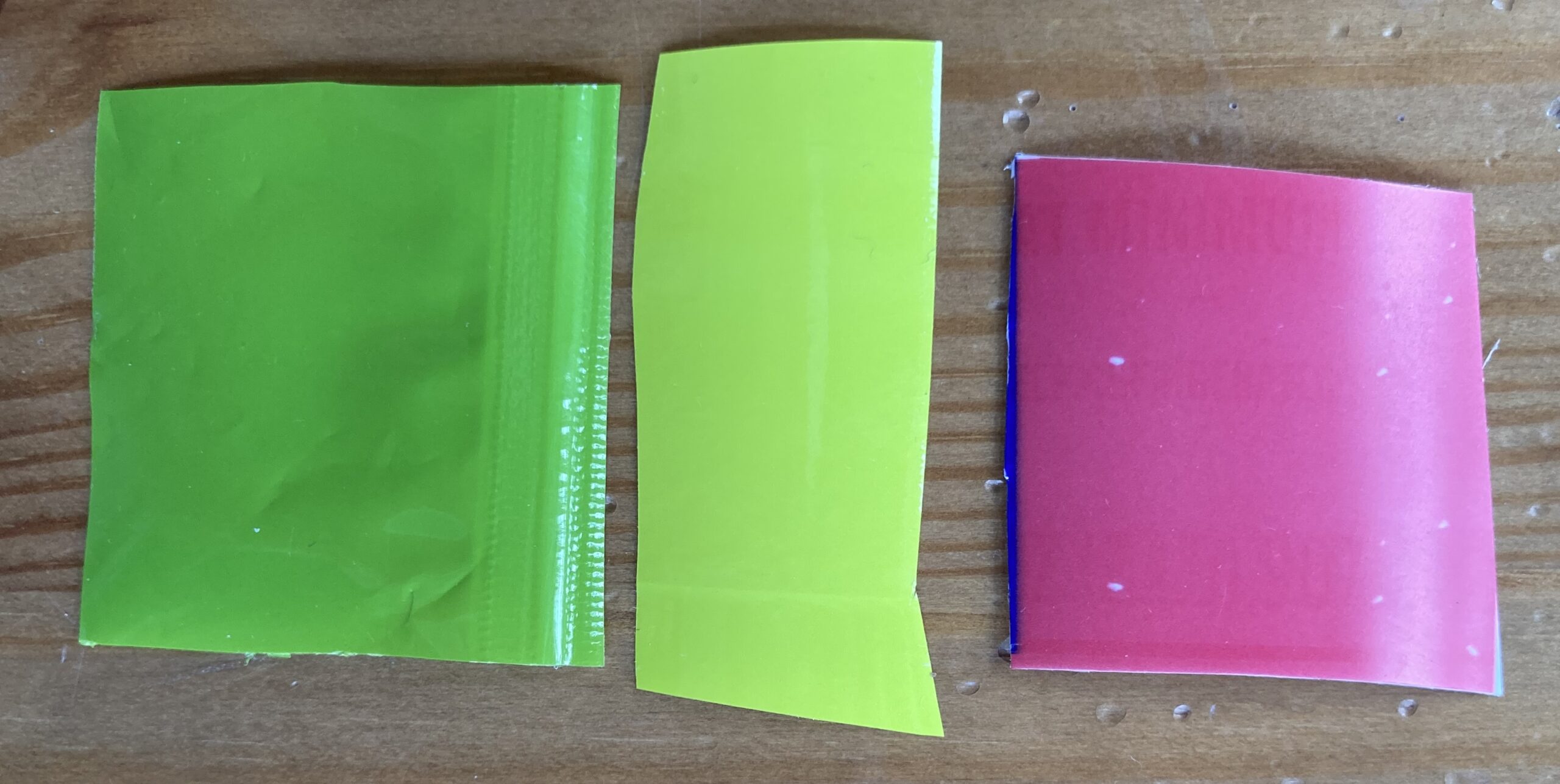
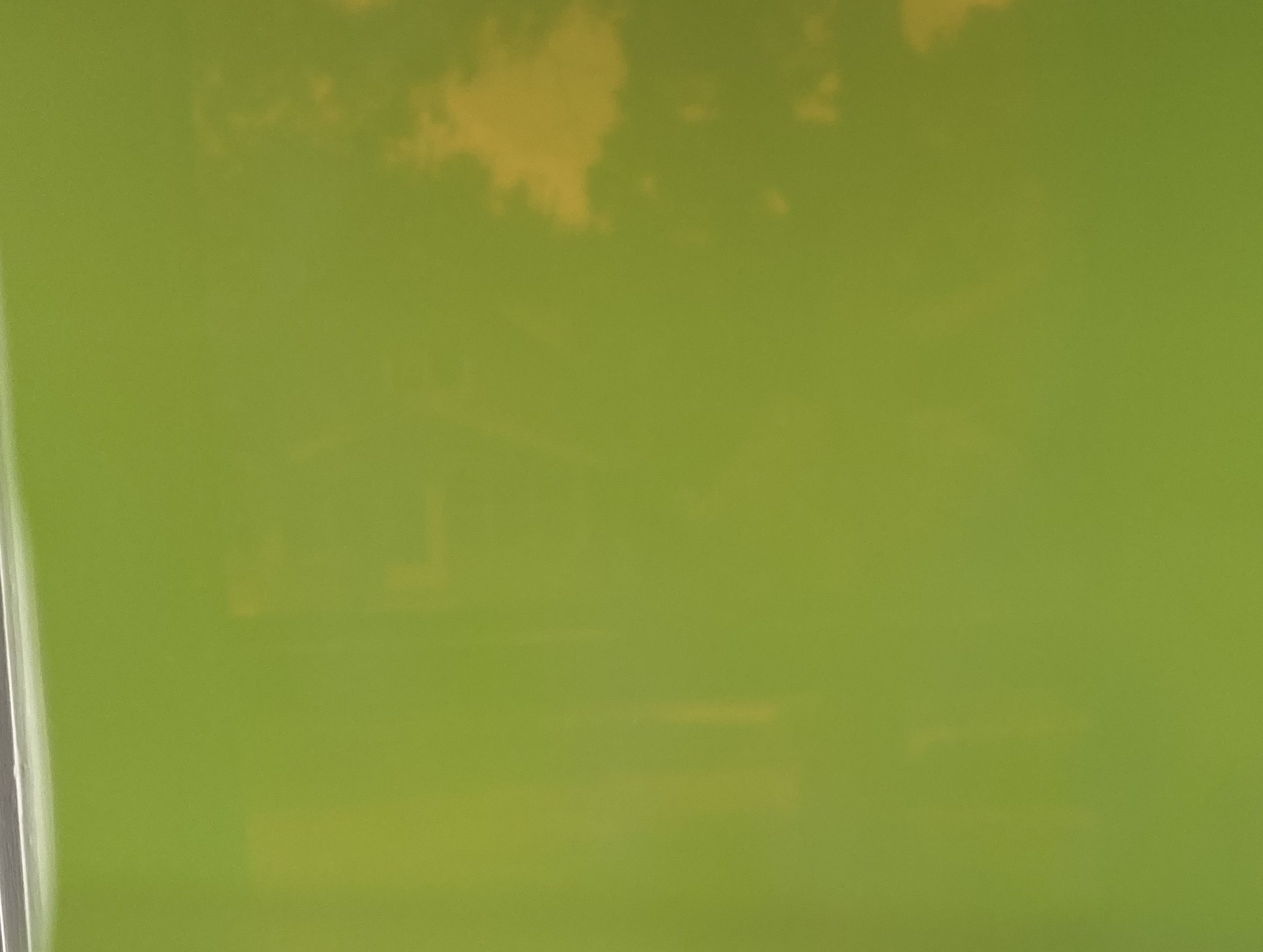
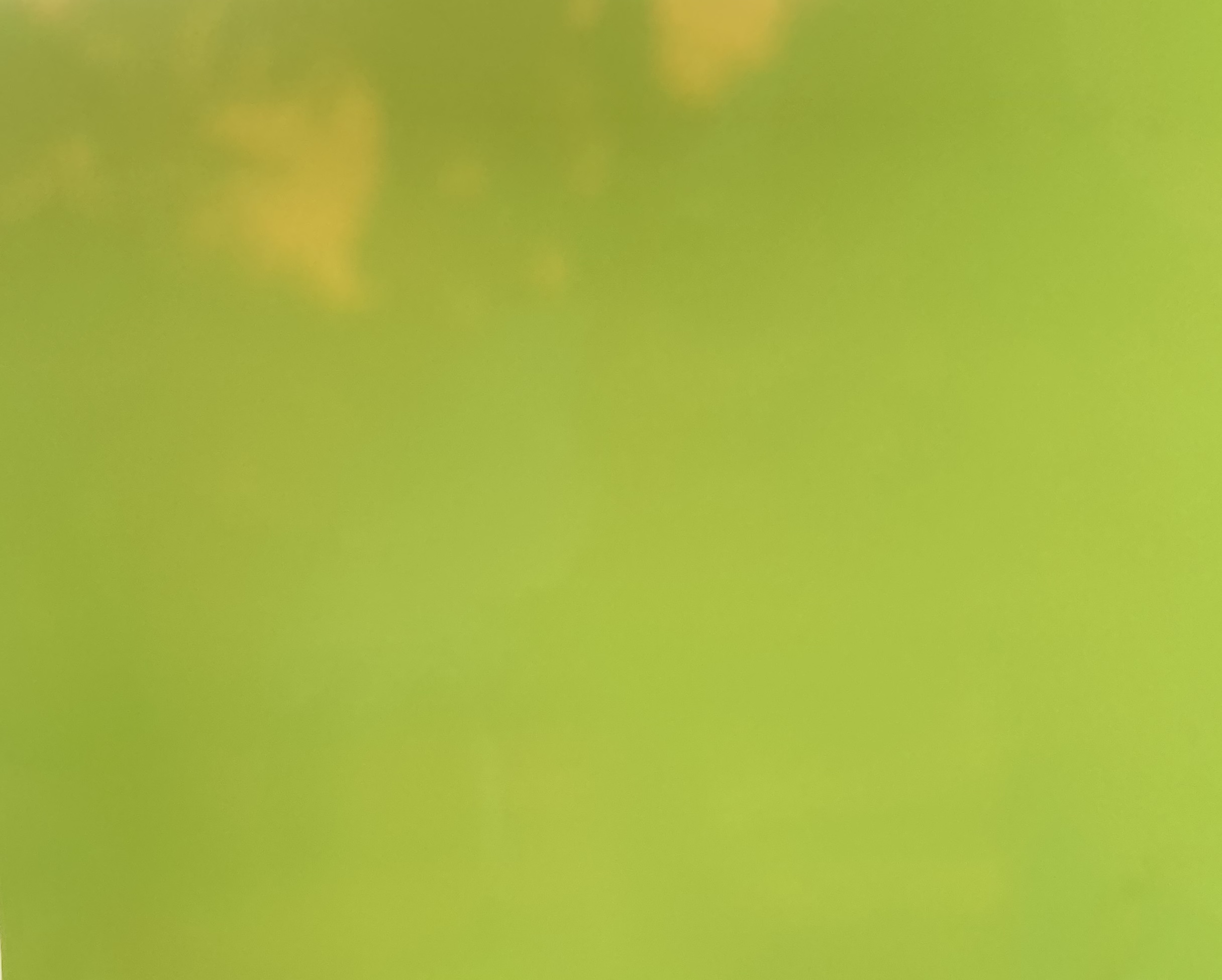
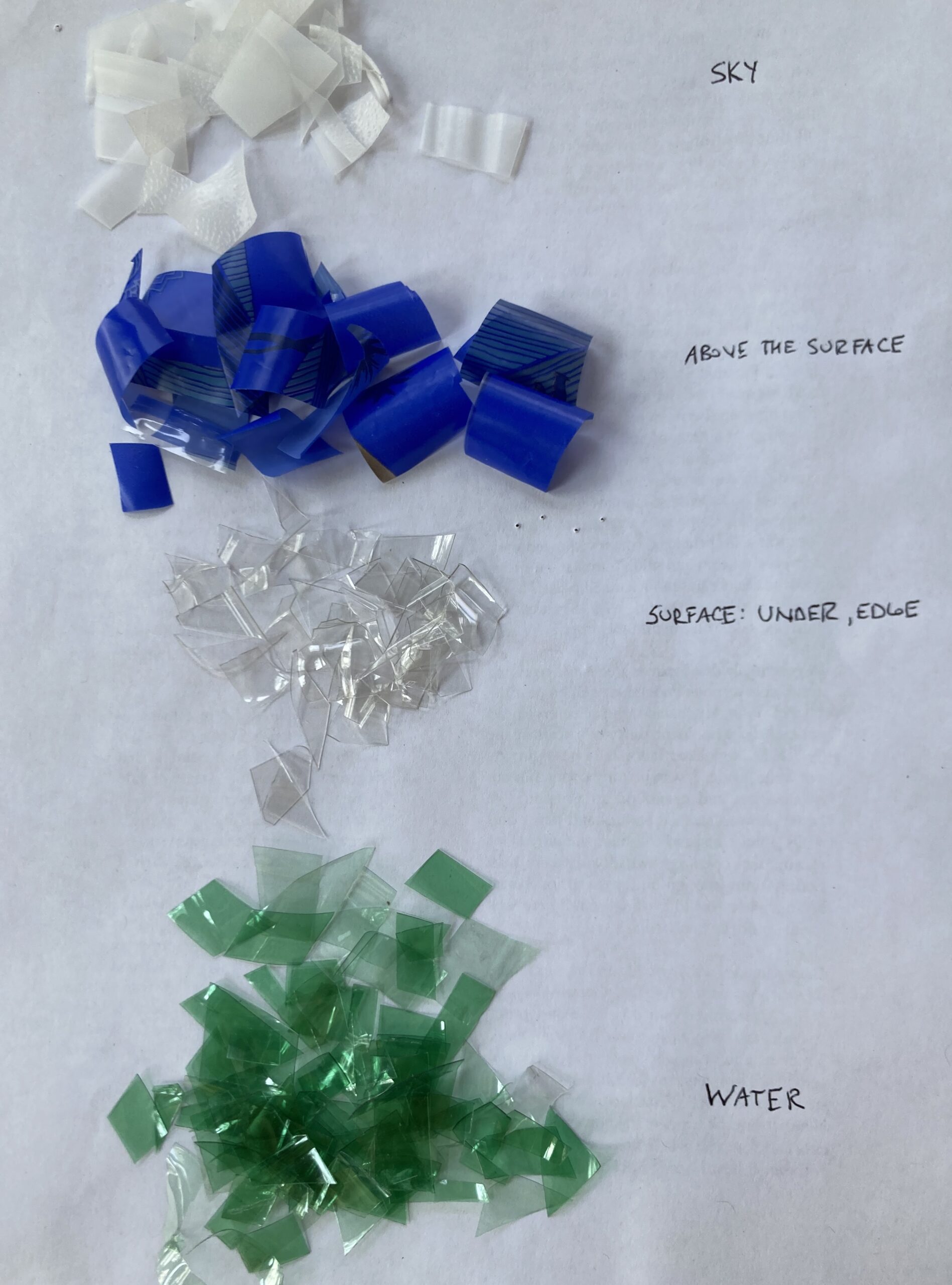
added the next day: I wanted to replicate the color of the water with my plastics, but didn’t have time last night. I’m not sure either of these quite capture the mix of (mostly) green with some yellow:
123
1: back of cukes plastic bag held close to the window 2: back of cukes plastic bag held far from the window 3: a square of a yogurt container covered with seltzer water shards
I think 2 is too yellow. I think there’s a section of 3, on the right side, that might best capture my memory of the water. I also like the overall color of 1.
Will we have open swim in an hour and a half? They haven’t cancelled it yet. I went outside to water the tomatoes and peppers and I could feel the smoke, but it wasn’t too bad. 113 is “unhealthy for sensitive groups.”
In other health news for future Sara when she talks to her doctor at the end of the month: another night with restless legs and (almost) a calf cramp. I felt the same sort of wave of something strange pass through my lower calf as I did a few years ago. Back then, it made me very anxious, last night, not as much. Is it the wrong level of estrogen or progesterone, or my body getting used to the HRT, or something else? Whatever it was, I slept poorly: only 5 hours even though I went to bed at 10:30.
AQI (8:15am): 123
swim: 2 loops lake nokomis open swim 76 degrees AQI: 137
Open swim happened! Hooray! I was disappointed that the air quality was bad, but it wasn’t that bad and it made for a cool effect on the water. So much smoke and haze, all of it white and dreamy. Harder to see for everyone, at least I imagine it was harder for normally sighted people too. It didn’t bother me because I already can’t see that well, and don’t really need sight to navigate.
Before the swim, my entire body was bubbling with anxiety — a combination of adjusting to the hormone flux, and strong physical reactions to any strange sensations in my calves. I think I was worried that I might have a calf cramp in the middle of the lake. As I started swimming everything felt strange, surreal. Smoke, warm water, a gentle rocking. I tried to distract myself by focusing on colors, but the anxiety kept bubbling up near the edge, like boiling pasta water on the stove. Just before it boiled over, I abruptly stopped swimming and listened to the silence in the middle of the lake. I saw a lifeguard silhouetted in the smoked-out sun and the bright pink buoy of another swimmer and I was able to calm down. I started stroking again — 1 2 3 4 5 breathe right 1 2 3 4 5 breathe left — as I passed the second, then third buoy.
I was able to swim about 40 minutes without stopping and with only a few more anxiety flare-ups. The water was a pale blue-ish green below me. Looking up and just beneath the surface, it started as pale green, then turned into a clear band at the edge. Above, it was the hint of a purply blue.
10 Things
a lot of the Eurasian milfoil is gone!
some non-open swimmers were blasting a speaker at the lifeguard stand where open swimmers leave their stuff, the LOUD throbbing of the beat increased my anxiety
overheard, 1 swimmer to another: I’m just going to swim to the second buoy and back
overheard, 1 swimmer to another: I have no illusions about my swimming ability!
overheard, 1 swimmer to another: Let’s put our ages on our (Women’s Tri race) caps! You don’t have to, but it’s fun to see everyone’s age when you’re running!
arriving at the lake, the smoke on the water looked so thick — everything was white
the occasional bent elbow of another swimmer, some foam, a bright pink or orange buoy tethered to a torso
a few shredded clouds hanging in the sky
a slight ache in my left shoulder by the start of loop 2
rounding the fifth buoy and sighting the first one in the distance: a small, bright orange dot
AQI (12:30pm): 156
The water offered a gentle rocking for the first half of the first loop, then turned choppier. I could see my bubble friends and hear the sloshing of water over my head.
color in layers: underwater / underside of surface / surface from above / sky
water / under surface / above surface / sky | seltzer bottle / danish container / ziploc / milk jug
Playlist: Plastic Fantastic
Created this plastic playlist yesterday. I’m looking forward to listening to it on my next run.
Plastic Hearts/ Miley Cyrus
Midnight Sky/ Miley Cyrus
PLASTIC/ sakehands (feat. Marty Valentine & Lo)
Plastic/ Moses Sumney
Fake Plastic Trees/ Radiohead
Plastic/ New Order
Plastic/ Portishead
Plastic Doll/ Lady Gaga
Barbie Girl/ Aqua
Plastic Romance/ A Toys Orchestra
Dear Plastic/ The Sugarcubes
Plastic Jesus/ Jello Biagra & MoJo Nixon
Welcome to the World of the Plastic Beach/ Gorillaz (feat. Snoop Dogg and Hypnotic Brass Ensemble)
Plastic Beach/ Gorillaz (feat. Mick Jones and Paul Simonon
Synthetic World/ Swamp Dogg
Plastico/ Ruben Blades
Plastic Girl/ CAPSULE (feat. EeL)
The Bomb/ L7
Plastic Factory (Mono)/ Captain Beefheart & His Magic Band
4 miles minnehaha falls and back 82 degrees / dew point: 72 AQI: 62
Hooray, the smoke moved out! Boo: not in time to have open swim this morning. Oh well, went for a run instead. It was hot and humid, but the air wasn’t hazardous and I had (finally) tied my shoes properly so that my feet weren’t sliding around, so I was happy to get outside and move. Mostly running, with some walking. In my approximate fashion, I followed a plan of intentional run/walk segments — 4/1 | 4/1 | 2/1 | 90/30 | 2/1 | 2/2.
10 Things
2 porta potties at the park with a temporary hand sanitation kiosk beside them — what even is happening here today? update: an art fair
a food truck — orange, yellow, and red — Cafe Cairo
the white foam of the falls
a shopping cart with a few things in it — some sort of electronics — in the middle of the narrow trail below the road
big spots of light in the midst of the shadowed trail, near the cart
a city truck blocking the path that leads down to the locks and dam — a crane in the air
the water in the water fountain was hot — yuck!
a person briskly crossing the parking lot, stopping in time to let me run by
a biker weaving over to the walking trail to avoid the bright sun on the bike path
the tangy — sweet and sour and rotting — smell left behind by the garbage truck
While I moved, I listened to the podcast about microplastics that I mentioned yesterday: Science Vs. Microplastics. I enjoyed it, even as I was a bit skeptical (thanks to another podcast, Maintenance Phase) when they started discussing a rise in/crisis of obesity without interrogating the term at all, like: how have designations for who is considered obese changed? Why is the term so morally and politically charged? But, I decided to let go of my criticisms and just listen. Here are two things I’d like to remember:
1 — we’re not consuming a credit cards worth of microplastics every week, but our endocrine system is being disrupted by chemicals in/on the plastic
The idea that we are consuming a large amount of microplastics (some people have suggested a credit cards worth a week!) doesn’t hold up, but concerns about the chemicals in/on the plastic getting into our bodies are warranted:
WZ … this idea that these chemicals on, in plastics are messing with our hormones. Take me through the science! Firstly what would these – how would they mess with our hormones? RR They’re tricksters! So they like bust in and they take over this important role from our actual hormones. So – hormones are all about binding to receptors on cells in order to send messages throughout the body. And they’re involved in SO MUCH, they do a lot day to day but also they help these key developmental things happen over the course of our whole lives. So if these chemicals are messing with it – that could be pretty bad. Here’s what Pat Hunt told me – she’s our scientist from the top of the show … PH I think of it kind of as radio static. You know, your hormones control everything. Your growth, your metabolism, your sleep, your reproduction. And it’s all by these finely tuned signals. And here’s this static in the system. RR So these endocrine disruptors are the static. They interfere with the hormones by binding to the receptors that hormones are supposed to bind to, and that could mess up those signals. WZ And we know these chemicals are in our environment, like, we know for sure? They’re in my body right now? RR Yeahhhh probably, we know that just about everybody is exposed to them
2— cut back on plastic consumption, including hair and skin products, but consider the benefits vs risks of using products that have plastic (like canned beans, which have plastic in the lining)
I don’t know, the thing is, like, the thing is with this topic that’s so frustrating, I still, even though I’ve been working on this for a couple months, and I’ve had these conversations with scientists who are like, Oh, I don’t I don’t buy canned food if I can help it. Every time I go to the grocery store, I stock up on my canned beans. I can’t quit it. And it’s like I think the problem is like without more specific information about how bad is it. What is my risk? I’m not able to weigh the risks of the plastics getting into my canned beans against the benefits of canned beans. I know the benefits: They’re cheap, healthy, easy. I like em. So for right now I’m kind of assuming the b
This episode has 84 footnotes — a great resource for more words and understandings about plastic. Here’s a disturbing passage:
The growth of plastics production in the past 65 years has substantially outpaced any other manufactured material. The same properties that make plastics so versatile in innumerable applications—durability and resistance to degradation—make these materials difficult or impossible for nature to assimilate. Thus, without a well-designed and tailor-made management strategy for end-of-life plastics, humans are conducting a singular uncontrolled experiment on a global scale, in which billions of metric tons of material will accumulate across all major terrestrial and aquatic ecosystems on the planet.
plastics’ largest market is packaging, an application whose growth was accelerated by a global shift from reusable to single-use containers. As a result, the share of plastics in municipal solid waste (by mass) increased from less than 1% in 1960 to more than 10% by 2005 in middle- and high-income countries
A lot to take in and think about — or try not to think about. Not as a way to be absolved or to deny accountability and responsibility, but as a way to endure. Sometimes thinking about the amount of waste that accumulates every year month week day second is too much. I imagine a door to a room where that information exists and I shut it. Don’t want to dwell in there, I might say to someone — the wind, a tree, Scott. update: I usually shut the door when I’m in a big store with too much plastic stuff, like IKEA.
do you ever feel like a plastic bag?
1 — American Beauty
1999
I don’t think I really liked this movie — Kevin Spacey was a terrible creep, but I often think of this scene where I see a plastic bag dancing in the wind.
2 — Firework/ Katy Perry
Do you ever feel/like a plastic bag/drifting through the wind/wanting to start again?
I can’t remember why I did it, but I put this song on one of my first playlists when I started running in 2011. Anytime I hear it, I think of that wonderful time when my life opened up and I became a runner.
There isn’t a word for walking out of the grocery store with a gallon jug of milk in a plastic sack that should have been bagged in double layers
—so that before you are even out the door you feel the weight of the jug dragging the bag down, stretching the thin
plastic handles longer and longer and you know it’s only a matter of time until bottom suddenly splits.
There is no single, unimpeachable word for that vague sensation of something moving away from you
as it exceeds its elastic capacity —which is too bad, because that is the word I would like to use to describe standing on the street
chatting with an old friend as the awareness grows in me that he is no longer a friend, but only an acquaintance,
a person with whom I never made the effort— until this moment, when as we say goodbye I think we share a feeling of relief,
a recognition that we have reached the end of a pretense, though to tell the truth
what I already am thinking about is my gratitude for language— how it will stretch just so much and no farther;
how there are some holes it will not cover up; how it will move, if not inside, then around the circumference of almost anything—
how, over the years, it has given me back all the hours and days, all the plodding love and faith, all the
misunderstandings and secrets I have willingly poured into it.
Ah, I love Tony Hoagland’s poetry. He often writes about swimming — I’ve memorized 2 of his water poems and recite themwhile I’m swimming around the lake, How sad it was that he died of cancer a few years ago!
4 — a plastic bag exhibit in Germany
A German exhibition documents the history of plastic bags, showcasing their evolution from a culture of convenience and design, opposed to the environmental nuisance they have become today.
The German Museum for Everyday Culture has dedicated a special exhibition to the history and design of plastic bags. ‘Adieu Plastiktüte!’ (Goodbye, Plastic Bag!) featuring a collection of more than 50,000 plastic bags from the last 50 years, looks back at the history and evolution of this innovation of convenience. Showcasing various designs, the exhibition illustrates how they were considered attractive advertising spaces, communicating the individuality of both brands and consumers. Though out of style these days, plastic bags were once a rocking cultural trend.
No running this morning. Too dangerous for my lungs to breathe in this smoke. I haven’t heard yet, but I can’t imagine that open swim will happen this afternoon. Even if it isn’t cancelled, if the AQI stays this high, I won’t be going.
the plastic art of finding the words
Returning to my “On this Day” practice, I found an intriguing quote from A Oswald:
She and her husband, playwright Peter Oswald, divide their day in two – walking their sons to and from school through fields. But she doesn’t take a notebook with her. She believes in the subconscious, in what is brewing on a ‘non-verbal level’. She thinks ‘a flavour or feeling builds up, almost a sculptural shape that could be a living creature, or a dance or a painting’. Only later comes the ‘plastic art of finding the words’.
What does she mean by plastic here? Reading the quotation again, plastic seems to mean artificial, imitation, not the real or living thing but a replica. Also, plastic as moldable, easily shaped and reshaped, pliable. Molded, modeled, “capable of being deformed continuously and permanently in any direction without rupture.” Formative, creative; (source).
just announced: Open Swim is cancelled for today.
A rotted swan is hurrying away from the plane-crash mess of her wings one here one there
getting panicky up out of her clothes and mid-splash looking down again at what a horrible plastic mould of herself split-second climbing out of her own cockpit
and lifting away again and bending back for another look thinking strange strange
And, the way I (mostly) think about plastic in relation to my vision and connection to the world: a film, a veil, an obstruction, the barrier between me and what is real. A distorted or approximate, not quite, reality.
I looked up “plastic” on Poetry Daily and found this fabulous poem (with an ecopoetry essay, too!):
polypropylene, moss, human hair, pine needles, cardboard, sheepskin condoms, coffee grounds
This sculpture reveals the demand my transition has created for the plastics industry over time. By melting plastic syringes into a compressed form, I hope to create an anticlimax by showing all at once the slow accumulation of material. When you observe me and then the sculpture, is the volume of plastic more or less than what you would expect? Do you agree strongly, agree, neither agree nor disagree, disagree, or strongly disagree that certain plastics should remain single-use? By incorporating an assortment of organic elements, I wanted to create a sense of grief out of the cognitive dissonance. Plastikos, to form or mold, an art long before plastics were invented. Trans is a way of arranging the world through change, but plastic is durable, meaning it never goes away. Very light, gets blown along in gentle winds. It gets washed by rain into sewers, streams, rivers, and finally oceans. It burns forever in landfills, a sickening campfire around which we tell scary stories. It is pleasurable at times when a container fulfills the functions for which it has been designed. I hope to return to earth a little bit more every day, until I’m finally you again.
Bendorf begins their essay with one of my favorite quotations from Lorine Niedecker in one of my favorite poems, “Lake Superior”:
“In every living thing is stuff that once was rock
In blood the minerals of the rock.”
Reading these lines I wondered, how much have plastics transformed what is in every living thing? How much of us is plastic? Found a podcast to listen to: Science Vs. Microplastics — here’s the transcript.
Also in the essay, Bendorf mentions a term I don’t remembernencountering before: “we each have a “terroir”— a particular flavor made up of the unique places and vocabularies that we have absorbed. Those registers that, in a unique combination, make us distinct.” Terroir is a matter of style and substance.
When I think of the “plastics” industry, I recall the scene from It’s a Wonderful Life, which was one of my favorite Christmas movies as a kid, and this scene from The Graduate:
One word: plastics
Back to Bendorf, in conversation with Oswald’s idea of sculptural shapes and the plastic art, and my own thoughts about my vision creating a plastic film that separates and distorts:
When you observe me and then the sculpture, is the volume of plastic more or less than what you would expect?
How can I find a way to praise it? Do the early inventors & embracers churn with regret? I don’t think my parents —born in the swing toward ubiquity—chew & chew & chew on plastic. But of course they do. Bits in water, food-flesh, air. And their parents? I remember Dad mocking his mother’s drawer of saved rubber bands and his father-in-law’s red, corroded jerry can, patched and patched, never replaced for new, for never- rusting. Cash or plastic? Plastic. Even for gum. We hate the $5 minimum. Bills paperless, automatic, almost unreal. My toys were plastic, castle and circus train and yo-yo. Did my lunches ever get wrapped in waxed paper or was it all Saran, Saran, Saran? Sarah’s mom was given, in Girl Scouts, a blue sheet of plastic to cut, sew, and trim with white piping into pouches for camping. Sarah has it still, brittle but useful. Merit badge for waterproofing. For everlasting. You, too, must have heard stories, now quaint as carriages, of first plastic, pre-plastic. Eras of glass, waxed cloth, and tin. Of shared syringes.
All our grocery bags, growing up, were paper. Bottom hefted on forearm, top crunched into grab. We used them to line the kitchen garbage pail. Not that long ago, maybe a decade, I made purses for my sisters out of putty-colored, red-lettered plastic Safeway bags. I’d snag a stack each time I went, then fold and sew, quilt with bright thread, line with thrift store blouses. They were sturdy and beautiful. Rainproof and light. Clever. So clever. I regret them. And the plastic toothpicks, folders, shoes that seemed so cheap, so easy, so use-again and thus less wasteful, then. What did we do before to-go lids? Things must have just spilled and spilled. Do you know what I mean? I mean, what pearl forms around a grain of plastic in an oyster? Is it as beautiful? Would you wear it? Would you buy it for your daughter so she in turn could pass it down and pass it down and pass it down?
When I started this entry, I was planning to go to open swim this afternoon, but I checked the air and water temperatures: hot, and saw on the radar that there’s a chance of rain. When I combine that with my desire to be cautious with my healing shoulder I decided I should take a break from swimming today. I didn’t run, either. So hot and sticky this morning! Instead, I worked on my plastic project and my cork board map of lake ideas. Fun!
the next morning: Hours after writing this first paragraph, the smoke from wildfires in northern Minnesota and the Boundary Waters arrived. By the time I went to bed, the AQI (air quality index) was almost 500 (anything over 125 is dangerous; 500 is hazardous). This morning it’s in the 400s. Scary stuff, especially when you think ahead to how this will most likely be happening more frequently. The smoke isn’t supposed to lift until noon on Friday, so open swim will probably be cancelled tonight and tomorrow.
the plastic process
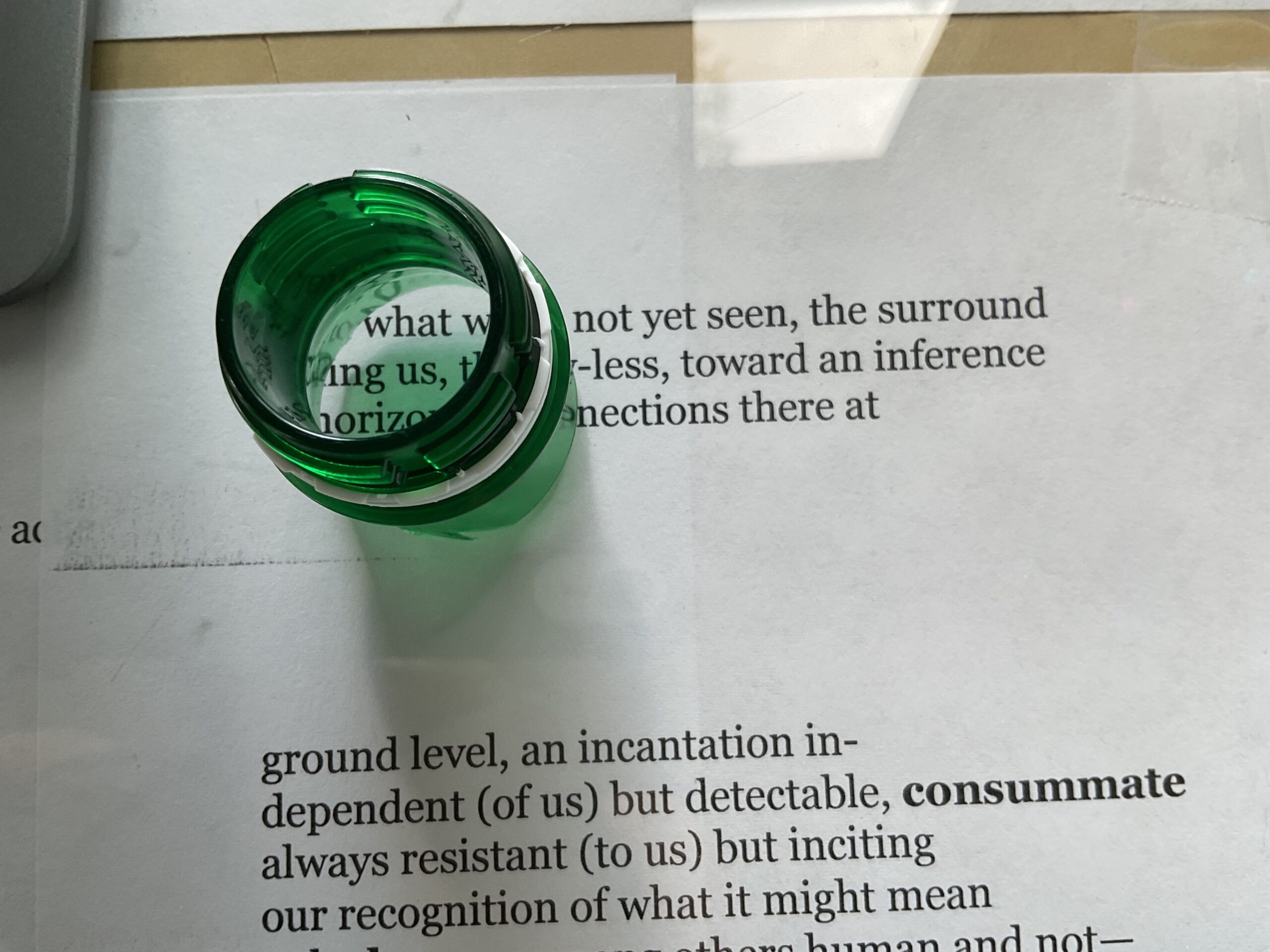
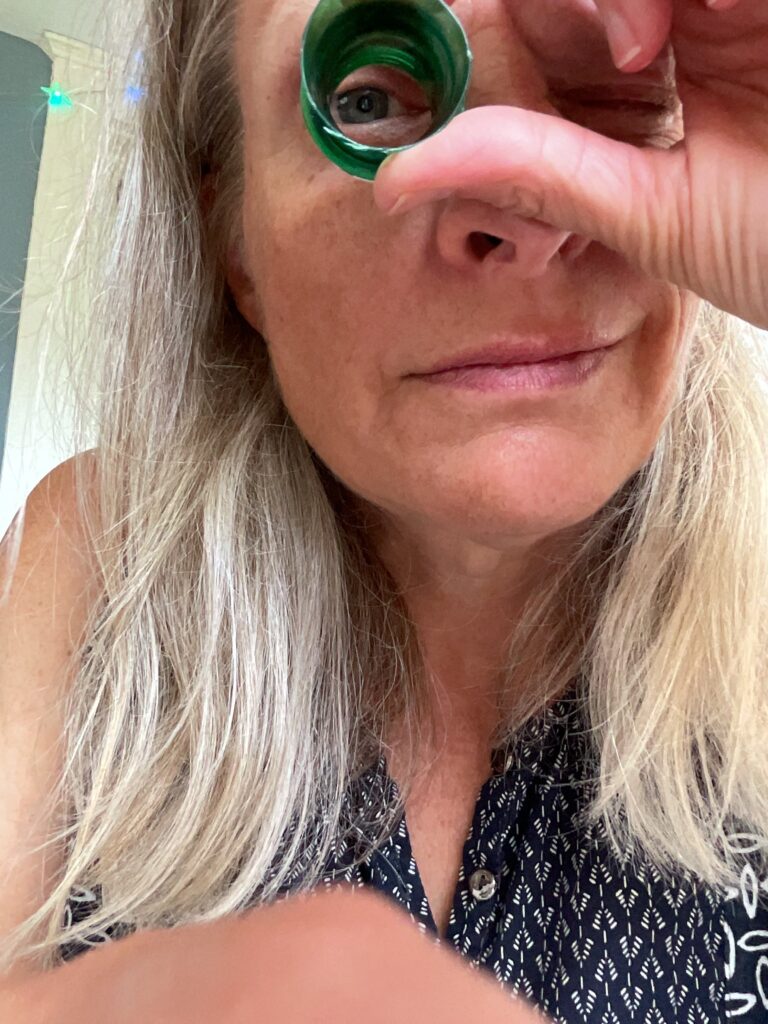
This morning, I reorganized the area of my studio where I gather and process my plastic. Then I cut up part of a milk jug, which creates a cool texture of brittle little shards, and another one of my seltzer bottles. Later in the day, I showed some of the stranger remnants of plastic to FWA and he suggested using the top of the seltzer bottle as some sort of view finder or monocle — something that, when you looked through it, created a visual effect. Distorts what you see? Adds layers of color? Allows you to isolate words? I’m going to have fun playing around with this!
I showed it to Scott and he said, it’s a loupe. A what? A loupe (loop) “is a simple, small magnification device used to see small details more closely.[1] They generally have higher magnification than a magnifying glass, and are designed to be held or worn close to the eye. A loupe does not have an attached handle, and its focusing lens(es) are contained in an opaque cylinder or cone” (wikipedia). A new word, learned!
Here are some things I’ve been doing with the plastic so far:
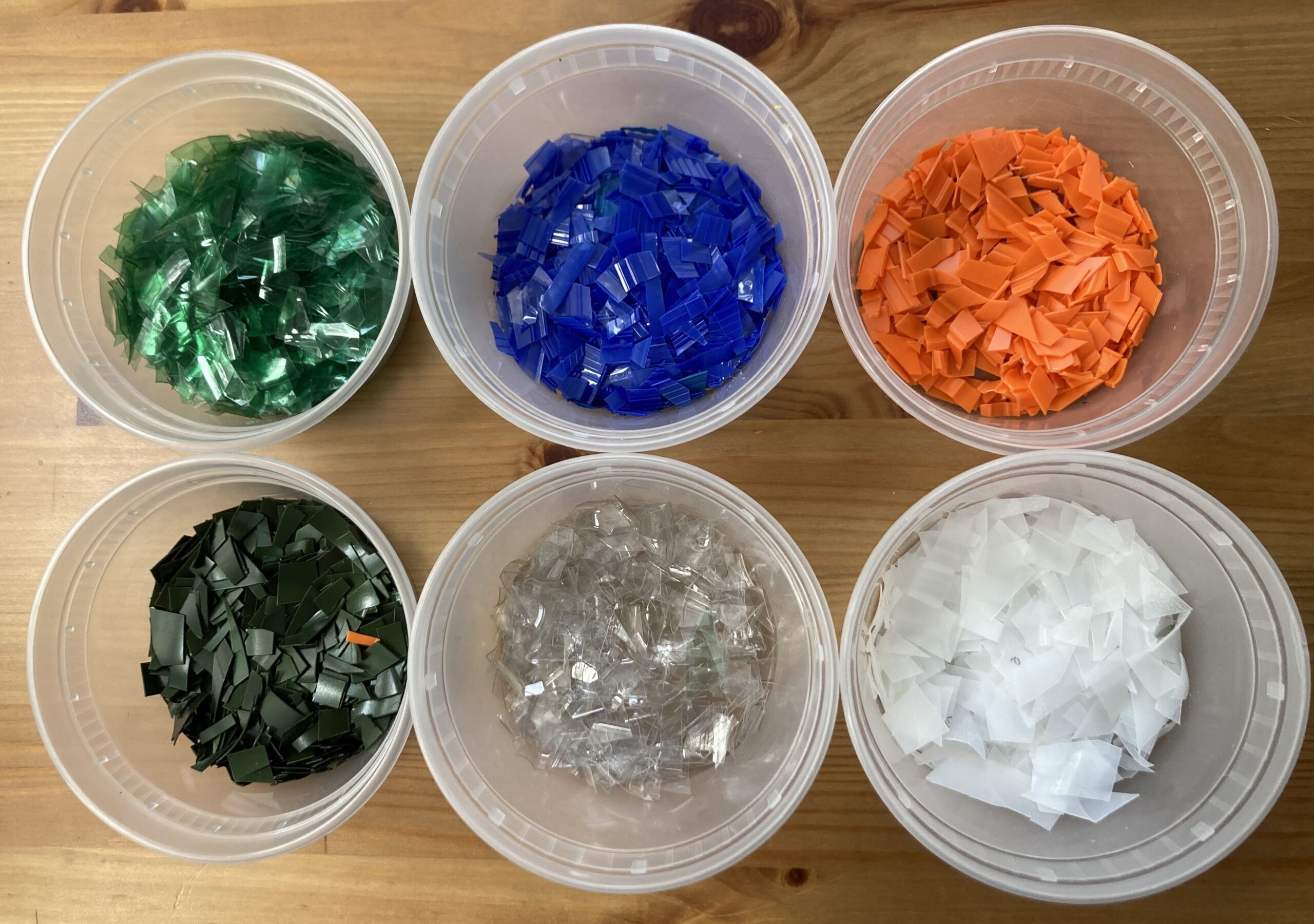
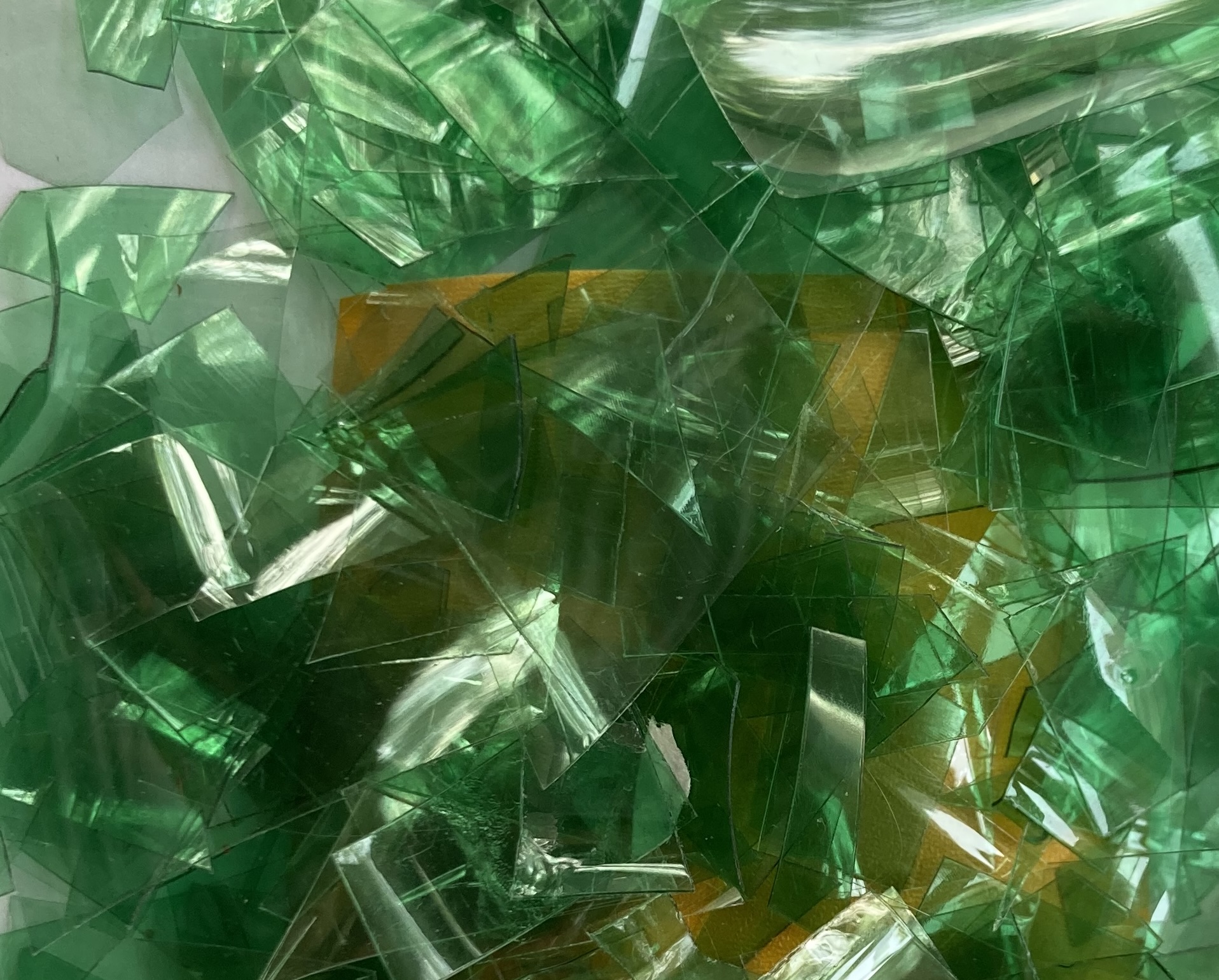
Cutting up plastic into strips and shards, separating them by color. So far, I’m using these shards/strips to show the color of the lake during open swim. Maybe I’ll turn them into some sort of mosaic, or create interesting sounds with them. As I handle them, I’ve been thinking about the importance of texture for how I see and how I understand/process/identify color.
Looking for and setting aside bigger strips of clear plastic to use for my holes/how I read series — to cover words and/or make them harder/impossible to read.
Cutting out and collecting words printed on plasticbags to turn into found poems about vision or swimming in the lake or something else I haven’t thought of yet.
I’m planning to make things with these plastics, and I’m also using the processing of them as an opportunity to critically reflect on how much plastic I use and to explore plastic as metaphor for my vision and distanced relationship to the world. Maybe I should study plastic for a month? I’m also using the act of processing as something I can do with my hands that is physical and tactile and repetitive enough to open me up to wandering and wondering.
4.6 miles veterans home 74 degrees / drizzle? humidity: 89% dew point: 69
Woke up at 6 am to get in a run before it rained, then heard thunder. Bummer. Had to wait until 9. When I left, the sun was coming out but a mile in, the wind picked up. Did it start drizzling or was that just dripping trees? I think it was a little of both.
It was hot and difficult and I wasn’t sure how much I’d be able to do when I started — 2 miles? 3? — but then I just kept going and it kept feeling a little more doable. Just make it to southern entrance to the Winchell Trail. And, just make it to the locks and dam parking lot. And, just make it to the top of the Wabun hill. Once I got to the top and kept going through Wabun park, there was no turning back, just through the grounds of the Veterans home and over to the falls then north on the river road to home.
10 Wet Things
big puddles on the sidewalk
smaller puddles on the path
muddy ruts
dripping trees
dripping ponytail
soaked shirt
roaring falls
gushing sewer pipe
whooshing wheels
damp face
Early this morning, while making breakfast, I listened to a podcast interview with Moheb Soliman whose book, Homes, I’ve just started reading. Love it! I think I’ll buy this book as a birthday present to myself!
In the interview, the interviewer mentions another poet who I’d also like to check out: Cecily Nicholson. Cecily Nicholson: interview + book, Crowd Source
Also in the interview, Soliman reads several of his poems, including this one:
Great Lake Swamp come heavy-use wetlands: powers of Toledo origin song
Who let this wetland wet / Who cut this little inlet / Laid the hill for golden hours / Fit the logs with the salamanders / Foretold the lichen and the mosses / Who offered the wildlife crossing
Along this promenade I sing / about how the world’s made / my behorned serenade to nobody but
Who wet this aggregate / Who raised this bamboo deck / Who had these grasses mown / Who made the birches grow in groves / Who made this prairie seric1 / Carved out a space for heron
This is my behorned little dirge / I sing along this little bridge / about how this little world’s birthed by no body but
Who left this river wet / Sowed the embankment / Set the grade for the slope of the island / Spawned the minnows to feed the walleye / Who knows the ripples till flood / Who reads teh dried-out flats of mud
About how the world’s mocked up / I sing along this ply boardwalk / This is where the trombones stop
for nobody / By no body but / you local / No melody but vocals / As is / La la / La li / La las / La lis / As is
Who let this wetland wet? I love all of these question about the creating of a place. I frequently think (and ask) about how the paths I run on, the lakes I swim in, were made what they are by people, particularly the city of Minneapolis and Minneapolis Parks. For years, I’ve been studying the documents and the places to find evidence of this creating and shaping.
Before reading the poem, Soliman says this:
And this is a big part of our discourse right now that, you know, humans aren’t separate. I mean, I have a really hard time kind of following that to the end, because I do feel that there’s a profound difference in how much we are able to control and shape that world to the point where we’re not really a part of it in the same organic way that so many other parts of it are, you know, and a lot of the poems like sometimes absurdly, you know, and I mean, I could even read some of those like, but absurdly play with that idea that, you know, we created this place, you know, the hiking trail, like it is actually, it’s not just some natural path.
You know, there’s a lot that has gone into making you feel that you are here at one in a harmonious, quiet moment in the woods or on the lake. And, you know, so our hand is like so strong in those places, and it would be really, like, naive to just write a poem about being out in the woods without also being aware about, of how we came to that place, and how humans are really, uh, yeah, sort of different and yet a part of.
I was prompted to find this interview because I wanted to hear Soliman read his own poems; I hoped that might help me understand the strange spacing of the lines. He addresses this desire directly in the interview:
A lot of these poems are these justified text blocks with like, internal line breaks. And a lot of them started as lineated poems. Uh, and I just liked the ones that weren’t like that more because I felt like line breaks were too precious sometimes.
Just in poetry, not just mine, but sometimes I just kind of bristle at line breaks, you know? Um, they make, yeah, sometimes they make poems feel too precious. And I wanted this to have a bit more of a, like, robustness, you know? That they’re, they kind of just sit there on the page, you know, like a paragraph, you know?
Yet, I still love, like, the wordplay of, like, enjambment, and, uh, so, I came to a point where I thought, well, either all of these have to be these text blocks, or they just all need to go to lineated. And I spent a lot of time, like, reworking so many of them into these text blocks. And at one point I was really terrified that, like, I’ve made the reading experience really hard for people.
I don’t know, because to me, I’m just so familiar with them. They’re really, I see them in my head and I understand how they move, like, you know, orally, you know. So, it’s part of the reason I, like, really appreciate the chance to read them, because I feel like if I can just get my voice into someone’s head about the book, it’ll just make the rest of the experience, you know, easier.
Very helpful to read this, and to hear him read his own poems. The next thing he says is also helpful, and is sparking some new thoughts on (my) forms:
A friend of mine kind of made this interesting point where they sort of, like lakes, like on the page. They just kind of pool there with some like, gaps. And I think she was kind of first saying how the poems have a real flow. And then we were talking about how poems sometimes really feel like rivers, you know, and without really meaning to, I kind of forced these to have a bit more of like a lake, like, you know, here they are, in one place, and there, there’s the pooling, you know, that’s happening.
Oh — I want to think about this some more! How do rivering words look different from laked ones? What else do lakes do, besides pooling? They settle, shimmy in place . . . . This question is an excellent one to think about and to go back into my log to find some answers!
a few minutes later: they sink and sour and are stuck, still, stagnant, unstirred. Could it be that lakes, more than oceans or seas or rivers, are about what’s at the bottom, what sinks down, unmoved by currents? Stale and stymied. Layered and sedimented, cyclical – circular
plastic project
Since March, or was it April?, I’ve been collecting the plastic that we use for some unspecified future project. It started with old freezer bags, but expanded to include grapefruit, zucchini, and mini cucumber bags. Now I have sandwich and pita bread bags and the plastic bags that covered the new fan I recently bought. My favorite one: the plastic shell my new googles came in, which looks like another pair of clear goggles.
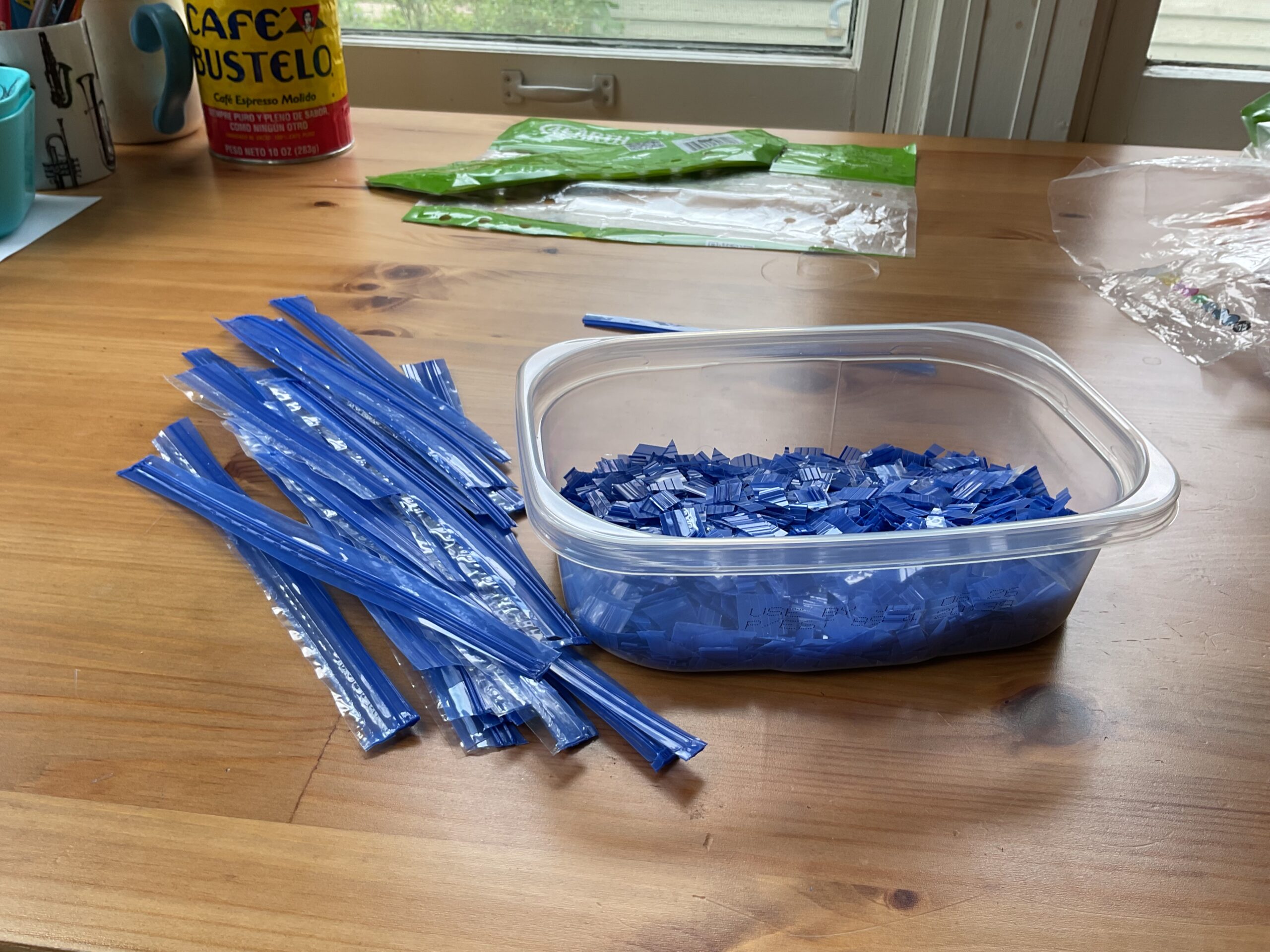
Definitely in April, I began deconstructing the freezer bags — cutting off the bright blue (zip) locking part, cutting open the clear plastic, then cutting out the white label. Last week, I decided I wanted to use the blue zip lock parts for some sort of visualizing of the lake. Maybe a big map of a lake nokomis loop? My first thought was to connect the strips together with thread or tape, but that didn’t really work. This week, another idea: shred the plastic! I tried to do it in the paper shredder, which would have shredded it almost instantly, but that wasn’t working. So, instead, I’m using my mother-in-law’s old silver scissors and snip snip snipping the strips. This snipping labor is reminding me of the satisfaction I got in the winter from drawing and shading in circle after circle on my New Yorker essays. There is something therapeutic about using my hands in this repetitive task, but also something that encouraged deep, creative thinking. These blue plastic strips are also satisfying to scoop up and sift through my fingers. Will these plastic blue shards become part of my map, or just the process that leads me to that map? Time will tell.
from the zip on a freezer bag to shards of blue lake
As I cut up these little shards, I thought about all the plastic that ends up in the lake and an ocean and my organs and tissues and bodily fluids. Yikes!
As I accumulate more and more plastic I wonder: how can I stop using so much plastic? First step: stop using ziploc bags for storing my half used produce! Make my own bread? What else?
Telling Scott about my shards last night, he suggested trying to (just barely) melt them. In one of my bouts of insomnia I looked it up and found some suggestions, but not for what I wanted. In the various sources, toxic fumes was brought up more than once. Also: homemade shrinky dinks.
They are not the same texture, but I have some great green plastic — from zucchini and cucumber bags, and from the plastic wrap on two olive oil bottles. I’d like to mix some bits of them with the blue and see how that affects the color. Could I melt these together?
swim: 3 loops (6 mini) cedar lake open swim 84 degrees
A calm and warm lake! Wonderful for swimming. I did 6 cedar loops without stopping. or only stopping mid-lake to adjust my nose plug. I noticed orange and pink buoys. Was mine the only yellow one? A few vines wrapped around my head and shoulders as I returned to the first buoy. The water was green-ish. The only fish I encountered were little minnows near shore. My bubble friends trailed below and in front of me.
overheard, one lifeguard to another — I told him he needed to head over to lake nokomis to pick up his swim cap.
A uncapped swimmer was out in the middle of the lake, some more uncapped swimmers were lurking at the far orange buoy.
Anything else? I felt strong and smooth, and often the swimming seemed effortless. Even so, I was glad to be done at the end of the 6th loop.