Oh, the sun! Warm enough for me to take my sweatshirt off halfway through the run. Beautiful by the gorge with the bare branches and open view. A few of the trees looked silvery. Was it because the sun was hitting the smallest branches, or a few tiny leaves? There were a lot of lone roller skiers out on the trail. One of them looked awkward, as if they were testing out their skis for the first time in years, or ever. Some bikers, walkers, other runners. An adult and 2 kids howling under the ford bridge. Why?
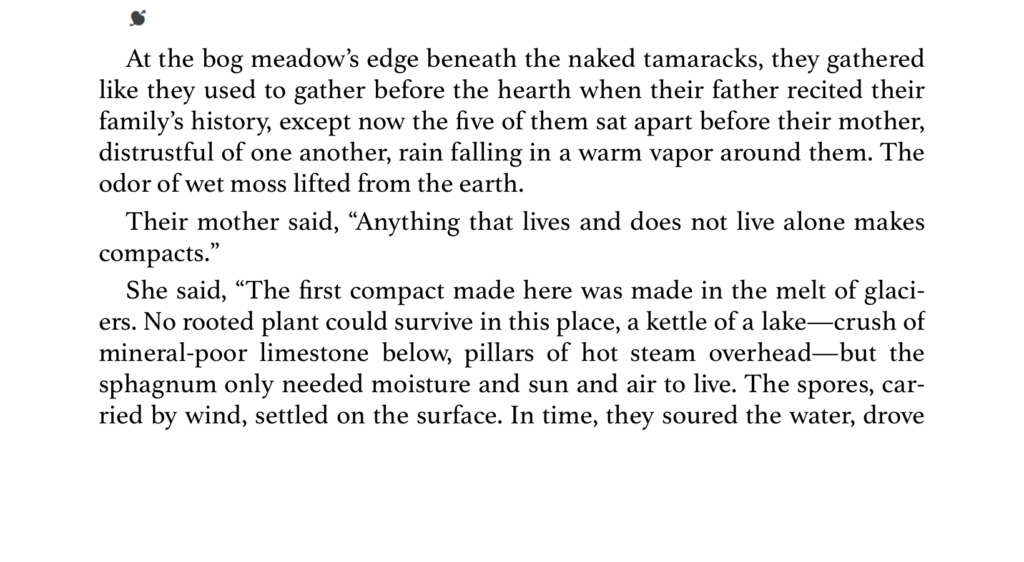
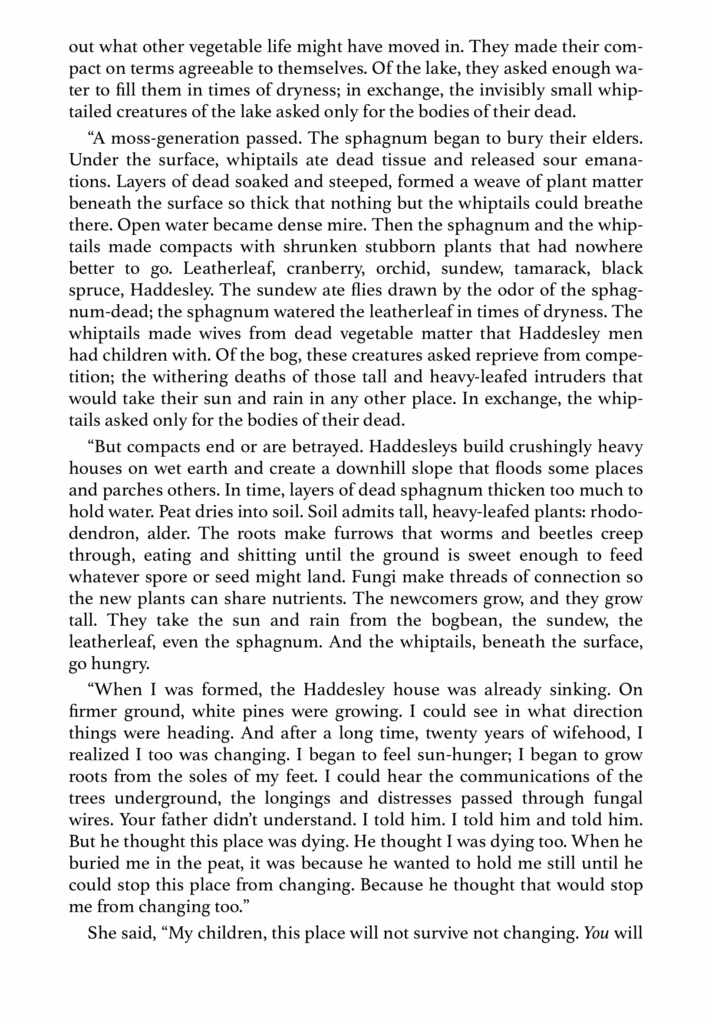
My favorite part of the run: the surface of the river at the bottom of the hill. A clear reflection of the bridge arches in the water, but the water wasn’t smooth. It looked like an impressionist painting or brush strokes or something else related to a painting. I wondered why, then I realized: the clouds! A sky filled with feathery clouds reflected on the water!
Heading back up the hill I heard the 2 kids and the adult again. This time they were quietly talking up in the bridge arches. I ran for another mile, stopping when I reached a 5k. I walked the rest of the way, admiring the shadows and the tiny buds (is that what they are?)
Sun! Warmer (but not too warm) air! An open view! And 6 miles! A good run. I’m tired now and my legs are sore, but I felt strong and light and full of energy at the end.
10 Things
click scrape scrape click — a roller skier’s poles approaching from behind
one roller skier bundled up, another in shorts
running beside 2 roller skiers, one of them listening to the other express concern/frustration about some part of his ski not locking in right
a mini peloton on the road — 10 bikes?
small scales on the surface of the gray water
a serpentine of big cracks and asphalt erupting on the st. paul path
the small building above the hydroelectric plant on the st. paul side is spray-painted bright pink
the gentle trickle of water over the rocks at hidden falls
a bad heavy metal hair band anthem blasting out of the window of a white car
not a wide open view — too many thin branches — but the feeling of openness and air on the st. paul side
Thought about my rock, river, and air chants as I ran. Recited (in my head) as much of the rock one as I could remember. Liked the groove I fell into as I chanted
poet’s clock poet’s clock poet’s clock this big rock
Finishing up the run, I felt strong and fast and proud as I thought about all the work I’ve put in over more than a decade of coming to the gorge at least 3 or 4 times a week, sometimes more, and running and noticing and writing.
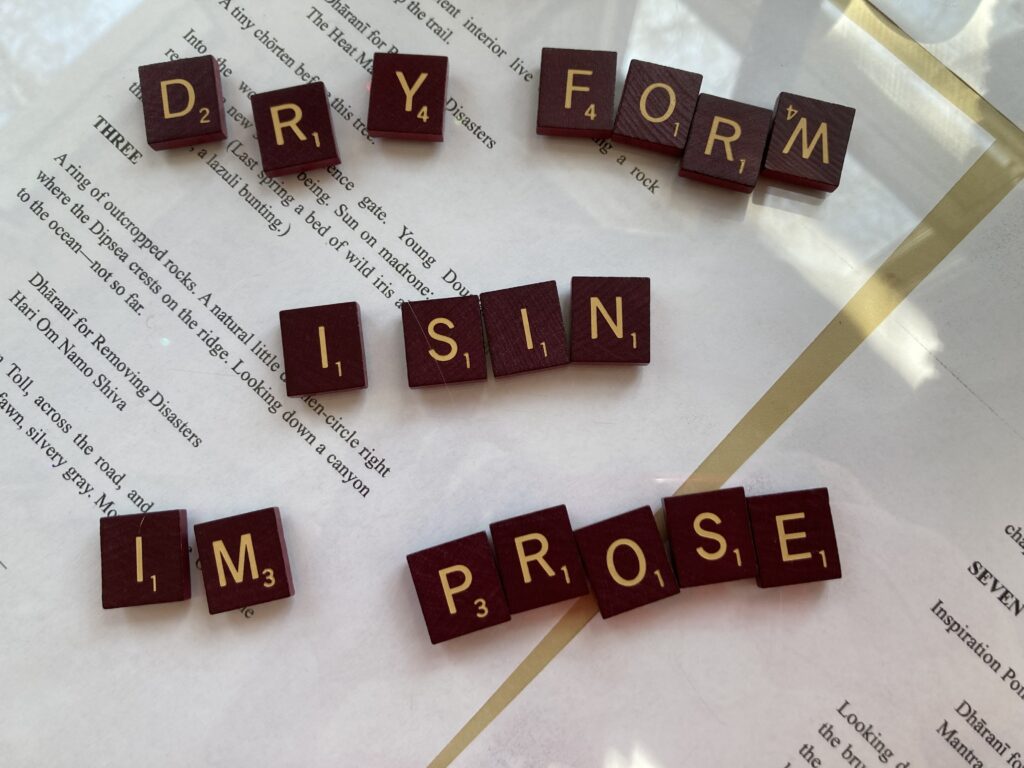
Any day I get to swim is a great day! Another good swim that started with my ritual: push off from the wall and swim just above the blue squares on the pool floor until I reach the deep end, which is about 2/3rds of the way, then surface. Today I shared the lane with another good swimmer. She was using pull buoys and hand paddles and had a strong freestyle stroke. Nice. As I swam, I thought about my latest visual, echolocation poem and wondered if I could figure out a form to read (not listen to) that prioritized aural over visual. Saw lots of orange — orange cones off to the side, orange cones ahead of me, blocking off the hot tub, orange swim trunks on Scott. No pool friends — fuzz or clumps or bandaids. Also don’t remember seeing any dancing shadows. Only the intense smell of chlorine and the almost leaking of googles and the familiar feeling of stroking and breathing and flipping at the wall.
This poem-of-the-day on poets.org! All of it is wonderful, but since it’s long, I’ll post only the second half. I love a great winter poem!
But, in January, we hold this promise. While lake ice shifts, dark a murmur, a creak. Now moonlight falls on snow crusts— always where two touch, night glistens. When distant wolf howls, answer comes.
Imagine the upturned muzzle, body a triangle of sound. Hazel eyes mere slits. This reverence—an ancient hunger for pack. See, too, each black branch; limbing—bare, suspended in soon.
How pristine the listening posture of pine marten, of fisher, of fox— each body cocked. To pounce, to dive nose-first into snow’s secrets, to search winter tunnels for mice.
We, too, poised like supplicants— rawness of the world a prayer we read but cannot speak. Silence an invocation, heavy as tobacco sinking into snow—into earth’s altar.
Against moon’s brilliance, slit your eyes. Let warmth of reflected light fill you; that holy—that glance of tiny gods. Make of your hands an empty globe, your body a vessel taut as river.
This image of snow at night! I love opening the back door, looking out at the snow in moonlight, and delighting in the snow sparkling like diamonds, or how I remember stars in the sky sparkling in a cartoon from when I was a kid.
Now moonlight falls on snow crusts— always where two touch, night glistens.
g listens — I never noticed, or thought about, how glistens is listens with a g. Glistens = sound traveling to ears (and eyes?), glazed with glitter
In her about this poem, Blaeser mentions being inspired by Kaveh Akbar’s talk on poetry and spirituality. You can watch and listen and read the whole thing online, here: The Word Dropped Like a Stone: Sacred Poetics Under the Reign of the Money God. Great title, and opening paragraph:
Today the great weapon used to stifle critical thinking is a raw overwhelm of meaningless language at every turn—on our phones, on our TVs, in our periphery on billboards and subways. So often the language is passionately absolute: immigrants are evil, climate change is a hoax, and this new Rolex will make you irresistible. Interesting poetry awakens us, asks us to slow down our metabolization of language, to become aware of its materiality, how it enters into us. Sacred poetry, from antiquity to the present, teaches us to be comfortable sitting in mystery without trying to resolve it, to be skeptical of unqualified certitudes. This lecture will orbit poems drawn from the past forty-three centuries, poems that remind us language has history, density, complexity. In surveying these examples, we’ll discuss how language art might serve as a potent antidote against an empire that would use empty, vapid language to cudgel us into inaction.
Another great late morning for a run. Overcast, possibly some drizzle/freezing rain/flurries. Not too cold, not too windy. Everything gray with brown and dull yellow. Listened to music because I had the King George song from Hamilton in my head — Billie Eilish, then my time and moment playlists. Even with the headphones in, I could hear a loud rumble below. Some sort of big machine doing something — was it at the white sands beach? I noticed a walker notice the sound too. He was startled, then confused, then curious as he peered down, trying to figure out what was causing the ruckus.
Witnessed a big, dark brown squirrel dart fast across my path. So fast that I didn’t have to stutter-step. Stopped at the bottom of the hill for a port-a-potty stop and to admire the river: blueish gray with little ripples. All open, no ice chunks yet. Stopped again at the sliding bench and in the tunnel of trees just above the floodplain forest. Took out my headphones and listened to the gorge. It sounded like it might be softly raining. Heard loud rustling, saw a flash of movement down below. Felt calm, relaxed.
At the sliding bench, I took a picture of the progress: open! no leaves to block out my view of the white sands beach, only thin branches that I can see through!
sliding bench / 19 nov 2025
One more thing about the run that I almost forgot. During the second half, after I climbed out of the flats, I felt fast and free. I had a huge smile on my face and was almost feeling a runner’s high. I haven’t experienced one of those in a while.
more of echo location
echolocation: using sonar flashes to “see” / interpreting echoes (as sound, as reverberations from the past) / navigation / location / locating and being located / finding being found / placing being placed / listen for echoes / gain substance and become an echo / repeat, not same but similar / the location of echoes / an indication of a big and open space / using words and sounds and syllables to place my self, to become more than ghost, girl
“Echolocation is the act of emitting a sound that bounces off an object or surface and comes back to you as an echo. This echo can help determine distance, location, motion, size, shape or surface material” (source).
Passive echolocation is sound that occur incidentally in the environment. As a car travels through a tunnel, the sound changes as the car enters the tunnel, travels through it and exits the tunnel. The sound your cane makes on the ground as you tap or roll will be different when you are next to a building compared to in an open area without obstruction.
Active echolocation, on the other hand, is sound you consciously produce like clapping your hands or clicking your tongue. Eventually, the sound you create bounces off other objects and comes back to you. Since your brain is familiar with the sounds you make, the echoes are easier for you to distinguish. By consistently emitting a sound and waiting for the sound to change, you can use active echolocation to help you navigate through an environment.
How does the sound of your footsteps change as you move from tile floor to carpet? Listen to the sound your voice makes when you are in a small room compared to a large room.
Sit in a moving car passing by parked cars. Roll your window down. Listen to how sound shifts between each parked car as you pass them.
you learn to hear doorways and walls and wide open spaces
Echolocation is an interesting metaphor within poetry and an important practical approach to navigating an unseen (or not seen) world.
Location for me is about recognition — being seen, offered a place in the family of things, and recognizing others (being held by/holding). And it is also about literally locating and navigating a world. As my vision fails, what other ways can I safely move through space?
And, here are a few lines from U A Fanthorpe that link echoes with ghosts and remind me of echolocation — especially those humpback whales:
Ghosts of past, present, future. But the ones the living would like to meet are the echoes Of moments of small dead joys still quick in the streets
These are the ghosts the living would prefer, Ghosts who’d improve our ratings. Ghosts Of the great innocent songs of freedom That shoulder their way round the world like humpback whales
The forecast was for 2+ inches of sloppy snow early this morning. Maybe rain too. Completely dry. Everything happened just south of us. Hooray! Great conditions for a run. Not too cold or too windy or too crowded. Today’s mental victory: I ran all the way up the marshall hill, over to the river, and down the summit hill without stopping. Stopped at the overlook on the bridge for a minute to check out the sandbar and the reflections and the smooth surface of the river. Beautiful.
10 Things
egg/breakfast sausage smells coming from Black Waffle Bar — no sweet waffle smell
no more leaves on the trees, all on the sidewalk
cars backed up on lake street
the light at the top of the hill: red
smell: savory, eggs and bacon
a car parked in a driveway blocking the path
the bent and crooked slats from blinds in a garage window
two people standing and looking at a stone wall above the ravine near shadow falls
a roller skier on the path, then on the road
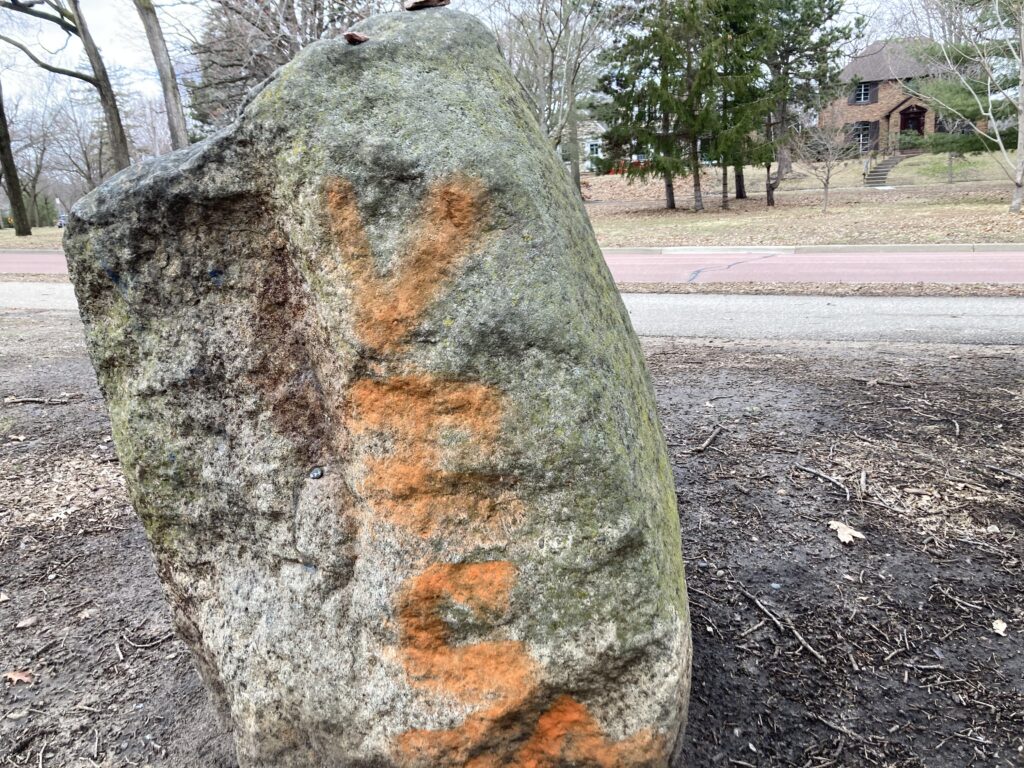
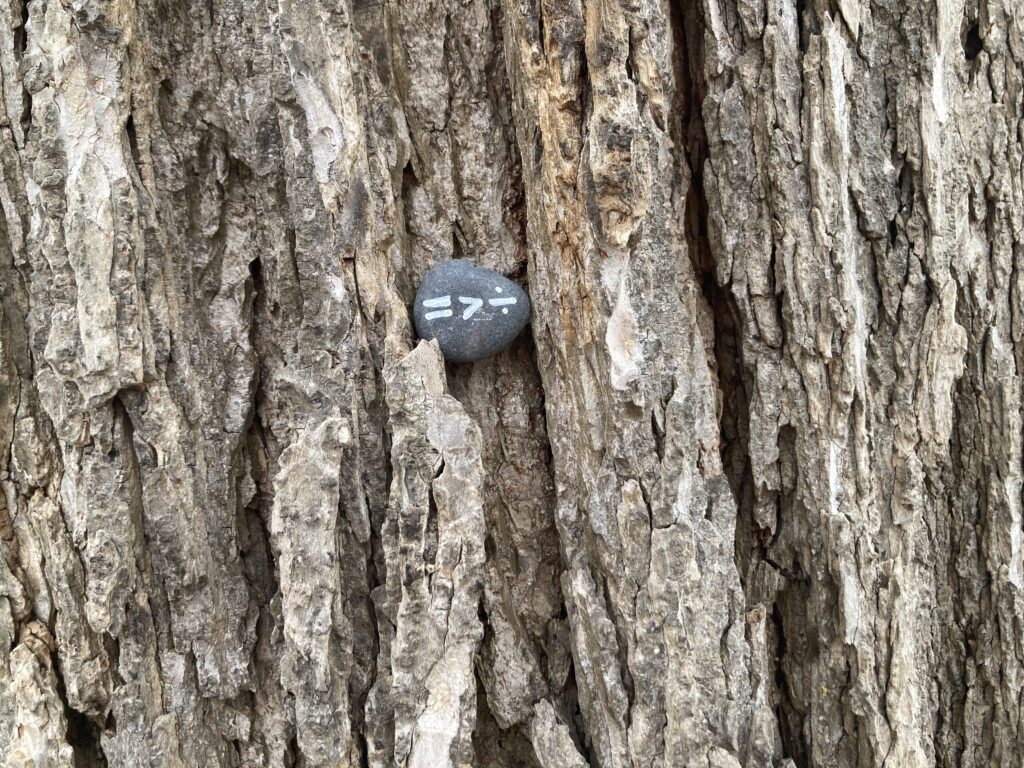
several stones stacked on the ancient boulder
echo / / location
I can’t quite remember how it happened, but I was thinking about my Girl Ghost Gorge poems and echoes and chanting — oh, yes, it had something to do with sound and a call for submissions for soundscapes in poetry. As I thought about my rock river air chants, ECHOLOCATION, suddenly popped into my head!
Echolocation is a great title for this collection. Or, echo location. Or, echo | | location. Or, as Scott suggested, echo / / location. I looked it up and someone has a poetry collection with the title echolocation. Is that a problem? To have the same name? I’m not sure. I like the sound of girl ghost gorge, and a girl (me), her ghosts, and the gorge are the theme that inspired all of the poems. But, being located in time and space — both placing myself and being placed by others — seems even more like the theme. At the very least, I’d like to title the final poem of the collection, echolocation.
Here’s something to read about humans and echolocation: How Does Human Echolocation Work? It’s with Daniel Kish, Batman from an Invisibilia episode.
update, several hours later: I received an email today from a journal that published one of my poems: I’ve been nominated for a Pushcart Prize! This is my second nomination, which is really exciting! It’s for “The Cut-off Wall” (“The Cut-Off Wall” — Rogue Agent, March 2025).
Also, another cool thought about my collection and the chants in it. I’ve been playing around with making the shape of the river out of words in my river chant:
flow flow flow slow slow slow
In early drafts, I had the words form the river, but now I’m thinking of making a page of these words and removing some to form the shape of the river/gorge. It’s echolocation with the syllables flow and slow bouncing off the object I cannot see! I’m imagining a sound accompaniment to this, inspired by Diana Khoi Nguyen’s reading of her “Triptych” for Ours Poetica:
inspiration starts 2 minutes in
Nguyen doesn’t remove words, but creates space in-between them where the shapes of her brother would be if he had not cut himself out of the photograph. I need to think about how I want to do it — like in this poem, or by removing some of the chanted words altogether. Maybe I wouldn’t call them chants but echolocations?
I think I’d like to do them for all three of the key “objects/subjects”: rock, river, and air! Very cool. I think this would be a great submission for the poetry soundscapes feature that I mentioned earlier in this post.
This section explores poetry in all its sonic dimensions. Across the premodern world, at a time when books were scarce and costly, poetry was often chanted or sung aloud, and the boundary between song and verse was fluid. Many poems resonate with the sounds of nature, while others pulse with onomatopoeia and sonic texture. Later, poets since the early 20th century have pushed the medium to its limits, exploring how the sonic interacts with grammar, rhetoric and rhythm on the page.
For a special section of Mantis 24 (2026), Soundscapes of Poetry, we invite submissions that engage with sound in any and all ways—whether through music, noise, onomatopoeia or rhythm, or even the sound of silence itself.
submission call for Mantis
The only bummer: your submission doesn’t include sound files; it’s only the written word. I’d like to find a journal that also wants the sounds.
swim: 1.5 loops ywca pool
Another swim! Swam at the y before community band rehearsal. It felt good and it wasn’t crowded. I had my own lane. I felt strong and relaxed and swimming a mile and a half wasn’t hard at all. I tried to think about echolocation while I swam, but I just counted my strokes instead.
After 4 days in Chicago visiting my sister, a great run. A wonderful trip and a wonderful return. I felt relaxed and strong and steady. Ran for 45 minutes without stopping. A big mental victory. And I didn’t feel wiped out at the end — a big physical victory. I kept my splits steady instead of speeding up too much in the second and third mile. I think that helped. I should be mindful of the second and third mile in future runs.
I ran south and then, instead of continuing on to the falls, I ran up the wabun hill and by the veterans’ home first. Then over the bridge, through the park, past the falls and up and out of the park. I almost always stop at my favorite viewing spot, but didn’t today. Hooray for mental strength!
10 Things
click clack — roller skiers behind me as I neared the locks and dam no 1
overheard — one roller skier to the other: hey — do you want to go to the falls and then turn around? another skier: sure!
open view: above the oak savanna, near the spot where the hills split and you can see the river
empty benches
the rumble of a jack hammer
a cacophony of chirping birds in the trees between the veterans’ bridge and the falls — such a convention!
the creek was brown and subdued
the falls were flowing, but thinner
on the cobblestones beside the falls: a small stretch of ice
waved to a regular: Santa Claus!
before and after the run
Before the run, I was thinking about chants and remembered the performance of a poem I had seen in the movie, Poetry in Motion. I looked it up: The Cutting Prow: For Henri Matisse/ Ed Sanders. What I had remembered, and wanted to hear again as inspiration was the chanting,
I’ve been thinking that my rock, river, and air chants should do something like this: repeating the essence/the form of something through the chanting of a few significant words. As I ran, I might have briefly thought about this chant/these ideas/this poem, but not in ways that I can recall now.
After the run, I watched Sanders’ full performance of the poem again and found it online:
“The genius was 81 Fearful of blindness Caught in a wheelchair Staring at death
But the Angel of mercy Gave him a year To scissor some shapes To soothe the scythe
And shriek! shriek! Became swawk! swawk! The peace of Scissors.
There was something besides The inexpressible
Thrill
Of cutting a beautiful shape—- For
Each thing had a ‘sign’ Each thing had a ‘symbol’ Each thing had a cutting form
-swawk swawkk___ to scissor seize.
‘One must study an object a long time,’ the genius said, ‘to know what its sign is.’
The scissors were his scepter The cutting Was as the prow of a barque To sail him away. There’s a photograph which shows him sitting in his wheelchair bare foot touching the floor drawing the crisscross steel a shape in the gouache
His helper sits near him Till he hands her the form To pin to the wall
He points with a stick How he wants it adjusted This way and that, Minutitudinous
The last blue iris blooms at The top of its stalk Scissors/scepter Cutting prow
(sung)
Ah, keep those scissors flashing in the World of Forms, Henri Matisse
The cutting of the scissors Was the prow of a boat To take him away The last blue iris Blooms at the top On a warm spring day
Ah, keep those scissors flashing In the World of Forms, Henri Matisse
Sitting in a wheelchair Bare feet touching the floor Angel of Mercy Pushed him over Next to Plato’s door
When I first heard/saw this a few years ago, I was drawn to the sound of the scissors and the words he repeated, but now I’m also thinking about Matisse and the cutting forms. Very cool. I might have to return to shadows, silhouettes, and forms and look into Matisse some more!
an hour, or so, later: Watching Poetry in Motion from the beginning, I encountered this great bit during the opening credits:
You don’t want to lead anyone in any subjective sense, to push anything onto them, you know. I mean, you could say teach in a certain way but it’s like putting light in people’s eyes, you know. Just opening the door but not showing them around and telling them, this is the chair, this is table, but saying, here’s the room and turning on the light.
4 miles river road, north/south 50 degrees wind: 14 mph / gusts: 29 mph
Ooo. Felt that wind, running north. A few times, I had to square my shoulders and sink down to face it, like I was a linebacker getting ready to tackle the air. Bright sun, lots of shadows — of tree branches, and fence posts, and flying birds, and swirling leaves. I don’t remember looking at the river as much as I remember admiring the air above it. Such openness! I felt strong until I didn’t. Stopped to walk a few times. Took some wooden steps down on a very steep part of the winchell trail. No wall or fence to stop you from falling far enough down to break something. Stopped at the sliding bench to see how much green was left and to admire the birds flitting from branch to branch.
Also stopped after mile 1, to record myself fitting some of Lorine Niedecker’s words into my running/breathing rhythm:
In every part of every thing stuff that once was rock.
Except, I forgot the stuff part, so I ended up with this:
In every part of every thing there once was living rock.
Does this second one make sense? Not sure.
before the run
Riprap. Thinking about riprap and rock and creating some sort of ceremony related to the gorge and running on and above the absence of rock. Reading Mary Oliver’s section in The Leaf and the Cloud, titled Riprap, fitting it into my breathing/running pattern —
tell me dear Rock — will secrets fly out when I break open?
Raking leaves and hearing the man next door scream at his grown daughter again through walls that aren’t thin, listening as she screams back, wondering what the daycare kids will remember from this moment.
before we are all wiped off of this planet that desperately wants us to live of natural causes, like kindness, like caring
Remembering something else I read earlier about a troubled woman who encountered a stranger that offered her kindness instead of judgment:
“The only question she asked me was, ‘Where do you want to go?'” Stacia said. “No judgment, no expectations. Just acceptance.”
Stacia immediately felt relieved.
She didn’t want to talk about her troubles; she just wanted to go home. She got in the car and they talked about things that gave her a sense of calm: nature, music and art.
After about 40 minutes, the woman dropped Stacia off at her house. Stacia didn’t learn the stranger’s name and she never saw her again. But she has never forgotten the woman’s question or how it made her feel.
“What I experienced that day — a single generous act of compassion — has stayed with me ever since and it shaped the life I went on to live.”
a few minutes later: Watching the daycare kids playing in the leaves in the front yard, screaming in delight. Remembering how one of them greeted my daughter last week as she parked in front of our house, distraught and overwhelmed, with: you’re beautiful, and how that kindness offered made such a difference.
Reading Gary Snyder’s poem, “Riprap,” fitting his words into my breathing pattern:
Lay down these words be- fore your mind like rocks placed solid by hands in choice of place, set before the body of the mind in time and in space.
Riprap: being broken up, made tender, feelings/fears exposed and scattered, gathering them into words and building a new foundation.
Beautiful morning! I was over-dressed in 2 long-sleeved shirts, running tights, winter vest, stocking cap, gloves, and a buff. Wow — what was I thinking? Had my hair in a braid, which really wicks the water, so when I arrived home RJP and FWA let me know that sweat was dripping (pouring) down my back. They thought it was hilarious and disgusting. It was.
My average pace wasn’t the fastest (11 minutes), and I stopped several times to walk in the second half, but I’m proud of my mental victories. I had planned to run this route before I started, but in the first mile I already felt it would be too hard. Just make it to the downhill at the locks and dam no 1, I thought. By the time I reached that I thought, just make it to the top of the wabun hill. Then it was, keep going over the bridge and make it to parking lot before you stop. Then, keep going until you hit 3 miles. I made it to 2.8, at the spot when the path and parking lot were closed for construction. I walked, then ran, then walked, then ran again for 1.5 miles.
10 Things
what a view between the ford overlook and hidden falls — wide open and steep
a lot of sirens — police, ambulance, fire? — across the river — on highway 5?
feeling strong and fast on the ford bridge
voices below on the winchell trail — happy, chatting
a tall fence around a construction site (for a BIG house) at Highland Bridge
later, that fence rattling, when a worker was entering the site
the “straight” (that is, straight to me) bluff line across the river, visible and framed with fuzzy tree limbs
someone sitting on the ledge at the ford overlook, gazing out at the gorge
the steady flow of water above hidden falls, part of the new water management plan for Highland bridge — making a soft, pleasing sound
empty benches, until I stopped at the one above the edge of the world to retie my shoes
Arrived home just in time to rake the leaves for almost 2 hours. Now I’m tired!
a few more things: Inspired by a call for hybrid/text-images/sound pieces for a journal, I thought about doing more with my rock, river, and air chants from GGG. Not sure I can do it in time for this call (11/16), but something fun to include with GGG as a collection.
Talked with RJP and she showed me her sketches from yesterday’s hike in the gorge. I love them! I could imagine us doing some fun collaborations!
Came across this great resource while searching for something else rock-related. It seems fitting to add it in this entry, since I ran to Hidden Falls! The Cascades of Minneapolis/St. Paul
Another swim. Hooray! It took some time to get my nose plug and goggles sorted — they were leaking — and my cap wasn’t ever quite on right, but it was a great swim. A solid 45+ minutes of moving through the water. I shared a lane with a woman who did some interesting sets. Lots of dolphin kick on her back. Some of the time she swam on her back, feet first — normally to move forward you swim head first. I don’t know if I’ve ever seen that before. She was doing a strange spread-finger paddle. She was already swimming when I started, and kept going after I finished. I wonder how long she swims for. I wasn’t trying to be competitive with her, but I probably was, in spite of my best attempts to be chill. Mostly, we were at opposite ends of the pool, but a few times I would catch up to her. Difficult to pass — was she trying to race me? Once our hands hit as we passed each other.
To focus my attention on something else, I looked down at the dancing shadows on the pool floor. Soft, not very distinct, like the floor was moving. It wasn’t that bright outside, so there were no big circles of light. Didn’t notice any pool friends — no fuzz.
hike: 30 minutes with RJP around the gorge 35 degrees
Hiked with RJP to some favorite spots that I’ve written about so she could take some pictures. She’s doing a series of colored pencil drawings inspired by GGG poems for her final project in her drawing class! Very cool!
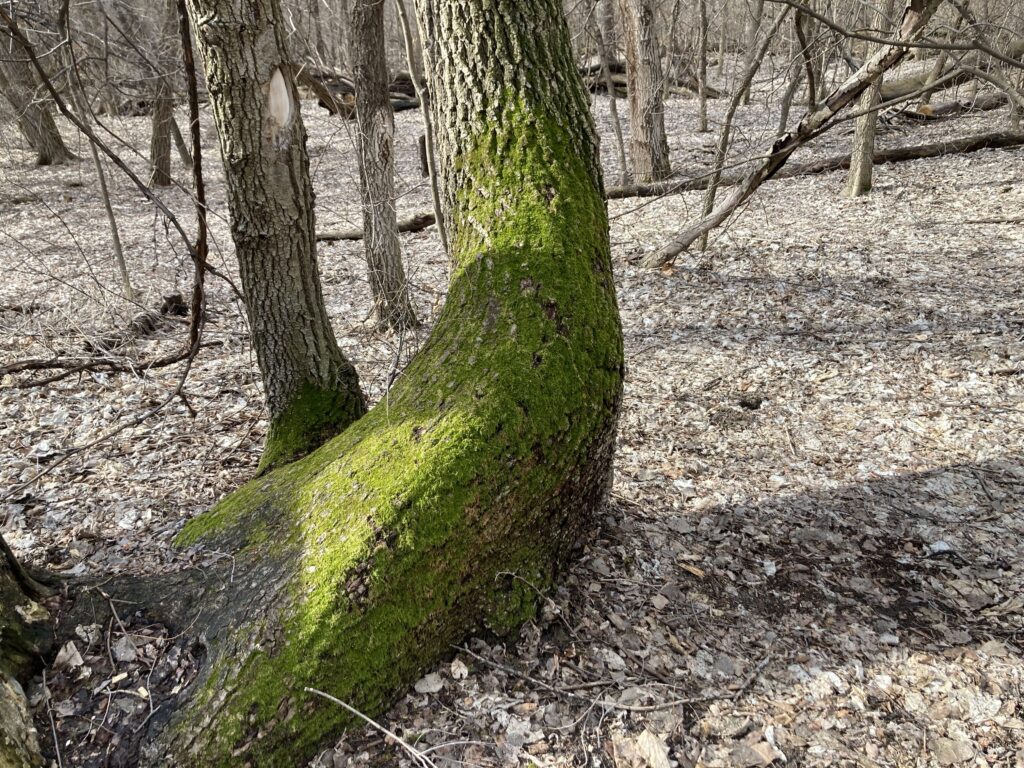
We took the old stone steps to the river, then back up and over to the winchell trail and the oak savanna. RJP took a picture of the tree growing through the fence — I hope she’s able to draw it. She took lots of pictures of steps and rocks and trees. Oh — and the surface of the river.
run: 4 miles wabun bluff / locks and dam no. 1 / river road 35 degrees
An afternoon run. Only 4:00 and it’s already getting dark. Chilly, but not too cold. The lack of wind helped. Lots of leaves on the trail, but not too many runners. A steady stream of cars, kids playing soccer over at the school — kick it higher! higher! Parents waiting to pick up kids at Dowling Elementary. Some voices down in the gorge. Could it be rowers? I couldn’t tell. The gate into the Locks and Dam no. 1 was closed. Is it closed for the season?
No turkeys or geese or fat tires or roller skiers. No music blasting from radios or droning leaf blowers. Plenty of squirrels, but none of them darted in front of me. Too busy rooting around in the dry leaves, making a racket.
cells remember
Found a great blog post on Poetry Foundation about cells:
symbiogenesis: we came about not only through competition but through acts of cooperation. We carry evidence of species merger in our cells, and of species relation in almost every structure we daily rely upon. Is there one piece of us that doesn’t also, in some form, belong to someone else? Your fingers ghosting chimp as they slender in the air. Lobe-finned fishes did protolungs, acorn worms might have done something like a heart. The more complex organs, like eyes, had to be developed many times, but jellyfish saw first, and not for us. Biology is remembering. Our cells remember ancient chemical interactions, pre-life, and our limbs remember salamanders. A poem remembers our past in language and posits a future in the simplest sense, like a to-do note, hoping that it will be read at some point hence, reminding us of something worth knowing. It can cast back between the “its” and the “octopus” in the second paragraph of this blog and remember the relation. In addition, it’s an ecosystem that, ideally, like any functioning ecosystem, deals with its own waste.
Like the octopus’s smart shadow, a poem’s shadow also always knows more than we do.
45 minutes neighborhood / old stone steps / winchell trail 29 degrees / feels like 13
Okay winter! Feels like 13! Took Delia on a long walk. Gray sky with snow flurries and some wind. Beautiful fall colors — what was left of the leaves. Much of them were already gone or has fallen last night and earlier today. Favorite moment while walking through the neighborhood: a buttery yellow door on the side of someone’s house.
Crossed over to the trail and took the old stone steps down to the river. Slippery with the recent snow and wet leaves. Good thing I was holding onto the railing! At the bottom, the forest floor was covered in green leaves. A strange sight. Reaching the river, I could hear it lapping the shore. I could see some small waves. I wish I could have stayed there longer, but Delia wanted to leave almost as soon as we got there. Boo.
Returning through the forest, I marveled at the slope of the gorge. All yellow, and so tall! The entire time I was down below, I could hear the leaf blowers up above. Really? Using a leaf blower today, when the wind is so strong — or using one ever; I hate leaf blowers.
I need to make sure that I get out for more walks/hikes this winter.