4.25 miles
lena smith boulevard
34 degrees
path: 100% ice / road: 5% ice*
*there are so many reasons why ICE is terrible and needs to get out and should be abolished. Here’s a small one: I like thinking and writing about winter ice — how it covers the trails, what it sounds feels looks like, the different forms it takes. But now that word overwhelming means: Immigration and Customs Enforcement and hate and evil. I want my ice back! Well, maybe not the thick, jagged ice that is currently cover the entire river road and made it impossible to run on today.
Today begins the 10th year of this log. I’m so grateful that I was able to run outside to celebrate it. It has been a whole week since I’ve been able to run outside above the gorge: too slippery on the trails and sidewalks. Today the roads were mostly clear, but the paths were not. So, I ran north on Lena Smith Boulevard until it ends at Minnehaha Academy on 32nd, then turned around and ran south until I hit 38th, then back north to 32nd, then south up the hill. Halfway up, I decided to do the hill again — hill repeats! So when I got to the top (it’s a small hill, so it only took 1 minute to climb it), I turned around and ran back down it. At the bottom, I took a 45 second break then ran up it again. I did that 5 times. It felt good!
During one of my breaks, I noticed a woman across the road, on the trail, holding up a big white sign. I couldn’t read what she had written on it, but I imagine it was Abolish ICE or something about Minnesotans standing up for each other because all the cars were honking. It was wonderful, hearing all the honks, and her loud, Thank You! after they did it. I started imagining different ways I could do something like her during my daily running practice. I decided a sign or banner would be too awkward. Next I thought about pinning a sign to my jacket. Then, the idea: work with RJP to design a shirt or something I could wear that offered some sort of resistance to ICE and/or expressed my love for my city. Should it just say LOVE? Whatever it is, I want it be big and brightly colored and easy to see/read. RJP stopped by and I talked to her about it. She’s excited!
Ice Get Out, Know Your Rights
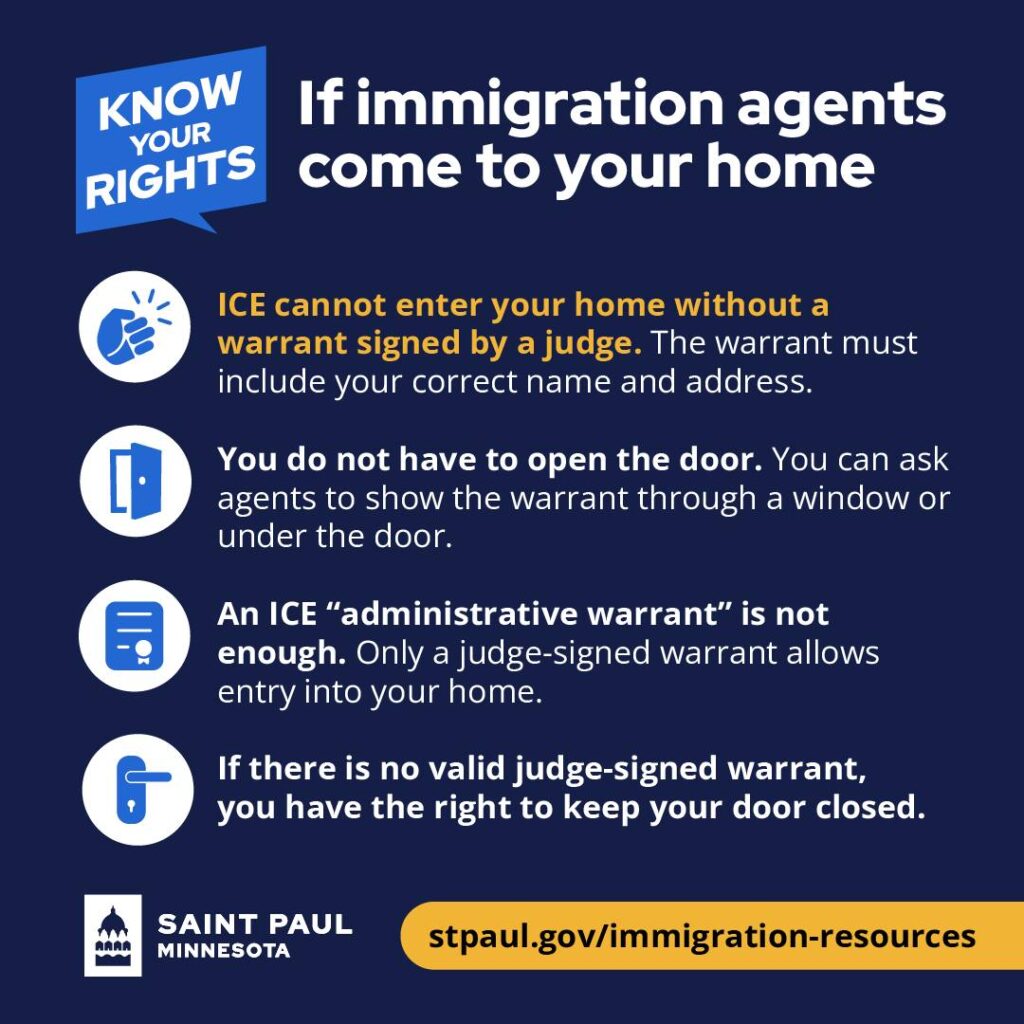
Another more accessible version:
KNOW YOUR RIGHTS:
WHAT TO DO IF YOU’RE STOPPED BY POLICE, THE FBI OR IMMIGRATION
Police are supposed to keep us safe and treat us all fairly, regardless of race, ethnicity, national origin or religion. This card provides tips for interacting with police and understanding your rights. Note: Some state laws may vary. Separate rules apply at checkpoints and when entering the U.S. (including at airports).IF YOU ARE STOPPED FOR QUESTIONING
ACLU Minnesota
Upon request, show police your driver’s license, registration and proof of insurance. If an officer or immigration agent asks to look inside your car, you can refuse to consent to the search. But if police believe your car contains evidence of a crime, your car can be searched without your consent. Both drivers and passengers have the right to remain silent. If you are a passenger, you can ask if you are free to leave. If the officer says yes, sit silently or calmly leave. Even if the officer says no, you have the right to remain silent.
YOUR RIGHTS
▪ You have the right to remain silent. If you wish to exercise that right, say so out loud.
▪ You have the right to refuse to consent to a search of yourself, your car or your home.
▪ Regardless of your citizenship status, you have constitutional rights.
▪ You have the right to a lawyer if you are arrested. Ask for one immediately.
▪ You have the right to record police actions as long as you do not interfere with their activities and are not breaking any other law. Stay calm. Don’t run. Don’t argue, resist or obstruct the police, even when you are innocent or police are violating your rights. Keep your hands where police can see them. Ask if you are free to leave. If the officer says yes, calmly and silently walk away. If you are under arrest, you have a right to know why.
You have the right to remain silent and cannot be punished for refusing to answer questions. If you wish to remain silent, tell the officer out loud. In some states, you must give your name if asked to identify yourself. You do not have to consent to a search of yourself or your
belongings, but police may “pat down” your clothing if they suspect a weapon. You should not physically resist, but you have the right to refuse consent for any search. If you do consent, it can affect you later in court.