jan 9/SWIM

1.6 miles
ywca pool

Finally able to get back to the pool! It felt good to swim, and tiring. My goggles kept leaking and I had trouble not stopping to fix them. Now my eyes are sore. Still, always grateful to be able to swim.

Tried a new set: 6 x 200s, continuous / even 200s breathe every 3/4/5/6 by 50, working on kicking out of the flip turn / odd 200s breathe every 3/4/3/4 by 50s, working on taking at least one stroke out of the flip turn before breathing. The odd 200s were difficult; I like to breathe right away after a flip turn. In the summer, there are no flip turns, which I prefer, so I don’t have to worry about when I breathe.

Split a lane with a woman I’ve swam next to before. I think she has the same green and black TYR suit I wore a few years ago. She’s a strong swimmer, but not that fast. Today she swam freestyle, backstroke, and breaststroke. Sometimes she had booties on her feet. Other times she walked/marched/ran the part of the lap in the shallower end.

A man in a black shirt and black swim trunks swam on the other side of me. He was doing underwater running drills in the shallow end with a lot of running backwards. I wonder if we was coming back from an injury or just cross-training. When he got to the deep end, he swam freestyle and breaststroke. At one point I stopped to drink some water and I realized that he was having a loud, animated conversation with the aqua jogger in the next lane. I had not heard it all as I was swimming. When I started swimming again, I could see he was talking — something about how he was moving underwater, his legs, how his body was positioned — but I still couldn’t hear he was talking. Strange, but not strange.

As always, I noticed the orange of the signs on the pool deck, the orange of Scott’s swim trunks.

Noticed a few cracks or bits of crud stuck to the tiles at the bottom of the pool as I swam above them. Thought about the wonderful book, The Swimmers, and the story in it about the mysterious cracks that began appearing in the basement pool.

Did I think about anything else? This is tiring. My feet/legs feel like rudders. Is Scott standing at the end of my lane? Is this swimmer/runner next to me trying to race? How can I balance supporting my daughter when she’s anxious and needs to stop doing things, with holding her accountable and not letting her stop doing everything? Why are my goggles leaking? That’s all I remember.

Found this delightful poem by Paige Lewis this morning:

I’m not Faking My Astonishment, Honest/ Paige Lewis

Looking out over the cliff, we’re overwhelmed 
by a sky that seems to heap danger upon us. We 
end up staring at a single white fluff in the air— 
feather, fur, dandelion puff—we don’t care 
to define it. The relief of having something 
to focus our attention. At home, our patio furniture 
unscrews itself under the usual sun. On this trip— 
well, I’m not any sadder, I just have more space 
for my sadness to fill. I don’t want to give 
particulars. A woman huffing up the trail behind 
us says to her hiking partner, It wasn’t my size,
but it was only 9 dollars. And now all I want 
is to see what it is. The future refuses 
to happen, so where else should I turn?

I love the line breaks in this poem and what they do to the meaning– we don’t care/to define it and The future refuses/to happen. I love the line, I don’t want to give/particulars, and And now all I want/is to see what it is. I enjoy overhearing conversations and trying to make sense of them, although I’m not sure I’d like to know what it is; I’d rather imagine what it might be.

dec 30/SWIM

1 mile
ywca pool

Another fun swim with RJP! Today, instead of continuous 200s, I mixed it up with a few faster 50s, 3 100 IMs, and a bunch of 200s. I stopped several times to talk with RJP. At one point, we were swimming together. I kept looking at her underwater, trying to catch her eye. She never noticed.

Anything else? The water was clear. The chlorine didn’t burn my nose. My googles only leaked a little. I don’t remember hearing many sounds — no squeaks from my nose plug. As usual, it was all about orange. Every time I turned my head, I saw orange (the orange signs on the pool deck) or looked for orange (the orange of Scott’s swim trunks).

a new form: the minison

Found a new poetic form that I’d never heard of before: minison. A mini sonnet. The only “rule” is that the poem is 14 letters long. Wow. Discovered The Minison Project and went down a rabbit hole.

rabbit hole trip (14 letters):

begin here: Issue 0 of the zine
go deeper here: The Minison Zine
get your bearings here: The Minison Project
find other examples here: corkwood blossom and the fourteen ghosts
fall further here: Seymour Mayne – Hail: 14 word Sonnets

a few favorite minisons:

fourteen ghosts
between the snow
nonstop farting
about aboutness

a favorite 14 word sonnet:

DECEMBER FLIGHT/ Seymour Maynes

These
starlings
swerve
in
flocks,
turning
their
frantic
wings
towards
the
sun’s
slanting
light.

So much fun! I could see these as being great for playing around with words, experimenting, and finding better words for describing a run or a swim. What could I say about my swim today?

  • butterfly hurts
  • winter swimming
  • flip turn fiasco
  • leaking goggles
  • staring at Rosie
  • I only see orange

When I have more time, I’d like to try these out more. Maybe suggest them in my class?!

dec 28/SWIM

1 mile
ywca pool

Just RJP and me today. We swam for about 1/2 hour. Crowded. We still managed to find a lane to split. At some point, I noticed a line of kids walking the pool deck. Otters swim team. RJP and FWA were on the team for 4 or 5 years. I wonder if it was strange for RJP to see all of them out of the corner of her eye as she kept swimming? I forgot to ask.

update (later that day): I asked RJP and she said that the kids weren’t Otters. They were just learning to swim and had on swimming vests. I asked, were the vests orange? Yes, she said. Of course, orange. Every time I swim at the y, I see orange, always orange. Will that make it into my orange poem? Possibly.

There were 2 women swimming next to us. One of them pushed off the wall for her first lap in a sprint. At least it looked like a sprint. The other woman was a little slower, more measured. 3 lanes across, a guy was swimming fast, doing a hard set. Another woman was walking underwater and stretching her legs.

There was a low buzz from the leisure pool as kids burned off holiday energy.

A good swim. I’d like to figure out how to swim for longer. It’s hard because RJP and Scott don’t want to stay quite as long as me, and they’re the ones who can drive. I’ll figure something out. For now, I’m just happy to be swimming in the winter!

Later, in the car, RJP told me about some older women she overheard in the locker room. They seemed like old friends, she said, and were happily chatting away. I love this about locker rooms. So many people are happy, having just worked out. I’m glad RJP noticed it too.

Here’s a color poem I discovered yesterday. I want to study it to see how it can help me with my color poems.

Against Pink / Dara Yen Elerath

Pink is an unhappy hue, not soothing like cerulean, nor calming like lavender or gray. It is the color of fingernails shorn away, blood dripping from the waxen quick. It is the color of a sunburned arm. The color of harm that lingers on cut shins for days. Pink is not the shade of buttercups or daisies. It is the color of poisonous brugmansia blooms, of poppies that bring on sleep. Pink saturates the face in anger. It is the cast left on a cutting board by a hunk of uncooked meat. Pink, too, is the bittersweet shade of passion subdued, passion that has slipped from burgundy to rose. It is only a tincture of desire and so carries the least conviction. It is the tint that drifts away unnoticed in the night. Be frightened of pink. Do not think it the innocent color of dresses or barrettes, the blush of areolas, strawberry snow cones, or grenadine martinis. Try, for once, to see it rightly. It is frightening. It is the hue of a person’s insides, the color of a womb. That room where life arises. That room where babies are made. Where arms, legs, and heads are created. Eyes, blood, and tiny teeth.

dec 26/RUNSWIM

run: 2.5 miles
ywca track

Went to the Y with Scott and RJP this morning, so I ran there. First time running on the track in 4 or 5 years. Wasn’t too bad — not that crowded. Very quiet. I forgot to count laps so my distance is approximate — my watch never seems to be accurate indoors. Listened to “swim meet motivation” playlist and observed people as I passed them.

10 People I Noticed on the track

  1. a man, sometimes running (slowly), sometimes walking, wearing black gloves — not boxing gloves but also not winter gloves
  2. another guy, pulling a sled at the far corner
  3. a woman running, the key to her locker jangling in her pocket with every step
  4. an older white woman with white hair — was she wearing a pink sweatshirt, or was it blue? I can’t remember now. She walked pretty fast on the track, but was slow on the stairs when I was behind her earlier
  5. RJP, walking — I waved at her every time I passed by. Was it annoying?
  6. someone using rattle ropes, off to the side, furiously lifting them up and down
  7. a woman on an eliptical machine in front of one of the windows
  8. an older white guy with white hair in jeans and a maroon shirt walking around the track
  9. Scott, running
  10. another older white man wearing gray shorts, walking

I don’t remember thinking about much, or noticing anything that interesting, or overhearing some strange conversation.

swim: .25 miles
ywca pool

Only needed a quarter of mile to reach my year goal of 120 miles. Not a very ambitious goal for an entire year of swimming; this goal was mostly for the open swim season. I’m thinking this year, since I’m swimming in the pool, I need to make it a lot bigger. 200 or 300? Not sure. Split a lane with RJP. Crowded today because of the break. All I remember was swimming next to a bunch of swim team kids, feeling sluggish in my first lap underwater, and noticing how the water was clearer than it had been last week.

Found this hybrid journal online, Cutbow Quarterly review (2025: clicked on the link and it no longer exists). A call for submissions from jan 1-2. I want to submit something — either a mood ring or a colorblind plate, but which? One note: some of the site is almost unreadable for my bad vision. Not nearly enough contrast! Thankfully the journal pdf is easier to read.

I love lists, so I was excited to see this poem in the first issue:

List of Things to Make a List of/ Beth Mulcahy

Make a list of
things that sound like thunder but are not conversations to have
hard conversations to have
what makes conversations hard what makes conversations easy
things to do to get through a hard day
songs that helps with getting through a hard day
people to tell about it what to tell them
people not to tell
ways to prevent it
how to describe it
how to tell people the truth when to tell people the truth things you have said
things you should not have said things you should have said things you should say
to someone specific to anyone
to no one
how to let go of retroactive anxieties
things you used to care about that you don’t anymore things you wish you cared more about
things that used to be different
examples of passive aggressive statements examples of things that are too direct (harsh)
ways of beating around the bush
ways of cutting to the chase
how to calm yourself down
apologies you owe
things you can’t forgive
things you can’t forget
things you should forget
things that are your fault
things that are not your fault
the hardest things you’ve had to do
how to make things easier
for self
for others things you can explain
things that you cannot explain things you can’t describe things to write through
things that are private
people who love you
people who love you and also like you
things you have to offer
things to say to people you love things to say about the weather people you talk to every single day people you don’t know anymore people you loved who are dead ways to let things go
how to keep from having to let go ways to pay attention
things to pay attention to
things to ignore
places to fly away to
ways to be where you are

dec 21/SWIM

2 miles
ywca pool
winter storm warning — snow, wind, cold

Got to the Y with RJP and Scott just as the big winter storm was beginning. Swam for an hour, which is the most I’ve done since open swim ended in August. Mostly, I felt strong. A little tired, a little sore. It was fun to share a lane with RJP. It makes me very happy that she’s swimming again.

10 Things I Noticed

  1. there was a lifeguard today
  2. the leisure pool was open with lots of happy kids, at least one screaming, not in anger but delight
  3. one woman next to me did some side lunges as she walked in her lane
  4. another woman did a strange butterfly stroke — was it butterfly? She was doing the arm motions but not much else, and barely that
  5. as usual, orange everywhere. I looked up and the only color I could see was the orange from the 2 signs on the pool deck
  6. the water seemed a little less cloudy, clearer
  7. some new things (or things I haven’t noticed before) on the pool floor: 2 white somethings — what were they?
  8. after one of the women left, another swimmer came, a man wearing a blue speedo
  9. my nose squeaked as my noseplug shifted, my googles leaked a few times
  10. noticed what a great job RJP does with her streamline off the walls

Before heading over to the y, as I was drinking my coffee, I read some more of Maggie Nelson’s Bluets. Here’s an excerpt that I was thinking about:

40. When I talk about color and hope, or color and despair, I am not taking about the red of a stoplight, a periwinkle line on the white felt oval of a pregnancy test, a black sail strung from a ship’s mast. I am trying to talk about what blue means, or what it means to me, apart from meaning.

Bluets/ Maggie Nelson

I’m interested in how this distinction between meaning and what it means to me works in understandings of color. Also, what meaning means here. Not truth, or what color something actually is, but how it comes to mean something to us. How we’ve collectively decided that a stop sign is red, for example. Not sure if this makes sense, but I’m also thinking about the collective decision we’ve made to understand the line on a pregnancy test as blue and not green or gray or some other color that some of us might be seeing instead. With this last sentence, I’m thinking about more than my vision issues, but the idea that how we see color can be at least partly determined by how we’ve named it. See: Crayola-fication of the world

dec 18/SWIM

.75 miles
ywca pool

Swam with my 16 year old daughter this morning! She used to be on the swim team and was really good. Then she stopped for years. I hope she starts again. She’s a great swimmer and it was fun to swim next to her. Because I was swimming with her, and it was her first time back, and we have to leave to pick up her brother from college in the late morning, I only had time to swim 1325 yards. Felt good. Noticed that the man next to me was missing part of his leg, from the kneecap down. Wondered how it felt to be moving through the water — more freeing? awkward? hard? easy?

Noticed more people wearing masks as they moved around the locker room and near the track. Was there more masks, or was I just noticing them more? Should I be wearing a mask in the locker room? Will masks be required again sometime this winter?

dec 16/SWIM

1.5 miles
ywca pool

Another swim! Felt good. A little sluggish at the beginning, but strong. Mostly steady splits and only stopped a few times. Didn’t count laps at all and had no idea how long I had been swimming until Scott showed up at the end of my lane. Unintentionally raced the guy swimming on one side of me. Well, more like, he tried to race me. Admired the stroke of the older swimmer on the other side. Could tell he was a good swimmer. After I was done, Scott and I talked with him for a few minutes in the hot tub. He’s in his mid to late 60s and was a distance swimmer 45 years ago. Wow — I bet he was good in college.

10 Things I Noticed

  1. the water was a little cloudy
  2. the guy next to me (the one who raced me) started by walking down his lane to the edge of the deep end
  3. this same guy hardly kicked at all, as far as I could see. Was he using a pull buoy?
  4. during my start ritual — pushing off and swimming underwater until I reach the blue line right before the deep end — I swam just above the bottom. I watched the blue tiles, 6 across, as I kicked my legs and tried to squeeze my outstretched arms to my ears
  5. lifting my head out of the water and seeing orange
  6. the red racing suit of a woman in the hot tub — not lifeguard red, darker and deeper than that
  7. my nose squeaking because my nose plug had shifted
  8. the water being churned up by a woman next to me as she did a fast 50
  9. almost every time I raised my eyes out of the water to see if Scott was there, or someone else who wanted to split a lane, I mistook my blue towel for a woman in a blue bathing suit
  10. the flip turn of the woman next to me, especially the phase of it when she was on her back, before the pushed off and twisted around

Earlier this morning, I shoveled the deck and the sidewalk. Heavy, wet snow that stuck to my bright orange plastic shovel. I could hear the whirr and the buzz of several snow blowers. Felt my forearm and elbow ache after I was done. Mostly, I don’t mind shoveling. It’s satisfying and a chance to be outside, breathing in the air, giving attention to the snow.

Looking for poems about shoveling snow and snowblowers (which is difficult), I came across a mention of “The Snowblower Ballet.” Here’s a description from a funding request for a snowblower ballet in the twin cities from 2016. Wow!

The Snowblower Ballet is a project that would involve dancers, wielding snowblowers and shovels, clearing a snow-covered surface in a dance set to music. In addition to performing a dance, they’ll create a pattern, an image in the snow, captured by a drone flying above, transforming the familiar but dreary toil of snow removal into unexpected joyful art. We want to stage a large scale Busby Berkeley version of the project on Harriet Island in St. Paul in January 2018, as well as a smaller scale pas de deux between two snowblowers on White Bear Lake in February 2017 as part of the Art Shanty Project. The Harriet Island version will be funded with a Knight Foundation grant, but only if we get matching funds. Art Shanty will pay us $200 for the White Bear Lake performance, but that’s not enough to hire dancers and a choreographer. That’s where we hope an Awesome grant will come in. We hope that a grant from Awesome will make the Art Shanty dance possible, which we can then turn into a video to generate excitement to raise money to make the expanded Harriet Island version a reality. Won’t you help us turn snow shoveling into art and bring joy to Minnesotans in the depth of winter.

The Snowblower Ballet

It doesn’t look like they ever got the funding they needed for it. Or did they?

dec 12/SWIM

1.5 miles
ywca pool

After a week and a half off because of COVID quarantining (daughter RJP had it, not me), I was able to go back to the pool. Crowded. Did my usual swim — continuous 200s, breathing every 3/4/5/6 by 50s, not stopping until I saw Scott at the end of the lane. I felt strong and steady and happy to be using my muscles differently. My kneecap (or was it just above my knee?) felt weird once, but otherwise was fine.

10 Things I Noticed

  1. Miss Luna came about 20 minutes into my swim
  2. my nose plug kept shifting and I had to stop a few times to adjust it. I didn’t feel any water coming in my nose, but I could feel my air coming out
  3. after the first few flip turns, my nose burned from the chlorine
  4. looking straight ahead underwater, I watched as my hands made bubbles as they entered the water
  5. the woman one lane over was swimming breaststroke, her frog kick looked extra froggy
  6. a man in black swim trunks was walking the length of the pool by the far wall. Why?
  7. looking up, I noticed someone at the end of my lane. She asked to share a lane. Sure! I think I might have said yep too.
  8. the woman sharing my lane kicked a lot as she swam freestyle. I saw, but didn’t feel, the water churning as I swam past
  9. turning on the wall, pushing off, looking ahead and noticing the bubbles of my lane partner, and thinking about how I was gaining on her*
  10. orange: my orange bag, the orange sign saying No lifeguard on duty, Scott’s orange swimming trunks

*I’m not really that competitive (am I?), but I do get some pleasure in being faster and passing people. I don’t want to race them, just pass them. It makes me feel like I’m going faster.

In the middle of my swim I started thinking about the Ishihara plate I’m working on, the one about the test and why it, and the Ishihara plate as form, is important to me. I thought about how the draft I worked on this morning seems to offer a redemptive conclusion — I will choose to see my changing vision not as losing it, but it being made strange. Then I thought about how I don’t want to do that, to resolve it, to make it a moment of redemption. As I circled around the pool, I wondered how to make this Ishihara poem more messy and uncertain. Even as I do prefer to understand my vision as strange and not lost, I don’t want to conclude the poem with this idea. As I was thinking this — and in far less words than I’m writing now! — I thought of something else, how I find the Ishihara plate pleasing with its many circles and dots — I love polka dots! — and colors, but I also find it a little gross and upsetting. It looks like disease or cancer cells under a microscope. I’m thinking about cancer a lot right now. Scott’s mom just died of lung cancer, and we’re watching Walter White deal with lung cancer on Breaking Bad — FWA finally convinced us to watch it and wow, what a show! What to do with this idea in the poem? Not sure, but I’m also thinking about cancer cells as uncontrolled growth and the uncontrolled growth of the market as progress in capitalism, and then how the version of cone dystrophy I have is progressive — it gradually worsens, so here progress is not about getting better, but getting worse. Whew — that’s a lot! Not sure how, if it all, I’ll use this in the poem, but it was helpful to think about it in flashes as I moved through the water.

dec 1/SWIM

1.5 miles
ywca pool

Back to the pool. Hooray! Swam a lot of loops — 99 laps — while breathing every 3, then 4, 5, then 6. Worked on breathing on my weaker side (left) when breathing every 4. Decided not to count, just swam until Scott entered the pool area and stood at the top of my lane. Not very crowded today. A guy in swim trunks to my right, swimming a lot of side stroke. It was fun to watch the wide sweep of his hands as he moved through the water on his side. Empty to my left, then Miss Luna arrived. Almost positive it was Miss Luna — the regular swimmer who swims with fins and paddles and does butterfly, and wears a pale green suit, with pale blue too, that makes me think vaguely of a luna moth. She wasn’t in pale green with blue today, but a similar suit. Same strong stroke, same fins.

They must have added chlorine since my last swim. Much clearer, sharper too. The blue of the tiles on the bottom that make the lines dividing the sides of the lane were a vivid blue instead of almost looking navy or black. Speaking of color, kept seeing yellow and orange when I lifted my head.

Felt strong and happy and buoyant, riding the surface, smoothly powering through the water. At some point, I started thinking about my color poems. I’ve written one about yellow, another about color in general. Before swimming, I started one about gray. Almost everything is gray or seems gray or leads to gray. Other colors are only pops, flashes, suggestions. I thought about making the poem mostly variations on the phrase, a gray day, or singing a song of gray, or gray area, or grayed out. Then I thought about having the poem visually mimic how I often see color. It’s frequently a flat or hazy gray until suddenly, to the side, a slash or pop of color appears, like orange or red. So, most of the words are gray, gray day, gray dreams, sing a song of gray, then off to the side, “orange” appears. Could this work? I’ll give it a try!

december challenge

I’m not sure what my challenge for this month will be. I’m in the thick of working on these color poems and prepping for my finding wonder in the winter writing class in late January (so excited to teach this one!). Should it be about orange? Or the poet that just wrote a collection partly about her degenerative eye disease — Julia B. Levine — titled, Ordinary Psalms? Or joy, inspired by recently purchasing Ross Gay’s Inciting Joy and my desire to explore what gray joy could be? I’ll give it another day, but I’m leaning towards Gay and joy. In the meantime, here’s one of Levine’s psalms from Ordinary Psalms:

Psalm with Near Blindness/ Julia B. Levine

i. 
The world mostly gone, I make it what I want: 
from the balcony, the morning a silver robe of mist.

I make a reckless blessing of it—the flaming, 
flowering spurge of the world, the wind 

the birds stir up as they flock and sing. 
Edges yes, the green lift and fall of live oaks,

something metal wheeling past, 
and yet for every detail alive and embodied— 

the horses with their tails switching back and forth, 
daylilies parting their lobes to heat— 

I cannot stop asking, Sparrow or wren? Oak
or elm? Because it matters 

if the gray fox curled in sleep 
is a patch of dark along the fence line,

or if the bush hung with fish kites 
is actually a wisteria in flower. Though 

even before my retinas bled and scarred 
and bled again, I wanted everything 

different, better. And then this afternoon, 
out walking the meadow together,

my husband bent to pick a bleeding heart.
Held it close as I needed 

to see its delicate lanterns, 
the shaken light. 

ii. 
Deer, he says, our car stopped in traffic. 
And since I can’t see them, I ask, Where?

Between the oaks, he answers,
and since I can’t see the between,
                                                                I ask, In the dappling?                        
He takes my hand and points 
to the darkest stutter in the branches 
                                                                and I see a shadow 

in the sight line of his hand, his arm, 
his blue shirt with its clean scent of laundry, 

my hand shading my eyes from glare. 
There! he says, and I can see 
                                                              the dark flash of them 
                                                              leaping over a fence (or is it reeds?), 

                                                              one a buck with his bony crown, 
                                                         and one a doe, and one smaller, a fawn,

but by then it seems they’ve disappeared 
and so I ask, Gone?
and he nods. 

We’re moving again,

                                                               and so I let the inner become outer 

                                                               become pasture and Douglas firs 
                                                               with large herds of deer, elk, even bison, 

                                                               and just beyond view, a mountain lion 

auburn red, like the one we saw years before, 
hidden behind a grove of live oaks, 

                                                                                        listening.

Oh, I am so excited to find this poem and the brilliant work of this poet! I can relate to so many of her words! The silver mist of the morning, the edges mostly gone, the emphasis on movement, her husband helping her to see, the inner becoming outer. Some differences too (probably partly because I imagine my vision isn’t quite as bad as hers): I don’t think the world is gone, more shifted, italicized, transformed. And I don’t need to know exactly what type of tree I’m seeing. I’d like to be able to tell the difference between a deer or a bush — sometimes I can’t — but the fine details matter less.

My thoughts on this last bit, about seeing exactly what’s there, are partly inspired by Levine’s response in an interview about the psalm. She says:

As I worked on it, this poem felt to me like a meditation on one particular dilemma of near blindness: that is, in the absence of a clear visual image, how the mind fills in, and what relationship this kind of seeing” has to spiritual notions of “vision” as opposed to a medical/anatomical definition of “sight.”

To explain further, there are some absences of visual perception that I actually like: I don’t see how dirty my house is, or whether or not my clothes are covered in blonde dog hair, and my friends and family all look very beautiful to me since I cannot see their wrinkles or whatever else might be considered “flaws.”

But I have loved the natural world since I was a small child and it is my inability to see it accurately that pains me. So, in the poem, I am interested in both how tounderstand what I do “see” as a amalgam of my own mind and memory, plus the relational construction that primarily my husband lends to me, and finally, what I can actually perceive. The result of this perceptual construction can sometimes feel like an important “truth” as opposed to visual fact.

I have loved the natural world since I was a small child and it is my inability to see it accurately that pains me.

Interview with Julia B. Levine

I love the natural world, but I’ve never needed to see it accurately in the ways that Levine seems to be invoking. I’m not interested in critiquing her perspective, but in positioning mine in relation to it. Also, I’d like to understand more of what she means by accurate. The more I (attempt to) study how vision and sight work, the more I’m fascinated by how much guesswork it involves for everyone, even “normally” sighted people. The brain filters, guesses, fills in. What does it mean to see nature accurately? Also, what about other senses? Can they enable us to access parts of nature that our limited/biased vision can’t? Losing some sight and the ability to easily, and more quickly, with much more detail, sucks, and I struggle with it. But I’m also interested in ways of knowing/understanding/recognizing/becoming familiar with beyond central vision and fine detail. I have a different project than Levine, but I deeply appreciate her words.
nov 21/SWIM

1.5 miles (2700 yards / 108 laps)
ywca pool

Very glad to be able to swim this morning. My foot, which has been sore the past few days, feels much better today. Swimming instead of running will help even more. I swam my usual continuous 200s. Decided not to count the laps and just keep swimming until Scott came to the pool and stopped at the end of my lane. A few workouts ago, I asked him to stop at the end of my lane instead of going straight over to the hot tub to wait for me to be finished. I explained that it’s hard for me to recognize him — I might not be able to do it. Now I don’t have to worry. It’s not hard for me to see a person with bright orange shorts at the end of my lane. Just another strategy for dealing with not being able to see that well.

note: re-reading this entry on 21 nov 2025, I thought about how this statement, it’s not hard to see a person with bright orange shorts at the end of lane, is not always true these days. Just a few days ago, Scott stood at the end of my lane in his bright orange shorts for 3 full laps trying to get my attention, but I didn’t see him. Was it bad vision or a fluke? Just yesterday, he stood there again and I saw him without a problem.

10 Things I Noticed While Swimming

  1. a few more things on the ground, at least one stringy thing floating in the water — I was in a different lane, so that might it explain why there were more things. It could also be that it’s time for them to clean the pool again
  2. no chlorine stings
  3. crowded — most lanes had 2 people
  4. the woman sharing the lane with me was a great swimmer. I liked watching her freestyle as I approached her, and the way she shot off the wall
  5. 2 Regulars — Mr. Speedo, the older white man who is lanky and probably has been swimming for 1/2 a century, and who wears a dark speedo and the oldish white woman in the pale blue and green suit who sometimes wears fins or booties on her feet, mitts on her hands. Today, after about 30 minutes in the water, she started swimming butterfly. It might be a stretch, but I think I’ll call her Miss Luna after the luna moth which is pale green — this luna moth is not a butterfly, but people often mistake it for one
  6. predominant color I noticed again: orange. I think a lot of the orange I see are the small sandwich board signs that are orange and read, caution wet floor, or someting like that
  7. looking straight ahead through the cloudy water, I could just barely see my lane partner approaching. She was in a solid dark suit and was streamlined, making me think of a small shark — surprisingly, this didn’t make me nervous
  8. at one point, Miss Luna and the shark were swimming at the same speed, on either side of me. It was fun speeding through the two of them — like what, a rocket?
  9. one distinctive noise — the squeak of my nose because my nose plug was not on properly
  10. 2 older women in the locker room discussing the big snow storm in upstate New York. 2 things in particular I remember: first, that the football game had to be moved somewhere else and two, about how after a big storm there are always tons of pictures on social media of people who are stuck and can’t open their front doors

Today’s gray theme: gray variations

The Nomenclature of Color/ Richard Jones

Absinthe green: Laura’s eyes.
Bishop’s purple: Evening skies.
Cornflower blue: Dreams of the wise.
Dragon’s-blood red: My mother’s dark sighs.
Elephant’s breath: Imagination.
Forget-me-not blue: The dust of cremation.
Guinea green: Ruination.
Hessian brown: The dust of creation.
Iron gray: The paradox of clouds.
Jade green: The bride’s necklace.
Kingfisher blue: Justice and grace.
Lavender gray: A widow’s shroud.
Medici blue: The heart that is jealous.
Nile blue: The color of water.
Onionskin pink: A poem for my daughter.
Pearl gray: The wedding gift.
Quaker drab: The virtue of thrift.
Raw sienna: Dirt we sift.
Seafoam green: The rowboat adrift.
Tyrian rose: Love’s ardor.
Ultramarine blue: Heaven’s color.
Venetian pink: Hell below.
Wedgewood blue: The little we know.
Xanthine orange: The taste of life.
Yvette violet: The lips of my wife.
Zinc orange, zinc blue, zinc white: The colors of houses in paradise.

Iron gray
Lavender gray
Pearl gray

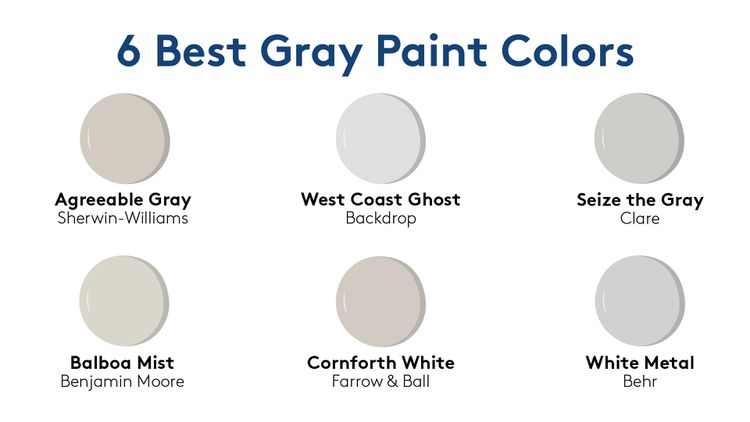
Doing a google search about gray, I found this article with 6 Popular Gray Paint Colors: Agreeable Gray, West Coast Ghost, Seize the Gray, Balboa Mist, Comfort White, and White Metal.

from “ode to gray”

Gray in the wild opens and spills. Put two grays together and you’ll see the color each one hides within, the “endless variations” noted by Van Gogh. I think of the handful of river pebbles I once snuck into my pockets on a day trip to a waterfall: they were dusty gray when I got home, but underwater, each concealed a secret separate life as green or red or blue. So many things that seem gray on the surface have a treasure to unlock—myself, I hope, included.

from To Theo van Gogh (a letter from Vincent Van Gogh to his son)

As regards black in nature, we are of course in complete agreement, as I understand it. Absolute black doesn’t in fact occur.2 Like white, however, it’s present in almost every colour and forms the endless variety of greys — distinct in tone and strength.3 So that in nature one in fact sees nothing but these tones or strengths. 

The 3 fundamental colours are red, yellow, blue. Composite: orange, green, purple.

From these are obtained the endless variations of grey by adding black and some white — red-grey, yellow-grey, blue-grey, green-grey, orange-grey, violet-grey. 

It’s impossible to say how many different green-greys there are for example — the variation is infinite.

But the whole chemistry of colours is no more complicated than those simple few fundamentals. And a good understanding of them is worth more than 70 different shades of paint — given that more than 70 tones and strengths can be made with the 3 primary colours and white and black.4 The colourist is he who on seeing a colour in nature is able to analyze it coolly and say, for example, that green-grey is yellow with black and almost no blue, &c. In short, knowing how to make up the greys of nature on the palette.