sept 25/RUN

5 miles
franklin loop
62 degrees
humidity: 80%

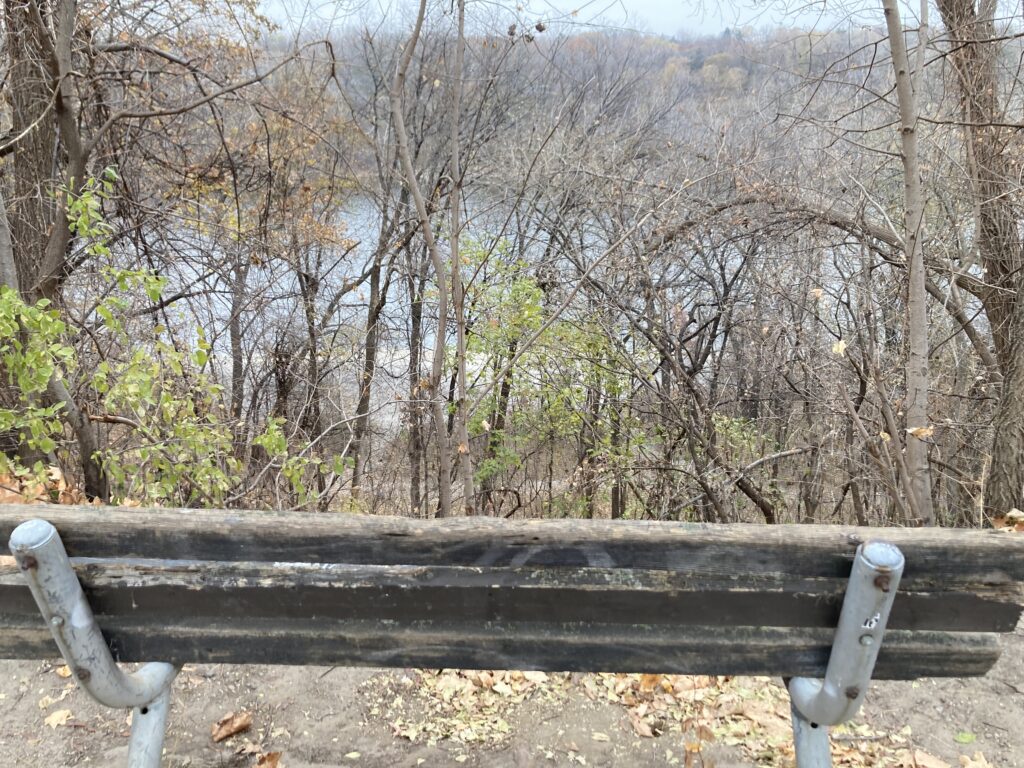
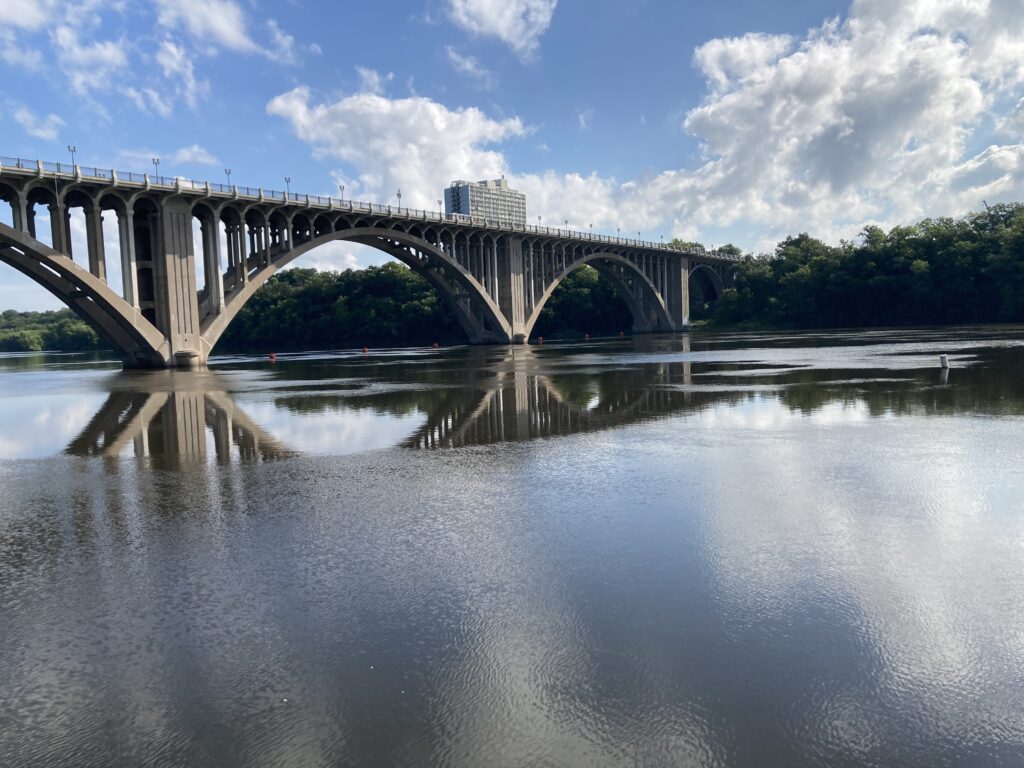
Not an easy run, but I kept going and was happy to be outside, above the gorge, for almost an hour. Some walking, more running. Was able to greet Dave, the Daily Walker. Noticed something sticking out in the middle of the river as I ran across the lake street bridge. People swimming across? No, tree branches stuck on the sandbar. The bridge steps were wet. Not rain, but a hose?

3 moments of color

1

Running across the Lake Street bridge, looking out through the railing, pink. Someone had spray-painted the railing with a thin line of bright pink, maybe bright green too, or was that my bad vision? Or maybe the bright sunlight doing strange things? Whatever it was, it looked magical.

2

Descending into the tunnel of trees from the north, a pool of reddish-orange light ahead of me. A wildfire sun? No, reflections from some orange paint on a nearby tree and red leaves on the ground.

3

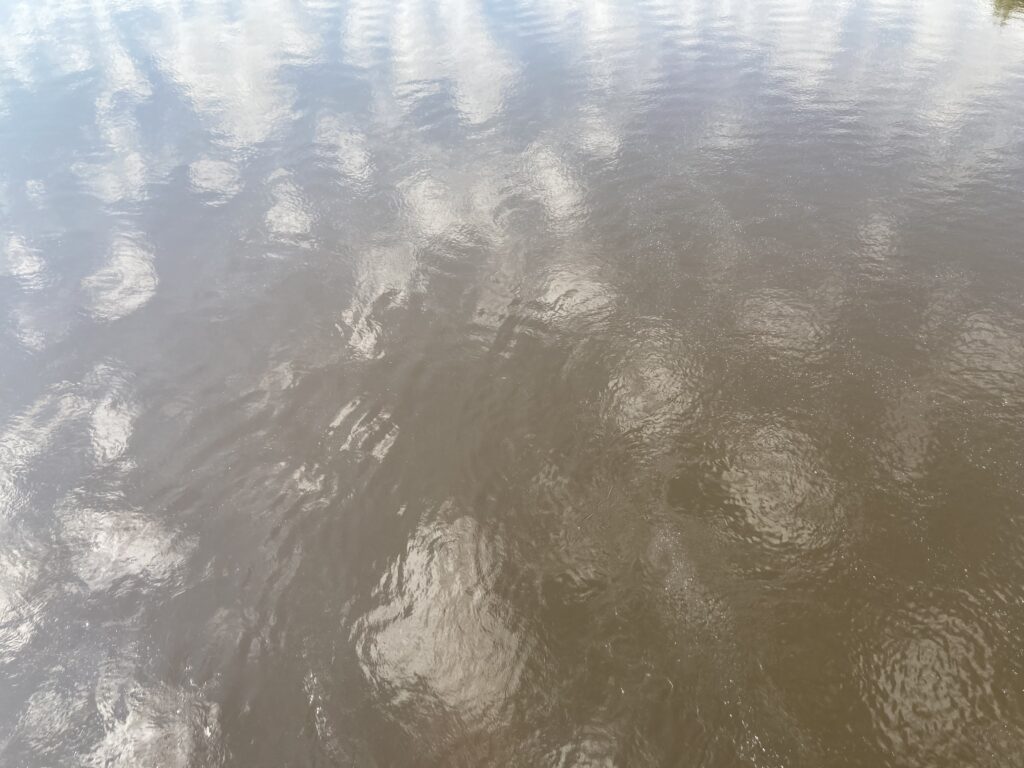
Again on the lake street bridge: a very bright circle of light on the water, silver with streaks of orange, or an orange tone? or the idea of orange?

Found a powerful poem on Poetry Daily this morning, Schrödinger/ Katie Erbs.

excerpt from Schrödinger/ Katie Erbs

a little thought experiment
gone sideways an idea
trapped in ovum
the cedar chest the bride suffocates in
the refrigerator’s magnetic closure invented only
after one too many kids
got trapped inside leaving
little claw marks on the insides
of little coffins how I dreamed
of the little bell to ring
from inside the box
to let everyone know
I’m alive inside still

Just yesterday, I was reading a novel, Victorian Psycho, that mentioned these bells in coffins. I don’t think I had ever heard of them before.

I am convinced I can hear bells — the bells that chime from inside the safety coffins in the Hopefernon churchyard. ‘To ensure one isn’t buried alive,’ explained the Reverend when I first remarked upon them as a child. ‘They can only be rung from inside the coffin.’

‘But I hear them at night,’ I had told him, and the Reverend had sighed and shaken his face full of wrinkles . . . .

Victorian Psycho/ Virginia Feito

sept 6/RUN

5.1 miles
bottom of franklin and back
53 degrees

Another cooler run. Shorts with my bright orange sweatshirt. Ran to the bottom of the franklin hill before I stopped to walk and use one of the few port-a-potties on the route. There used to be at least one more under the lake street bridge, but they removed it. Chanted in triple berries to keep steady and distracted, or focused, depending on your perspective.

Listened to rowers and a beeping bike that I thought might be a bird before I saw it and striking feet, all around. Lots of runners out there this late morning. Listened to my “Moment” playlist once I started running again. It started with U2’s “Stuck in the Moment” and I thought about my latest insomnia rut.

10 Things

  1. a greeting from Dave, the Daily Walker: Happy 100 days after your birthday! Dave is the best — well, maybe not with his math!
  2. dark and green in the tunnel of trees, a circle of faint light up on the hill
  3. at least one yellowish orangish tree
  4. down in the flats the river’s surface was laced with grayish-white foam
  5. someone sitting on the sliding bench as I ran north, their bike propped behind the back of the bench
  6. returning south, the sliding bench was empty so I stood behind it and assessed the crumbling hill and the block view of the white sands beach
  7. finally took the dirt path that cuts behind some benches just south of the trestle
  8. 2 people walking 2 dogs, one person saying to the other something about an unwalked dog needing to be walked
  9. 2 women walking in the flats, one of them to the other: It’s by Ann Patchett. I wish I would have written down the passage.
  10. running on the north double bridge — just past the old stone steps — something caught my eye on the fence. On the way back, I remembered to stop to check it out. A small cut-out of Frump’s head on a popsicle stick with a caption: ‘tator on a stick. I took a picture, but decided not to post it*

*it took me a minute to understand fully the meaning here — at first I was thinking of the state fair, but finally it hit me that tator = dictator. Memories of reading Simon Schma’s Citizens about the French Revolution and heads on pikes being paraded around Paris. A sad and scary time in this country to have a president who foments such violence and violent responses in others.

You

1

A line from Endi Bogue Hartigan’s poem “Running Sentences”:

First the cloud of gnats first the movement through the cloud
and then the body, not a cloud

Something about running through gnats — which I’ve done many times — and the body as not a cloud, triggered past thoughts about encountering someone on the trail and what happens to the You in the time/space between my Thank you and someone else’s You’re welcome when I thanked them for moving over.

2

These were the original thoughts, from a 31 may 2023 log entry:

I had a breakthrough in the second mile as I passed a walker and a dog on the Winchell Trail. They noticed me before I reached them and moved to the side. I said thank you and the woman replied you’re welcome. As I continued running on the steep-ish trail with no railing I thought about how when I said thank you, I was the I, she was the you. But when she answered you’re welcome, I become the you and she the I. Each of us both. Then I started thinking about the space and time between when we each embodied the pronoun, before my I turned into a you or her you into and I. This is the space of possibility where unhitching can happen, when we can be both a you and an I or something else that doesn’t divide and separate or assign us a fixed role — as active I or passive you. A moment when we can experience or behold the is below the threshold of thought, over and above society and its constructs.

31 may 2023

3

And here’s an excerpt from the draft of the poem I wrote:

first movement,
a making

space for each
other, then

a cloud of
Yous to pass

through. Bodies
enter cloud,

cloud enters
bodies

sept 3/RUN

3.1 miles
2 trails + tunnel of trees
56 degrees / humidity: 80%

Fall! Cooler this morning for my run. Windy, too. Ran south on the paved path, then north on the Winchell Trail. Heard kids arriving at Dowling Elementary. It’s the second day of school. Also heard wind rushing through the trees and some water falling out of the sewer at 42nd but not at 44th. No rowers or packs of runners or fragments of conversation.

Chanted in triple berries — strawberry/blueberry/raspberry — for several minutes then other triples — mystery/mystery/mystery deepening/quieting/deepening interior/exterior/deep deep down Thought about surfaces again and their value. Wondered: should I spend a month studying surfaces?

Listened to my “The Wheeling Life” playlist for the last mile of the run. Started with “Proud Mary” and my feet found the fast beat. I swung my arms back and forth but imagined they were rolling like wheels. Rollin’ Rollin’ Gave the most attention to the lyrics of XTC’s “Season Cycle”:

Darling, don’t you ever sit and ponder (darling, did you ever think)
About the building of the hills a-yonder (all this life stuff’s closely linked?)
Where we’re going in this verdant spiral
(‘Round and ’round) who’s pushing the pedals on the season cycle?

It’s September, so it is time to wrap up my reading of Endi Bogue Hartigan’s oh orchid o’clock. Here’s another great hour entry:

hour entry: The hawk is an approximate whisking together/ Endi Bogue Hartigan

The hawk is an approximate whisking together of fractions of itself the 23 intervals in the second the eye can see the 500 intervals in the second the ear can hear the 100 intervals in the second the bird can see. The second is forming midair like any duration or station in sun. Say “look a red-tailed hawk” and in that second the alliterative span of flashes of light formed by a moving pinking-sheared wing shape becomes it. I wish my words to become unfit for a second, to not make such burred sad sounds. The unspoken fractions of our seconds are expressed imprecisely all the time in seconds. “I’ll be there in a second.” “He was gone for a second.” “The next second they were on the ground.”

intervals / frames per second / illusion: converting what’s still into motion, what’s motion into a still / duration station span / blurred imprecise approximate

motion, the animation of the still
still, the freezing of motion
Oliver’s quieting of the spirit = slowing and smoothing of the motion

sept 2/RUNBIKESWIM

5 miles
franklin loop
70 degrees

I was planning to bike over to the lake and swim this morning but it looked gloomy and ominous, and then started raining and thundering for several hours. Bummer. By the time it stopped raining it had warmed up and the sun came out. Even so, I went for a hot and humid run. Everything was wet. A slick trail, dripping branches, wet shoes and shirt.

10 Things

  1. someone covered over the graffiti on the steps that read, stop hate, with blue paint
  2. sky, part 1: gray, heavy
  3. sky, part 2; blue and cloudless
  4. empty river
  5. white foam on the edge of the east bank near the franklin bridge
  6. kids laughing on the playground at the church daycare
  7. some orange and red leaves beyond the fence near east river road
  8. the squeal of tires near the trestle — what happened?
  9. orange cones lining the path: there must have been a race or a sponsored bike ride this past weekend
  10. the sliding bench was empty of people but close to a thick veil or green

Listened to voices, cars, and drips for the first half of the run, my “Doin’ Time” playlist for the second half. The song I remember the most was Peter Gabriel’s “Playing for Time.”

Oh, there’s a hill that we must climb
Climb through all the mist of time
It’s all in here what we’ve been through

Not a fan of the phrase, mist of time, but these lyrics reminded me of a few lines from Mary Oliver that I read right before heading out for my run:

Slowly
up the hill,
like a thicket of white flowers,
forever.
(The Leaf and the Cloud/ Mary Oliver)

The lines just preceding these were a series of good-byes to the world: the swaying trees, the black triangles of the winter sea, oranges, the fox sparrow, blue-winged teal, lettuce, turnip, rice fields, the morning light, and the goldfinches.

Down, I’m getting it down
Sorting it out
So everything I care about
Is held in here
All of those I love, inside

Listening to these lines, I thought about Oliver’s deepening of the spirit. I thought about the interior and moving inside of yourself and of burying memories and ideas not as a way to avoid them, but to protect them. I also thought about someone growing older and having memory-loss and trying to hold onto faces and names and experiences. I weighed the possibilities and limitations of going deep inside as compared to opening up to the outside. All of these thoughts came at once — not in a linear progression — in a burst which lasted until I heard these lines less than a minute later:

There goes the sun
Back from where it came
The young move to the center
The mom and dad, the frame

I just remembered: at the start of my run, I was thinking about the difference between ordinary and extraordinary time, which was a continuation of thoughts that began earlier this morning. Habits, routines, activities/events experienced again and again — the mundane — versus the scattered, sporadic occasions that break up the routine. While meaning and memories are often found in the singular moments, I’m drawn to the rituals and repetitions and daily events as where imporant meaning dwells.

Everyday. everyday = ordinary / every day = each day, daily.

Everyday—I have work to do (“Work” in The Leaf and the Cloud/ Mary Oliver)

I love that she writes everyday and not every day, so it’s not, each day I have work to do but, ordinary, everyday life: don’t bug me, I have work to do!

bike: 7.5 miles
lake nokomis and back*
75/71 degrees

*instead of the river road trail, we took 44th until the falls park, which is shorter

A good bike ride with Scott. As usual, better on the way back — easier, more relaxed. On the way there: wind. No problems with panicking about not seeing. The ride home was great: the sun was setting soon. Passed by adults playing soccer or flag football or some team sport in the field by the duck bridge, and kids playing soccer at Hiawatha school. RJP and FWA both played for a season at Hiawatha. I played for 5 or 6 years when I was kid in Northern Virginia. I loved it; they didn’t.

swim: 2 loops
lake nokomis main beach
74 degrees

Only 4 other people in the lake, and none of them were swimming laps, just standing around and talking — brrr, I bet that was cold! I swam far from the white buoys and almost completely avoided the milfoil. Only a few times, I got too close and felt the vines on my toes and wrists. For most of the swim there was wind and choppy water. In one direction, it pushed me along. In the other, I got to swim straight into it, which I liked doing. Mostly, a fun swim. The vines were the only bad thing about it. They were too thick by the one buoy so I didn’t want to circle around it. This made it much harder to loop, so I mostly stopped and twisted around. I noticed some birds in the sky and a few planes. Trees on the distant shore were looking less green — were any of them changing?

I thought about how this might be my final swim of the season. It’s cooler for the rest of the week — highs in the 60s, so they might take down the buoys soon. It’s been a great season. I swam for longer, both distance and time. And, I had fun reciting more water lines in my head and writing about water.

aug 30/RUN

4 miles
minnehaha falls and back
63 degrees / humidity: 86%

Felt cooler at the beginning, then the sun came out. Warm! A good run. There was a nice spray coming off of the falls and lots of people taking selfies. I felt strong and able to run 2.25 miles without stopping for a walk break. A slow, steady progression towards more endurance. By winter will I be able to run 10 miles without stopping? I hope so.

Listened to cars and one runner’s slapping feet and rushing water on the first half of my run, then my “Slappin’ Shadows” playlist on the second half. I was hoping that listening to songs about shadows would make more of them appear! Did it? I don’t think so.

10 Things

  1. a speedy runner sprinting past me, his feet striking the ground with a loud slap — Slap! Slap! Slap!
  2. crunch crunch — discarded acorn shells on the trail
  3. the steady whooshing of car wheels
  4. 2 walkers, or maybe runners who were taking a walk break, walking towards me, one of them saying, let’s turn around, the other, let me get some water up ahead first
  5. empty benches, including the one above the edge of the world
  6. crash! crash! some critter rooting around in the bushes in the park
  7. kids laughing and yelling at the park playground
  8. a runner with a white shirt wrapped around her waist, running on the bike path, then on the edge closest to the bike path, forcing runners and bikers to more around her
  9. a roller skier on the walking trail doing a strangely slow shuffling exercise with her poles and roller skis
  10. a coxswain down below — rowers!

quieting of the spirit (from 29 aug 2024)

stillness: Anne Carson and taming uncontrolled movement:

The other day I discovered an essay by Anne Carson about her experiences with Parkinson’s, especially with trying to navigate tremors and tame uncontrolled movement. My experiences with vision loss are very different, yet I recognize similarities in terms of focused attention as a way to combat constant motion.

Righting oneself against a current that never ceases to pull: the books tell me to pay conscious, continual attention to actions like walking, writing, brushing my teeth, if I want to inhibit or delay the failure of neurons in the brain. It is hard to live within constant striving. 

Gloves on!/ Anne Carson

*

Since being diagnosed with a degenerative eye disease, I’m giving conscious, but maybe not constant, attention to how I see, to the complicated process of seeing. Some of this attention is out of curiosity and astonishment. And some of it is about helping neurons to fire in new ways and learning how to see differently. 

The uncontrolled motion I experience is not tremors, but images that constantly shift and shimmer and buzz, usually in ways too subtle to see clearly. I feel them — soft notes of disorientation, dizziness, restlessness. Maybe you could call them tremors? The ground never ceasing to unsettle.

Recently, I’ve been writing about the different definitions of still. Is the constant motion I see never still? I’m not sure. I think I’m striving for new ways of defining that word and of accessing the feeling of being still, enough, calm.

still / enough / calm / quieter

Here are 2 more poems from Hartigan’s excellent collection, On Orchid O’clock that I want to put beside each other:

hour entry: Sorry, I am at the gym this instant/ Endi Bogue Hartigan

I am at the gym again this instant and of it, in its treadmills, its black tongues and beetle shines its oily handles in time and time and time intervals and people cupped and kept in beeps and measures, always. I’m nearly half done with my pre-programmed eliiptical slot, having spent 211 calories. This very instant a woman, having come in from the street, is staring at the smeared glass of the vending machine an instant too long, the change hot in her palm, a kind of calm as yet unspent. And I am bent away from God, running horizontally in place, & all instance protests movement, all instance must be thick with protest, coated with candle wax of sadness, walking upright like unlit wicks.

The treadmills black tongue / time and time and time intervals (intervals as verb?) / people cupped and kept in beeps and measures / 211 calories / I am bent away from God

hour entry: Orchids because orchids are impossibly mimicking / Endi Bogue Hartigan

Orchids because orchids are impossibly mimicking the milk fluid capture of being orchids, orchids because they are grown commercially in soldiering rows in hothouse tents, because they are given as gifts for merely being orchids, because they are inherently exceeding themselves and held as if rare, though they are not, their stems are second hands untimed and slightly skewed to binding. Orchids because they are wrist-colored, because they are eyelid textured, because they are partial light captured, because they are hard to keep living. And on the slope of a hillside of a rainforest of my childhood was an orchid nursery. I don’t know I ever entered it, but knew the plastic walls sweat.

I love the repetition in this poem — the orchids, because
orchids as partial light captured / eyes as orchid textured / the slope of a hillside of a rainforest of my childhood

aug 28/RUN

3.8 miles
river road, north/south
61 degrees

Cooler this morning. Quiet. Ran earlier than usual: 7:30. Lots of traffic on the road, some on the trail too: walkers, runners, bikers, strollers, at least 2 roller skiers. I could hear one of the roller skiers as it approached, scraping their poles on the ground. No clicks and clacks, just scraaaape scraaaape. Running past the rowing club, I encountered a group of people in bright yellow vests emerging from below. Were they rowers, and did they wear those vests on the water?

After reaching the river, I noticed the fence slat, pushed loose by a leaning tree trunk, was looser today. Greeted the Welcoming Oaks, good morning! hello friend! The sunlight was beautiful in the tunnel of trees — thin strips of light coming through the leaves.

Found this poem yesterday. It’s great for my interest in ekphrastic poetry and color:

A Lexicon of Light/ George Looney

     –after Claude Monet’s Charing Cross Bridge series

It’s not accurate to say we know
what we see. Truth is, few understand

the physics of color. What Monet knew
had little to do with science. He was

intent on getting the bridge, and everything
that gave the bridge context, right. Language

isn’t accurate enough. To depict the world
with color and form—to make a place

and moment of time a composition—is
no more precise a vocabulary. Vision

tends to end up being an imposition
more than a recognition of how the fog

consumes much of the bridge, as if nothing
is able to fully connect one side

of the Thames to the other. Distance
often asks too much of us, and Monet

found ways to accept that insistence. His
endlessly varied harmonies of color

wrote a new definition of accuracy. The bridge
is more than a construction passed over

by trains and imbued with shifting colors
with the time of day. It becomes, for the artist,

a lexicon of light and all that light does
to this world. At times everything is more

certain, and we want to stand on the bridge
and compose a tune, humming, that the sun,

glittering in the river, inspires. Other times,
we want to be nothing but a faint music,

too distant or muted to be identified,
drifting along with the soothing mist and fog.

accurate / know /
see / Truth

physics of color


not accurate, right


color and form

composition
not precise

vision as more imposition than recognition of how the fog consumes the bridge?


harmonies of color — a new definition of accuracy


shifting colors with the time of day

lexicon of light and all that light does to this world

aug 27/BIKESWIMRUN

bike: 8.6 miles
lake nokomis and back
64/71 degrees

Hooray for feeling comfortable on a bike! Able to see enough to not feel scared.

…sitting on the back deck to write this, a wave of ear piercing cicada buzz just passed by. Wow! What’s the decibel level of that?

Rode into the wind for a lot of the ride — and not just the wind I was making with my moving body. Wondered if it would be choppy at the lake. (it was). At one point, when the wind seemed particularly strong, I could feel how un-aerodynamic I was — an upright form fighting against air. I tried to get more aerodynamic, leaning low and over my hips, my bike as parallel to the ground as I could get it. Thought about ironman triathletes who can bike like in an even more parallel position for almost 5 hours. Wow, how many hours of training and lifting and working with a coach must you need to keep that form for so long?

The bike ride back was wonderful. What a beautiful late summer day! Sunny, warm in a way that’s welcome because it was cooler in the morning.

swim: 2 loops
56 minutes
lake nokomis main beach
66 degrees

I did it! 1440 minutes, 24 hours, one day swimming in August! Hooray for ambitious goals that push you to do a little more than you would have otherwise. Swimming a total of 24 hours (over 21 swims) was a commitment for sure, but it wasn’t an unreasonable commitment. And the biggest challenge was not getting my body to swim that many minutes — and miles, over 40 — but having clean water and an open lake. Lake Nokomis was closed for 2 weeks in August due to elevated e-coli and algae blooms.

24 hours was a good goal. Enough to challenge me and enable me to get deeper into my swimming and writing about swimming, but not too deep to sink me, to overwhelm and injure me. That’s another definition of Mary Oliver’s deepening and quieting of the spirit: deepening my commitment, steadily chipping away at the time (a quiet = still = steady approach).

The water was empty of other humans. I don’t remember seeing/hearing any ducks or geese or seagulls either. Lots of milfoil, both tethered and floating in segments on the surface. Too many milfoil vines near the white buoys. They seem to be increasing every time I swim. Boo! I went much farther out to avoid them, and when I veered closer, I could feel them wrapping around my wrists and ankles. Join us, I briefly imagined them saying. No thanks!

Yesterday while looking up recent drownings in Lake Nokomis — the ones I remember are the South High football player in 2013 and the 11 year old girl in 2023 — I discovered that someone else drowned last week. A woman who (presumably) took her own life. Rescuers were searching for more than 24 hours, looking for the body. They found it. As I swam out to the white buoys, I thought about this woman and the others that had drowned, wondered how terrified I would be to encounter their dead bodies bobbing in the water. Another meaning of deepening/quieting of the spirit.

The water shimmered in the sun, sometimes like silver, sometimes glass. There were little waves, big enough to make a noise, but not big enough for white caps. Before I got used to the rocking movement, I was slightly dizzy. I liked the chop. I was able to got faster heading north with the wind, and more powerfully heading south against it.

The sky was a deep blue with a few clouds. They were fluffy like cotton balls, some of them big, like a whole ball, some of them wispy and small, like one chunk of the ball. Noticed a plane, parallel to the water.

The water was thick with particles, impossible to see too far in front of me — only my hand and the trailing bubbles.

Heading north, following the path of an open swim loop, I looked up and imagined that the orange buoy was far off in the distance. Oh, to have it appear to be able to swim out and beyond it!

When I finished the swim, I sat on the sand, feeling the sun on my back, looking out at the water and reflecting on the season. What a summer! I hope to come back to the lake more times this week and until they remove the buoys, but whatever happens, I met my goal and have no regrets about how much I swam this summer. Good job, Sara!

today’s inspiration

One of the poems-of-the-day offers inspiration for my Swimming One Day project:

Task/ Ari Banias

There’s a poem I tried to write about
bathing you the last day you were alive.

On one of our drives home:
I want to die without shame.

You didn’t elaborate.
I described standing across from a stranger

paid to do this work, her presence
anchoring me in the task

with you between us.
From this distance I can use the word task.

Your pain the astrologer said A gift
for others

A mixing bowl
filled with warm water

we dipped washcloths into before
wringing them out

rested between your legs.
The phrase utilitarian tenderness served

some containing purpose
I needed at the time.

A great effort
to come up to the surface of yourself

to say what you said to us.
A student writes two lines

about an aging parent
they think are boring and may cut.

That poem did not belong
to language, and surpassed touch

Dough rising somewhere
under a red and white

dishtowel in that bowl

about this poem

“The task is attempting to write the poem again the task is bathing the dying the task is work done for wages the task is recognizing the encounter that refuses containment that insists on experience outside narrative time the task is to not entomb memory in language to not reduce grief to a quotable thing the task is to feel the edge of a void and keep going inside the feeling the task summons in you the task continues despite”

inspirations

  • create a set of poems — one of them is the main poem, another about it, explaining it in some way, sideways or front ways or back ways, and maybe a third one that condenses it (like Hardly Creatures and the original poem, replica, souvenir)
  • a pair of poems, the second, the reflection of the first, as if on the surface of water, and darker, like A Oswald’s line about water letting you see twice but more darkly
  • take an idea — in the poem it is “task” — and play around with a wide range of meaning. I’m thinking: “day” or “quiet/still”

run: 2.45 miles
around lake nokomis
76 degrees

Went back to the lake in the evening with Scott. He started running north, I started south around the lake. I haven’t run here at all this summer. Stopped at the little beach briefly to check out the algae. Since my swim this morning, the test results have come in and there is an blue-green algae advisory at both beaches. They tested it on Monday when it was the worst. It’s better today.

Over halfway around, I passed a young boy walking by himself. After I passed him, I heard somebody running like they were trying to catch me. I think it was him. The footsteps lasted for 30 seconds? a minute? then stopped. I kept running until I reached the overlook on the cedar bridge then briefly stopped to take in the view. I noticed waves and the silhouettes of 2 kayaks in the distance, silvery water.

10 Lake Things

  1. a guy calling out, no! drop it! drop it! no! no! — I’m assuming they were talking to their dog, but I didn’t see
  2. a kid’s loud foot strikes
  3. a group of people crossing the path, heading for the dock
  4. the soft sand of the dirt trail next to the path
  5. 2 kids climbing the leaning tree that I used to run by and think it looked like a woman arching her back
  6. an opening in the vegetation, an empty bench, a person closer to shore
  7. 2 women’s voices on the water near shore — were they in a kayak or a canoe?
  8. the bridge has lane markings for a bike path — that’s new
  9. the smell of cigarette smoke near the booth where they test for zebra mussels
  10. a woman and a man blocking part of the path — the guy practicing a stretch as the woman gave him pointers — his coach?

aug 21/RUNSWIM

3.6 miles
locks and dam #1
74 degrees
humidity: 88% / dew point: 65

I’m trying to write this entry but I’m distracted by the little kids next door in the front yard — such cute voices. One of them was singing a song — take this grass. . .broken world. . . broken glass.

Refrain: hot, humid. Even so, a better run today than the last one I did. When was that? Tuesday (checked my log). Ran all the way to the bottom of the locks and dam #1 hill without stopping. Noticed the river. Such reflections! Clouds, trees, the bridge. Took a picture:

bridge / clouds / surface / sky

The water was smooth beneath the bridge and rippled (corrugated, as Anne Carson wrote) farther out.

Everything is still this morning, calm, quiet. Partly inspired by my 21 aug 2024 entry, I thought about being still. Not as not moving, but as a calm, steadiness. Stillness as the space between beats, when both of my feet are off the ground. Or, stillness as my strong core that floats through that space — suspended as held up in the air, not as stopped.

10 Bridge Things

  1. at the top of the hill, in-between the top and bottom of the bridge, a family was sitting on a bench
  2. the gate near the columns of the bridge was unlatched and slight ajar
  3. beyond it, hollowed out bricks with a strange pattern
  4. empty benches all the way down
  5. the reflection of the bridge on the water’s surface, upside down
  6. a car nearing the bottom, voices — couldn’t hear what they were saying but imagined it was about whether or not the locks and dam was open
  7. the echo of my footsteps under the bridge
  8. the clicking of a bike’s gear across the service road
  9. thought about what RJP told me yesterday: someone went over this locks and dam in a canoe (or was it a kayak?) yesterday
  10. at the top of the hill again, a man read the sign to a little kid who started jumping and asked him to join — by the time I reached them, they were both jumping and laughing and making goofy noises

the deepening and quieting of the spirit
among the flux of happenings

still

I thought about being quiet and calm and the opposite of restless and anxious. Then I thought about my core — literally and figuratively. Core = my core muscles, strong back, a straight spine. Core = enduring values, character. I felt the stillness within my self and my body even as the world blurred and floated and drifted around me. Then, Mary Oliver’s “deepening and quieting of the spirit” popped into my head — amongst the flux of happenings. Yes! A stillness of the spirit, where stillness is being satisfied and balanced and present in the moment, not needing to do more or feel guilt or regret for what was or wasn’t done. 

21 aug 2023 log entry

I still the clock./ Endi Bogue Hartigan

/I still the clock.

/I still the clock by holding the pendulum coin still so that
the mechanism stops
and I can sleep without the consciousness of it.

to still the clock is a ritual of the demagnification of clocks.

/it is a kind of violence of fiction for the clock to not
function as a clock while others click and breathe and blink.

the eyes blink more before they stop functioning as eyes.

/the rapid eye movement of dream frightening being pure
pulse, pure frenetic zag force

/to watch a gold-painted platinum extravagant clock you’re an excess you’re
a fire you’re in competition with the tiredness of time.
/to hold in your satiny eyelids the still unstill pendulum of
the gaudy machination you are in unison

with the aspirant expirations of the day.

still / holding / pending / stop
sleep / not function /
click / breathe / blink / dream / pulse / excess / rapid fire extravagance / tiredness / still unstill / aspire to expire

underwater the end (expiration) is the breath (expire)
the end / forced above / evicted from below / no longer water but air

In this poem, to still is to stop, to end, the deep sleep

swim: 6 loops
110 minutes
cedar lake open swim
82 degrees

The final open swim of the season. It goes so fast! Another great night for a swim. Warm, sunny. I liked that the wind made the water less smooth — not too rough, a gentle rocking. The course was set up strangely and even though I complained about it afterwards, I think I liked the challenge of it. One buoy was in the middle of the lake, the other was at the far left edge of hidden beach. At first I worried that this set-up would cause chaos with swimmers crossing over the path and running into to each other, but it was fine.

a risky moment: Because the course was so far to the left, I swam in water I haven’t before. Almost halfway across, I swam straight into a nest of vines — the biggest cluster of vines I’ve ever experienced. I didn’t panic and was able to swim out of it, but I could imagine a weaker swimmer struggling to free themselves and getting wrapped more tightly. As I swam away from it, I thought about the high school football player that drowned off of the little beach at lake nokomis about 10 years ago. That’s probably how it happened.

Some things irritated me: the swimmer that I tried to pass but sped up to prevent it, another swimmer stopped at the buoy, blocking the way, the unmoving lifeguard on his kayak too close in on the course, the bright sun making it almost impossible to see anything on the way back, the scratchy vines. But more things relaxed and delighted me: the gentle water, feeling strong and able to swim for so long, swimming past other swimmers like they were standing still, the faint clouds in the sky, the solitary orange buoy sitting on the surface of the water glowing, glimpsing other swimmers off in the distance — only inklings: the flash of a yellow or orange buoy, a bright pink cap, white foamy water.

overheard:

a mom with 2 kids, one who was around 4 or 5, the other a baby in her arms, to a lifeguard: Can he swim out to the orange pyramid?
lifeguard: (thinking she meant the baby and not the kid) alone?
mom: oh no, not the baby!

Later I heard her recounting the story to a friend. They were laughing about it.

At the end of the second to last loop, I stopped at the beach, stood in the shallow water and the sand, checked my watch, and decided to do one more loop. For the final loop, I felt Mary Oliver’s one day in August, everything calm and quiet. I thought about what a great season it has been, how grateful I am to have this time swimming, and how satisfied I am to have taken advantage of it. No open swims until next June. I thought about how no next season is guaranteed; a lot could happen between now and then. Then I remember the story of my great-grandmother Johanna standing out in the field at the farm near the end of the fall to behold the familiar view, wondering if she’d still be around the next fall.

aug 17/SWIM

4 loops (8 cedar loops)
95 minutes
cedar lake open swim
69 degrees

Would it rain? Would they cancel the swim? It seemed uncertain when I woke up to gloom, but the storm stayed south and the water was great. Smooth, mostly calm, not too crowded, easy to see. The first 3 and a half loops felt so easy and fast. I stopped at hidden beach for a quick break and a chance to see the lake from above the water for more than a brief flash every 5 strokes. The beach was quiet, empty. I could hear wind in the trees, then some bugs. I think I saw a few people getting ready to do open swim. They were up in the grass putting on wetsuits. Started swimming again and did another 3 loops before taking a minute or two break at hidden beach again. swam 1.5 more loops before deciding I was done — my legs decided for us. Nearing the first buoy, my legs felt like they were about to cramp, so I stopped kicking and dragged myself in for the last 50 feet or so.

strange vision

Several times, something strange happened with my color vision. Looking up quickly to sight, I noticed the lifeguard’s kayak. Instead of red in looked white and (almost) robin’s egg blue. Later, getting closer to more than one swimmer, their swim cap was white and the same blue instead of bright pink. Both with the kayak and the caps, when I got closer they returned to normal — red and pink.

10+ Things

  1. white sky — sometimes I could see the sun through the clouds, but it never emerged
  2. a swirl of vines, passing over my head, shoulders, torso, lingering near my ankles
  3. the swimming area at hidden beach was wide and long and almost empty — at least one other open swimmer was standing in the shallow water
  4. for the first 4 loops, the water was all smooth, during loop 5 it was much choppier heading to hidden beach
  5. a bird in the air — was it big or small? I couldn’t quite tell. I’m thinking small
  6. opaque water
  7. a scratchy vine, pricking my arm
  8. noticing the surface above the water from my vantage point: submerged, only my eyes out of the water, like an alligator
  9. stopping at the little beach: a dog barking, a collar clanging
  10. making note of the procession of swimmers on the other side of the course, heading to hidden beach when I was heading from it — a slow and steady line of swimmer
  11. after the swim, walking past a big puddle on the dirt/gravel road, its surface had scales on it from the wind

I never got completely lost in the swim, although I had moments where I wasn’t thinking about my stroke or breathing or sighting.

Thinking about time, last night I started reading Endi Bogue Hartigan’s on orchid o’clock. Here’s the opening poem, which I think will be a great inspiration for me in playing around with “one day in august.”

I’m talking about the rotation/ Endi Bogue Hartigan

—The predictable commencement of annual flooding of the Nile River is said to have formed the foundation of the ancient Egyptian calendar. Calculations were made using nilometers, vertical water-measurement devices, influencing taxation, crop planning, and more.

I’m talking about the black cows in the pasture along the highway between here and the office: some days the black cows’ snouts are pointed in the same direction in the morning and the opposite direction in the evening, all 200-300 or so, parallel dipping their snouts: some days they are helter-skelter; some days the shadows are crisp some days the shadows are swallowed but they have shadows on all days; and the wet eyes of the cows have an angle with which they lean into the wet grass, so they are a kind of dials to themselves and their light, visible to themselves or not. I might be comforted driving by saying cow shadow o’clock, saying east black cow o’clock, I might be comforted by talking about their rotation.

/it is child eyelash o’clock /it is having to look o’clock it is
Nile flood o’clock /it is percolate o’clock

/it is morning birds plus socket sound of car closing / 21st century pastoral
o’clock it is flashflood fear o’clock /it is TV van at the shooting site rim

/it is miscount of the dead o’clock
/it is remember to call remember to call find a corner to make a call o’clock

/it is the blue jay screech o’clock /it is having to look o’clock
/it is innocent eyelash o’clock /it is the clock continuing despite

o’clock /people emptying from their eyes
/it is yesterday’s rose-dew o’clock

/it is tearing the work blouse off its hanger o’clock/ it is
tearing and not /it is that blouse again that headline again it is

everything I forgot creeping up in tides
/it is people split and swelled

confiding overflow o’clock /it is the shadow of a gun / the shadow of
the cow o’clock /it is what is allowed in the shadow

/it is the president’s turned up o’clock it is America’s deadliness and dailiness
o’clock /it is glued to the headline o’clock

it is lunchhour-beeline o’clock /it is it’s only Tuesday o’clock another
curbside memorial o’clock another caterpillar miracle o’clock another

people emptying from their lives o’clock or into their
lives o’clock the Nile floods every hotspell in this week

/it is child-wake, it is flood of what’s at stake o’clock,
/it is the morning rupture the American rupture that

shadow-bleeds and swells /it is the felling of the shadow o’clock
/I’m talking about the black cows.

Wow!

I found this helpful essay by Hartigan about the book and the process of creating it: process note #2: on orchid o’clock

And here’s an earlier book of hers that might be interesting to check out: Pool (5 choruses)

aug 10/RUN

2.1 miles
to falls coffee
75 degrees / humidity: 91%
dew point: 70

Maybe because it was overcast, it didn’t feel as bad as the numbers would suggest. Still sweat a lot, but didn’t feel miserable. Ran with Scott to Falls Coffee. Ran on edmund, parallel to the YWCA tri racers biking on the river road. I remember doing this race — three times, in 2013, 2014, and 2015. I can’t remember why I didn’t sign up for it in 2016 — maybe because my favorite part, the swim, was too short and the bike was too long. In 2017, I was signed up, with RJP, to do a mother-daughter super sprint, but then I got injured. After that, I didn’t do it because my vision was too bad to go that fast and be that close to other bikers (and, because I never really liked the biking part). I love watching professional triathlons — Ironmans, T100s, WTCS Olympic distance races, and Super-tris, but I don’t like racing them.

Scott and I didn’t talk much as we ran; I think we were both too warm. Heard cicadas and birds and people calling out, good job! you got this!, way to go ladies!, to the racers. A steady stream of bikers on the road, some heading out, others returning.

We got coffee at Falls Coffee then walked back through the neighborhood, including through the playground at FWA and RJP’s elementary school. My favorite thing: little birds — sparrows? — lifting off from the pavement, like little bubbles bursting up in the air. Another thing: hearing cicadas buzzing and birds chirping at the same time — not a duet, I said to Scott, but two songs being sung at the same time that almost, but not quite, fit together.

Oh, this poem!

Difference/ Mark Doty

The jellyfish
float in the bay shallows
like schools of clouds,

a dozen identical — is it right
to call them creatures,
these elaborate sacks

of nothing? All they seem
is shape, and shifting,
and though a whole troop

of undulant cousins
go about their business
within a single wave’s span,

every one does something unlike:
this one a balloon
open on both ends

but swollen to its full expanse,
this one a breathing heart,
this a pulsing flower.

This one a rolled condom,
or a plastic purse swallowing itself,
that one a Tiffany shade,

this a troubled parasol.
This submarine opera’s
all subterfuge and disguise,

its plot a fabulous tangle
of hiding and recognition:
nothing but trope,

nothing but something
forming itself into figures
then refiguring,

sheer ectoplasm
recognizable only as the stuff
of metaphor. What can words do

but link what we know
to what we don’t,
and so form a shape?

Which shrinks or swells,
configures or collapses, blooms
even as it is described

into some unlikely
marine chiffon:
a gown for Isadora?

Nothing but style.
What binds
one shape to another

also sets them apart
— but what’s lovelier
than the shapeshifting

transparence of like and as:
clear, undulant words?
We look at alien grace,

unfettered
by any determined form,
and we say: balloon, flower,

heart, condom, opera,
lampshade, parasol, ballet.
Hear how the mouth,

so full
of longing for the world,
changes its shape?

We look at alien grace/unfettered/by any determined form


aug 7/SWIM

5 loops
90 minutes
lake nokomis open swim
86 degrees

Yes! A wonderful swim, and another hour and a half to add to my goal of reaching 34 hours by the end of the month. The water was choppy, which I liked, except for when it made it hard to get a stroke in and I felt like I was sinking. The water was thick and filled with my sparkle friends. Several times it felt like the buoy kept getting farther and farther away, until I broke the spell and suddenly had reached it. I saw some menacing sailboats and 1 or 2 paddle boarders. The light during the last loop was very cool — why? I guess because it was giving very chill twilight vibes. Noticed a few planes flying low and lots of seagulls and ducks. A few flashes down below — fish?

I felt strong and can tell that I’m getting stronger as I do more longer swims. A thought — could I possibly manage 7 loops in 2 hours? That would be amazing!

A few lines from two poems discovered this morning:

There is the clarity of a shore
And shadow,   mostly,   brilliance

summer

                the billows of August
(from “From the Sustaining Air“/ Larry Eigner

The clarity of a shore and shadow. Not sure about the shore, but I like the idea of shadows bringing clarity. They do for me.

2

I am pointless. This I come to know
by pressing ear to night’s machinery.
Outside, the words rub each other
until they are dull: calibrate, resurface,
surface, invest, investigate, snowy, open,
environ, woman, wooden, system.
I look where little nodes of language cling,
lichen-like, to what will have them.
(from “Rose-crowned Night Girl”/ Emily Skillings

I read this line about being pointless and it helped me to think about pointless meaning more than useful or not worthwhile. To be pointless is to not have points, to be smooth instead of rough, nothing sharp about you. My vision is point-less but not pointless. Everything softens with my fuzzy gaze.

added after the swim: During loop 4 or 5, I started thinking about pointless again as a way to indicate a dot — it’s a star without points. Earlier today I was working on a poem that describes a dot as a distant star. After thinking about pointless I thought about how the star/point, which was the far-off buoy, wasn’t always there — it flickered.

added 8 aug 2025: Just remembered a few more things. After the swim, I met Scott at Painted Turtle for a beer. We watched the ducks in the water, bobbing and floating and almost getting into fights with seagulls. We also watched the final swimmer being escorted into shore by 3 lifeguards. I told Scott that being the last swimmer, that is, staying until the very end of open swim, is a goal every year. I think I’ve done it once. Then we watched the green buoys heading in for the night, looking so much smaller than they do in the water when you’re right next to them.

aug 5/SWIM

a few hours before my swim: just got word, finally, that lake nokomis is reopening after a week of being closed. not because the e-coli was that bad all week, but because they only test it once a week.

5 loops
100 minutes
lake nokomis open swim
80 degrees

A wonderful night for a swim! The water was choppy, but gentle, and never forcing me to alter the side I breathed on. 1 2 3 4 5 right 1 2 3 4 5 left. Before the swim began, I encountered an older man and we talked about how much we love open swim. We agreed: it’s our favorite thing to do. As I started my swim, I thought about this wonderful exchange and this swimmer who loved what he was doing and I was happy.

10 Things

  1. a plane parallel to the water, flying low but not too low
  2. a dragonfly just above the surface
  3. a distant swan boat
  4. my sparkle friends were moving fast and into me as I swam
  5. thick, murky water
  6. seagulls
  7. ducks — quack quack
  8. the long, low light heading back to the big beach
  9. the alert on my watch beep beep beeping underwater at the end of a loop — was it a reminder about the amber alert we got earlier today — did other people hear it under water?
  10. more ghostly vines, one wrapping around my foot

I recited Mary Oliver’s, “Swimming, One Day in August” and felt the deepening and quieting of my spirit. Peaceful, calm, relaxed, in my element.

This entire poem is fire, but for the sake of space I’ll just the pertinent section in today’s entry:

from Swimming Chenango Lake/ Charles Tomlinson

There is a geometry of water, for this
Squares off the clouds’ redundancies
And sets them floating in a nether atmosphere
All angles and elongations: every tree
Appears a cypress as it stretches there
And every bush that shows the season,
A shaft of fire. It is a geometry and not
A fantasia of distorting forms, but each
Liquid variation answerable to the theme
It makes away from, plays before:
It is a consistency, the grain of the pulsating flow.

geometry: the shape and relative arrangement of the parts of something / relationship of points, lines, surfaces, angles


geometry and not
distorting form — angles and points and lines off due to water and unreliable vision

Thinking about geometries of water and Anne Carson’s anthropology of water and the relationship of points, lines, surfaces, angles. Suddenly remembered a reference to geometry that I’d like to experiment with:

Closed because geometric mean of E. coli exceeds 126 MPN/100 mL

It’s the message on the parks lake water quality map, explaining why the beach is closed. Will it reopen in time for tonight’s open swim? I hope so!

Geometric mean, what’s that? While Minneapolis Parks doesn’t explain, I found another site with some helpful information: E-coli Open Water Data

  • tests take 24 hours to process, that’s why I’m still waiting for the results to show up now, even though they tested yesterday (could this 24 hours be another example of swimming, one day in august?)
  • MPN = most probable number
  • this site is out of Toronto so it gives the acceptable rates for Canada. In Canada, it’s under 200 MPN, which is higher than here in Minneapolis: 126
  • e-coli stands for  Escherichia coli

I asked FWA — my science guy — what the geometric in geometric mean means and he explained it this way: they make an imaginary grid for the lake and then take samples from different sections of the grid, then they average those samples to get the MPN/ML number. So geometric = grid

The grid makes me think of my vision and the visual field test and the amsler grid and imagining the lake as a grid with different sections of it muted or extinguished or replaced with other sections of the grid that I can actually see.

And now I’m thinking about the geometric ways in which I approach swimming in the lake:

  • angles
  • trajectories
  • following a line, working to understand that relationship between points and surfaces (swimmers’ hands piercing the water and plotting my course with glitter)
  • lines and angles (wider angles to achieve distance from other swimmers, to find the buoy without seeing it)
  • lines and surfaces (try to follow a line that cuts across a wave/swelled surface instead of directly into it)
  • the line of the rope tethered to the buoy and a weight, anchoring the buoy
  • the angle of that rope line
  • how the angle of the sun and the angle of the buoy determine how likely I am to see it and how much orange is reflected on the surface of the water
  • the angle of the lifeguards in relation to the angle of my projected path, how the difference between these angles affects how straight I swim
  • same with the angle of other swimmers’ paths
  • the sharp angles of prickly vines
  • parallel lines: water and airplane, kicking feet, body and bottom, body and big beach
  • perpendicular lines: water and light pole
  • buoys as balls, spheres, orbs
  • buoys as cylinders
  • buoys as equilateral triangles
  • angles of elbow, the arc of an elbow’s path from out of the water to back in
  • grid quadrants: 1. from big beach to little beach, 2. from little beach to middle green buoy, 3. from middle green to final green buoy, 4. from final green buoy to first orange buoy
  • rounding the buoy vs. cutting a sharp angle
  • coordinate points: hand/water, a swimmer/another swimmer’s toe, orange buoy/surface

More on geometry . . . searched geometry on Poetry Foundation and this was the first result:

Geometry/ Nancy Botkin

All the roofs sloped at the same angle.
The distance between the houses was the same.
There were so many feet from each front door
to the curb. My father mowed the lawn
straight up and down and then diagonally.
And then he lined up beer bottles on the kitchen table.

We knew them only in summer when the air
passed through the screens. The neighbor girls
talked to us across the great divide: attic window
to attic window. We started with our names.
Our whispers wobbled along a tightrope,
and below was the rest of our lives.

slopes angles

distance = feet


lines straight diagonally


screens = grid
divide line bar

We knew them only in summer when the air
passed through the screens. The neighbor girls
talked to us across the great divide: attic window
to attic window. We started with our names.
Our whispers wobbled along a tightrope,
and below was the rest of our lives.

All of this geometry talk has inspired me to craft a sonnet about grids and seeing and the grid in my eye tethered to the grid in the water. I have a first draft that needs a little work. The poem is about how I’ve been using sighting buoys during open swim to learn how to see in new ways, or to function without needing to see things clearly or often. Or, is it about the parallel paths that learning to sight and learning to rarely or unreliably see have taken and how that’s shaped my experiences with vision loss? or, are both of those conclusions too heavy-handed? Should it be stranger?

1

tethers us to each
other — swimming and
vision, buoy and
body, to sight
but rarely see

2

tethers us to each
other — swimming and
vision, buoy and
body, to use sight
to learn how to see

Typing up both of these endings, I like the first one better. I’ll keep thinking about it.

aug 3/RUN

2.25 miles
2 trails
70 degrees
AQI: 151

Another short run today. The air quality is still bad, but it didn’t bother me — or, I’m so used to it bothering me that I didn’t notice. Wore my bright yellow shoes again and felt bouncy. Listened to my “Slappin’ Shadows” playlist running south, the gorge running north: trickling water, laughing kids, someone talking about walking on a boardwalk, a beeping/ringing noise on repeat somewhere below. Noticed a haze above the river, everything washed out, pale. The tree that fell a few weeks ago is still there, unmoved. The benches were empty, the trails were thick with bikes. No more mud. Acorn shells on the sidewalk.

Walking back after the run, I thought about my inkling poems and how I like to/have to try and guess what something is based on very little data. Some lines came to me —

It’s a game, really —
Name that Tune but for
forms. I can name that
form in 2 curves . . .

Searching for “inkling” on poets.org, I found these great lines:

For what is prophecy but the first inkling
of what we ourselves must call into being?
The call need not be large. No voice in thunder.

It’s not so much what’s spoken as what’s heard—
and recognized, of course. The gift is listening
and hearing what is only meant for you.
(from Prophecy/ Dana Gioia)

And now I’m thinking about inklings as creatures, and not just hunches or ideas or guesses or a call/prophecy to listen to. An inkling is the tiny creature that speaks to us — not a little man, but a spirit or an insect or Dante’s spiriti visivi.

july 31/RUN

4.5 miles
minnehaha falls and back
59 degrees
AQI*: 157

*Air Quality Index

Cooler! Smoky, again. Ran on the dirt trail on the other side of the river road heading south. Noticed how the trail didn’t seem quite as wide as it did a few years ago during the pandemic when more people were using it. Wondered how many feet have to tread over the same spot to make a trail, and how long it takes for a forgotten trail to revert to grass. Crossed over to the paved path by Becketwood and stayed on it to the falls, then past the falls, then over the Veterans bridge then down the steep hill to the very bottom of the ford bridge then north thenhome.

Listened to cars and birds and voices as I ran south. Put in my “Remember to Forget” playlist returning north. Tried to forget that I was hot and wanted to stop as I listened to Peter Gabriel and Michael McDonald singing about forgetting.

10 Things

  1. orange light dotting the path
  2. turkeys! 4 female turkeys (hens) bobbing their necks and moving slowly, 1 male (a tom) following behind — the hens ignored me as I stopped to look, but the tom turned and stare
  3. the rush of minnehaha creek below me as I ran over the veterans bridge
  4. standing on the bridge above the falls, watching it tumble down to the creek below
  5. a man and a little kid sitting at the bench near the boulder
  6. the path blocked off near Godfrey by 2 trucks and some cones — not sure what they were working on
  7. the path blocked off near folwell by cones: park workers repainting the biking and walk signs
  8. a new person painted on the paved path — glowing white, I checked to see if anyone had drawn in a face yet (nope)
  9. my shadow — I could see my pony tail bobbing as I moved
  10. fake bells x 2: the ding-ding-ding of the light rail pulling out of the station and the chiming of the st. thomas bells at 7:45

excerpt from 38. Shedding the Old/ Samantha Thornhill

Such as the lobster 
cracking loose 
from its exoskeleton 
after moons of moulting,  
or the viper that squeezes 
out of the skin 
of its remembrance, 
this oracle invites you
to rewild yourself,
to unbox, detox, and de-
clutter your blood. 

Rewild yourself!

july 29/RUNRUN

2.5 miles
2 trails
73 degrees
dew point: 70

Another hot and hazy morning. I remembered to notice the river and it looked . . . thirsty? Trying to think of the best word that conveys the opposite of refreshing and cool. Uninviting? Thick? Stuck? Inert? By the Cleveland Overlook it was green and dull and thick. Below the Winchell Trail near the south entrance it was a pale blue with a soft haze hovering above it. Farther north on the trail it was bright blue with a few spots of sparkle through the trees.

Because of the intense thunder storm last night, there was water everywhere — puddles, gushing sewers, squishy mud. The puddles were small but filled with the reflections of trees and flat, still. The mud was slick and slippery. Two distinctive sewer sounds/movements: 1. below 44th street, the water was pulsing, coming in waves — a moment of steady flow, then nothing, then water flowing again. I stopped to lean over the railing and watch it. 2. below 42nd street, the water was rushing out of the pipe, making a small waterfall on the rocks below — a continuous dropping of water.

With all the wind and rain last night, I expected there to be more trees or branches down than there were. Was there any new debris? I don’t think so.

The weather is strange this week: very hot and humid and sunny during the day — we’ve had several heat advisories, then violent storms move in quickly at night. Last night, it started with the wind. I opened the front door and watched the trees bending, twisting, waving. Very unsettling to watch. Then the sky unzipped and rain came down in sheets. Will it happen again tonight? I hope not.

For future Sara: Scott and I discovered a new sport to watch during the Aquatic World Championships — men’s 27 meter (that’s 9 stories!) and women’s 20 meter diving. Why can’t the men and women dive from the same height? Anyway, I’d never heard of this before. An extremely HIGH platform is created outside with a small circular pool at the bottom — don’t worry, the water is deep. Divers jump — they enter feet first — from high up, doing flips and twists and somersaults as they plummet. It’s so dangerous that they have 4 first-responders in the pool waiting to rescue them if they need it. And the first thing they do after surfacing is alert the responders with a thumbs up. What? Wow. Like other diving competitions, a lot of the score is determined by how much splash they make entering the water. I can’t see the splash, because of my bad vision, but I still enjoy watching it. After the dive, they show several slow-motion replays, including one from below. You watch as the diver nears the water; Scott says it reminds him of seeing someone falling to their death.

Discovered this beautiful poem yesterday:

Someone Is the Water/ Austin Araujo

I am alone but for this vein
splitting the earth open
and we are silent, the stream and I

far away from our mouths. The stream
folds over itself, my hand
speculating under the surface.

The stippled faces of orioles
sail by slowly, their dark wings working
hard as tired men pulling oars

in a landscape painting, their lantern
chests dotting a modest pattern
across the sky, over this brook

a mile from your house—from you
who are alone but for your sons
and your sons’ refusal to recognize

you cloaked under a sadness,
the color of whose cloth is muted
as these late-afternoon birds.

The stream sluices crawdads
and stones, carefully takes its bend
like a tongue spackled with canker sores.
I still expect it to speak. I’ve come
to listen to this slow
unfurling, hoping I’ll fall

asleep as it turns like a lullaby
a child promises he will strain
to hear, to memorize. I make sense

of smudged pastoral visions.
Gone, the birds long gone.
Palms, I cup water with bent palms.

run: 3 miles
trestle turn around
86 degrees

I was supposed to go to open swim, but the beach has been closed for a week because of e-coli. Not sure why, but I’m guessing it’s because of the storm. What a bummer! I’m supposed to start my “swimming one day in august” project on 1 august. It will be more difficult to do it now that I’m missing august 1 and 3. Thankfully Cedar Lake is open so at least I can swim there tomorrow.

Since I couldn’t swim, I decided to do another run. It was hot, but the humidity was lower so it seemed less terrible than this morning’s run.

10 Things

  1. I think I heard the rowers; I know I saw a few of them heading down the hill to the dock
  2. traffic was backed up — so many cars trying to turn onto lake street
  3. a mini peloton — a dozen bikers — whirred by me on the river road
  4. someone in a strange t-shirt with lots of words or logos or symbols that I couldn’t make sense of was sitting on the ledge under the trestle listening to heavy metal on their phone
  5. a walker, dressed in brown shorts and a brown shirt, passing me twice, their head titled to the side
  6. the sliding bench was a cool, dark green
  7. the spray paint on the ancient boulder looked extra orange today — did someone touch it up recently?
  8. a lime scooter parked in the middle of the walking path under the bridge
  9. the big crack north of the trestle looks about the same as it did last week — not bigger — but the path is blocked off with caution tape, orange cones, and a warning spray-painted on the asphalt
  10. as I neared them, someone was emerging from the old stone steps

july 16/RUN

Rain this early (7 am) morning. Hopefully stopping in a few hours. Watching the tour and rereading old entries from july 16ths. Discovered this excellent description of a buzzing bug:

The Locust/ Leonara Speyer

Its hot voice sizzles from some cool tree
Near-by:
It seems to burn its way through the air
Like a small, pointed flame of sound
Sharpened on the ecstatic edge of sunbeams.

note: I first posted this poem on 16 july 2022. I posted it again last year in 2024. Maybe I should memorize it?

a few hours later: what a stage of the tour (stage 11)! Pogacar crashing; Visma waiting for him. What will happen tomorrow in the Pyrenees?

It is 10:30 and a light rain. Won’t stop until 12:30. Do I wait, or go now? It’s probably refreshing and it might be fun to run in the rain . . .

4.25 miles
minnehaha falls and back
66 degrees
light rain

I did it, and it was a great run! Back to the 9/1 (9 minutes running / 1 minute walking) and feeling strong and relaxed. The light rain helped to cool me down, and I liked how my feet glided on the wet trail. Glided sounds strange. How about glode or glid or glod? Started the run by chanting in triple berries then turning everything I noticed into triples — river road, dripping trees, running feet, rushing cars. Listened to everything dripping for the first 30 minutes, then put in the “Energy” playlist for the last stretch.

10 Things

  1. gloom with the occasional bright flash from headlights
  2. one flash looked lower — I think it was a reflection in a big puddle!
  3. the ravine by 42nd was gushing like the falls
  4. the falls were giving off a fine, gauzy spray
  5. a stranded surrey near the longfellow house — were they getting wet in the rain?
  6. someone walking up the hill at the edge of the park, carrying an umbrella
  7. above the creek, the grass next to the sidewalk was soaked with a line of big puddles
  8. the sprawling reflection of a tree in a wide puddle on a sidewalk
  9. the silhouette of a bird on a wire, looking very Bird
  10. the bells of St. Thomas — faint, distant

an hour later: I was planning to do open swim at cedar lake tonight but I just got an email: “canceled due to inclement weather.” Bummer.

a few random Alice Oswald bits

1

On her process of translating what she notices into a poem, and on poetry as framing the silence:

She and her husband, playwright Peter Oswald, divide their day in two – walking their sons to and from school through fields. But she doesn’t take a notebook with her. She believes in the subconscious, in what is brewing on a ‘non-verbal level’. She thinks ‘a flavour or feeling builds up, almost a sculptural shape that could be a living creature, or a dance or a painting’. Only later comes the ‘plastic art of finding the words’.

There is also, in her poems, a sense of the silence behind every word. ‘One of the differences between poetry and prose is that poetry is beyond words. Poetry is only there to frame the silence. There is silence between each verse and silence at the end.’ 

into the woods

2

Wood Not Yet Out/ Alice Oswald

closed and containing everything, the land
leaning all round to block it from the wind,
a squirrel sprinting in startles and sees
sections of distance tilted through the trees
and where you jump the fence a flap of sacking
does for a stile, you walk through webs, the cracking
bushtwigs break their secrecies, the sun
vanishes up, instantly come and gone.
once in, you hardly notice as you move,
the wood keeps lifting up its hope, I love
to stand among the last trees listening down
to the releasing branches where I’ve been –
the rain, thinking I’ve gone, crackles the air
and calls by name the leaves that aren’t yet there

Oh, that ending! Now I’m imagining what the rain does when it thinks I’m not around! Today the rain didn’t crackle the air but . . . dotted it? feathered it? poked or punctured it?

3

The other day I came across Alice Oswald’s description of a project she’ll be working on next year as a fellow at Columbia University. She’s calling it Interviews with Anon:

At the Institute, Oswald will write a procession of passersby, not all of whom are human and many of whom are imperfectly seen: “My inspiration is the wandering, bartering, folktale style of Herodotus, who included 940 characters in his Histories. I shan’t be writing history. Perhaps it will be more like a headcount or even a carnival.”

Interviews with Anon

Very cool! I can’t wait to read/hear this in a few years.

july 14/RUN

3.1 miles
locks and dam #1 and back
72 degrees / humidity: 84%
air quality: 117

Hot! Humid! Hazy! The shade helped. Avoided the crowded river road trail. Heading south I ran on the narrow, root-filled dirt trail on the grassy boulevard until I reached the parking lot, then the trail to Locks and Dam #1. Heading back north, I ran on the Winchell Trail.

There was a moment when I heard the soft rush of cars, the trickle of water out of the sewer pipe, and . . .? I know there were 3 distinct sounds that I noticed all at once and that I imagined putting in a contrapuntal poem. Was the third sound the rowers? the birds? the tapping which might have been a woodpecker on a tree, or a squirrel with a nut? It wasn’t the wind, because there is no wind today. I felt its lack, but also saw it on the surface of the water. Still, thick. It wasn’t the buzzing of workers sawing or mowing or building something. What was it? Just remembered! The soft then sharp buzz of cicadas, which came in waves. I knew I’d remember it! (It only took 2 hours.)

The common thread for these 3 noises is their steady, insistent beat, not moving time forward, but around and around, on repeat.

swimming words

Catch water, thumb first then the semi-circle pull,
arms straight, centre, down. Palm push back, twist
shoulder to breath. And recover.
Kick. Kick. Kick.

Catch. Pull. Push. Twist, Recover.
CatchPullPush. TwistRecover.
CatchPullPushTwistRecover.
Catchpullpushtwistrecover
(No Moon/ Tanis Rideout)

The Catch/ Tanis Rideout

Stretch bone to breakwall and the tidal roar of thirty thousand
swamps, refuses to crest, to break. Thirst for the bubbled silence
of midnight, midlake, midstroke when the limelight was all
to reach for, a trap door opening to a world below.

Pulse counts in an orchestra — it’s only a paper moon
waterlogged and beaming up, a lighthouse lamp spinning
in time. A course to decipher all the way to safe harbour.
There’s a table laid in checkered cloth. The catch of the day muscles away.

At the edge, pulled bodily from a lake that holds fast and drags
thighs, shins against stacked stone and laps the bloody threads.
It won’t return you whole to the land.

Love the title of this poem and the last line. Does the lake return me whole to the land? What does it mean to be returned whole? And, is that to be desired?

I was planning to do open swim at Cedar Lake tonight, but there is a heat advisory and it’s 90 degrees, so Scott and I will go on Wednesday instead, when it’s much cooler.

process influences constraint

Last week, I read about Sarah Riggs’ approach to writing her latest collection, Lines:

In my poem “November 14” from Lines we start with “Only hour only thought: speech speech.” At the age of 47 I set out to write the book in 47-minute time periods. Roughly an hour, an only hour so to speak, in a field of time dedicated only to thinking/ speaking. Increasingly hard to do this century, with text messages et cetera punctuating thought.  So on October 15, 2018, I started on a dictation of the mind so to speak, in which second thoughts are also written, and set my phone timer for each writing session, at the same café for many of the poems.  Not written so much as transposed.  I determined each poem would be 47 lines, and the lines do not need to be connected to ones before or after, though they could be. There would be 47 poems. The name of each poem is the date it was written.  To be in time, in the calendar, to have a project that is a book that is a series. To feel in the momentum of it. To slant into dream, to invite that we survive through the tilt and whir of connecting synapses. 

Sarah Riggs on Writing Lines, and the Revolutionary Pleasure of Process, Influence, and Constraints

Process, Influence, and Constraints. I love all 3 of these, and think about them quite a bit. I like how Riggs opens the essay: “The bird song and street noise and lilt of the subway and recent phone conversations go into our poetry. We are made up of influences, there is no blank page or screen, as has been said many times.”

In terms of influence, Riggs offers these suggestions:

Channel an influence or more than one.  You can choose to riff on or translate someone else’s work. You can choose epigraphs. Dedicate or address your work to someone.

I like the idea of translation. I’ve been playing around with something I call form fitters, where I take words from other poets I love and fit them into my running rhythms (3/2 or 2/1 or 3/3/3/4) and swimming breath patterns (5 syllable lines or 3/4/3/4 or 5/4/5/4). I also like the idea of taking a line and making it the title or, what about the last line?, of a poem. Playing around with influences could be a fun month-long project?!

july 7/RUNSWIM

4.25 miles
monument and back
71 degrees
dew point: 64

Hot! I’ve never liked running in the heat but now that I’m taking lexipro my heat intolerance has increased. For some moments of the run I felt great, other moments I didn’t. So I walked some, ran some, and walked again at different stretches.

10 Things

  1. I kept seeing orange flashes — a sign, a cone, a tree marked for removal
  2. kids yelling and laughing outside at a daycare attached to a church
  3. the river from above, on the bridge, heading east: brown, and looking shallow — were those sandbars I was seeing near the surface?
  4. trickling water out of the limestone below the bridge
  5. the sound of shadow falls, falling
  6. a kid’s voice rising from the ravine
  7. construction on the other side of the lake street bridge — orange cones, trucks, yellow-vested workers, the buzz of equipment
  8. the river from above, on the bridge, heading west: blue and covered in the reflections of clouds*
  9. click clack — a roller skier
  10. seen, not heard: a dog, by the clanging of their collar

*stopped at the bridge overlook to take a picture of the clouds reflected on the surface of the water. Is it just me, or does this look like an impressionist painting?

a view from above the river: gray, corrugated water with reflections of clouds and trees
river with clouds, 7 july 2025

the color of water

How to Read Water is fascinating. Here are some things I’d like to remember from the chapter on color:

The colors we see in water depend on the brightness and angle of the light and the water’s depth, as well as what’s on, in, and under that water.

How to Read Water

something to consider: are you looking at water, or something in or under the water, or a reflection on water’s surface. Is it the color of water, or the color of the ground beneath the water (a puddle), or the color of cloud on its surface? What angle are you looking from?

. . . in many circumstances when we think we are looking at the water, we are actually looking at something different and in the distance. Looking out to the sea in the distance is a great example: What we see in that situation is dominated by the reflection of the sky even further in the distance. This is why the distant sea appears blue in fine weather and gray on overcast days.

How to Read Water

This water looks blue because it’s reflection the sky is one I’ve heard a lot, but I think I’ve always heard it as the reason, not one reason under certain circumstances.

What about when we see different colors — which I often do as I run across the bridge and look down at the water? The different colors are based on how much of the water we are actually seeing. Sometimes I see brown, sometimes blue.

You will notice this if you look for it, but not if you don’t because our brain has gotten used ot this effect and so oesn’t register it as at all peculiar.

something to try: Can you find the area/the moment where the shift takes place from looking only at reflections to being able to see water?

the exact color that can travel furtherest through the water without being absorbed: blue-green color, wavelength = 480 nanometers

Is it a big cloud or Jaws? People often think it has gotten deeper or there are fish around when the water darkens, but it might just be a big cloud.

eutrophication = excessive nutrients — algal blooms reduce light, use up a lot of oxygen, change the color of the water

oligotrophic = low in nutrients, clear

my sparkle friends! “A lot of the particles that see in water will be inorganic, a mixture of mud, sand, clay, silt, chalk, and other substances, each one affecting the colors we see.” Do I see them as anything other than the color sparkle?

Today I’m swimming at Cedar Lake, which is much deeper than Lake Nokomis. It is also more of a “natural” lake than nokomis. What impact do these factors have on its colors and my experiences of them?

swim: 2.5 loops (5 cedar lake loops)
cedar lake open swim
82 degrees

The water by the orange buoy closest to Point Beach was almost hot — so warm! It was a little cooler in the middle of the lake and near Hidden Beach, but not that cool. It was also calm. Not much wind, no waves. A few vines floating over and under and around me. Some milfoil by the beach. I forgot to look at the color of the water from above, but I did look below. Blue-green, a few hints of yellow. Opaque.

10 Things

  1. driving past another part of the lake: the surface covered with green vegetation
  2. clear blue sky, then a few clouds, the more clouds, then dark
  3. the first orange buoy seemed much farther out in the water
  4. breathing to my right, seeing some other swimmers halfway across the lake
  5. yellow safety buoys
  6. something in the sky — a plane? a bird? I’m uncertain
  7. the warm water was buoyant; I felt higher on the water
  8. bubbles around my hands
  9. a line of white buoys at hidden beach
  10. a breaststroker, stroking with intensity — are they trying to race me?

Is that what bothers me about breaststrokers I encounter: that they always look so intense and like they are trying to race me or keep up with me? I think of breaststroke as a chill stroke, where you glide and kick as you travel on the surface of the water, able equally to see above and below. But, there’s nothing chill or relaxed about the breaststrokers i encounter!

Before swimming, I worked on memorizing some more lines from Alice Oswald, this time from Nobody, but I got stuck on the beginning and wasn’t able to recite them in my head as I swam:

There are said to be microscopic insects in the eye
who speak Greek and these invisible
ambassadors of vision never see themselves
but fly at flat surfaces and back again
with pigment caught in their shivering hair-like receptors
and this is how the weather gets taken to and fro
and the waves pass each other from one color to the next
(Nobody/ Alice Oswald)

july 4/REST

Fourth of July, so no open swim. Bummer. Too hot to run, besides I haven’t taken a day off from running since last Thursday. Today a break from disciplined moving outside. But not from thinking and writing and reading and dreaming.

Sometimes when something is missing, what you have left is making and believing (Keith S. Wilson).

Copying this quotation from Keith S. Wilson into this entry, I wasn’t thinking about the missing in relation to the green buoy I couldn’t see last night, yet swam straight towards. But somehow, it was the next thought I had as I stared at the words.

a few hours later: I’m sitting under the crab apple tree in my backyard in the shade — thank you, tree, for this shade on a hot day — and I’m re-reading Alice Oswald’s nobody and pondering a word, rumor/rumour:

what kind of a rumour is beginning even now
under the waterlid she wonders there must be
hundreds of these broken and dropped-open mouths
sulking and full of silt on the seabed
I know a snorkeller found a bronze warrior once
with the oddest verdigris* expression and maybe
even now a stranger is setting out
onto this disintegrating certainty this water
whatever it is whatever anything is
under these veils and veils of vision
which the light cuts but it remains

unbroken

*verdigris: a green or bluish deposit especially of copper carbonates formed on copper, brass, or bronze surfaces

A fun rumor to make imagine believe in spread: maybe your brain, or some part of your brain, or your breath, or some other part of you that is not (only) you, has secret conversations with the water in which the water reveals the location of the buoy and the part of you that is you but not (only) you guides you towards it. Of course, this only works if you listen, which I have learned to do. Can you?

rumour (OED):

General talk or hearsay, not based on definite knowledge

General talk or hearsay personified
1600: “Open your eares; for which of you wi’l stop The vent of hearing, when lowd Rumor speaks?”/ W. Shakespeare, Henry IV, Part 2 Induct. 2

Clamour, outcry; noise, din. Also: an instance of this

To make a murmuring noise

This last one — to make a murmuring noise — reminds me of the idea of bubbles speaking to me in a soft, faint, bubble-whisper. And now, I’m thinking of a book that I checked out of the library years ago: How to Read Water. Since the ebook is available, I just checked it out again! What are water’s languages?

Back to Alice Oswald’s words and her bronze warrior. Have I written about these particular lines (I’ll check later)? I’m thinking of the ghosts — people who drowned, objects forgotten or carelessly discarded — on the bottom of the lake. What do/can they say to me? Do their messages travel through the pale milfoil that stretches up to the light?

july 3/RUNSWIM

3.1 miles
2 trails
72 degrees
dew point: 70

8 a.m. and already 72. It’s going to be hot today. Heard some birds and the coxswain and water trickling, then dropping steadily. The river was pale blue through the trees. When I heard the rowers I wondered how hot they were on the water without any shade.

overheard: an adult runner to a kid biking behind them — you’re doing such a good job!

Wore my bright yellow shoes — the ones I bought over a year ago and have tried to wear several times but always give up because they hurt my feet and my calves. They seem to be working now.

10 Things

  1. purple flowers just beyond the fence
  2. blue sky
  3. empty bench
  4. a roller skier holding their poles up instead of using them
  5. noisy birds near the tree that fell a few days ago onto the winchell trail
  6. a small circle of shimmer: sparkling water seen through a gap in the trees
  7. several stones stacked on the ancient boulder
  8. a small group of bikers — 4, I think — speeding past, one of them wearing a bright pink shirt
  9. a women with a dog stepping off the path near the bench above “the edge of the world”
  10. faint lines of yellow and orange and pink and purple chalk on the 38th street steps

orbit

This morning, another orbit around an idea that I’ve been orbiting for a few years now:

1

He aligns himself and moves forward with his face in the water staring down at the bottom of the lake. Old, beautiful shadows are wavering steadily across it. He angles his body and looks up at the sky. Old, beautiful clouds are wavering steadily across it. The swimmer thinks about symmetries, then rotates himself to swim on his back staring at the sky. Could we be exactly wrong about such things as—he rotates again—which way is up? High above him he can feel the clouds watching his back, waiting for him to fall toward them.

The Anthropology of Water/ Anne Carson

Which way is up? Which way down? Which real? Imagined? Symmetries or similarities?

2

I began more seriously than ever to learn the names of things—the wild plants and animals, natural processes, local places—and to articulate my observations and memories. My language increased and strengthened, and sent my mind into the place like a live root-system. And so what has become the usual order of things reversed itself with me: my mind became the root of my life rather than its sublimation. I came to see myself as growing out of the earth like the other native animals and plants. I saw my body and my daily motions as brief coherences and articulations of the energy of the place, which would fall back into the earth like leaves in the autumn.

Native Hill/ Wendell Berry

Brief coherences and articulations of the energy of the place.

3

Reading Berry, I’m reminded of Arthur Sze’s discussion of mushrooms as poems:

I began to think I love this idea that the mycelium is below the surface. It’s like the subconscious, then when the mushroom fruits pops up above ground, maybe that’s like this spontaneous outpouring of a poem or whatever.

4

Then, I returned, as I often do, to the beginnings of a poem:

Maybe like mushrooms, we rise
or not rise, flare —
brief bursts from below
then returns 
to swim in the dirt…

5

Could we be more like fungi/mushrooms, with their nets of mycellium, than trees with their roots and branches and one trunk? Googled it: Animals and fungi are each other’s closest relatives: congruent evidence from multiple proteins

6

And back to W. Berry and the reversing of wild and domestic:

VI.

our word “domestic” comes from the Latin domus, meaning “house” or “home.” To domesticate a place is to make a home of it. To be domesticated is to be at home.

X. 

But if we were really to pay attention to what we’ve been calling “wilderness” or “the wild,” whether in a national park or on a rewooded Kentucky hillside, we would learn something of the most vital and urgent importance: they are not, properly speaking, wild.

XI. 

Our overdone appreciation of wildness and wilderness has involved a little-noticed depreciation of true domesticity, which is to say homemaking, homelife, and home economy.

XII

With only a little self-knowledge and a little sitting still and looking, the conventional perspective of wild and domestic will be reversed: we, the industrial consumers of the world, are the wild ones, unrestrained and out of control, self-excluded from the world’s natural homemaking and living at home.

swim: 3 loops
lake nokomis open swim
90 degrees

Another great swim! Felt strong — no strange calf pain, or feet that feel like they might start cramping, or fear over not seeing buoys. The water was warm and green. The sky was blue with a few clouds. No dragonflies or planes or menacing swans, although there was a lurking sailboat. The far green buoy still looked blue to me, when I could see it as having color. Often it looks like a white dot, or just a colorless dot that I understand as buoy.

I saw pale legs and green globs and a vague orangish red light and sparkle friends and bubbles and ghostly milfoil underwater. No ducks or fish or seagulls. For the last stretch of each loop, I recited the lines from Alice Oswald’s Dart that I just memorized:

1

Then I jumped in a rush of gold to the head,
through black and cold, red and cold, brown and warm,
giving the water the weight and size of myself in order to imagine it,
water with my bones, water with my mouth and my understanding

2

He dives, he shuts himself in a deep soft-bottomed
silence
which underwater is all nectarine, nacreous. He lifts
the lid and shuts and lifts the lid and shuts and the sky
jumps in and out of the world he loafs in.
Far off and orange in the glow of it he drifts

Such great lines that feel familiar when I’m swimming in the middle of the lake.

july 2/RUN

4 miles
franklin loop
68 degrees
humidity: 81%

Started at 7:30 a.m. and it was already hot and humid. That sun! Ran with Scott. We talked about AI and whether or not art was a purely human expression and how, within running circles, humidity is considered a “poor man’s altitude training.” We ran over the lake street bridge and the franklin bridge and above the mississippi rowing club and wondered what the loud buzzing noise below was. Trucks. My guess: doing something with the sewer vents by the rowing club. Scott’s guess: pulling a car out of the river.

10 Things

  1. a single rower on the river
  2. graffiti under the lake street bridge: Stop Hate
  3. cloudless blue sky
  4. everywhere, a thick green veil
  5. all the benches we ran by were facing a wall of green — on the other side of that: an unseen river
  6. 2 runners ahead of us disappearing into the trees — passing the spot a minute later, we noticed a steep dirt trail
  7. the cracked pavement that I’ve been monitoring for years has grown into a sinkhole
  8. the color of the river: brown in the foreground, blue in the background
  9. I don’t remember seeing shadows, just experiencing the cooling effects of shade
  10. beep beep beep — a truck backing up somewhere nearby

We started out doing 9/1, but had to take an extra minute of walking after the second interval. Still, we got outside and moved over 4 miles in the heat. Small victories: we ran more again in the last 2 miles and we ran up the entire section of the franklin hill even though I had initially wanted to walk it.

Found this definition of poetry by Wang Ping. Several years ago, she wrote a wonderful poem about the Mississippi River Gorge.

That’s what poetry is: a wind, a leaf of grass that ties time and space together (Wang Ping).

field

Continuing to think about the visual field test and the idea of my visual field. Today: what is a field? and can I play around with the idea of a field?

The visual field is “that portion of space in which objects are visible at the same moment during steady fixation of the gaze in one direction”; in ophthalmology and neurology the emphasis is mostly on the structure inside the visual field and it is then considered “the field of functional capacity obtained and recorded by means of perimetry”.

wikipedia

A single, fixed view from one direction — the space, and what’s contained within that space that can be seen.

I think I’ll leave thoughts about visual fields alone for now. Instead, I want to turn to a wonderful chapbook I just bought — as part of an entry fee for a chapbook contest — from Driftwood Press: Questions about Circulation

ruins/ Charles Malone

III.

The kitchen ceiling falls to the floor—
soaked plaster, moldy wood.
Hundred-year-old floors warp
something more sinister than time
in the farmhouse.
Plants grow to cover the windows,
the smell chokes
a massive colony of honeybees takes up in the siding,
raccoons come and go from the basement window.

This is the process by which a home becomes not,
a process other than a real estate transaction—
spills, arguments, accidents, cruelties.
You see other farmhouses stripped of paint
ducking behind wilding shrubs and flowering weeds.
The boundary between in and out blurs,
a sign with shameful orange letters on the door.
What action and inaction, what ruins a house
for the body and the lungs and recollection?
Rain, the creep of ivy, the sedimentary accumulation of dirt
this is the opposite of the joy of work.

1

Scott and I recently discovered more seasons of the Great House Revival where people take abandoned houses in Scotland Ireland (oops) and restore them. There are lots of discussions of water damage and rotten floorboards and overgrown yards and critters wandering in and out of basements and kitchens and first-floor (which is the second floor in a U.S. house) bedrooms.

2

Ever since I discovered the concept of re-wilding, I’ve been thinking about my eyes becoming wild again. At some point, my cone cells began scrambling then leaking then scarring then dying. Sometimes, I think of my central vision less like a wilderness, and more like a wasteland. But, there is something wild/feral about the refusal to fix/tame an image. Everything moves slightly — shakes, shimmers, fuzzes, fizzes. Nothing is still.

june 23/RUNWALKSWIM

run: 4.05 miles
minnehaha falls and back
71 degrees
dew point: 66

It felt warmer than 71, the air thicker than a 66 dew point. Had to remind myself a few times that I could stick to my 9/1 plan. And I did — at least through the first 3 cycles. Had to do an extra minute of walking at 32 or 33 minutes in, but then I got right back on track. A victory!

overheard: Just starting my run, I overheard one woman say to the other: that was the first time I ever saw a spider biting me! As opposed to waking up with spider bites, not knowing when you got them, I suppose.

10 Things

  1. one of the recently re-mulched trails that leads down into the oak savanna looked dark and deep and mysterious — partly due to a late June abundance of green leaves blocking out the light, partly the sun behind the clouds
  2. a smattering of young runners in small groups — a high school cross-country team already in training?
  3. empty benches
  4. the steady hum of some construction equipment
  5. a sour smell coming from a trash can
  6. a packed shopping cart parked on the lowest part of the trail that dips below the road
  7. the flash of a very small bird — a hummingbird? — flying past me
  8. an over-the-shoulder sideways glance at the falls: all white foam
  9. 2 people waiting to pay for parking at the falls
  10. mostly overcast with a few stretches of pale sun

A good run. A low average heart rate. A steady pace. A chance to be above the gorge and the river. And, interesting thoughts. Earlier this morning, I was reminded of some ideas about movement and death and the Homeric mind, and they fluttered like loose threads behind and beside me as I ran.

thread 1: entangled, murky, thick-layered

As I ran on the Winchell Trail through the thick green, I thought that when I’m running by the gorge, I think of it in broad, basic ways: tree, rock, bluff, bird, water. Then my mind wandered, and I wondered: (Why) do we need more specific, “technical” names in order to connect with the land? I thought about the importance of names and the violence of occupying and renaming, the value of knowing the history of a place, understanding how it works scientifically, and placing it in a larger context (space, time). Then, as I ran up the short, steep hill by Folwell, I thought about how important it is to learn to think on all of these levels at once, or at least be able to switch back and forth between them. I can experience the gorge as water, rock, tree, bird, wind, or as stolen land occupied and used, abused, restored, protected, ignored, exploited. As a geological wonder, slowly–but not really slowly in geological time, 4 feet per year–carved out by the river eroding the soft St. Peter sandstone. As both wild/natural and cultivated/managed–the site of erosion due to water, and erosion due to the introduction of invasive species, industry, too many hikers, bikers, houses nearby. There isn’t an easy way to reconcile these different understandings and their impacts.

23 june 2021

thread 2: moving as death rearranged

from To chlorophyll, refineries, coal, furnaces beneath early skyscrapers, fossils/ Caroline Kenworthy

Life’s long inhale of nutrients, and longer, hotter exhalation in decay. Packed, still, silent.

Hard to remember that matter hums constantly.
These cars and highways— how much of moving is death rearranged.

I kept thinking about this idea of death rearranged. At point, I thought, of course — recycling, decomposing, rebirth = rearranging. I like this word choice — rearranging.

thread 3: Homeric mind

this physical thing that moves. So, if you imagine a place over the sea, your mind actually has to get there. So, even though it may be as fast as the light, it is physical movement.

 A Conversation with Kit Fan and Alice Oswald

The mind as moving — not just through associations, but literally moving, traveling.

As I thought about movement and connection, and death rearranged on my walk back after the run, I passed by a painted rock at the edge of neighbor’s side garden that read, We are our ancestors with an arrow pointing to plants. Yes. No one is gone, just rearranged, reconfigured. And, we are connected deeply to the green.

walk: 3 miles
east lake library and back
78 degrees

Walked to the library to pick up Anne Carson’s Float. I’ve checked it out once or twice before but I’m thinking this time I might be more interested in it. (2 hours and several naps later: nope. Still don’t understand it or why it’s called float, but I found a review of it and Mary Ruefle’s My Private Property that might help.) It was fun walking through the neighborhood, looking at how different neighbors deal with their slanting lawn. FWA is interested in re-doing ours for us. Wood, rock, stone, mulch, hostas, ornamental grass. My favorite flowers: the vines with the bright purple flowers — clematis, I think, and the dozens of cacti with beautiful yellow blooms. Saw a lime green door, like mine, on a bright blue garage. A perfect blue for the green, but maybe too much for a whole house. And, it clashed with the purple fence. Heard some loud christian rock blasting from a backyard and a 2 story tall skeleton wearing a green t-shirt in a front yard. Kids on scooters, yelling from inside houses, lounging by the pool at longfellow park.

Speaking of kids, we live next to a daycare. It’s never been a problem because the kids usually stay inside so I never hear them. A few months ago, Sheila (our neighbor and owner of the daycare) began letting 2 little girls play outside in their front yard and our side yard. They are very loud and like to scream a lot. And they are right outside of my windows so I hear them and see them flitting and darting out of the corner of my eye. Thankfully they haven’t opened our gate . . . yet. It doesn’t seem like they are being supervised. Today Scott noticed that one of them had picked up a giant branch — taller than them — and was waving it around — through the air, at the other little girl. No adults stopped them until about 15 minutes later when they were scolded. Yikes.

5

point
could
stick
least
first
extra
right
track
other
green
light
cloud
empty
group
cross
smell
front
never
being
story

trash
trail
below
heart
above
loose
thick
gorge
think
basic
bluff
water
order
value
place
short
steep
giant
adult
until

forth
abuse
carve
house
death
early
decay
still
there
about
after
arrow
plant
check
twice
might
later
stone
mulch
hosta

empty group smell
basic bluff order
thick heart track
cloud water light
green house plant
extra loose trash
never think twice

swim: 5 cedar loops (2.5 lake nokomis)
cedar lake open swim
80 degrees

First open swim of the season at Cedar Lake. Wonderful conditions. Warm-enough water and no chop. I felt strong and fast and smooth. I didn’t stray too far to the center. They have a new lifeguard who was actually telling people dogs weren’t allowed in the water and requiring people to have swim caps. Is Cedar Lake going to lose some of its chill vibes?

The water was olive green, but more yellow than the blue of lake nokomis. I didn’t see any fish or get wrapped in vines. No canoes crossed my path, either. Not too many clouds in the sky. No planes or birds.

A great early evening for a swim!

june 22/RUNBIKESWIM

run: 2 miles
2 trails
81 degrees
dew point: 73

Before biking over for a swim, I decided to run a few miles in the heat. 7 am and already 81. Ugh. Even with the heat, it was nice to get out by the gorge. Was able to greet Mr. Morning. I know I looked at the river, but I don’t remember what I saw. Was it blue? Probably. Was it shimmering? Possibly. Didn’t hear any rowers or roller skiers. A few bikes on the trail, 4 bikes on the road, out for a serious ride, hugging the curb to let cars go by. I heard sprinklers and dripping water and scattered voices.

image: walking up the 38th street steps from the winchell trail to the river road trail, the undersides of the steps had a faint colorful glow — one step was purple, another pink, orange, green, red, yellow. Was it the light? No someone had used chalk to color the steps. For Pride month, I’m assuming. Very cool.

The Alchemist/ Louise Bogan

I burned my life, that I might find 
A passion wholly of the mind, 
Thought divorced from eye and bone, 
Ecstasy come to breath alone. 
I broke my life, to seek relief 
From the flawed light of love and grief.

With mounting beat the utter fire 
Charred existence and desire. 
It died low, ceased its sudden thresh.
I found unmysterious flesh—
Not the mind’s avid substance—still
Passionate beyond the will.

mind/body split described as thought divorced from the eye and bone, and breath alone

unmysterious flesh — not pure mind but something passionate beyond mind and will

I like the rhyme here; it doesn’t feel forced

bike: 8.6 miles
lake nokomis and back
84 degrees (there) / 88 (back)

So windy and hot! Difficult, especially on the way there. I seemed to be always biking straight into the wind and out of the shade. Other than the heat and the wind and the bright sun, it was great. I’m feeling comfortable on my bike this year.

5 Bike Things / 5 Swim Things

  1. bike: a big bird — eagle? turkey vulture? — soaring above the falls parking lot
  2. bike: another biker far ahead, looking small and just in the center of my vision, reminding me of the far off barn in the vision test
  3. bike: so many e-bikes on the trail, which I think is good and not good — it’s complicated
  4. bike: more kids splashing and swimming and yelling in the creek — didn’t see them, but heard them and saw an inner tube on the side of the trail
  5. bike: the stand of trees to the right of the bike trail in the stretch between lake hiawatha and lake nokomis looked deep green and cool and inviting
  6. swim: minnows and small 6 inch fish near the shore
  7. swim: the underwater plants looked orange or greenish brown and they didn’t look like plumes or feathers, but like christmas tree branches. did they have an attitude of a plume? what would that be — ornamental? showy? preening? Nope, these plants had an attitude of a fungus or rash or disease — spreading, taking over, menacing
  8. the light underwater: I can see them as bars, a series of them, slanted and spread out from one central point
  9. sparkling water above, sparkle friends below
  10. so choppy from the wind, rocking me — not gentle but not rough either

swim: 3 loops
lake nokomis open swim
86 degrees

It was so windy and choppy that they couldn’t put the green buoys in. Just 3 orange buoys today and out and back. I thought maybe I would only do 2 loops, but I felt good enough to do a third. Nice work! The choppy water was difficult — especially breathing — but I liked it. I thought about a poem I wrote that has yet to find a home about stroking straight into waves. Not fighting the lake but taking up its challenge.

The water is still fairly clear and I enjoyed looking at the vegetation and the lake floor as I approached the shore. Much easier to tell when it’s shallow enough to stand up!

During one loop, noticing the sparkle on the water, I suddenly felt happy and grateful and content. What a life! I love swimming in this water.

Just remembered something else: stroking roughly through the water, being buffeted by waves, I felt like a boat moving across choppy water, half-submerged. Yesterday, I was talking to FWA about how I imagine myself less of a fish, more of a boat.

more from Anne Carson and “An Essay on Swimming”:

Saturday 6:30 a.m. Swimming.

the motion of the strange white hands. Gold rungs slide past beneath. Red water plants waver up from the bottom in an attitude of plumes. How slow is the slow trance of wisdom, which the swimmer swims into.

Are my hands white when I swim, or is it just the legs and feet of other swimmers?
Not shafts of light but gold rungs?
The water plants are orange or green, but never red, right? (I’ll check tomorrow).
Plumes is a better description than feathers.
The slow trance of wisdom. Swimming for over an hour in lake nokomis puts me in a trance, for sure.

Friday 8 a.m. Swimming.

On the surface the water is navy blue and
corrugated by wind. Spots of white foam crowd hectically up
and down the waves. there is an urgency to it as if a telephone
were ringing in the house. But there is no telephone in the house.

I don’t know if I’ve ever seen the lake surface navy blue, but I have seen it corrugated. I like that word as a description for a rough surface.

urgency like a telephone ringing in a house, but there is no house. Is there a name for experiencing the same feeling but in a different context. I don’t think this is just metaphor, or is it?

Wednesday 8:30 a.m. Swimming.

the swimmer inserts himself into the dark green glass.

Wednesday 5:45 p.m. Swimming.

The lake is cool and rippled by an inattentive wind. The swimmer moves heavily through an oblique greenish gloom of underwater sunset

from an earlier essay in The Anthropology of Water: “The Wishing Jewel: Introduction to Water Margins:

My brother once showed me a piece of quartz that contained, he said, some trapped water older than all the seas in our world. This line reminds me of a poem I re-encountered yesterday during my “on this day” reading practice:

from Conversation with a Pebble/Alyson Hallett

I kiss the pebble,
Watch the moisture from my lips sink in.

That’s what I’m hiding,
It says. Water. The tiniest Rivers, lakes, seas.

Ideas of what water
Can be. Yes, pebble says,
I am hiding all the world’s memory.

5

I’ve probably missed some, but here are the five letter words (minus plurals) that I found in this entry:

gorge
greet
river
trail
heard
water
voice
street
trail
faint
green
light
chalk
color
pride
month
split
alone
rhyme
windy
shade
great
eagle
above
ahead
small
think
creek
inner
stand
right
brownplume
point
below
rough
today
maybe
third
still
clear
floor
shore
happy
being
about
white
slide
waver
trance
other
never
check

rough windy rhyme
stand still today
below color trance
waver above water
faint floor shore
above gorge being
think inner creek
never point alone
happy water slide
great white check

This is fun!

june 21/RUN

4 miles
the Monument and back
82 degrees
dew point: 74

Last night I decided I would get up early and do a 7 mile run. Then I checked the forecast. 80 at 6 am. What? No thanks. I went to bed thinking I might skip running today and tomorrow (the low is 80). Then I woke up at 6 and even though it felt oppressive outside, I decided to go for a run. Maybe a 5k. Somehow, without meaning to, I ran 4 miles. It was hard. I felt almost dizzy once as I walked up the lake street bridge steps. And I’m glad I did it. Even with a few extra walk breaks I consider this run a victory.

Yes, it was warm and uncomfortable, but it was worth it for the quiet and for the strange light: darker, a little ominous, the green so deep, not glowing but pulsing? not sure what word I would use.

10+ Things

  1. on the lake street bridge from east to west, to the right a pale blue sky, to the left darker blueish-purple
  2. on the lake street bridge, wind blowing hard from the south, a bird getting a boost and flying so fast
  3. from the monument, I could her Shadow Falls dripping
  4. small white caps on the river
  5. the gentle slope of a mowed stretch of grass between Shadow Falls and the Monument
  6. the shuffling of a runner’s feet across the road
  7. the clicking and clacking of ski poles through the trees and on the other side of the ravine
  8. at the Monument, the line of narrow paving stones near the water fountain — they looked old — when were they placed here and who did it?
  9. the swirling and waving of some wildflowers in the wind
  10. taking off my cap on the bridge because of the wind, feeling it hit my face and grab my hair
  11. encountered the runner who wears bright orange compression socks*

*I’ve encountered this runner enough that they’re officially a regular. I think I’ll call him Mr. Orange Socks

Listened to the wind and dripping water and the heavy air for 3 of the miles. Put in my “It’s Windy” playlist for the final mile. Windy has stormy eyes that flash at the sound of lies.

Encountered two Anne Carson poems this morning and it feels like a sign, or a nudge, to keep reading her The Anthropology of Water. One of this poems was from an 21 june entry in 2022 (Could I), and this one from today’s poem of the day:

Between Us And/ Anne Carson

BETWEEN US AND
animals is a namelessness.
We    flail    around
generically      —
camelopardalis   is   what
the Romans came up with
or  ”giraffe” ( it looked to
them like a camel crossed
with a leopard ) or get the
category wrong — a musk
Ox isn’t an ox at all but
more closely cognate with
the  goat —  and   when
choosing   to    name
individual  animals  we
pretend they are objects
(Spot) or virtues (Beauty)
or just other selves (Bob).

The idea of knowing the names of things has come up before on this blog. There’s the act of naming something, which is addressed in this poem and evidenced in my naming of “regulars,” and there is also the act of learning the name that a living thing calls itself. Robin Wall Kimmerer (Gathering Moss in 22 march 2024 entry), JJJJJerome Ellis (“A Litany of Names” from Aster of Ceremonies), and Alice Oswald (“Violent” in 16 feb 2025 entry) all describe this in their writing.

an hour later: Taking up the nudge to read more Anne Carson, I returned to The Anthropology of Water. I focused on the final section, “Margins: An Essay on Swimming By My Brother.” Wow! So many great descriptions of what it feels like to swim in a lake! I need to make a list.

I may have posted this bit before, but here’s Carson’s answer to the question, How does swimming figure into your writing?

It keeps me from being morose and crabby. Sometimes I think in the pool. Usually it’s a bad idea. The ideas you have in the pool are like the ideas you have in a dream, where you get this sentence that answers all questions you’ve ever had about reality and you get up groggily and write it down, and in the morning, it looks like “let’s buy bananas” or something completely irrelevant. Plus, I like water. Some people just need to be near water.

Interview in Paris Review

I am one of those people who needs be near water.

Back to the “An Essay on Swimming.” I like how it’s structured: journal entries titled with day of the week and time and either swimming or not swimming. Here’s the second entry:

Friday 4:00 p.m. Swimming.

In late afternoon the lake is shaded. There is the sudden luxury of the places where the cold springs come flooding up around the swimmer’s body from below like an opening dark green geranium of ice. Marble hands drift enormously in front of his face. He watches them move past him down into the lower water where red stalks float in dust. A sudden thin shaft of fish smell. No sleep here, the swimmer thinks as he shoots along through the utterly silent razor-glass dimness. One drop of water entirely awake.

I like how there’s no date. It’s placed in time, but vaguely.

that sudden luxury! I welcome those cold patches in lake nokomis when I swim but I don’t think they’re from cold springs. What are they from? Now when I feel them I will think: I’m being flooded with a dark green geranium of ice!

marble hands — yes! that’s how I should describe the pale legs and hands of swimmers that I’ve seen recently.

where red stalks float in dust — for me: curled green feathers that do more than float, they seem to reach up to/for me.

that’s me: one drop of water entirely awake

Recap, and to put on a list of Carson’s water descriptions to use/think about as I swim:

  • I’m being flooded with a dark green geranium of ice!
  • marble hands and legs
  • stalks that reach to/for me
  • me as one drop of water entirely awake

june 19/RUNBIKESWIM

2.75 miles
trestle turn around
73 degrees
dew point: 63

Ugh! Too warm for me today. I wanted to get up earlier, so I went to bed at 9:45, but I still slept poorly and didn’t wake up until 8. A small victory: I wanted to turn around at a mile, but I kept going until I got to the trestle. Took a walk break, then ran a faster mile. I heard rowers and kids yelling. Greeted Dave, the Daily Walker and Daddy Long Legs. Dodged a pack of people emerging from the rowing club entrance. Admired the cottonwood fuzz looking light green on the edge of the trail. Counted the stones stacked on the ancient boulder: 3, with another stone waiting for a friend. Stopped and stared at the ironwork of the trestle stretching to the east bank of the river.

before the run

Yesterday, this was the poem of the day:

Altitude/ Airea D. Matthews

Icarus, he advised,
heed the warning: don’t fly 
too near the sun or sea; 
stay the path.

But I mistook the sky for an iris,
and entered at the northern horizon,
where map edges blister,
and the compass wasps. 

I was dutiful but unwooed
by chisel and bench, contracts
scribbled in fig sap, or watching
Ariadne ungold time.

          What awe is there
in earthen labyrinths?

Wax molds itself sublime,
shapes wings each night.
Light refracts my name in
dialect only moths comprehend.

I belong elemental, where trees 
chance to become constellations,
where the bar-headed goose flies
past with the heart of a clock and

Zeus is a silver kite tethered
to Olympus by harp strings
trembling an offering. 

          Of bliss? To remember
the why of it all. 

Bliss is a body absconding
warp speed toward 
a dwarf star whispering,
Unsee the beheld.

My fall, well, yes,
those depths matter less.
What I learned by height—
that’s the story.

Iris? A flower? Part of the eye?

map edges blister
compass wasps
I love these nouns as verbs

ungold time — love how that sounds, but what does it mean to ungold something? to tarnish it? Looked up Ariadne — from Greek mythology, gave Theseus a thread to help him survive the labyrinth, kill the Minotaur, known to some as goddess of weaving, also her diadem ends up in the sky as a constellation

light refracts in dialect only moths comprehend I might want to use that — so good

a goose with the heart of a clock, to belong elemental

bliss
the why of it all
bliss is a body

Unsee the beheld — I want to devote some time to thinking through what this idea might mean to me

And here’s the poet’s expanation:

About this Poem

“‘Altitude’ reimagines the myth of Icarus not as a cautionary tale of hubris, but as a meditation on ecstatic pursuit, disobedience, and the search for transcendent knowledge. The speaker rejects Daedalus’s pragmatic warnings, drawn instead to a metaphysical journey—flying not for safety or ambition, but to answer an elemental, inner urge to transform, no matter the consequence.”

during the run

As I suffered through my run, when I wasn’t thinking about wanting to stop or how hot it was, I thought about the command, Unsee the Beheld. I held onto the thoughts and spoke them into my phone at the end of the run:

Unsee as different than not-seeing (which I ‘ve thought/written about before). Not seeing is a static thing; you just don’t see it. To unsee is more active and also suggests a process of unravelling which is where my vision is at.

A few minutes later in the walk, I thought about flipping the phrase to, behold the unseen.

after the run

I like thinking about to unsee as a verb, an act, a process, a type of prayer? Just as seeing is not a static thing, where you simply see, but a process of light and signals and filtering and guessing by the brain, unseeing is a process of slow (or sporadic) unravelling then adapting — a brain doing mysterious and magical things with the scrambled and limited data it receives, a mind developing new ways to witness/behold without stable and dependable eyes.

And now I’m thinking of unseeing as eroding/erosion and the creation of the gorge. Rock erosion occurs in 2 main ways at the Mississippi River Gorge: 1. soft sandstone slowly and gradually wears away as it encounters water and air and 2. this wearing away weakens the foundation for limestone until it breaks. My unseeing process could be similar: the slow and gradual dying/not working of cell cones until a final break and no central vision. Is this how it will happen? Maybe, but maybe not.

a volta

A few months ago, I briefly wrote about the volta. When? Just remembered: it was during my study of time and thinking about the cyclical time and turning while I was listening to the Byrds — to everything turn, turn, turn. This morning, reviewing a poem I posted on this day in 2022, I think I found a good example of it in Ada Limón’s poem, Calling Things What They Are. For much of the poem, she is writing about what a difference it makes to know the names of birds or trees and how she likes to call things in the natural world what they are. Then she ends the poem with this:

I like to call things as they are. Before, the only thing I was interested in was love, how it grips you, how it terrifies you, how it annihilates you, and resuscitates you. I didn’t know then that it wasn’t even love that I was interested in, but my own suffering. I thought suffering kept things interesting. How funny that I called it love and the whole time it was pain.

a thought on time from the novel. The Bear

I’m reading a beautiful novel, The Bear by Andrew Krivak. A bear and a young girl are discussing how all creatures can speak. Skeptical, the girl asks, What about the trees? After instructing her on how and where to listen to the trees the bear said,

the voices of the trees were the voice of the forest, and that when they spoke, they spoke with such indifference to time that it would take the girl several moons to hear one of their conversations, the better part of one just to hear a single word.

bike: 8.6 miles
lake nokomis and back
84 degrees

Another anxiety-free bike ride, and no knee pain. Hooray! Hotter and harder on the way there. It felt like I was biking into some wind. The bike back was wonderful. A little cooler, the glow of a lower sun and my satisfied muscles. I thought about how I don’t ever want to take biking for granted. I never know when my last cone cells will go and I’m not sure what that will mean for biking. Will it be too scary and unsettling? I want to bike more this summer.

5 bike things, 5 swimming things

  1. bike: nearing lake nokomis I heard a siren, then saw an ambulance by the lake. Was it coming from the beach?
  2. bike: 3 or 4 kids yelling and running across the path toward the creek with inner tubes. A dad called out to one — not to caution or scold but to collect their glasses
  3. bike: a recumbent bike, slow and low to the ground
  4. bike: going slower so I could keep a good distance between me and a group of bikers up ahead. The last one in line was wearing a dark pink shirt
  5. bike: turning onto the part of the path that’s between hiawatha and the creek and looking down at a part of the creek that I don’t know very well
  6. swim: olive green water
  7. swim: waiting in the shallow water before it started, the kids were so LOUD — I flinched as they screamed near my ear
  8. swim: the visibility underwater was good — I saw a lot of pale legs kicking
  9. swim: clear enough that I could see how deep the water was as milfoil stretched up from the bottom — delightfully creepy!
  10. swim: my sparkle friends were joined by shafts of light

swim: 3 loops
lake nokomis open swim
84 degrees

Got to the lake early — a half hour before it started — to make sure I got a spot for my bike and my bag. I was hoping they’d start as early as they did on Tuesday. Nope, but still 5 minutes early. My left shoulder hurt a little at the beginning, but by the end it was okay. It wasn’t the easiest swim — I’m out of shape — but it was still amazing. I kept thinking about how I’ll feel after a couple of weeks of steady swimming: amazing.

At one point when I was ready to be done, I had a flash of a thought: what would happen if my body just shut down right here in the middle of the lake. No panic, just curiosity. At another point, I thought about unsee the beheld, both the unsee and beheld part. what was beheld? swimming, a practice in unseeing.

This just popped in my head: See no cola, Hear no cola, Drink uncola. That’s on my favorite sleeping bag from the 70s.

june 15/RUN

2.5 miles
2 trails
63 degrees
humidity: 87%

Sticky this morning, but no rain. Thought very briefly about stopping to walk after the first mile, but didn’t. Another mental victory. Ran south to the entrance of the winchell trail, then entered it. There are 2 sets of 3 or 4 steps but I never take them when I’m running. Instead, I run down the dirt beside them. Everything was dark green, except for the slits of the pale blue river through the trees. I heard some honking up ahead (geese) and voices down below (rowers?). In the opening stretch of the trail, the asphalt is cracked and sloped and on a steep, unfenced edge. Past the “edge of the world” it is in better condition. More level with less cracks and a black, wrought-iron fence to hold back the vines and trees.

Found this poem the other day. Great inspiration for my Haunts poems:

Possessed/ John Berryman

This afternoon, discomfortable dead
Drift into doorways, lounge, across the bridge, 
Whittling memory at the water’s edge, 
And watch. This is what you inherited. 

Random they are, but hairy, for they chafe
All in their eye, enlarging like a slide;
Spectral as men once met or crucified, 
And kind. Until the sun sets you are safe. 

A prey to your most awkward reflection, 
Loose-limbed before the fire you sit appalled. 
And think that by your error you have called
These to you. Look! the light will soon be gone. 

Excited see from the window the men fade 
In the twilight; reappear two doors down. 
Suppose them well acquainted with the town
Who built it. Do you fumble in the shade? 

The key was lost, remember, yesterday, 
Or stolen—undergraduates perhaps;
But all men are their colleagues, and eclipse
Very like dusk. It is too late to pray. 

There was a time crepuscular was mild, 
The hour for tea, acquaintances, and fall 
Away of all day’s difficulties, all 
Discouragement. Weep, you are not a child. 

The equine hour rears, no further friend, 
Intolerant, foam-lathered, pregnant with 
Mysterious grave watchers in their wrath
Let into tired Troy. You are near the end. 

Midsummer Common loses its last gold, 
And grey is there. The sun slants down behind 
A certain cinema, and the world is blind
But more dangerous. It is growing cold. 

Light all the lights, heap wood upon the fire
To banish shadow. Draw the curtains tight. 
But sightless eyes will lean through and wide night 
Darken this room of yours. As you desire. 

Think on your sins with all intensity. 
The men are on the stair, they will not wait. 
There is a paper-knife to penetrate
Heart & guilt together. Do it quickly.

june 11/RUN

5.3 miles
ford loop
65 degrees / steady drizzle

Thought the rain wasn’t coming until later today so I got ready for my run — changed into my running clothes, stretched, put on my running shoes — then opened the door to drizzle. Decided to go anyway. At first, it was intermittent drizzle, but halfway through it became a steady, soft rain. Not enough to soak my shorts but enough to cool me off and to inspire a chant:

drip drip drop
drop
drip drip drip
drop

drop drip
drop drip
drop drip
drip drop

drip drip drip
drop drop drop

drop drop drip
drop drop drip
drop drop drip
drip

I continued my 9 minutes of running, 1 minute of walking plan and was successful. In the last mile, my left started to hurt a little, then my left calf, and my foot. It’s fine, but to be safe, I stopped at 5.3 miles. The run was never easy, but it also wasn’t hard to keep going, knowing that I had a walk break coming.

10 Things

  1. a soft green everywhere
  2. an empty river
  3. new trees wrapped in plastic looking like wild turkeys
  4. a dark tunnel of green with a bright circle of white at the end
  5. on your left / thank you!
  6. front yard tree with a giant boulder just in front of it
  7. empty benches except for the one near folwell: 2 people not sitting, but standing behind it
  8. the rumble of planes sounding like thunder
  9. the sharp clang of a mailbox lid falling shut
  10. chains from a trailer rattling and scraping on the rough road

green haze: Running on the east river road, quick glances over to the gorge — a soft green and silver view of trees and sky

I was delighted to discover halfway in that the poem-of-the-day on the Poetry Foundation is about rust! The entire poem is wonderful, but it’s long, so I’ll only post most of the rust part:

excerpt from “Que Sera Sera”/ A. Van Jordan

Like when a song gets so far out
on a solo you almost don’t recognize it,
but then you get back to the hook, you suddenly

recognize the tune and before you know it,
you’re putting your hands together; you’re on your feet—
because you recognize a sound, like a light,
leading you back home to a color:

rust. You must remember
rust—not too red, not too orange—not fire or overnight
change, but a simmering-summer
change in which children play till they tire

and grown folks sit till they grow edgy
or neighborhood dogs bite those not from your neigborhood
and someone with some sense says Down, Boy,
or you hope someone has some sense

who’s outside or who owns the dog and then the sky
turns rust and the streetlights buzz on
and someone’s mother, must be yours, says
You see those streetlights on don’t you,

and then everybody else’s mother comes out and says
the same thing and the sky is rust so you know
you got about ten minutes before she comes back out
and embarrasses you in front of your friends;

ten minutes to get home before you eat and watch
the Flip Wilson Show or Sanford and Son and it’s time for bed.
And it’s rust you need to remember
when the cop asks, What kind of work you do?

It’s rust you need to remember: the smell
of summer rain on the sidewalk
and the patina on wrought-iron railings on your front porch
with rust patches on them, and the smell

of fresh mowed grass and gasoline and sweat
of your childhood as he takes a step back
when you tell him you’re a poet teaching
English down the road at the college,

when he takes a step back—
to assure you, know, that this has nothing to do with race,
but the rust of a community he believes
he keeps safe, and he says Have a Good One,

meaning day as he swaggers back to his car,
and the color of the day and the face behind sunglasses
and the hands on his hips you’ll always remember
come back gunmetal gray

for the rest of this rusty afternoon.

Rust — I’ve been wanting to write a poem about rust for some time. Is this a sign that I should try today?

june 10/RUNSWIM

4.5 miles
veterans home
59 degrees
poor air quality

The smoke from Canadian wild fires didn’t bother me much, although the inside of my nose was coated with something which made breathing a little more difficult. Other than that, it was a nice morning for a run. More shade than sun, low wind. Another 9/1 success. I’m continuing to build up the mental strength — a belief that I can keep going. Chanting in triple berries helped: strawberry raspberry blueberry.

Yesterday I mentioned possibly focusing on benches as a monthly theme — or a 1 or 2 week theme? As I ran south, I made note of a few of the benches.

9 Benches

  1. near the worn wooden steps leading to the winchell trail — wooden slats — empty
  2. at the top of a mulched trail descending into the oak savanna — a worn boulder that looks and acts as a bench — someone was standing there today, writing something on a piece of paper
  3. above the 38th street steps — wooden slats — empty
  4. beside a boulder in a part of the walking path that splits from the bike path — wooden slats — empty
  5. in a patch of grass above the “edge of the world” — wooden slats — empty
  6. on the edge of the 44th street parking lot — wooden slats — occupied by a bike/biker
  7. near John Stevens house and a cluster of picnic tables — wooden slats — empty
  8. at the bus stop across from the veterans home — green metal back/wooden slat seat — empty
  9. above the locks and dam no. 1 — green metal back/wooden slat seat — empty

Other things noticed: 4 or 5 turkeys in the grassy boulevard, a group of 8-10 roller skiers, the roar of the falls through the trees, a human with 2 dogs trotting to the creek bank, the light rail horn blasting a warning, the sweet/sour smell of earth on the hill descending below the ford bridge, headlights from a bobcat below me in the woods — I think they’re building a new walking path that goes deeper into the gorge!

For the first 3 miles, I listened to voices and wheels and the echo of a dog’s bark. For the last 1.5 miles, my color playlist.

still life

In the middle of the night, during one of several bouts of restlessness, I started reading a book I got from the library: Still Life/ Jay Hopler. Why did I request this book? It must have been because of the title and my interest in the word, still, and still life paintings. Reading more about it, I discovered this:

When Jay Hopler was diagnosed with metastatic prostate cancer and told he only had two years left to live, he chose to spend his time writing this book: a rare gift to our world in all its ways. The book seems to be both a representation of all the moving parts of the dying, as well as an antithesis to how we usually converse about death, namely a dying person.

Still Life review

still life w/ wet gems/ Jay Hopler

lightnings bang their jaggeds on the cloud-glower
the cloud-glower is a broken necklace spilling its wet gems
its wet gems w/ facets cut uncountable
uncountable the reflections of the world in those gems
uncountable the version of the world into its dry self crashing
the shards of those worlds like shrapnel blasting skyward
slicing skyward or sidewise through the dune grass
the dune grass flattened by that splatter even as i write
the words

To My Wife on Our Anniversary/ Jay Hopler

In Castiglione del Lago, the pines are iron-spined. When the wind
blows, they stand still & the earth sways. If only God had forged me thus!
Forced into a stooped form & told to straighten up, that’s as far as His
blessings ever extended in my direction. You know what keeps me from
falling apart? Luck & duct tape. Even so, those trees have nothing on me.
Blessed as they are, all they get to hold today is a sick man’s attention &,
maybe, a few birds.

After reading still life w/ wet gems last night, I thought about my “how I see” project and the idea of writing around landscape and still life paintings — maybe portraits, too?

swim: 2 loops
lake nokomis open swim
81 degrees
water temp: 68 degrees

Open swim! Open swim! Open swim! There aren’t enough exclamation points to convey my joy over another summer of swimming across the lake. I swam 2 loops without stopping at the beach in-between. It felt good and then it didn’t and then it did again. Sore arms, the strange feeling of muscles not worked for a year waking up again. Now, a warm buzz. With no access to a pool, I haven’t swum since last august, so I’m impressed that I did as much as I did. I didn’t worry about not seeing the buoys, even when I couldn’t. Just kept swimming and reached them. Hooray for swimming without seeing (much)! Hooray for Minneapolis Parks for keeping open swim the same! Hooray for my muscles and tendons and lungs enabling me to do this thing I love!

The water was a deep green-blue. I could see the milfoil reaching up from the bottom, looking ghostly. Also saw pale legs kicking in front of me. No fish, no dragonflies, no menacing swans.

june 9/REST

I might have biked or swam today if it hadn’t been so breezy and cool. 57 degrees? No thanks. Tomorrow, no matter the temperature, I’ll be swimming in the lake! Open swim! Open swim!

Become/River/ Meridian Johnson

How does it feel
              to be
in that moment before we take the full-length of our flesh?
Lie still and breathe.
There are no mistakes here.
Stillness of mind.

The universe is a shawl to wrap about the shoulders
              dark     pervasive
                           ever-sensing.

                           By the river two ducks fly above the morning current.
On the opposite bank
              two black dogs rousing the bushes.
The naked tree shadows scratch the ground, shifting through wind.

To own the space deep in the cell
                           deeper
                                          deeper yet
                                                            cobalt blue.
                                                            The Beginning.

When we’re giving ourselves that much space
principle shimmering                                          intake.

                                                                              The river begins.

The naked tree shadows scratch the ground, shifting through wind. I love this description of tree shadows on the ground!

When we’re giving ourselves that much space . . . the river begins. I’m thinking about the idea of rivering — to river — that poets have discussed. who? I’ll search for it on this log. Found some!

from swims/ Elizabeth-Jane Burnett

The river is something that happens,
like exercise or illness, to the body
on any given day
I am rivering.

Not that the river is like the body
or the river is the body
but both have gone
and what is left is something else.

a thought from 16 aug 2022: I wonder, is there such a thing as lake-ing? How does it differ from rivering? Also: what is the something else that is left? I like the idea of the water being a verb and not a noun.

opening line from Gave/ Cole Swensen

no river rivers 

What is to river? I can imagine rivering as the act of being beside and with the river — walking or running — or in it — swimming, rowing — witnessing the river.

a note for future Sara: Since we (the Saras) are interested in this sort of thing, here’s how I found this poem:

  1. reading past entries from 9 june, I clicked on a link to an essay about green poems that I mentioned in 2019 (good job past Sara!)
  2. read through the essay, and clicked on the link for a poem discussed in it: Reverent Green
  3. which is in a lit journal called, Wildness.
  4. checked out the submission guidelines — I’m going to submit here! — where it was recommended that I read through past issues to see what they’re looking for
  5. scrolled through the issue from 2017 that Reverent Green is in and found Become/River

Back to the river and rivering. Every summer, during open swim season, I devote myself to water, especially the lake. A perpetual question: how does a lake form of water differ from its river form or rain form (it’s raining right now) or sweat form or puddle form or glass of water form or creek form? Will this be the summer that I’m able to write a poem/poems about this? I hope so!

Before writing these last few sentences, I intended to give attention to green, and growing in green, and my ekphrasis project, and circumambulation, but now I’m thinking it’s time to return to water. It is time now, I said, for the deepening and quieting of the spirit among the flux of happenings.

I’m remembering last year’s attention given to the rules of water (Anne Carson) and liquid looking (Alice Oswald). Yes! Time for summer/swimming-Sara to emerge!

hardly creatures

Still reading and thinking about Rob Macaisa Colgate’s Hardly Creatures and how it’s inspiring me with its inventive form and powerful voice. A few things:

  1. the collection as a museum, organized around different wings of an imagined building (“a gallery of our own”), including: entryway, fine art, audiovisual room, gift shop/exit. What if I created a collection of poems about the gorge that was organized around a route, with different sections corresponding to different landmarks?
  2. places to rest or to gather strength or to be cared for: the “bench” sections, which are all about Eli, Colgate’s partner. Benches have become increasingly important in my gorge running practice. I have started regularly pausing at a few benches, and I have made note of the plaques on many of them. Ooo — maybe benches could be a theme for a month!
  3. Hopescrolling” — labeled as ALT text and consisting of a series of brief descriptions of engagement with social media

Speaking of “Hopescrolling,” here’s RMColgate’s explanation of the poem:

JGJ: Can we talk about “Hopescrolling?” The poem felt very modern, how it referenced so many different virtual spaces, all these posts on social media, and captured tens of disparate experiences all at once. What inspired you to capture that?

RMC: I love to scroll, and I don’t really feel bad about it either. Like, I’m really on that phone! 

As we entered the later stages of the pandemic, and because of the challenge of the earlier stages, a lot of the reciprocal energy was clapping back at things like Zoom, virtual events, and people started talking about how much they loathed them. I don’t think it was totally because they loathed them. I think a lot of it was because it reminded them of a challenging time. Of course, the interpersonal connection is different digitally—I’m not necessarily going to say worse or better—but I also spent a lot of time thinking about how essential digital community is for so many disabled people. 

Like I said earlier, I’m a really sleepy person. I take these anti-psychotics, and they have a huge sedative effect. I have trouble getting out of bed a lot of the time. I rarely work at my desk more than I’m working on the couch, like I am right now. And sometimes I still want to be at my friend’s event, but I’m about to pass out, and so I want to do it from bed. With “Hopescrolling,” I was trying to have a poem that was like, “You know what, the internet is good and digital connection is actually meaningful. And I know we don’t want to say that because we love being together in person, but let me just make a case for it.” And so I just started literally bookmarking tweets, Tiktoks, and Instagram posts that had takes on disability. You could see people in the comments, expressing their authentic feelings on disability without feeling like they were in a conversation about ableism or something. 

Interview

june 8/RUN

3.1 miles
marshall loop
65 degrees

No walk breaks today. Slowly I’m building back confidence in my legs and lungs and brain. Ran through the neighborhood then over to the lake street bridge, up the marshall hill, down the summit hill past shadow falls, and back over the bridge again. On the northeast side of the bridge, 2 fire trucks and — was it an ambulance? I can’t remember. No sirens or anxious yelling. I wonder what was happening? No rowers or sparkles on the river. No pelotons or packs of runners.

Midway through the run I chanted triple berries: strawberry/blueberry/raspberry/blackberry/red berry/orange berry/green berry

Walking back, I observed a family of four on the opposite sidewalk. The voices of the two young kids were on the edge between losing their shit with joy and losing their shit with frustration over a puppy. Frustration prevailed. I could hear the little girl’s shrieks, I want to pet the puppy!, for more than a block. Passed by a house with several signs in the front yard, nestled between hostas and hydrangeas: Democracy dies when we are silent and Love is love and another one about hope. At the next house, a garage sale. A few blocks later, one kid swinging, another kid on a bike at the corner, sitting motionless and looking creepy, two dads talking about their wives and their upcoming girls’ weekend.

Hardly Creatures

I like the form Rob Macaisa Colgate creates and uses in Where Does Joy Live in the Body. It’s a series of three poem: 1. the original poem, 2. an erasure of that poem, 3. a condensed version of the erasure. Original, replica, souvenir

Where Does Joy Live in the Body/ Rob Macaisa Colgate

Original artwork: Feel free to look.

1. At the department dinner, I drink too much and spill
to Heather about my body dysmorphia. She nods, then
shrugs and laughs, carefree: It’s great to be blind.

2. I get indecisive trying to choose the most perfect avocado
while making lunch with Lorriane. When I ask for her help
she stares, gives me a wry smile. They all feel the same to my hands.

3. Alex witnesses my descentinto psychobabble as we walk
each other home from Lee’s Palace after the Joy Division tribute concert.
The next day, they text: Lol, you make me doubt that I could read lips.

4. When I offer Leah one of my Oreos, she perks up, holds
the cookie to her nose, closes her eyes as she inhales. I can’t handle
the taste, but eventually I fell in love with the smell.

Multisensory replica: Feel free to touch, listen, taste, smell.

the art
the body
are
perfect
witnesses
to
each other’s Joy
yes
even you

Souvenir replica: Feel free to take home with you.

artbody perfect
witness each other
joy yes you

Reading the third part, I thought of my interest in condensing images and ideas to their barest form, partly because that’s how I see them and also because it makes them easier for my weak eyes to read and because it’s more possible to take them with me on a run. Cool — I want to play around with this form!

june 6/RUN

4 miles
minnehaha falls
65 degrees / dew point: 55

At first it felt cool, pleasant, but after a few minutes, heavy, warm. Slept in until 8 and then waited too long to go out — around 10:30. Oh well, a good run anyway. Another 9/1 with a pause at the halfway point for a bathroom break at the falls.

10 Things

  1. flushed
  2. bright yellow vest
  3. green
  4. turkey!
  5. busker
  6. accordian
  7. workers
  8. a kid losing their shit
  9. I’m a Barbie Girl
  10. thick

Flushed face, flushed toilet at the falls. Voices below me, then 2 people in bright yellow vests discussing where to start doing whatever they were doing — trimming trees? pulling buckthorn? Green green green everywhere — no blue sky, just a green one. A turkey beside the path! Then more turkeys all around. A busker at the falls, playing an acordian. Workers at the falls, workers, at the Horace Cleveland Overlook. Daddy! Daddy! It’s THIS way! Daddy! — a kid losing his shit near the parking lot. Seen not heard — a little, high voice singing, I’m a Barbie girl. By the end of the run, the air felt and looked thick.

Listened to chainsaws and scattered voices as I ran south. Put in my “Doin’ Time” playlist heading back north.

While drinking my coffee and scrolling through Instagram, I read about how a favorite running podcaster’s cancer has returned: stage 4 metastatic bone cancer. Other than her podcast and instagram posts, I don’t know her, but I know she has a beautiful 5 year old daughter and I am sad.

Hardly Creatures

What a book! Rob Macaisa Colgate has such a compelling, beautiful voice. Here’s the title poem:

Hardly Creatures/Rob Macaisa Colgate

“A healed femur”

      —Margaret Mead, anthropologist, on the first evidence of human civilization

The digital tour guide tells us how we are animals
as if we don’t already know, as if sleep is a game
we play, as if hunger is incidental every day at lunch.
We enter a virtual room with an improbable flock

of birds suspended at eye level, a hundred
species flying together. The guide tells us about
a bonded pair of male crows, how when one
lost his lower mandible to a crashed window

the other began to forage for them both, chewing up
seeds and worms and pushing the bolus
down his partner’s throat. In another room
we pivot the camera angle and see a hill country creek

running beneath our feet under thick clear plastic.
We learn how the blind salamander compensates
for its lack of eyesight with advanced sensitivity
to changes in water pressure, sweeping its lonely head

back and forth to detect small aquatic invertebrates—
We creatures have always found a way,
the recording chuckles. We have, I think,
though this should not mean that we must.

We pause the tour for Rosie to rest with her camera off.
I wish the guide would stop calling humans creatures, she says.
We’re hardly creatures, the way we love each other.
I nod, but can’t stop thinking about the crows

that love each other, the salamander that loves itself,
the crows that only know caregiving, the salamander
that only knows survival, every creature forever feeding
whatever mouth is in front of them

either born knowing how to love
or picking it up down the line.

Question: Is Ross suggesting that we love more/better than “creatures” or less? Are they challenging the narrator’s assessment or reinforcing it? I can’t decide.

every creature forever feeding/whatever mouth is in front of them — what a beautiful line and idea

june 5/RUN

5.45 miles
franklin loop
60 degrees

Another 9/1 successfully done! Left the house by 8, so it was cool. I wasn’t sure which way I would run until my feet turned to the left and I was heading for the franklin bridge. Went by the welcoming oaks, through the tunnel of trees, above the floodplain forest, below the road. Deep in the trees, I felt a truck rumbling by. Near the rowing club, I thought I heard some rowers below me. The bridge was backed up and thick with cars, so was the east river road. A line up of 25 or 30 or more cars. Like I usually do, I wondered if these cars were watching me and if they wished they could be outside on a run instead of cooped up in a car. Running across the lake street bridge, I looked for boats in the water, but it was empty.

A thought mid-run: Instead of trying to notice anything particular, why not stop noticing or thinking and just be. Of course right after that, I started listening to the birds and then the cars and then the voices of other walkers.

10 Things

  1. rustling
  2. sprinkling
  3. hovering
  4. green
  5. rowers
  6. flat
  7. traffic back-up
  8. back pack
  9. construction cone
  10. whirring

Yesterday I picked up Hardly Creatures at Moon Palace Books. I’m very excited to start it today!

An hour later: I’m reading Hardly Creatures. Wow! I feel like I need to read through the whole collection, then read through several more times and think about all that Rob Macalisa Colgate is doing in this book with accessibility. It’s in the content and the form. He’s writing about his experiences with (in) accessibility, but also offering different ways to access the stories, the words, the ideas in this collection.

So far, I’m struck by the opening to each section:

Access Check-In

There is no right way to end
the sickness,
to stomach it.
A reasonable
failure to care for yourself like a child. No
body
is useless.

page 19
page 21
page 23
page 24
page 27

page 29
page 31

And what made me stop and decide to write about the book, were these lines in the poem, “Ward”:

Window:


Form:

what allows you to see out
what separates you from what you see
your only chance

a body
a set of rules
a set of empty spaces to fill out at the front desk

june 4/RUN

4 miles
minnehaha falls and back
67 degrees

Another successful 9/1 run, where success = picking something and committing to it and keeping steady and relaxed. Yesterday it rained most of the day, so no running. Evn if it hadn’t been raining, I wouldn’t/couldn’t have fun; smoke from the Canadian wild fires made the air quality terrible. Not just hazy; I could smell/feel the smoke. Today it’s much better.

9 Things

  1. mowing
  2. sweating
  3. bugs
  4. shadows
  5. voices
  6. laughter
  7. crowds
  8. cars
  9. potholes

I tried something new today with the 10 things. At the end of my run, I pulled out my phone and recorded a list of things. I ended up with nine because I forgot to count as I was doing it. By the end, I wasn’t sure of how many things I had listed.

On Monday, we moved RJP into her new apartment. She handled the stress of moving very well. What a difference a year makes!

Here’s another bit from Brian Teare’s Companion Grasses I’d like to remember:

from Tall Flatsedge Notebook/ Brian Teare

A guidebook calls it “tall Flatsedge” but at my desk
it doesn’t stick : each sketched notebook detail floats
slowly from what once had make it live. At its smallest
:matter has no ideals” : taking off my socks, I find
several flatsedge seeds hooked : no split of self
from self—it can’t lack—carbon, oxygen, nitrogen—
it’s being & being singly is. All day at Chimney Rock
I’d returned to three thoughts :

you; the “world

we wanted to go out into,
to come to ourselves into”;

& the right form
to bridge two subjects apart

“organizations in the sound of them
verg[e] upon meaning,
upon ‘Heaven;”

As part of this section, Teare includes sources for these ideas in the left margins. I fiddled around with columns to add them in, but I wasn’t able to. Maggie Nelson did a similar thing with sources in The Argonauts. And Alice Oswald does it in Dart to identify the “voice” that is speaking in the poem. I’d like to experiment with this in a piece involving my notes for a gorge run.

I also like his discussion of bridging the gap between two subjects — you and the world. Here I’m thinking of the you and the I, too.

june 1/RUN

3.15 miles
trestle turn around
56 degrees

Excellent weather this morning for a run. I decided to run without stopping to walk, instead of doing the 9/1, just to see if I could do it. I could. At the end of the run, a thought: I should do a 3 mile run like this on the first of each month and compare times and effort. Maybe I should do this test twice a month?

The thing I remember most about the run was the orange light. It’s from wildfires up in Canada. I didn’t see an orange sun, or orange light in the sky. I saw orange light on the paved trail. Strange. I wondered if it really looked orange, or it just felt orange. And, was anyone else seeing the light on the trail and thinking, orange?

The thing I remember second most was the cottonwood fuzz, everywhere. Lining the trail, turning the grass pale green. I think I inhaled some; it got caught in my throat and made it hard to breathe.

There were chatty bikers and small packs of runners and walkers, a few dogs. I think I might have heard the rowers briefly. I didn’t look for the river or hear any geese. I did witness a car ignore a stop sign. And I admired another runner’s bright orange compression socks. I noticed that the grass near the trail had been trimmed and wondered how short the parks had trimmed it. No more rubbery dandelion stalks.

To keep a steady pace, I chanted in triple berries: strawberry / blueberry / raspberry

Picked up Brian Teare’s Companion Grasses from the library. I’m particularly inspired by the sections/pieces/poems? that combine his hiking notes with descriptions and references to other thinkers.

from Tall Flatsedge Notebook/ Brian Teare

A mile’s hike outside the fence-enclosed vista point
we sat hillside so inside experience I wrote the wrong date
down–March twenty second–noticing no thought
but things : “when I think they animate my interior speech,
they haunt it as the little phrase.” Oceans tilted, the whole thing
leaning green, coastal prairie poised pre-Spring
a prosody for seeing landscape as aural, ambient trick
to hear the ear’s eye : far bass, near treble, I saw

I heard
low drone wind
cut by distant cliffs’ sheer fall

Above it below the hill

surf’s purr
& nearer

wind-shirred grass
bright brown birdsong

in back of one bee far
barking seals–

*

I wanted a hello sort of like I know you as if
to call a grass a subject like I can’t back home :
urbanity : a class-based lack of grasses shared
people, fog, sidewalks, architecture, money,
the smells of jasmine & feces, & five sounds :

suck of tread in water

window clicking against frame

recycling knicked from bins

footsteps above

heater’s hiss

A few pages later, he offers this quote:

at the edge
of what is bearable
in an image.

In the margins he provides a source: The Object Stares Back/ James Elkins. I looked this source up and got very excited. It’s all about how we see and our myths about what we think we’re seeing and doing when we see. Very cool. I requested the book from the libary; it should be ready in a few days.

update, 28 dec 2025: Reviewing this entry at the end of the year, I (vaguely) recall getting this book and being disappointed. It wasn’t written poorly; it just wasn’t helpful to me in whatever moment I was in in early June.

may 27/RUN

2.6 miles
river road trail, south/winchell trail, north
64 degrees

Thought briefly about biking to the lake and swimming, but it’s drizzling off and on, and it’s not that warm, and I imagine the water isn’t that warm yet. Just checked the temp: 61 degrees. What’s the coldest water I’ve been in? Probably colder than 61 as a kid in Lake Superior, but as an adult, I’m not sure. Too cold for me today, so I did a short run.

I wanted to run to the south entrance of the Winchell trail but there was a very large — 40 or more? — kids up ahead, walking and blocking the trail, and I didn’t want to encounter them. So I turned down at 42nd. Before I turned, I enjoyed witnessing the kids from afar. They kept trying to get passing cars to honk by yelling honk! honk! honk! They were not quite in unison, and sounded almost like a vee of geese flying overhead. Nice! A few cars honked, one for several seconds — no quick tap, a long HONK! At first I thought they were part of a school group but would teachers let students yell at cars like that? Maybe it was a walk-out protest?

My weather app disagrees, but I think it was very humid. Now that funding for gathering weather data has been taken away, I don’t trust any forecasts. How could it only be 64% humidity when I ‘m sweating this much, and it is drizzling a little?

I ended my run on the dirt trail that climbs up the edge of the grassy boulevard. I had to watch carefully for roots or rocks. On either side, vivid, abundant (or excessive) green grass. In the middle, bare dirt — brownish gray, fuzzy, almost a nothingness that was difficult to see. The green, dizzying, disorienting. Inspiration for my green sonnet?

excerpt from Desire/ Christopher Buckley

Shuffling down
the path in the park, I go on whistling what was once
considered a lively tune, thankful to even be a satchel
of ligaments and bone still able to transact enough chemicals,
one neuron to another,
                                        that I can appreciate the day lilies,
star jasmine, and have some idea about what’s missing
when a streak of grey engraves hosannas of moonlight,
the spindrift off the rocks, anything that sounds
remotely like a prayer
                                       sent into the air to a god who,
in his infinite memory, must know he abandoned us
here—so many self-conscious molecular assemblies—
specs in a starry whirlwind of desire.

Wow — a satchel/ligament and bone still able to transact enough chemicals,/one neuron to another — what a description of a human!

spin-drift: sea spray; fine wind-borne snow or sand

may 25/RUN

3.5 miles
trestle turn around
63 degrees

Felt good today. Ran a little faster, felt a little freer. Even though the weather is great, it’s Sunday, and it’s almost noon, the paths weren’t that crowded. Was it because it’s memorial day weekend? Whatever the reason, I appreciate not having to dodge bikers or groups of walkers.

10 Things

  1. sea
  2. stacked
  3. stink
  4. staring
  5. shadows
  6. craters
  7. purple
  8. soft
  9. sitting
  10. saw

Running through the tunnel of trees above the floodplain forest, a sea of green. No sky or river or solid ground.

4 stones stacked on the ancient boulder.

Above the rowing club, a slight stink from the sewers — sweet and sour.

Running up the hill, past the old stone steps, 2 walkers and a dog about to descend the old stone steps. I couldn’t see their faces, but I felt like they were staring at me.

At the start of my run, bird shadows: a big one swooping, several smaller ones shooting across the street like bullets.

The craters in the patched crack near the trestle seem to be growing deeper.

Running past a tree, a flash of purple in the otherwise green leaves. Was that a trick of the light?

The soft sound of water falling or wind gently rustling the leaves near the ravine.

I was planning to stop at the sliding bench, but 2 people were already sitting there.

Before I began running, I heard a woman’s voice — you did it! Then the sound of a saw buzzing, then good job! Her tone sounded like she was praising a little kid. I wondered if that were true and how old the kid was that she was teaching to use a power saw — not in judgment, in wonder.

indigo

I have returned to my color poems. Before I ran, I was thinking about indigo again. During the run, an idea popped in my head, so just past the trestle I stopped to record it:

Thinking about indigo and idea of wanting this time, at night, that is dark without stars. Which is referencing how, when I lose all of my cone cells, there may never be true dark. And then thinking also about how true dark is not possible (in the city) because of light pollution. The idea that indigo is something both wished for and feared.

another grass line

It will soon be cold here,
and dark here;
the grass will lie flat
to search for its spring head.
(Love in the Weather’s Bells/ Jay Wright)

may 24/RUN

4 miles
minnehaha falls and back
54 degrees

Ah, another wonderful morning. Sunny and just the right amount of warm. Ran with Scott. He talked about the book he’s reading — a murder mystery set in Austin, MN and Minneapolis. I talked about turning my color poems in to a chapbook. Also discussed: a YouTube video about taking a train from D.C. to Seattle (me), UAE cycling team doing altitude training (Scott), favorite and least favorite running shirts (me), possibly ordering a new bass (Scott), and voltas and vueltas and a tour as turn as hero’s quest (both of us). We also discussed an annoying woman last summer who wouldn’t let us use one of the drinking fountains because she was using the other to slowly fill up her big water bottle (both of us).

I don’t recall looking down at the river even once. Would I have been able to see it? A rare sight: a rollerblader, not a roller skier. Shirtless runners. The white foam of the falls. A stick flying up from under Scott’s foot. The cool green just before reaching the ford bridge.

bank

The other day I overheard one runner say to another something about banking time. I thought about the word bank and embankment popped into my head. Then I wondered about bank’s origins. Reading the poem-of-the-day this morning on Poetry Foundation, I encountered another bank line:

from Ode to the Midwest/ Kevin Young:

I want to jog
down to the river

& make it my bed—

I want to walk
its muddy banks

& make me a withdrawal.

a return to color

I’ve decided to turn my color poems into a chapbook for a contest. Time to study color some more. I need to write a sonnet about green, indigo, and blue. Maybe yellow, too? Here’s a wonderful yellow poem to inspire me:

Crown of Yellow/ Sarah Audsley

If I stay, I might notice things—the color of buttercups, their bright faces
en masse floating in green-grass-clouds, the lolling fields.

Butter—browned in a pan for the sauce to dress an expensive dead fish.

Yellow yolks make cake, custards, or the exact shade for stasis.

Or shame. I always think of yellow so.

A primary color, it arrives in packages, crushed natural iron oxide from a quarry in France.

Combine yellow with red, make orange. Shades shift by proportion.

The painter tells me about the color wheel, not the grey fear-sphere spinning in my head, or
anything I know something about.

The beehive above, swaying. Yellow bits move in and out.

How yellow the yellow finches’ bodies, how they lift so easily into the air.

The in-between color—traffic lights say, stop. Then, go.

The striking of a single ray of sunlight can cause cancerous cells to grow, mutate.

Paint the kitchen walls a shade—warms and comforts.

Color of the piss puddle I left on the hardwood floor. Little ballerina shoes tiptoed around the mess.
I did raise my hand, I did ask to go, I did try to do the right thing.

Tutus and twirls. Mrs. Stein said, Wait. Hold it! Her black leotard plastered to the curvature of her
small breasts rose with her commands.

If you prefer gold fillings, and can afford them, the dentist will place them inside decayed teeth.
Gold is a soft metal.

Combine yellow with blue, make green.

Are we back in the field, yet? Why do I ever leave it? The forest needs no grammar. Water splits
rock. Hawk shreds yellow birds’ feathers.
The mind, an unending sieve.

Dandelion wine is made from the tufts of heads, collected and boiled.
Alcohol is for adults. Some bitterroot.

Never dress Asian babies in yellow, my mother tells me. Clashes with their skin.
I learned from you, she says.

And, there is a fox running the median line on the bumpy road. I am not there, but I’m driving fast,
headlights off, because there is a full-bodied moon, and I want to move in the dark like I know
exactly, no precisely, without any hesitation, where I am going.

Barreling ahead.

Each hour the light changes, each minute angles shift.

Skylights are key in the studio. Naked. Put on my skin in layers—how many? What can the painter
see?

I prefer to sleep through sunrise. I trust the heliocentric turning of things that are difficult to
understand.

About yellowface I cannot say—enough. What is enough?

The channeling knife is the tool to make a lemon twist. I use it. Hovering over the glass, making the
cut infuses the air in the space above the liquid with the essence of the fruit.

Once, I plucked an entire bucket of lemons and lavender. Made lemonade.

I don’t believe in that phrase…because my mother took to the tug of the bottle.
More often than not, vomit is yellow.

In another dream, I am the lone sunflower swaying, shaken by the anticipation from the smell of the
oncoming distant rain.

may 23/RUN

4 miles
minnehaha falls and back
56 degrees

Didn’t feel the greatest — unfinished business — but managed to keep running and feeling strong, especially in my legs. Today is another beautiful day. When I walked outside, I whispered, wow! Sun, blue sky, warm air, birds, dry paths.

10 Things

  1. scary
  2. runner!
  3. cooler
  4. busker
  5. bikes
  6. busy
  7. left
  8. cobblestones
  9. unstacked
  10. hitch

In the bathroom at the falls, a little boy in the next stall was scared by the loud sounds — toilets flushing, hand dryers buzzing. His mom said, try putting your hands over your ears and I imagined him trying — wide-eyed with tiny sticky hands up to his ears.

Running south on the trail, a long train of young bikers — a school field trip? — slowly passed me. As each biker approached me, they would call out to the others behind them, runner! I was impressed until one of them yelled it right in my ear. Ouch!

Taking the part of the trail that dips lower than the road and into the shade, everything was darker, dimmer, cooler.

Running through the park, I passed a busker playing an instrument that I couldn’t see because I was running too fast or hear because I had headphones on.

The kids that had biked past me on the trail had stopped at the falls. Their bikes had taken over a grassy hill near the playground. So many bikes!

The park was busy — people walking, biking, taking pictures, eating outside at Sea Salt or near the pavilion.

A woman on a bike with a kid on a seat behind her extended her right arm to signal a left turn. There was something about how straight and stiff her arm was that made me remember the gesture.

Ran over the cobblestones near the falls overlook. Later, leaving the park, listened to Simon & Garfunkel sing about cobblestones and feelin’ groovy. Thought about how my ophthalmologist told me I had signs of cobblestones in my peripheral vision a few years ago.

The white plastic chairs I wrote about a few days ago that were stacked, are now unstacked and set up side by side in the shade of the building.

A runner passed me. I couldn’t see it, but I heard a slight hitch in his step as one foot strike was always slightly louder and longer than the other. I wondered, what do people hear in my foot strikes?

before the run

Reading the poem-of-the-day on Poetry Foundation — We/ Joshua Bennett, I was struck by a word near the end, apprehension.

he is a father now, with a boy he is trying to teach
the benefits of apprehension.

I wanted to dig into apprehension, so I looked it up and found this, on Merriam-Webster:

There’s quite a bit to comprehend about apprehension, so let’s take a closer look at its history. The Latin ancestor of apprehension (and of comprehendprehensile, and even prison, among others) is the verb prehendere, meaning “to grasp” or “to seize.” When it was first used in the 14th century, apprehension could refer to the act of learning, a sense that is now obsolete, or the ability or power to understand things—learning and understanding both being ways to “grasp” knowledge or information. It wasn’t until the late 16th century that apprehension was used, as it still is today, for the physical seizure of something or someone (as an arrest). The most commonly used sense of apprehension today refers to a feeling that something bad is about to happen, when you seize up, perhaps, with anxiety or dread, having grasped all the unpleasant possibilities.

entry for apprehension

I started to think about prehension too. It feels vaguely religious/spiritual to me. I looked it up: “apprehension by the senses.”

I like how apprehension and its grasp, can mean to understand or “get” something — to grasp it, but also to be seized or held by it — is this seizing always negative/oppressive?

All of this musing over the different meanings of apprehension, returns me to the beginning of the poem and the narrator’s wrestling with different meanings of attention — as the money of the mind or care or access to the Divine. Of course, to care can also lead to caring too much, being preoccupied with, worried, anxious, apprehensive. Now I’m thinking about the color of the therapist’s dress and the disagreement over whether it is a yellow-based red or a blue-based red. And I’m thinking about this line —

still studying the difference between
what a man proclaims in speech and what he says with his
body.

The difference between comprehension (knowing in language) and apprehension (knowing through senses). All of these tensions with opposing meanings. I mentioned this Scott at breakfast and added, wow, the word apprehension comes near the end of the poem. It’s the volta — the moment in which the poem turns, shifts, a door opens to unlock understanding or to upend understanding!

The Italian word for “turn,” a volta is a rhetorical shift that marks the change of a thought or argument in a poem. 

Other common names for volta include turn, fulcrum, or hinge. The volta marks a shift from the main narrative or idea of the poem and awakens readers to a different meaning or to a reveal in the conclusion of the poem. They often use words like “but,” “yet,” or “however” to distinguish a reversal or shift in thought. 

Voltas are part of the sonnet form. In the Petrarchan sonnet, the volta occurs between the eighth and ninth lines. In the Shakespearean sonnet, the volta occurs before the final couplet. Voltas are also characteristics of other poetic forms, and can even occur in free verse poems. 

Volta

And now, writing this last sentence, I’m realizing that the volta is a MOMENT, to put beside my other definitions of moment.

I go to the gorge

I go to the gorge/to find the soft space/between beats. Woke up this morning to the news that a favorite poem of mine, written in the late fall of 2022, will be published this August. Hooray! Yesterday, watching a book trailer for Litany for the Long Moment — a book that I’d like to read, but might have to ILL or buy it to do so, I had an idea for a video project. Something about the mix of music, text on the screen, and the flash of images, made me think about my ritual/circumambulation project and the idea of chanting,

I go to
the gorge

over and over and finishing the phrase differently each time with cuts between text/voice and images from the gorge. I imagine an acceleration of this text and images until something breaks open and ? — maybe silence, the image of the air above the gorge, and then voice-over of the entire poem. After that, a return to more images, softer and slower this time, and more chanting.

I go to/the gorge || to open/a door
I go to/the gorge || to be with/ my mom
I go to the gorge ||to become/ shadow

names

a connection between the two other poems-of-the-day:

1

from Poetry Daily and Visitation/ Kelly Hoffer

my nameis the last name my mother refused
to change. so as not to lose you, the hospital
lists your name with your mother’s on your
baby wristlet. thislife is a repetition that knows
no bounds, tracing a tablet into a waxing
oval that spirals outward. seed of a
seed sowing itself into the ground. this name
just happens to be the size of the concept growing.

2

from Poets.org and Naming/ Julia Kolchinsky

For the first month of life, I was 
unnamed. To my Mama, my body belonged 
to one nameand to my Babushka, another, so 

they called me LyalyaLyalichka, little 
doll, baby, because neither would bend 
their letters and though I was already known 

to scream, to refuse sleep and strangers, 
they couldn’t have known then how, 
silently, I’d keep screaming, keep refusing 

any name they’d give me, how in my mouth, 
it wouldn’t feel like mine, and on the tongues 
of others, even less like I belonged. 

may 19/RUN

4 miles
minnehaha falls and back
54 degrees
wind: 15 mph

Even though I’ve run the past 3 days, I decided to run again today for 2 reasons: 1. it’s supposed to rain all day tomorrow and Wednesday and I don’t want to run in the rain and 2. we have leftover butternut squash mac and cheese, and I always like to run before eating it for lunch. A good run. Managed to keep my heart rate lower until I reached the falls. Had to stop at the bathroom in the park building for some unfinished business. Will that be a problem again this summer? After, I put in my “Moment” playlist and ran again until I reached the bench above the edge of the world. I was planning to stop, but I noticed someone was sitting there. Bummer

Because I wanted to eat right when I got back, I gave myself about 3 minutes to jot down 10 things I remembered from the run (the jotted list was brief; below was written after I ate):

10 Things

  1. didn’t see the falls, but heard it — not a roar, but a rush of water
  2. looking ahead, seeing someone on the dirt trail next to the path — is that a kid? It looked like they were moving towards me. As I got closer — 15 or 20 feet, I realized it was not a person, but a bike — and a bike that had been parked there yesterday too
  3. a strong wind — for one stretch I was worried it would rip my cap off of my head
  4. 2 plastic white chairs stacked on the side of the park building — later in the summer they will be unstacked and people will usually be sitting in them
  5. a long row of port-a-potties (20 or more?) still standing after Saturday’s race. I wondered if they were planning to pick them up or if there was another race this weekend
  6. a walker, passed twice, bundled up in a winter coat, a winter cap (with a ball on top), and a mask
  7. the faint laughter and yelling of kids on a playground
  8. the dim roar and rush and rustle of the wind moving through the trees
  9. a fully parking lot at the falls
  10. noticed beneath the dirt next the trail just north of the 44th street parking lot: netting left behind from a failed attempt at re-grassing this stretch

more on the moment

Looking at my Plague Notebook, vol. 26, I saw that I had written CONTEXT for yesterday’s entry — as in, moments have a context, a history, a location in space. I remember being reminded of context as I walked back home after my run while listening to Rut by Wimps:

Each day is
the same as the last
There is no future
There is no past

I like routine
It’s my favorite thing
No new memories
Don’t change my scenery

Note: I listened to some other songs on the City Lights, the album “Rut” comes from. Wow — it’s all about losing your Self when you become a Mom.

Responding to the word context in yesterday’s entry, for today I wrote: Yes, context is important! A moment is not out of time, but deeper in it — geologic time.

For future Sara, who will want to bring context into any writing we do with the moment, past Sara discussed it in these entries: 6 may, 7 may, 8 may 2025

Poetry Daily’s poem-of-the-day is a great one for thinking about moments: Temporal Saturation by Chloe Garcia Roberts in their book, Fire Eater. I might want to buy this book for my birthday?

temporal saturation—the explanation for why certain moments of your life seem to spill or shrink, to transcend or subvert their physical duration, and color differently their surrounding time.

This is a wonderful description of a Moment!

Temporal saturation is an elusive measurement disproving any correlation between quantity and influence that is used to explain both the canyons that can appear inside moments of great rending, joyous or horrific, entombing an incarnation of the self which will never again exist; as well as the median intervals of floating passivity that resist recollection and whose ending is marked by a feeling of awakening: a drowsy startle or a gradual reconsciousness.

Difficult to measure / length of time does not determine significance / the canyons inside moments — canyons = the Mississippi River Gorge?! / not entombing a past or gone self but holding it / floating passivity = the space between beats?

saturation = the state or process that occurs when no more of something can be absorbed || Can I make a connection with the dew point and its impact on a moving body? dew point = “the temperature at which the air becomes saturated with water vapor”

High levels of temporal saturation are evidenced by a languorous stretching of the experienced present, which then refracts and amplifies the emotion of the moment. The joy making this spreading pleasurable, the fear terrible, though both poles can be described in terms of the sensation of falling. The difference being that the first is a falling into and the latter a falling through

refracts = deflects / distorts / bends / disrupts

falling through = And then a plank in reason broke / And I dropped down and down / And hit a World at every plunge / And finished knowing then (I wrote these lines from “I Felt a Funeral in my Brain,” from memory so the punctuation and capitalization aren’t quite right).

Low levels of temporal saturation are evidenced by malaise, an involuntary refusal on the part of the individual to knit themselves to the place they occupy. Home-sickness—the corporeal and spiritual longing for a physical and temporal point of greatest belonging—is the best diagnosis to describe these ebbs of existence.

No moments = a lack of connection, an untethering, no home

The measurement of temporal saturation then can be used to quantify both the abscesses and the vividities, these gestures floating in great swathes of meaningless automation. Just as the atoms composing a human body can condense smaller than the head of a pin, the self can, like a black hole collapse, like a poem reduce. And the proof of the emptiness that oceans those bright livings is how they sparkle and call to each other despite the expanse of the interims, be they seconds, decades, lifetimes. Inlaid in space, they form the constellation of the soul.

water images: floating, condensation, oceans, sparkle — like waves hit by light
the sparkle reminds me of swimming across the lake and seeing the sparkling water, realizing that each cluster of sparkles was another swimmers’ hand piercing the water

seconds, decades, lifetimes: Aren’t we all just masses of energy and light in a jumbled future or past, stopping to embrace one another for a moment or decades before passing too far for sight? (Halos/ Ed Bok Lee)

The dew point is the temperature when air condenses on the skin and turns into sweat.

Lorine Niedecker and the poet’s work: condensing. “A condensary is where condensed milk is made. In order to make condensed milk, you evaporate a significant amount of water from milk and what you’re left with is
something delicious and much more concentrated and powerful” (Close Reading).

may 17/RUN

5.15 miles
bottom of franklin turn around
44 degrees

More layers today. When I checked the weather on my watch before my run, the feels like temperature was 32 degrees. Didn’t feel that cold, but it didn’t feel warm either. I worked at trying to lower my heart rate as I ran when it as creeping up to 170. It’s getting easier. My goal is to be able to run to the lake (8 miles) for my 14th runniversary on 2 june.

10 Things

  1. the tail end of a race — Women Run the Cities, 1: one of the police cars blocking off the road was blasting “She Works Hard for the Money”
  2. race, 2: cowbells ringing in the distance
  3. race, 3: orange cones in a tight row blocking the entrance to the river road
  4. some sort of vehicle — a train? a truck? — crossing over the trestle. My view was blocked by green
  5. voices below — rowers?
  6. a roller skier climbing the franklin hill
  7. white foam on the river in the flats
  8. the view from the sliding bench is completely blocked by green leaves
  9. noticed for the first time: a dirt path leading behind a fence and down to the river near the 94 bridge
  10. an adult making funny noises, then a toddler giggling across the road — that deep, genuine laugh of delight that toddlers can do

Listened to spectators cheering and cowbells and my feet sliding on wet dirt as I ran north. Put in a new playlist — “Moment” — heading south. Heard U2’s “Stuck in a Moment You Can’t Get Out of”; Olivia Newton John’s “Suspended in Time”; “Right Where You Left Me”/ Taylor Swift; “Lose Yourself”/ Eminem; “A Moment Like This”/ Kelly Clarkson. Listening to U2, I thought about ruts vs. grooves. During Eminem I sprinted in the chorus and slowed down in the verses. And with Kelly Clarkson, I thought about big moments then everyday moments, not one but an accumulation of them as a way to create magic or find meaning. This idea of accumulation reminded me of a section of a poem I read during my morning ritual of reading poems-of-the-day.

from Remote Disjunctions/ Mónica de la Torre

You’d taken yourself
to places whose specifics you’d chosen to forget. You said you
weren’t there to keep track, but to experience. Which, when
I’m feeling negative, I translate as ditching the thing as soon as
you’re done with it onto the heap of junk you’re not accumulating.

may 14/RUNWALK

4.15 miles
minnehaha falls and back
68 degrees
dew point: 59

Even though it was warm and the dew point was high, my run was good. Managed to bring my heart rate back down and keep it under 170 until I reached my favorite spot at the falls — 2.25 miles in. Excellent. I’m feeling stronger, mentally and physically.

10 Things

  1. a turkey in the middle of the road, honking? squawking? yelling? at the cars unwilling to stop and let him cross
  2. a hazy green above the gorge
  3. the sun hitting the light green leaves so intensely in the distance that I thought it was a bright yellow crossing sign instead of a tree
  4. the falls were rushing, all white foam framed by green trees
  5. a steady procession of cars on the road
  6. roots and rocks hidden in the shadows on the trail — I lightly twisted both ankles, one from a root, the other a rock
  7. the tree that feel in the creek sometime last year was gray — will they remove it?
  8. a line of a dozen or more cars backed up on the parkway, stuck at the stop sign
  9. a crowded trail heading north — bikers and walkers, a few runners, strollers
  10. the water fountains have been turned on again! I stopped for a drink and to wet down my hat

Listened to the hum of traffic as I ran south, my “Doin’ Time” playlist heading back north.

before the run

Thinking about LN’s poem — that I posted yesterday — about standing in the north woods with birch, which led me to think about becoming a tree, like in Katie Farris’ “What Would Root” and Linda Pastan’s “In The Orchard” — I shall come back as a tree.

I’m also thinking about Mary Oliver and “Can You Imagine” — surely you can’t imagine trees don’t dance from the roots up, wishing to travel a little, not cramped as much as wanting a better view, or sun, or just as avidly, more shade.

during the run

I don’t remember thinking about becoming a tree or rooting or stillness while I ran, but I remembered right after I finished and as I walked back home I recited “What Would Root” in my head. I need to practice the second half of the poem. Then I thought about the illusion of stillness and how nothing, not even rocks or trees, stand still. They’re sinking and shifting and swaying and responding to (being changed) by the world around them.

after the run

Still as not not moving but being stuck in a rut, doing the same thing again and again, as in, you’re still doing that?

Still as not needing more, content, at peace, satisfied, stilled desire or anxiety.

Nox Borealis/ Campbell McGrath

If Socrates drank his portion of hemlock willingly,
if the Appalachians have endured unending ages of erosion,
if the wind can learn to read our minds
and moonlight moonlight as a master pickpocket,
surely we can contend with contentment as our commission.

Deer in a stubble field, small birds dreaming
unimaginable dreams in hollow trees,
even the icicles, darling, even the icicles shame us
with their stoicism, their radiant resolve.

Listen to me now: think of something you love
but not too dearly, so the night will steal from us
only what we can afford to lose.

walk: 1 hour
winchell trail / edmund
77 degrees

Remembered to take Delia the dog for a walk before it got too hot. We walked to the Winchell trail than sauntered, me studying the leaves with my fuzzy vision and fingers, and Delia sniffing them with her snout. Warm in the sun, cool in the shadows.

10+ Things

  1. clumps of tallish grass growing through the mulch — a vibrant green
  2. even taller grasses growing among the flowers on the hill, creating a visual effect that was dizzying as my eyes tried to land on anything solid
  3. little bits of some sort of plant scattered along the top of the fence. It looked like it was growing there — a form of lichen? — but I couldn’t tell. It might have just fallen from a tree
  4. the pleasing, easily identifiable shape of the maple tree on the trees close to the trail
  5. sparkling, blue water
  6. blue water, blue sky, green trees
  7. the laugh of a woodpecker
  8. a yard with several bleeding heart bushes, all in bloom
  9. sprawled tree shadows on the grass
  10. the crotch of a tree — standing beside a tree that branched off into two equally sized limbs which looked like thighs to me. I imagined a person planted head first in the ground, which is what happens in “What Would Root”
  11. walking near Hiawatha Elementary, watching as a gym class “ran” around the block, studying the different approaches to “running” — a steady jog, sprint then stop then sprint, skipping, arms flailing and screaming while moving

As I walked with Delia, stopping at almost every tree or tuft of grass or clump of dirt, I thought about the differences between walking and running, this time in relation to a sense of self. Does one enable you to lose yourself or step outside of yourself more easily? I haven’t decided, but I think while walking you can be more aware of what you are doing, how you are attending to the world and noticing what is going on. While running, the attention is less deliberate; you’re too busy managing your effort to carefully study things. There was more to that thought but I lost in the time that it took me to get home.

may 12/WALK

45 minutes
longfellow flats
70 degrees

Took Delia the dog on a walk to the river. So much green everywhere. Birds, blue sky, soft breeze. Everything out of focus. Walked above the winchell trail and the ravine. Made note of the angle of the leaning tree on the wooden fence. Couldn’t see anything below through the thick leaves. Encountered 2 women with coffees deliberating whether or not to descend the old stone steps. Let’s go further and take the road down. I took the steps down to the trail that leads to the river. The river was blue and sparkling with small waves lapping the shore. A boat must have just come through — I didn’t see it. I wish I could have stayed there for longer but Delia wanted to keep moving. Returned to steps and waited for someone descending. At the bottom, they turned around and walked back up. Did they change their mind, or were they doing a stair workout?

For the rest of the walk Delia was difficult. Refusing to go in certain directions, wanting to stop and pee near every tree, slowing down right in front of me. I want to forget my irritation and remember what a beautiful morning it was, how the river looked, how the air felt. Breathing it in, a sense of calm and euphoria enveloped me.

before the run

Yesterday I came across this call for submissions:

What does it mean to be a poet engaged with the physical material of the world around us? How does poetic form change in the encounter with other beings? How do we write collaboratively with—rather than about—nonhuman beings and ecologies?

For the Fall 2025 issue, Arc is seeking experimental eco-poetry that engages with the possibilities of organic form. We welcome experiments with lyric, visual poetics, material poetries, and sound poetries.

I want to spend today (at least) exploring what this might mean for my writing around/beside/within the gorge. And, if I can manage it, I’d like to find another home for some of my favorite lines: it begins here, from the ground up: feet first, following. I started to write, finally find a home, but then I remembered that I’ve actually used the line in a poem that was published earlier this year: Girl Ghost Gorge

My organic form is based on breathing and foot strikes: 1 2 3 breathe in/ 1 2 breathe out. Is this experimental enough?

How do write collaboratively with the nonhuman? Does my form, based on foot strikes, impose an order on the nonhuman? Does it offer a way outside of myself and into somewhere else?

How does poetic form change in the encounter with other beings? I’m thinking about water and stone and wondering how they inform my poetry about the gorge.

during the run

I tried to think about my form as I walked. Mostly, it’s easier for me to think about the words/content than about form and shapes of the words. I wondered about absence and the gorge as eroding/eroded and how that affects the page. An blank space that is not empty but open. Yes, can I push at the idea more?

after the run

I think some inspiration would help in thinking through how form can be inspired by place. Time to revisit Susan Tichy and her collection North | Rock | Edge.

distills somatic observations down their bones. Tichy describes an immersive, granular experience exploring the contours, rocks, winds, and waters of Shetland, a remote northern archipelago between Scotland, the Faroe Islands, and Norway. In isolated yet accumulative images and line breaks, she details the distances and resonances between geology and language, minutely mutable coastscapes, and how to write and walk in a time of planetary change.

distills / somatic / immersive / granular
contours / rocks / winds / waters
isolated yet accumulative images and line breaks

In the interview, Tracy Zeman suggests:

The islands’ bays, rugged edges, and jagged protrusions correlate with the way the poems look on the page, a varied right margin, short lines, and a proliferation of line breaks. There are few stopping points in the poems, no periods, and sparse punctuation generally, so that pacing and rhythm are made with line, as if the reader is part of one continuous yet staggered experience.

In my poems about the gorge, I’m less interested in having the words look like the place, but I like the idea of the few stopping points, lack of punctuation and a poem that is part of a continuous experience. Maybe a mostly continuous experience with a few pauses?

There are rhythms to walking on rough ground, a step-after-step persistence that swallows obstacles, like irregular lines that nonetheless carry forward through the poem. There’s also a sensory excitement in a sea-rock-light-wind-bird-flower-seal-seep-peat-rain-salt—oh look, there’s a whale!—environment that subsumes attention to any one thing into the press of the whole.

I like this idea of the sensory excitement that doesn’t subsume attention to any one thing, even as there is one thing: the gorge as gap, gash, bowl.

Tracy Zeman: you also eschew the “I.” I feel that the lack of “I” allows the reader to experience the place as the poem’s speaker does, and that the landscape stays primary and the human secondary in the action. Can you explain why you made this choice and what effect you hoped it would have on the reader’s experience of the text?

Susan Tichy: To me, the poems feel so intensely somatic and personal that the grammatical sign felt unnecessary. Here and there, I drafted other people’s words to express the sensation more directly, such as Robert Macfarlane’s thought diffusing /at body’s edge in “Eshaness | Is It Force Failure.”

Where do I/the poet fit into my poems? I wrote in Plague Notebook, no. 25: To be with the gorge, to witness/behold it, demands participation not observation. It is intimate — contact, meeting, interfacing — and transforms you. You transform it (the gorge world), too.

I feel like this poem that read today on Poetry Daily (poems.com) speaks to and against that:

Captivity/ Siddhartha Menon

it is impossible
to kill and question at the same time.
—Louise Glück, “Liberation”

Or to watch and at the same time
to capture.
A restive robin in your path
flew onto a low cable
and you had to choose between
binoculars and camera. You knew
it would not stay for both.
So near: a killing
to capture it forever here.
Only to watch is a kind of questioning.
You are paralyzed.

captivate = to hold something’s attention
captivated = rapt, enthralled, cannot look or turn away

may 11/RUN

4.3 miles
ford overlook
63 degrees

Ran earlier today, which helped. The first half was windy. Windy enough that I needed to take my cap off on the ford bridge. Sunny. A mental victory: thought about stopping on the bridge but then just kept going. Made it through the hard moment. The second half of the run, I felt stronger, everything was easier.

I don’t remember noticing the river sparkling, but I did see scales on its surface as I ran west on the bridge. No rowers, no roller skiers, only a few bikers. One small pack of shirtless runners.

Ran up the steep hill that starts under the ford bridge and ends in Wabun park. At the top, I stopped at the fence and looked down at the dam. I studied the tall grass pushing up against the fence. I thought about fences for a moment, how many I encounter while I run by the gorge, some maintained, some abandoned, many damaged by leaning trees or critters or hikers. Wooden, chainlink, iron, stone. Noticed another fence at the ford overlook: chainlink.

Listened to the wind and birds until I reached the ford overlook, then I put in my “Wheeling Life” playlist. Started with “Windmills of Your Mind,” ended with “Watching the Wheels.” Thought about FWA and how he might appreciate John Lennon’s song.

Speaking of playlists, I forgot to mention this in my entry 2 days ago. Listening to my “Slappin’ Shadows” playlist and Cream’s “White Room” came on. I wanted to remember this description of eyes:

Silver horses, ran down moonbeams
In your dark eyes

Is this a gleam? Or is she crying?

suburban lawns

I’m still thinking about grass. If I were to make a list of grassy things, which I should and will, the suburban lawn would be on it. I’ve thought about it before, imagining my version of Lorine Niedecker’s growing in green (from her poem, “Paean to Place,”) as the lawn and the patches of green that grow on the edge between suburbs and the few remaining farms they haven’t yet consumed. That was my childhood. Here’s a poem I found this morning to add to the image of the lawn:

Observation/ Nicholas Friedman

In the wilds of our suburban lawn,
the natural world inclines to fable:
Gray squirrels, unperturbed by rain,
jockey for position at what our landlord
speaks of, nominally, as the bird feeder.
Below, dark-eyed juncos peck at fallen millet,
masked like hangmen from another time.
The great, unwritten order of it all
scrambles when Max, our landlord’s aging chow,
starts loping toward the scene. This is his work,
so in a sense, he’s adding order, too.

One squirrel has shifted to a fencepost
where it twitches its tail and rearranges
in quarter turns like a guard. In total, there’s
more movement than the eye can account for,
all of it framed in the window’s tic-tac-toe.
The glass weeps condensation. It’s early, but
already the dog has slumped down for a nap.
There’s plenty of time to lumber after thoughts
that rise and disperse, dark-feathered things
returning when I manage to be still.

may 1/RUN

4 miles
minnehaha falls and back
60 degrees

Warm! Green everywhere — tufts of grass on the bluff, leaves unfurling from the trees. Lots of bikers on the trail today. I ran to the falls without stopping, then took several walk breaks on the way back. My heart rate was high, my legs were sore. I think I should do a post-injury walk/run plan to ease back into moving.

As I write this on my deck, a black-capped chickadee is doing their feebee call. So loud! So constant. No answer yet.

10 Things

  1. Sea Salt is open at the falls — I could smell it as I ran through the park — what was the smell? fried and salty?
  2. a group of kids with adults — students/teacher? — below me on the winchell trail
  3. the falls parking lot was full of cars
  4. kids yelling/laughing on the playground
  5. a park worker driving a big mower, cutting grass on the strip between the walking and biking path — the lawn mower had a bright orange triangle on the back
  6. a biker in a bright yellow shirt with a matching bright yellow helmet
  7. someone swinging at the falls playground
  8. a biker biking in wide circles under the ford bridge
  9. flashes of white though the (already) thick green on the trail below me and beside the creek — I think it was the heads of people taking the path that leads to the river
  10. yellow and red tulips near a parking lot

before the run

Thank you past Sara for posting this beautiful Katie Farris poem — Ode to Money, or Patient Appealing Health Insurance for Denial of Coverage — and giving me inspiration for a May challenge with these lines:

America’s optimistic to dye its money
green. Leaves are green
because of chlorophyll, which is the machine
that turns sunlight, water, and carbon dioxide into leaf, stem, and root. All
the little blades of grass left behind by the lawn mower like Civil
War soldiers. Same as cash.

Grass! A whole month with grass? Maybe a whole month with green, one week with grass? Yes! And (at least) a week with Robin Wall Kimmerer’s gathering moss. Will this challenge idea go the way of last month’s steps? Forgotten after a few days? I hope not.

like Civil War soldiers — the line this is referencing in Walt Whitman’s Leaves of Grass was one of my first favorite lines from a poem:

And now it seems to me the beautiful uncut hair of graves.

I posted this section of Song of Myself on 18 may 2020. Here’s another part I want to remember:

They are alive and well somewhere,
The smallest sprout shows there is really no death,
And if ever there was it led forward life, and does not wait at the end to arrest it,
And ceas’d the moment life appear’d.

All goes onward and outward, nothing collapses,
And to die is different from what any one supposed, and luckier.

And now I’m thinking about Mary Oliver and her line about rising up again like grass, and realizing that she was referencing Whitman with it. She loved Walt Whitman. Uh oh — I’m feeling a shift in direction. Will I forgo grass for a study of Walt Whitman?

during the run

As I mentioned in my 10 things list, while I was running, I encountered a park worker mowing the strip of grass between the bike and walking paths. I decided that that would be my image of grass for today. I could smell the freshly cut grass as I ran by. I wonder what the parks’ department’s schedule for mowing grass is — how often? and how many acres of grass do they maintain across the city?

after the run

1

Read Mary Oliver’s chapter in Upstream, “My Friend, Walt Whitman.” I’m pretty sure I’ve posted this line before, but I’ll do it again because it fits:

I learned from Whitman that the poem is a temple–or a green field–a place to enter, and in which to feel.

2

I decided to look up information about minneapolis parks and mowing.

4,660 acres of grass/turf mowed

They divided grassy areas into 3 types: athletic fields, general park turf, reduced mowing areas.

general park turf: “We cut grass to a height of 3 inches on a regular basis as time and weather allows, but grass height may exceed 5 inches at times. This standard applies to most of the Park System including neighborhood parks, boulevards, parkways and active use areas within regional parks.”

reduced mowing areas: “We maintain some park lands through mowing on an infrequent basis. These areas include steep hillsides, erosion prone slopes, shorelines and park lands that are not intensively maintained.”

I love that the parks department posts this information!

Also wanted to add this video. It’s light on sources, especially the early history of grass, but I like the clips from commercials:

And here’s a useful resource to return to, and also to use to supplement the video:

The History of Early American Landscape Design: Lawn

And also this — Get Off My Lawn! — which has an interesting 30 minute podcast, images related to the lawn from the Smithsonian Museum.

april 30/YOGAWALK

yoga: 20 minutes
hip opening

Last week, RJP sent me a yoga video that’s been very helpful with tight hips/glutes/sciatica. I did it this morning and it was great. Was it why I felt so calm and relaxed on my walk?

walk: 50 minutes
winchell trail south to folwell
58 degrees

Deep into spring — red tulips everywhere, light green leaves, grass. Birds, shadows, bikers.

Overheard —
biker 1: I just love biking!
biker 2: me too

Walked to the winchell trail, then to the back of the oak savanna, on the other side of the mesa, then to the paved part of the path. Warm and peaceful. Some wind.

10 Things

  1. a biker listening to music — it probably wasn’t, but it reminded me of the Macarena
  2. water dripping steadily and with an echo over the limestone ledge in the ravine
  3. more green in the savanna
  4. the chain link fence beyond the mesa was almost buried in the bluff — steep and slowly eroding — how many years before this fence is buried or falls in?
  5. silver sparkles on the blue waves
  6. a trail runner passing by — hello / hi! — I liked watching their heels lift and drop, lift and drop
  7. the graffiti I noticed last week on the 38th street steps is still there
  8. tree trunks and thick roots emerging from the hill, many intertwined, some gnarled and knobby and knotted
  9. 2 distinct and soft horizontal lines dividing bluff and tree line from sky
  10. the soft shadows of trees stretching across the greenish grass on the boulevard

What a wonderful walk! What a beautiful day! No back or hip or leg pain. No anxiety. Lots of deep breaths and flashes of past spring hikes on the edges of suburban developments in the little bit of woods still left. Briefly, I thought about orange (which I had been thinking about before my walk). I pulled out my phone and made a note about Alice Oswald’s Dart and Nobody and how she sees orange underwater.

Here’s the AO reference, which I posted about on 28 july 2024.

excerpt from Dart/ Alice Oswald

He dives, he shuts himself in a deep, soft-bottomed
silence,
which underwater is all nectarine, nacreous. He lifts
the lid and shuts and lifts the lid and shuts and the sky
jumps in and out of the world he loafs in. 
Far off and orange in the glow of it he drifts 

nacreous = iridescent/iridescence = “a lustrous rainbowlike play of color caused by differential refraction of light waves (as from an oil slick, soap bubble, or fish scales) that tends to change as the angle of view changes (Merriam-Webster Dictionary). 

Last week, the water had streaks of red — or maybe tangerine? — in it. Today, blue-green. Not iridescent below, maybe above?

A different take on the far off orange glow: a buoy, or the idea of a buoy, or the certainty that a buoy, orange and glowing, is there.

Orange

It’s the last day of April. My theme was supposed to be steps but ended up being color. It seems fitting to end it with orange, the color that matters the most to me and that I can’t always see. I posted this poem a few days ago. This morning, I’m returning to it to explore its various references.

Orange/ Noel Quiñones

If I have a gender, let it be a history learned from orange
Freak            Sun Sucker           Queer            Orange Boy

Rumor of 6th grade sunrise, dressed in you I was a child
of unspeakable obsession. Archaic language, Giolureade

rumor: not sure what this (if anything) a reference to, but it reminded me of the opening of Carl Phillips’ poem, “Night Comes and Passes Over Me”: There’s a rumor of light that/any dark starts off as.
obsession: because I can’t see it, but seemingly, in order to swim across the lake, I need to, I have become obsessed with orange.
giolureade: portmanteau, yellow-red

Until Margaret Tudor, Queen of Scots. Her lips unlocked
your sarcenet line, my fingers knew taste before the orange

Margaret Tudor: The earliest known use of orange as a color name in English was in 1502, in a description of an item of Margaret Tudor’s clothing. 
sarcenet line: thin, soft lining often in bright colors and used in elaborate dresses

Dared on Norwood apartments, Dutch colonies
hunted man straight into your family crests of orange

Dutch colonies: William and the House of Orange

Scraped from dust to crown our bruises, warriors we
stared directly into the sun, Tainos dyed in orange

dust/bruises: arnica?
Tainos: original inhabitants of Puerto Rico

As if we always knew we were history. Amber hardened into gold
tricking mortals, mortals tricking gods asking Was it the fruit or the color?

amber tricking mortals: alchemy?

First, Tibbets’ grove, millions of fruits grafted
instead of born, from two parent orange trees

Timmerts’ grove: “In 1873 Eliza Tibbets received two new grafted orange trees to grow and test, from the botanist William Saunders, the Director of the new U.S. Department of Agriculture in Washington, D.C.[4] He had ordered the original cuttings from Bahia, Brazil.”

The key to a philosopher’s stone: Colormen flirting
with volcanos to retrieve your arsenic orpiment

philosopher’s stone/volcano/orpiment: “From antiquity to the end of the 19th Century, a volcanic mineral found in sulphurous fumaroles (great gashes in the Earth’s crust) was a significant source for the harvesting of orange pigment. The highly toxic orpiment, rich in lethal arsenic, ripens from mellow yellow into outrageous orange when subjected to the heat of a fire. Convinced that the luminous shimmer of orpiment (its name is a contraction of Latin aurum, meaning ‘gold’, and pigmentum meaning ‘colour’) must be a key ingredient in concocting the Philosopher’s Stone, alchemists for centuries risked exposure to the noxious substance” (source).

Forever in danger of sliding into another color, I ran
after you, tracing rivers and creeks and streams of citrus

sliding into another color: “forever in danger of sliding into another color category” (The Secret Lives of Color)

The Washington Navel Orange, a second fruit protruding:
not a twin, nor translation, but a new name every season.

not a twin, nor translation, new name: “For centuries, growers noticed that orange trees would occasionally, spontaneously produce individual fruit different from the that of rest of the tree, with fewer or more seeds, a thicker or thinner skin, a sweeter or sourer taste” (source).

april 28/WALKBIKE

50 minutes
neighborhood / edmund / river road trail
64 degrees

Took a walk in the late morning with Scott and Delia. A few hours ago it rained, so everything is wet and green and gray. Puddles, mud, dripping leaves. Scott talked about irritating AI generated images on facebook and how he hardly ever notices the trees. I talked about orange and my back and pointed out interesting looking oaks. When I pointed out a gnarled, leafless one, Scott said, now that tree is a hot mess! I also mentioned D.H. Lawrence’s poem, “The Enkindled Spring,” and the idea of green spreading like a fire all over the forest. We saw tulips and explosions of green and several trees growing closely beside each other — expressions of intimacy (Scott described them as intimate). Intimacy is a key topic in the conversation between Forrest Gander and Anne Pringle that I mention below.

We heard a woodpecker laughing in the gorge and some robins encouraging us to cheer up! cheer up! in the neighborhood. On the river road trail, Scott suggested that it smelled very porky. A fire perhaps? I sang, or tried to sing, the Woody Woodpecker Show and Friendship from Anything Goes, which irritated Scott. Don’t get those dumb songs in my head!

My back didn’t hurt, but it felt tight. I need to relax.

before the walk/bike

Orange! The poem of the day at poets.org is a fabulous poem about orange!

Orange/ Noel Quiñones

If I have a gender, let it be a history learned from orange
Freak            Sun Sucker           Queer            Orange Boy

Rumor of 6th grade sunrise, dressed in you I was a child
of unspeakable obsession. Archaic language, Giolureade

Until Margaret Tudor, Queen of Scots. Her lips unlocked
your sarcenet line, my fingers knew taste before the orange
The earliest known use of orange as a colour name in English was in 1502, in a description of an item of Margaret Tudor’s clothing.  By the 17th Century, the fruit and its colour were familiar enough for ‘orange-coloured’ become ‘orange’ as an adjective.
Sarcenet line: thin, soft lining often in bright colors and used in elaborate dresses

Dared on Norwood apartments, Dutch colonies
hunted man straight into your family crests of orange
the color, Dutch Orange

Scraped from dust to crown our bruises, warriors we
stared directly into the sun, Tainos dyed in orange

As if we always knew we were history. Amber hardened into gold
tricking mortals, mortals tricking gods asking Was it the fruit or the color?

First, Tibbets’ grove, millions of fruits grafted
instead of born, from two parent orange trees

The key to a philosopher’s stone: Colormen flirting
with volcanos to retrieve your arsenic orpiment

Forever in danger of sliding into another color, I ran
after you, tracing rivers and creeks and streams of citrus

The Washington Navel Orange, a second fruit protruding:
not a twin, nor translation, but a new name every season.

Wow, this poem! I love how the poet weaves in interesting facts about orange. I started looking some of them up, but I don’t have time to finish right now.

The risk of severe weather in the late afternoon and early evening — tornadoes, strong thunderstorms, high winds. Hopefully nothing will happen.

Yesterday afternoon while leaning down to take off my compression sock, something suddenly hurt — OUCH! Was it a pop or a slide or a snap? I’m not sure. All I know is that after it happened, my leg/back hurt and it was difficult to find a position that wasn’t uncomfortable. I think the pain started in/near my piriformis. Within an hour, it was slightly better. I was worried that I would have trouble sleeping, but it was fine. Now today, everything is back to how it has been for the past 2 months — manageable and occasional pain and stiffness. I checked this log and the first time I mentioned back pain was on 25 feb. About 2 months. If it is my piriformis, which I think it is, it looks like (according to several sources online) that I can run as long as it isn’t painful. Thought about running today, but I think I should stick with my original plan to not run again until May.

motion/movement

Reading my 28 april post from 2021, I came across this:

Mary Oliver’s ethical poetics of noticing, being astonished, and telling others about it involves a lot of standing back and still, staring, stopping, taking notes, sitting at a desk and writing. Yes, becoming connected or immersed in what you are noticing does happen, but the emphasis is on observing/seeing/staring at the world at some sort of distance and when you have stopped moving or doing anything. You stop to notice, or notice then stop, observe or behold (this makes me want to revisit Ross Gay and the idea of beholding), then sit and write. What if you didn’t stop? What if you observed while moving (while running?) Took notes while moving? Wrote while moving? I wonder how far I can push at the limits of writing about the gorge while running at the gorge–not running and noticing then writing, but running while noticing while writing.

A sudden thought: for May as I read more of CA Conrad, I want to create rituals that involve writing while moving/moving while writing. I’d also like to play around with the word/idea/feeling of still — yet, motionless, still life paintings. And I want to explore different ways motion/movement matter: movement in poetry — associations, rhythms, movement in diagnosing injuries, motion = energy, restlessness, the color of motion — not green (like Carl Phillips suggests in a poem) but silver.

Speaking of silver, 2 lines came up in the 28 april 2021 entry: ED’s too silver for a seam and MO’s gathering up the loose silver.

Getting back to MO’s practice/ethics of noticing:

But nothing you ever understand will be sweeter, or more binding,
than this deep affinity between your eyes and the world.

So I’m thinking about this in relation to my quote about the difference between looking and listening at the beginning of this post, and in terms of my own desire to feel with senses other than sight, or with sight not as Sight (as an objective, unfiltered way of being in and with the world). This idea of sight not as Sight, comes out of my thinking about how I see through my damaged eyes. I can see, but not with sharp focus or precision or mastery–I don’t look and See, as in, capture/own what I see with my eyes. My seeing is softer and involves more fluid waves and forms being felt. Returning to MO’s poem, I could definitely be delighted by the terns as I watched them moving—sweeping and plunging and thickening–because you detect motion in your peripheral vision and my peripheral vision is great. But I probably couldn’t see how many terns there are or how their thin beaks snapped. And I wouldn’t be able to see their hard eyes happy as little nails. But, seriously, can anyone see bird eyes in this way, other than MO?

28 april 2021

This discussion of sensing beyond vision, reminds me of something I heard yesterday while listening to an interview with the poet Forrest Gander and the mycologist Anne Pringle:

At 18:30, Pringle says:

I think a lot about humans being visual creatures. We study with our eyes almost as much as — almost more in a way — than with any other sense. But fungi, for example mushrooms, don’t see each other. I know that will be a shock and a revelation to your audience. So I’m constantly thinking about interpreting Visual Evidence and what it means to use your eyes to study something that doesn’t see.

What does it mean to use your eyes to study something that doesn’t see?

In my 28 april 2023 entry, I read about A.R. Ammons and his book garbage. And now I want to read it again and think about it in relation to motion. Here’s a recap I wrote using Ammons’ own words:

Energy and motion. The spindle of energy, motion as spirit, all forms translated into energy: value systems, physical systems, artistic systems, from the heavy (stone) to the light (wind) and back again. Loops, returns, the constant recycling of stone to wind to stone, waste into something new then returning to waste, using words to find a moment of the eternal, losing it again, the words becoming waste to break down and rebuild. Always motion, flow, decomposing, returning. Always behind it all, the relief of indifferent stars: twinkle, twinkle: just a wonder. And old people dying, bodies falling apart, individual existence ending. All of it happening, whether we believe in or not. All of us motion: a whirlwind becoming gross body, all navel and nipple and knee, then vaporized, refined, distilled into a place not meaning yet or never to mean.

28 april 2023

bike: 32 minutes
basement
outside: 68 degrees / 40 mph gusts / dew point: 63

Began watching a documentary about an upcoming 250 mile ultra running race. The doc = The Chase, the race = Cocodona in Arizona. Wow, that’s a lot of miles, and a lot of hallucinations!

The biking didn’t bother my legs or back.

I’m not watching The Residence while I bike anymore because Scott and I are watching it together. It’s helpful to watch it with Scott because he picks up on things I can’t see and/or the person doing the audio description doesn’t mention, like that Jane Curtain is playing the alcoholic mother-in-law (I couldn’t recognize her) and Bronson Pinchot is the pastry chef.

april 22/WALK

45 minutes
winchell trail south / folwell bench
58 degrees

Wow wow wow! Spring. Little explosions of bright green everywhere — out of sidewalk cracks, under fences, on slender branches. I think explosion is the right word — not pops or flashes, well maybe flares. Almost overnight, green! Not yet annoying or oppressive; I still have my view of the gorge and the other side. I could see fuzzy details, branches, rippling water, houses, but what I felt was the horizons of gray (river), brown (shore/trees), and blue (sky). 3 distinct lines dividing my view into 3 colors.

Delia and I walked to the river then down the uneven wooden steps to the trail. We walked even slower than usual to let two walkers move past. One of them was talking about a friend (or a partner?): we’re both from the same town, and we went to the same school! I smiled and greeted a friendly runner, called out Hi Dave! to Dave. Delia jumped up and walked all of the walls on the trail. We ended at the folwell/the WWDD bench (see below) and sat for a moment, taking in the view.

10 Things

  1. the air was hazed with humidity, making everything look even fuzzier, more distant
  2. minneapolis park workers have cleared out old trees in the savanna, turned them into mulch that they put on the trail
  3. the small rise up to the paved trail is more visible now — all dirt and dead leaves and stubs of tree trunks
  4. the cave below the limestone ledge in the ravine seems to be expanding — how long is this process? how long before the ledge collapses?
  5. mud on the part of winchell on the hill between the savanna and the 38th street steps
  6. the repeated honk from a lone goose, below us. It always seemed the same distance from us. Was it following us, or taking a walk with us?
  7. a loud, rhythmic clanging above us that I couldn’t quite place. A thought: was it someone banging on a fire hydrant to open it up? Near the end of my walk, I saw one open and gushing water
  8. sitting at the folwell bench, overheard — an older walker to a younger one: we haven’t even gone 20 minutes yet
  9. someone pushing a walker through the grass on the boulevard between edmund and the river road, stopping to check out each tree
  10. the husk of some big trees leaning at awkward angles in the oak savanna

A wonderful walk! I felt relaxed and calm and grateful to be outside and moving (without pain) this morning.

before the run

Reading through my “on this day” entries from past april 22nd entries, I was inspired by Mary Oliver and a little old lady walking and listening to a radio and a bench dedicated to a woman who fell through the ice one winter and a fragment overheard on the little old lady’s radio — this is why we are all here — especially the this, which is echoed in Marie Howe’s poem, The Gate. Instead of trying to explain these connections–entanglements?– I’ll gather them here:

1 — the little old lady

For the third time, encountered the little old lady walking with her hiking poles listening to a radio show or an audio book or something. Today I heard, “which reminds us of why we are all here.” Decided that I should create a poem or some piece of writing around this phrase. This phrase could be the title or the ending line of the whole poem or a sentence or a refrain (5 aug 2019).

…the little old lady slowly shuffling by, swinging her hiking poles, a voice TED-talking out of her phone’s speaker reminding you that this is why we are all here. Do not bother the bench resting on the rim of the gorge to ask what this is (22 april 2022 — a draft of my poem).

note: reviewing these entries, I’m noticing how I changed what I heard from “reminds us why” to “this”. I’m almost prefer the original — the reminder, that doesn’t have to be the answer, just a pointing to it — a finger pointing! a definition of poetry!

2 — The Gate

from The Gate/ Marie Howe

This is what you have been waiting for, he used to say to me.
And I’d say, What?

And he’d say, This—holding up my cheese and mustard sandwich.

And I’d say, What?
And he’d say, This, sort of looking around.

3 — This is why we are all here

which reminds us why we are all here…

We are here. Me and joints and muscles and bones and ligaments and lungs. Us. me
and blood and cells and electrolytes and sweat and saliva. we. me
and hands and feet, a heart, two diseased eyes, a knee that displaces. we. me
worn out running shoes, threadbare worries. we. me
and those oak trees, that wrought iron fence, this rutted, dirt path, that short, steep hill. we. me river. that we are here with the old woman who slowly shuffles in her straw hat with her hiking poles and a voice that calls out from her radio speakers, “which reminds us why we are all here.”
here. above the river and the gorge and the floodplain forest, below the bike path and the road, the cars and the boulevard.
here. in this heat and humidity and haze. here. on a monday morning. here.

We are all here.

(from 22 april 2022)

4 — Mary Oliver

Reading MO, I’ve noticed, and have been trying to articulate, a tension in her poems between the I, the World, Nature, God, Eternity, Work. This tension seems to take many forms and MO imagines it to be endlessly intriguing and part of the process of living. Never to be resolved but to be puzzled over. One element of this tension involves the plight of the human—born to doubt and argue and question what it all means, to be both brought closer to and further away from the world by language and the power and beauty of words, which are never as powerful or beautiful as the world itself. To want a name and a useful place, to claim a life, but also to belong to the world, to be “less yourself than part of everything.”

(from 22 april 2021)

From The Book of Time in The Leaf and the Cloud

5.
What is my name, 
o what is my name
that I may offer it back
to the beautiful world?

from “Gravel” in The Leaf and the Cloud

6.

It is our nature not only to see
that the world is beautiful

but to stand in the dark, under the stars,
or at noon, in the rainfall of light, 

frenzied, 
wringing our hands, 

half-mad, saying over and over:

what does it mean, that the world is beautiful—
what does it mean?

5 — the words/reminder

from “Work” in The Leaf and the Cloud

3.
Would it be better to sit in silence?
To think everything, to feel everything, to say nothing?

This is the way of the orange gourd.
This is the habit of the rock in the river, over which
the water pours all night and all day.
But the nature of man is not the nature of silence.
Words are the thunders of the mind.
Words are the refinement of the flesh.
Words are the responses to the thousand curvaceous moments—
we just manage it—
sweet and electric, words flow from the brain
and out the gate of the mouth. 

We make books of them, out of hesitations and grammar.
We are slow, and choosy. 
This is the world.

Words can help us to remember a beloved but long dead dog:

And now she’s nothing
except for mornings when I take a handful of words
and throw them into the air
so that she dashes up again out of the darkness,

5 — the bench

I have run by this bench hundreds of times, stopped and sat once or twice, even wrote about it, but I’ve never noticed this small plaque on it. How did I see it today? I love these little surprises, just waiting to be found! I had no idea what this plaque meant — WWDD? I looked it up and found a facebook page for the Rachel Dow Memorial. Wow. She was loved by so many. I read a little about her life — a passionate, social justice minded, free-spirit — and her death — she fell through the ice at the river and died of hypothermia. Maybe I’ll write a poem about her and the others I’ve found through their plaques. All of them share with me a deep love for this river. And maybe one day, I’ll have a plaque there too (from 8 sept 2022).

6 — Jane Hirshfield

Termites: An Assay/ Jane Hirshfield

So far the house still is standing.
So far the hairline cracks wandering the plaster
still debate, in Socratic unhurry, what constitutes a good life.
An almost readable language.
Like the radio heard while traveling in a foreign country—
You know that something important has happened, but not what.

What to do with all of this? I’m not quite sure yet.

during the run

Occasionally, I thought about these ideas as I walked, and when I sat on the folwell bench. What did I think? I hardly remember. Once, I thought about how words were not the most important part, that being out there by the gorge, feeling everything was.

april 19/WALK

35 minutes
neighborhood
50 degrees

Walked with Scott and Delia the dog. My hips feel a little sore, but otherwise I’m okay. Not in pain, not stressed about taking a break from running. I know I need this break. Scott and I noticed more Siberian Squill, taking over. I admired the big turtle in someone’s front yard, Scott critiqued some out of place columns holding up a trellis-like porch at the front of a house. He asked, how have I never noticed these columns before? My response: Really? These columns are the defining characteristic of this block for me. Scott wondered if a robin, standing still in a yard, was dead. Nope, we saw it move its head. I pointed out a house that was very big. The wind was coming at us from almost every direction — not quite stiff, but irritating. Even with the chilled air, it felt like spring was here to stay. Hooray!

La Guerre (II)/ e.e. cumming

O sweet spontaneous
earth how often have
the
doting

               fingers of

prurient philosophers pinched
and
poked

thee
,has the naughty thumb
of science prodded
thy

       beauty     how

often have religions taken
thee upon their scraggy knees
squeezing and

buffeting thee that thou mightest conceive
gods
(but
true

to the incomparable
couch of death thy
rhythmic
lover

             thou answerest

them only with

                             spring)

april 18/WALK

30 minutes
neighborhood
50 degrees

Went on a walk with Delia and FWA. He’s home for Easter weekend. We talked about the show Russian Doll and the 4th dimension and the limits of language and how it shifts meanings and experiences of the world. FWA wondered what it might feel like to experience the world outside of language and I talked about my work on this log and with poetry, particularly soft attention and my 10 things practice. I mentioned Mary Oliver’s poem “The Real Prayers Are Not the Words but the Attention that Comes First.” I pointed out the small stone embedded in a tree that reads, = > ÷.

Years ago, I remember feeling disconnected from FWA, not knowing how to talk with him, wondering why he was so distant. A deep sadness. I couldn’t have imagined (or hoped for) our wonderful, wandering conversation this afternoon. Not the same, but an echo of the ones I used to have with my mom.

It was not raining. Things felt open and possible, not closed and finished. Everything almost opposite of Bert Meyers’ poem, “Rainy Day.” Even so, I’ll post it here for later:

Rainy Day/ Bert Meyers

Outside, nothing moves: only the rain
nailing the house up like a coffin.

Remember, in childhood, when it rained?
Then, the whole world sailed down the alley:

leaves, paper, old shoes, the buildings,
everything like a circus going to sea.

Now, the rain, the iron rain, with its little keys
is closing all the doors . . .

and I think we’re all dead. See how the sky
sits like a tombstone on the roofs.

april 9/RUN

4.6 miles
ford overlook and back
45 degrees

Overcast, warm. I was overdressed in a short-sleeved shirt with a hooded pull-over. I tried a slightly new route today: south on the river road trail, up to Wabun park, over the ford bridge, along the river in st. paul, stopping at the ford overlook, then turning around. A harder run today. I felt tired and had to convince myself to keep running a few times. Recited the poem I re-memorized this morning as I ran — Still Life with Window and Fish/ Jorie Graham. Such an amazing poem!

10 Things

  1. a brown leaf whirling in the wind then startling me as it landed in front of me
  2. kids yelling on the playground, one voice sounded frantic at first, like the kid was hurt. As I listened longer, their voice sounded less pained and more playful
  3. a tall runner with long legs loping (with a long, bounding stride) — not graceful but awkward, gawky
  4. 2 (or was it 3?) big birds with wide wingspans riding the thermals near the overlook — almost floating, smooth, slow, silent
  5. reading the plaque describing the giant rusted paddle wheel on display at the overlook — from 1924, part of the hydroelectric power plant — the rust was deep red-brown and speckled with orange
  6. a skateboarder heading to the empty skate park
  7. crossing the ford bridge from west to east, noticing how steep and crumbling the slope at the edge of the bridge was — I wondered how soon this would need to be reinforced
  8. the river was a deep and dark blue with small waves and no shadows
  9. someone playing frisbee golf in wabun park — not seen, but heard: the clanging of the chain netting as it caught the frisbee
  10. running above on the paved trail, noticing a man walking a dog below, feeling tall and fast as I passed them

Here’s a poem I found the other day. I love the idea of writing a thank you poem to a poet. Maybe I’ll do one?

For Allen Ginsberg/ Dorothy Grossman

Among other things,
thanks for explaining
how the generous death
of old trees
forms
the red powdered floor
of the forest.