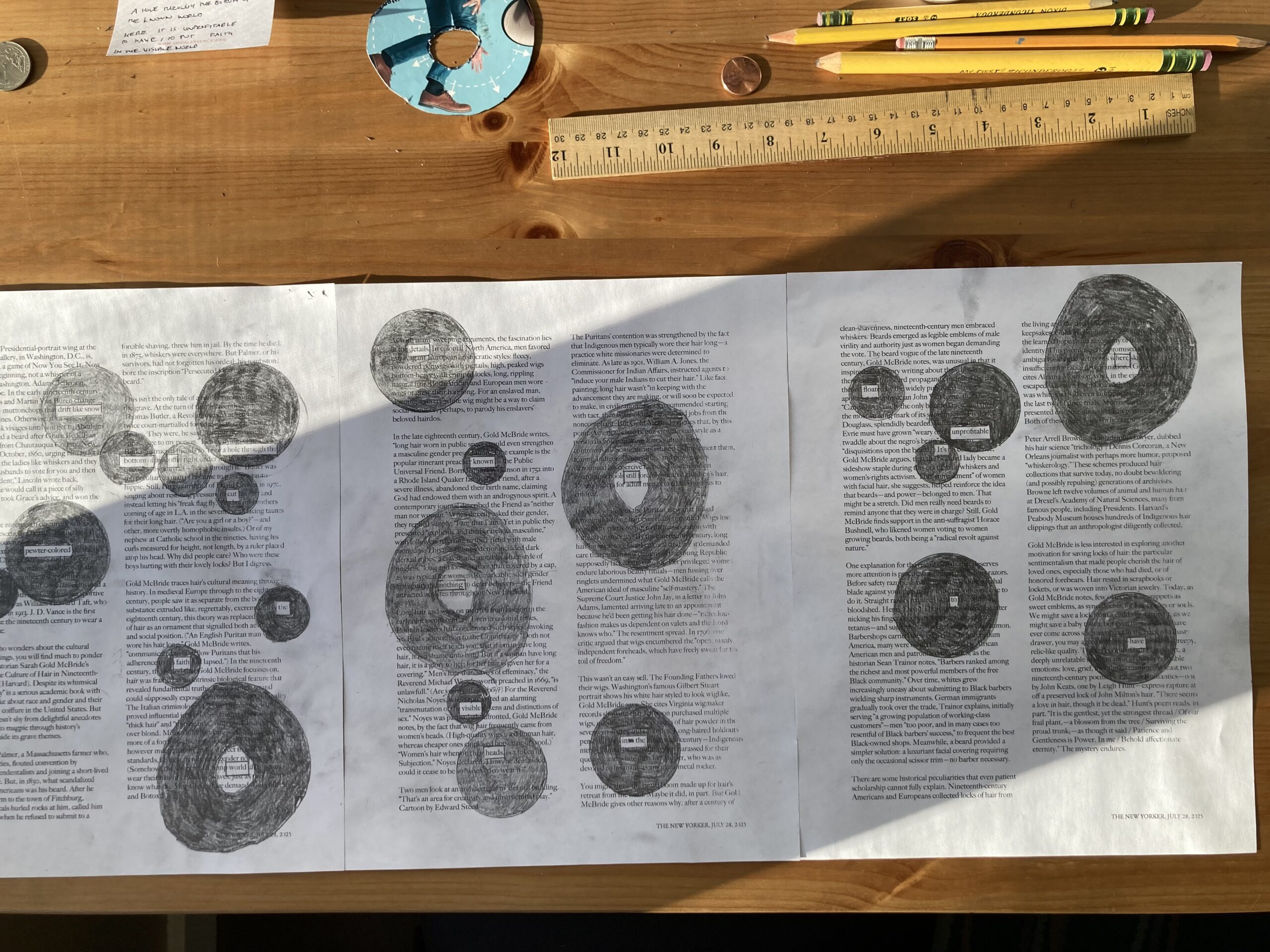
feb 28/RUNGETOUTICE

3.95 miles
wabun hill loop*
20 degrees

*wabun loop = river road, south/ go down locks and dam road / go up the steep hill that leads to wabun / through the park and back down to the river road / river road, north

future Sara might want to remember this, present Sara hopes it’s more like Venezuela, less like starting WW3: Trump, without approval from Congress, and Israel bombed the hell out of Iran last night or early this morning.

Colder today, but hardly any wind or sun. Last night the temperature dropped so quickly that there was a very wide ring around the moon. Showed it to Scott and he said it was a moon dog. I don’t recall ever seeing one of these before. Yesterday meteorologists were predicting snow today/tonight, but the forecast has shifted again. No snow, just cold.

My legs felt awkward for the first 5 minutes of the run, but then I warmed up and they felt better. By the third mile, they felt strong and efficient. It feels like I have more energy and power in my legs. Are the iron pills I’m taking to raise my ferritin working, or is it just a placebo effect?

When I got to the lock and dam no. 1, I decided — just seconds before I did it — to turn and run up the steep hill that leads to Wabun Park. It was mostly covered in ice, but also dead leaves, so it didn’t seem too slippery. As I neared the top, I walked for a stretch. At the top, I stopped to admire the view through the chainlink fence of the river and the island and the St. Paul side, then I walked until the ice had stopped. In the park, there were several small ice rinks where melted water had refroze.

10 Things

  1. someone was on the frisbee golf course at Wabun park — I couldn’t quite see, but I’m assuming they were playing
  2. at the top of the bluff, a big stretch of the paved path was covered in a thick sheet of ice
  3. also at the top of the bluff, on the other side neared to the park, there was a small clearing with a decomposing trunk and thick logs — do people come here to sit at night and watch the lights on the bridge?
  4. the hill leading up to wabun was mostly thin layers of ice mixed with thick, jagged layers of ice, butat least part of the trail was coated with dry leaves
  5. although there were walls of snow or thick chunks of ice at some of the entrances and exits, the walking paths were mostly clear
  6. empty benches, empty parking lots
  7. running, looking down at the winchell trail and seeing a person walking — they looked so far down, I felt so high up
  8. stopping to walk on the double bridge, hearing the loud shuffling of a runner’s feet approaching from behind
  9. do I remember any color, or was it all just pale gray and white today?
  10. the low rumble of a LOUD truck driving too fast on the river road

Like yesterday, I don’t remember what I listened to when I wasn’t listening to headphones and my “Bunnies and Rabbits” playlist. Traffic? The shuffling of my own feet? No birds or bells or fragments of conversation from other runners or walkers. A memorable song on my playlist: The Young Rabbits / the Jazz Crusaders

Rabbit Eyes: how they se, what they see

Rabbits have 3 eyelids, 3 tear glands, one tear duct. They rarely blink — only 12 times an hour — and can sleep with their eyes open which helps keep them safer. How? It

allows their light receptors to remain active. If a predator nears, their brain receives signals faster, enabling a quicker response than if their eyes were closed.

Rabbit Eye: a Complete Guide

To see without actively seeing. Two immediate thoughts: 1. I’m fascinated by passive seeing and how it works in the human brain (especially mine) and 2. how exhausting to sleep with your eyes open! I’d like to learn more about how this works.

How to tell when a rabbit is sleeping? Their nose stops twitching.

Here’s something I have in common with rabbits: they can’t see red and have a lot less cone cells than a normally sighted human. I can see red, but not that often. Also, they rely more on rod cells (and they have more of them than humans) and see better (best?) in low light. Peripheral vision!

rabbit eyes were built to excel in low light situations. Rabbits are usually the most active in the hours around dawn and dusk, when it’s not too bright out but also not pure darkness. This is a time of day when rabbits have the advantage over both predators that are nocturnal and see best in the dark, and predators that are diurnal and see best when there is bright light. 

7 fun facts about rabbit eyes / the bunny lady

Crepuscular!

360 degree view: “the rabbit visual system is designed–not for foraging and locomotion–but to quickly and effectively detect approaching predators from almost any direction. The eyes are placed high and to the sides of the skull, allowing the rabbit to see nearly 360 degrees, as well as far above her head” (What Do Rabbits See?)

Rabbits have a blind spot in front of their face.1 Like me! I wonder how the sizes of our blind spots compare? “The central blind spot in the rabbit’s field of view precludes a three-dimensional view of nearby objects. When your bunny cocks her head and seems to be looking at you “sideways,” she is actually looking as straight at you as is possible for a bunny” (What Do Rabbits See?). Sideways! Periphery! Me too. To really see something straight on, like where eyes are on a face, I need to look off to the side, at a shoulder. Sometimes when I watch tv, I look off to the edge of the screen to see what’s happening in the center.

And this!: “The image formed by the area centralis is relatively “grainy” compared to the one formed by your (normally sighted human with all cone cells intact) fovea, but it serves the rabbit well. Using this image, your voice, body movements and scent as cues, your rabbit can recognize you (his favorite human)–as long as you’re not carrying a scary box that completely changes your familiar shape!” (What Do Rabbits See?). Yes! Sometimes, like when I’m in a store and have separated from whoever I’m with, I use a combination of voice, body movement, overall silhouette, known distinctive features — like glasses or haircut or unusual dress — to identify them. My sense of smell is not good enough to identify by scent, though.

lack of depth perception and parallax motion: “rabbits have evolved in creative ways to overcome this limitation, enhancing their ability to spot predators and make a quick escape. Rabbits employ a method known as “parallaxing”, moving their heads back and forth to gauge the distance and size of distant objects” (Rabbit Eye: A Complete Guide). Sometimes I have trouble with depth perception. Could I use parallaxing to help me navigate better? I googled, “Can visually impaired humans use parallax motion to detect depth.” Yes! I should practice this parallaxing when I’m out running above the gorge! I found this answer on a Reddit thread that was started with this question, if we need both eyes in order to see depth (depth perception), why is it also possible to see said depth when you close one eye? What a useful thread about how our brains fill in gaps and determine depth based on patterns and a library of known depths. And even better than this thread, here’s an article about a scientific study that was designed to explore and answer the question, “Can people with different forms of low vision use motion parallax to improve depth judgments?” The answer? Yes! And many people with low vision use it without realizing. And it should be introduced to people with low vision as a tool early on in their vision loss. And not enough research has been done on it. This study is from 1997. Has more research been done since then? Has it been adapted by low vision educators?

Here’s something I found from Duke Health in 2013. It’s specifically about low vision as having vision only in one eye, but it’s still helpful:

Adults who lose vision in one eye also have more collisions when walking, especially on the side where they lost the vision. That’s where sessions with an orientation and mobility specialist can help.

“The emphasis is on helping people to judge distances by using monocular clues, such as something called motion parallax. If you’ve ever seen a cat moving its head or eyes side to side before it jumps, that’s motion parallax,” Dr. Whitaker said.

Duke Health

Returning to the parallaxing quote: “This behavior is less common in familiar environments (such as their home), as rabbits memorize their surroundings. However, introducing a rabbit to a new home or a new furniture layout often prompts this scanning technique during initial explorations.” Yes! I’ve memorized my surroundings, which has made it easier to navigate both my physical environment and my new reality of living with a lot less vision — inside my familiar world, I am far less aware of a loss. New environments can be scary, unsettling, upsetting. I need to be brave2 and build up skills and explore new environments.

This last sentence, and footnote 2 below, highlights something that I am doing with my poetry/attention/moving practice. Not only am I working on my craft (writing poetry) and increasing my capacity for care and attention and my commitment to where I live and the many creatures I live with, I’m also acquiring tools and learning how to see in new ways. For example, today I’m studying rabbits in a wide range of ways because it’s fascinating and delightful and because how they see shares some similarities with how I see. Like the bat (and echolocation), rabbits offer strategies for seeing with less (or without) central vision.3

hinged skulls/big feet: “When they do smell, see or hear a predator, rabbits have to be able to make quick escapes. To help with this bunnies have very large back feet, and hinged skulls to absorb shock. Their cranial hingeallows rabbits to run at speeds above which the impact of their feet would rattle their brain around” (Rabbits have hinged skulls).

family:  Leporidae / order: lagomorpha / backyard rabbits: eastern cottontail, sylvilagus floridanus

Looking through the wikipedia entry for eastern cottontails, I found this about habitat:

The eastern cottontail is a territorial species that relies on speed and agility to evade predators. When chased, it typically escapes in a zigzag pattern and can reach speeds of up to 18 mph (29 km/h). Cottontails favor habitats where they can feed in the open but quickly retreat to cover when threatened. Preferred environments include forest edges, swamps, brushy thickets, hedgerows, and open fields with nearby shelter. Instead of digging burrows, eastern cottontails rest in a form—a shallow, scratched-out depression in grass or beneath dense vegetation. . . .

The rabbit eye in A Young Hare

There was a moment in the year 1502, so the story goes, that the eye of a dead rabbit reflected the real window of Albrecht Dürer, who, with his watercolors and genius and passion for detail, painted that eye with the window in it. It then became art, and, then, art again: the painted eye with the painted window in Diane Seuss’s “Young Hare” that connects the artist to the poem’s speaker. “Why does the window feel so intimate in the hare’s unreadable eye?” the speaker asks, and the answer is that the window in the eye represents a straddling between worlds, between then and now, between artist and viewer, between life and art.

Diane Seuss

I’ve tried looking at the painting online and my eyes cannot offer enough detail to see the hare’s eye and the window in it. I have read Diane Seuss’ poem about it, The Young Hare, and believe I don’t need to see the eye myself to understand its significance or its beauty.

The Young Hare / Diane Seuss

Oh my love, Albrecht Dürer, your hare

is not a spectacle, it is not an exploding hare,

it is not a projection of the young hare

within you, the gentleness in you, or a disassembled hare,

nor a subliminal or concealed hare,

nor is it the imagination as hare

nor the soul as a long-eared, soft-eared hare,

Dürer, you painted this hare,

some say you killed a field hare

and brought it into your studio, or bagged a live hare

and caged it so you could look hard at a wild hare

without it running off into thorn bushes as hares

will do, and you sketched the hare

and laid down a watercolor wash over the hare

and then meticulously painted-in all the browns of hare,

toast brown, tawny, dim, pipe-tobacco brown of hare,

olive, fawn, topaz, bone brown until the hare

became dimensional under your hand, the thick hare

fur, the mottled shag, the nobility of the nose, the hare

toenails, black and sharp and curved, and the dense hare

ears, pod-shaped, articulated, substantial, erect, hare

whiskers and eyebrows, their wiry grace, the ruff of hare

neck fur, the multi-directional fur over the thick hare

haunches, and did I say the dark inside the hare

ears, how I want to follow the darkness of the hare

and stroke the dark within its ears, to feel the hare

ears with my fingers, and the white tuft, the hare

anomaly you painted on its side, and the fleshy hare

cheeks, how I want to squeeze them, and the hare

reticence, how I want to explore it, and the downturned hare

eye, it will not acknowledge or appease, the black-brown hare

eye in which you painted the reflection of a window in the hare

pupil, maybe your studio window, in the hare’s

eye, why does that window feel so intimate in the hare’s

unreadable eye, why do I press my face to the window to see the hare

as you see it, raising your chin to look and then back to the hare

on the page, the thin hair of your brush and your own hair

waving gold down your back, hair I see as you see the hare.

In the hare’s eye you see me there, my swaying black hair.

Oh, I love this poem and how it allows me to reflect on what it means to study/explore/be inspired by something and someone.4 And what wonderful work she does with her linking of hare with the hair of the paint brush, the hair of the artist, the hair of the person viewing the painting/writing and reading? the poem!5

  1. They also have a blind spot in the center of the back of their head, preventing full 360 degree vision. ↩︎
  2. I don’t usually like the use of the word brave to describe how I’m navigating new ways of seeing — as in, someone responding to hearing that I’ve lost vision with, you’re so brave! As if just continuing to exist with such a diagnosis, which they really imagine as a death sentence, is being brave. But seeking out unfamiliar situations that frighten/unsettle me in order to get better at navigating because I want a fuller life is me being brave. ↩︎
  3. Additionally, the language used to describe how low light animals see/navigate can be helpful in understanding and communicating to others the strange ways I see. Maybe I can borrow that language as I try to describe how I see? ↩︎
  4. Taking this discussion back to its origins a week ago, I’m returning to the muse. I don’t see the rabbit as my muse, but as both a gate — an opening — and a teacher. ↩︎
  5. Reading this poem is making me want to read Seuss’ “Two Dead Peacocks” collection again, and more closely, as part of my ekphrastic project. I just ordered it from Moon Palace Books! ↩︎

Get Out Ice

As a reminder of some of the ways Minnesotans have resisted ICE this winter, Racket offered this list:

Fifty-thousand people thronging the streets of downtown Minneapolis in subzero temperatures to protest ICE’s presence in the Twin Cities. Thousands more pedaling their bikes through south Minneapolis, many in “peaceful observer, don’t shoot” vests, to honor a cyclist killed by state violence. Massive papier-mâché puppets presiding over rallies and memorials as brass bands play songs of liberation, and luminaries on frozen lakes spelling out messages like “ABOLISH ICE” and “ICE OUT 4 GOOD.” 

Anti-ICE Ice Fishing, Subzero Marches, and Art Sled Activism: A Winter of Protest in the Twin Cities

The rest of the article describe the bike ride, sponsored by Angry Catfish, in honor/memory of Alex Pretti.
feb 25/RUNGETOUTICE

2 miles
river road, north/lena smith, south
22 degrees

Sunny, cold, shadowed. Most distinctive shadow: the ball-like one, made by the light of the street light. It was nice weather for a run. Not too cold, or too warm, clear trails. Unfortunately, I struggled. Sore legs, unfinished business, and some fatigue. And now I’ll struggle not to worry about what caused the bad run — this worrying about my health is the way my anxiety is expressed. No fun.

Even with my not-so-great run, can I remember 10 things I liked (or loved)?

10 Things

  1. the feel of my feet sliding on the grit as I ran up the lake street hill
  2. the bright orange graffiti under the lake street bridge
  3. the surface of the river, covered in a thin skin of ice, a pale gray
  4. the bright blue and empty sky
  5. the deep footprints on the snow-covered walking path, descending just below the road
  6. feeling strong and relaxed as I ran up the hill from under the bridge
  7. the sheen of the thin glaze of ice on the shaded sidewalk
  8. some puddles on the sidewalk where snow from a yard had melted
  9. looking through a net of bare, slender trunks
  10. chirping birds, all around

For the first part of my run, I listened to the traffic and my feet striking the gritty ground. For the second part of the run and the walk, I put in my new “Bunnies and Rabbits” playlist — see below. I heard these songs today:

  1. Rabbot Ho / Thundercat
  2. Baile InoLVIDABLE / Bad Bunny
  3. Rabbit Fur Coat / Jenny Lewis
  4. Abracadabra / Steve Miller Band
  5. I’m Drivin’ My Life Away / Eddie Rabbit

I’d liked the speed/fast beat of the Bad Bunny song, the storytelling in “Rabbit Fur Coat,” the 80s kid nostalgia of Abracadabra, and the little North Carolina Sara nostalgia of Eddie Rabbit (from June 1980, when I was 6). Jenny Lewis’ story about her poor (both, no money and tragic figure) mom made me think of Diane Seuss and her use of a rabbit motif — see below and this diane seuss and rabbits.

Rabbits, Rabbits, Everywhere — written earlier today

As is usually the case when I give attention to something I haven’t given much attention to before, that something is suddenly everywhere, or not everywhere, but the instances of it seem to grow exponentially (you might say, they breed like rabbits). The rabbit/bunny/hare floodgate has been opened! This morning, I’m finding so many rabbit references!

And what’s the point of all of this? Following the rabbit down the rabbit hole is a wonderful distraction. It is also an excellent opportunity to learn. And to learn more about rabbits, which leads to caring about them as living things and as symbols. This caring might (is) enabling me to open up a closed part of myself (closed = strong dislike of rabbits). And it is helping me to think more broadly and specifically about the impacts of humans and human encroachment on environments and the consequences of that encroachment for humans and non-humans. Plus, all (or any) of it could inspire new poems.

Here are a few rabbit-related things:

1

The killer rabbit in Monty Python and the Holy Grail. I should rewatch this movie because I remember the rabbit in the cave (or is it a bunny) at the end, but not that clearly. Is the joke that rabbits/bunnies are soft and cute and frail and couldn’t possibly be vicious killers?

2

Bunny Lebowski in The Big Lebowski. It’s been long enough since I’ve seen this film that I all I can remember is that she is the young wife of the Big Lebowski, who is kidnapped and is a catalyst for much of the action. Is that right? I could look it up, but I’d rather use this lack of remembering as a reason to watch the movie again.

3

Rabbit in Red matchbox from Halloween. Near the beginning of the movie, the nurse who has accompanied Dr. Loomis to pick up Michael Myers from the mental hospital and bring him to his parole hearing lights a cigarette using a match from this matchbook just before Micheal Myers attacks them and escapes in their car. Later that same matchbook appears in the grass near the dead body of a mechanic. A clue! Michael Myers must have been here! And now he’s going home to finish what he started!

4

Harvey, a Jimmy Stewart movie from 1950 in which Stewart befriends a 6 foot tall invisible rabbit. I have never seen it, but when I was younger, after having watched Rear Window, I developed a bit of a crush on Jimmy Stewart. Maybe that’s why I thought of this? I looked to see if it was streaming anywhere or available from the library. Nope.

5

Max and Ruby, Ruby and Max. A cartoon with baby brother/big sister bunnies. My kids watched this when they were young, thanks to hand-me-down dvds from my sister whose kids watched it when they were young. When and where did it air? What I remember most about this show was that the adults were almost non-existent and Ruby was the suffering big sister who rarely got to have any fun because she had to mother clueless Max. The gendering in this one — wow!

6

The documentary from PBS, The Pill. When I taught a class about debated issues within feminism, we usually started with a section on Reproductive Justice. Instead of focusing on abortion, we looked more broadly at women’s reproductive health and their access to care and control over their own bodies. I often screened this documentary and I recall a section with rabbits in a lab that also included the story of how they experimented on women in Puerto Rico. I can’t easily stream this again, so I’m relying on my memory and the transcript. The section is called, “A Cage of Ovulating Females.” Here’s the mention of the rabbits:

Margaret Marsh, Historian: Gregory Pincus wasn’t a physician, he was a scientist. And so he could give the pill to as many rabbits as he wanted to. Rabbits everywhere could take this pill. But he couldn’t give the pill to women. He wasn’t a doctor. He couldn’t run a clinical trial on human beings.

The Pill

And here’s one bit about Puerto Rico:

Getting the pill to market would require approval from the Food & Drug Administration, and that would entail a large-scale human trial. In exasperation, Katharine McCormick, asked, “Where can we find a cage of ovulating females?”

Puerto Rico had a network of birth control clinics and no Comstock laws. Pincus called it “the perfect laboratory.”

The Pill

The experiments on Puerto Rican women were considered a success, but some of the women suffered terrible side effects: headaches, nausea, dizziness, vomiting.

7

Rabbit from Winnie-the-Pooh — Winnie-the-Pooh’s neighbor who sometimes wishes he wasn’t — there’s a real Dennis the Menace vibe happening here, with Pooh as Dennis, Rabbit as the menaced neighbor. Yesterday I read about how Lewis Carrol intended the White Rabbit to be a sharp contrast to Alice:

For her ‘youth’, ‘audacity’, ‘vigour’, and ‘swift directness of purpose’, read ‘elderly’, ‘timid’, ‘feeble’, and ‘nervously shilly-shallying’, and you will get something of what I meant him to be. I think the White Rabbit should wear spectacles. I’m sure his voice should quaver, and his knees quiver and his whole air suggest a total inability to say ‘Boo’ to a goose!”

The White Rabbit in Fandom

I see a similar contrast between Pooh (as Alice) and the Rabbit (as White Rabbit):

8

Cadbury Creme Egg Bunny. Growing up, I LOVED these eggs. Unlike now, in the 80s and 90s you could only get them around Easter. More than any other, these eggs are my favorite childhood candy. Do they hold up? Not really. I remember the commercial with the bunny that sounds like a chicken:

the 1983 commercial with copy read by the Smuckers guy!

9

9

Diane Seuss and rabbits. Yesterday I remembered a line from a favorite Diane Seuss poem, I Look Up at my Book and out at the World Through Reading Glasses:

The load of pinecones at the top,
a brown smudge which could be anything: a wreath
of moths, a rabbit strung up
like a flag.

She’s referencing some famous still life painting with the rabbit, I think — this is in her collection all about still life paintings, Still LIfe with Two Dead Peacocks and a Girl. I looked up “Diane Seuss and rabbits” and found two other poems by her with rabbits in them!1

excerpt from backyard song / Diane Seuss

Uncorked, I had a thought: I
want the want
I dreamed of wanting once, a
quarter cup of sneak-peek
at what prowls in the back, at
what sings in the
wet rag space behind the garage, back
where the rabbits nest

Her first poem had a rabbit/ Diane Seuss

in it. Life
story at age fourteen sifted
through a rabbit.

It had a tattoo on a hand
in it. And cherries, the kind
that come in a can.

She tended
toward rabbits back then.
Toward the theoretically mild

that are really
wild. Like ducks on a pond
that is really a moon

full of menacing weeds.
The duck gets ready for noon,
she wrote. Yes,

nonsense, I guess.
She embroidered a poem
on a foam

pillow with a felt pen.
Pinned an actual
cherry on it back then

life story sifted through a rabbit — drawing upon this poem and a few others, AI suggests that Seuss frequently uses the motif of rabbit to explore themes of wildness, vulnerability, and the grotesque. In the summary, it (AI) misnames the poem “Basket,” which is the name of the journal, not this poem.

theoretically mild, really wild

Ducks on a pond, right next to the rabbit? That has to be reference to the optical illusion — do you see a duck or a rabbit? — right?

11

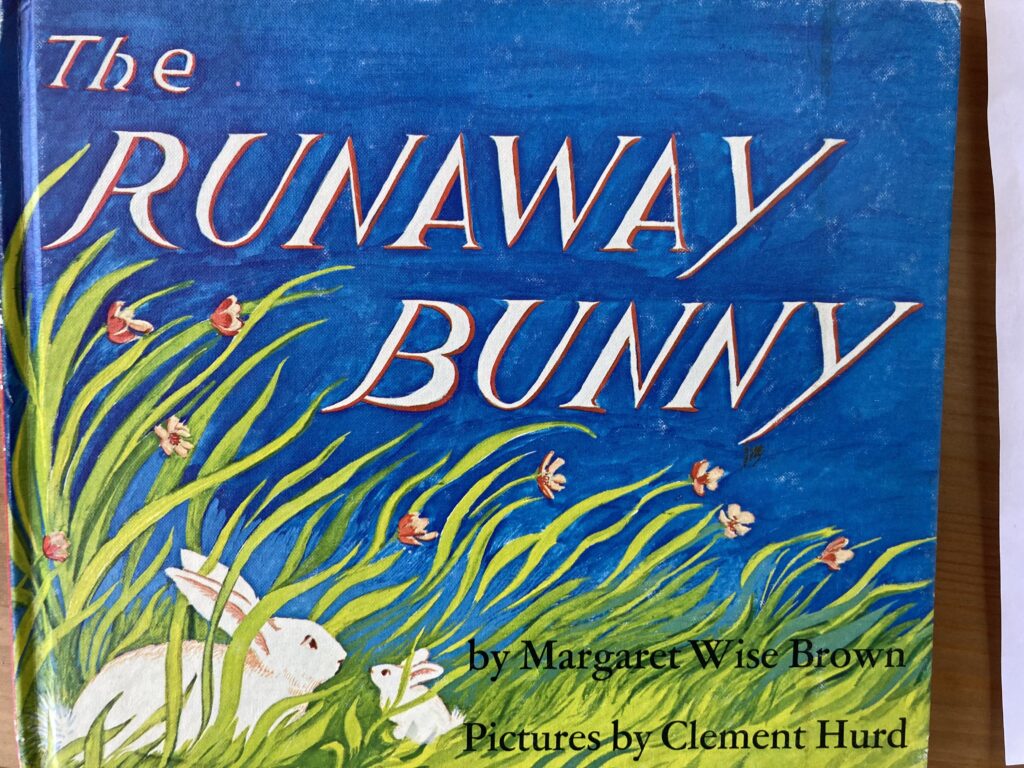
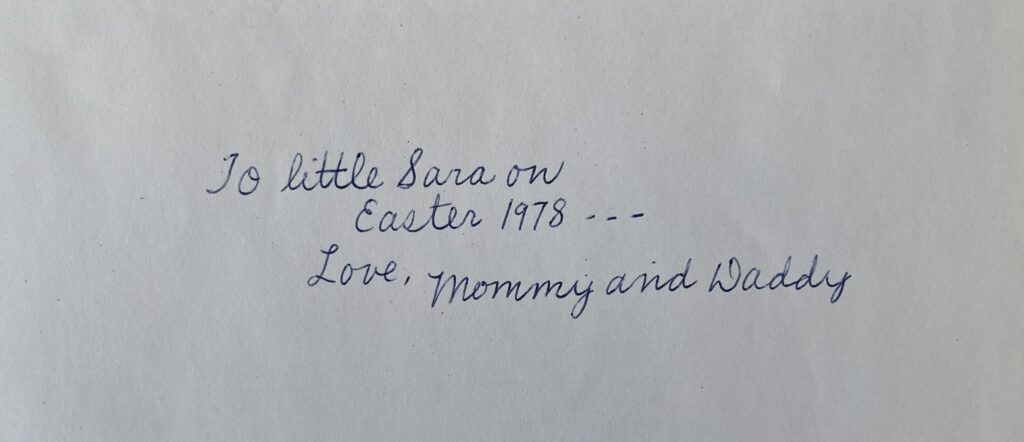
The Runaway Bunny — This was one of my favorite books as a kid. At first, I wondered why I thought that, then I found the book and opened it and saw why:

book inscription: To little Sara on Easter 1978 -- from Mommy and Daddy
my copy from 1978

added, 28 feb 2026: I was never a big Velveteen Rabbit fan, but there is another bunny book I loved as a kid, Pat the Bunny.

11

Looney Tunes: I want hasenpfeffer! I am almost certain that when I watched this cartoon as a kid, this was the first time I had heard of hasenpfeffer or imagined that rabbit was something you could eat. I still never have, but whenever I hear the word hasenpfeffer I think of this cartoon.

Hasenpfeffer

From a comment: “The King wants Hasenpfeffer which is traditional Dutch and German stew made from marinated rabbit or hare, cut into stewing-meat sized pieces and braised with onions and a marinade made from wine and vinegar.”

What to do with all of this rabbit-holing? I want to orbit around all, or at least many, of these ideas. Bring them into poems. Write a series of small poems about rabbits and bunnies and hares. As I was writing this last line, another bunny zapped into my head — The Runaway Bunny! I’ll add it above. What form should these rabbit poems take? Could this be an inspiration — Seven American Centuries? Whatever the form, I like the idea of returning repeatedly to century bunny/rabbit themes, and telling a story across the poems, not in one poem.

  1. Yesterday I realized I could easily do footnotes and I’m here for it! Googling “Diane Seuss and rabbits” the AI explanation seemed useful and it was, but also a bit suspect. When I clicked on the links offered at the end of the AI summary and read the source, it often wasn’t saying what AI claims it saying. AI takes some liberties, I think. ↩︎

a Rabbit/Bunny/Hare playlist

When Scott reminded me of Thundercat’s song “Rabbot Ho,” I knew I needed to make a playlist for this recent preoccupation!

  1. Rabbot Ho / Thundercat
  2. Baile InoLVIDABLE / Bad Bunny
  3. Rabbit Fur Coat / Jenny Lewis
  4. Abracadabra / Steve Miller Band
  5. I’m Drivin’ My Life Away / Eddie Rabbit
  6. The Young Rabbits / The Jazz Crusaders
  7. Let’s Pretend We’re Bunny Rabbits / Magnetic Fields
  8. Rabbit Heart (Raise It Up) / Florence + the Machine
  9. Rabbit Fighter / T. Rex
  10. Jack Rabbit / Elton John
  11. Here Comes Peter Cottontail / Gene Autry
  12. White Rabbit / Jefferson Airplane
  13. White Rabbit / George Benson
  14. Rabbit Will Run / Iron & Wine
  15. Breathe (in the Air) / Pink Floyd
  16. Pink Rabbits / The National
  17. Mycomatosis / Radiohead
  18. Alice / Peggy
  19. Mad as Rabbits / Panic at the Disco
  20. Bunny is a Rider / Caroline Polachek

feb 9/RUNGETOUTICE

4.5 miles
minnehaha falls and back
39 degrees
40% sloppy (snow/ice/puddles)

Ran in the afternoon, which is when I run most days this winter. It felt much better than yesterday. I think the effects of the second shingles shot are lessening. And I was less worried about blood pressure and heart rate too; both have gone down — not quite to normal numbers, but much closer than a few days ago.

It was sloppy out there! The snow and ice weren’t slippery — thanks Minneapolis Parks Department for sprinkling dirt on the trail! — but they were wet, and there were deep puddles in several spots. I managed to avoid completely soaking my shoes or socks.

Today it is gray and a dingy white — writing that, I’m thinking of a line from a Diane Seuss poem; I’ll find it after I finish this recounting of my run*. Gloomy, humid, wet. I didn’t mind. It felt more like early spring than deep into winter. Right after going outside, I even smelled thawing earth! There were some runners and walkers and bikers on the trail, but no cross country skiers or eliptigos or hoverboards. (Earlier today, when Scott and I were heading back from a meeting, we saw someone speed by on a hoverboard!)

The falls and the creek were frozen and everything was still. No one else around, which was a little unsettling. A few minutes later, heading out of the park, I heard some kids at the playground. Earlier, as I passed the parking lot, I heard the train bells and horn blaring. Was it a normal alert that the train was crossing an intersection, or a different warning?

I don’t recall hearing any birds or seeing any squirrels. No wild turkeys or yipping dogs. No bad music blasting out of a car window. Passing a trash can at 42nd, my nose crinkled as it got a faint smell of poop. My first thought: a diaper, but more likely dog poop. Yuck!

Near the end of my run, I decided to recite — again, out loud! — Alice Oswald’s “The Story of Falling.” It helped distract me, or focus me, or moved my mind somewhere other than how much more I had to run. I think it’s time to return to reciting poems on the trail! Maybe I’ll start with my Emily Dickinson experiment: pick a different ED poem to recite for each mile run.

*Here’s the Diane Seuss poem. It’s so good, and not too long, so I’ll post the whole thing again. I first posted it on 1 june 2024, when I was reading Seuss’ Pultizer Prize winning, Frank.

Legacy/ Diane Seuss

I think of the old pipes, 
how everything white 
in my house is rust-stained, 
and the gray-snouted
raccoon who insists on using
my attic as his pee pad, 
and certain
sadnesses losing their edges, 
their sheen, their fur
chalk-colored, look
at that mound of laundry, 
that pile of pelts peeled away
from the animal, and poems, 
skinned free of poets, 
like the favorite shoes of that dead 
girl now wandering the streets
with someone else’s feet in them.

white as rust-stained, certain sadnesses as dull, soft, and chalk-colored

Get Out Ice

This morning, I watched Bad Bunny’s Super Bowl performance. Wow! So much love. Such a powerfully layered f–k you to hate! So many beautiful stories of a culture!

Here’s what was written about it on Facebook:

I watched Bad Bunny deliver the most American halftime show I have ever seen. Then I came home and watched it again. And I am not okay. In the best possible way.

He sang every single word in Spanish. Every. Single. Word. He danced through sugarcane fields built on a football field in California while the President of the United States sat somewhere calling it “disgusting.” Lady Gaga came out and did the salsa. Ricky Martin lit up the night. A couple got married on the field. He handed his Grammy, the one he won eight days ago for Album of the Year, to a little boy who looked up at him the way every child looks up when they dare to believe the world has a place for them.

And then this man, this son of a truck driver and a schoolteacher from Vega Baja, Puerto Rico, stood on the biggest stage on the planet and said “God bless America.”And then he started naming them.

Chile. Argentina. Uruguay. Paraguay. Bolivia. Peru. Ecuador. Brazil. Colombia. Venezuela. Panama. Costa Rica. Nicaragua. Honduras. El Salvador. Guatemala. Mexico. Cuba. Dominican Republic. Jamaica. The United States. Canada. And then, his voice breaking with everything he carries, “Mi patria, Puerto Rico. Seguimos aquí.” My homeland, Puerto Rico. We are still here.

The flags came. Every single one of them. Carried across that field by dancers and musicians while the jumbotron lit up with the only words that mattered: “THE ONLY THING MORE POWERFUL THAN HATE IS LOVE.”

I teared up. I’m not ashamed to say it. I sat on my couch and I wept because THAT is the America I believe in. That is the American story, not the sanitized, gated, English-only version that small and frightened people try to sell us. The REAL one. The messy, beautiful, multilingual, multicolored, courageous one. The one that has always been built by hands that speak every language and pray in every tongue and come from every corner of this hemisphere.

That is the America I want Jack and Charlotte to know. That when the moment came, when the whole world was watching, a Puerto Rican kid who grew up to become the most-streamed artist on Earth stood in front of 100 million people, sang in his mother’s language, blessed every nation in the Americas, and spiked a football that read “Together, we are America” into the ground. Not with anger. With joy. With love so big it made hate look exactly as small as it is.

And what did the President do? He called it “absolutely terrible.” He said “nobody understands a word this guy is saying.” He called it “a slap in the face to our Country.” The leader of the free world watched a celebration of love, culture, and everything this hemisphere has given to the world, and all he could see was something foreign. Something threatening. Something disgusting.

Let that sink into your bones.

The man who is supposed to represent all of us looked at the flags of our neighbors, heard the language of 500 million Americans across this hemisphere, and felt attacked. That’s not strength. That’s not patriotism. That is poverty of the soul.

. . .

Bad Bunny didn’t say “ICE out” tonight. He didn’t need to. He just showed the whole world what America looks like when we are not afraid of each other. When culture is shared, not policed. When language is music, not a threat. When a flag from every nation in this hemisphere can walk across a football field together and the only words you need are the ones he gave us:

The only thing more powerful than hate is love.

Michael Garrett — NC Senate

jan 3/RUN

4.5 miles
minnehaha falls
20 degrees
100% snow-covered

Not a single bare spot on the trail or the road. Hard on the ankles, calves, and the eyes — so bright and white and endlessly nothing. Difficult to see where the snow was loose and where it wasn’t. It didn’t bother me; I’m just happy to be outside moving, connected to this place. Tried to greet everyone I saw — runners, walkers, at least one biker — with a wave or a hello.

10 Things

  1. the smell of chimney smoke lingering near a neighbor’s house
  2. soft ridges of sand-colored* snow covering the street — tricky to run over and through
  3. empty benches
  4. (almost) empty parking lots
  5. a hybrid/electric car singing as it slowly rounded a curve near locks and dam no. 1
  6. the sound of the falls falling over the ledge: almost gushing
  7. scattered voices echoing around the park — at least one of them was from an excited kid
  8. stopping to tighten my laces, a woman in a long coat nearby, standing and admiring the falls
  9. splashes of yellow on the snow
  10. bird song then a burst of birds briefly filling the sky

*sand-colored: using these words, I immediately thought of a favorite poem that I’ve memorized, I Remember/ Anne Sexton: the grass was as tough as hemp and was no color — no more than sand was a color

I listened to the quiet — barely any wind — for the first half of the run, then put in my “Sight Songs” playlist on the way back. Memorable songs: Sheena Easton’s nasally high notes in “For Your Eyes Only,” and the lyrics in the refrain —

The passions that collide in me
The wild abandoned side of me
Only for you, for your eyes only

Yikes. Also, these lines from The Who’s “Behind Blue Eyes”:

And if I swallow anything evil
Put your finger down my throat

And if I shiver please give me a blanket
Keep me warm, let me wear your coat

And these, from Bonnie Tyler’s “Total Eclipse of the Heart,” which I don’t recall ever hearing:

Every now and then I know you’ll never be the boy you always wanted to be. . .

. . .Every now and then I know there’s no one in the universe as magical and wondrous as you

(Almost) 9 Years!

Typically each year, I mark the anniversary of this log as the first of January, with a new year beginning on that day. But, that’s not the real anniversary of this log. It’s January 12th, 2017. Why the 12th and not the 1st? I’m not quite sure; I’ll have to look through my journal from that year. It seems fitting, with my affinity (see D. Seuss below) for the approximate, the almost, to not start on the first day of the year!

On This Day: January 3, 2022

Reading this past entry today, I re-discovered this beautiful poem by a favorite poet, Diane Seuss, Love Letter. Rereading it, so many words, phrases, ideas tapped me on the shoulder, invited me it! Here’s the second half of the poem:

I’m much too sturdy now to invest
in the ephemeral. No, I do not own lace
curtains. It’s clear we die a hundred times
before we die. The selves
that were gauzy, soft, sweet, capable
of throwing themselves away
on love, died young. They sacrificed
themselves to the long haul.
Picture girls in white nighties jumping
off a cliff into the sea. I want to say
don’t mistake this for cynicism
but of course, it is cynicism.
Cynicism is a go-to I no longer have
the energy to resist. It’s like living
with a vampire. Finally, just get it
over with, bite me. I find it almost
offensive to use the word love
in relation to people I actually love.
The word has jumped off
so many cliffs into so many seas.
What can it now signify?
Shall I use the word affinity
like J.D. Salinger, not a good
man, put into the mouths
of his child genius characters? I have
an affinity for my parents. An affinity
for you. I will make sure you are fed
and clothed. I will listen to you
endlessly. I will protect your privacy
even if it means removing myself
from the equation. Do those sound
like wedding vows? Are they indiscriminate?
Well then, I am indiscriminate.
I am married to the world.
I have worked it all out in front of you.
Isn’t that a kind of nakedness?
You have called for a love letter.
This is a love letter.

sturdy! I love this word — the sound and the feeling of it: I like being sturdy. My Girl (in my Girl Ghost Gorge poem, the preferred version of me — Sara, age 8).

the “gauzy, soft, sweet selves” — these gothic girls, jumping off cliffs into the sea — a very different version/vision of a girl than mine

Linking these lines to others from Seuss, I imagine one version of her girl to be the one that died when her father did — she writes about him in Still Life with Two Dead Peacocks and a Girl. That girl’s father became sick when she was 2 and died when she was 7.

Of course, this is only one version of her girl. How many different versions of girls do I have? Do I write about?

Affinity?! Yes, I need to put that beside my list of “love?” words, accustomed, familiar, acquainted, known. Affinity = kinship, attraction, liking/affection, causal relationship, attractive force, “a relation between biological groups involving resemblance in structural plan and indicating a common origin”

Right now, I’m reading “You” as the poem and poetry.

Indiscriminate = not marked by careful distinction — ambiguous, sloppy? a (too) rough approximation?

love letter world . . . suddenly, I’m thinking of Emily Dickinson: This is my letter to the world that never wrote to me

That was fun, giving some time to these words! I am drawn — do I have an affinity? — to Diane Seuss’s words. Is it because my introduction to her was her fabulous poem about vision that begins with the line, the world, italicized? Or her ekphrastic poems, in Still Life with Two Dead Peacocks and a Girl?

a return to the ekphrastic! I am reminded of my past reading and writing about still life, especially with Diane Seuss. I’m imagining my “how to see” series of ekphrastic poems with a section on still life paintings and one on pastoral poems! Also, a section on artists with vision conditions or that particularly resonate for my vision: Magritte, Monet, Vincent Van Gogh. Ideally, a series of poems. But first, taking the time to gather all of the resources together, then to stay open to what could happen! I’m also imagining a section on cut-outs/silhouettes, which I studied during my shadow month.

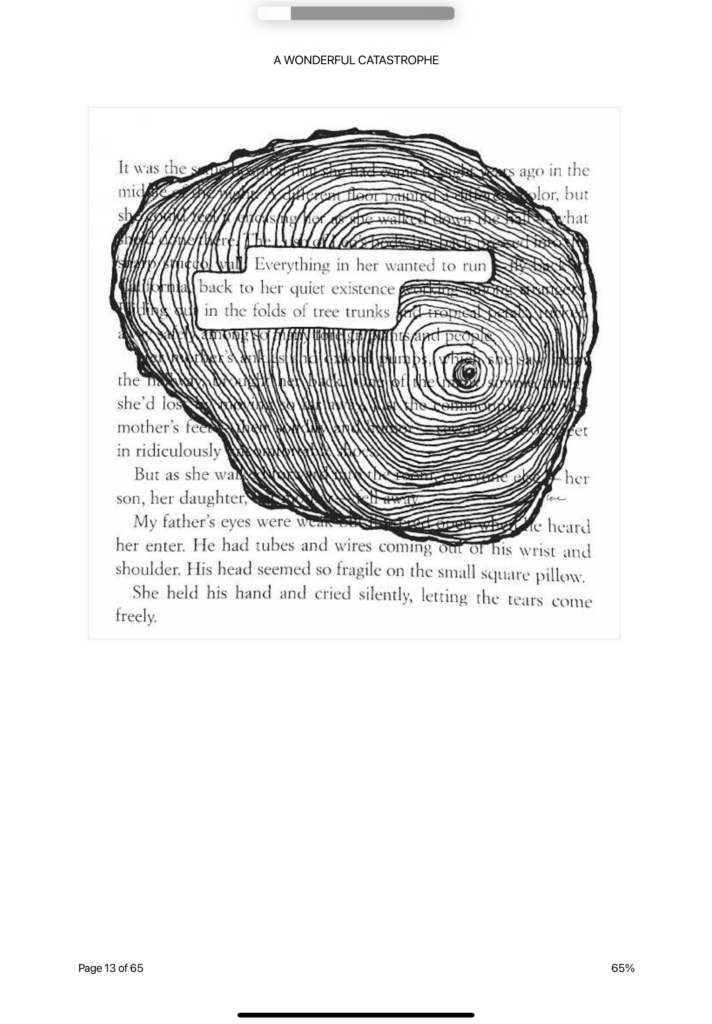
Colette Love Hilliard and the erasure poem

Last night I bought CLH’s  a wonderful catastrophe. Wow! I love it. This one reminded me of my blind spot/mood ring visual poetry:

from A Wonderful Catastrophe / Colette Love Hilliard

june 1/RUN

4.15 miles
marshall loop (cleveland)
65 degrees
humidity: 85% / dew point: 60

Mostly overcast, a few moments of sun, no shadows. Sticky, everything damp, difficult. I felt better during the run — distracted by the dew point and the marshall hill — but when I finished, I felt a heaviness: hormones. The NP agrees: perimenopause. The good news: I’m healthy, the new NP I went to is awesome, I don’t feel anxious, I have an order in for an SSRI (lexapro). The bad news: I feel bummed out (depression doesn’t quite fit, I think), there’s some problem with insurance so they can’t fill the prescription so I have no idea when I can actually start taking the medication. But it’s June, I have several cool books to dig into, and I just got a hug from my daughter so I’ll be okay.

10 Things

  1. the red of a cardinal seen as a flash
  2. one small white boat on the river
  3. shadow falls falling, sounding like silver
  4. the smell of breakfast at Black — faint, sweet
  5. pink peonies about to pop
  6. click clack click clack — a roller skier’s poles: orange happiness
  7. the strong smell of fresh green paint on the base of a streetlamp
  8. the next streetlamp base: disemboweled, gray wire guts hanging out
  9. a purple greeting: morning! — good morning!
  10. a group of people in bright yellow vests laughing and walking on the road near the Danish American center — why?

added a few hours later: When writing this entry, I forgot about all the chanting I did. Started with triple berries:

raspberry strawberry blueberry
strawberry blueberry raspberry

Then added in some other 3 beat words:

intellect mystery history
remember remember remember

Then played with remember:

remember
try to re

member try
to remem

ber try to
remember

Then I decided to chant some of my favorite lines from Emily Dickinson:

Life is but Life
and Death but Death
Bliss is but bliss
and Breath but Breath

Life is but life is but life is but life
Death is but death is but death is but death
Bliss is but bliss is but bliss is but bliss
Breath is but breath is but breath is but breath

Life life life life
Death death death death
Bliss bliss bliss bliss
Breath breath breath breath

something important to remember: Donald Trump was convicted on all 34 counts of falsifying business records. He is now a felon and will be sentenced on July 11th. He can still run for office, but most likely won’t be able to vote (for) himself.

I’d like to focus on color this summer: June, July, and August. I’m not sure how I’ll do it, yet. Will I break it down my color? Possibly. Yesterday I picked up 2 color books that I had checked out 4 or 5 years ago. I’m anticipating that I’ll find them more useful now: The Secret Lives of Color and Chroma.

I also checked out Diane Seuss’ latest, Modern Poetry. Here’s one of her poems with some color in it:

Legacy/ Diane Seuss

I think of the old pipes,
how everything white
in my house is rust-stained,
and the gray-snouted
raccoon who insists on using
my attic as his pee pad,
and certain
sadnesses losing their edges,
their sheen, their fur
chalk-colored, look
at that mound of laundry,
that pile of pelts peeled away
from the animal, and poems,
skinned free of poets,
like the favorite shoes of that dead
girl now wandering the streets
with someone else’s feet in them.

At the beginning of the book, Diane Seuss offers a quote from Wallace Steven’s poem, Man with Blue Guitar, which I first learned of while reading Maggie Nelson’s Bluets. It is a long poem, so I won’t include all of it, just the part that Seuss quotes, with a few lines before that too:

from The Man with the Blue Guitar/ Wallace Stevens

Here, for the lark fixed in the mind,
in the museum of the sky. The cock

will claw sleep. Morning is not sun,
it is the posture of the nerves,

It is as if a blunted player clutched
The nuances of the blue guitar.

It must be this rhapsody or none,
The rhapsody of things as they are.

may 5/RUN

3.1 miles
turkey hollow loop
60 degrees

Late morning felt hot today. Bright sun, not much shade. The river road was closed off for the annual Walk MS charity event so I ran on the dirt/mud trail between it and edmund. Listened to my “I’m Shadowing You” playlist for the whole run:

(skipped Shadow Song/Screaming Trees, Shadows and Light/ Joni Mitchell)
Silver Shadow/ Atlantic Starr
Total Eclipse of the Heart/ Bonnie Tyler
Help Me Make It Through the Night/ Kris Kristofferson
Sunshine in the Shade/ The Fixx
The Shadow of Your Smile/ Astrud Gilberto
Evening/ The Moody Blues
White Room/ Cream

I wondered what a silver shadow might look like, then I wanted to see one. The silver outline of the sun behind the clouds? My shadow on the blue-white snow? I know — it’s Eamon Grennan’s birdsong in his poem, Lark-Luster:

. . . when summer happens, you’d almost see the long silver ribbons of song the bird braids as if binding lit air to earth that is all shadows, to keep us (as we walk our grounded passages down here) alive to what is over our heads—song and silence—and the lot of us leaning up: mind-defeated again, just harking to it.

Then I got distracted by mud and people and the sun and didn’t give close attention to the lyrics for the next three songs, only briefly registering that Bonnie Tyler was singing to someone whose love is like a shadow on her, keeping her in the dark; Kris Kristofferson was comparing someone’s hair “laying soft upon his skin” to the shadows on the wall; and The Fixx were declaring that they were the sunshine in the shade of life.

Off the grass, back on the road, I thought about Astrud Gilberto’s affection for the shadow of a smile — was the shadow cast by a very bright smile? Looking at the lyrics now, I understand the shadow to be the wonderful (but haunted?) memory of a love that didn’t last.

I am really digging The Moody Blues, “Evening.” That flute! Shadows on the ground/never make a sound/fading away in the sunset/Night has now become/Day for everyone

I thought about the white curtains in Marie Howe’s dark room instead of Cream’s black curtains in a white room. where the shadows run from themselves.

This is fun! I like thinking about silver shadows as birdsong, and shadows softly caressing the wall, and what it would be like to see shadows running from themselves.

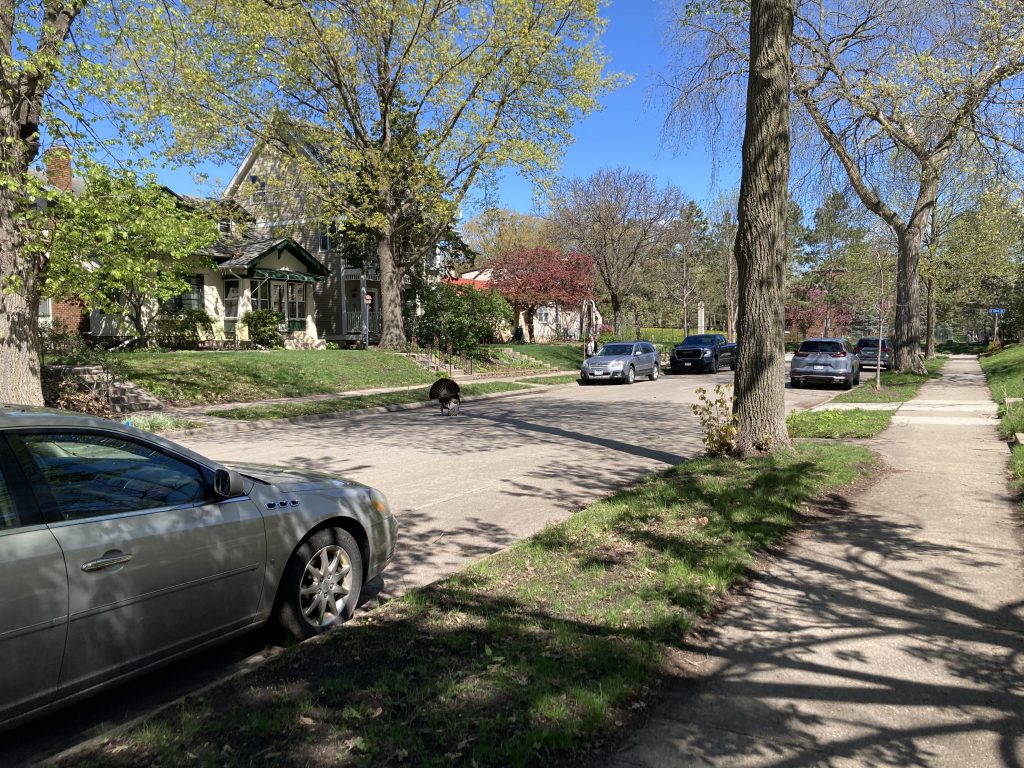
Near the end of “Shadow of Your Smile,” I saw something ahead of me, in the middle of the road. A big black dog? No — it’s that menacing turkey again! The one I wrote about on april 30th and april 11th. Just standing there in the middle of the road, his feather fanned out. This time I didn’t turn around, but walked by him, at a safe distance. I also took a picture:

RJP has named this big turkey Jon.

Zooming in, I see a brave person on the sidewalk, nearing Jon.

Recounting the story to Scott when I returned home, I decided that I wanted to imagine this turkey as a friend, not an enemy — or a frenemy? I also began to believe that he’s trying to tell me something: write about ME! And I will. Well, I already wrote one poem:

Unsettled

by noise

I stop to
witness

a dark shape
draw near

too big for

a squirrel

too small for
a bear.

The moment
suspends

unresolved
until

the shape turns —
pale beak

red wattle
framed by

tail feathers.
This Tom

wants trouble.

What if this turkey is my shadow-self? Will he be around for my next run? I guess it’s the spring of the turkey — maybe the summer, too? I will add Jon — I might name him myself if he appear again — to my list of Regulars!

Inspired by another turkey sighting, and deciding that I will embrace these visits, here’s another amazing poem from Diane Seuss’s Sill Life with Two Dead Peacocks and a Girl:

Still Life with Turkey/ Diane Seuss

The turkey’s strung up by one pronged foot,

the cord binding it just below the stiff trinity

of toes, each with its cold bent claw. My eyes

are in love with it as they are in love with all

dead things that cannot escape being looked at.

It is there to be seen if I want to see it, as my

father was there in his black casket and could not

elude your gaze. I was a child so they asked
if I wanted to see him. “Do you want to see him?”

someone asked. Was it my mother?
Grandmother? 
Some poor woman was stuck with the job. 

“He doesn’t look like himself,” whoever-it-was

added. “They did something strange with his mouth.”

As I write this, a large moth flutters against

the window. It presses its fat thorax to the glass.

“No,” I said, “I don’t want to see him.” I don’t recall

if I secretly wanted them to open the box for me

but thought that “no” was the correct response,

or if I believed I should want to see him but was

too afraid of what they’d done with his mouth.
I think I assumed that my seeing him would

make things worse for my mother, and she was all

I had. Now I can’t get enough of seeing, as if I’m paying

a sort of penance for not seeing then, and so

this turkey, hanged, its small, raw-looking head, 

which reminds me of the first fully naked man

I ever saw, when I was a candy striper

at a sort of nursing home, he was a war veteran,

young, burbling crazily, his face and body red
as something scalded. I didn’t want to see,

and yet I saw. But the turkey, I am in love with it, 

its saggy neck folds, the rippling, variegated

feathers, the crook of its unbound foot,

and the glorious wings, archangelic, spread

as if it could take flight, but down, 
down
ward, into the earth.

feb 23/WALK

20 minute walk with Delia
neighborhood
33 degrees

A short walk through the neighborhood with Delia the dog. My calf is feeling better. I think I’ll try running 1 or 2 miles tomorrow morning. Today, just a walk. Brrr. The thing I’d like to remember from the walk — other than the happy feeling of walking without fear of cramping — was the exclamation point on the sold sign in front of house 1 block south. Sold! Maybe I’ve missed it, but I don’t think sold signs usually have exclamation points. I love exclamation points! So did Emily Dickinson and Walt Whitman!

Searched through my archives and found a reference to exclamation points in a Diane Seuss sonnet:

how many exclamation points can I 
get away with in this life, who was it who said only two
or maybe seven, Bishop? Marianne Moore?

In that 27 march 2023 entry, I tried finding the reference — Bishop or Moore — but couldn’t. Still can’t.

Returning to Emily Dickinson, I think my favorite exclamation point poem by her is ‘Tis so much joy! ‘Tis so much joy! — especially these lines, which I like to chant on some runs:

Life is but Life! And Death, but Death!
Bliss is, but Bliss, and Breath but Breath!

While rereading the entry for feb 23, 2022, I re-discovered these poems by Rebecca Hazelton — 2 examples of ekphrastic poetry: The Husband’s Answers

july 23/RUN

3.1 miles
47th st loop
69 degrees

Ran almost two hours later because I wanted to work more in the morning and because the humidity was 100% at 8 am. Running at 10 was much better, I imagine. Sunny with lots of shade, calm. No turkeys but I did see my shadow briefly. Saw a biker and one graceful rollerblader moving so quickly and smoothly, swinging his arm like an Olympic speeed skater.

delight of the day

Nearing Edmund, past becketwood on the part near turkey hollow, I heard a truck approaching from behind with some squealing kids. As it passed me, driving very slowly, I noticed a few heads just poking out of the red truck’s bed. It turned up the next street. Nearing the end of my loop, almost back to becketwood, I encountered it again, parked in front of house, the kids yelling out delightedly, “We drove around the block in the back of the truck! We drove around the block in the back of the truck!” Such delight. Such cute, earnest, high-pitched voices! Oh, to be that free of cynicism and able to find joy in such a small but perfect moment!

Before heading out for the run, I memorized another poem, the third in my vision series: I Look Up From My Book and Out on the World Through Reading Glasses/ Diane Seuss.

I love this poem because it does a great job of capturing how I see the world sometimes–not through reading glasses, but through my diseased eyes. Sometimes the world looks italicized, slanted, not quite straight, off-kilter. And sometimes trees are nothing but the classic form of a tree — a brown trunk with leaves. Colors, when I can see them, are sometimes only smudges and smears and slashes. It’s all vague or just barely formed–the idea of the river instead of the actual view of an in-focus river. And it often feels like I’m in a haze or a daze or a fog. This is not upsetting to me; it’s more dreamy and calm and soft. Often the sharpness of the forms dependents on the quality of the light–gray days make everything look even fuzzier, bright sunny blue days make it all clearer, with more edges.

A few hours after returning home, I recorded myself reciting the poem. I just learned it this morning so I don’t know it by heart yet. Even as the pauses in this recording make me a little uncomfortable, I like how they demonstrate the moments of my forgetting and then remembering.

I Look Up From My Book, July 23